Search
9 resources
9 items
Date
1526
-
 Text
TextAuslegu[n]g der Evangelienn, von Ostern biss auffs Advent
Luther, Martin, 1483-1546Summary: This is the summer Section of Luther's postils, as edited by S. Roth. Luther was not at all pleased with Roth's slip-shod editing. Roth took sermons from whatever sources were available, including from other people (notably Bugenhagen) when copies of Luther sermons could not be found. He also conflicted some sermons, condensed others, and rewrote several.Summary: This is the summer Section of Luther's postils, as edited by S. Roth. Luther was not at all pleased with Roth's slip-shod editing. Roth took sermons from whatever sources were available, including from other people (notably Bugenhagen) when copies of Luther sermons could not be found. He also conflicted some sermons, condensed others, and rewrote several. -
 Text
TextAuslegunge der Episteln vn[d] Euangelien von der heyligen drey Königefest bis auff Ostern
Luther, Martin, 1483-1546Summary: This is the second printing of Luther's Lenten Postils separate from other sermon collections. Kohl of Regensburg had issued the first printing the previous year. Of interest is the large initial on page a3a.Summary: This is the second printing of Luther's Lenten Postils separate from other sermon collections. Kohl of Regensburg had issued the first printing the previous year. Of interest is the large initial on page a3a. -
 Text
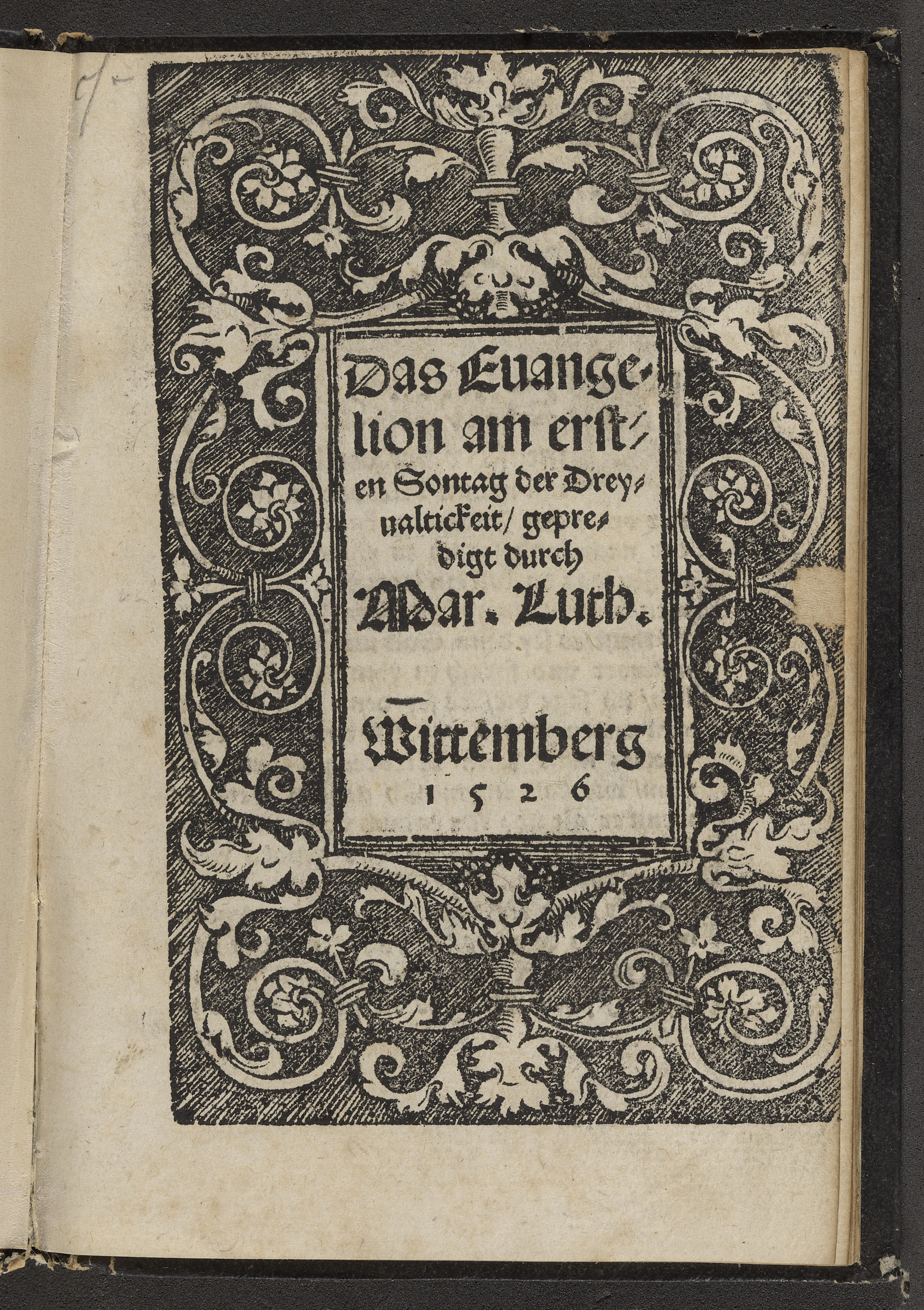
TextDas Euangelion am ersten Sontag der Dreyualtickeit
Luther, Martin, 1483-1546Summary: Sermon preached May 27, 1526, on John 3:1-16 (Nicodemus).Summary: Sermon preached May 27, 1526, on John 3:1-16 (Nicodemus). -
 Text
TextDas der frey will nichts sey : Anntwort D. Martini Luther ann Erasmum Rotherdam
Luther, Martin, 1483-1546Summary: German translation by Martin Luther's colleague, Justus Jonas, of "De servo arbitrio". "De servo arbitrio (Concerning the Enslaved Will)" is considered one of Luther's greatest literary productions, and among the most important writings of the Reformation. In it, he defends the idea of the complete inability of the human being to please God, apart from Divine grace.Summary: German translation by Martin Luther's colleague, Justus Jonas, of "De servo arbitrio". "De servo arbitrio (Concerning the Enslaved Will)" is considered one of Luther's greatest literary productions, and among the most important writings of the Reformation. In it, he defends the idea of the complete inability of the human being to please God, apart from Divine grace. -
 Text
TextDe servo arbitrio
Luther, Martin, 1483-1546Summary: An important treatise on human free will by Martin Luther, responding to Erasmus' work De libero arbitrio.Summary: An important treatise on human free will by Martin Luther, responding to Erasmus' work De libero arbitrio. -
 Text
TextDe servo arbitrio Martini Lutheri, ad Desiderium Erasmum Roterodamu[m]
Luther, Martin, 1483-1546Summary: "De servo arbitrio (Concerning the Enslaved Will)" is considered one of Martin Luther' greatest literary productions, and among the most important writings of the Reformation. In it, he defends the idea of the complete inability of the human being to please God, apart from Divine grace. His tract is a response to Desiderius Erasmus', "De libero arbitrio (Concerning Free Will)." Erasmus defends the view that salvation is by Divine grace, but wants to leave some room for a person's moral motivation.Summary: "De servo arbitrio (Concerning the Enslaved Will)" is considered one of Martin Luther' greatest literary productions, and among the most important writings of the Reformation. In it, he defends the idea of the complete inability of the human being to please God, apart from Divine grace. His tract is a response to Desiderius Erasmus', "De libero arbitrio (Concerning Free Will)." Erasmus defends the view that salvation is by Divine grace, but wants to leave some room for a person's moral motivation. -
 Text
TextDiss ist ain Anzayg: ainem meinem, etwann vertrawten Gesellen, über seyne harte Widerpart, des Sacrament vnd annders betreffend
Langenmantel, Eitelhans, -1528Summary: Since the city of Augsburg was fairly evenly divided between Catholic and Protestant in the early 1520s, several Anabaptists hoped that their movement might benefit from this stalemate. Eitelhans Langenmantel attacks both Catholics and Lutherans, whom he called neo-Papists. His critique in this pamphlet focuses on the eucharist, which Langenmantel views in Zwinglian terms as a symbolic commemoration of the Last Supper. Like many other Anabaptists in Augsburg, Langenmantel was arrested and executed in 1527.Summary: Since the city of Augsburg was fairly evenly divided between Catholic and Protestant in the early 1520s, several Anabaptists hoped that their movement might benefit from this stalemate. Eitelhans Langenmantel attacks both Catholics and Lutherans, whom he called neo-Papists. His critique in this pamphlet focuses on the eucharist, which Langenmantel views in Zwinglian terms as a symbolic commemoration of the Last Supper. Like many other Anabaptists in Augsburg, Langenmantel was arrested and executed in 1527. -
 Text
TextEyn unuberwindtlich Beschirm Buchleyn von Haubt Artickeln, vn[d] furnemlichen Puncten der götlichen Geschrifft, : auss dem Alten vnd Newen Testament, mit Beschlussreden, eynem yden rechten Christe[n] Me[n]schenn zu Handhabung der göttlichen Warheyt, wyder die Verfolger der selben, gar nützlich tzu brauchen
Gretzinger, BenedictSummary: Benedict Gretzinger was a city scribe in the town of Reutlingen. In his only known work, which was however published 17 times between 1523 and 1528, he lists 10 fundamental articles of faith, each with short references to the Bible and explanatory notes. The text is close to the children's catechisms by the Bohemian Brethren, published in 1522, which may itself have been influenced by Martin Luther's "Short form of the 10 commandments".Summary: Benedict Gretzinger was a city scribe in the town of Reutlingen. In his only known work, which was however published 17 times between 1523 and 1528, he lists 10 fundamental articles of faith, each with short references to the Bible and explanatory notes. The text is close to the children's catechisms by the Bohemian Brethren, published in 1522, which may itself have been influenced by Martin Luther's "Short form of the 10 commandments". -
 Text
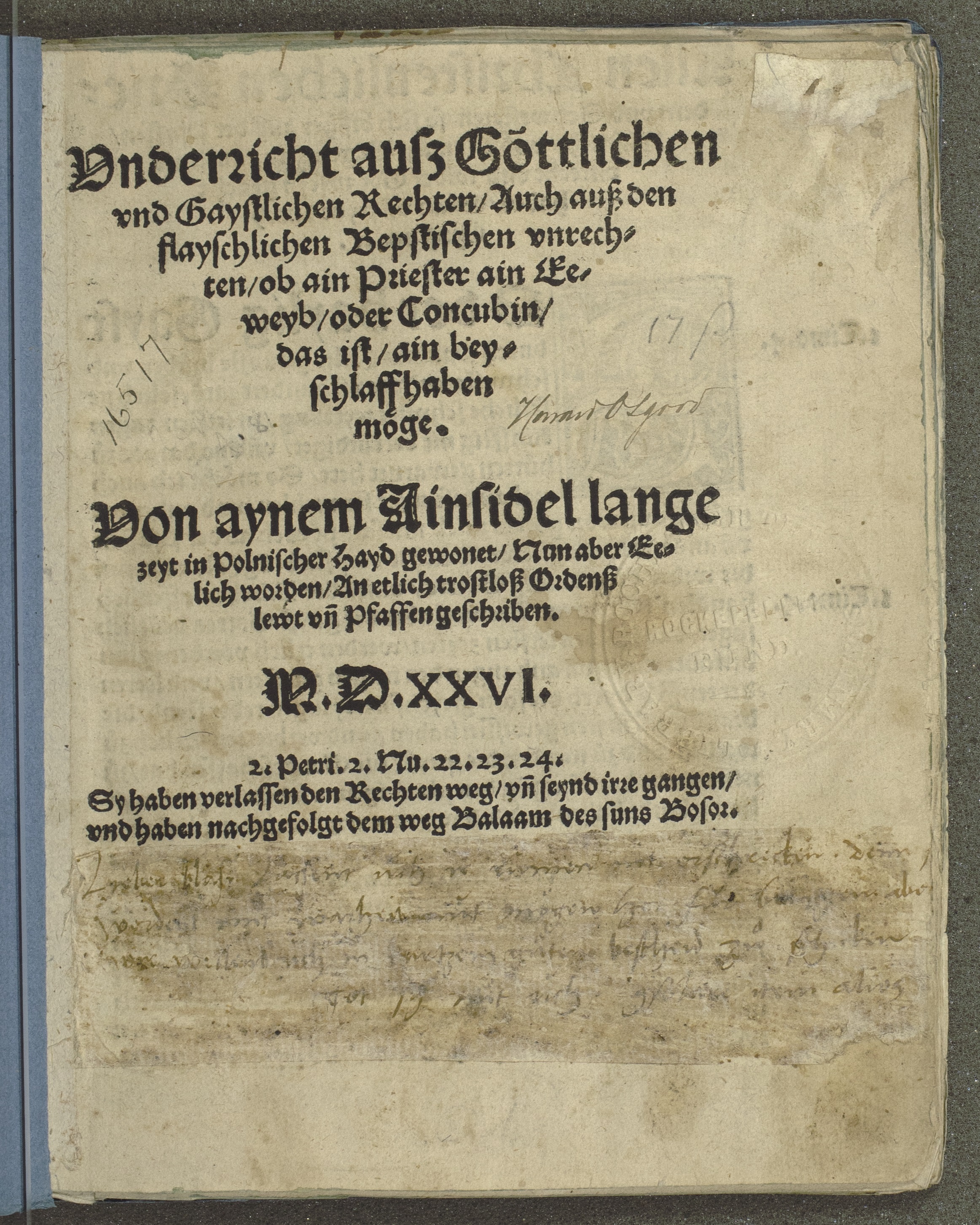
TextVnderricht ausz göttlichen vnd gaystlichen Rechten : Auch ausz den flayschlichen bepstlichen Vnrechten, ob ain Priester ain Eeweyb, oder Concubin, das ist, ain Beyschlaff haben möge
Keller, MichaelSummary: Polemical tract against celibacy, attributed to Michael Keller, who was married August 10, 1526 in Augsburg.Summary: Polemical tract against celibacy, attributed to Michael Keller, who was married August 10, 1526 in Augsburg.