Search
3 resources
3 items
Publisher
Cervicornus, Eucharius, active 1516-1547
-
 Text
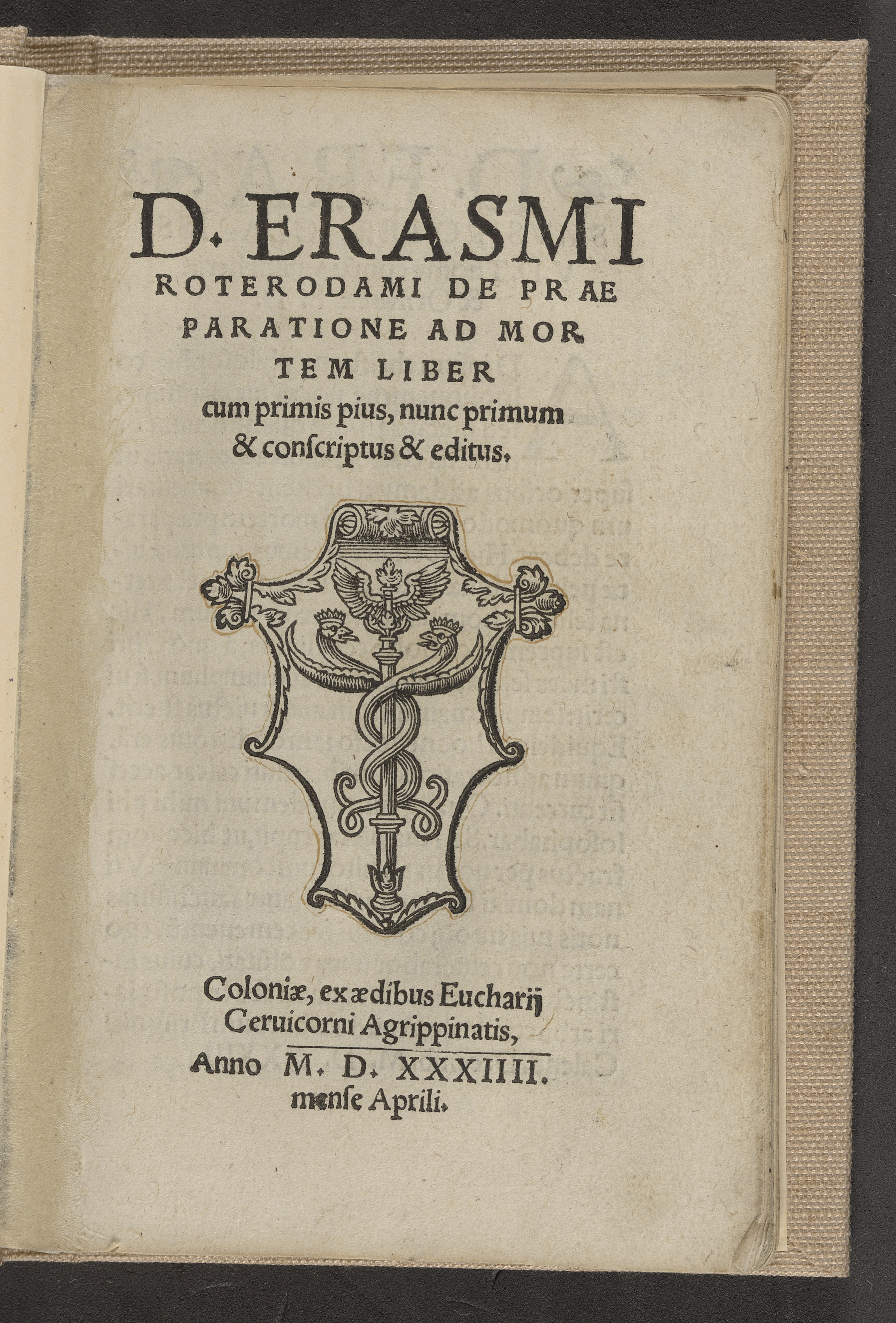
TextD. Erasmi Roterodami De praeparatione ad mortem liber : cum primis pius, nunc primum & conscriptus & editus
Erasmus, Desiderius, -1536Summary: Composed by Erasmus of Rotterdam, at the latest, in 1533, this tract on preparing for death first appeared in printed form in Basel at the beginning of 1534. This printing was followed by the Cologne printing in April. It is dedicated to Thomas Boleyn, Earl of Wiltshire and Ormond (1477-1539), the father of Henry VIII's second wife, Anne Boleyn.Summary: Composed by Erasmus of Rotterdam, at the latest, in 1533, this tract on preparing for death first appeared in printed form in Basel at the beginning of 1534. This printing was followed by the Cologne printing in April. It is dedicated to Thomas Boleyn, Earl of Wiltshire and Ormond (1477-1539), the father of Henry VIII's second wife, Anne Boleyn. -
 Text
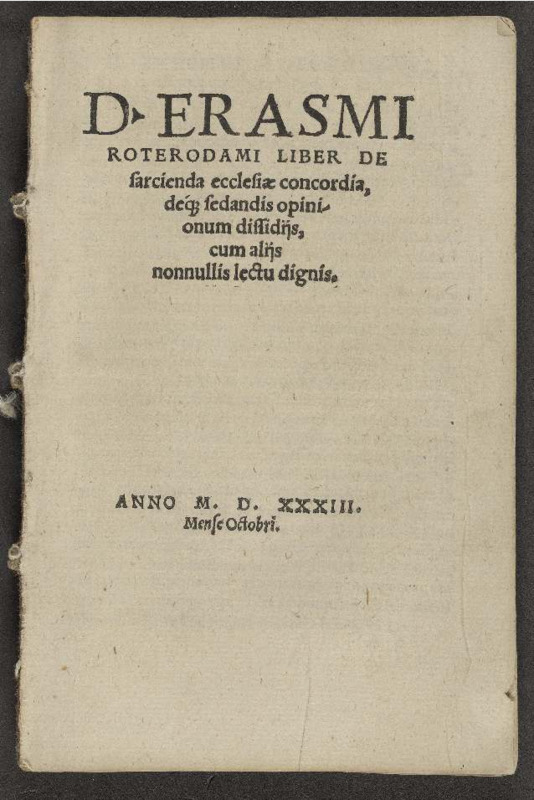
TextD. Erasmi Roterodami Liber de sarcienda ecclesiae concordia deq[ue] : sedandis opinionum dissidijs, cum alijs nonnullis lectu dignis
Erasmus, Desiderius, -1536Summary: A call for concord and harmony in the church by one of the great Humanists of the time.Summary: A call for concord and harmony in the church by one of the great Humanists of the time. -
 Text
TextRatio, cur synodus illa, quam Paulus Ro. Pontifex eius nominis III, Mantuae celebrandam, parum candide indicit, & se habiturum esse significat, neque aequa inderi possit, neq[ue] utilis Ecclesiae, unde & ab ijs, qui sacrosanctum Euangelium ineffabili Dei
Summary: When Pope Paul III called for a reform council at Mantua in 1536, the Protestants were faced with a dilemma. If they attended the council they would be recognizing the Pope's authority in such matters. If they refused, then it might appear that their calls for a general council had been insincere. The sticky task of responding to the pope's call fell upon Melanchthon. This is an edition of his response.Summary: When Pope Paul III called for a reform council at Mantua in 1536, the Protestants were faced with a dilemma. If they attended the council they would be recognizing the Pope's authority in such matters. If they refused, then it might appear that their calls for a general council had been insincere. The sticky task of responding to the pope's call fell upon Melanchthon. This is an edition of his response.