Search
11 resources
11 items
Spatial coverage
Africa
-
 Text
TextA narrative of the most remarkable particulars in the life of James Albert Ukawsaw Gronniosaw, an African prince
Gronniosaw, James Albert UkawsawSummary: An autobiography of James Albert Ukawsaw Gronniosaw.Summary: An autobiography of James Albert Ukawsaw Gronniosaw. -
 Artifact
Egungun (?) Headdress (Igboogi) of a Monkey (Akato) (?)
McKelvey, MichaelA headdress carved from wood and decorated with animal hair, bamboo, iron, and pigment.A headdress carved from wood and decorated with animal hair, bamboo, iron, and pigment. -
 Artifact
Ekele Masquerade Headcrest
White, Bruce M.This is a type of headcrest mask found amongst the southern Ika, a western Igbo peoples residing on the left bank of the Niger River (Kwale region) and Isoko peoples residing further to the south. G.I. Jones photographed such masks in the 1930s. In performance they are embellished with feathers inserted into holes along the back of the figure and across the feline figure at the top of the mask. Jones documented their performance in the Ogonya Play in Ogume village, southern Ika.This is a type of headcrest mask found amongst the southern Ika, a western Igbo peoples residing on the left bank of the Niger River (Kwale region) and Isoko peoples residing further to the south. G.I. Jones photographed such masks in the 1930s. In performance they are embellished with feathers inserted into holes along the back of the figure and across the feline figure at the top of the mask. Jones documented their performance in the Ogonya Play in Ogume village, southern Ika. -
 Artifact
Face Mask (Mma ji)
White, Bruce M.A mask made of wood, fiber, and pigment, portraying Mma ji.A mask made of wood, fiber, and pigment, portraying Mma ji. -
 Artifact
Face Mask (Okorisa Nma)
White, Bruce M.Igbo masks are made in many styles, and their distribution does not necessarily coincide with a matching set of beliefs concerning mask spirits. For example, the Okorosia masquerades of south-central Igboland share overall style features with the northern Igbo masks of the Nri-Awka area, such as the white-faced "Maiden-Spirit Mask" Agbogho mmuo but the belief in Okorosia water spirits is borrowed from the Niger Delta to the south where water spirits abound.Igbo masks are made in many styles, and their distribution does not necessarily coincide with a matching set of beliefs concerning mask spirits. For example, the Okorosia masquerades of south-central Igboland share overall style features with the northern Igbo masks of the Nri-Awka area, such as the white-faced "Maiden-Spirit Mask" Agbogho mmuo but the belief in Okorosia water spirits is borrowed from the Niger Delta to the south where water spirits abound. -
 Artifact
Female Helmet Crest Mask, Ngoin
White, Bruce M.Masks from the Cameroon Grassfields were owned by either the men's regulatory society (Kwifoyn) that shared power with the king (Fon), or by lineage groups authorized by the Kwifoyn to perform. Although all masked dancers in the Grassfields are male, they may represent either male or female characters. This mask represents Ngoin, the royal wife and a symbol of womanhood. The mask can be identified by the royal headdress that has an almond or oval-shaped protruberance at the top and a wavy or zigzag hairline. Ngoin dances with short, restrained steps to mark her royal presence.Masks from the Cameroon Grassfields were owned by either the men's regulatory society (Kwifoyn) that shared power with the king (Fon), or by lineage groups authorized by the Kwifoyn to perform. Although all masked dancers in the Grassfields are male, they may represent either male or female characters. This mask represents Ngoin, the royal wife and a symbol of womanhood. The mask can be identified by the royal headdress that has an almond or oval-shaped protruberance at the top and a wavy or zigzag hairline. Ngoin dances with short, restrained steps to mark her royal presence. -
 Artifact
Headdress for Egungun Masquerade Costume
Adugbologe SchoolA headdress carved from wood and decorated with pigment.A headdress carved from wood and decorated with pigment. -
 Artifact
Helmet Mask (Sowei)
White, Bruce M.This mask, called Sowo (pl. Sowei) or Bondo, is a type commissioned and worn by female members of the Gola, Temne, and Mende Sande societies in Sierra Leone and Liberia. The Sande society is responsible for the instruction of young girls into adulthood. This process occurs in the forest under the guidance of senior Sande members and Sowo or Bondo nature spirits. Once they have learned basic female values and trained for marriage, domestic life, and religious, economic, and political pursuits, the girls are integrated back into the village as women.This mask, called Sowo (pl. Sowei) or Bondo, is a type commissioned and worn by female members of the Gola, Temne, and Mende Sande societies in Sierra Leone and Liberia. The Sande society is responsible for the instruction of young girls into adulthood. This process occurs in the forest under the guidance of senior Sande members and Sowo or Bondo nature spirits. Once they have learned basic female values and trained for marriage, domestic life, and religious, economic, and political pursuits, the girls are integrated back into the village as women. -
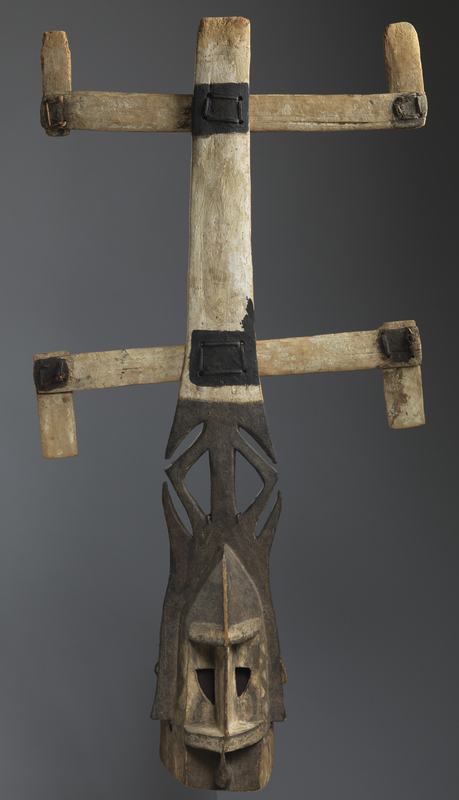 Artifact
Kanaga Mask
White, Bruce M.The Dogon migrated to present-day Mali beginning in the fifteenth century, settling along the Bandiagara escarpment. The harsh, remote terrain of central Mali protected the Dogon and shaped their culture. The Kanaga mask honors the dead and connects them to the living, in much the same way as the long cliff on which they live connects the earth and sky, and the vertical strip of the mask connects the two horizontal bands.The Dogon migrated to present-day Mali beginning in the fifteenth century, settling along the Bandiagara escarpment. The harsh, remote terrain of central Mali protected the Dogon and shaped their culture. The Kanaga mask honors the dead and connects them to the living, in much the same way as the long cliff on which they live connects the earth and sky, and the vertical strip of the mask connects the two horizontal bands. -
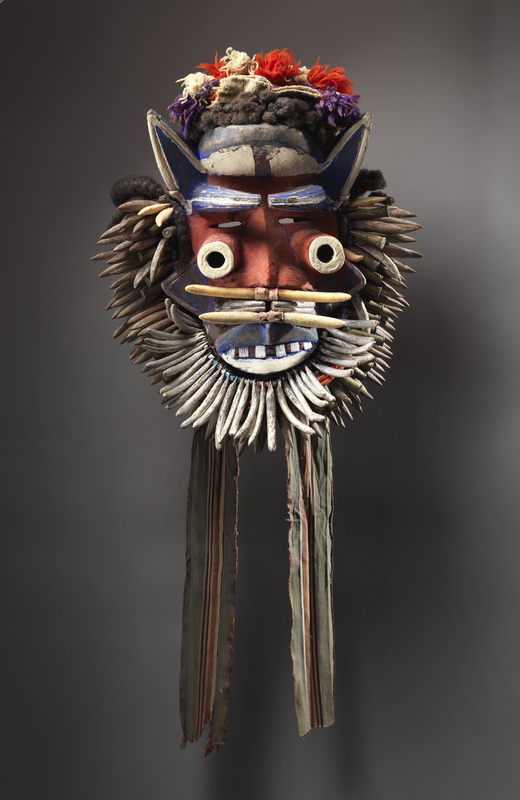 Artifact
Mask
White, Bruce M.Through bold color and aggressive imagery, predatory animal references, horns, and strange tubular eyes this mask is a visually intimidating presence that harnesses the power of spirits from the wilderness as instruments of proprietary control in the realm of the town or village. Their visual affect was only heightened during performance. This Wé mask presents a bewildering accumulation of animal references: a fringe of aluminum-silver pseudo-leopard teeth, wild boar tusks, and pointed ears.Through bold color and aggressive imagery, predatory animal references, horns, and strange tubular eyes this mask is a visually intimidating presence that harnesses the power of spirits from the wilderness as instruments of proprietary control in the realm of the town or village. Their visual affect was only heightened during performance. This Wé mask presents a bewildering accumulation of animal references: a fringe of aluminum-silver pseudo-leopard teeth, wild boar tusks, and pointed ears. -
 Artifact
Mask (Elu)
White, Bruce M.Small delicately carved face masks with pert noses and childlike facial features representing male and female spirits (elu) appear in village masquerades among Ogoni peoples living between the Niger Delta and Cross Rivers of southern Nigeria. Many of these face masks are cut across the mouth allowing the wearer to articulate the jaw as the spirit speaks through him. The open mouth reveals narrow teeth, usually made of cane.Small delicately carved face masks with pert noses and childlike facial features representing male and female spirits (elu) appear in village masquerades among Ogoni peoples living between the Niger Delta and Cross Rivers of southern Nigeria. Many of these face masks are cut across the mouth allowing the wearer to articulate the jaw as the spirit speaks through him. The open mouth reveals narrow teeth, usually made of cane.