Search
57 resources
57 items
Subject
Controversial literature
-
 Text
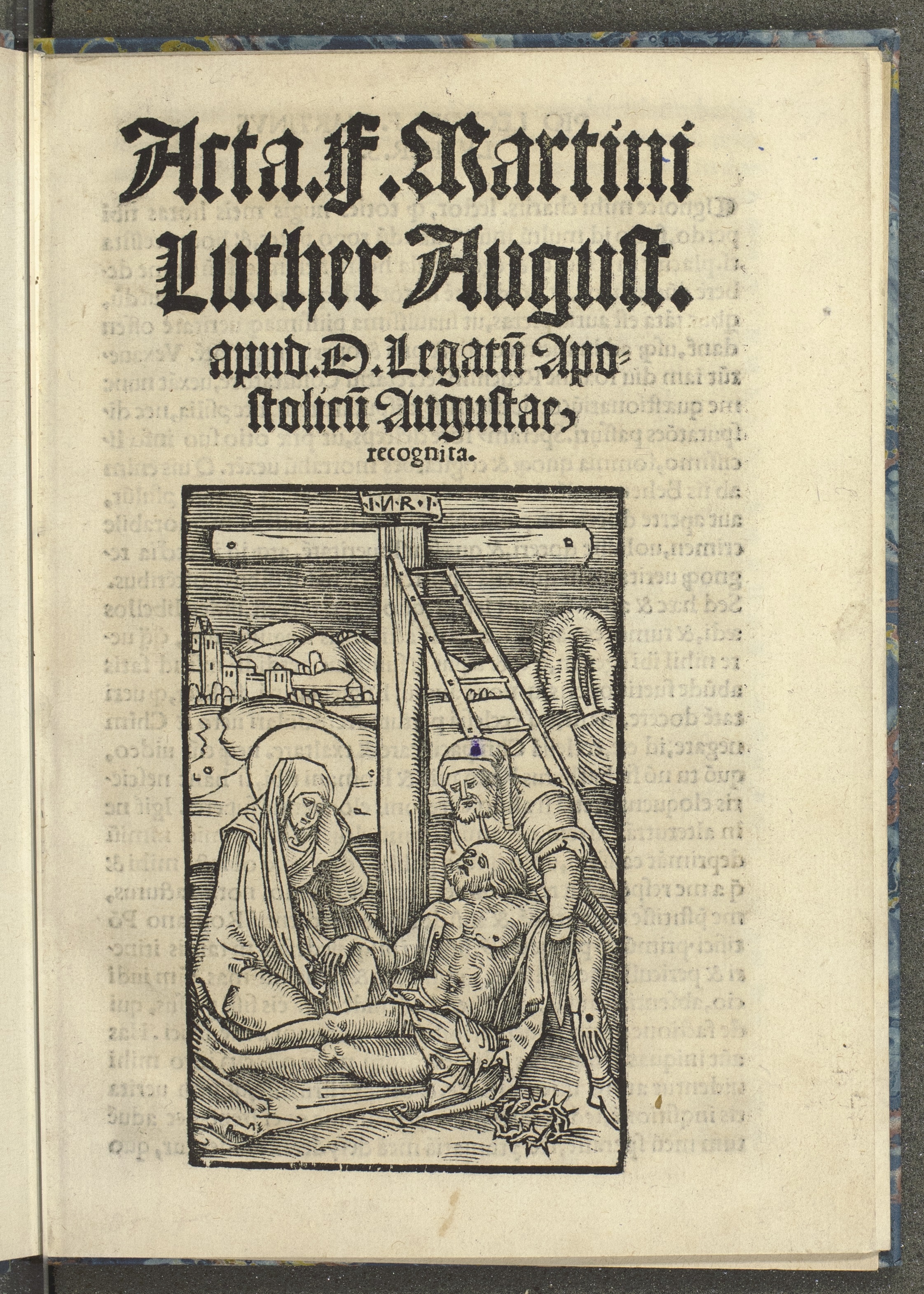
TextActa f. Martini Luther august. apud D. legatu[m] apostolicu[m] Augustae recognitum
Luther, Martin, 1483-1546Summary: In 1518 Luther was summoned to Rome. He appealed to Frederick, Elector of Saxony who was attending the imperial Diet in Augsburg. Frederick negotiated with the Papal Legate Cajetan who finally agreed to a hearing in Augsburg. Luther went there with an imperial escort and then returned safely to Wittenberg. This is Luther's report of what took place in Augsburg. It is the fifth printing of the "Acta Augustana."Summary: In 1518 Luther was summoned to Rome. He appealed to Frederick, Elector of Saxony who was attending the imperial Diet in Augsburg. Frederick negotiated with the Papal Legate Cajetan who finally agreed to a hearing in Augsburg. Luther went there with an imperial escort and then returned safely to Wittenberg. This is Luther's report of what took place in Augsburg. It is the fifth printing of the "Acta Augustana." -
 Text
TextAin Beweysung, das der war Messias kom[m]en sey, des die Juden noch on Vrsach zůkünfftig sein, warte[n]
Samuel, MarochitanusSummary: German translation by Ludwig Hätzer of Epistola contra Judaeorum, thought to be written in Arabic by Samuel of Marocco, an apostate Jew at the beginning of the 11th century and translated into Latin by the Spanish Dominican Alphonsus Bonihominis in the 14th century and widely disseminated. Bonihominis is likely the real author of the work.Summary: German translation by Ludwig Hätzer of Epistola contra Judaeorum, thought to be written in Arabic by Samuel of Marocco, an apostate Jew at the beginning of the 11th century and translated into Latin by the Spanish Dominican Alphonsus Bonihominis in the 14th century and widely disseminated. Bonihominis is likely the real author of the work. -
 Text
TextAin schöner Dialogus wie ain Bawr mit aim Frawe[n] Brůder Münch redt : das er die Kutten von jm würfft, und dem Münch Arbayt zůgeben, lustbarlich und lieblich zů lesen
Summary: Polemical dialogue between a peasant and a monk, who had lost his livelihood after the dissolution of his monastery. The peasant advises the monk to try his hand at "real work".Summary: Polemical dialogue between a peasant and a monk, who had lost his livelihood after the dissolution of his monastery. The peasant advises the monk to try his hand at "real work". -
 Text
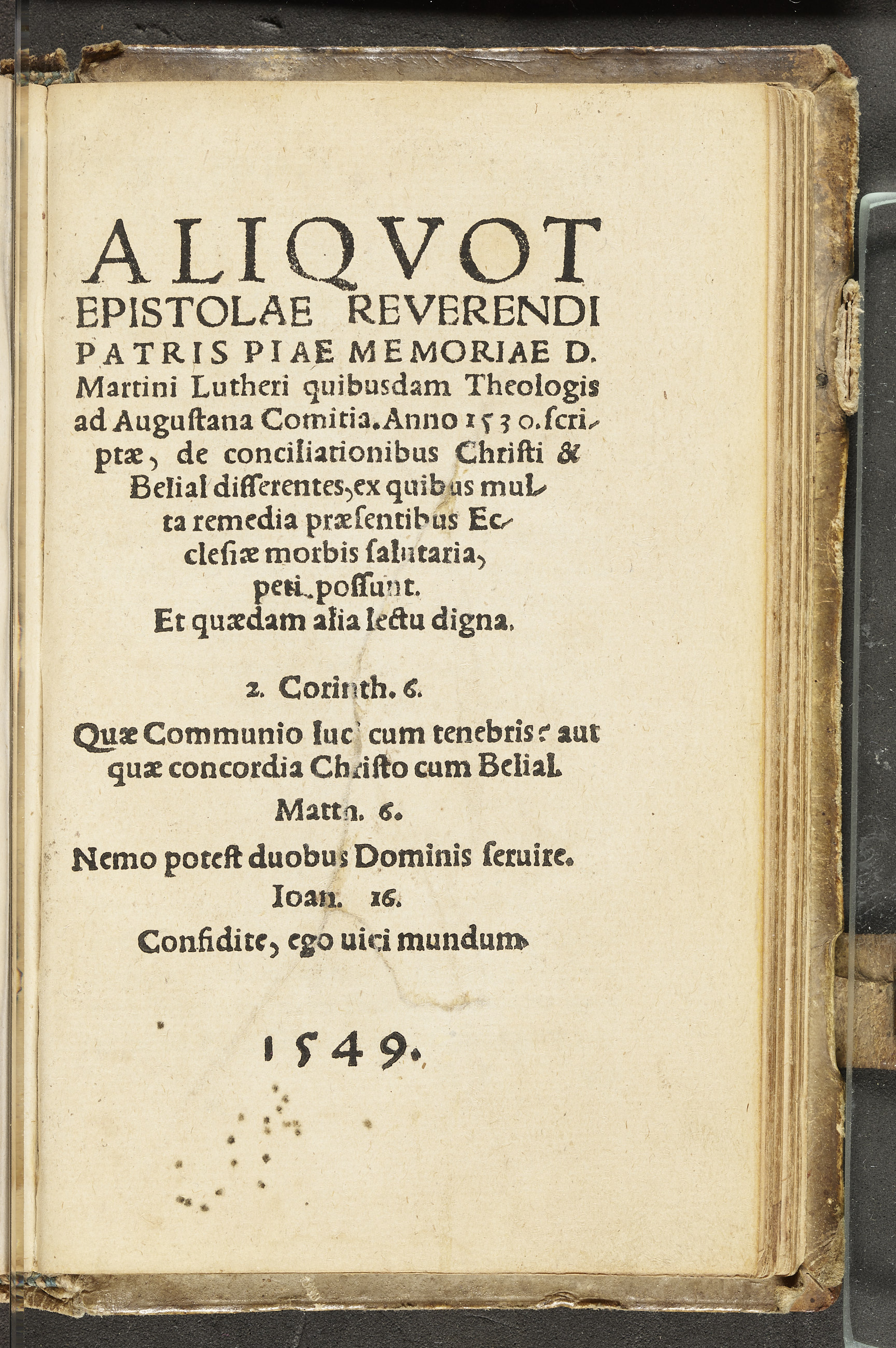
TextAliquot epistolae
Luther, Martin, 1483-1546Summary: M. Flacius Illyricus issued this edition of Luther's letters from Coburg Castle to the theologians at the Diet of Augsburg in an attempt to strengthen the Protestant resolve during the Interim. Intended for the widest possible distribution, both German and Latin versions were provided.Summary: M. Flacius Illyricus issued this edition of Luther's letters from Coburg Castle to the theologians at the Diet of Augsburg in an attempt to strengthen the Protestant resolve during the Interim. Intended for the widest possible distribution, both German and Latin versions were provided. -
 Text
TextAn answer in defense of the truth against the Apology of private mass
Cooper, Thomas, 1517?-1594Summary:Summary: -
Text
An appeal to the records : a vindication of the Methodist Episcopal Church, in its policy and proceedings toward the South
Fuller, Erasmus Q. (Erasmus Quincy), 1828-1883Summary:Summary: -
 Text
TextAn den Christlichen Adel deutscher Nation : von des Christlichen Standes Besserung
Luther, Martin, 1483-1546Summary: Fourth edition of the "Address to the Christian Nobility of the German Nation," one of Luther's most important pamphlets, in which he develops some of the central ideas of his theology, including the principle of universal priesthood. He also discusses the possibility of a German national church.Summary: Fourth edition of the "Address to the Christian Nobility of the German Nation," one of Luther's most important pamphlets, in which he develops some of the central ideas of his theology, including the principle of universal priesthood. He also discusses the possibility of a German national church. -
 Text
TextAnalectus siue libellus collectaneorum, continens tres tractatus de praecipuis capitibus doctrinae Christianae, quae à Papistis corrumpuntur, & oppugnantur
Selneccer, Nicolaus, 1530-1592Summary: Compilation of three anti-Catholic tracts by the Lutheran theologians and composer of hymns Nicolaus Selneccer.Summary: Compilation of three anti-Catholic tracts by the Lutheran theologians and composer of hymns Nicolaus Selneccer. -
 Text
TextAuff das Vermeint Keiserlich Edict : Ausgangen jm 1531 jare nach dem Reichs tage des 1530 Jars. Glosa
Luther, Martin, 1483-1546Summary: In response to an ultimatum to the Lutheran princes and cities from Emperor Charles V to return to the pre-Reformation status quo within six months, Luther here issues some of his strongest polemic.Summary: In response to an ultimatum to the Lutheran princes and cities from Emperor Charles V to return to the pre-Reformation status quo within six months, Luther here issues some of his strongest polemic. -
 Text
TextCantio de papa romanaque ecclesia, per Boemum quendam ante annos circiter 100 composita, secundum ordinem alphabeti
Summary: Satirical song about the office of the Pope, composed anonymously in response to the execution of Jan Hus in 1415 and published by Matthias Flacius to underscore his opposition to the Catholic Church in all matters following the Interim of Augsburg in 1548.Summary: Satirical song about the office of the Pope, composed anonymously in response to the execution of Jan Hus in 1415 and published by Matthias Flacius to underscore his opposition to the Catholic Church in all matters following the Interim of Augsburg in 1548. -
 Text
TextConfutatio XCI. articulorum e tribus Martini Lutheri Teuthonicis sermonibus excerptorum
Cochlaeus, Johannes, 1479-1552Summary: Second printing of the first edition of a tract listing 91 errors in three sermons by Martin Luther.Summary: Second printing of the first edition of a tract listing 91 errors in three sermons by Martin Luther. -
 Text
TextContra Henricum regem Angliae
Luther, Martin, 1483-1546Summary: This is the second and much expanded edition of Luther's reply to Henry VIII's Assertion of the Seven Sacraments. Luther replies quite moderately (for him) to what he feels to be the King's unwarranted assertions on the Catholic Sacraments. This is the second printing of this edition.Summary: This is the second and much expanded edition of Luther's reply to Henry VIII's Assertion of the Seven Sacraments. Luther replies quite moderately (for him) to what he feels to be the King's unwarranted assertions on the Catholic Sacraments. This is the second printing of this edition. -
 Text
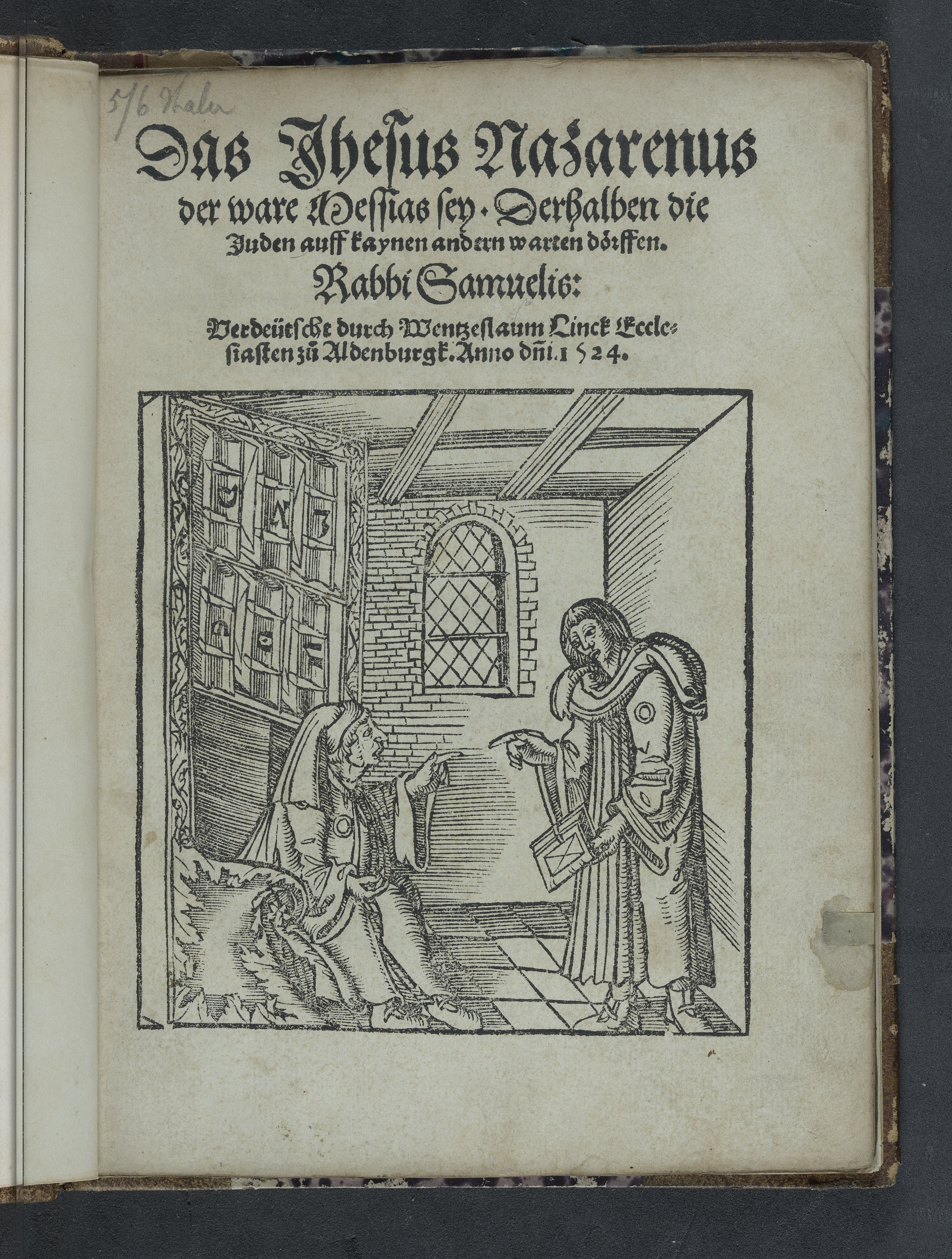
TextDas Jhesus Nazarenus der ware Messias sey : Derhalben die Juden auff kaynen andern warten dörffen
Samuel, MarochitanusSummary: German translation by Wenzeslaus Linck of Epistola contra Judaeorum, thought to be written in Arabic by Samuel of Marocco, an apostate Jew at the beginning of the 11th century and translated into Latin by the Spanish Dominican Alphonsus Bonihominis in the 14th century and widely disseminated. Bonihominis is likely the real author of the work.Summary: German translation by Wenzeslaus Linck of Epistola contra Judaeorum, thought to be written in Arabic by Samuel of Marocco, an apostate Jew at the beginning of the 11th century and translated into Latin by the Spanish Dominican Alphonsus Bonihominis in the 14th century and widely disseminated. Bonihominis is likely the real author of the work. -
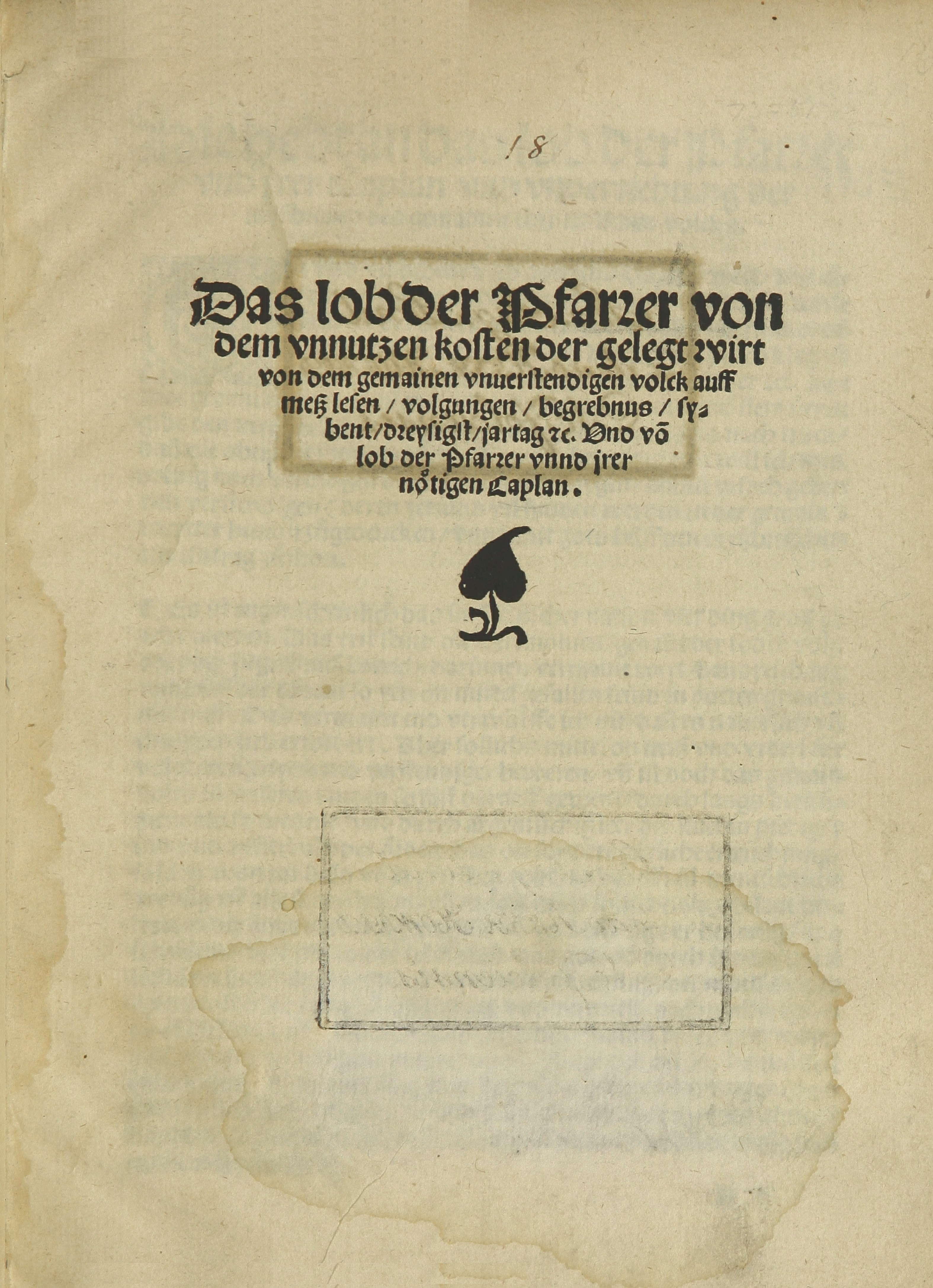 Text
TextDas lob der Pfarrer von dem vnnutzen kosten der gelegt wirt von dem gemainen vnuerstendigen volck auff mess lesen, volgungen, begrebnus, sybent, dreysigst, jartag, rc. : Vnd vo[m] lob der Pfarrer vnnd irer nötigen Caplan.
Eberlin von Günzburg, Johann, approximately 1470-1533Summary: One of the problems that led to the Reformation was the sad state of ecclesiastical finance that forced many priests to change fees for the sacraments and other services. Von Gunzburg subjects such practices to sharp sanitization in the form of "praise of priests."Summary: One of the problems that led to the Reformation was the sad state of ecclesiastical finance that forced many priests to change fees for the sacraments and other services. Von Gunzburg subjects such practices to sharp sanitization in the form of "praise of priests." -
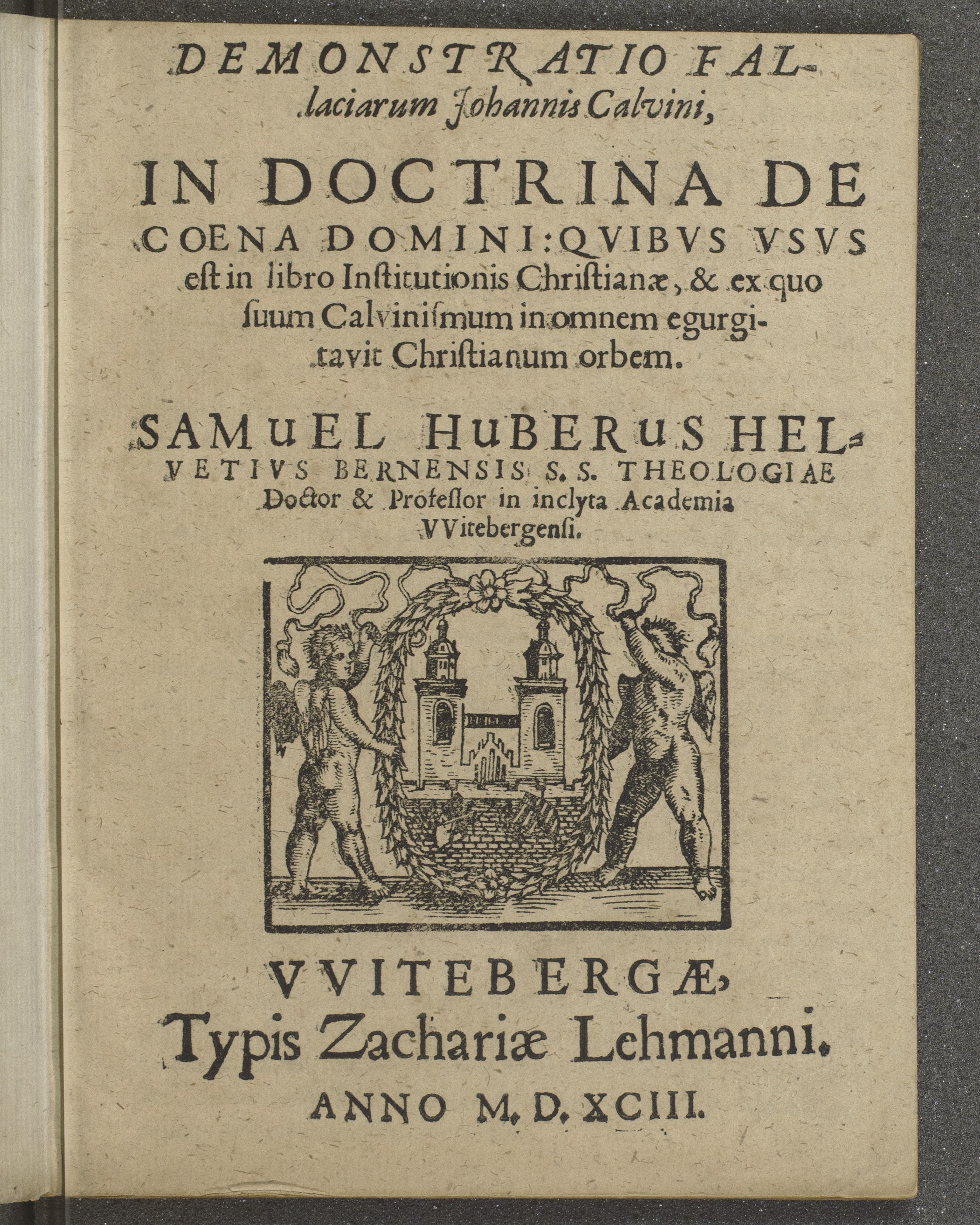 Text
TextDemonstratio fallaciarum Johannis Calvini :in doctrina de Coena Domini : quibus usus est in libro Institutionis Christianae, & ex quo suum Calvinismum in omnem egurgitavit Christanum orbem
Huber, Samuel, 1547?-1624Summary: A text written against the teachings of Jean Calvin and the Calvinist approach to the Lord's Supper.Summary: A text written against the teachings of Jean Calvin and the Calvinist approach to the Lord's Supper. -
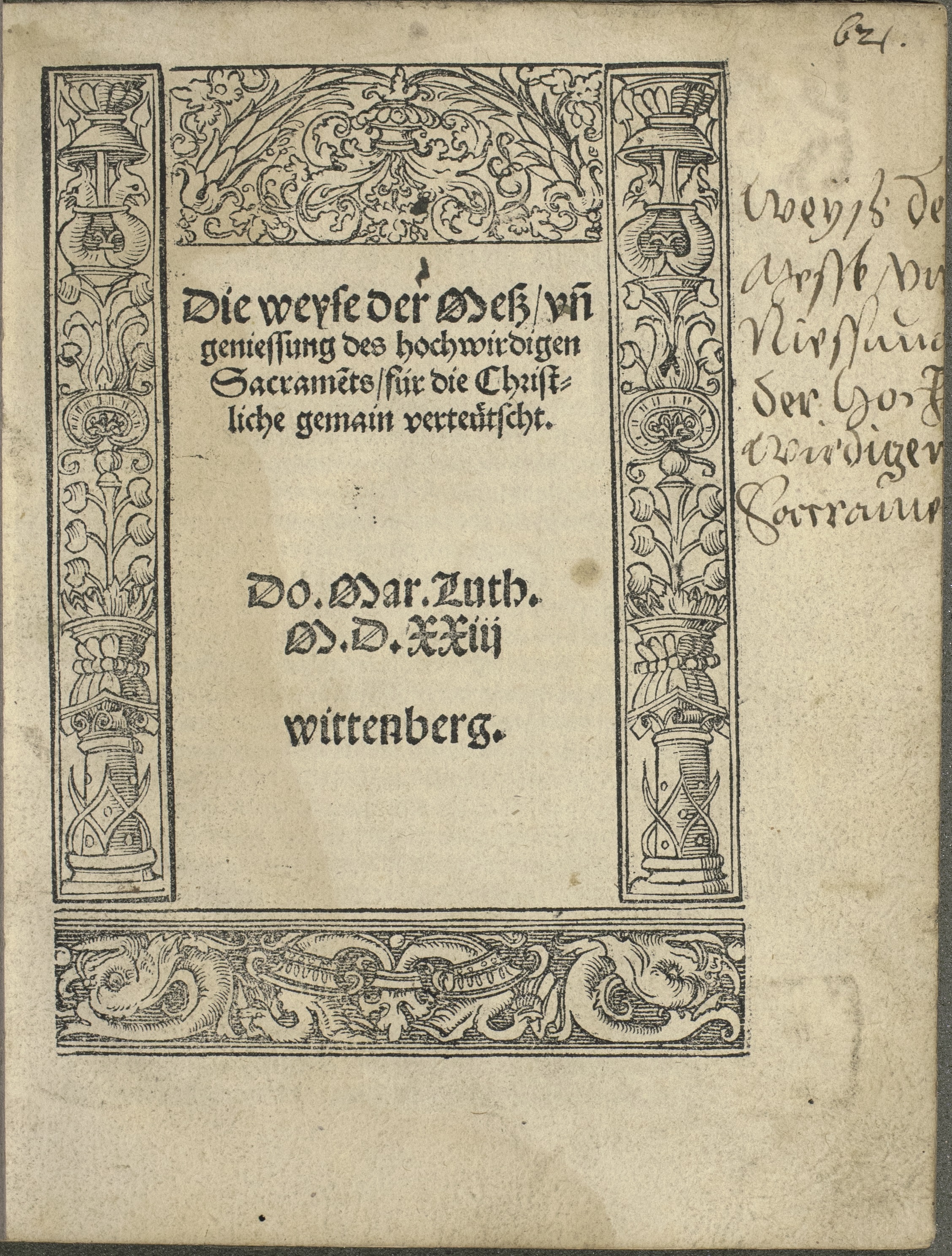 Text
TextDie weyse der Mess, vn[d] geniessung des hochwirdigen Sacrame[n]ts, für die Christliche gemain verteütscht
Luther, Martin, 1483-1546Summary: First published in Latin in 1523, Luther defines in this tract the order of the Sunday worship service and the distribution of communion. This pamphlet is an important forerunner of Luther's "Deutsche Messe" (German Mass) published in 1526.Summary: First published in Latin in 1523, Luther defines in this tract the order of the Sunday worship service and the distribution of communion. This pamphlet is an important forerunner of Luther's "Deutsche Messe" (German Mass) published in 1526. -
 Text
TextDoctoris Martini Luthers kurtz schlussrede von den gelöbten vnd geistlichen leben der klöster
Luther, Martin, 1483-1546Summary: Luther's "Theses on Monasticisms" came about as a partial response to Melanchthon's essay in Loci Communes. Melanchthon revised this section of the Loci to take Luther's criticism into account. Luther's work was translated into German by at least three translators none of whom can be named with certainty.Summary: Luther's "Theses on Monasticisms" came about as a partial response to Melanchthon's essay in Loci Communes. Melanchthon revised this section of the Loci to take Luther's criticism into account. Luther's work was translated into German by at least three translators none of whom can be named with certainty. -
Text
Doctrinal treatises and introductions to different portions of the Holy Scriptures
Tyndale, William, -1536Summary:Summary: -
 Text
TextEin Sermon oder Predig von dem ablasz vnd gnade
Luther, Martin, 1483-1546Summary: An early sermon by Luther on Indulgences and Grace. First appearing in 1518, this work went through fully fourteen printings in that year alone.Summary: An early sermon by Luther on Indulgences and Grace. First appearing in 1518, this work went through fully fourteen printings in that year alone. -
 Text
TextEin kurtze vnterricht, den Pfarherrn vnd Predigern Inn meiner gnedigen Herrn der Marggraffen zu Branndenburg. [et]c. Fürstenthumen vn[d] Landen, hieniden in Francken vnd auff dem Gebirg verordent : wes sie das volck wider etliche verfürische lere, der widertauffer, an den Feyertägen auff der Canntzel zum getreulichsten vnd besten auss Götlicher schrifft vermanen, vnd vnterrichten sollen
Georg, Margrave of Brandenburg-Ansbach, 1484-1543Summary: A decree against the Anabaptists by the Lutheran prince, Georg, Margrave of Brandenburg-Ansbach, to be read from the pulpits of his territory.Summary: A decree against the Anabaptists by the Lutheran prince, Georg, Margrave of Brandenburg-Ansbach, to be read from the pulpits of his territory. -
 Text
TextEin schöner spruch darinn deren von Costantz seltzame Renckh und Abentheür, damit Sy vmbgon begriffen syen.
Treger, Konrad, approximately 1480-1542Summary: Anti-Reformation poem directed at the city of Konstanz. Tregor, an Augustinian Prior, was a leading defender of Catholicism in Switzerland.Summary: Anti-Reformation poem directed at the city of Konstanz. Tregor, an Augustinian Prior, was a leading defender of Catholicism in Switzerland. -
 Text
TextEine Schrifft, wie die Pfarherrn an den Örtern, da man die Papisterey widerumb auffricht, die Euangelisch Lehr, welche sie Lutherisch nennen, verloben vnd verschweren müssen
Summary: An anonymous pamphlet, containing an oath German pastors had to swear to renounce the "Evangelical doctrine, which is called Lutheran" in order to be readmitted to the Roman Catholic Church. The copy of the oath is preceded by two satirical poems regarding the oath, the first one representing the opinion of a wise man, the second one the answer of an unwise man. On the titlepage are two verses from Matthew 10 against the taking of oaths. The work is published by Christian Rödinger, a printer who put his press in service of the Reformation.Summary: An anonymous pamphlet, containing an oath German pastors had to swear to renounce the "Evangelical doctrine, which is called Lutheran" in order to be readmitted to the Roman Catholic Church. The copy of the oath is preceded by two satirical poems regarding the oath, the first one representing the opinion of a wise man, the second one the answer of an unwise man. On the titlepage are two verses from Matthew 10 against the taking of oaths. The work is published by Christian Rödinger, a printer who put his press in service of the Reformation. -
 Text
TextEnchiridion locorum communium aduersus Lutheranos
Eck, Johann, 1486-1543Summary: In 1521, Melanchthon wrote the first Protestant dogmatics, the "Loci Communes." Eck countered in 1525 with his "handbook on Theological Topics". Possibly the most widely reprinted Catholic critique of Lutheran doctrine (Metzler lists 91 contemporary editions). Eck uses the same topical procedure and cites the Bible, Church Fathers, Councils, and Popes heavily in the presentation of his arguments.Summary: In 1521, Melanchthon wrote the first Protestant dogmatics, the "Loci Communes." Eck countered in 1525 with his "handbook on Theological Topics". Possibly the most widely reprinted Catholic critique of Lutheran doctrine (Metzler lists 91 contemporary editions). Eck uses the same topical procedure and cites the Bible, Church Fathers, Councils, and Popes heavily in the presentation of his arguments. -
 Text
TextEpistolae duae
Haner, Johannes, active 1524-1544Summary: This pamphlet contains two letters on Lutheranism by converts to Catholicism. Witzel's publication of Haner's letter led to the latter's expulsion from the city of Nuremberg.Summary: This pamphlet contains two letters on Lutheranism by converts to Catholicism. Witzel's publication of Haner's letter led to the latter's expulsion from the city of Nuremberg. -
 Text
TextEthnica Iesvitarum doctrina de duobus praecipuis Christianae fidei articulis, : nempe de expiatione remissioneq[ue] peccatorum: ac de iustificatione aut iustitia Christi, qua Christiani iustificantur: ex eorum autentico, magnisq[ue] bullis confirmato Catechismo, ad verbum descripta ...
Flacius Illyricus, Matthias, 1520-1575Summary: Peter Canisius was a Dutch Jesuit working to restore the Catholic church in Germany during the Reformation. Matthias Flacius criticized Canisius's catechism, first published in 1555. In this tract, he specifically attacks the Jesuit's views on the expiation of sin and the justification in Christ.Summary: Peter Canisius was a Dutch Jesuit working to restore the Catholic church in Germany during the Reformation. Matthias Flacius criticized Canisius's catechism, first published in 1555. In this tract, he specifically attacks the Jesuit's views on the expiation of sin and the justification in Christ. -
 Text
TextEyn Gesprech vo[n] de[n] Scheinwercke[n] der Gaistlichen, und yhren gelubde[n] : damit sie zuverlesterung des bluts Christi vermaynen selig zu werden
Sachs, Hans, 1494-1576Summary: One of nine 1524 printings of this short anti-monastic tract by the Nuremberg cobbler and playright Hans Sachs.Summary: One of nine 1524 printings of this short anti-monastic tract by the Nuremberg cobbler and playright Hans Sachs. -
 Text
TextEyn Gesprech vo[n] den Scheinwercke[n] der Gaystlichen, vnd jren gelübdten : damit sy zuouerlesterung des bluots Christi vermaynen selig zuowerden
Sachs, Hans, 1494-1576Summary: One of nine 1524 printings of this short anti-monastic tract by the Nuremberg cobbler and playright Hans Sachs.Summary: One of nine 1524 printings of this short anti-monastic tract by the Nuremberg cobbler and playright Hans Sachs. -
 Text
TextEyn Widerruff vom Fegefeur
Luther, Martin, 1483-1546Summary: Refutation, by Luther, of the teaching of Purgatory.Summary: Refutation, by Luther, of the teaching of Purgatory. -
 Text
TextEyn Wyderrueff vom Fegfewr
Luther, Martin, 1483-1546Summary: One of several 1530 editions of a tract in which Luther rejects the Catholic doctrine of purgatory, a topic not addressed in the Augsburg Confessions.Summary: One of several 1530 editions of a tract in which Luther rejects the Catholic doctrine of purgatory, a topic not addressed in the Augsburg Confessions. -
 Text
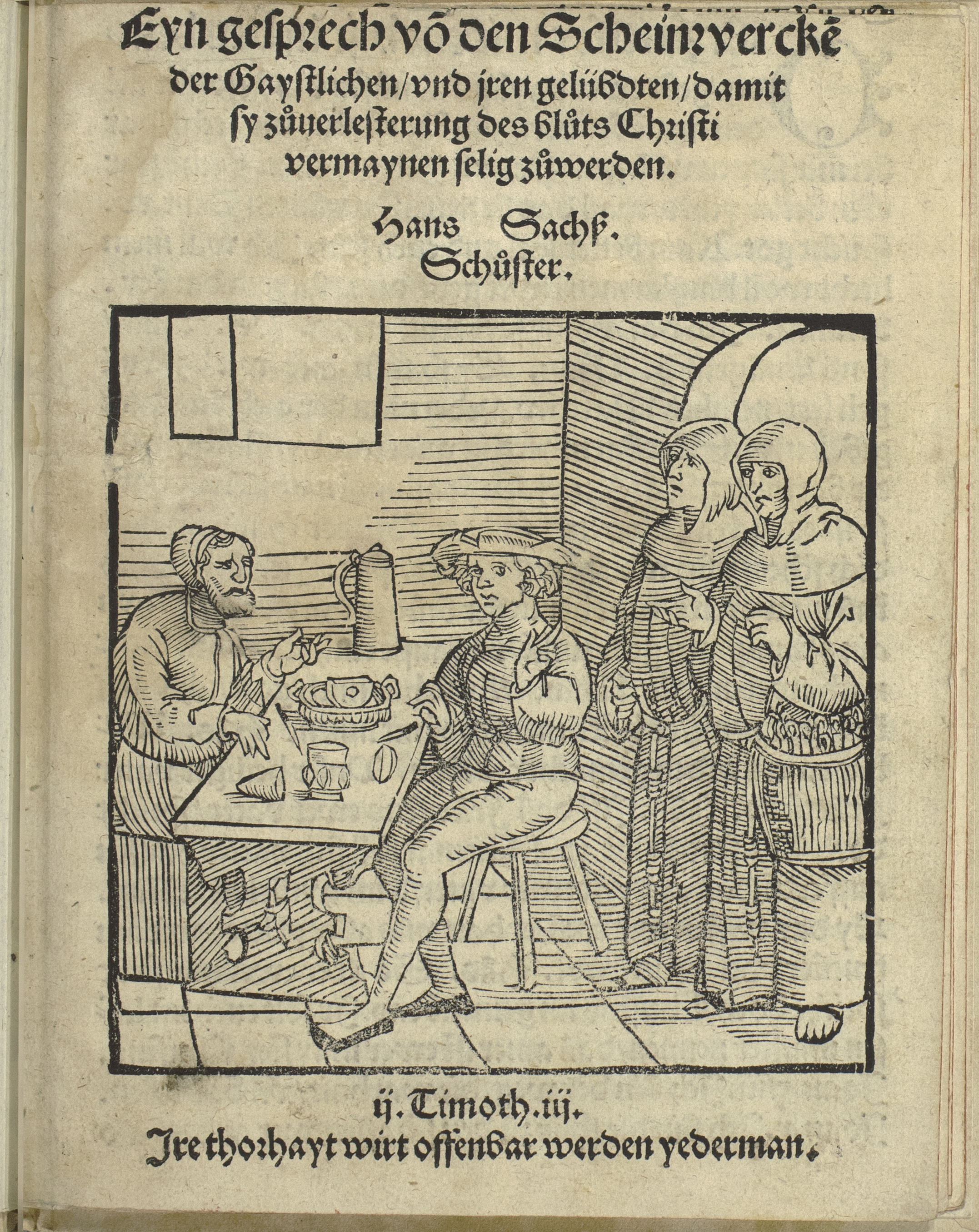
TextEyn gesprech vo[n] den Scheinwercke[n] der Gaystlichen, vnd jren gelübdten : damit sy zuouerlesterung des bluots Christi vermaynen selig zuowerden
Sachs, Hans, 1494-1576Summary: Anti-monastic tract by Hans Sachs, shoemaker, poet, and dramatist of Nürnberg, and strong supporter of Luther.Summary: Anti-monastic tract by Hans Sachs, shoemaker, poet, and dramatist of Nürnberg, and strong supporter of Luther. -
 Text
TextFrüntlich verglimpfung vnd ableynung über die predig des treffenliche[n] Martini Luthers wider die Schwermer : zuo Wittemberg gethon vnnd beschriben zuo schirm des wäsenlichen lychnams vn[d] bluts Christi im Sacrame[n]t
Zwingli, Ulrich, 1484-1531Summary: In a sermon against religious fanatics (Wider die Schwärmer), Luther had asserted the real presence of Christ in the eucharist. Zwingli responds by affirming the Reformed position that the practice of communion is to be seen as a symbolic act.Summary: In a sermon against religious fanatics (Wider die Schwärmer), Luther had asserted the real presence of Christ in the eucharist. Zwingli responds by affirming the Reformed position that the practice of communion is to be seen as a symbolic act. -
 Text
TextGründtliche anzaygung vnd bericht, ausz was vrsachen (deren fürnemlich siben seind) so mancherley, vnnd vilfaltige Ketzereyen, zwispaltung vnnd jtzthumb in Christlicher Religion, vnd der hailigen Catholischen Kirchen, von anfang biss auff dise zeit erwachsen seind, vnd jren grund genommen haben
Leib, Kilian, 1471-1553Summary: Second printing of a an anti-Protestant tract by Kilian Leib, prior of the Augustinian monastery at Rebdorf. Leib was a Catholic theologian in the humanist tradition who was a firm opponent of Martin Luther's reforms. In 1530 he had participated in drafting the Catholic response to the Augsburg Confession. In this work, Leib outlines 7 causes for the Lutheran heresy, which include among others an unfavorable constellation of the stars, ordained by God to punish humanity.Summary: Second printing of a an anti-Protestant tract by Kilian Leib, prior of the Augustinian monastery at Rebdorf. Leib was a Catholic theologian in the humanist tradition who was a firm opponent of Martin Luther's reforms. In 1530 he had participated in drafting the Catholic response to the Augsburg Confession. In this work, Leib outlines 7 causes for the Lutheran heresy, which include among others an unfavorable constellation of the stars, ordained by God to punish humanity. -
![Summary: This is an early Italian response to Martin Luther, attacking the schismatic monk on his own terms, in the vernacular for the benefit of laymen or simplici, as advertised on the title-page. The work is quite broad in its criticism and aims to refute not only Luther and his followers, but all heretics and even Jews. On the final leaf of text, following the colophon the list of errata, we find a curious addition perhaps intended to be removed from the book and used separately: a "song" satirically composed by "several of Luther's friends in praise of him" [Alcuni amici de Martin Luthero in laude sua cantano], beginning "Te Lutherum damnamus". Evidently a parody of the Te Deum, Fano's hymn condemning Luther to Hell was in fact subsequently set to music by a certain Maistre Jhan (ca. 1485-1538).](https://digital.pitts.emory.edu/files/large/P_300000491804/P_300000491804_P001.jpg) Text
TextIesus Maria Opera vtilissima uulgare co[n]tra le pernitiosissime heresie Lutherane p[er] li simplici
Giovanni, fra., active approximately 1513-1523Summary: This is an early Italian response to Martin Luther, attacking the schismatic monk on his own terms, in the vernacular for the benefit of laymen or simplici, as advertised on the title-page. The work is quite broad in its criticism and aims to refute not only Luther and his followers, but all heretics and even Jews.Summary: This is an early Italian response to Martin Luther, attacking the schismatic monk on his own terms, in the vernacular for the benefit of laymen or simplici, as advertised on the title-page. The work is quite broad in its criticism and aims to refute not only Luther and his followers, but all heretics and even Jews. -
 Text
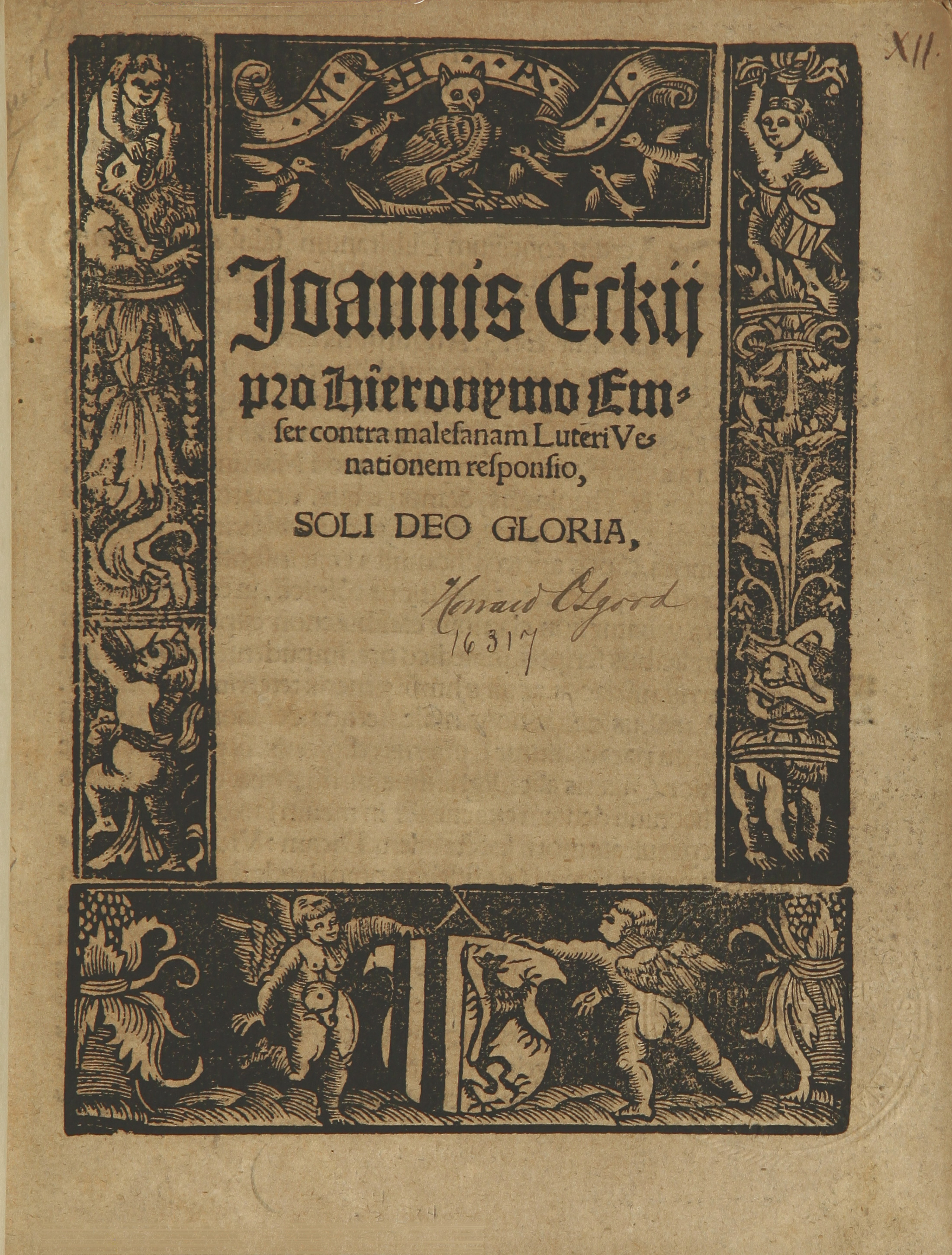
TextJoannis Eckij pro Hieronymo Emser : contra malesanam Luteri venationem responsio, Soli Deo gloria.
Eck, Johann, 1486-1543Summary: First printing of the first edition of a pamphlet by Johann Eck in support of Hieronymus Emser, a theologian in Leipzig and one of Luther's most vehement early opponents.Summary: First printing of the first edition of a pamphlet by Johann Eck in support of Hieronymus Emser, a theologian in Leipzig and one of Luther's most vehement early opponents. -
 Text
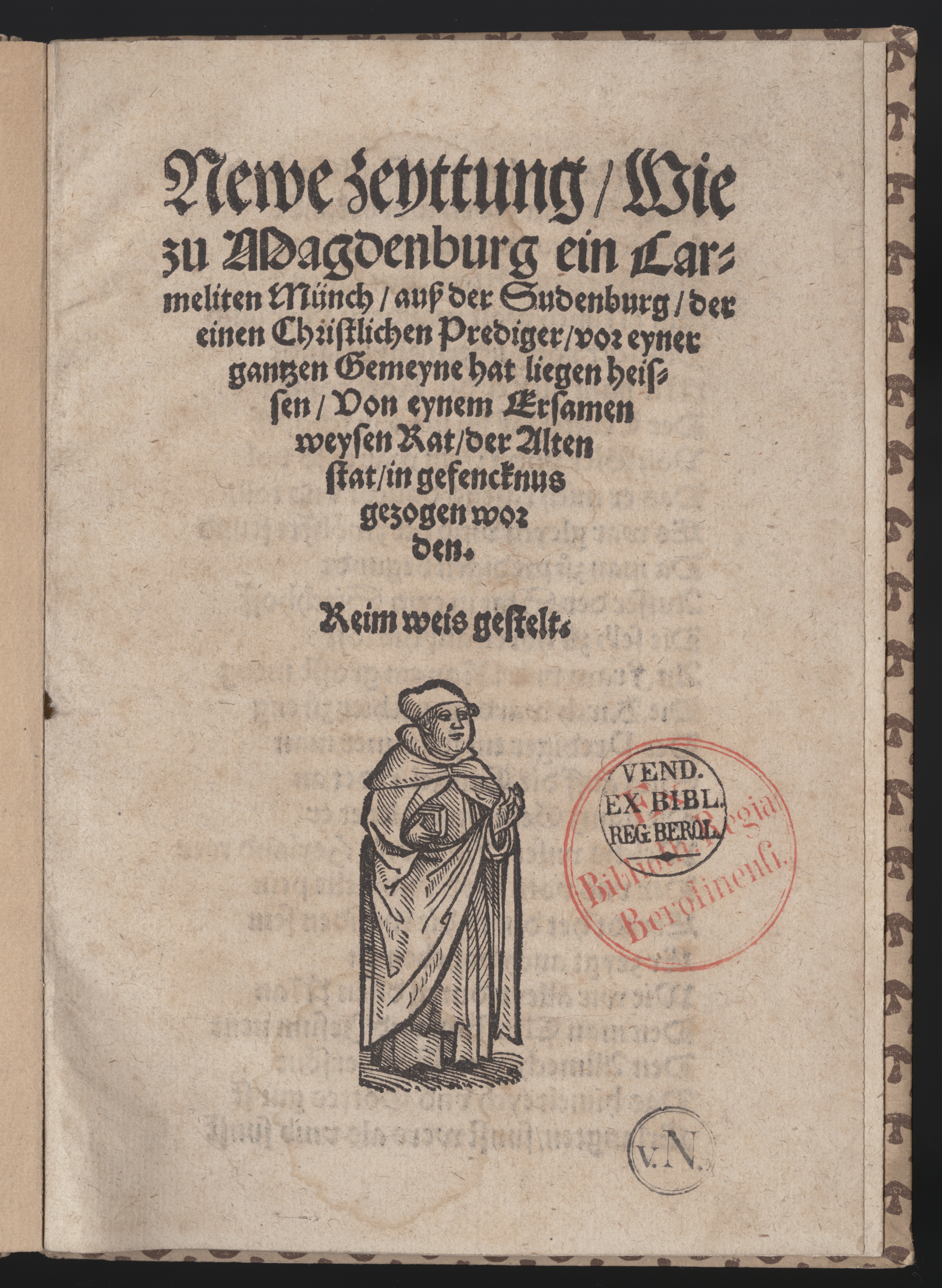
TextNewe zeyttung, Wie zu Magdenburg ein Carmeliten Münch, auss der Sudenburg, der einen Christlichen Prediger, vor eyner gantzen Gemeyne hat liegen heissen, Von eynem Ersamen weysen Rat, der Alten stat, in gefencknus gezogen worden. : Reim weis gestelt.
Summary: Polemic ballad with a total of 142 rhymed lines, relating the story of a drunk Carmelite monk who attends a sermon preached outside the city by a righteous (Lutheran) pastor and who interrupts the preacher, accusing him of lying and misrepresenting Scripture. The people in response rise up and begin to beat him, almost killing him, but the monk is taken away and brought before the city council and the mayor who calls for calm and instructs that the monk should be locked up to await the executioner and thus be placed under God's justice rather than the mob's anger.Summary: Polemic ballad with a total of 142 rhymed lines, relating the story of a drunk Carmelite monk who attends a sermon preached outside the city by a righteous (Lutheran) pastor and who interrupts the preacher, accusing him of lying and misrepresenting Scripture. The people in response rise up and begin to beat him, almost killing him, but the monk is taken away and brought before the city council and the mayor who calls for calm and instructs that the monk should be locked up to await the executioner and thus be placed under God's justice rather than the mob's anger. -
-
 Text
TextPopery calmly considered
Wesley, John, 1703-1791Summary: A tract in which Wesley reflects on a number of doctrines of the Catholic Church.Summary: A tract in which Wesley reflects on a number of doctrines of the Catholic Church. -
 Text
TextResolutio Lutheriana super propositione sua tercia decima de potestate papae
Luther, Martin, 1483-1546Summary: This is the fifth printing of Luther's defense of his thirteenth proposition, on the power of the Pope, prepared for the Leipzig Disputation.Summary: This is the fifth printing of Luther's defense of his thirteenth proposition, on the power of the Pope, prepared for the Leipzig Disputation. -
 Text
TextResolutio lutheriana [sic] super propositione deci[m]a tertia: de potestate pape
Luther, Martin, 1483-1546Summary: One of the thorniest issues raised in the Leipzig Disputation was the historical precedence of papal authority. Eck argued that from earliest times, the authority of the bishop of Rome was accepted by the other bishops. Luther's thirteenth proposition argued that only much later did the church in Rome claim precedence over the other churches.Summary: One of the thorniest issues raised in the Leipzig Disputation was the historical precedence of papal authority. Eck argued that from earliest times, the authority of the bishop of Rome was accepted by the other bishops. Luther's thirteenth proposition argued that only much later did the church in Rome claim precedence over the other churches. -
 Text
TextResolutio[n]es disputationum
Luther, Martin, 1483-1546Summary: This is Luther's final authorized edition of his Ninety-five Theses in book form with his own commentaries. The edition published by Rhau-Grunemberg had been so full of errors, that Luther gave the printing of this edition to Melchior Lotter in Leipzig.Summary: This is Luther's final authorized edition of his Ninety-five Theses in book form with his own commentaries. The edition published by Rhau-Grunemberg had been so full of errors, that Luther gave the printing of this edition to Melchior Lotter in Leipzig. -
Text
The high-churchman disarmed : a defense of our Methodist fathers
Harrison, W. P. (William Pope), 1830-1895Summary:Summary: -
Text
The life and labors of Rev. E. M. Marvin, one of the bishops of the M. E. church, South : together with a discussion of some of the more important points of doctrine and principles of church polity taught by the Methodist Episcopal churches
McAnally, D. R. (David Rice), 1810-1895Summary:Summary: -
Text
The works of John Jewel
Jewel, John, 1522-1571Summary: A sermon preached at Paul's cross. Correspondence with Dr. Cole. The reply to Harding's Answer...Summary: A sermon preached at Paul's cross. Correspondence with Dr. Cole. The reply to Harding's Answer... -
Text
The works of John Jewel
Jewel, John, 1522-1571Summary: The reply to Harding's Answer...[cont.] An exposition upon the two Epistles to the Thessalonians. Sermons. A treatise of the sacraments.Summary: The reply to Harding's Answer...[cont.] An exposition upon the two Epistles to the Thessalonians. Sermons. A treatise of the sacraments. -
 Text
TextUom Missbrauch der Messen
Luther, Martin, 1483-1546Summary: Written in Latin in the fall of 1521 under the title De abroganda missa privata, this is the third printing of the first German edition of Martin Luther's important tract on the celebration of private masses. Luther opposed any celebration of the Eucharist that was not accessible to or provided for the congregation at large and felt so strongly about this material that he translated it into German himself.Summary: Written in Latin in the fall of 1521 under the title De abroganda missa privata, this is the third printing of the first German edition of Martin Luther's important tract on the celebration of private masses. Luther opposed any celebration of the Eucharist that was not accessible to or provided for the congregation at large and felt so strongly about this material that he translated it into German himself. -
 Text
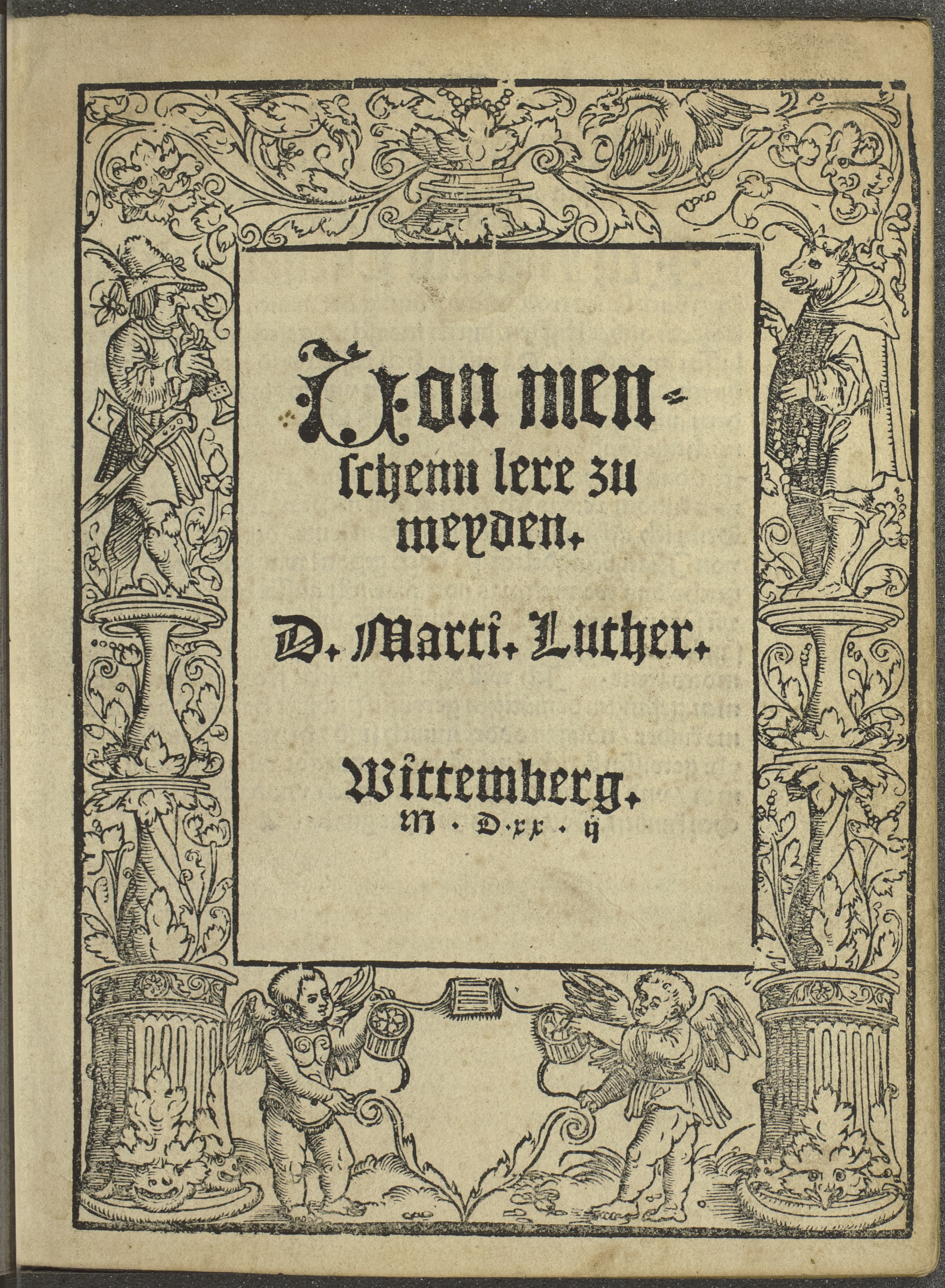
TextUon Menschenn Lere zu meyden
Luther, Martin, 1483-1546Summary: A treatise by Luther on the relationship of belief and practice, intended for those "poor consciences, that lie captive to human laws in cloisters and monastic foundations", as he puts it in his preface. It is also noteworthy that Luther assumes his audience includes both those who could read his writings directly, and those who heard them read by others, when he dedicates his pamphlet "to all who read or hear this little book".Summary: A treatise by Luther on the relationship of belief and practice, intended for those "poor consciences, that lie captive to human laws in cloisters and monastic foundations", as he puts it in his preface. It is also noteworthy that Luther assumes his audience includes both those who could read his writings directly, and those who heard them read by others, when he dedicates his pamphlet "to all who read or hear this little book". -
 Text
TextUon denn geystlichen vnd kloster gelubden
Luther, Martin, 1483-1546Summary: One of three 1522 printings of an essay on monastic vows written by Luther during his stay at the Wartburg Castle after the Diet of Worms. It is addressed to monks, whose conscience is troubled by the conflict between their vows and their desire to leave the monastic life. Luther frequently referred to this piece throughout his career, and it became one of his most influential works.Summary: One of three 1522 printings of an essay on monastic vows written by Luther during his stay at the Wartburg Castle after the Diet of Worms. It is addressed to monks, whose conscience is troubled by the conflict between their vows and their desire to leave the monastic life. Luther frequently referred to this piece throughout his career, and it became one of his most influential works. -
 Text
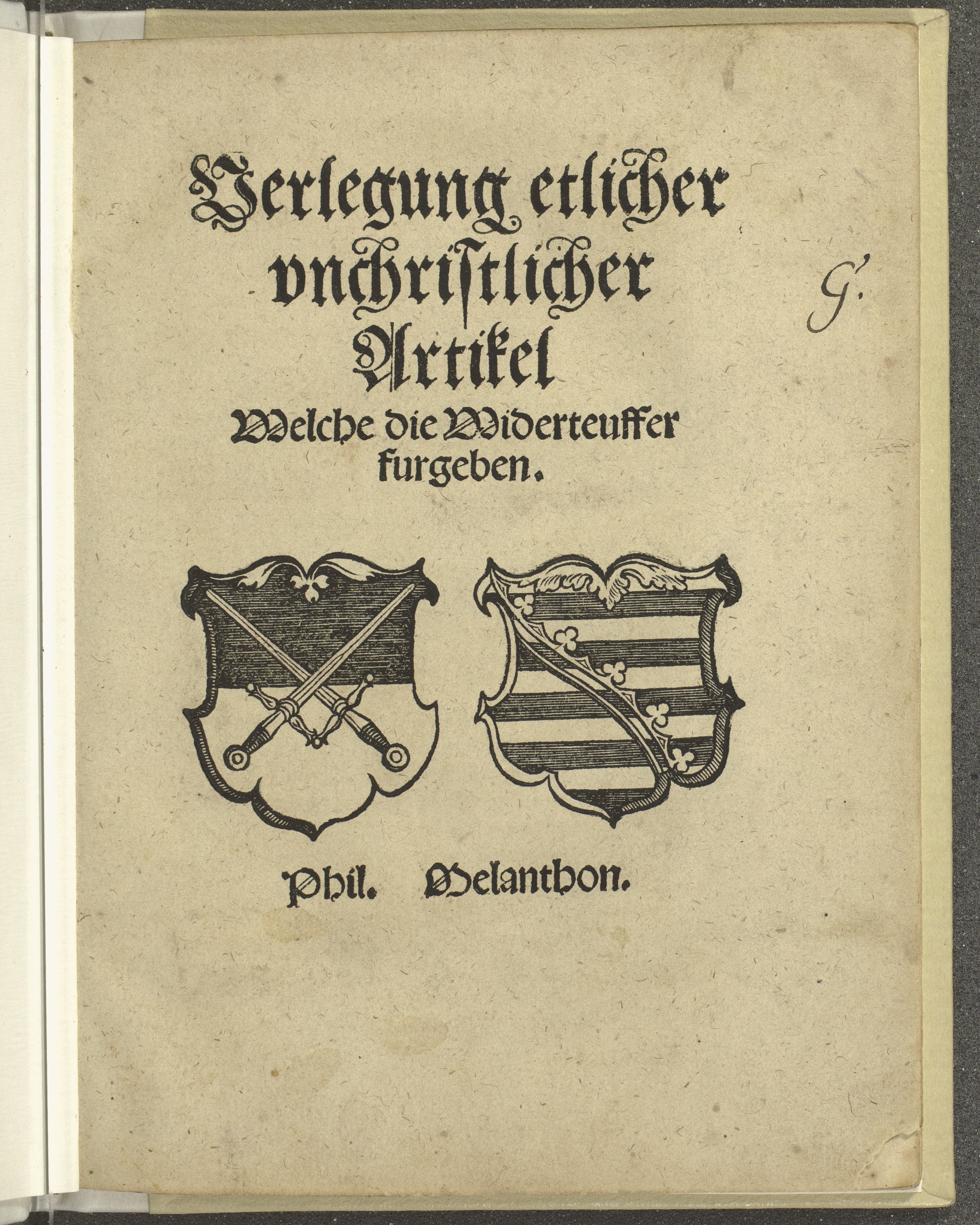
TextVerlegung etlicher vnchristlicher Artikel : Welche die widerteuffer furgeben
Melanchthon, Philipp, 1497-1560Summary: In this piece, Melanchthon sharply attacks the major Anabaptist theological points. This is the second printing of the tract.Summary: In this piece, Melanchthon sharply attacks the major Anabaptist theological points. This is the second printing of the tract. -
 Text
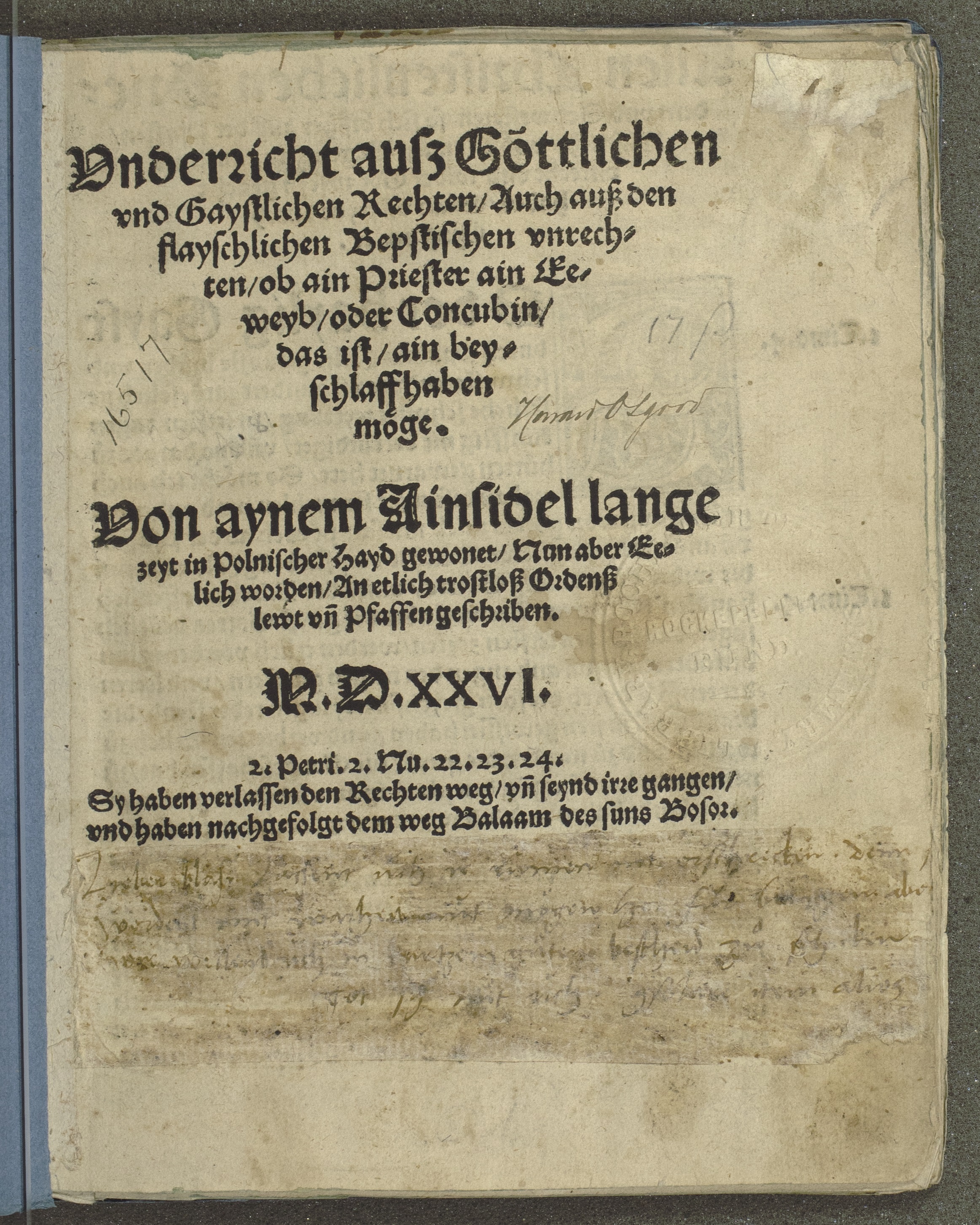
TextVnderricht ausz göttlichen vnd gaystlichen Rechten : Auch ausz den flayschlichen bepstlichen Vnrechten, ob ain Priester ain Eeweyb, oder Concubin, das ist, ain Beyschlaff haben möge
Keller, MichaelSummary: Polemical tract against celibacy, attributed to Michael Keller, who was married August 10, 1526 in Augsburg.Summary: Polemical tract against celibacy, attributed to Michael Keller, who was married August 10, 1526 in Augsburg. -
 Text
TextVon Ceremonien der Kirchen : das ist von eusserlichem dienste Gottes, oder von Leiblicher vbunge Göttlicher Ampter ...
Bachmann, Paul, 1465-1538Summary: Defense of Catholic worship and priestly offices by Paul Bachmann, Abbot of Altzelle, a vehement opponent of Martin Luther.Summary: Defense of Catholic worship and priestly offices by Paul Bachmann, Abbot of Altzelle, a vehement opponent of Martin Luther. -
 Text
TextVon der Beycht, ob die der Bapst macht habe zuo gebieten
Luther, Martin, 1483-1546Summary: Second Basel printing of an early Luther treatise on Penance, together with a translation and exposition of Psalm 118.Summary: Second Basel printing of an early Luther treatise on Penance, together with a translation and exposition of Psalm 118. -
 Text
TextVon der Papisten Tauff : vnd andern Caeremonien oder Kirchendiensten ob die nach erkanter vnd angenomener Warheit durch jemand Christlich zu besuchen vnd zu gebrauchen sein
Summary: Only printing of a Lutheran pamphlet by an anonymous preacher from Southern Germany on the subject of baptism and other ceremonies in the Catholic church, with an introduction by Nicolaus Gallus.Summary: Only printing of a Lutheran pamphlet by an anonymous preacher from Southern Germany on the subject of baptism and other ceremonies in the Catholic church, with an introduction by Nicolaus Gallus. -
 Text
TextWid' die unselige Auffrure Merten Luders von Wolffgango Wulffer un[d] andern Christgleubige[n] euch zw Wittenberg tzugeschribenn.
Wulffer, Wolfgang, -1538Summary: First printing of a rare pamphlet directed against Martin Luther. Wulffer calls Luther a false prophet and claims that his teachings contain no love, but only self-aggrandizement.Summary: First printing of a rare pamphlet directed against Martin Luther. Wulffer calls Luther a false prophet and claims that his teachings contain no love, but only self-aggrandizement. -
 Text
TextWider den newen Taufforden : notwendige Warnung an alle Christgleubigen
Rhegius, Urbanus, 1489-1541Summary: First and only edition of an important source about the early relations between the Lutheran and Anabaptist movements.Summary: First and only edition of an important source about the early relations between the Lutheran and Anabaptist movements. -
 Text
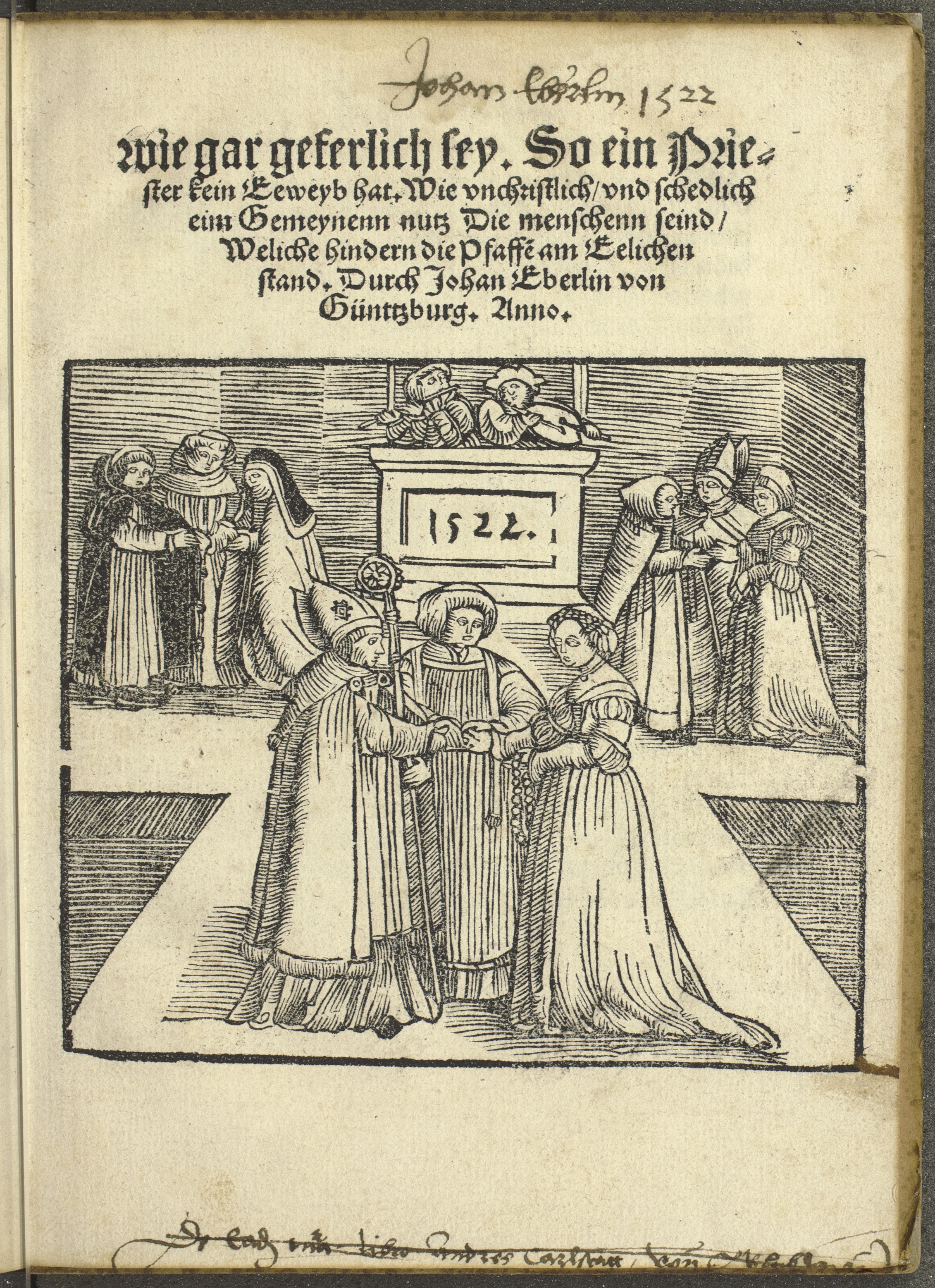
TextWie gar geferlich sey. So ein Priester kein Eeweyb hat : Wie unchristlich, und schedlich eim Gemeynenn nutz die menschenn seind, weliche hindern die Pfaffẽ am Eelichen stand.
Eberlin von Günzburg, Johann, approximately 1470-1533Summary: Johann Eberlin von Günzburg was a former Franciscan who had left the order and joined the Lutheran Reformation in 1521. This is the second edition of his tract on the dangers of priestly celibacy. He himself was married in 1524 and had four children. The title page woodcut shows the wedding of three different priests, including one to a nun.Summary: Johann Eberlin von Günzburg was a former Franciscan who had left the order and joined the Lutheran Reformation in 1521. This is the second edition of his tract on the dangers of priestly celibacy. He himself was married in 1524 and had four children. The title page woodcut shows the wedding of three different priests, including one to a nun. -
 Text
TextWie in Eesachen vnnd den fellen so sich derhalben zutragen, nach Götlichem billichem rechten, Christenlich zu handeln sey
Brenz, Johannes, 1499-1570Summary: In this pamphlet, Johann Brenz, the Lutheran Reformer of South Germany, attacks papal marriage law, and limits the forbidden degrees (marriages) to the narrowest possible interpretation of the Biblical material.Summary: In this pamphlet, Johann Brenz, the Lutheran Reformer of South Germany, attacks papal marriage law, and limits the forbidden degrees (marriages) to the narrowest possible interpretation of the Biblical material.