Search
4 resources
4 items
Subject
Judaism
-
 Text
TextAin Beweysung, das der war Messias kom[m]en sey, des die Juden noch on Vrsach zůkünfftig sein, warte[n]
Samuel, MarochitanusSummary: German translation by Ludwig Hätzer of Epistola contra Judaeorum, thought to be written in Arabic by Samuel of Marocco, an apostate Jew at the beginning of the 11th century and translated into Latin by the Spanish Dominican Alphonsus Bonihominis in the 14th century and widely disseminated. Bonihominis is likely the real author of the work.Summary: German translation by Ludwig Hätzer of Epistola contra Judaeorum, thought to be written in Arabic by Samuel of Marocco, an apostate Jew at the beginning of the 11th century and translated into Latin by the Spanish Dominican Alphonsus Bonihominis in the 14th century and widely disseminated. Bonihominis is likely the real author of the work. -
 Text
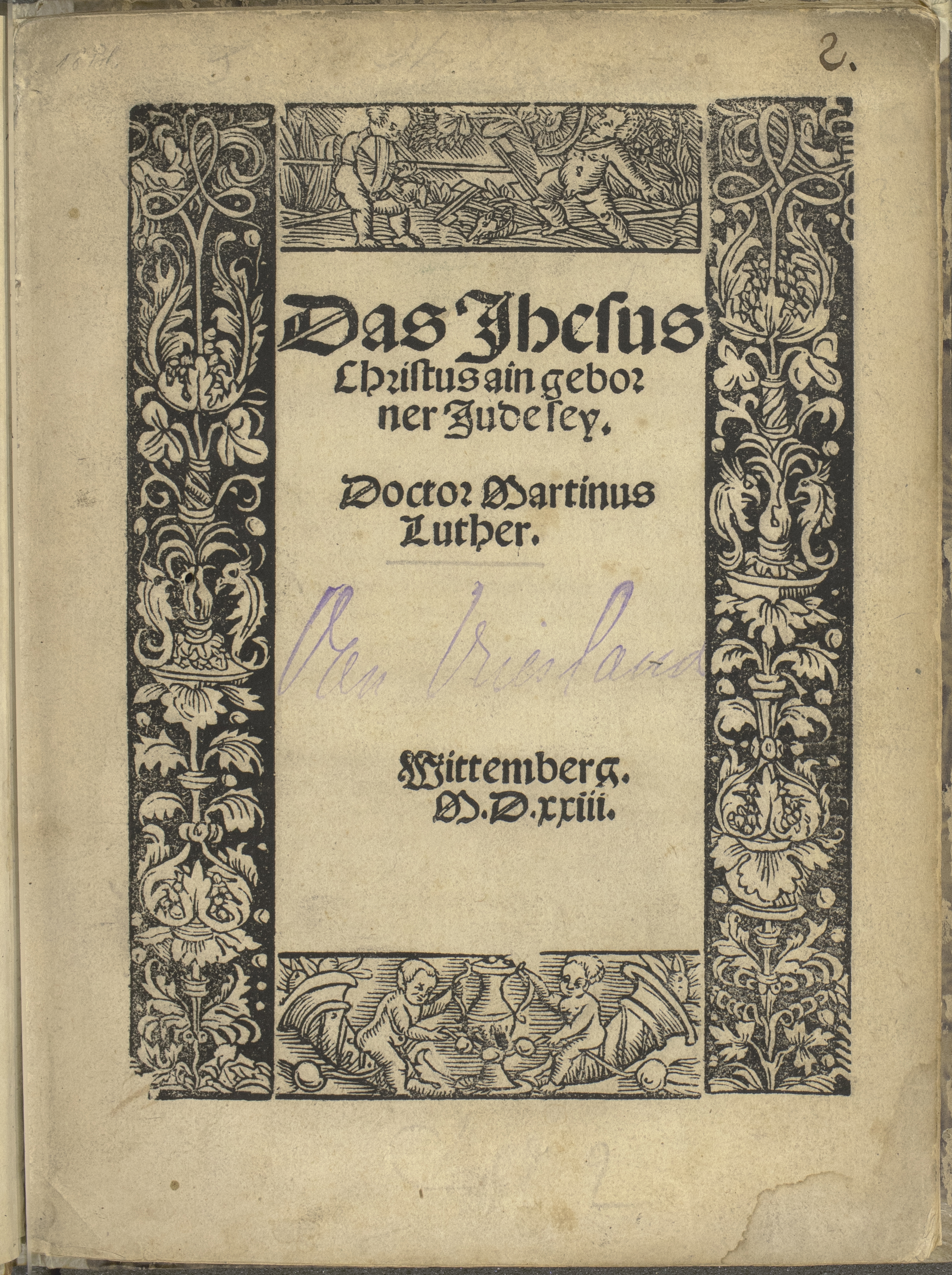
TextDas Ihesus Christus ain geborner Iude sey
Luther, Martin, 1483-1546Summary: The sixth printing (of ten in 1523) of Luther's early treatise, "That Jesus Christ was born a Jew", in which he denies the charges made against him that he did not believe in the Virgin Birth, but rather that Jesus was a naturally born child of Joseph and Mary. In this tract, Luther confesses that he believes that Jesus was born a Jew of the Virgin Mary. He also hopes that his teaching will bring more Jews to convert to Christianity.Summary: The sixth printing (of ten in 1523) of Luther's early treatise, "That Jesus Christ was born a Jew", in which he denies the charges made against him that he did not believe in the Virgin Birth, but rather that Jesus was a naturally born child of Joseph and Mary. In this tract, Luther confesses that he believes that Jesus was born a Jew of the Virgin Mary. He also hopes that his teaching will bring more Jews to convert to Christianity. -
 Text
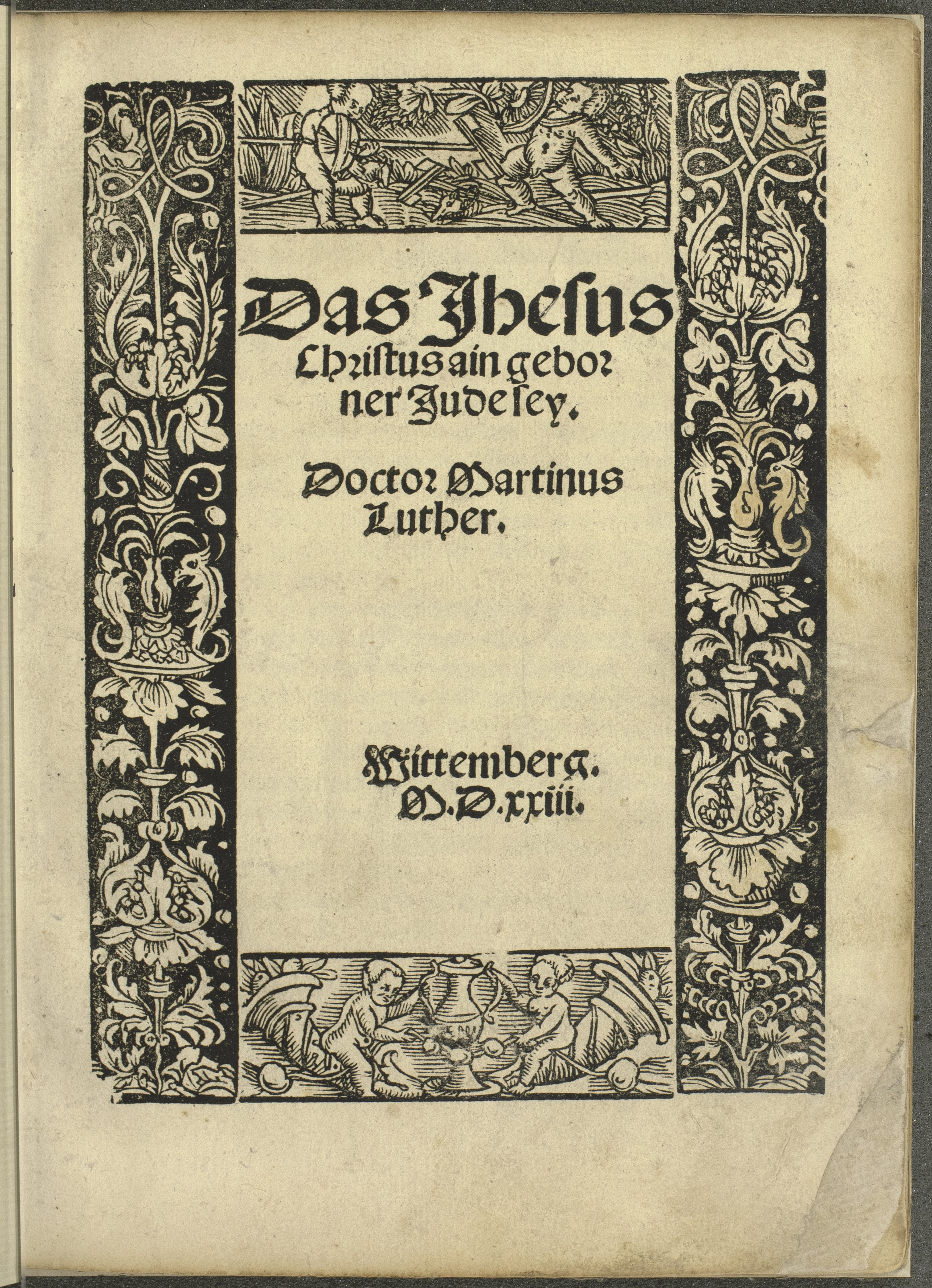
TextDas Ihesus Christus ain geborner Iude sey
Luther, Martin, 1483-1546Summary: The fifth printing of Luther's early treatise, "That Jesus Christ was born a Jew", in which he denies the charges made against him that he did not believe in the Virgin Birth, but rather that Jesus was a naturally born child of Joseph and Mary. In this tract, Luther confesses that he believes that Jesus was born a Jew of the Virgin Mary. He also hopes that his teaching will bring more Jews to convert to Christianity.Summary: The fifth printing of Luther's early treatise, "That Jesus Christ was born a Jew", in which he denies the charges made against him that he did not believe in the Virgin Birth, but rather that Jesus was a naturally born child of Joseph and Mary. In this tract, Luther confesses that he believes that Jesus was born a Jew of the Virgin Mary. He also hopes that his teaching will bring more Jews to convert to Christianity. -
 Text
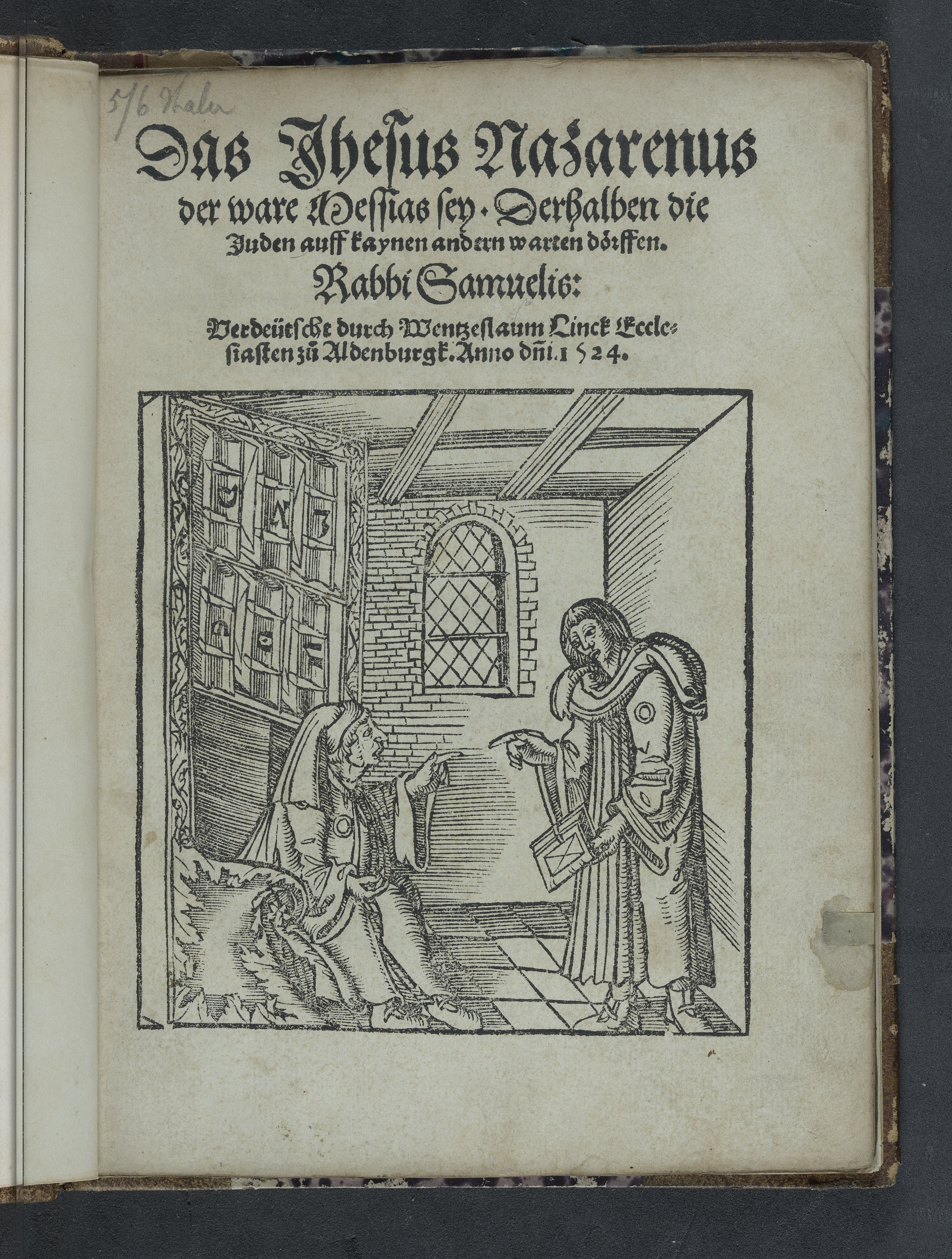
TextDas Jhesus Nazarenus der ware Messias sey : Derhalben die Juden auff kaynen andern warten dörffen
Samuel, MarochitanusSummary: German translation by Wenzeslaus Linck of Epistola contra Judaeorum, thought to be written in Arabic by Samuel of Marocco, an apostate Jew at the beginning of the 11th century and translated into Latin by the Spanish Dominican Alphonsus Bonihominis in the 14th century and widely disseminated. Bonihominis is likely the real author of the work.Summary: German translation by Wenzeslaus Linck of Epistola contra Judaeorum, thought to be written in Arabic by Samuel of Marocco, an apostate Jew at the beginning of the 11th century and translated into Latin by the Spanish Dominican Alphonsus Bonihominis in the 14th century and widely disseminated. Bonihominis is likely the real author of the work.