Search
10 resources
10 items
Subject
Monastic and religious life
-
 Text
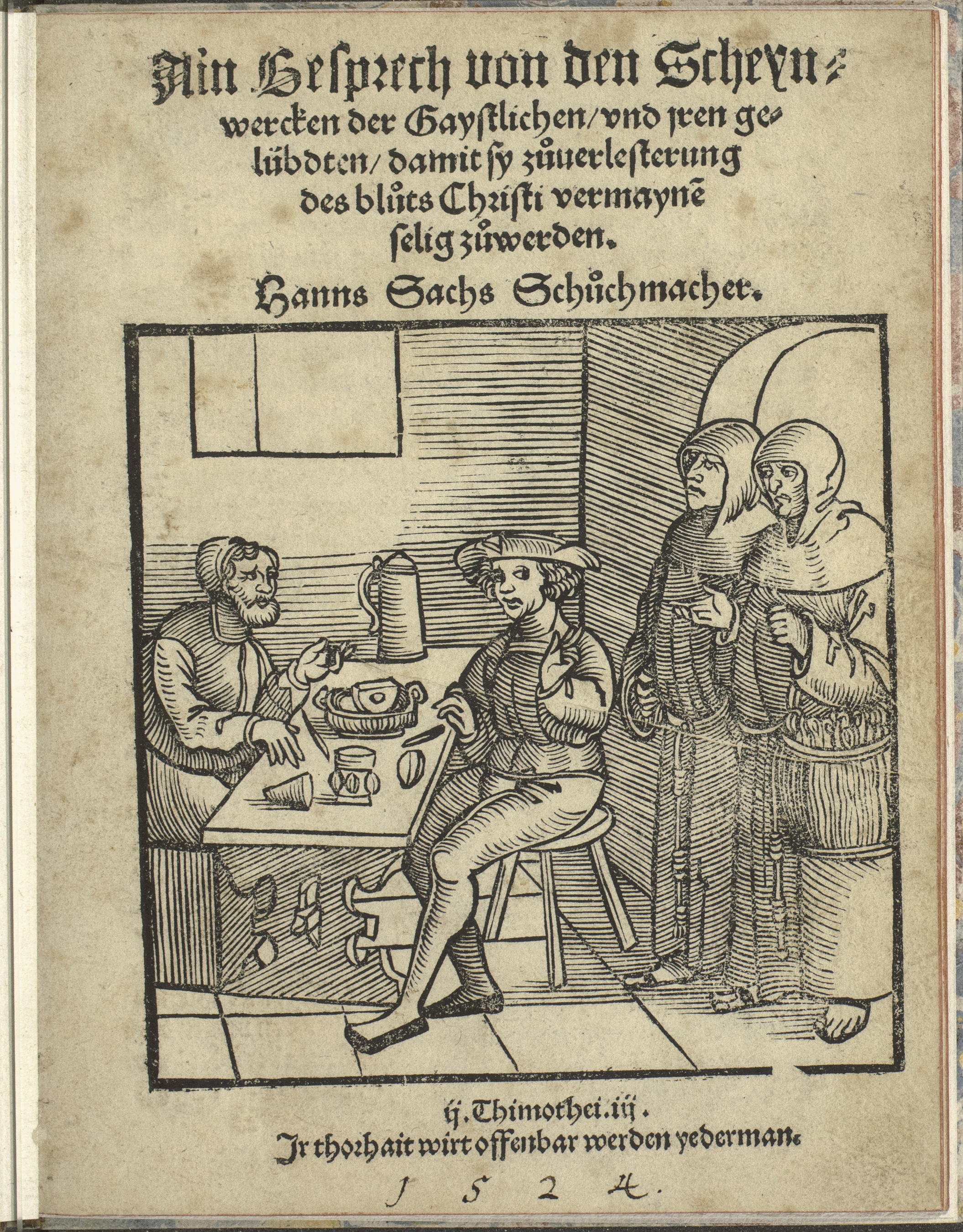
TextAin Gesprech von den Scheynwercken der Gaystlichen, vnd jren gelübdten, : damit sy zuouerlesterung des blouts Christi vermayne[n] selig zuowerden
Sachs, Hans, 1494-1576Summary: H. Sachs the Nuremberg "Master-Singer" and shoemaker became an early and ardent supporter of Luther and the Protestant cause. In this "trio-logue" a baker named Peter, a monk named Heinrich, and a shoemaker named Hans discuss questions relating to monastic life and monastic vows. The work is in prose, a change from Sachs' usual rhymed couplet format. This printing is from the same year as the first printing and re-uses the woodcut from the title page of the first printing.Summary: H. Sachs the Nuremberg "Master-Singer" and shoemaker became an early and ardent supporter of Luther and the Protestant cause. In this "trio-logue" a baker named Peter, a monk named Heinrich, and a shoemaker named Hans discuss questions relating to monastic life and monastic vows. The work is in prose, a change from Sachs' usual rhymed couplet format. This printing is from the same year as the first printing and re-uses the woodcut from the title page of the first printing. -
 Text
TextDe votis monasticis
Luther, Martin, 1483-1546Summary: This is the third printing of Luther's treatise on monastic vows.Summary: This is the third printing of Luther's treatise on monastic vows. -
 Text
TextDoctoris Martini Luthers kurtz schlussrede von den gelöbten vnd geistlichen leben der klöster
Luther, Martin, 1483-1546Summary: Luther's "Theses on Monasticisms" came about as a partial response to Melanchthon's essay in Loci Communes. Melanchthon revised this section of the Loci to take Luther's criticism into account. Luther's work was translated into German by at least three translators none of whom can be named with certainty.Summary: Luther's "Theses on Monasticisms" came about as a partial response to Melanchthon's essay in Loci Communes. Melanchthon revised this section of the Loci to take Luther's criticism into account. Luther's work was translated into German by at least three translators none of whom can be named with certainty. -
 Text
TextEin Worhafft geschicht wie es kürtzlich einem prediger Münch zuo Nürmberg mit seinen Ordens brüdern von wegen seiner Eua[n]gelischen predig ergangen ist
Korn, GallusSummary: The tribulation of monks-turned Protestant, and then turned out of their monasteries, made fascinating reading for the newly-converted Protestants. In style, it is analogous to martyrologies, such as Foxe's "Book of Martyrs." G. Korn here relates his sufferings on account of the Gospel as one such monk in Nuremberg.Summary: The tribulation of monks-turned Protestant, and then turned out of their monasteries, made fascinating reading for the newly-converted Protestants. In style, it is analogous to martyrologies, such as Foxe's "Book of Martyrs." G. Korn here relates his sufferings on account of the Gospel as one such monk in Nuremberg. -
 Text
TextEyn Gesprech vo[n] de[n] Scheinwercke[n] der Gaistlichen, und yhren gelubde[n] : damit sie zuverlesterung des bluts Christi vermaynen selig zu werden
Sachs, Hans, 1494-1576Summary: One of nine 1524 printings of this short anti-monastic tract by the Nuremberg cobbler and playright Hans Sachs.Summary: One of nine 1524 printings of this short anti-monastic tract by the Nuremberg cobbler and playright Hans Sachs. -
 Text
TextEyn Gesprech vo[n] den Scheinwercke[n] der Gaystlichen, vnd jren gelübdten : damit sy zuouerlesterung des bluots Christi vermaynen selig zuowerden
Sachs, Hans, 1494-1576Summary: One of nine 1524 printings of this short anti-monastic tract by the Nuremberg cobbler and playright Hans Sachs.Summary: One of nine 1524 printings of this short anti-monastic tract by the Nuremberg cobbler and playright Hans Sachs. -
 Text
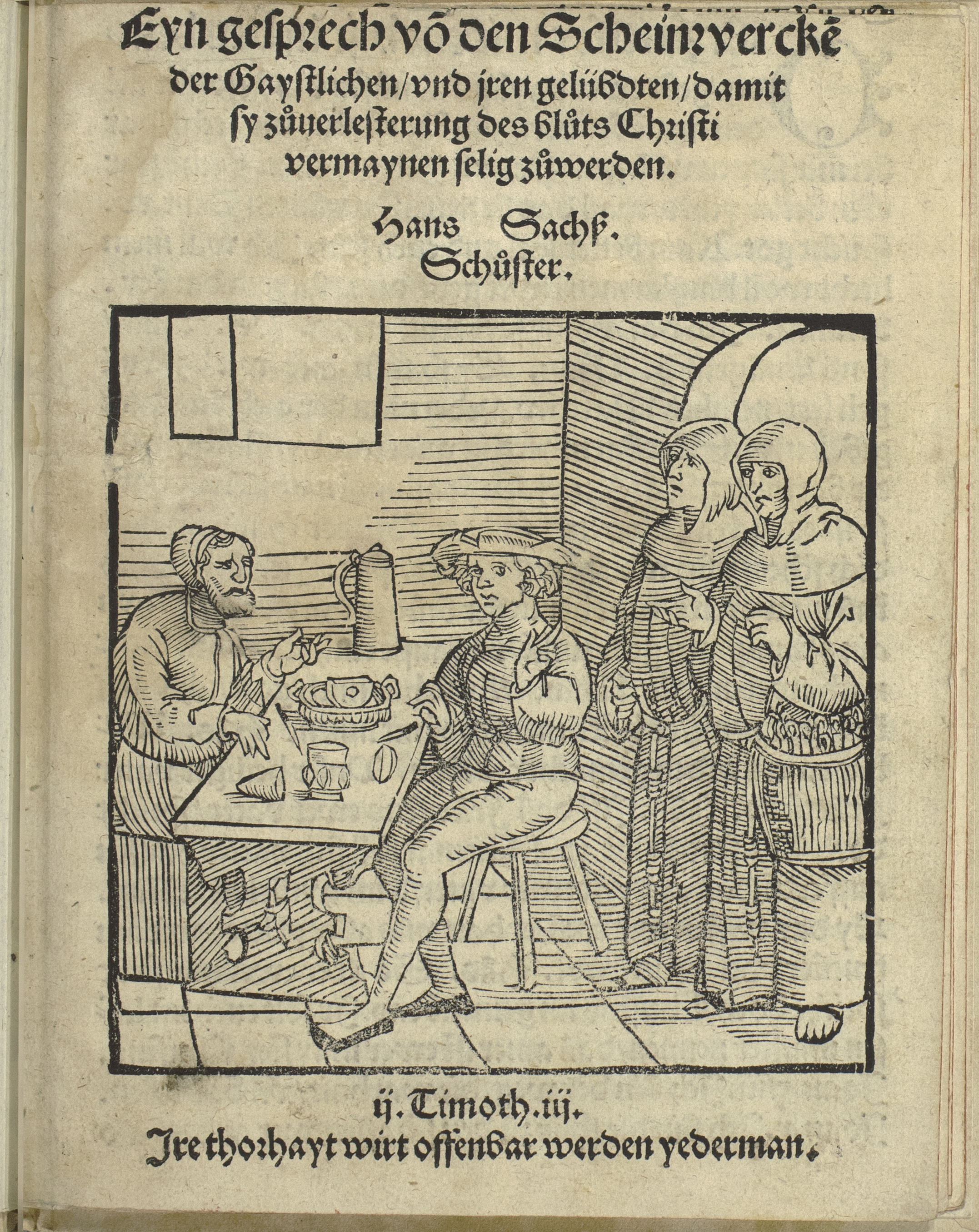
TextEyn gesprech vo[n] den Scheinwercke[n] der Gaystlichen, vnd jren gelübdten : damit sy zuouerlesterung des bluots Christi vermaynen selig zuowerden
Sachs, Hans, 1494-1576Summary: Anti-monastic tract by Hans Sachs, shoemaker, poet, and dramatist of Nürnberg, and strong supporter of Luther.Summary: Anti-monastic tract by Hans Sachs, shoemaker, poet, and dramatist of Nürnberg, and strong supporter of Luther. -
 Text
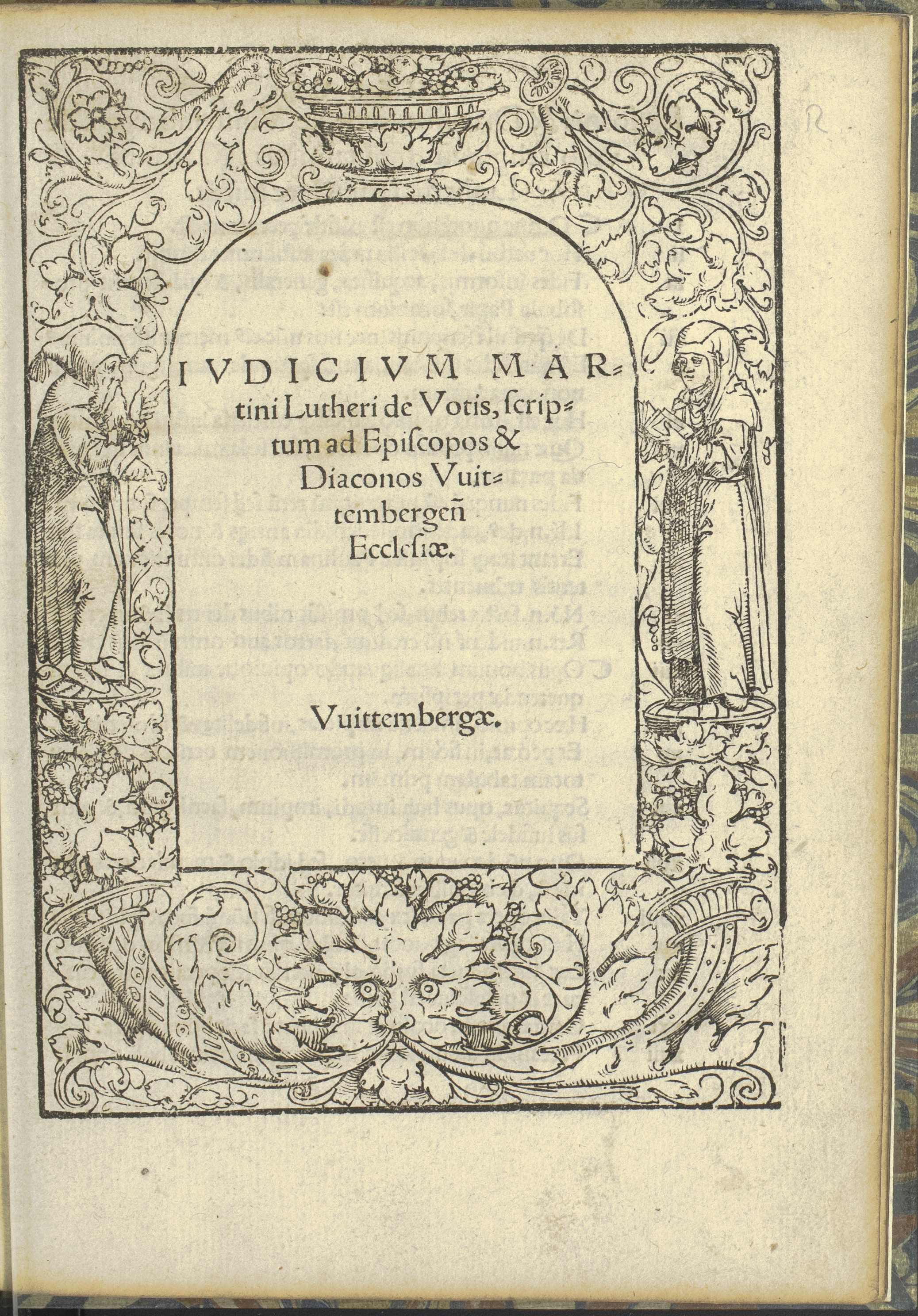
TextIudicium Martini Lutheri de votis : scriptum ad episcopos & diaconos Vuittembergen[sis] ecclesiae
Luther, Martin, 1483-1546Summary: First edition of a short tract written by Luther at Wartburg castle and addressed to the bishop and religious leaders in Wittenberg. In 139 brief statements, Luther warns that religious vows and monastic life do not by themselves bring about the forgiveness of sins.Summary: First edition of a short tract written by Luther at Wartburg castle and addressed to the bishop and religious leaders in Wittenberg. In 139 brief statements, Luther warns that religious vows and monastic life do not by themselves bring about the forgiveness of sins. -
 Text
TextPhilipps Melanchtons Sendtbrieff an ein Kartheüser, von den dreyen Clostergelübten : Von der Keüschait, Von der Armuot, Und von der gehorsam ; wittenberg, 1524
Melanchthon, Philipp, 1497-1560Summary: First German printing of this treatise by Philipp Melanchthon on the three monastic vows of poverty, chastity, and obedience.Summary: First German printing of this treatise by Philipp Melanchthon on the three monastic vows of poverty, chastity, and obedience. -
 Text
TextUon denn geystlichen vnd kloster gelubden
Luther, Martin, 1483-1546Summary: One of three 1522 printings of an essay on monastic vows written by Luther during his stay at the Wartburg Castle after the Diet of Worms. It is addressed to monks, whose conscience is troubled by the conflict between their vows and their desire to leave the monastic life. Luther frequently referred to this piece throughout his career, and it became one of his most influential works.Summary: One of three 1522 printings of an essay on monastic vows written by Luther during his stay at the Wartburg Castle after the Diet of Worms. It is addressed to monks, whose conscience is troubled by the conflict between their vows and their desire to leave the monastic life. Luther frequently referred to this piece throughout his career, and it became one of his most influential works.