Search
-
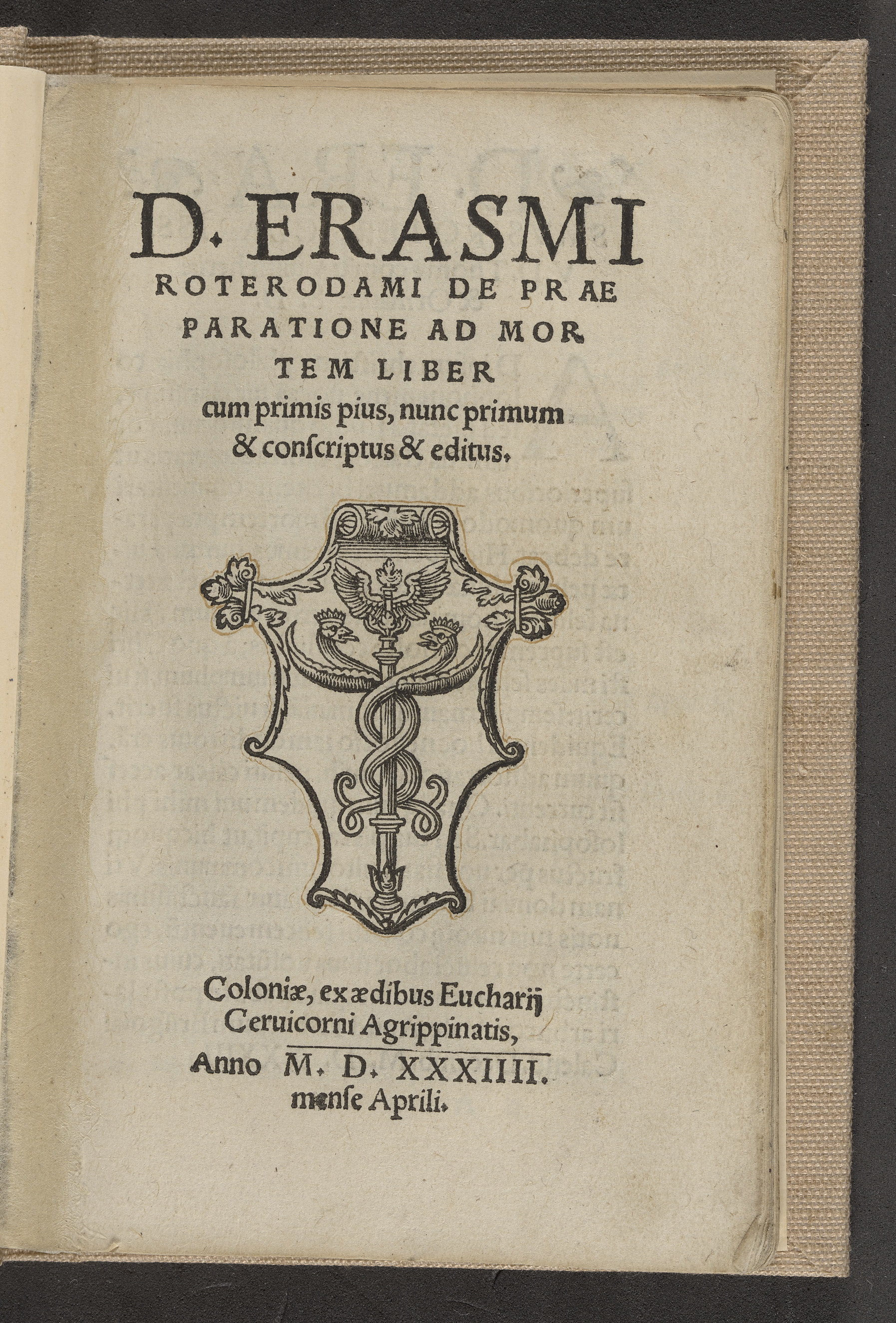 Text
D. Erasmi Roterodami De praeparatione ad mortem liber : cum primis pius, nunc primum & conscriptus & editus
Erasmus, Desiderius, -1536Summary: Composed by Erasmus of Rotterdam, at the latest, in 1533, this tract on preparing for death first appeared in printed form in Basel at the beginning of 1534. This printing was followed by the Cologne printing in April. It is dedicated to Thomas Boleyn, Earl of Wiltshire and Ormond (1477-1539), the father of Henry VIII's second wife, Anne Boleyn.Summary: Composed by Erasmus of Rotterdam, at the latest, in 1533, this tract on preparing for death first appeared in printed form in Basel at the beginning of 1534. This printing was followed by the Cologne printing in April. It is dedicated to Thomas Boleyn, Earl of Wiltshire and Ormond (1477-1539), the father of Henry VIII's second wife, Anne Boleyn. -
 Text
Zwo Predig über der Leiche des Kurfürsten Hertzog Johans zu[o] Sachssen
Luther, Martin, 1483-1546Summary: Two funeral sermons by Martin Luther on the occasion of John the Steadfast, Elector of Saxony, who had founded and headed the Smalcaldic League. John was succeeded by his son Johann Friedrich I.Summary: Two funeral sermons by Martin Luther on the occasion of John the Steadfast, Elector of Saxony, who had founded and headed the Smalcaldic League. John was succeeded by his son Johann Friedrich I. -
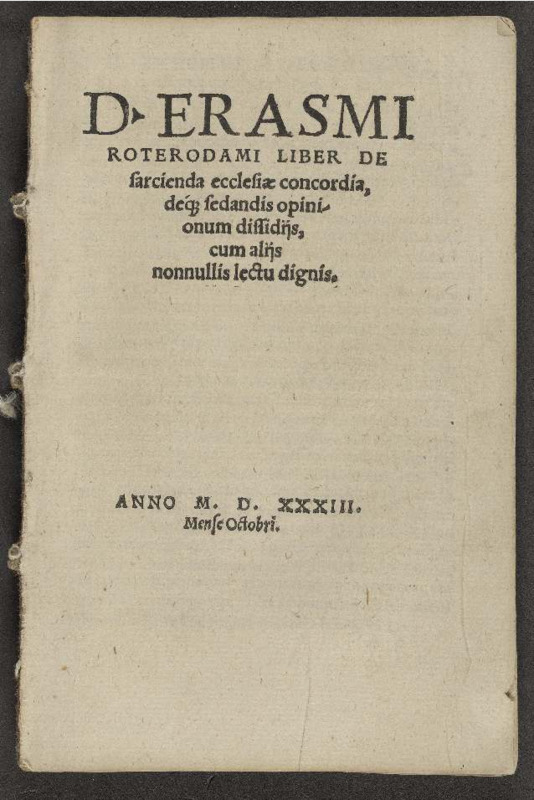 Text
D. Erasmi Roterodami Liber de sarcienda ecclesiae concordia deq[ue] : sedandis opinionum dissidijs, cum alijs nonnullis lectu dignis
Erasmus, Desiderius, -1536Summary: A call for concord and harmony in the church by one of the great Humanists of the time.Summary: A call for concord and harmony in the church by one of the great Humanists of the time. -
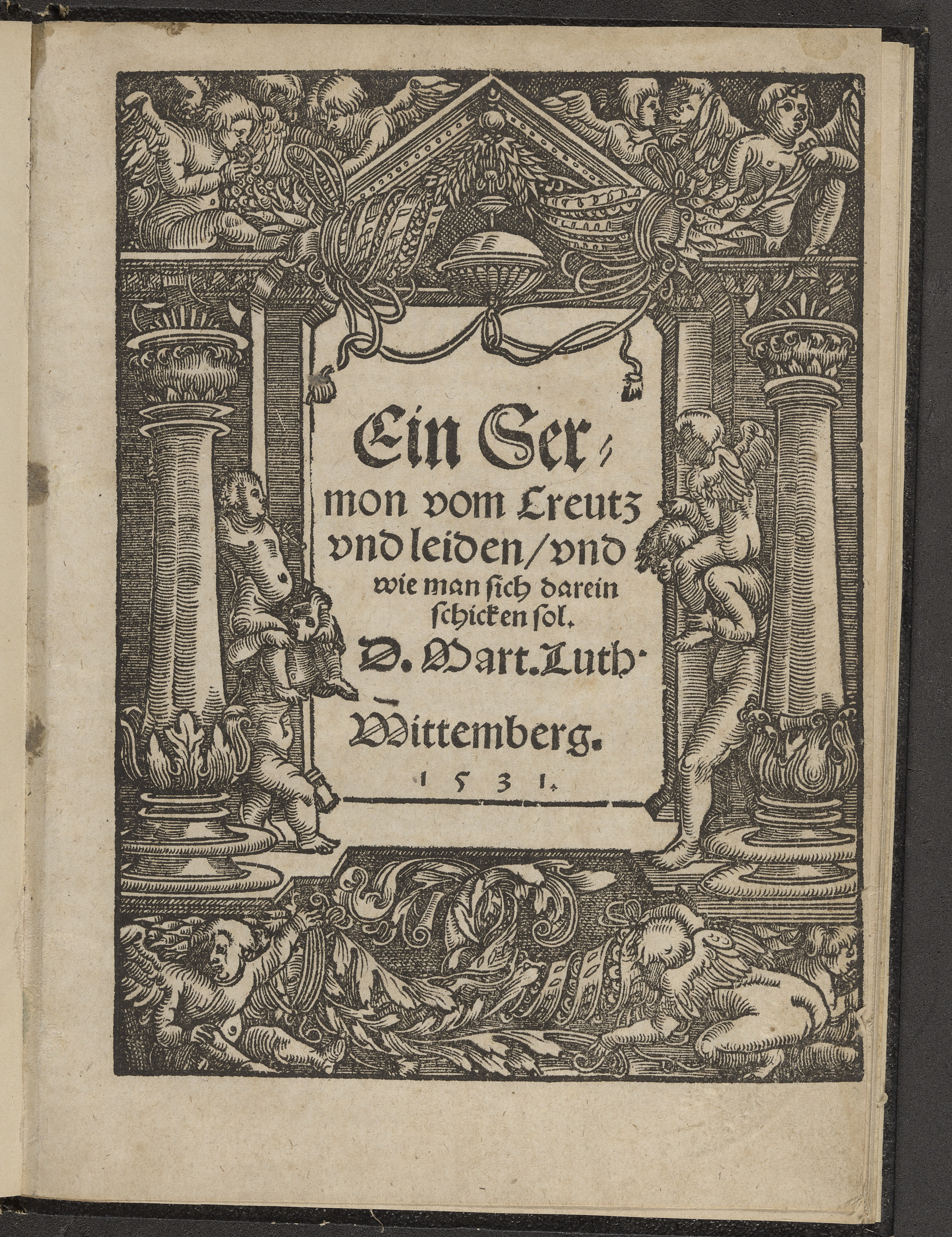 Text
Ein Sermon vom Creutz vnd leiden : vnd wie man sich darein schicken sol
Luther, Martin, 1483-1546Summary: The first sermon Luther preached in the Coburg Castle on April 16, 1530. The theme is the Cross and Suffering.Summary: The first sermon Luther preached in the Coburg Castle on April 16, 1530. The theme is the Cross and Suffering. -
 Text
Ainn Sermon oder Predigt von der Aufferstehung Christi
Alber, Matthäus, 1495-1570Summary: First and possibly only edition of a sermon by Mathäus Alber on the resurrection of Christ. Alber was an active reformer in Swabia, particularly in Reutlingen and Esslingen.Summary: First and possibly only edition of a sermon by Mathäus Alber on the resurrection of Christ. Alber was an active reformer in Swabia, particularly in Reutlingen and Esslingen. -
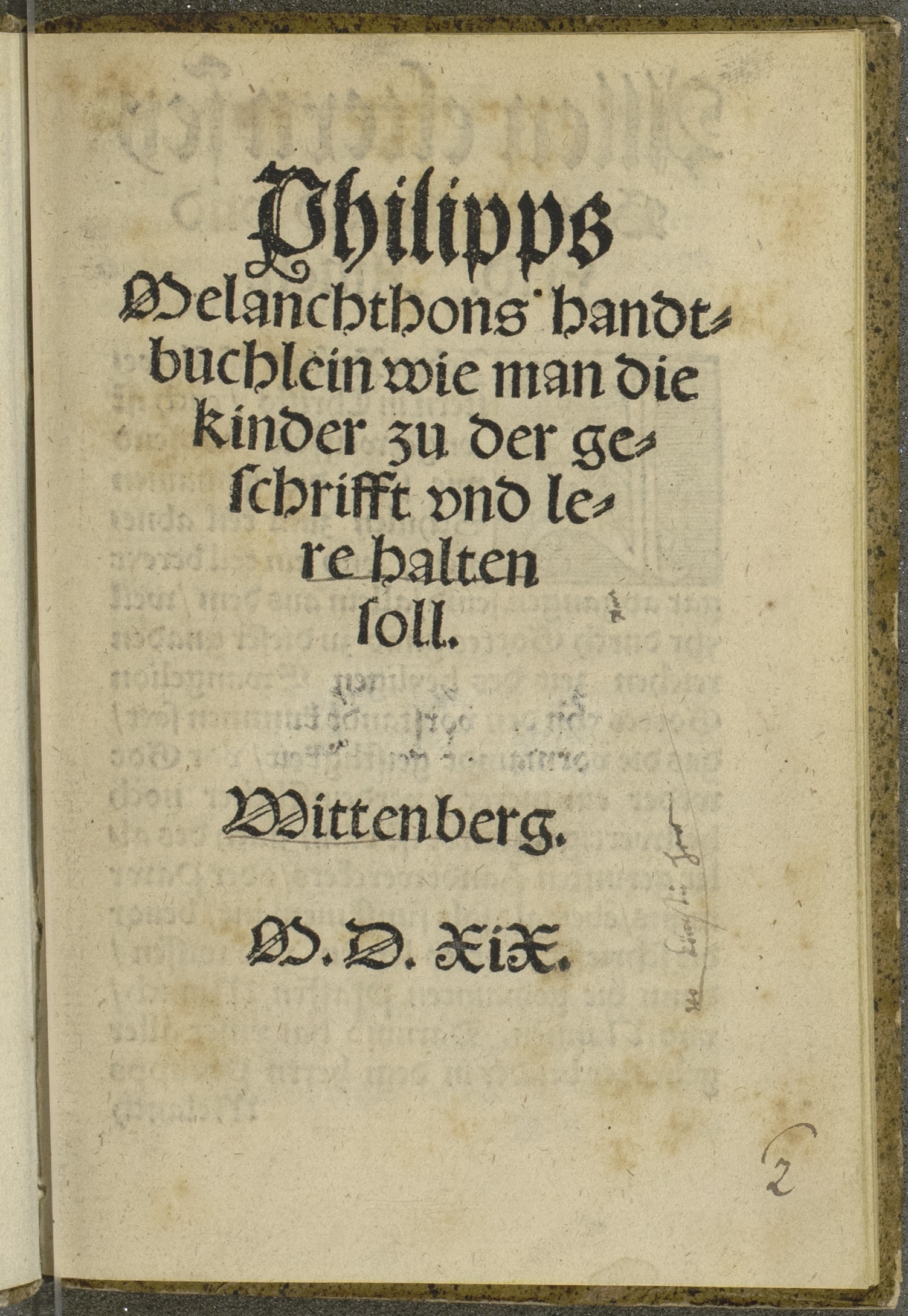 Text
Philipps Melanchthons handtbuchlein wie man die kinder zu der geschrifft vnd lere halten soll. Wittenberg. M.D.XIX
Melanchthon, Philipp, 1497-1560Summary: Melanchthon's "Handtbuchlein" is among the first attempts at a Protestant catechism. It is a collection of selections from scripture passages, prayers, and other text intended as instruction for students in German schools. Noteworthy are the "Seven Wise Saying" derived from Periander by Erasmus.Summary: Melanchthon's "Handtbuchlein" is among the first attempts at a Protestant catechism. It is a collection of selections from scripture passages, prayers, and other text intended as instruction for students in German schools. Noteworthy are the "Seven Wise Saying" derived from Periander by Erasmus. -
 Text
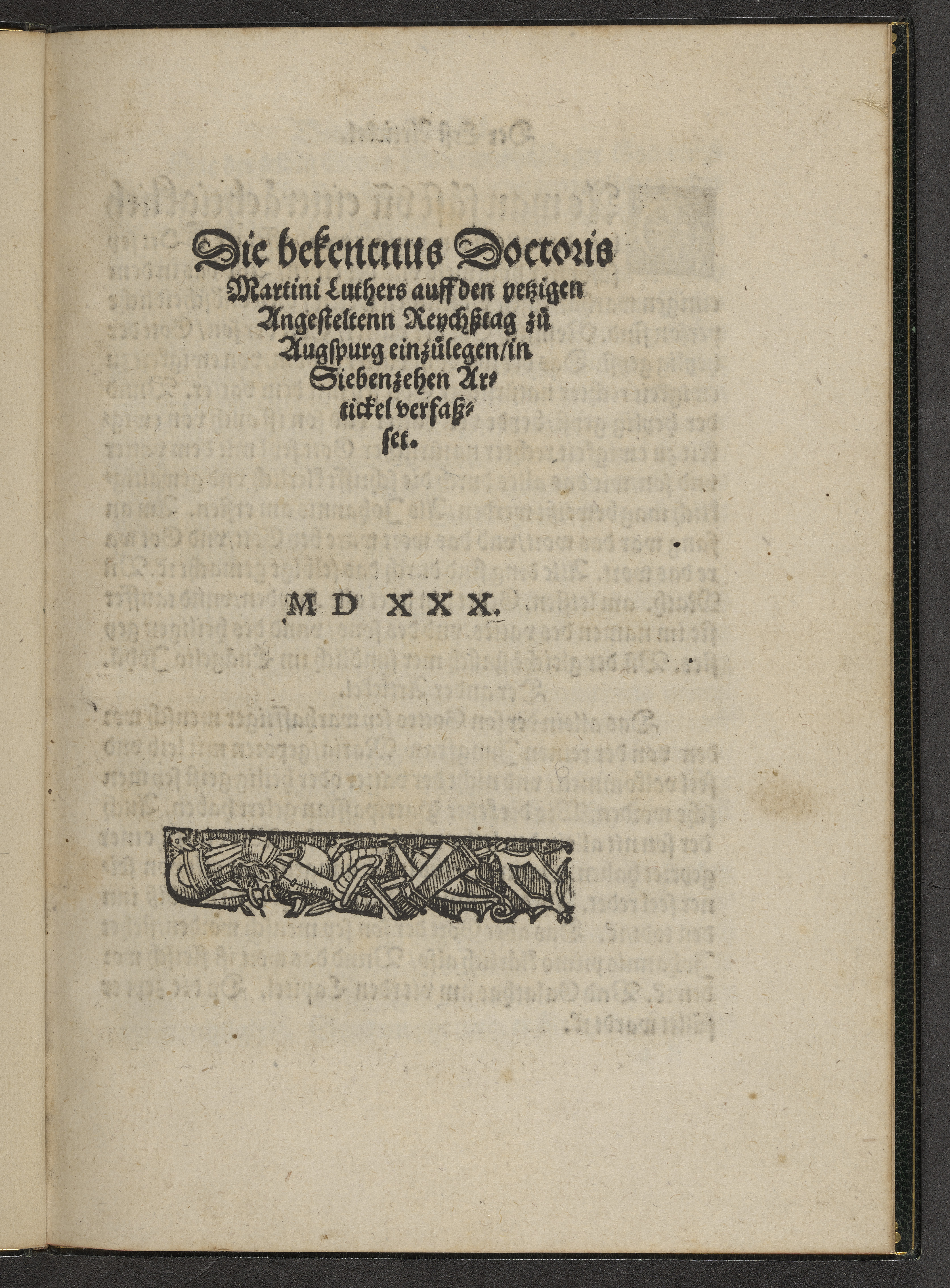
Die bekentnus Doctoris Martini Luthers auff den yetzigen Angesteltenn Reychstag zu Augspurg einzuolegen : in Siebenzehen Artickel verfasset
Luther, Martin, 1483-1546Summary: One of at least 11 printings produced in 1530 of the Schwabach Articles, 17 articles of faith composed by Luther 1529 in Schwabach. It became one of the foundational documents for the Augsburg Confession.Bound in modern dark green morocco, bordered, blind- and gilt-tooled, with inside dentelles, gold spine title, and gilt edges. Upper board scratched.Summary: One of at least 11 printings produced in 1530 of the Schwabach Articles, 17 articles of faith composed by Luther 1529 in Schwabach. It became one of the foundational documents for the Augsburg Confession.Bound in modern dark green morocco, bordered, blind- and gilt-tooled, with inside dentelles, gold spine title, and gilt edges. Upper board scratched. -
 Text
Das schön Confitemini an der zal der CXVIII Psalm
Luther, Martin, 1483-1546Summary: Text in German includes Luther's German translation of Psalms CXVIII from the Hebrew O.T., and is Luther's expanded version of his earlier Latin work.Summary: Text in German includes Luther's German translation of Psalms CXVIII from the Hebrew O.T., and is Luther's expanded version of his earlier Latin work. -
 Text
Wes sich D. Martinus Luther. etc. mit Huldrich Zwinglin. etc. der streitigen Articulen halb, vereynet vnd verglichen auff der Conuocation zu[o] Marpurg, den dritten Tag Octob. Im Jar, M. D. xxix
Colloquy of Marburg (1529)Summary: The Colloquy of Marburg was a meeting arranged at the initiative of Philip of Hessen in an attempt to forge religious unity in Germany and mediate theological differences between Lutherans and Zwinglians. Besides Luther and Zwingli, the meeting was also attended by Johannes Agricola, Johannes Brenz, Martin Bucer, Caspar Hedio, Justus Jonas, Philipp Melanchthon, Johannes Oecolampadius, and Andreas Osiander.Summary: The Colloquy of Marburg was a meeting arranged at the initiative of Philip of Hessen in an attempt to forge religious unity in Germany and mediate theological differences between Lutherans and Zwinglians. Besides Luther and Zwingli, the meeting was also attended by Johannes Agricola, Johannes Brenz, Martin Bucer, Caspar Hedio, Justus Jonas, Philipp Melanchthon, Johannes Oecolampadius, and Andreas Osiander. -
 Text
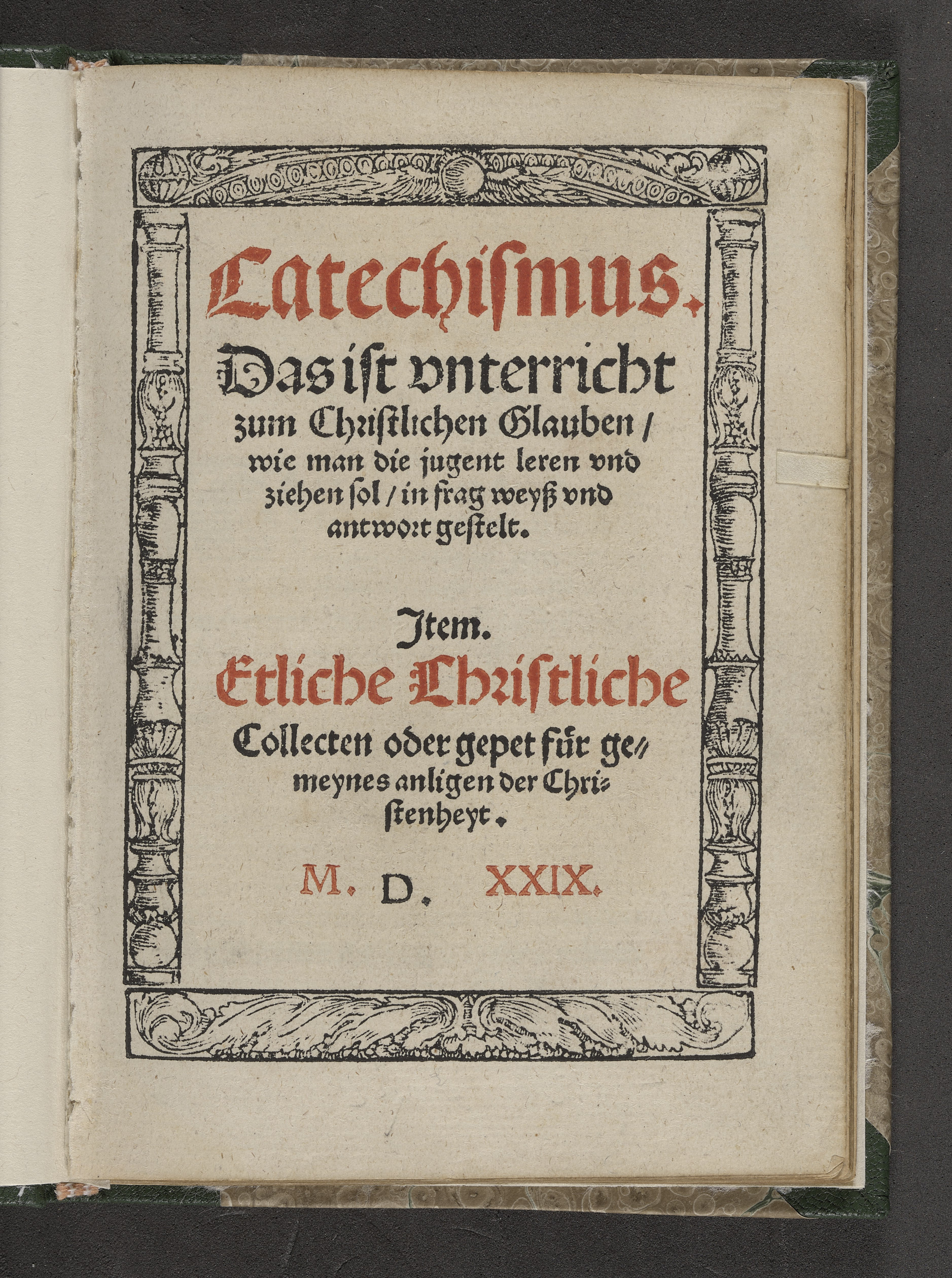
Catechismus. Das ist Vnterricht zum christlichen Glauben wie man die Jugent leren vnd ziehen sol, in Frag Weyss vnd Antwort gestelt : Jtem etliche christliche Collecten oder Gepet für gemeynes Anligen der Christenheyt
Althamer, Andreas, approximately 1500-1539Summary: Third printing of the Ansbach Catechism by Andreas Althamer and Johannes Rurer, commissioned by Margrave Georg of Brandenburg. It has been called the first regional catechism of the Protestant movement. It contains 92 questions and answers as well as an appendix with 18 prayers.Summary: Third printing of the Ansbach Catechism by Andreas Althamer and Johannes Rurer, commissioned by Margrave Georg of Brandenburg. It has been called the first regional catechism of the Protestant movement. It contains 92 questions and answers as well as an appendix with 18 prayers. -
 Text
Auslegung der zehen Gebot aus dem xix. vnd xx. Capitel des andern Buchs Mosi
Luther, Martin, 1483-1546Summary: Second printing of a collection of sermons by Luther on Exodus 19-20, which includes the 10 commandments. The sermons were given between 1524 and 1527 and were first published in 1528.Summary: Second printing of a collection of sermons by Luther on Exodus 19-20, which includes the 10 commandments. The sermons were given between 1524 and 1527 and were first published in 1528. -
 Text
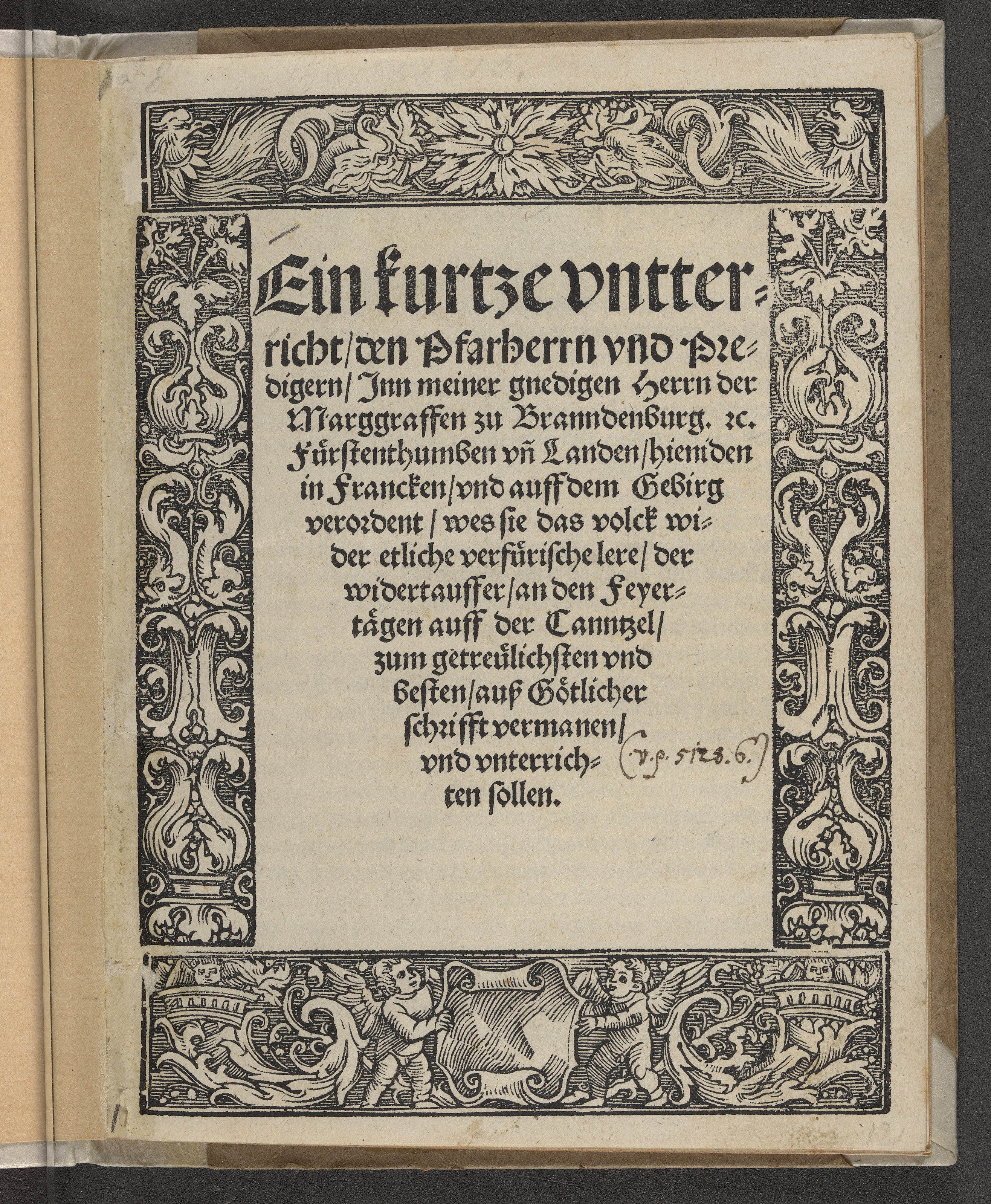
Ein kurtze vnterricht, den Pfarherrn vnd Predigern Inn meiner gnedigen Herrn der Marggraffen zu Branndenburg. [et]c. Fürstenthumen vn[d] Landen, hieniden in Francken vnd auff dem Gebirg verordent : wes sie das volck wider etliche verfürische lere, der widertauffer, an den Feyertägen auff der Canntzel zum getreulichsten vnd besten auss Götlicher schrifft vermanen, vnd vnterrichten sollen
Georg, Margrave of Brandenburg-Ansbach, 1484-1543Summary: A decree against the Anabaptists by the Lutheran prince, Georg, Margrave of Brandenburg-Ansbach, to be read from the pulpits of his territory.Summary: A decree against the Anabaptists by the Lutheran prince, Georg, Margrave of Brandenburg-Ansbach, to be read from the pulpits of his territory. -
 Text
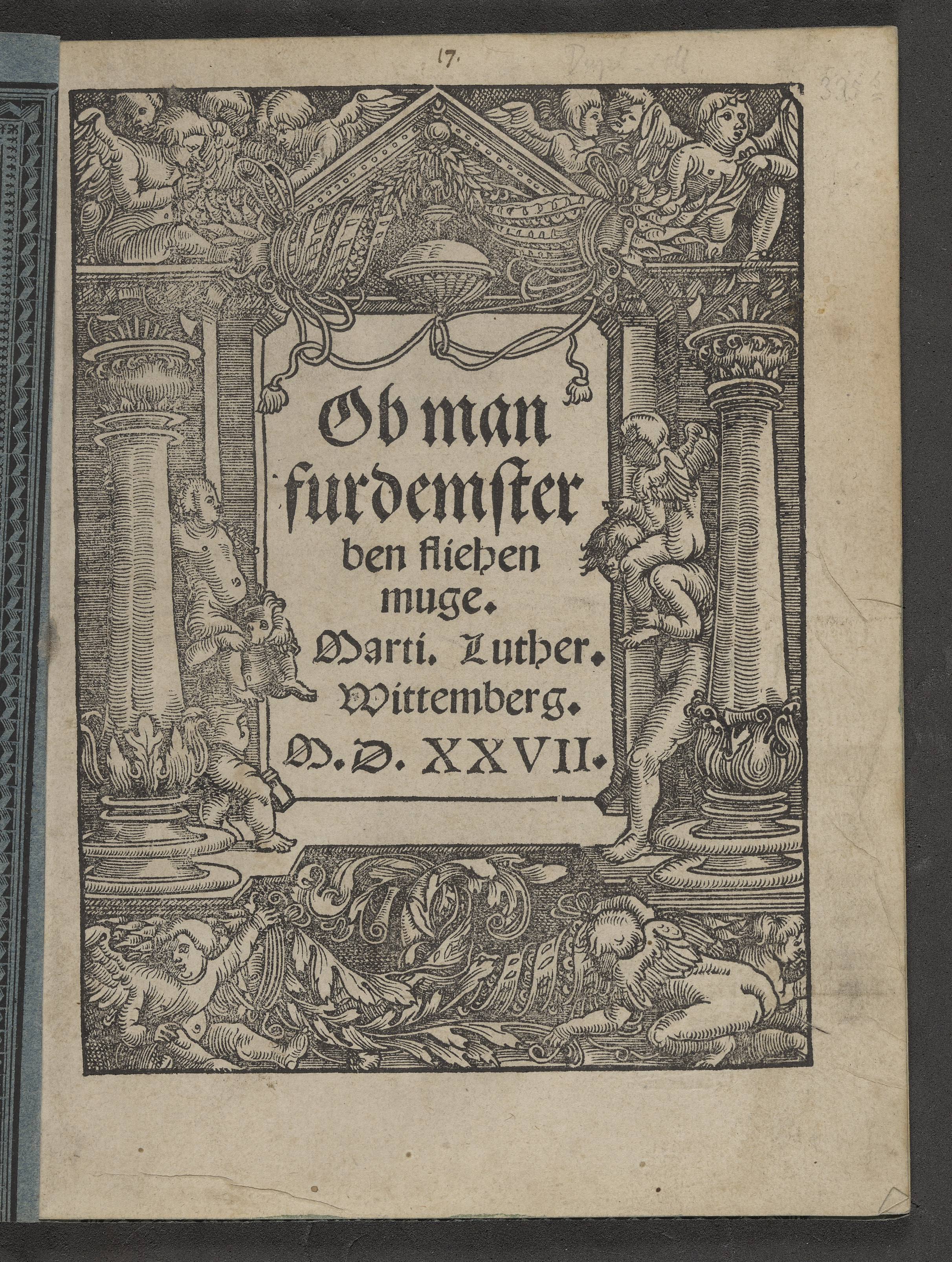
Ob man fur dem sterben fliehen muge
Luther, Martin, 1483-1546Summary: The Black Death ravaged Europe from the fourteenth century onward. Dr. Johann Hess, a pastor from Breslau, asked Luther in 1527 whether it was permissible for a person to flee from plague-infested areas. Luther replied that it was, and then added some public health advice for town and city government officials in plague-ravaged areas.Summary: The Black Death ravaged Europe from the fourteenth century onward. Dr. Johann Hess, a pastor from Breslau, asked Luther in 1527 whether it was permissible for a person to flee from plague-infested areas. Luther replied that it was, and then added some public health advice for town and city government officials in plague-ravaged areas. -
 Text
Ob man fur dem Sterben fliehen muge
Luther, Martin, 1483-1546Summary: The Black Death ravaged Europe from the fourteenth century onward. Dr. Johann Hess, a pastor from Breslau, asked Luther in 1527 whether it was permissible for a person to flee from plague-infested areas. Luther replied that it was, and then added some public health advice for town and city government officials in plague-ravaged areas. He advocated fumigation of this, the seventh printing of the work.Summary: The Black Death ravaged Europe from the fourteenth century onward. Dr. Johann Hess, a pastor from Breslau, asked Luther in 1527 whether it was permissible for a person to flee from plague-infested areas. Luther replied that it was, and then added some public health advice for town and city government officials in plague-ravaged areas. He advocated fumigation of this, the seventh printing of the work. -
 Text
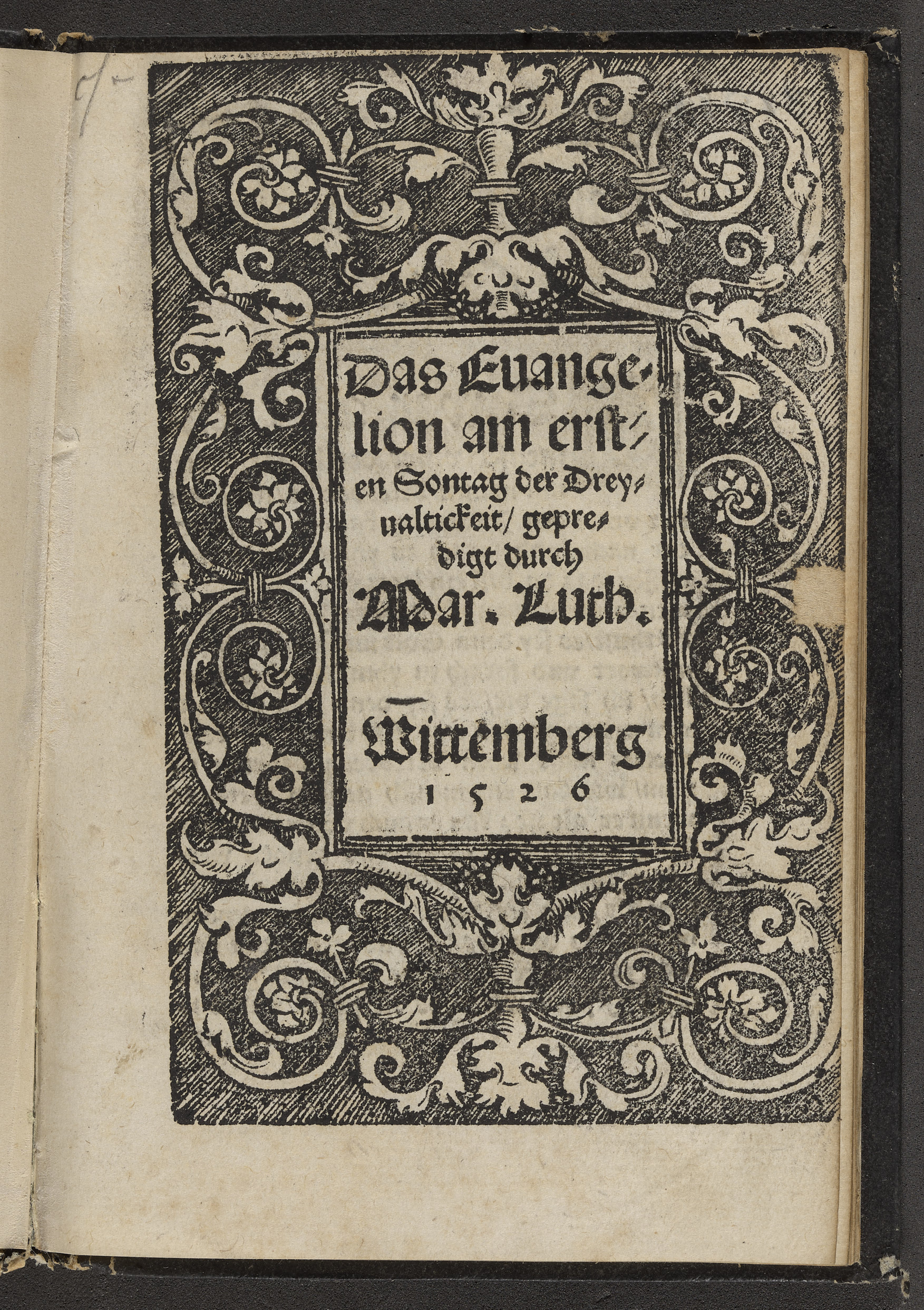
Das Euangelion am ersten Sontag der Dreyualtickeit
Luther, Martin, 1483-1546Summary: Sermon preached May 27, 1526, on John 3:1-16 (Nicodemus).Summary: Sermon preached May 27, 1526, on John 3:1-16 (Nicodemus). -
 Text
Diss ist ain Anzayg: ainem meinem, etwann vertrawten Gesellen, über seyne harte Widerpart, des Sacrament vnd annders betreffend
Langenmantel, Eitelhans, -1528Summary: Since the city of Augsburg was fairly evenly divided between Catholic and Protestant in the early 1520s, several Anabaptists hoped that their movement might benefit from this stalemate. Eitelhans Langenmantel attacks both Catholics and Lutherans, whom he called neo-Papists. His critique in this pamphlet focuses on the eucharist, which Langenmantel views in Zwinglian terms as a symbolic commemoration of the Last Supper. Like many other Anabaptists in Augsburg, Langenmantel was arrested and executed in 1527.Summary: Since the city of Augsburg was fairly evenly divided between Catholic and Protestant in the early 1520s, several Anabaptists hoped that their movement might benefit from this stalemate. Eitelhans Langenmantel attacks both Catholics and Lutherans, whom he called neo-Papists. His critique in this pamphlet focuses on the eucharist, which Langenmantel views in Zwinglian terms as a symbolic commemoration of the Last Supper. Like many other Anabaptists in Augsburg, Langenmantel was arrested and executed in 1527. -
 Text
Eyn unuberwindtlich Beschirm Buchleyn von Haubt Artickeln, vn[d] furnemlichen Puncten der götlichen Geschrifft, : auss dem Alten vnd Newen Testament, mit Beschlussreden, eynem yden rechten Christe[n] Me[n]schenn zu Handhabung der göttlichen Warheyt, wyder die Verfolger der selben, gar nützlich tzu brauchen
Gretzinger, BenedictSummary: Benedict Gretzinger was a city scribe in the town of Reutlingen. In his only known work, which was however published 17 times between 1523 and 1528, he lists 10 fundamental articles of faith, each with short references to the Bible and explanatory notes. The text is close to the children's catechisms by the Bohemian Brethren, published in 1522, which may itself have been influenced by Martin Luther's "Short form of the 10 commandments".Summary: Benedict Gretzinger was a city scribe in the town of Reutlingen. In his only known work, which was however published 17 times between 1523 and 1528, he lists 10 fundamental articles of faith, each with short references to the Bible and explanatory notes. The text is close to the children's catechisms by the Bohemian Brethren, published in 1522, which may itself have been influenced by Martin Luther's "Short form of the 10 commandments". -
 Text
Loci communes seu hypotyposes theologicae
Melanchthon, Philipp, 1497-1560Summary: A 1525 printing of this most famous of all Melanchthon's theological works, first published in Wittenberg in 1521. The Loci Communes represent the most comrehensive systematic theology of the Lutheran reformation. Melanchthon continued to revise this work throughout his life.Summary: A 1525 printing of this most famous of all Melanchthon's theological works, first published in Wittenberg in 1521. The Loci Communes represent the most comrehensive systematic theology of the Lutheran reformation. Melanchthon continued to revise this work throughout his life. -
 Text
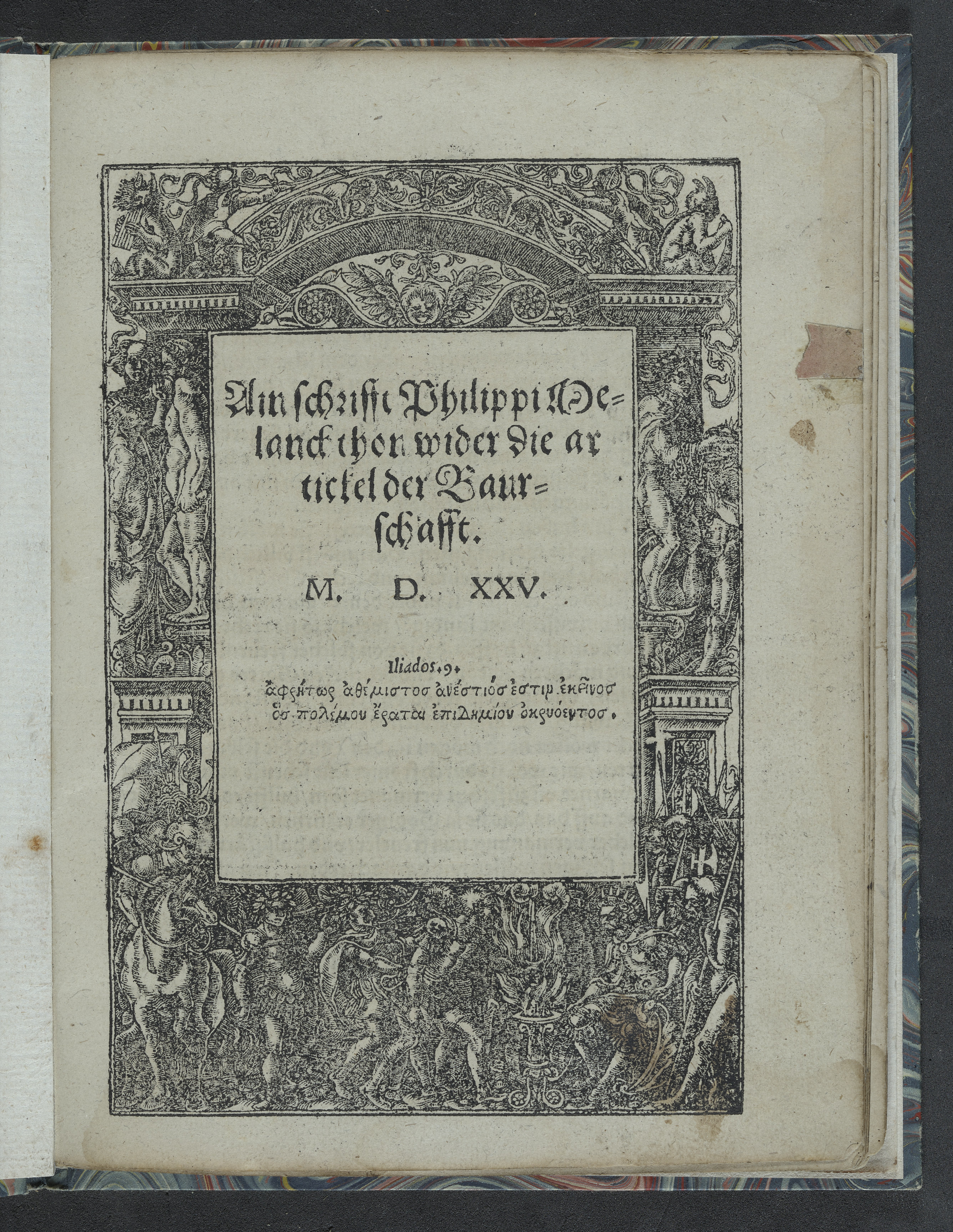
Ain schrifft Philippi Melanchthon wider die artickel der Baurschafft
Melanchthon, Philipp, 1497-1560Summary: Treatise by Melanchthon against the peasants' revolt of the mid 1520's.Summary: Treatise by Melanchthon against the peasants' revolt of the mid 1520's. -
 Text
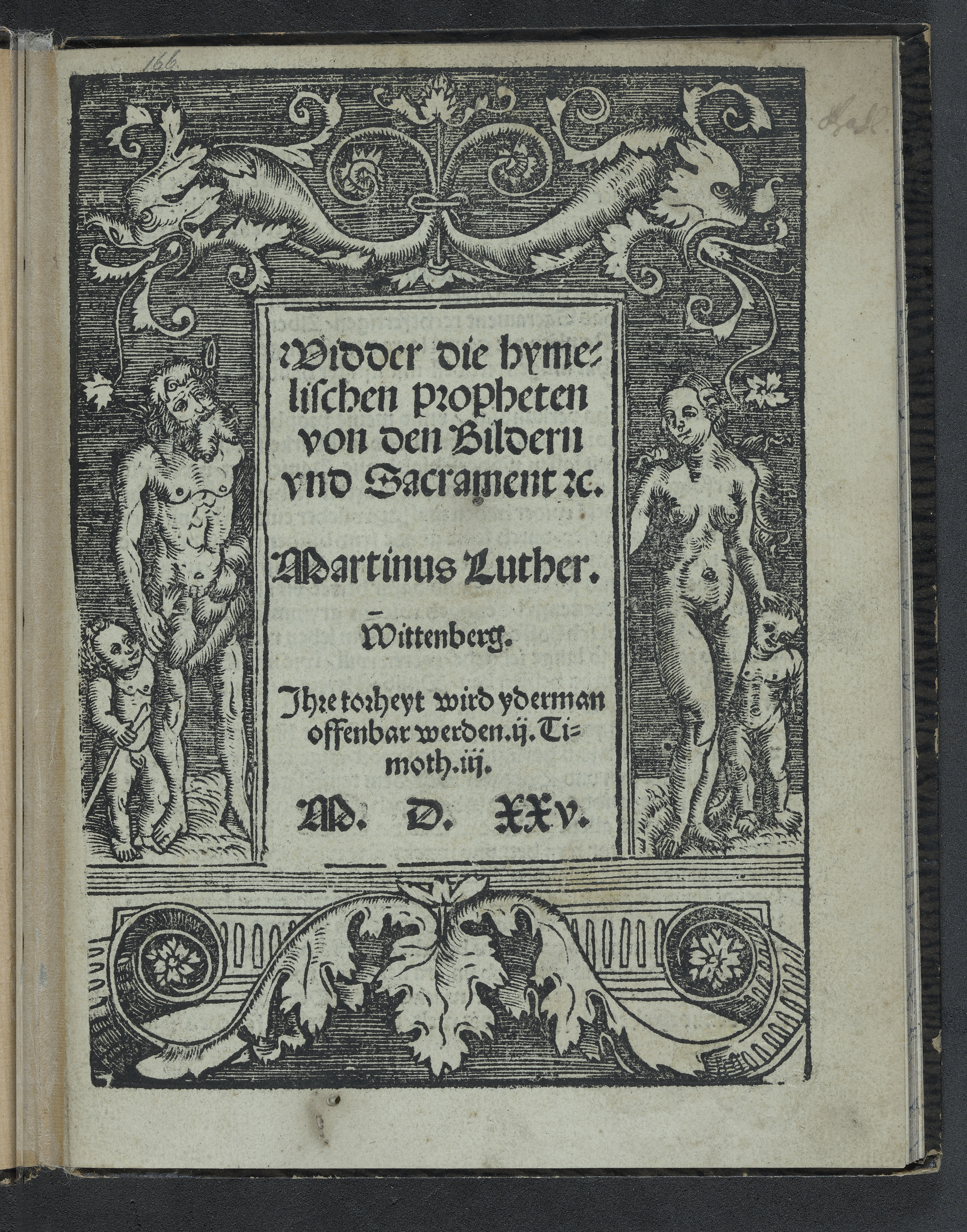
Widder die hymelischen propheten von den Bildern vnd Sacrament rc.
Luther, Martin, 1483-1546Summary: This is the ninth printing, in the year of issue, of Luther's "Against the Heavenly Prophets", a work directed at Karlstadt and his followers.Summary: This is the ninth printing, in the year of issue, of Luther's "Against the Heavenly Prophets", a work directed at Karlstadt and his followers. -
 Text
Ermanunge zum fride auff die zwelff artickel der Bawerschafft yn Schwaben
Luther, Martin, 1483-1546Summary: When Luther wrote this reply to the Swabian peasant' "Twelve Articles and Institution of the Peasants, he was still in hopes that reason might prevail and that bloodshed might be avoided.Summary: When Luther wrote this reply to the Swabian peasant' "Twelve Articles and Institution of the Peasants, he was still in hopes that reason might prevail and that bloodshed might be avoided.

Page 188 of 257
