Search
-
 Text
TextEin Predig vber die Epistel, so man liset von den heiligen Engeln. Apoc. xij. Wittenberg. M.D.Xliiij
Luther, Martin, 1483-1546Summary: Sermon preached September 21, 1544, on text: Revelation XII, 7-12 (St Michael Archangel).Summary: Sermon preached September 21, 1544, on text: Revelation XII, 7-12 (St Michael Archangel). -
 Text
TextConfessio fidei exhibita Inuictiss. Imp. Carolo V. Caesari Aug. in Comicijs Augustae, anno M.D.XXX. Addita est Apologia Confessionis. Wittenbergae
Summary: This is a fine, well-preserved copy of a sixteenth century edition of the "Confessio Augustana and Melanchthon's Apology."Summary: This is a fine, well-preserved copy of a sixteenth century edition of the "Confessio Augustana and Melanchthon's Apology." -
 Text
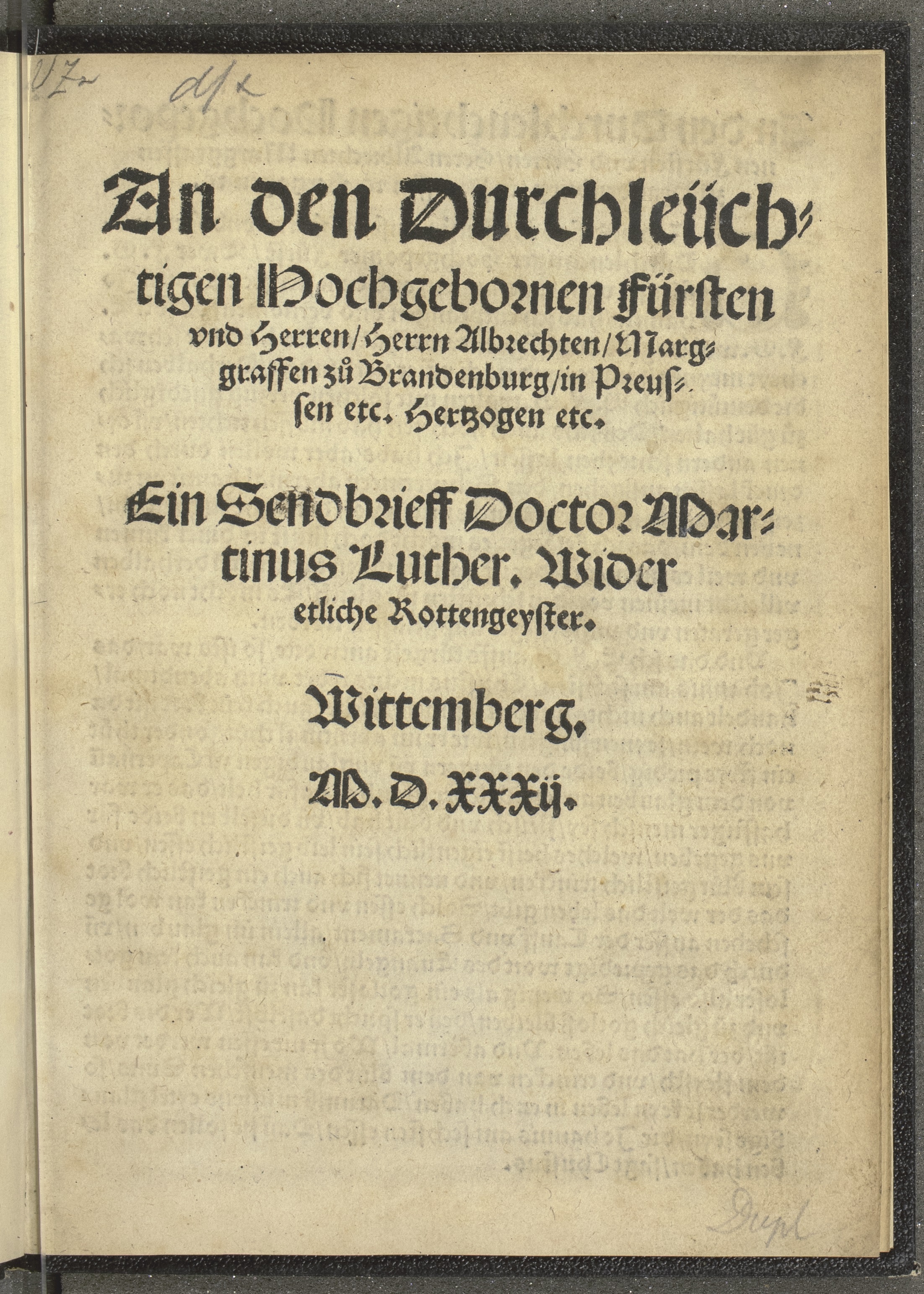
TextAn den Durchleüchtigen Hochgepornen Fürsten vnd Herrn, Herrn Albrechten, Marggraffen zuo Brandenburg, inn Preussen [et]c. Hertzogen [et]c. Ein Sendbrief Doct. Mart. Luth. Wider ettliche Rottengeyster : Wittemberg, M.D.XXXII
Luther, Martin, 1483-1546Summary: Luther's reply to a letter from Duke Albrecht of Brandenburg, concerning the interpretation of John VI with reference to the Lord's Supper.Summary: Luther's reply to a letter from Duke Albrecht of Brandenburg, concerning the interpretation of John VI with reference to the Lord's Supper. -
 Text
TextAn den Durchleüchtigen Hochgebornen Fürsten vnd Herren. Herrn Albrechten, Marggraffen zuo Brandenburg, in Preussen etc. Hertzogen etc.
Luther, Martin, 1483-1546Summary: After Albrecht, Duke of Prussia and last of the Masters of the Teutonic Knights, became a Protestant, he sought out preachers to fill the pulpits in his territory. Some were Lutherans, others were followers of Schwenckfeld. Luther here warns Albrecht about the heretical tendencies of the Schwenckfelders. Albrecht came increasingly under the influence of F. Von Heideck (a Schwenckfelder) and was not especially impressed by Luther's arguments against the use of John 6 in the interpretation of the Lord's Supper.Summary: After Albrecht, Duke of Prussia and last of the Masters of the Teutonic Knights, became a Protestant, he sought out preachers to fill the pulpits in his territory. Some were Lutherans, others were followers of Schwenckfeld. Luther here warns Albrecht about the heretical tendencies of the Schwenckfelders. Albrecht came increasingly under the influence of F. Von Heideck (a Schwenckfelder) and was not especially impressed by Luther's arguments against the use of John 6 in the interpretation of the Lord's Supper. -
 Text
TextDer CXLVII. Psalm Lauda Jerusalem
Luther, Martin, 1483-1546Summary: This is the second printing of Luther's exposition of Psalm 147. Text in German includes M. Luther's German translation of Psalms CXLVII from the Hebrew O.T.Summary: This is the second printing of Luther's exposition of Psalm 147. Text in German includes M. Luther's German translation of Psalms CXLVII from the Hebrew O.T. -
 Text
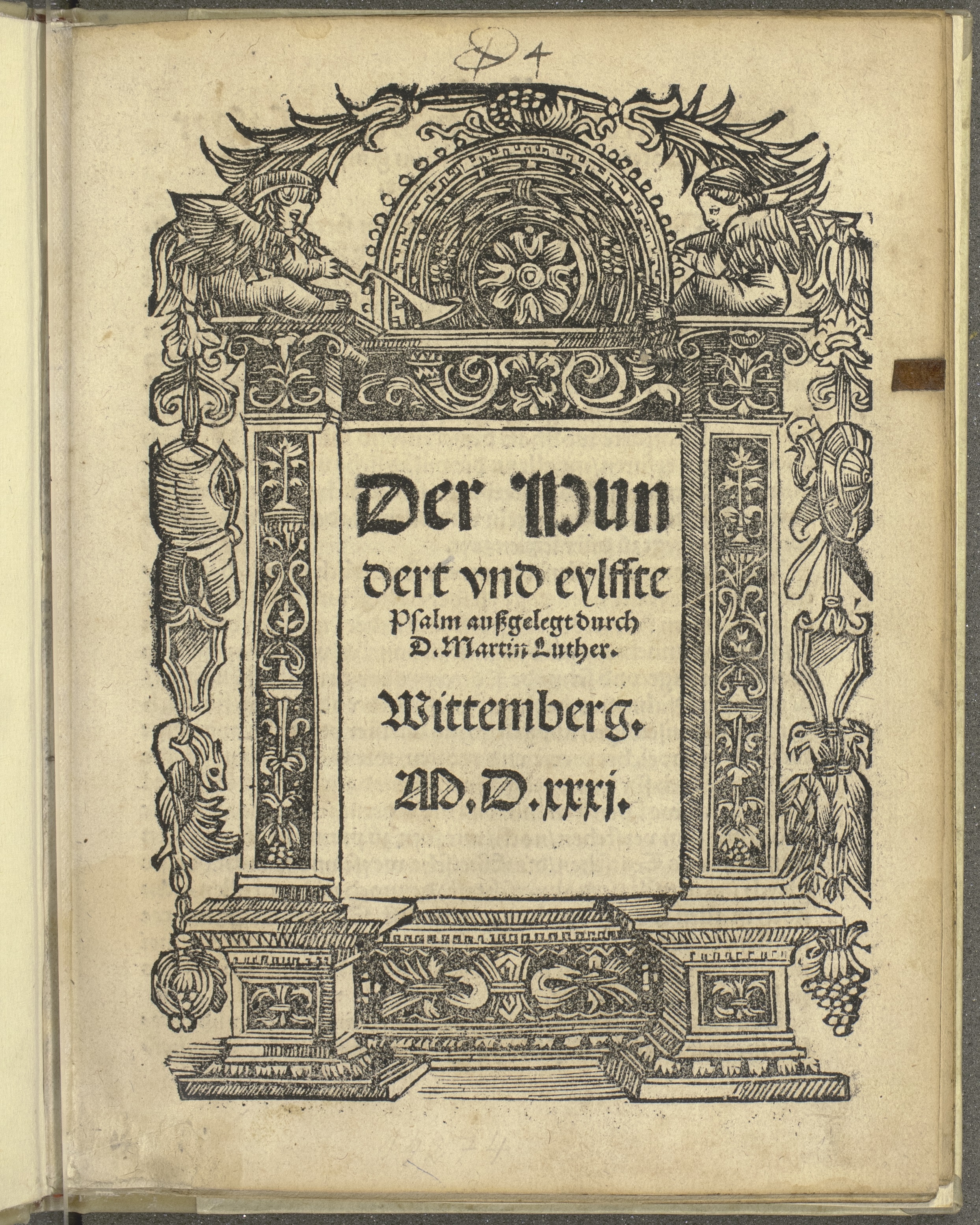
TextDer hundert vnd eylffte Psalm aussgelegt
Luther, Martin, 1483-1546Summary: 1531 printing of Luther's commentary on Psalm 111, written 1530 while he was staying at Coburg Fortress during the time of the Diet of Augsburg.Summary: 1531 printing of Luther's commentary on Psalm 111, written 1530 while he was staying at Coburg Fortress during the time of the Diet of Augsburg. -
 Text
TextVon Ehesachen
Luther, Martin, 1483-1546Summary: Second edition of the last of Luther's four tracts on marriage and married life. Luther addresses in particular the issue of secret or private engagements and their status in cases in which one of the parties enters into a public engagement.Summary: Second edition of the last of Luther's four tracts on marriage and married life. Luther addresses in particular the issue of secret or private engagements and their status in cases in which one of the parties enters into a public engagement. -
 Text
TextDas schön Confitemini an der zal der cxviij. Psalm
Luther, Martin, 1483-1546Summary: This is the third printing of Luther's German translation of his notes on Psalm 118. An Earlier German translation version had been published by Wenzeslaus Linck. Luther's expanded edition, as reprinted here, differs from Linck's in that it uses Eobanus Hessus' verse translation of the psalm, prepared with Luther's advice, as the scriptural text. Text in German includes Luther's German translation of Psalms CXVIII from the Hebrew O.T., and is Luther's expanded version of his earlier Latin work.Summary: This is the third printing of Luther's German translation of his notes on Psalm 118. An Earlier German translation version had been published by Wenzeslaus Linck. Luther's expanded edition, as reprinted here, differs from Linck's in that it uses Eobanus Hessus' verse translation of the psalm, prepared with Luther's advice, as the scriptural text. Text in German includes Luther's German translation of Psalms CXVIII from the Hebrew O.T., and is Luther's expanded version of his earlier Latin work. -
 Text
TextEyn Wyderrueff vom Fegfewr
Luther, Martin, 1483-1546Summary: One of several 1530 editions of a tract in which Luther rejects the Catholic doctrine of purgatory, a topic not addressed in the Augsburg Confessions.Summary: One of several 1530 editions of a tract in which Luther rejects the Catholic doctrine of purgatory, a topic not addressed in the Augsburg Confessions. -
 Text
TextEin Sendbrieff von Dolmetschen vnd Fürbitte der Heiligen
Luther, Martin, 1483-1546Summary: One of seven 1530 printings of a tract by Luther on his method of translating the Bible. Included is a short discussion on the possibility of intercessory prayer by the saints. The work is prefaced by Wenzeslaus Linck.Summary: One of seven 1530 printings of a tract by Luther on his method of translating the Bible. Included is a short discussion on the possibility of intercessory prayer by the saints. The work is prefaced by Wenzeslaus Linck. -
 Text
TextEine Heer predigt wider den Turcken
Luther, Martin, 1483-1546Summary: This is the third printing, second state, of Luther's sermon against the Turks.Summary: This is the third printing, second state, of Luther's sermon against the Turks. -
 Text
TextEyn Widerruff vom Fegefeur
Luther, Martin, 1483-1546Summary: Refutation, by Luther, of the teaching of Purgatory.Summary: Refutation, by Luther, of the teaching of Purgatory. -
 Text
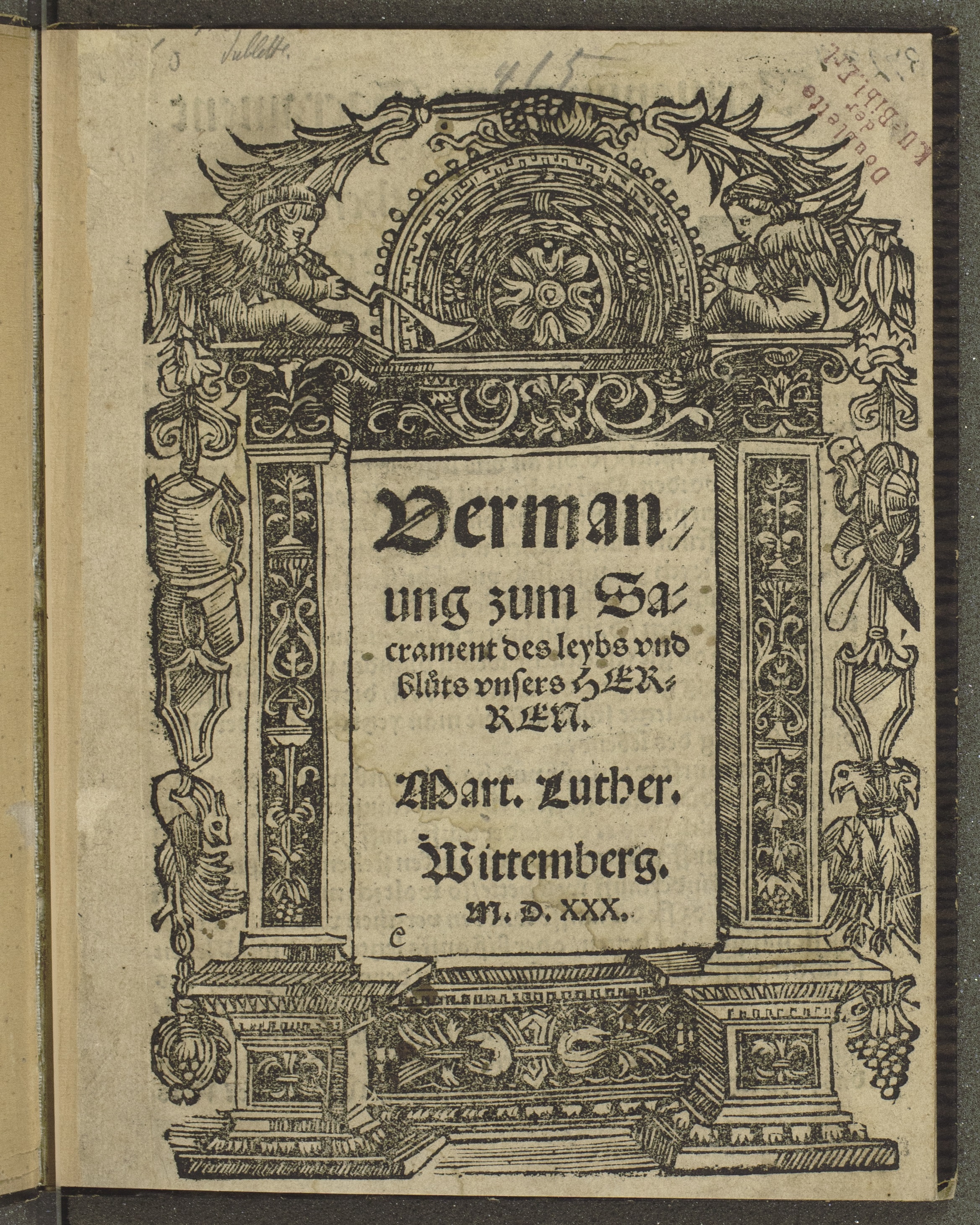
TextVermanung zum Sacrament des leybs vnd bluots vnsers Herren
Luther, Martin, 1483-1546Summary: Luther wrote this "Exhortation to the sacraments" during his stay at Coburg Castle in 1530, during the Diet of Augsburg.Summary: Luther wrote this "Exhortation to the sacraments" during his stay at Coburg Castle in 1530, during the Diet of Augsburg. -
 Text
TextVier trostliche Psalmen, an die Königin zu Hungern
Luther, Martin, 1483-1546Summary: An interpretation on 4 Consolation Psalms (Ps. 37, 62, 94, 109), written by Luther for Queen Mary of Hungary, sister of the Emperor Charles V, after the death of her husband Louis in the battle of Mohács.Summary: An interpretation on 4 Consolation Psalms (Ps. 37, 62, 94, 109), written by Luther for Queen Mary of Hungary, sister of the Emperor Charles V, after the death of her husband Louis in the battle of Mohács. -
 Text
TextDas der frey will nichts sey : Anntwort D. Martini Luther ann Erasmum Rotherdam
Luther, Martin, 1483-1546Summary: German translation by Martin Luther's colleague, Justus Jonas, of "De servo arbitrio". "De servo arbitrio (Concerning the Enslaved Will)" is considered one of Luther's greatest literary productions, and among the most important writings of the Reformation. In it, he defends the idea of the complete inability of the human being to please God, apart from Divine grace.Summary: German translation by Martin Luther's colleague, Justus Jonas, of "De servo arbitrio". "De servo arbitrio (Concerning the Enslaved Will)" is considered one of Luther's greatest literary productions, and among the most important writings of the Reformation. In it, he defends the idea of the complete inability of the human being to please God, apart from Divine grace. -
 Text
TextDas ander teyl widder die hymlischen Propheten, vom Sacrament.
Luther, Martin, 1483-1546Summary: The Second printing of Luther's book, "Against the Heavenly Prophets addresses A. Karlstadt's doctrine of the Sacraments. This is the second printing of this work in its year of issue.Summary: The Second printing of Luther's book, "Against the Heavenly Prophets addresses A. Karlstadt's doctrine of the Sacraments. This is the second printing of this work in its year of issue. -
 Text
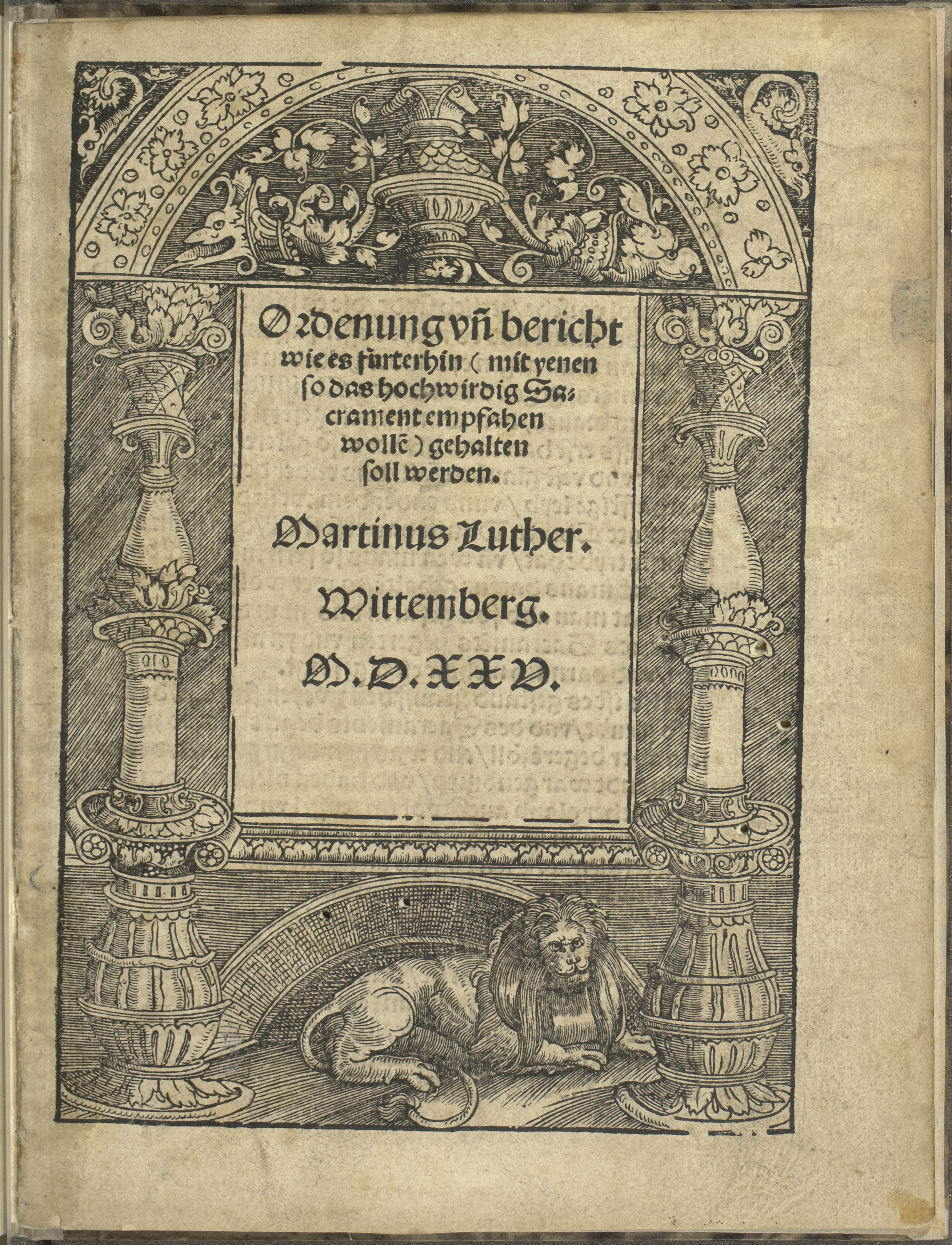
TextOrdenung vn[d] bericht wie es furterhin (mit yenen so das hochwirdig Sacrament empfahen wolle[n]) gehalten soll werden
Luther, Martin, 1483-1546Summary: Early guidance by Luther on how a Christian ought to approach and receive the Lord's Supper. Includes the Words of Institution, the Aaronic Benediction, and a series of questions that ought to be put to everyone wishing to receive the Sacrament, with appropriate answers.Summary: Early guidance by Luther on how a Christian ought to approach and receive the Lord's Supper. Includes the Words of Institution, the Aaronic Benediction, and a series of questions that ought to be put to everyone wishing to receive the Sacrament, with appropriate answers. -
 Text
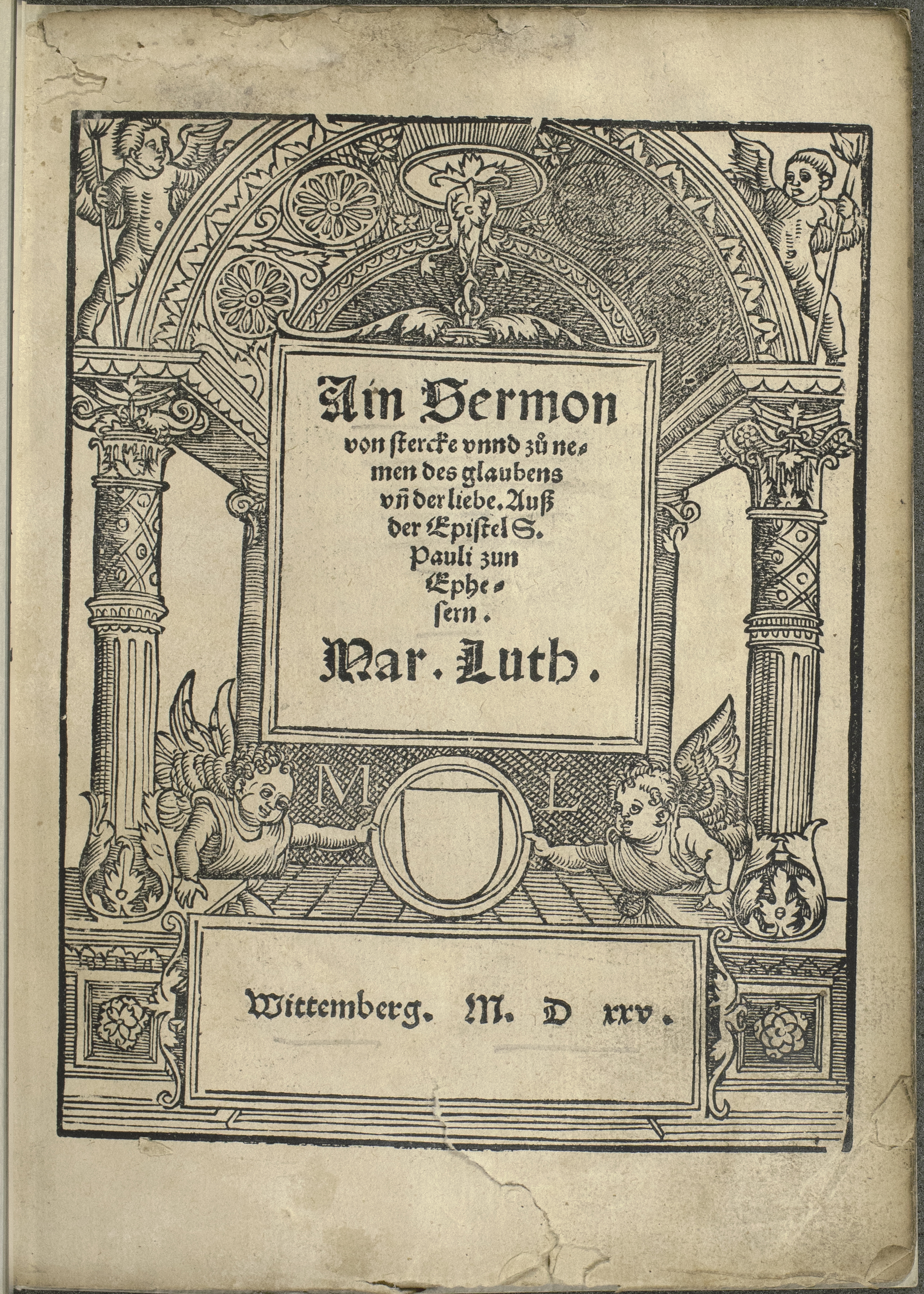
TextAin Sermon von stercke vnnd zuo nemen des glaubens vn[d] der liebe : Aus der Epistel S. Pauli zun Eypesernn
Luther, Martin, 1483-1546Summary: Sixth of six printings to appear in 1525, the year of its initial printing, of this sermon by Luther on the strengthening of faith and love.Summary: Sixth of six printings to appear in 1525, the year of its initial printing, of this sermon by Luther on the strengthening of faith and love. -
 Text
TextEyn Sermon von stercke vnnd zuonemen des glaubens vnnd der liebe : Aus der Epistel S. Pauli zuon Eypesernn
Luther, Martin, 1483-1546Summary: Third of six printings to appear in 1525, the year of its initial printing, of this sermon by Luther on the strengthening of faith and love.Summary: Third of six printings to appear in 1525, the year of its initial printing, of this sermon by Luther on the strengthening of faith and love. -
 Text
TextVonn dem grewel der stillmesse, so man den Canon nennet
Luther, Martin, 1483-1546Summary: Luther here offers his translation of the Canon of the Mass together with a brief treatise against the practice of private masses. Text in German includes Luther's German translation of the Canon from the Latin.Summary: Luther here offers his translation of the Canon of the Mass together with a brief treatise against the practice of private masses. Text in German includes Luther's German translation of the Canon from the Latin. -
 Text
TextDie Epistel S. Paul an die Galater
Luther, Martin, 1483-1546Summary: In August 1523, a second revision of Luther's 1519 Galatians commentary was issued by Luther himself. V. Heydnecker (who may have been V. Obsopaeus) prepared this German translation of the work. Text in German includes M. Luther's translation of St. Paul's Epistle to the Galatians from the Greek N.T. Text is translated from M. Luther's Latin work: In epistolam Sancti Pauli ad Galatas commentarius (1519) by V. Heydnecker, who some scholars believe was V. Obsopäus. Text is translation of the 2nd version of Luther's work.Summary: In August 1523, a second revision of Luther's 1519 Galatians commentary was issued by Luther himself. V. Heydnecker (who may have been V. Obsopaeus) prepared this German translation of the work. Text in German includes M. Luther's translation of St. Paul's Epistle to the Galatians from the Greek N.T. Text is translated from M. Luther's Latin work: In epistolam Sancti Pauli ad Galatas commentarius (1519) by V. Heydnecker, who some scholars believe was V. Obsopäus. Text is translation of the 2nd version of Luther's work.

Page 220 of 257
