Search
-
 Text
Letter from Georg Spalatin to Duke Magnus III of Mecklenburg, May 3, 1534
Spalatin, Georg, 1484-1545A cover letter, dated May 3, 1534, for a manuscript which Spalatin had promised to Duke Magnus III of Mecklenburg regarding the justification used by Henry VIII for his divorce from Catherine of Aragon, which was never recognized by Rome. Henry had married Anne Boleyn in January of 1533 and on May 23 1534, Pope Clement VII invalidated Henry's divorce and remarriage, which led to England's final break with Rome and the foundingn of the Anglican Church.A cover letter, dated May 3, 1534, for a manuscript which Spalatin had promised to Duke Magnus III of Mecklenburg regarding the justification used by Henry VIII for his divorce from Catherine of Aragon, which was never recognized by Rome. Henry had married Anne Boleyn in January of 1533 and on May 23 1534, Pope Clement VII invalidated Henry's divorce and remarriage, which led to England's final break with Rome and the foundingn of the Anglican Church. -
 Text
Letter from Georg Spalatin to Heinrich von Einsiedel, January 9, 1536
Spalatin, Georg, 1484-1545A letter written to Heinrich von Einsiedel and an enclosed with a copy of a sermon by Philipp Melanchthon. Within the body of the letter, Spalatin entreats Einsiedel to "exert your goodwill on the work's behalf". The letter is dated 1536.A letter written to Heinrich von Einsiedel and an enclosed with a copy of a sermon by Philipp Melanchthon. Within the body of the letter, Spalatin entreats Einsiedel to "exert your goodwill on the work's behalf". The letter is dated 1536. -
 Text
Letter from Georg Spalatin to Heinrich von Einsiedel, October 7, 1528
Spalatin, Georg, 1484-1545A letter written to the "Noble and Right worthy Heinrich von Einsiedel" in Gnansteyn. The matter being addressed is the refusal of Brosius Berger to take an oath, thus hindering Katharina Gockritz from getting married. Mention of consultation with Doctor Martin [Luther] is in the letter. With the exception of the upper right corner which is missing, the paper is in good condition. The date "1528" appears in the upper left corner in a different ink.A letter written to the "Noble and Right worthy Heinrich von Einsiedel" in Gnansteyn. The matter being addressed is the refusal of Brosius Berger to take an oath, thus hindering Katharina Gockritz from getting married. Mention of consultation with Doctor Martin [Luther] is in the letter. With the exception of the upper right corner which is missing, the paper is in good condition. The date "1528" appears in the upper left corner in a different ink. -
 Text
Letter from Johannes Cochlaeus to Julius von Pflug
Cochlaeus, Johannes, 1479-1552This letter was written by Cochlaeus on June 6, 1547 to Julius von Pflug, the last Prince Bishop of Naumburg. Cochlaeus congratulates von Pflug on his reinstatemnnt into his office following the defeat and capture of Elector John Frederick of Saxony in the Schmalkald War. The letter also contains a reference by Cochlaus to the transfer to Bologna of the meetings that became known as the Council of Trent.This letter was written by Cochlaeus on June 6, 1547 to Julius von Pflug, the last Prince Bishop of Naumburg. Cochlaeus congratulates von Pflug on his reinstatemnnt into his office following the defeat and capture of Elector John Frederick of Saxony in the Schmalkald War. The letter also contains a reference by Cochlaus to the transfer to Bologna of the meetings that became known as the Council of Trent. -
 Still image
Effigies Reverendi Viri, D. Philippi Melanchthonis, Expressa VVitebergae Anno M. D. LXIII
Cranach, Lucas, 1515-1586An impression done in 1564 of a woodcut made in 1561 depicting Philipp MelanchthonAn impression done in 1564 of a woodcut made in 1561 depicting Philipp Melanchthon -
 Text
Paulus Spricht zu den Colossern
Melanchthon, Philipp, 1497-1560An unpublished manuscript signed and dated (1551) by Philipp Melanchthon. Written on three sides of two sheets, it is a meditation on the Third Chapter of Paul's Letter to the Colossians. The two leaves on which the meditation is written (19 x 29 cm.) show signs of insect damage and have been repaired with Japanese paper. The verso of the title page holds the inscription "C. S. V. R. mit Galt" near the top with a less readable second line. Near the bottom is the inscription "1551 mit Galt". For their protection, both pieces were encapsulated in mylar.An unpublished manuscript signed and dated (1551) by Philipp Melanchthon. Written on three sides of two sheets, it is a meditation on the Third Chapter of Paul's Letter to the Colossians. The two leaves on which the meditation is written (19 x 29 cm.) show signs of insect damage and have been repaired with Japanese paper. The verso of the title page holds the inscription "C. S. V. R. mit Galt" near the top with a less readable second line. Near the bottom is the inscription "1551 mit Galt". For their protection, both pieces were encapsulated in mylar. -
 Text
Receipt for 20 Gulden salary to Jonas Justus from the City Council of Erfurt
Jonas, Justus, 1493-1555This collection consists of a single receipt, on paper, for 20 Gulden which Jonas received as salary from the City Council of Erfurt. Our research has so far been unable to determine just why Jonas was being paid by the City Council. The fact that he uses the word "Zinse" (interest income, or, income from a benefice) suggests that it was for services rendered as a preacher in that City. It is also known that he was considering returning to Erfurt as a preacher after the debacle at Halle. The receipt is signed by Justus Jonas and is dated the 2nd February 1549.This collection consists of a single receipt, on paper, for 20 Gulden which Jonas received as salary from the City Council of Erfurt. Our research has so far been unable to determine just why Jonas was being paid by the City Council. The fact that he uses the word "Zinse" (interest income, or, income from a benefice) suggests that it was for services rendered as a preacher in that City. It is also known that he was considering returning to Erfurt as a preacher after the debacle at Halle. The receipt is signed by Justus Jonas and is dated the 2nd February 1549. -
 Text
Letter from John, Elector of Saxony, to Duke Albrecht of Bavaria
John, Elector of Saxony, 1468-1532A signed (letter contains notation in his own hand), handwritten letter, in German, on paper. The letter addresses John's unwillingness to provide aid in a dispute against his relative, Duke Albrecht of Bavaria.A signed (letter contains notation in his own hand), handwritten letter, in German, on paper. The letter addresses John's unwillingness to provide aid in a dispute against his relative, Duke Albrecht of Bavaria. -
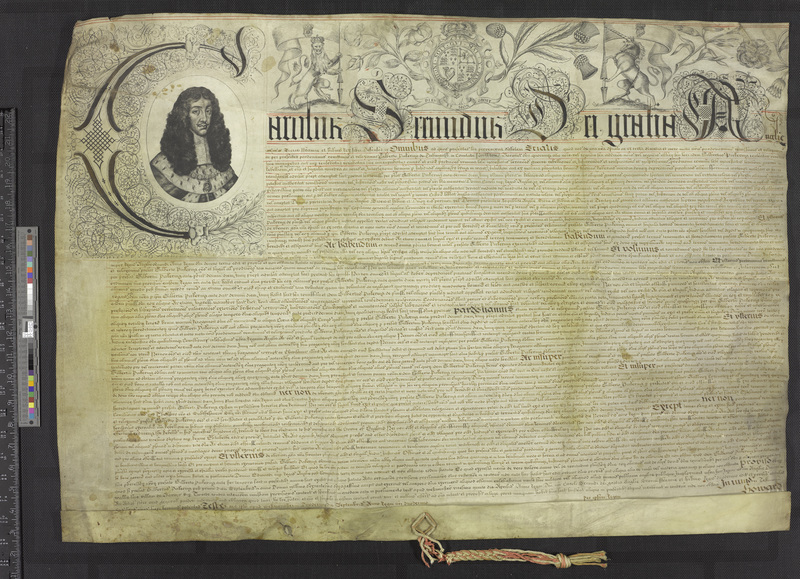 Text
Pardon of Sir Gilbert Pickering
Charles II, King of England, 1630-1685This is a pardon granted to Sir Gilbert Pickering by Charles II. Pickering was pardoned for supporting Oliver Cromwell prior to the Restoration of 1660. It is hand-written on vellum.This is a pardon granted to Sir Gilbert Pickering by Charles II. Pickering was pardoned for supporting Oliver Cromwell prior to the Restoration of 1660. It is hand-written on vellum. -
 Text
James Radcliffe's Speech from the Scaffold
Derwentwater, James Radcliffe, Earl of, 1689-1716This manuscript consists of a handwritten copy of the speech made by James Radcliffe, third Earl of Derwentwater, from the scaffold on February 24, 1716. Radcliffe was sentenced to death by King George I because of his participation in the conspiracy to reinstate the Stuarts. In the speech Radcliffe renounced his plea of guilt, affirmed his adherene to the Roman Catholic faith, and professed his loyalty to James III.This manuscript consists of a handwritten copy of the speech made by James Radcliffe, third Earl of Derwentwater, from the scaffold on February 24, 1716. Radcliffe was sentenced to death by King George I because of his participation in the conspiracy to reinstate the Stuarts. In the speech Radcliffe renounced his plea of guilt, affirmed his adherene to the Roman Catholic faith, and professed his loyalty to James III. -
 Text
Note on Old Testament Chronology
Luther, Martin, 1483-1546A manuscript in Martin Luther's own hand, "Notes on Two Chronological Difficulties in the Old Testament" (see Weimar Edition of The Works of Martin Luther, Volume 60, page 163). The document is a seven line author's note written in 1541, in which Luther discussed the accuracy of the computations in his 1541 work, Computation of the Years of the World. (Weimar Edition of The Works of Martin Luther, Volume 53, pages 177-182).A manuscript in Martin Luther's own hand, "Notes on Two Chronological Difficulties in the Old Testament" (see Weimar Edition of The Works of Martin Luther, Volume 60, page 163). The document is a seven line author's note written in 1541, in which Luther discussed the accuracy of the computations in his 1541 work, Computation of the Years of the World. (Weimar Edition of The Works of Martin Luther, Volume 53, pages 177-182). -
 Text
Henry de Lesomet letter to Raffaele de' Medici, April 29, 1521
Lesomet, Henry deA letter from Henry de Lesomet to Raffaele de' Medici concerning correspondence with a Monsieur de Hoochstrate as well as mentioning Luther's departure from Worms and Lesomet's disdain for Luther's opinionsA letter from Henry de Lesomet to Raffaele de' Medici concerning correspondence with a Monsieur de Hoochstrate as well as mentioning Luther's departure from Worms and Lesomet's disdain for Luther's opinions -
 Text
Disticha de uita et praecipuis rebus gestis uiri Dei et...
Stoltz, Johann, circa 1514-1556Twenty distichs (couplets) inspired by important events in the life of Martin Luther. The couplets, in Latin, were composed ca. 1550 and are written on paper. The author's name is found at the end of the piece as is his dedication of it to Johann Kestner. Pencil markings of a later owner are located in the upper left corner of the first page. Originally part of a signature, each of the two leaves has been encapsulated in Mylar for protection.Twenty distichs (couplets) inspired by important events in the life of Martin Luther. The couplets, in Latin, were composed ca. 1550 and are written on paper. The author's name is found at the end of the piece as is his dedication of it to Johann Kestner. Pencil markings of a later owner are located in the upper left corner of the first page. Originally part of a signature, each of the two leaves has been encapsulated in Mylar for protection. -
 Text
Letter to Frederick III, Elector of Saxony, ca. 1512
A handwritten letter, in German, addressed to Samsons Schoffler zu Seyda and Mathes Pustewald, concerning the parish of Neuerdorff, and the death of the Rev. Wust.A handwritten letter, in German, addressed to Samsons Schoffler zu Seyda and Mathes Pustewald, concerning the parish of Neuerdorff, and the death of the Rev. Wust. -
 Text
Girolamo [Hieronomo] Aleandro letter to Raffaele de' Medici, June 1, 1521
Aleandro, Girolamo, 1480-1542A letter from Girolamo Aleandro to his patron, Raffaele de' Medici, concerning the work done at the Diet, including the condemnation and arguments made against Luther. Aleandro discusses the drafting of an offical Imperial decree against Luther and discusses political tensions between the Holy Roman Empire and France.A letter from Girolamo Aleandro to his patron, Raffaele de' Medici, concerning the work done at the Diet, including the condemnation and arguments made against Luther. Aleandro discusses the drafting of an offical Imperial decree against Luther and discusses political tensions between the Holy Roman Empire and France. -
 Text
Girolamo [Hieronomo] Aleandro letter to Raffaele de' Medici, May 5, 1520
Aleandro, Girolamo, 1480-1542A letter from Girolamo Aleandro to his patron, Raffaele de' Medici, mentioning Luther's presence in Worms and commending himself further to Raffaele.A letter from Girolamo Aleandro to his patron, Raffaele de' Medici, mentioning Luther's presence in Worms and commending himself further to Raffaele. -
 Artifact
Medallion commemorating the centenary of the "Organization of American Methodism" (Methodist Episcopal Church, South)
A medallion celebrating the Methodist Episcopal Church, South and the Organization of American Methodism's centenary with portraits of bishops George Foster Pierce and Francis Ashbury Pratt, one on each side.A medallion celebrating the Methodist Episcopal Church, South and the Organization of American Methodism's centenary with portraits of bishops George Foster Pierce and Francis Ashbury Pratt, one on each side. -
 Artifact
Baby cap attributed to be Charles Wesley's
An infant's bonnet with lace trim preported to have been Charles Wesley's.An infant's bonnet with lace trim preported to have been Charles Wesley's. -
 Artifact
Methodist Wesleyan Centenary Medallion
A medallion celebrating the centenary of Wesleyan Methodism. One side shows a portrait of John Wesley with the dates of his birth and death. The reverse shows the Centenary Hall and Mission House in London over the motto "The world is my parish."A medallion celebrating the centenary of Wesleyan Methodism. One side shows a portrait of John Wesley with the dates of his birth and death. The reverse shows the Centenary Hall and Mission House in London over the motto "The world is my parish." -
 Artifact
Forty-two clear glass communion cups
A set of forty-two simple glass communion cups.A set of forty-two simple glass communion cups. -
 Artifact
Staffordshire ceramic bust of George Whitefield
Wood, Enoch, 1759-1840A bust of Revd. George Whitefield stamped on the reverse with the inscription "The Revd. George Whitefield, died Sept. 30, 1770, aged 56."A bust of Revd. George Whitefield stamped on the reverse with the inscription "The Revd. George Whitefield, died Sept. 30, 1770, aged 56."

Page 241 of 257
