Search
14 resources
14 items
Date
1530
-
 Text
TextAn die durchtlüchtige[n] Fürsten Tütscher nation zuo Ougspurg versammlot ein Sendtbrieff Huldrych Zuinglis : die schelckwort Eggens so er wider die warheyt vszgossen betreffendt
Zwingli, Ulrich, 1484-1531Summary: Exemplar of a unique contemporary printing of Swiss Reformer Ulrich Zwingli's apology for his theological position, sent to the assembled princes at the Diet of Augsburg in 1530. Zwingli focusses especially on the Lord's Supper, in view of the criticisms of his position by Johann Eck.Summary: Exemplar of a unique contemporary printing of Swiss Reformer Ulrich Zwingli's apology for his theological position, sent to the assembled princes at the Diet of Augsburg in 1530. Zwingli focusses especially on the Lord's Supper, in view of the criticisms of his position by Johann Eck. -
 Text
TextAuslegung der Episteln vnd Euangelien vom Advent an, bis auff Ostern
Luther, Martin, 1483-1546Summary: Luther certainly had his problems with printers, as this edition of his "Winter Postil" testifies. Michael Lotter issued this new edition without Luther's approval. The editors took great labors, but found no favor in Wittenberg, and this edition was never reprinted.Summary: Luther certainly had his problems with printers, as this edition of his "Winter Postil" testifies. Michael Lotter issued this new edition without Luther's approval. The editors took great labors, but found no favor in Wittenberg, and this edition was never reprinted. -
 Text
TextDas schön Confitemini an der zal der CXVIII Psalm
Luther, Martin, 1483-1546Summary: Text in German includes Luther's German translation of Psalms CXVIII from the Hebrew O.T., and is Luther's expanded version of his earlier Latin work.Summary: Text in German includes Luther's German translation of Psalms CXVIII from the Hebrew O.T., and is Luther's expanded version of his earlier Latin work. -
 Text
TextDas schön Confitemini an der zal der cxviij. Psalm
Luther, Martin, 1483-1546Summary: This is the third printing of Luther's German translation of his notes on Psalm 118. An Earlier German translation version had been published by Wenzeslaus Linck. Luther's expanded edition, as reprinted here, differs from Linck's in that it uses Eobanus Hessus' verse translation of the psalm, prepared with Luther's advice, as the scriptural text. Text in German includes Luther's German translation of Psalms CXVIII from the Hebrew O.T., and is Luther's expanded version of his earlier Latin work.Summary: This is the third printing of Luther's German translation of his notes on Psalm 118. An Earlier German translation version had been published by Wenzeslaus Linck. Luther's expanded edition, as reprinted here, differs from Linck's in that it uses Eobanus Hessus' verse translation of the psalm, prepared with Luther's advice, as the scriptural text. Text in German includes Luther's German translation of Psalms CXVIII from the Hebrew O.T., and is Luther's expanded version of his earlier Latin work. -
 Text
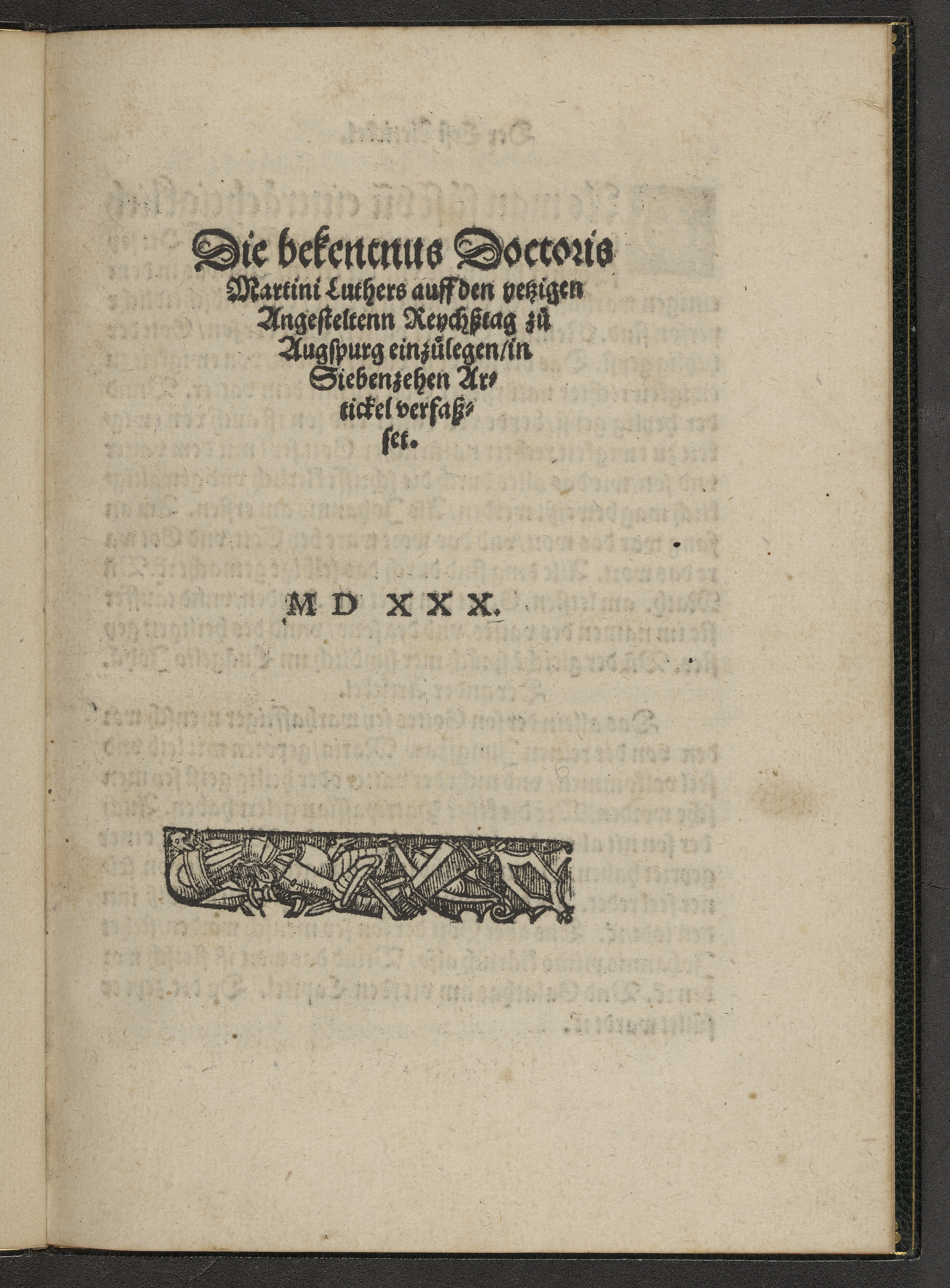
TextDie bekentnus Doctoris Martini Luthers auff den yetzigen Angesteltenn Reychstag zu Augspurg einzuolegen : in Siebenzehen Artickel verfasset
Luther, Martin, 1483-1546Summary: One of at least 11 printings produced in 1530 of the Schwabach Articles, 17 articles of faith composed by Luther 1529 in Schwabach. It became one of the foundational documents for the Augsburg Confession.Bound in modern dark green morocco, bordered, blind- and gilt-tooled, with inside dentelles, gold spine title, and gilt edges. Upper board scratched.Summary: One of at least 11 printings produced in 1530 of the Schwabach Articles, 17 articles of faith composed by Luther 1529 in Schwabach. It became one of the foundational documents for the Augsburg Confession.Bound in modern dark green morocco, bordered, blind- and gilt-tooled, with inside dentelles, gold spine title, and gilt edges. Upper board scratched. -
 Text
TextEin Sendbrieff von Dolmetschen vnd Fürbitte der Heiligen
Luther, Martin, 1483-1546Summary: One of seven 1530 printings of a tract by Luther on his method of translating the Bible. Included is a short discussion on the possibility of intercessory prayer by the saints. The work is prefaced by Wenzeslaus Linck.Summary: One of seven 1530 printings of a tract by Luther on his method of translating the Bible. Included is a short discussion on the possibility of intercessory prayer by the saints. The work is prefaced by Wenzeslaus Linck. -
 Text
TextEine Heer predigt wider den Turcken
Luther, Martin, 1483-1546Summary: This is the third printing, second state, of Luther's sermon against the Turks.Summary: This is the third printing, second state, of Luther's sermon against the Turks. -
 Text
TextEyn Widerruff vom Fegefeur
Luther, Martin, 1483-1546Summary: Refutation, by Luther, of the teaching of Purgatory.Summary: Refutation, by Luther, of the teaching of Purgatory. -
 Text
TextEyn Wyderrueff vom Fegfewr
Luther, Martin, 1483-1546Summary: One of several 1530 editions of a tract in which Luther rejects the Catholic doctrine of purgatory, a topic not addressed in the Augsburg Confessions.Summary: One of several 1530 editions of a tract in which Luther rejects the Catholic doctrine of purgatory, a topic not addressed in the Augsburg Confessions. -
 Still image
Historiated title page of Ad Carolum Romanorum imperatorem Germaniae comitia Augustae celebrantem, fidei Huldrychi Zuinglij ratio
The title page of Ulrich Zwingli's Ad Carolum Romanorum imperatorem Germaniae comitia Augustae celebrantem, fidei Huldrychi Zuinglij ratio featuring a portrait of Holy Roman Emperor Charles V, holding a scepter and with the chain with the ram of the Order of the Goldent Fleece around his neck.The title page of Ulrich Zwingli's Ad Carolum Romanorum imperatorem Germaniae comitia Augustae celebrantem, fidei Huldrychi Zuinglij ratio featuring a portrait of Holy Roman Emperor Charles V, holding a scepter and with the chain with the ram of the Order of the Goldent Fleece around his neck. -
 Still image
Hosea with his Wife and Children
A woodcut depicting Hosea, his wife, Gomer, and their three children, Jezreel, Lo-Ruhamah, and Lo-Ammi. The first verse of the book of Hosea is printed above.A woodcut depicting Hosea, his wife, Gomer, and their three children, Jezreel, Lo-Ruhamah, and Lo-Ammi. The first verse of the book of Hosea is printed above. -
 Text
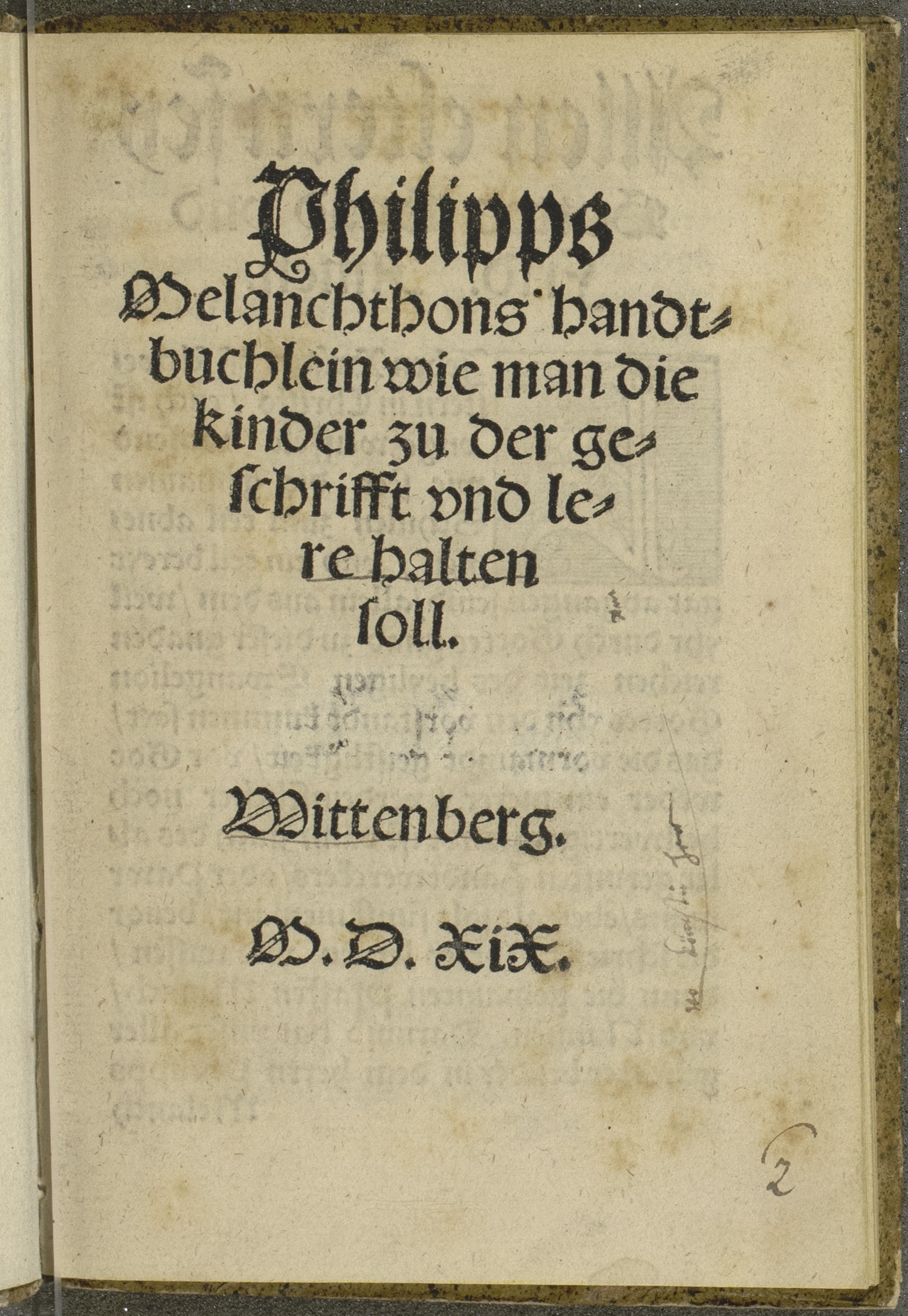
TextPhilipps Melanchthons handtbuchlein wie man die kinder zu der geschrifft vnd lere halten soll. Wittenberg. M.D.XIX
Melanchthon, Philipp, 1497-1560Summary: Melanchthon's "Handtbuchlein" is among the first attempts at a Protestant catechism. It is a collection of selections from scripture passages, prayers, and other text intended as instruction for students in German schools. Noteworthy are the "Seven Wise Saying" derived from Periander by Erasmus.Summary: Melanchthon's "Handtbuchlein" is among the first attempts at a Protestant catechism. It is a collection of selections from scripture passages, prayers, and other text intended as instruction for students in German schools. Noteworthy are the "Seven Wise Saying" derived from Periander by Erasmus. -
 Text
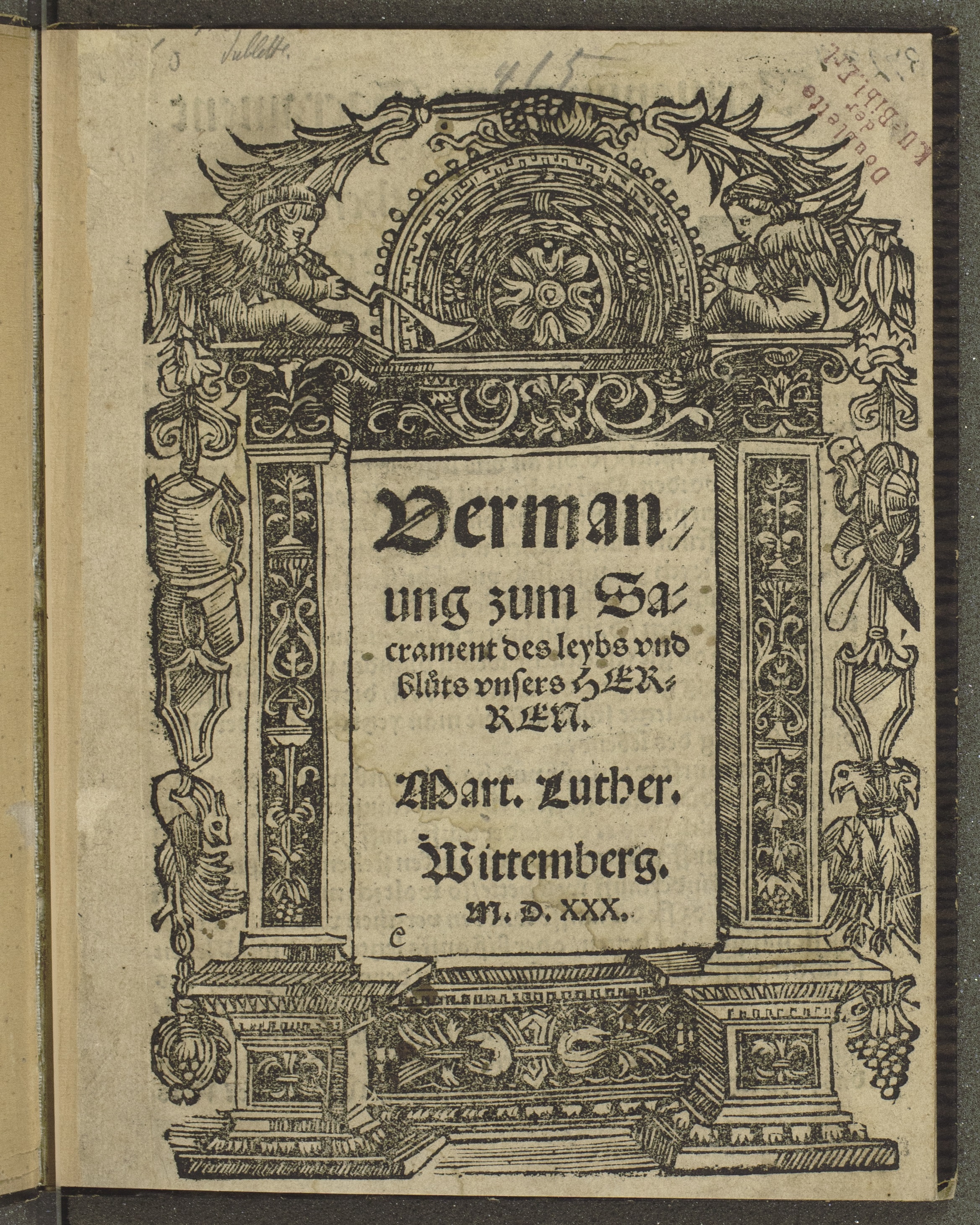
TextVermanung zum Sacrament des leybs vnd bluots vnsers Herren
Luther, Martin, 1483-1546Summary: Luther wrote this "Exhortation to the sacraments" during his stay at Coburg Castle in 1530, during the Diet of Augsburg.Summary: Luther wrote this "Exhortation to the sacraments" during his stay at Coburg Castle in 1530, during the Diet of Augsburg. -
 Text
TextVon Ehesachen
Luther, Martin, 1483-1546Summary: Second edition of the last of Luther's four tracts on marriage and married life. Luther addresses in particular the issue of secret or private engagements and their status in cases in which one of the parties enters into a public engagement.Summary: Second edition of the last of Luther's four tracts on marriage and married life. Luther addresses in particular the issue of secret or private engagements and their status in cases in which one of the parties enters into a public engagement.