Search
36 resources
36 items
Publisher
Rhau-Grunenberg, Johann, active 1508-1525
-
![A woodcut border on the title page to Luther's Ad Johannem Ecciu[m] printed in 1519. The border depicts a variety of plants and animals, including a crane or heron and a squirrel.](https://digital.pitts.emory.edu/files/large/P_300000072446_P005/P_300000072446_P005_PROD.jpg) Still image
Still imageHistoriated title page of Luther's Ad Johannem Ecciu[m]
A woodcut border on the title page to Luther's Ad Johannem Ecciu[m] printed in 1519. The border depicts a variety of plants and animals, including a crane or heron and a squirrel.A woodcut border on the title page to Luther's Ad Johannem Ecciu[m] printed in 1519. The border depicts a variety of plants and animals, including a crane or heron and a squirrel. -
 Still image
Historiated title page of Luther's De votis monasticis
A woodcut border on the title page of Luther's Uon Menschenn Lere zu meyden printed in 1522. The border consists of a single woodcut depicting two birds flanking a plinth (top), a man wearing a hat and playing a flute with a bee at his shoulder (right), two cherubs holding up a blank crest (bottom), and a humanoid fiure with a pig or cow's head holding a rosary (right).A woodcut border on the title page of Luther's Uon Menschenn Lere zu meyden printed in 1522. The border consists of a single woodcut depicting two birds flanking a plinth (top), a man wearing a hat and playing a flute with a bee at his shoulder (right), two cherubs holding up a blank crest (bottom), and a humanoid fiure with a pig or cow's head holding a rosary (right). -
 Still image
Historiated title page of Luther's Uom Missbrauch der Messen
A woodcut border on the title page of Luther's Uom Missbrauch der Messen printed in 1522.A woodcut border on the title page of Luther's Uom Missbrauch der Messen printed in 1522. -
 Still image
Historiated title page of Luther's Uon Menschenn Lere zu meyden
A woodcut border on the title page of Luther's Uon Menschenn Lere zu meyden printed in 1522. The border consists of a single woodcut depicting two birds flanking a plinth (top), a man wearing a hat and playing a flute with a bee at his shoulder (right), two cherubs holding up a blank crest (bottom), and a humanoid fiure with a pig or cow's head holding a rosary (right).A woodcut border on the title page of Luther's Uon Menschenn Lere zu meyden printed in 1522. The border consists of a single woodcut depicting two birds flanking a plinth (top), a man wearing a hat and playing a flute with a bee at his shoulder (right), two cherubs holding up a blank crest (bottom), and a humanoid fiure with a pig or cow's head holding a rosary (right). -
 Still image
Historiated title page of Luther's Vom ehelichen Leben
A woodcut border on the title page of Luther's Vom ehelichen Leben printed in 1522.A woodcut border on the title page of Luther's Vom ehelichen Leben printed in 1522. -
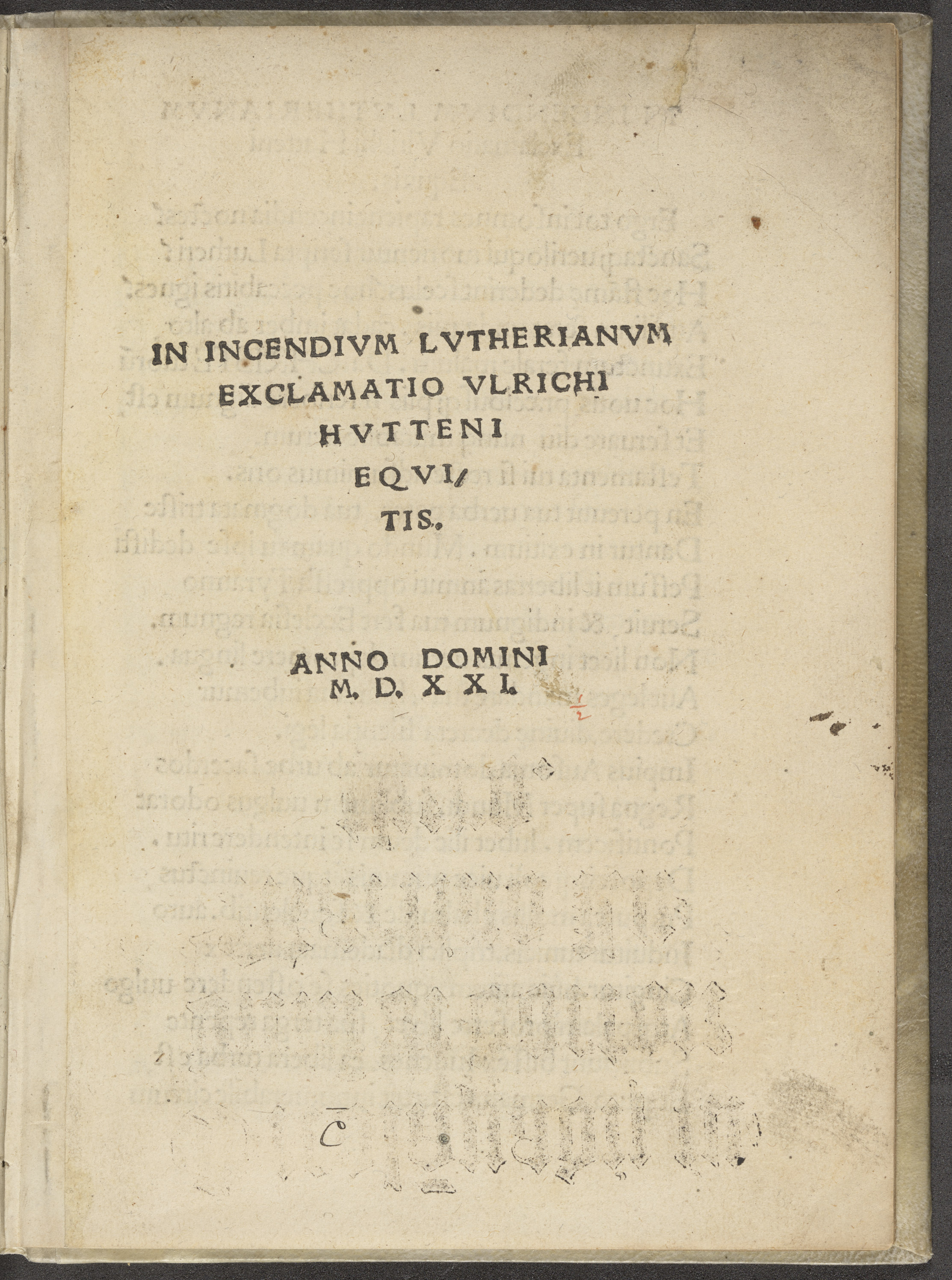 Text
TextIn incendium Lutherianum Exclamatio
Hutten, Ulrich von, 1488-1523Summary: This poem is Hutten's reaction to the burning of Luther's books at Mainz by papal legates.Summary: This poem is Hutten's reaction to the burning of Luther's books at Mainz by papal legates. -
 Still image
Monstrance
A woodcut depicting an elaborate monstrance, or an ostensorium, somewhat in the shape of a cathedral with a crucefix on top.A woodcut depicting an elaborate monstrance, or an ostensorium, somewhat in the shape of a cathedral with a crucefix on top. -
 Still image
Printer's Device of Johann Rhau-Grünenberg
A woodcut of the printer's device (or mark) of Johann Rhau-Grunenberg, featuring his initials, "IG," and a small hill decorated with a number of different plants. The printer's mark is placed just below the colophon.A woodcut of the printer's device (or mark) of Johann Rhau-Grunenberg, featuring his initials, "IG," and a small hill decorated with a number of different plants. The printer's mark is placed just below the colophon. -
 Text
TextResolutiones Lutheriane super propositio[n]ibus suis Lipsie disputatis
Luther, Martin, 1483-1546Summary: An analysis by Luther of the propositions debated by him, his colleague, Andreas Karlstadt, and Johann Eck at the Leipzig Debate of 1519.Summary: An analysis by Luther of the propositions debated by him, his colleague, Andreas Karlstadt, and Johann Eck at the Leipzig Debate of 1519. -
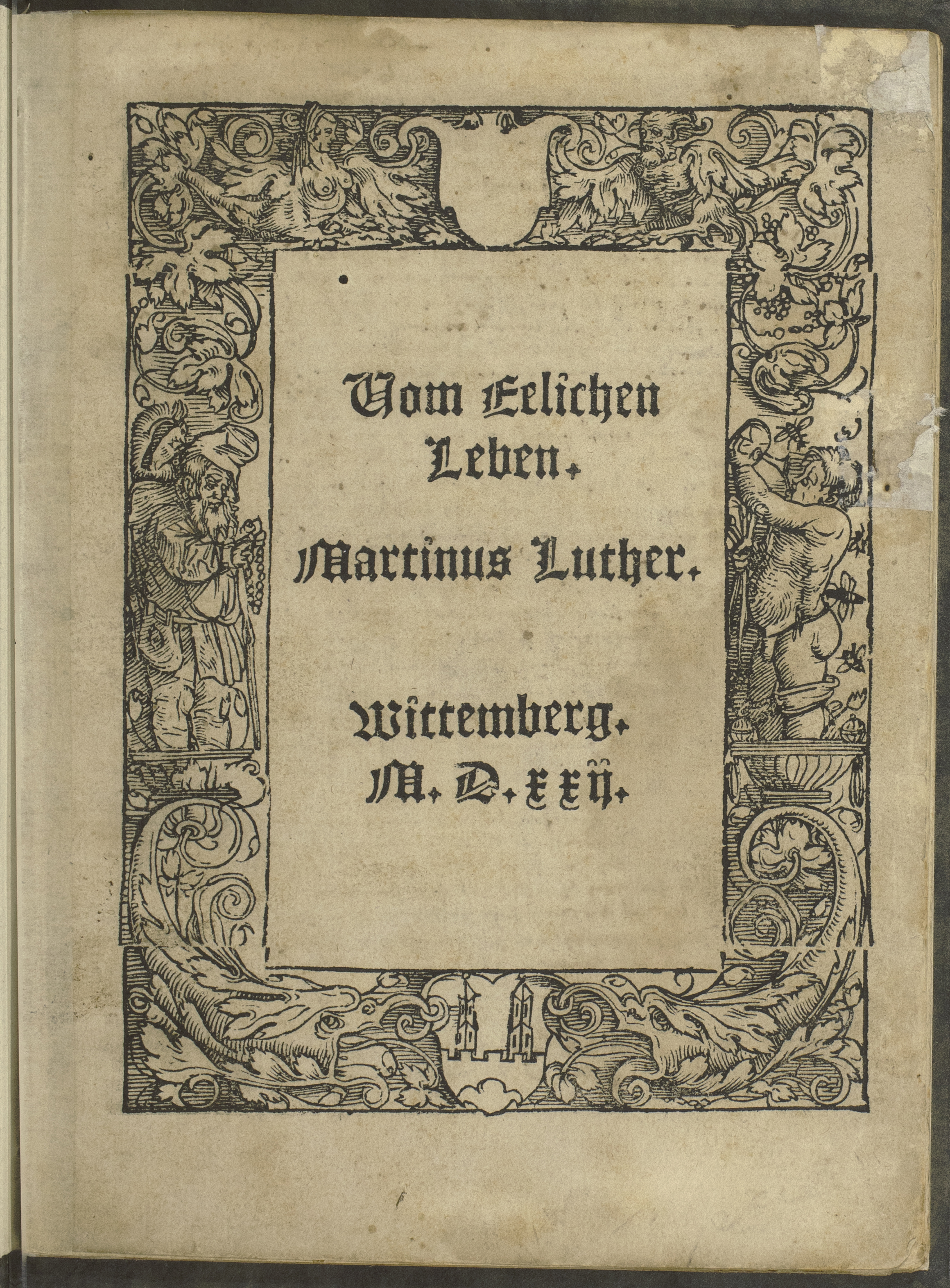 Text
TextUom eelichen Leben
Luther, Martin, 1483-1546Summary: This sermon on marriage is an elaboration of an earlier work no longer extant. In its present form there is no set Bible text, nor is the sermon designed for a particular place in the Church year.Summary: This sermon on marriage is an elaboration of an earlier work no longer extant. In its present form there is no set Bible text, nor is the sermon designed for a particular place in the Church year. -
 Text
TextUom miszbrauch der Messen
Luther, Martin, 1483-1546Summary: Luther always felt a special fondness for this work. Nearly two decades after writing it, he remembered it as being especially powerful. It elicited response from Catholic opponents five years hence. Luther felt so strongly about this material that he translated it into German himself. The abuse of the title refers to the masses sung by chantry priests for individuals. Luther opposed any celebration of the Eucharist that was not accessible to or provided for the congregation at large.Summary: Luther always felt a special fondness for this work. Nearly two decades after writing it, he remembered it as being especially powerful. It elicited response from Catholic opponents five years hence. Luther felt so strongly about this material that he translated it into German himself. The abuse of the title refers to the masses sung by chantry priests for individuals. Luther opposed any celebration of the Eucharist that was not accessible to or provided for the congregation at large. -
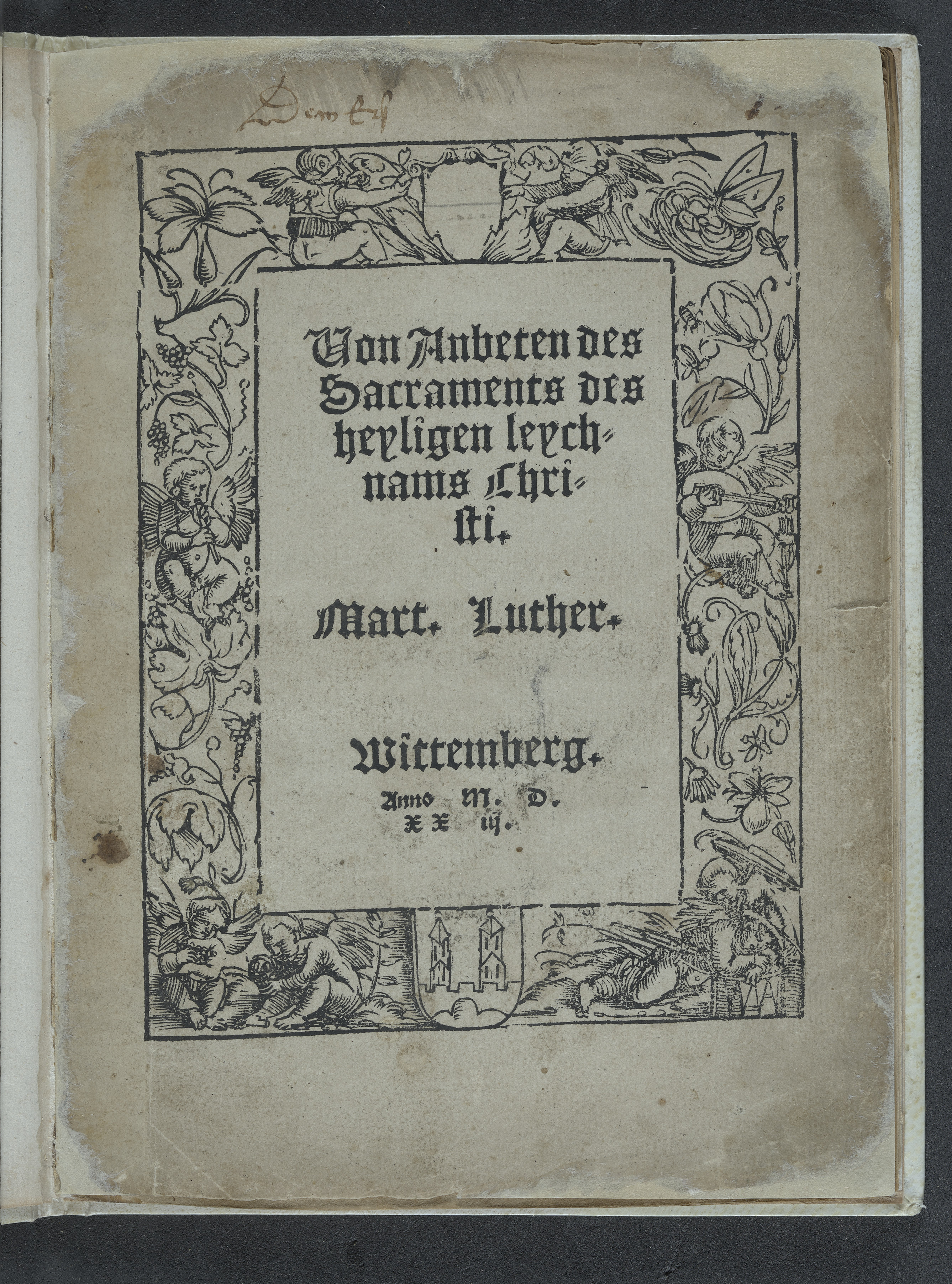 Text
TextUon Anbeten des Sacraments des heyligen leychnams Christi
Luther, Martin, 1483-1546Summary: Second printing of Luther's response to a catechism of the Bohemian Brethren, with special attention to the Adoration of the Host, and to the Real Presence.Summary: Second printing of Luther's response to a catechism of the Bohemian Brethren, with special attention to the Adoration of the Host, and to the Real Presence. -
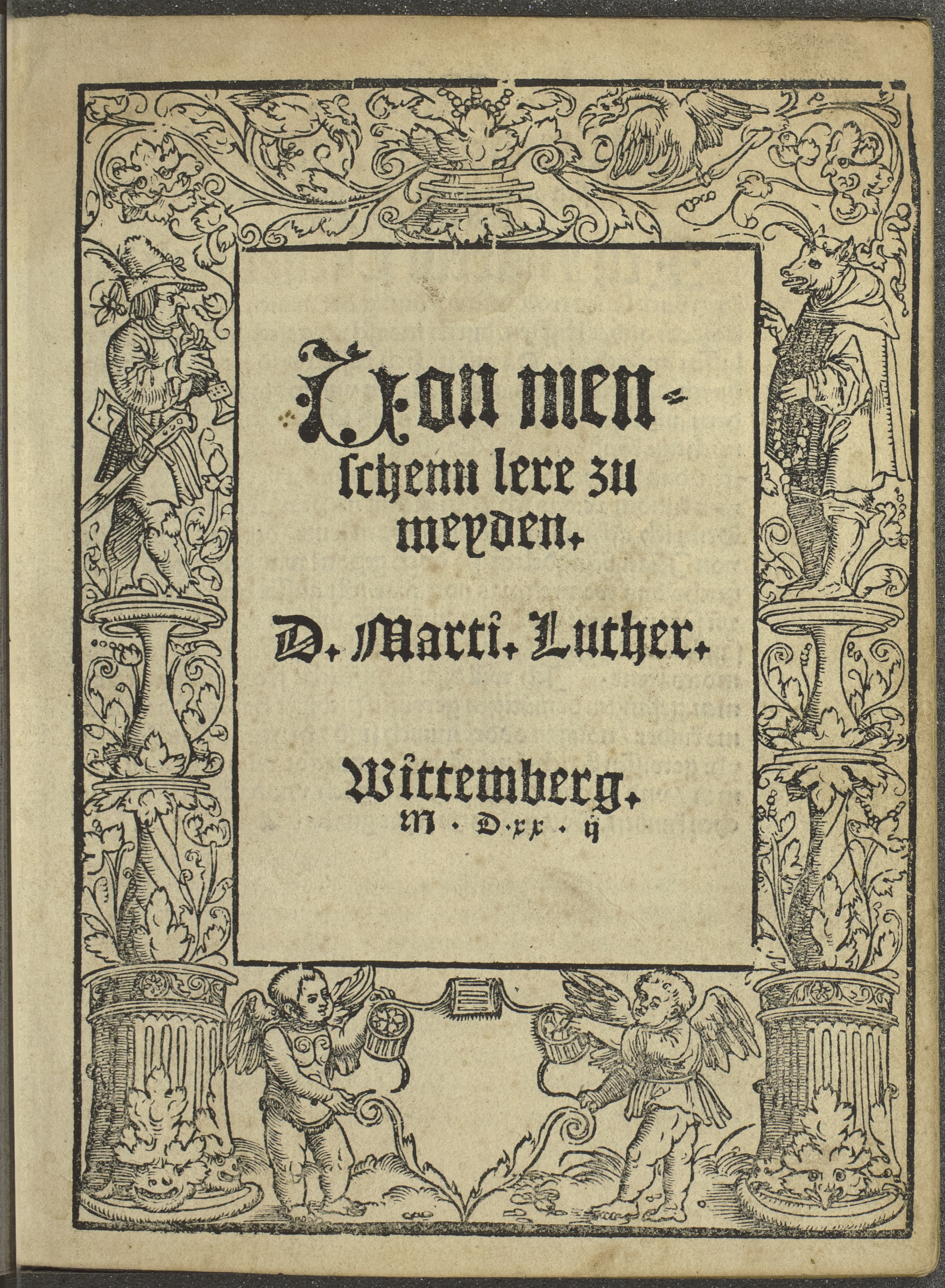 Text
TextUon Menschenn Lere zu meyden
Luther, Martin, 1483-1546Summary: A treatise by Luther on the relationship of belief and practice, intended for those "poor consciences, that lie captive to human laws in cloisters and monastic foundations", as he puts it in his preface. It is also noteworthy that Luther assumes his audience includes both those who could read his writings directly, and those who heard them read by others, when he dedicates his pamphlet "to all who read or hear this little book".Summary: A treatise by Luther on the relationship of belief and practice, intended for those "poor consciences, that lie captive to human laws in cloisters and monastic foundations", as he puts it in his preface. It is also noteworthy that Luther assumes his audience includes both those who could read his writings directly, and those who heard them read by others, when he dedicates his pamphlet "to all who read or hear this little book". -
 Text
TextUon beyder gestalt des Sacraments zu nehmen vnd ander newerung
Luther, Martin, 1483-1546Summary: After Luther published his "Eight Sermons" of 1522, he decided that there was needed a shorter, more concise statement of these sermons' arguments. This is the third printing of the resulting précis.Summary: After Luther published his "Eight Sermons" of 1522, he decided that there was needed a shorter, more concise statement of these sermons' arguments. This is the third printing of the resulting précis. -
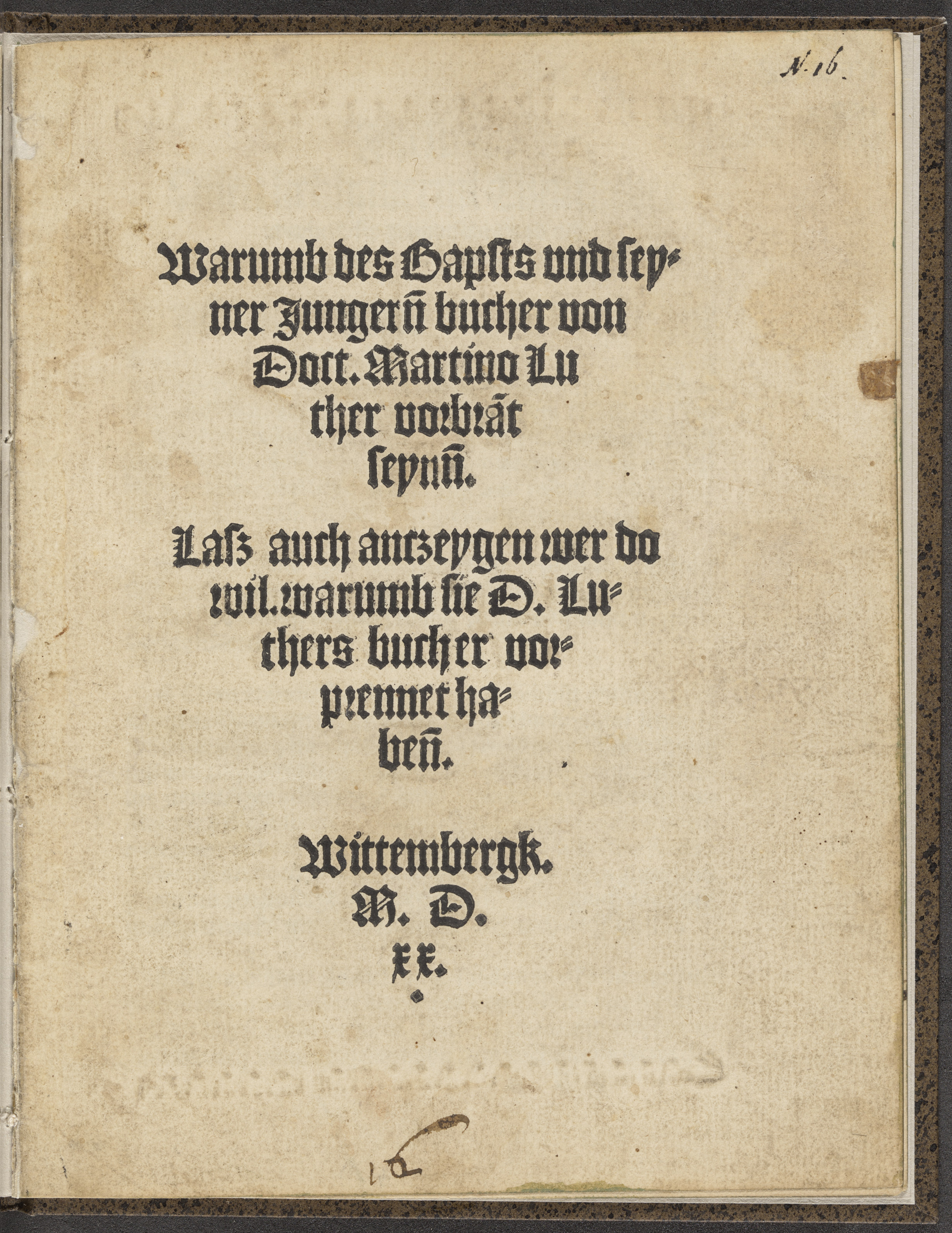 Text
TextWarumb des Bapsts vnd seyner Jungern[n] Bucher von Doct. Martino Luther vorbra[n]t seynn[n] : lass auch anczeygen wer do wil, warumb sie D. Luthers Bucher vorprennet haben[n]
Luther, Martin, 1483-1546Summary: When the time stipulated in the Pope's bull of excommunication had elapsed on December 10, 1520, Luther and some of his students burned the bull and copies of the canon law. This pamphlet details their reasons for doing so. This is the third (of three) printings of the first edition.Summary: When the time stipulated in the Pope's bull of excommunication had elapsed on December 10, 1520, Luther and some of his students burned the bull and copies of the canon law. This pamphlet details their reasons for doing so. This is the third (of three) printings of the first edition.