Search
297 resources
297 items
Subject
Jesus Christ
-
 Still image
Possible Printer's Device of Wolfgang Stöckel
A woodcut depicting Saint Jerome in prototypical fashion, kneeling before a crucifix and smiting himself on the chest with a stone. It also includes two of the other 'attributes' that typically occur in his portraits: the lion and the cardinal’s hat. The printer, Wolfgang Stöckel may have used it as a kind of printer's device, and some have characterized it as a loose copy of the work of Wolf Traut.A woodcut depicting Saint Jerome in prototypical fashion, kneeling before a crucifix and smiting himself on the chest with a stone. It also includes two of the other 'attributes' that typically occur in his portraits: the lion and the cardinal’s hat. The printer, Wolfgang Stöckel may have used it as a kind of printer's device, and some have characterized it as a loose copy of the work of Wolf Traut. -
 Text
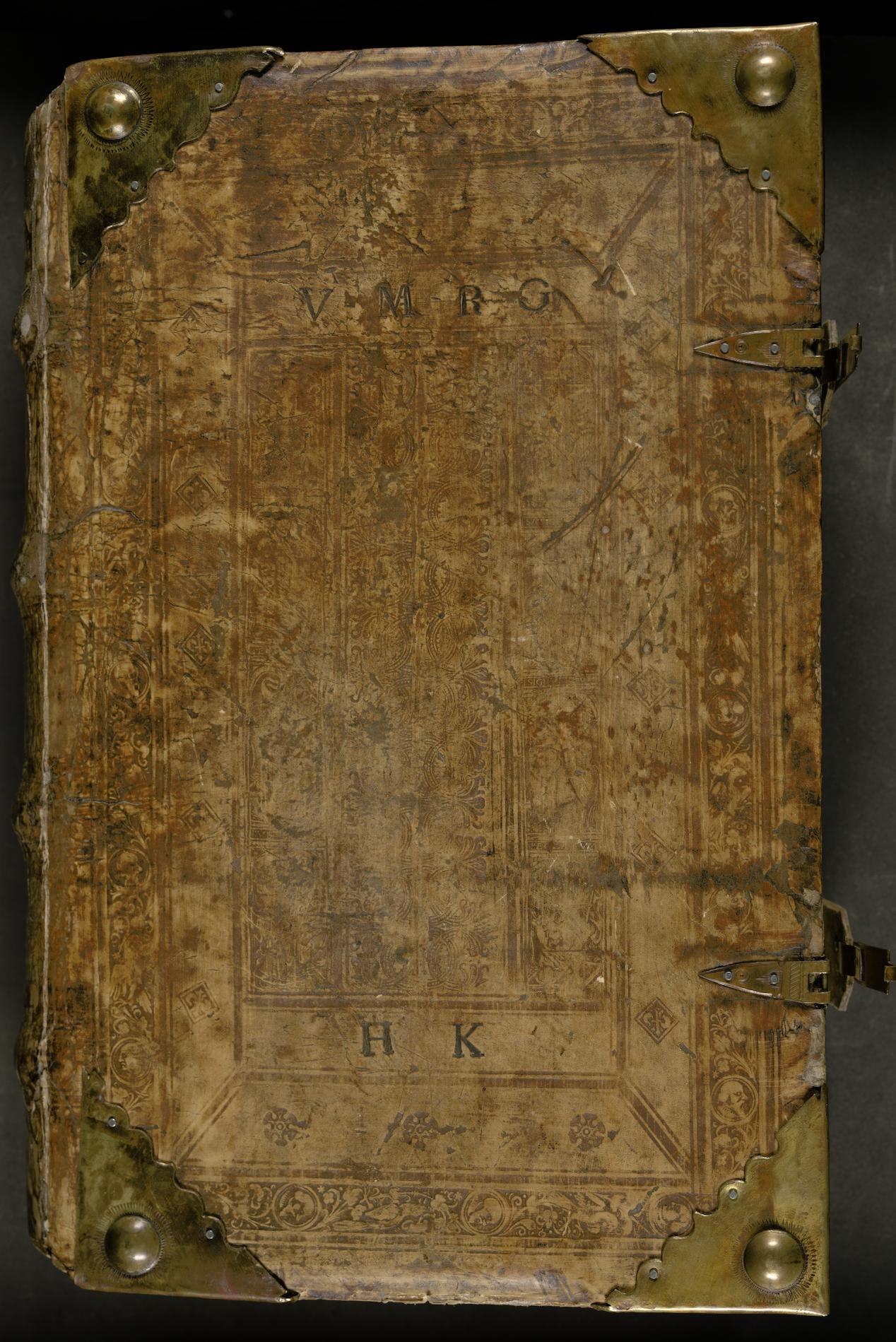
TextPostill. Ausslegung der Euangelien, so auff die Sontag, und fürnemste Feste, durchs gantze Jar gepredigt werden. : Mit den Summarien, vnd Register, new hinzů gethan. : Zusampt angehenckter Erklärung der Histori vom Leiden und Sterben vnseres Herrn Jesu Christi, nach Beschreibung der Vier Evangelisten
Brenz, Johannes, 1499-1570Summary: Second German edition of Johannes Brenz' postil or lectionary sermons, presented in three parts. The fourth part is a harmony and interpretation of the four Gospel passion stories.Summary: Second German edition of Johannes Brenz' postil or lectionary sermons, presented in three parts. The fourth part is a harmony and interpretation of the four Gospel passion stories. -
 Still image
Presentation at the Temple
Illuminated painting depicting the Presentation in the Temple. Mary stands on the left of the image, hands outstretched to Simeon on the right, who holds the infant Jesus. Joseph stands behind Mary holding their sacrifice of two doves, while the prophetess Anna stands behind Simeon.Illuminated painting depicting the Presentation in the Temple. Mary stands on the left of the image, hands outstretched to Simeon on the right, who holds the infant Jesus. Joseph stands behind Mary holding their sacrifice of two doves, while the prophetess Anna stands behind Simeon. -
 Still image
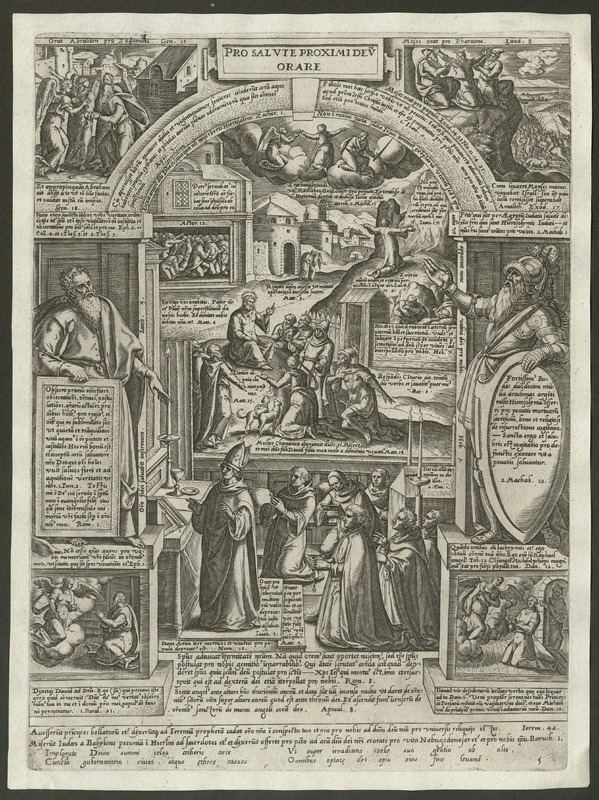
Pro salute proximi deu orare
Galle, Philippe, 1537-1612The act of praying for the healthy and those near to God (the dead), illustrated and accompanied by scriptural references.The act of praying for the healthy and those near to God (the dead), illustrated and accompanied by scriptural references. -
 Still image
Raising of Lazarus
Illuminated painting depicting the Raising of Lazarus. Jesus stands in the center of the image with a crowd of people behind him on the left. Jesus motions towards Lazarus, who is on the right of the image and wrapped in his burial clothes with a person standing next to him. Two men watch from above Lazarus and one stands below him. Two additional figures have been drawn under Jesus' feet.Illuminated painting depicting the Raising of Lazarus. Jesus stands in the center of the image with a crowd of people behind him on the left. Jesus motions towards Lazarus, who is on the right of the image and wrapped in his burial clothes with a person standing next to him. Two men watch from above Lazarus and one stands below him. Two additional figures have been drawn under Jesus' feet. -
 Still image
Removal of Jesus from the Cross
A woodcut depicting Mary and Joseph of Arimathea taking the body of Jesus down from the cross. The crown of thorns lies on the ground beside Jesus and the inscription "INRI" appears above the cross.A woodcut depicting Mary and Joseph of Arimathea taking the body of Jesus down from the cross. The crown of thorns lies on the ground beside Jesus and the inscription "INRI" appears above the cross. -
 Still image
Restored Altar of Gregory containing pieces of the Cradle of Jesus
An engraving depicting the Altar of Gregory, built as dictated by a vision of Mary to contain pieces of Jesus' cradle as relics, as it appeared after restoration was done.An engraving depicting the Altar of Gregory, built as dictated by a vision of Mary to contain pieces of Jesus' cradle as relics, as it appeared after restoration was done. -
 Still image
Rock-hewn tomb in cliff outside Jerusalem — possible tomb of Jesus
Hurlbut, Jesse Lyman, 1843-1930An example of a rock-hewn tomb outside of Jerusalem, proposed to be the tomb where Jesus was laid after his crucifixion.An example of a rock-hewn tomb outside of Jerusalem, proposed to be the tomb where Jesus was laid after his crucifixion. -
 Text
TextSaint Louys, ou, La sainte couronne reconquise : poeme heroique
Le Moyne, Pierre, 1602-1671Summary: A largely fictitious epic poem about Saint Louis (King Louis IX) and his crusade against the Saracens in Egypt in search of Christ's Crown of Thorns.Summary: A largely fictitious epic poem about Saint Louis (King Louis IX) and his crusade against the Saracens in Egypt in search of Christ's Crown of Thorns. -
 Text
TextSecond of three short discourses, all untitled, concerning candidates for a religious profession
Archer, James, 1751-1834This sermon addresses the blessings God has conferred on his followers, describing the Jubilee and the forgiveness of debts.This sermon addresses the blessings God has conferred on his followers, describing the Jubilee and the forgiveness of debts. -
 Text
TextSermon for the 1st Sunday of Advent, "On the General Judgement
Archer, James, 1751-1834This sermon cautions against growing complacent in the face of the fear invoked by considering the day of Final Judgement and encourages Christians to keep in mind the eventual day that their immortal souls will stand before God for Judgement.This sermon cautions against growing complacent in the face of the fear invoked by considering the day of Final Judgement and encourages Christians to keep in mind the eventual day that their immortal souls will stand before God for Judgement. -
 Text
TextSermon for the 4th Sunday of Lent; John 9:8-9
Archer, James, 1751-1834This sermon addresses false reports, addressing both those that make false reports and those that listen to them.This sermon addresses false reports, addressing both those that make false reports and those that listen to them. -
 Text
TextSermon for the 5th Sunday after Easter; John 16:23
Archer, James, 1751-1834This sermon addresses prayer, emphasizing that consistent prayer is necessary to receive salvation, but prayer must be done correctly, as in, with humility and without sin, to be fruitful.This sermon addresses prayer, emphasizing that consistent prayer is necessary to receive salvation, but prayer must be done correctly, as in, with humility and without sin, to be fruitful. -
 Text
TextSermon for the Sunday within the Oct. of the Holy Sacrament, Luke 14:16
Archer, James, 1751-1834This sermon addresses the sacrifice of Jesus and the continual practice of Mass, indicating the importance of attending mass, the situations in which people can be excused from Mass without sin, and the dispositions necessary to benefit from Mass.This sermon addresses the sacrifice of Jesus and the continual practice of Mass, indicating the importance of attending mass, the situations in which people can be excused from Mass without sin, and the dispositions necessary to benefit from Mass. -
 Text
TextSermon for the [?] Sunday of Advent; Luke 3:3
Archer, James, 1751-1834This sermon examines the practice of penance, explaining examples of Jesus's penitence and necessary qualities that distinguish one's penance as truthful.This sermon examines the practice of penance, explaining examples of Jesus's penitence and necessary qualities that distinguish one's penance as truthful. -
 Text
TextSpeculum passionis domini nostri Ihesu Christi : in quo reluce[n]t hec omnia singulariter vere & absolute, puta omnis [per]fectio yerarchie, Omniu[m] fidelium beatitudo, Omnes virtutes, dona, fructus, et spiritualiu[m] bonoru[m] omnium efficacia, quod in fine prime partis huius speculi manifestissime co[m]probat[um]
Pinder, Ulrich, -1510 or 1519Summary: First edition of Ulrich Pinder's Passion narrative richly illustrated with 77 woodcut images (39 full page). Pinder was medical doctor, who had served as the court physician of the Elector Frederick the Wise of Saxony. After 1493 he was the town physician for the city of Nuremberg, where he also wrote several medical tracts and published a variety of books with the printer Friedrich Peypus. For this work, Pinder employed the services of the engravers Hans Schaufelein, who contributed 39 woodcuts, and Hans Baldung Grien, who contributed 21 woodcuts.Summary: First edition of Ulrich Pinder's Passion narrative richly illustrated with 77 woodcut images (39 full page). Pinder was medical doctor, who had served as the court physician of the Elector Frederick the Wise of Saxony. After 1493 he was the town physician for the city of Nuremberg, where he also wrote several medical tracts and published a variety of books with the printer Friedrich Peypus. For this work, Pinder employed the services of the engravers Hans Schaufelein, who contributed 39 woodcuts, and Hans Baldung Grien, who contributed 21 woodcuts.