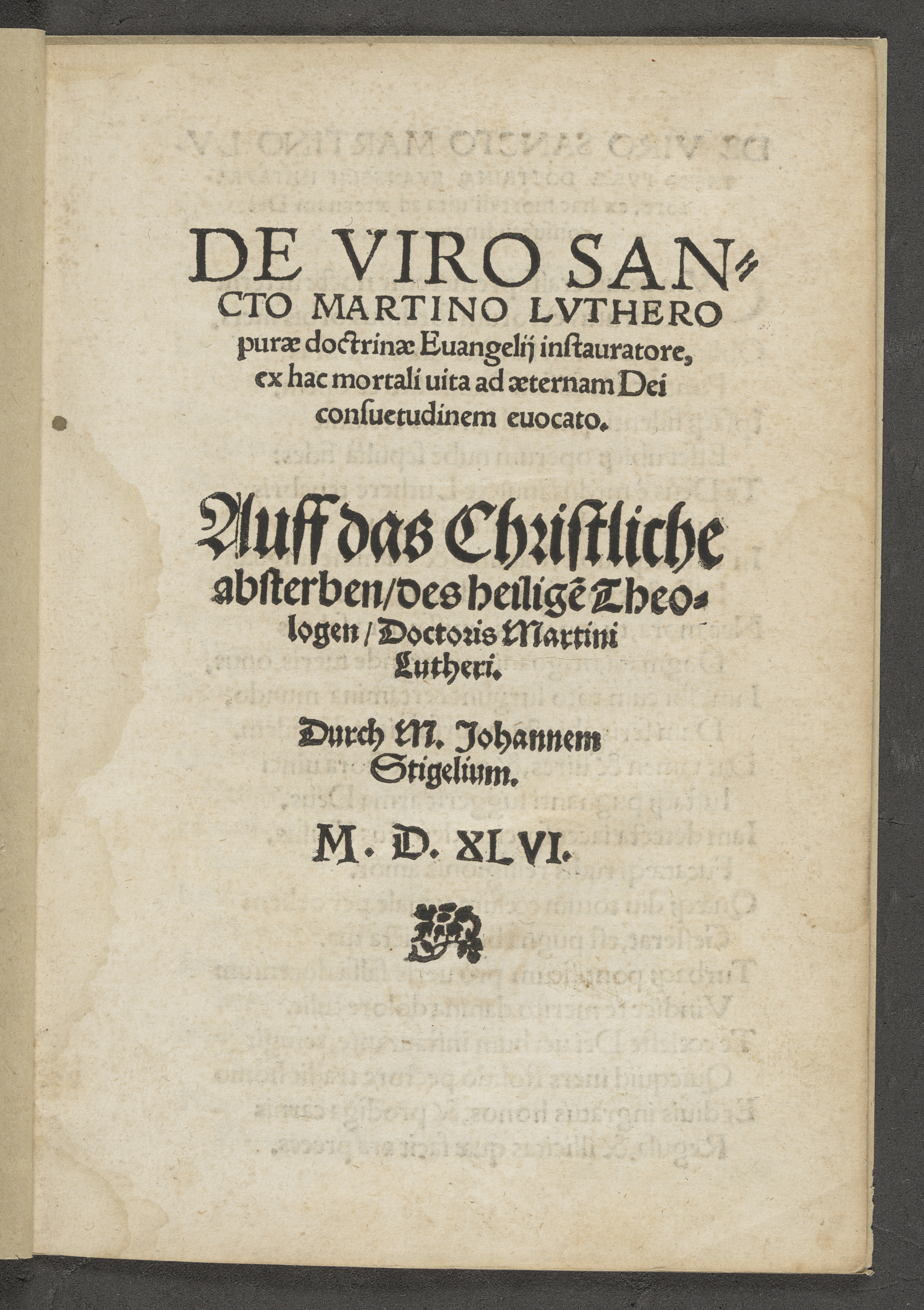
The digital edition of an introduction to and translation of Johann Bugehangen's "Eine christliche Predigt vber der Leich vnd Begrebnis des ehrwirdigen D. Martini Luthers," originally published by Georg Rhaw in Wittenberg, Germany, in 1546, including facsimile reproductions. The original text is a sermon at Martin Luther's funeral service in Wittenberg..
The digital edition of an introduction to and translation of Johann Bugehangen's "Eine christliche Predigt vber der Leich vnd Begrebnis des ehrwirdigen D. Martini Luthers," originally published by Georg Rhaw in Wittenberg, Germany, in 1546, including facsimile reproductions. The original text is a sermon at Martin Luther's funeral service in Wittenberg..
Summary: M. Flacius Illyricus issued this edition of Luther's letters from Coburg Castle to the theologians at the Diet of Augsburg in an attempt to strengthen the Protestant resolve during the Interim. Intended for the widest possible distribution, both German and Latin versions were provided.
Summary: M. Flacius Illyricus issued this edition of Luther's letters from Coburg Castle to the theologians at the Diet of Augsburg in an attempt to strengthen the Protestant resolve during the Interim. Intended for the widest possible distribution, both German and Latin versions were provided.
Summary: One of at least 11 printings produced in 1530 of the Schwabach Articles, 17 articles of faith composed by Luther 1529 in Schwabach. It became one of the foundational documents for the Augsburg Confession.Bound in modern dark green morocco, bordered, blind- and gilt-tooled, with inside dentelles, gold spine title, and gilt edges. Upper board scratched.
Summary: One of at least 11 printings produced in 1530 of the Schwabach Articles, 17 articles of faith composed by Luther 1529 in Schwabach. It became one of the foundational documents for the Augsburg Confession.Bound in modern dark green morocco, bordered, blind- and gilt-tooled, with inside dentelles, gold spine title, and gilt edges. Upper board scratched.
The digital edition of an introduction to and translation of Johan Tetzel's "Vorlegung gemacht von Bruder Johan Tetzel Prediger Orde[n]s Ketzermeister : wyder eynen vormessen Sermon von tzwentzig irrige[n] Artickeln Bebstlichen Ablas vn[d] Gnade belange[n]de allen cristglaubige[n] Mensche[n] tzuwissen von Notten," originally published by Melchior Lotter in Leipzig, Germany, in 1518, including facsimile reproductions.
The digital edition of an introduction to and translation of Johan Tetzel's "Vorlegung gemacht von Bruder Johan Tetzel Prediger Orde[n]s Ketzermeister : wyder eynen vormessen Sermon von tzwentzig irrige[n] Artickeln Bebstlichen Ablas vn[d] Gnade belange[n]de allen cristglaubige[n] Mensche[n] tzuwissen von Notten," originally published by Melchior Lotter in Leipzig, Germany, in 1518, including facsimile reproductions.
Summary: The Black Death ravaged Europe from the fourteenth century onward. Dr. Johann Hess, a pastor from Breslau, asked Luther in 1527 whether it was permissible for a person to flee from plague-infested areas. Luther replied that it was, and then added some public health advice for town and city government officials in plague-ravaged areas.
Summary: The Black Death ravaged Europe from the fourteenth century onward. Dr. Johann Hess, a pastor from Breslau, asked Luther in 1527 whether it was permissible for a person to flee from plague-infested areas. Luther replied that it was, and then added some public health advice for town and city government officials in plague-ravaged areas.
Summary: This is the original Latin version of Melanchthon's funeral oration for Luther, preached in Wittenberg, February 22, 1546. The friendship between Luther and Melanchthon was almost legendary, even in their own lifetimes, and this deeply moving oration is an eloquent testimony to the depth of Melanchthon's feelings for his friend of twenty-eight years.
Summary: This is the original Latin version of Melanchthon's funeral oration for Luther, preached in Wittenberg, February 22, 1546. The friendship between Luther and Melanchthon was almost legendary, even in their own lifetimes, and this deeply moving oration is an eloquent testimony to the depth of Melanchthon's feelings for his friend of twenty-eight years.
Summary: Response by King Henry VIII of England to Luther's attack on his book, "Assertio septem sacramentorum", on the seven sacraments of the Catholic Church. This printing was issued in Leipzig by Hieronymous Emser, early opponent of Luther, with a reply by his ruler, Duke George of Saxony, and dedicated by Emser to Johann von Schleinitz, bishop of Meissen.
Summary: Response by King Henry VIII of England to Luther's attack on his book, "Assertio septem sacramentorum", on the seven sacraments of the Catholic Church. This printing was issued in Leipzig by Hieronymous Emser, early opponent of Luther, with a reply by his ruler, Duke George of Saxony, and dedicated by Emser to Johann von Schleinitz, bishop of Meissen.
 Text
Text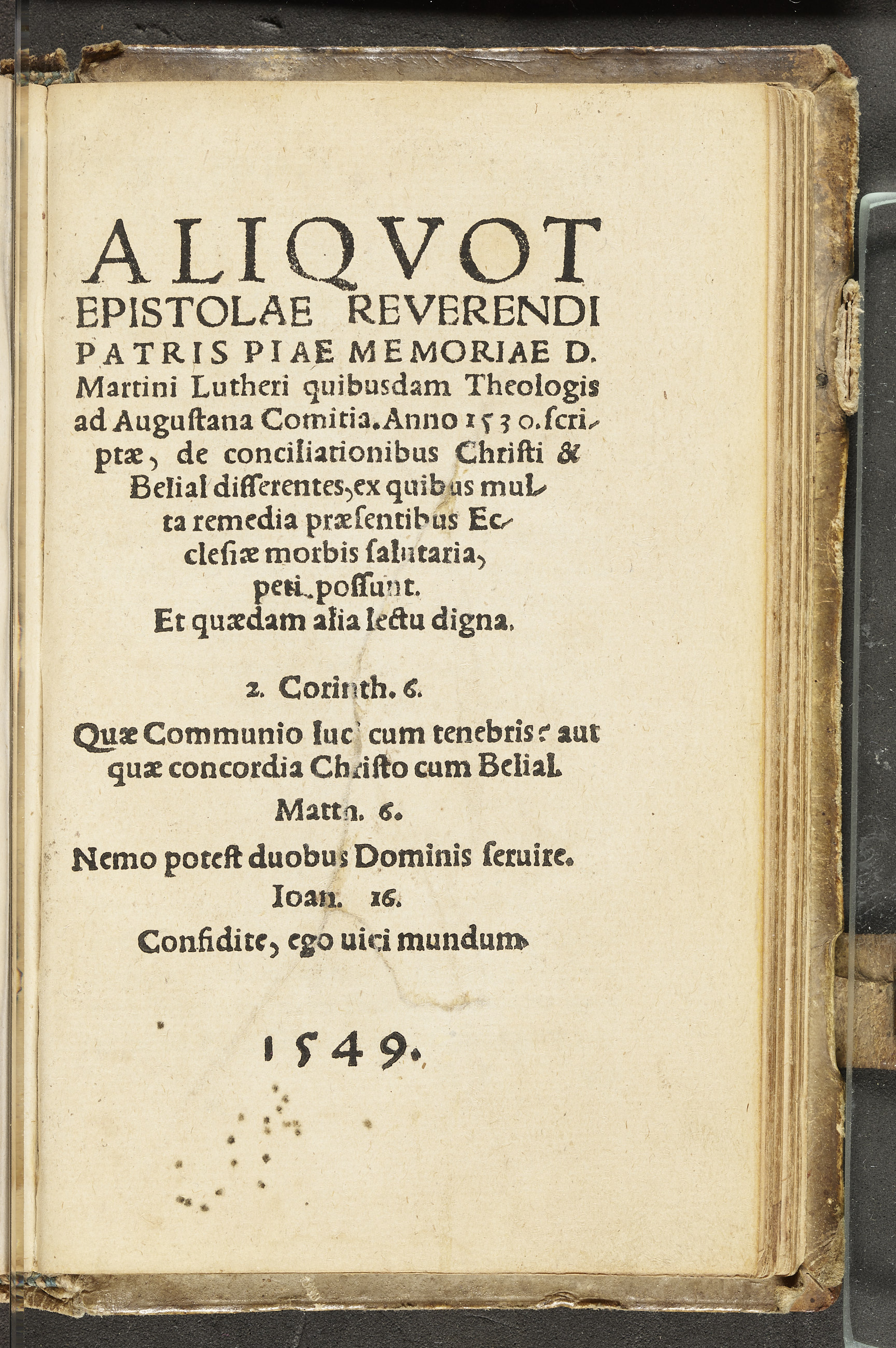 Text
Text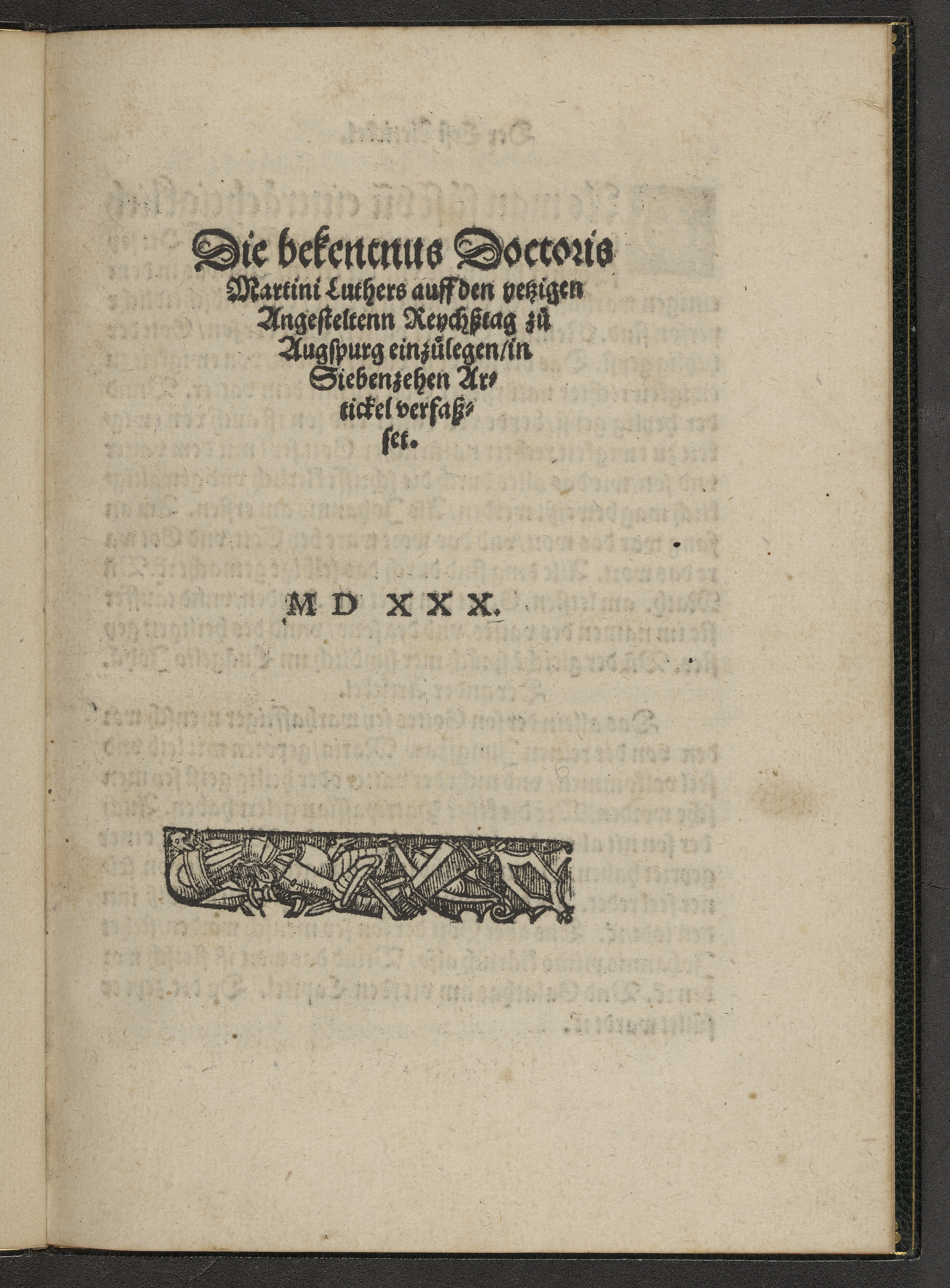 Text
Text Text
Text Text
Text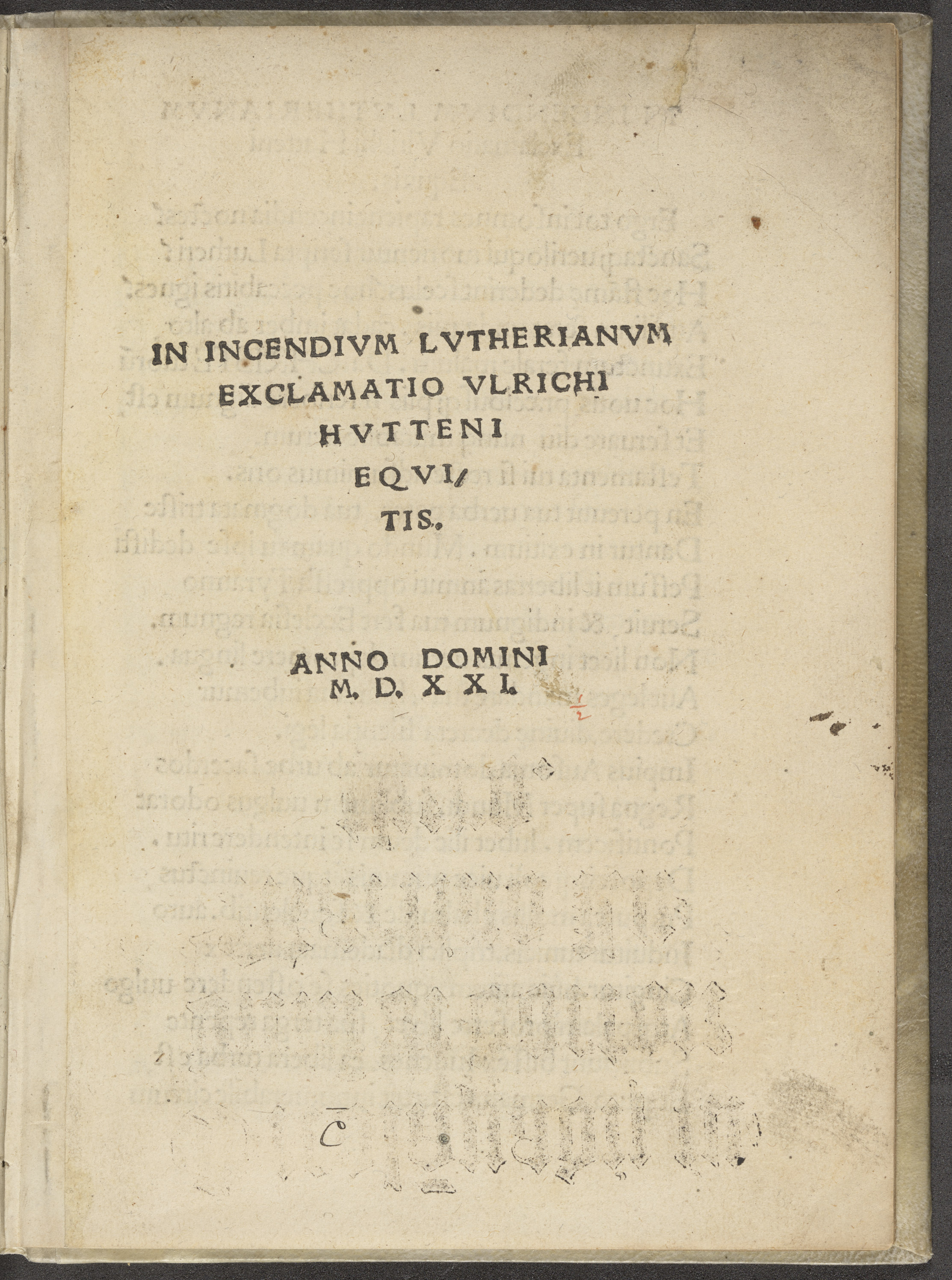 Text
Text![The digital edition of an introduction to and translation of Johan Tetzel's "Vorlegung gemacht von Bruder Johan Tetzel Prediger Orde[n]s Ketzermeister : wyder eynen vormessen Sermon von tzwentzig irrige[n] Artickeln Bebstlichen Ablas vn[d] Gnade belange[n]de allen cristglaubige[n] Mensche[n] tzuwissen von Notten," originally published by Melchior Lotter in Leipzig, Germany, in 1518, including facsimile reproductions. The original text is the first attack on Luther's "Sermon von dem Ablass und Gnade" (Sermon on indulgences and grace) by Johan Tetzel, a refutation of Luther's position.](https://digital.pitts.emory.edu/files/large/P_CSTA005_BD002_300000422352/P_CSTA005_BD002_2012_300000422352_KRAMER.jpg) Text
Text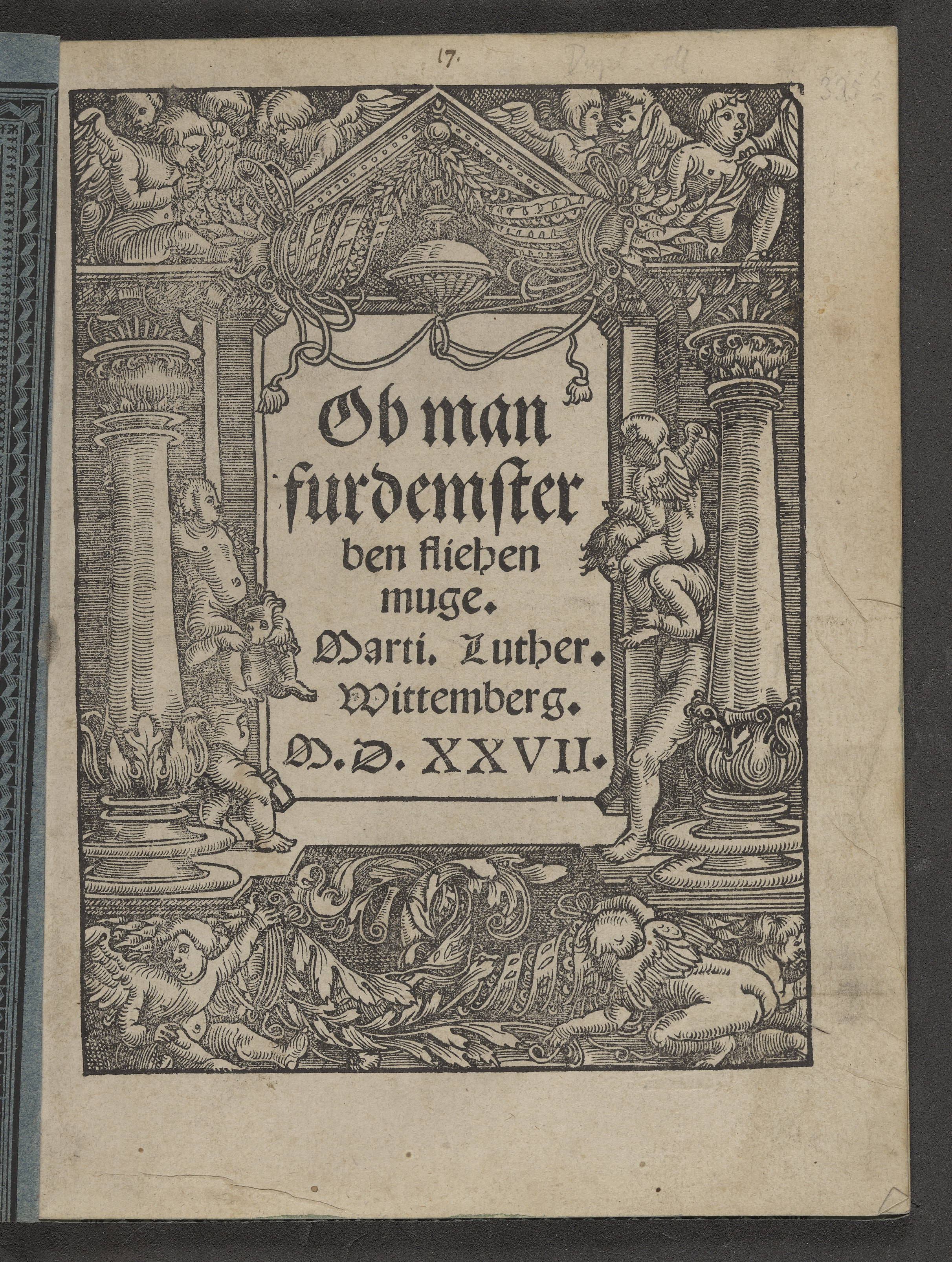 Text
Text Text
Text Text
Text