Search
56 resources
56 items
Subject
Lutheran Church
-
 Text
TextElisabeth Creutziger, the Magdeburg Enchiridion, 1536 and Reformation Theology
Leaver, Robin A.The digital edition of lecture on Elisabeth Creutziger in relation to the Magdeburg Enchiridion (1536) and the broader theology of the Reformation, delivered at the seventh annual fall concert celebrating the Richard C. Kessler Reformation Collection in the Pitts Theology Library at the Candler School of Theology, Emory University, October 18, 1994.The digital edition of lecture on Elisabeth Creutziger in relation to the Magdeburg Enchiridion (1536) and the broader theology of the Reformation, delivered at the seventh annual fall concert celebrating the Richard C. Kessler Reformation Collection in the Pitts Theology Library at the Candler School of Theology, Emory University, October 18, 1994. -
 Text
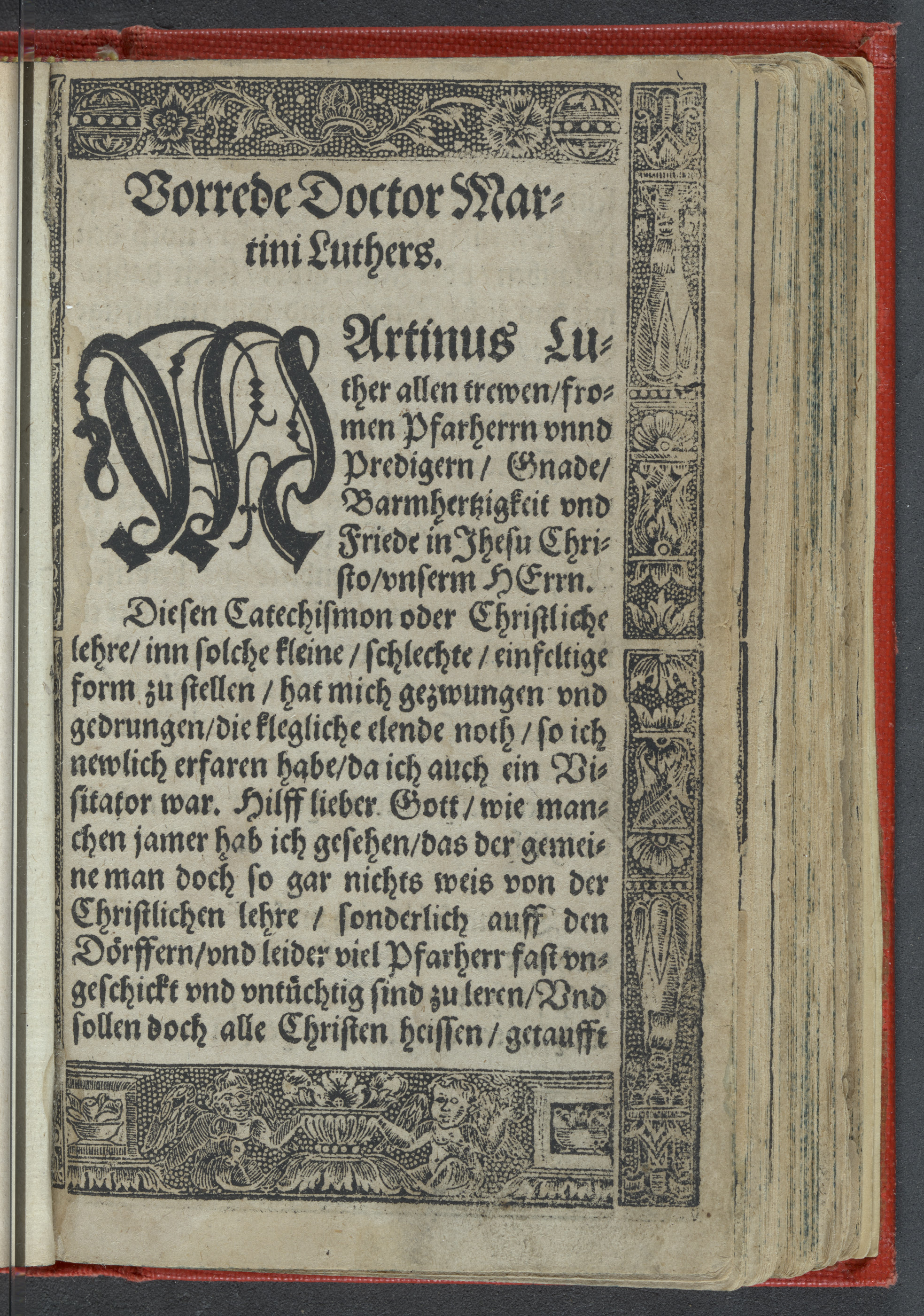
TextEnchiridion : Der kleine Catechismus : Für die gemeine Pfarherr vnd Prediger
Luther, Martin, 1483-1546Summary: A 1565 printing of Luther's Small Catechism.Summary: A 1565 printing of Luther's Small Catechism. -
 Text
TextEnchiridion : Der kleine Catechismus für die gemeine Pfarherr vnd Prediger
Luther, Martin, 1483-1546Summary: Second illustrated edition of Valentin Babst's publication of Luther's small catechism.Summary: Second illustrated edition of Valentin Babst's publication of Luther's small catechism. -
 Text
TextEnchiridion locorum communium aduersus Lutheranos
Eck, Johann, 1486-1543Summary: In 1521, Melanchthon wrote the first Protestant dogmatics, the "Loci Communes." Eck countered in 1525 with his "handbook on Theological Topics". Possibly the most widely reprinted Catholic critique of Lutheran doctrine (Metzler lists 91 contemporary editions). Eck uses the same topical procedure and cites the Bible, Church Fathers, Councils, and Popes heavily in the presentation of his arguments.Summary: In 1521, Melanchthon wrote the first Protestant dogmatics, the "Loci Communes." Eck countered in 1525 with his "handbook on Theological Topics". Possibly the most widely reprinted Catholic critique of Lutheran doctrine (Metzler lists 91 contemporary editions). Eck uses the same topical procedure and cites the Bible, Church Fathers, Councils, and Popes heavily in the presentation of his arguments. -
 Text
TextEpistolae duae
Haner, Johannes, active 1524-1544Summary: This pamphlet contains two letters on Lutheranism by converts to Catholicism. Witzel's publication of Haner's letter led to the latter's expulsion from the city of Nuremberg.Summary: This pamphlet contains two letters on Lutheranism by converts to Catholicism. Witzel's publication of Haner's letter led to the latter's expulsion from the city of Nuremberg. -
 Text
TextEpitome colloquij inter illustrissimorum Principum D. Friderici Palantini Electoris, & D. Christophori Ducis Wirtengergensis theologos, de maiestate hominis Christi, de[ni]q[ue] vera eius in eucharistia praesentia, Maulbrunnae instituti
Colloquy of Maulbronn (1564)Summary: Summary of the transactions of teh Colloquy of Maulbronn, a council involving theologians from Lutheran Würtemberg and the Reformed (Zwinglian) Palatinate. The main point of debate was the presence of Christ in the Eucharist.Summary: Summary of the transactions of teh Colloquy of Maulbronn, a council involving theologians from Lutheran Würtemberg and the Reformed (Zwinglian) Palatinate. The main point of debate was the presence of Christ in the Eucharist. -
 Text
TextEtlich Cristlich lider Lobgesang, vn[d] Psalm : dem reinen wort Gottes gemess, auss der heylige[n] schrifft, durch mancherley hochgelerter gemacht, in der Kirchen zu sigen, wie es dann zum tayl berayt zuo Wittenberg in übung ist
Summary: This is the first volume of printed hymns for church use ever compiled. Jobst Gutknecht, the Nuremberg printer, gathered eight broadside hymns into one collection, thus making the world's first church hymnal. Four hymns are by Luther, three are by Paul Speratus, and one is anonymous.Summary: This is the first volume of printed hymns for church use ever compiled. Jobst Gutknecht, the Nuremberg printer, gathered eight broadside hymns into one collection, thus making the world's first church hymnal. Four hymns are by Luther, three are by Paul Speratus, and one is anonymous. -
 Text
TextEyn bett buchlin. : Der czehen gepot. Des glaubens. Des vater vnsers. Des Aue Marien. Etliche verdeutschte Psalmen. Die Epistell sanct Pauls tzu tito, eyn Christlich leben tzu vnterrichten
Luther, Martin, 1483-1546Summary: Text in German includes Luther's translations from Latin of several Psalms from the Hebrew O.T., and the Epistle to Titus from the Greek N.T.Summary: Text in German includes Luther's translations from Latin of several Psalms from the Hebrew O.T., and the Epistle to Titus from the Greek N.T. -
 Text
TextGeistliche Lieder zu Wittemberg / Anno 1543
Luther, Martin, 1483-1546Summary: Joseph Klug printed the first collection of hymns that Luther prepared specifically for congregational use in Wittenberg in 1529. It followed the church year closely and was revised and reprinted several times. The renowned hymnal printed by Valentin Bapst (Geystlicher Lieder'; Leipzig, 1545) may be seen as a later edition of the Klug hymnal. (Robin Leaver, "Hymnals," in 'The Oxford Encyclopedia of the Reformation' (1996) 2:286-89.)Summary: Joseph Klug printed the first collection of hymns that Luther prepared specifically for congregational use in Wittenberg in 1529. It followed the church year closely and was revised and reprinted several times. The renowned hymnal printed by Valentin Bapst (Geystlicher Lieder'; Leipzig, 1545) may be seen as a later edition of the Klug hymnal. (Robin Leaver, "Hymnals," in 'The Oxford Encyclopedia of the Reformation' (1996) 2:286-89.) -

-
![Summary: This is an early Italian response to Martin Luther, attacking the schismatic monk on his own terms, in the vernacular for the benefit of laymen or simplici, as advertised on the title-page. The work is quite broad in its criticism and aims to refute not only Luther and his followers, but all heretics and even Jews. On the final leaf of text, following the colophon the list of errata, we find a curious addition perhaps intended to be removed from the book and used separately: a "song" satirically composed by "several of Luther's friends in praise of him" [Alcuni amici de Martin Luthero in laude sua cantano], beginning "Te Lutherum damnamus". Evidently a parody of the Te Deum, Fano's hymn condemning Luther to Hell was in fact subsequently set to music by a certain Maistre Jhan (ca. 1485-1538).](https://digital.pitts.emory.edu/files/large/P_300000491804/P_300000491804_P001.jpg) Text
TextIesus Maria Opera vtilissima uulgare co[n]tra le pernitiosissime heresie Lutherane p[er] li simplici
Giovanni, fra., active approximately 1513-1523Summary: This is an early Italian response to Martin Luther, attacking the schismatic monk on his own terms, in the vernacular for the benefit of laymen or simplici, as advertised on the title-page. The work is quite broad in its criticism and aims to refute not only Luther and his followers, but all heretics and even Jews.Summary: This is an early Italian response to Martin Luther, attacking the schismatic monk on his own terms, in the vernacular for the benefit of laymen or simplici, as advertised on the title-page. The work is quite broad in its criticism and aims to refute not only Luther and his followers, but all heretics and even Jews. -
 Text
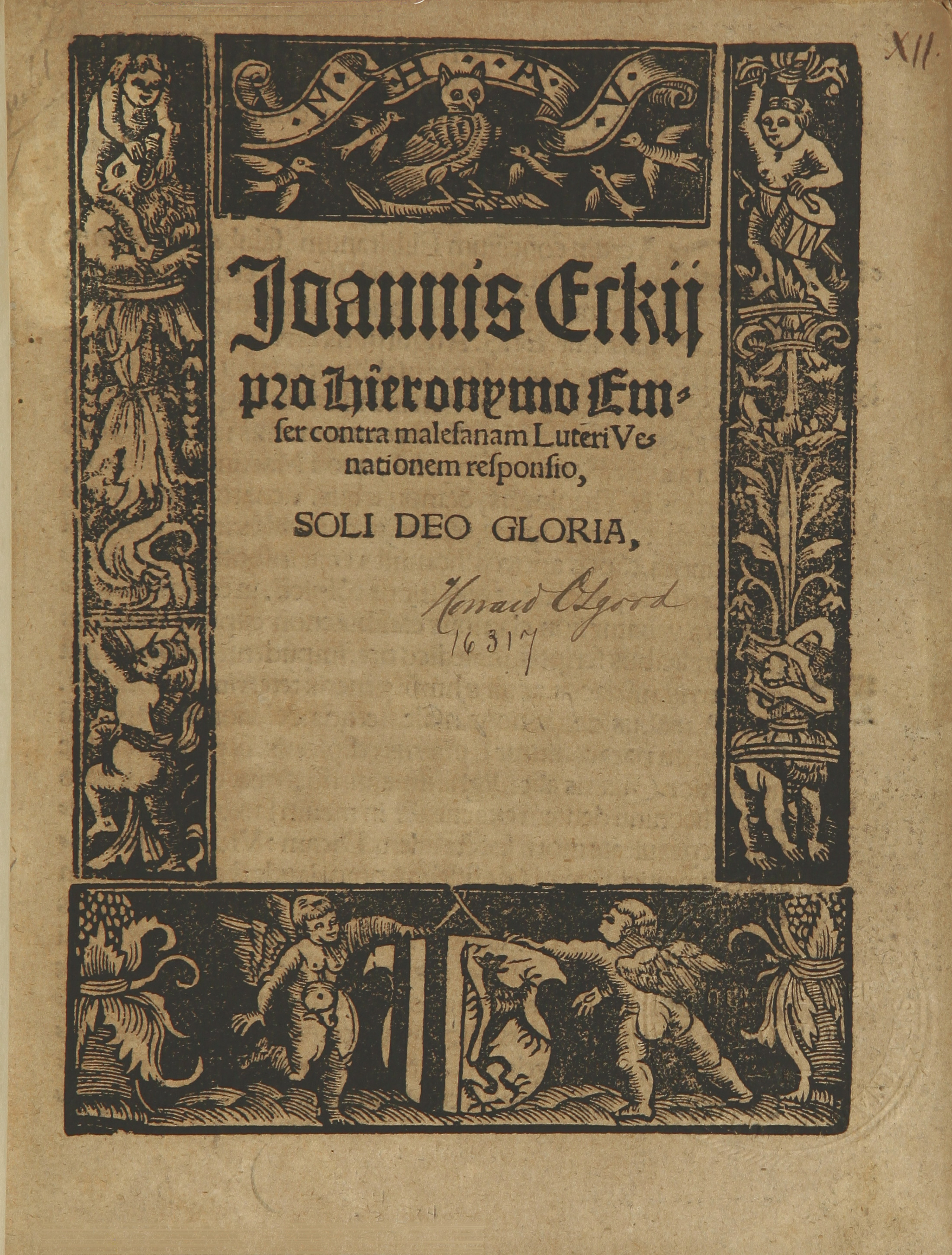
TextJoannis Eckij pro Hieronymo Emser : contra malesanam Luteri venationem responsio, Soli Deo gloria.
Eck, Johann, 1486-1543Summary: First printing of the first edition of a pamphlet by Johann Eck in support of Hieronymus Emser, a theologian in Leipzig and one of Luther's most vehement early opponents.Summary: First printing of the first edition of a pamphlet by Johann Eck in support of Hieronymus Emser, a theologian in Leipzig and one of Luther's most vehement early opponents. -
 Text
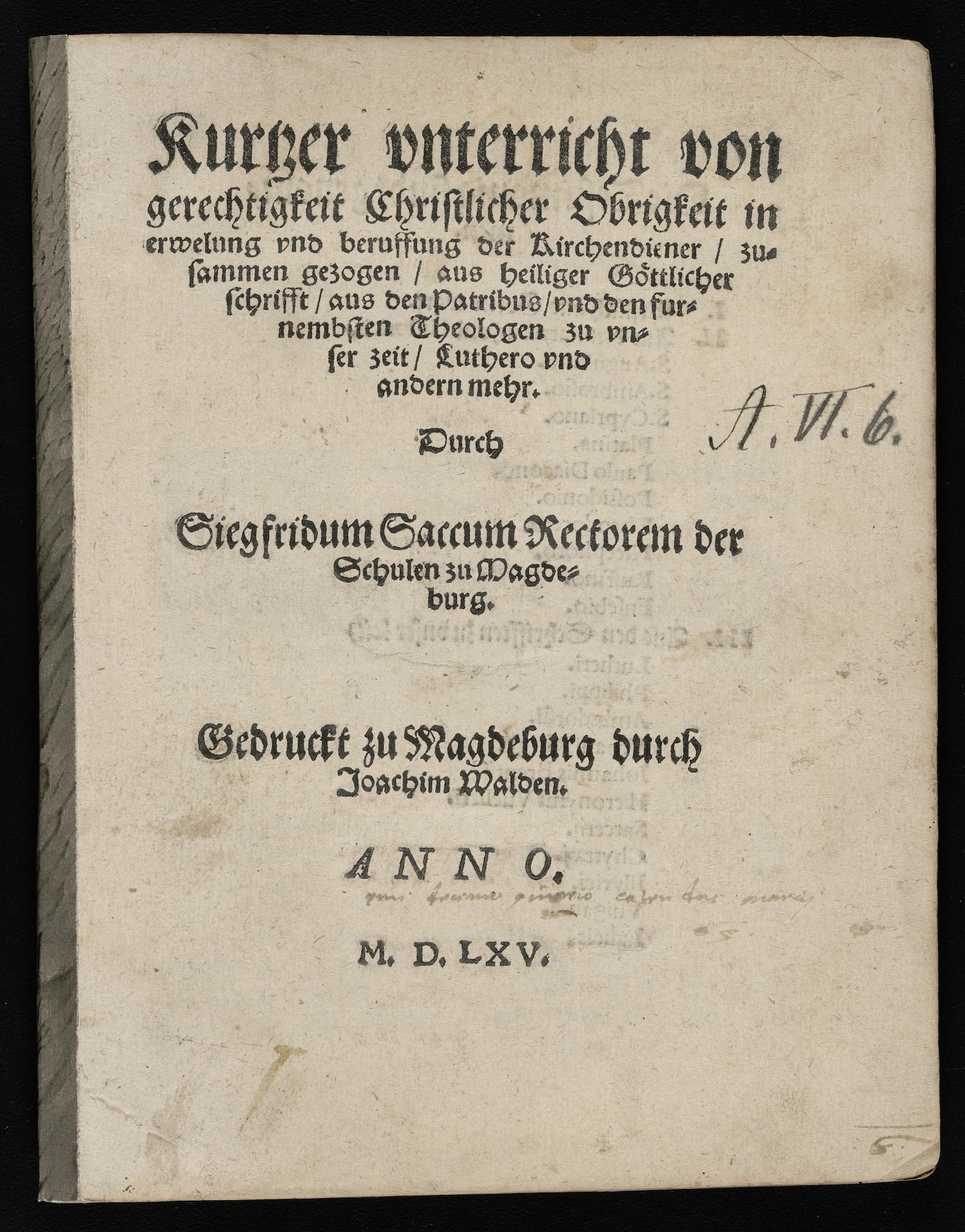
TextKurtzer vnterricht von gerechtigkeit Christlicher Obrigkeit in erwelung vnd beruffung der Kirchendiener : zusammen gezogen, aus heiliger Göttlicher schrifft, aus den Patribus, vnd den furnembsten Theologen zu vnser zeit, Luthero vnd andern mehr
Saccus, Siegfried, 1527-1596Summary: Formal opinion of Siegfried Saccus, schoolmaster at Magdeburg and later its first Lutheran cathedral preacher, concerning the right of the city government to appoint clergy. As a follower of the strict Lutheran Nicholas von Amsdorff, he steered a careful path between the views of the local Catholic hierarchy on the one hand, and those of the Münster Anabaptists, on the other. Although Magdeburg became a refuge of the strict Lutheran party following the Schmalkald War, the city council was late in making an official decision for or against the Reformation.Summary: Formal opinion of Siegfried Saccus, schoolmaster at Magdeburg and later its first Lutheran cathedral preacher, concerning the right of the city government to appoint clergy. As a follower of the strict Lutheran Nicholas von Amsdorff, he steered a careful path between the views of the local Catholic hierarchy on the one hand, and those of the Münster Anabaptists, on the other. Although Magdeburg became a refuge of the strict Lutheran party following the Schmalkald War, the city council was late in making an official decision for or against the Reformation. -
 Text
TextLoci communes seu hypotyposes theologicae
Melanchthon, Philipp, 1497-1560Summary: A 1525 printing of this most famous of all Melanchthon's theological works, first published in Wittenberg in 1521. The Loci Communes represent the most comrehensive systematic theology of the Lutheran reformation. Melanchthon continued to revise this work throughout his life.Summary: A 1525 printing of this most famous of all Melanchthon's theological works, first published in Wittenberg in 1521. The Loci Communes represent the most comrehensive systematic theology of the Lutheran reformation. Melanchthon continued to revise this work throughout his life. -
 Text
TextLuther, Bach, and the Early Reformation Chorale
Marshall, Robert LewisThe digital edition of a lecture on the relationship between Luther, Bach, and early Reformation chorale music, delivered at the eighth annual fall concert celebrating the Richard C. Kessler Reformation Collection in the Pitts Theology Library at the Candler School of Theology, Emory University on October 17, 1995.The digital edition of a lecture on the relationship between Luther, Bach, and early Reformation chorale music, delivered at the eighth annual fall concert celebrating the Richard C. Kessler Reformation Collection in the Pitts Theology Library at the Candler School of Theology, Emory University on October 17, 1995. -
 Text
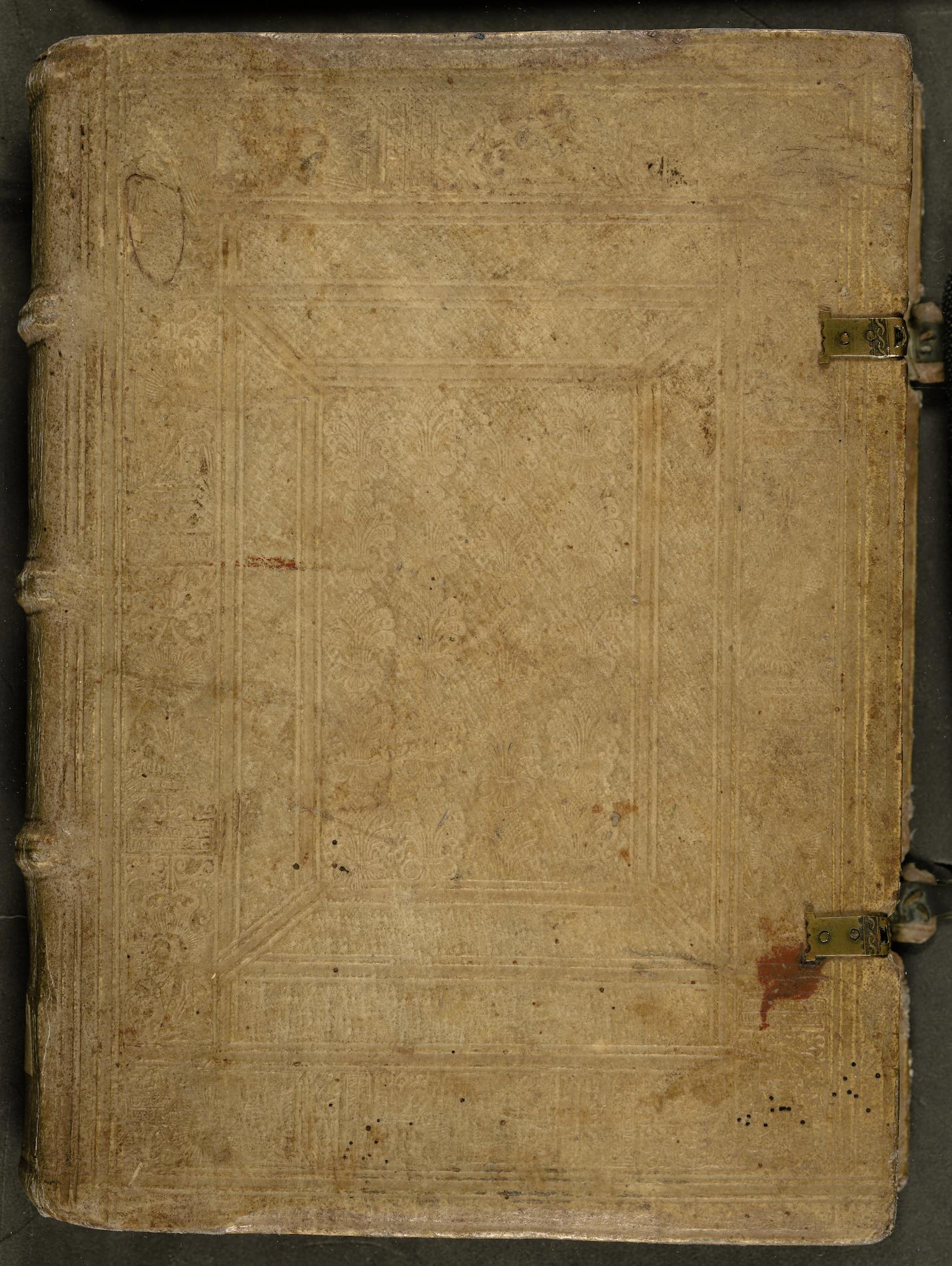
TextMancherley Form zu predigen, von den fürnembsten Stücken, so in der Christlichen Kirchen teglich gelert vnd getrieben sollen werden : Allen Kirchendienern, vnd guthertzigen Christen zu Dienst
Huberinus, CasparSummary: Collection of sermons on various topics by the Lutheran preacher Caspar Huberinus.Summary: Collection of sermons on various topics by the Lutheran preacher Caspar Huberinus. -
 Text
TextMargarita theologica, continens praecipuos locos doctrinae Christianae, per quaestiones breuiter & ordine explicatos : Omnibus pastoribus, verbi praeconibus, & ecclesiae ministris summè utilis & necessaria
Spangenberg, JohannSummary: Popular doctrinal theology by the Lutheran reformer Johann Spangenberg, based on Melanchthon's Loci Communes, and written for use by pastors and ministers. The work was first published in 1540 and was re-issued and translated numerous times.Summary: Popular doctrinal theology by the Lutheran reformer Johann Spangenberg, based on Melanchthon's Loci Communes, and written for use by pastors and ministers. The work was first published in 1540 and was re-issued and translated numerous times. -
 Text
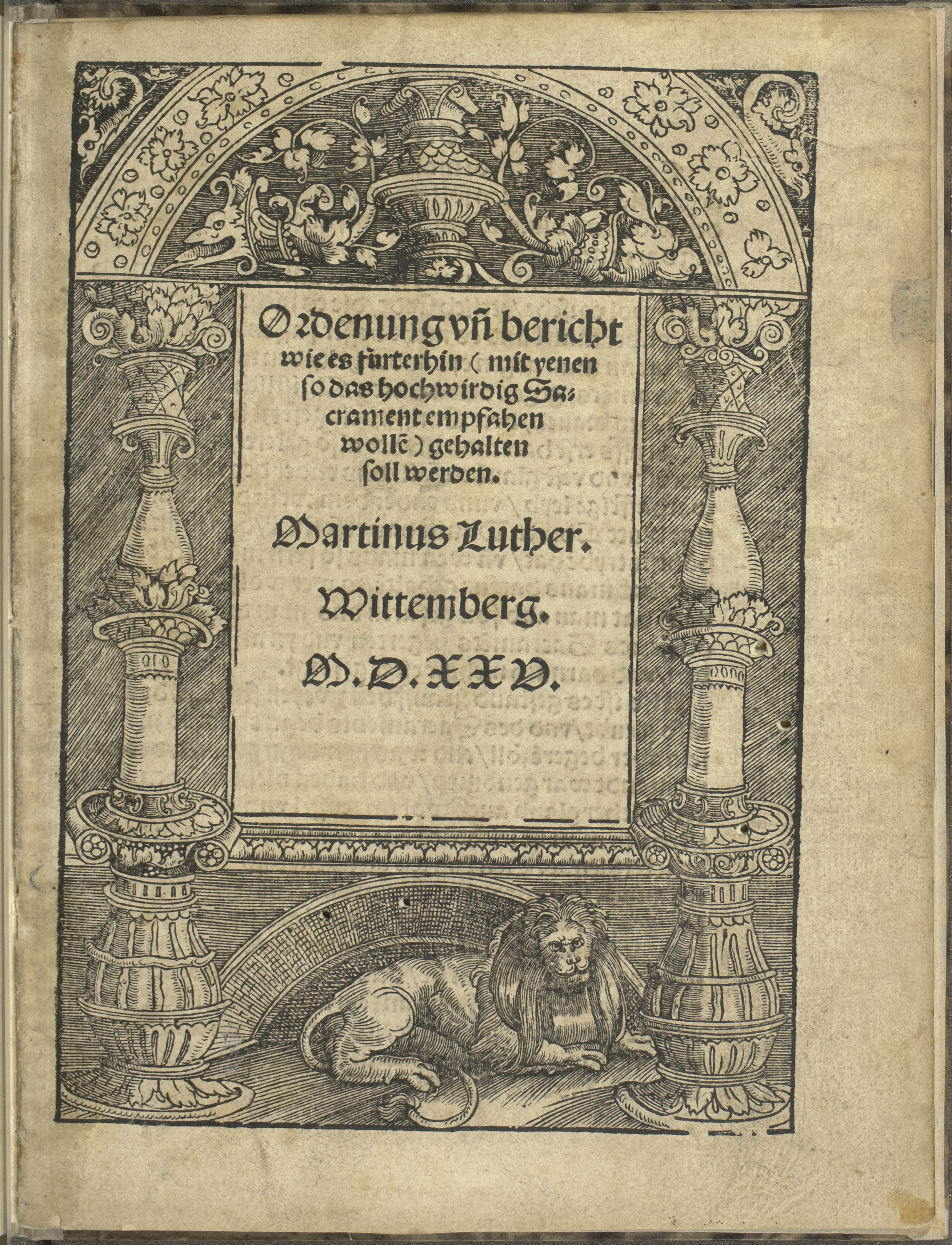
TextOrdenung vn[d] bericht wie es furterhin (mit yenen so das hochwirdig Sacrament empfahen wolle[n]) gehalten soll werden
Luther, Martin, 1483-1546Summary: Early guidance by Luther on how a Christian ought to approach and receive the Lord's Supper. Includes the Words of Institution, the Aaronic Benediction, and a series of questions that ought to be put to everyone wishing to receive the Sacrament, with appropriate answers.Summary: Early guidance by Luther on how a Christian ought to approach and receive the Lord's Supper. Includes the Words of Institution, the Aaronic Benediction, and a series of questions that ought to be put to everyone wishing to receive the Sacrament, with appropriate answers. -
 Text
TextParuus catechismus pro pueris in schola
Luther, Martin, 1483-1546Summary: Latin version of Martin Luther's Small Catechism, translated by Johannes SauermannSummary: Latin version of Martin Luther's Small Catechism, translated by Johannes Sauermann -
 Text
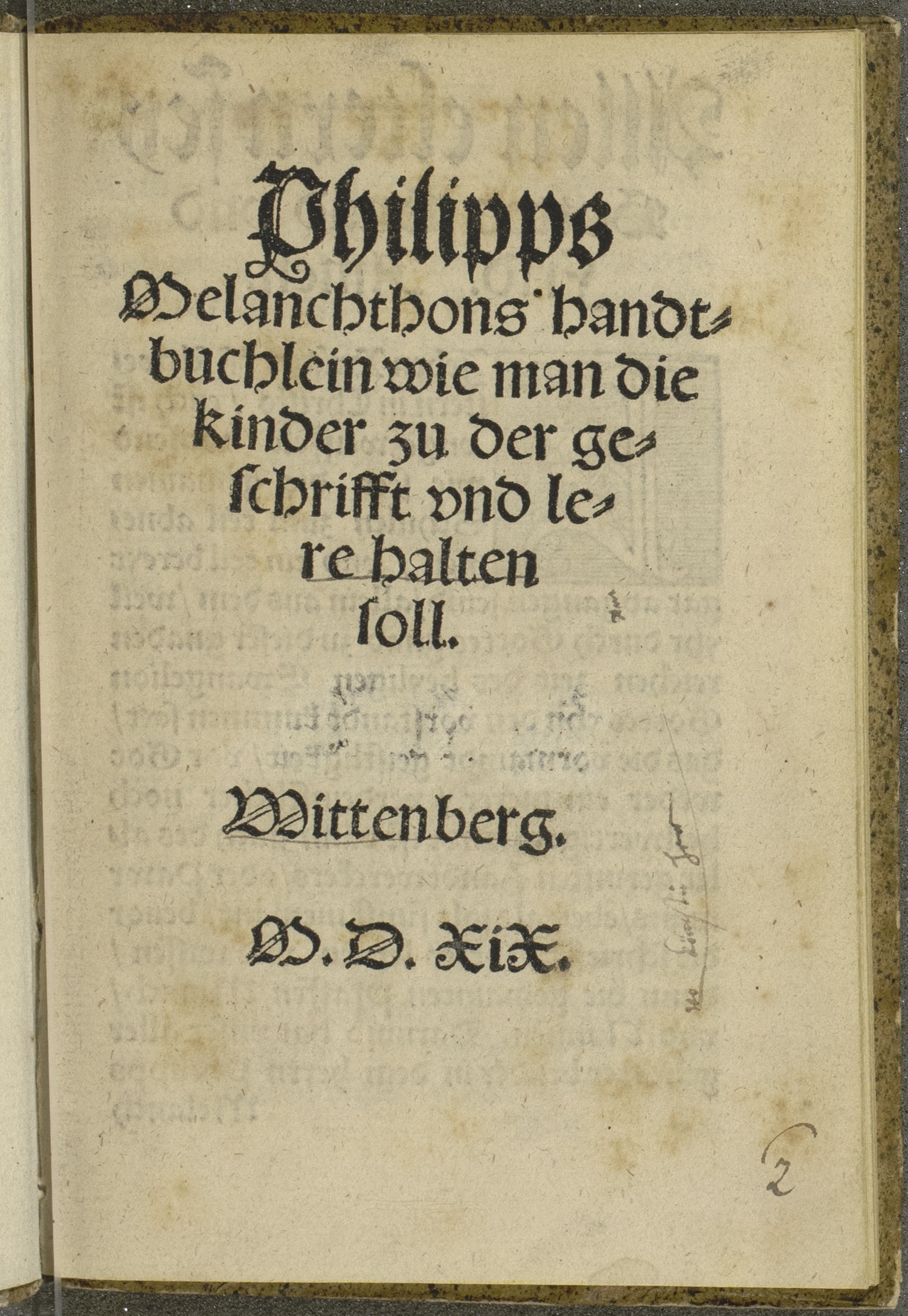
TextPhilipps Melanchthons handtbuchlein wie man die kinder zu der geschrifft vnd lere halten soll. Wittenberg. M.D.XIX
Melanchthon, Philipp, 1497-1560Summary: Melanchthon's "Handtbuchlein" is among the first attempts at a Protestant catechism. It is a collection of selections from scripture passages, prayers, and other text intended as instruction for students in German schools. Noteworthy are the "Seven Wise Saying" derived from Periander by Erasmus.Summary: Melanchthon's "Handtbuchlein" is among the first attempts at a Protestant catechism. It is a collection of selections from scripture passages, prayers, and other text intended as instruction for students in German schools. Noteworthy are the "Seven Wise Saying" derived from Periander by Erasmus. -
 Text
TextPrimvs tomvs enarrationum in Epistolas & Evangelia : ut vulgo vocant, lectiones illas, quæ in Missa sestis diebus ex historiis Evangelicis & scriptis Apostolicis solentre citari
Luther, Martin, 1483-1546Summary: Part one of Luther's collected sermons on the historical Epistles and Gospels of the Church year, as edited by Martin Bucer, the Reformer of Strasbourg. Bound with part two. Six volumes, in all, were issued, with the last appearing in 1527.Summary: Part one of Luther's collected sermons on the historical Epistles and Gospels of the Church year, as edited by Martin Bucer, the Reformer of Strasbourg. Bound with part two. Six volumes, in all, were issued, with the last appearing in 1527.