Search
741 resources
741 items
Collection
Richard C. Kessler Reformation Collection
-
 Text
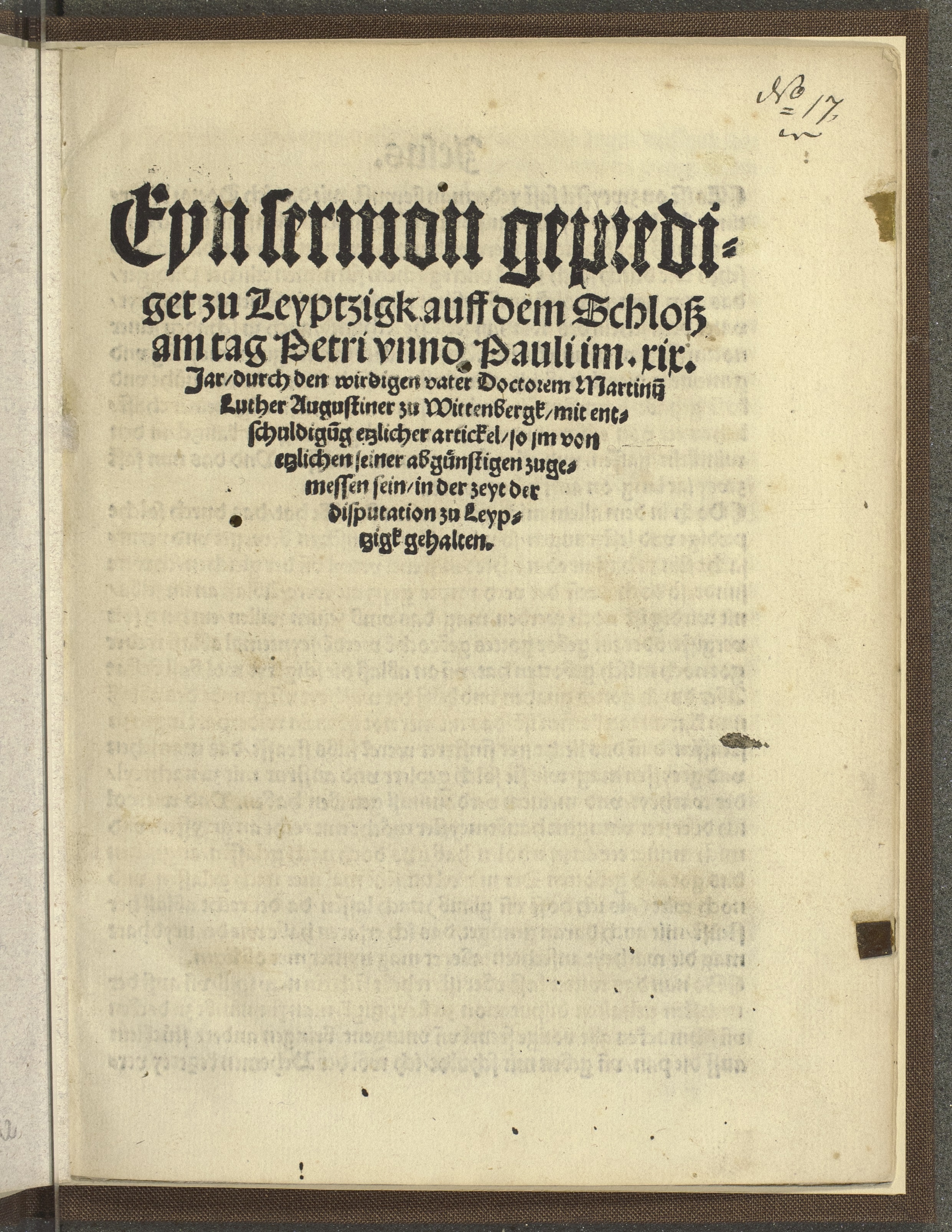
TextEyn sermon geprediget zu Leyptzigk auff dem Schloss am tag Petri vnnd Pauli im .xix. Jar
Luther, Martin, 1483-1546Summary: Sermon preached June 29, 1519, on text: Matthew XVI, 13-19.Summary: Sermon preached June 29, 1519, on text: Matthew XVI, 13-19. -
 Text
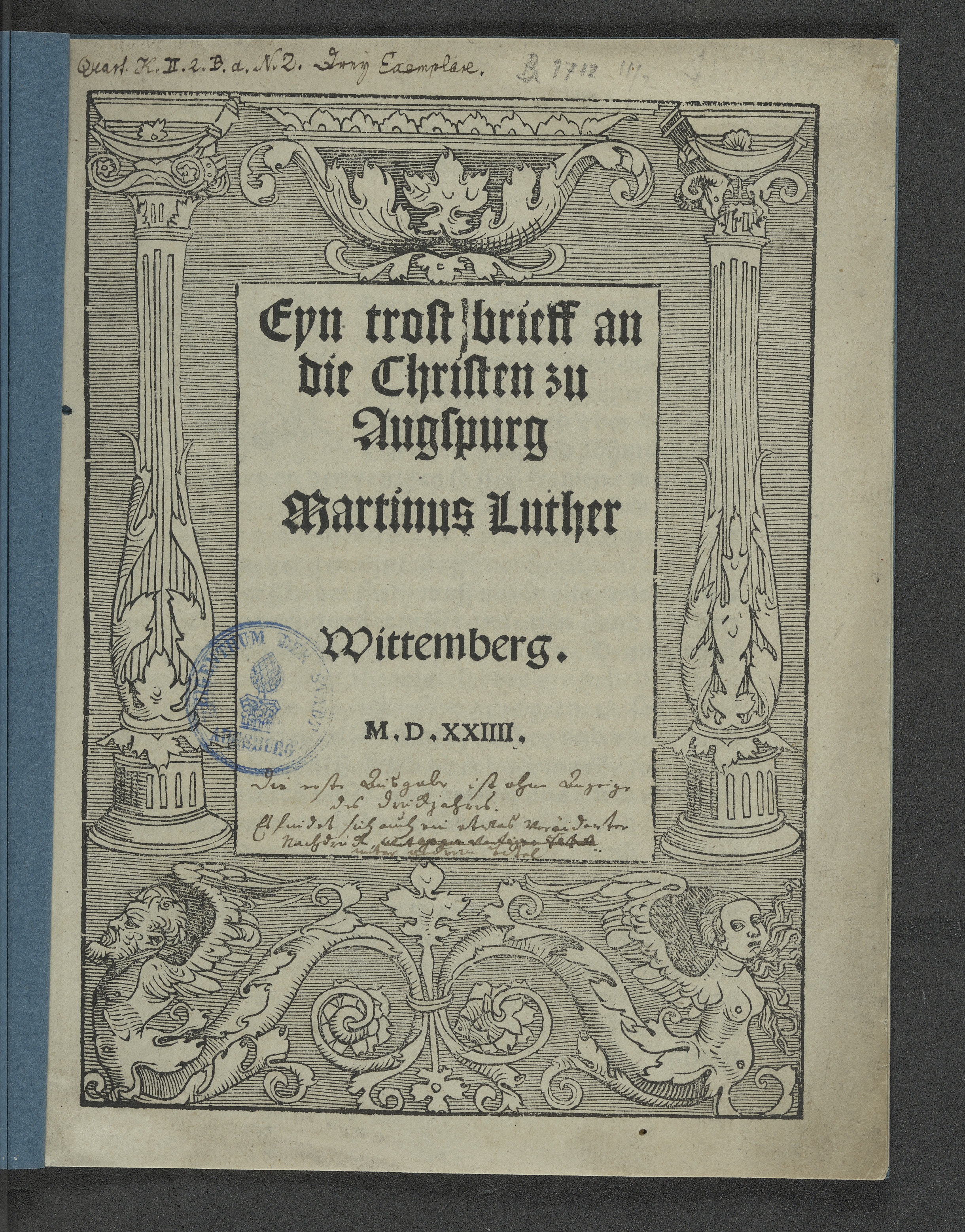
TextEyn trost brieff an die Christen zu Augspurg
Luther, Martin, 1483-1546Summary: A letter of comfort and encouragement written to a group of Augsburg citizens who had been punished for helping to celebrate the marriage of a former Catholic priest.Summary: A letter of comfort and encouragement written to a group of Augsburg citizens who had been punished for helping to celebrate the marriage of a former Catholic priest. -
 Text
TextEyn unuberwindtlich Beschirm Buchleyn von Haubt Artickeln, vn[d] furnemlichen Puncten der götlichen Geschrifft, : auss dem Alten vnd Newen Testament, mit Beschlussreden, eynem yden rechten Christe[n] Me[n]schenn zu Handhabung der göttlichen Warheyt, wyder die Verfolger der selben, gar nützlich tzu brauchen
Gretzinger, BenedictSummary: Benedict Gretzinger was a city scribe in the town of Reutlingen. In his only known work, which was however published 17 times between 1523 and 1528, he lists 10 fundamental articles of faith, each with short references to the Bible and explanatory notes. The text is close to the children's catechisms by the Bohemian Brethren, published in 1522, which may itself have been influenced by Martin Luther's "Short form of the 10 commandments".Summary: Benedict Gretzinger was a city scribe in the town of Reutlingen. In his only known work, which was however published 17 times between 1523 and 1528, he lists 10 fundamental articles of faith, each with short references to the Bible and explanatory notes. The text is close to the children's catechisms by the Bohemian Brethren, published in 1522, which may itself have been influenced by Martin Luther's "Short form of the 10 commandments". -
 Text
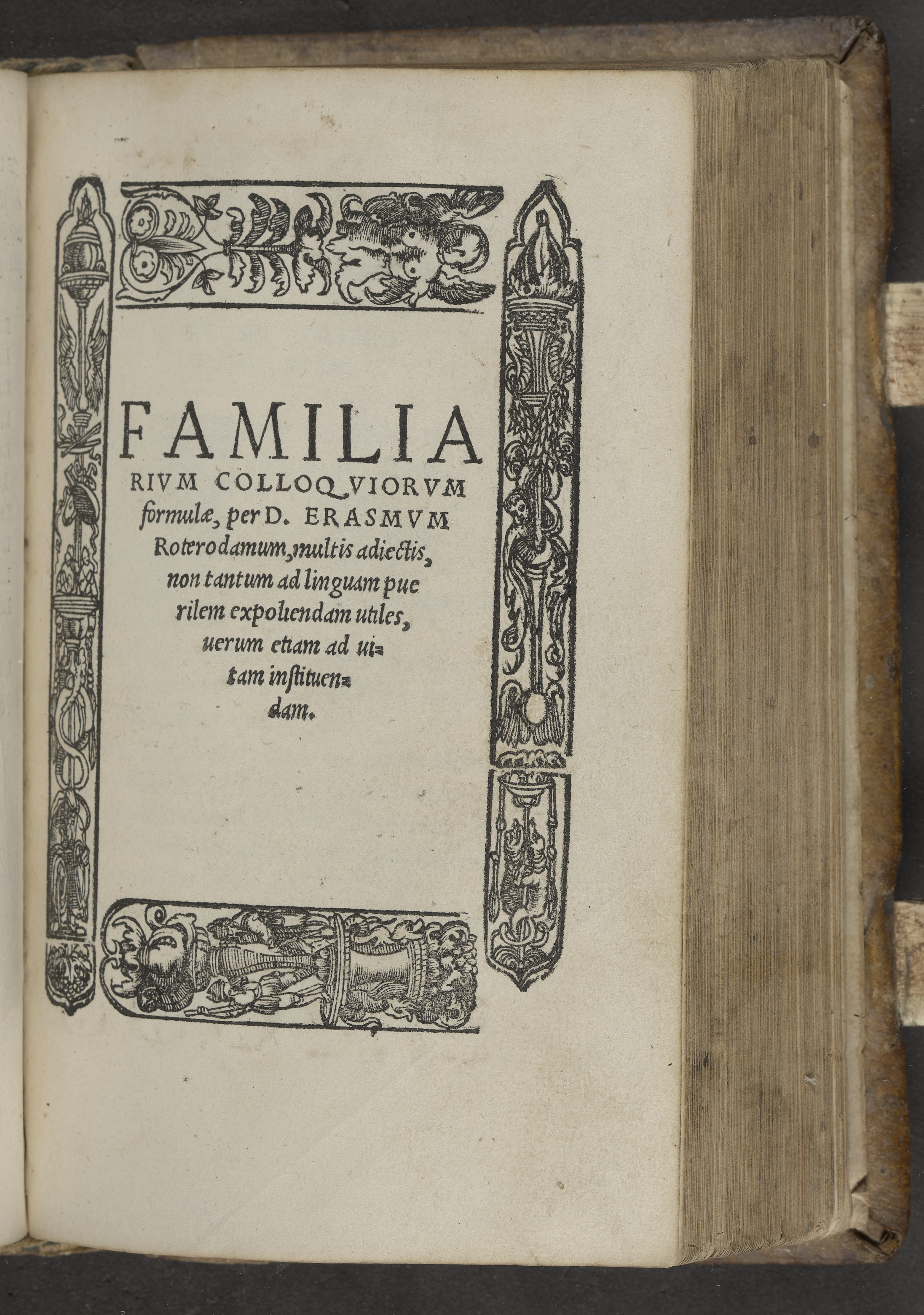
TextFamiliarium colloquiorum formulae
Erasmus, Desiderius, -1536Summary: Fifth edition of Erasmus' Colloquies, a collection of dialogues on Latin conversation and good behavior first published in 1518 as an excercise book for Erasmus's students.Summary: Fifth edition of Erasmus' Colloquies, a collection of dialogues on Latin conversation and good behavior first published in 1518 as an excercise book for Erasmus's students. -
 Still image
Floral printer's ornament
A decorative woodcut depicting a floral printer's ornament below the date of printing, "1523."A decorative woodcut depicting a floral printer's ornament below the date of printing, "1523." -
 Text
TextForma Inquisitionis Hispanicae instituta in inferiori Germania anno 1550
Summary: Instructions for inquisitors in the Netherlands (Lower Germany), published by the Lutheran reformer Matthias Flacius to call attention to the persecution of Protestants. Flacius intended this report to underscore his opposition to any compromises with the Catholic Church, even in liturgical matters, as permitted by the Augsburg Interim of 1548.Summary: Instructions for inquisitors in the Netherlands (Lower Germany), published by the Lutheran reformer Matthias Flacius to call attention to the persecution of Protestants. Flacius intended this report to underscore his opposition to any compromises with the Catholic Church, even in liturgical matters, as permitted by the Augsburg Interim of 1548. -
 Still image
Four Horsemen of the Apocalypse
Cranach, Lucas, 1472-1553A woodcut depicting the Four Horsemen of the Apocalypse: the first, a conquerer with a crown and bow, the second, with a sword, tasked with taking peace from the earth, the third holding scales, and the fourth, Death itself. The image appears in the September Testament, Martin Luther's first printing of his German New Testament.A woodcut depicting the Four Horsemen of the Apocalypse: the first, a conquerer with a crown and bow, the second, with a sword, tasked with taking peace from the earth, the third holding scales, and the fourth, Death itself. The image appears in the September Testament, Martin Luther's first printing of his German New Testament. -
 Text
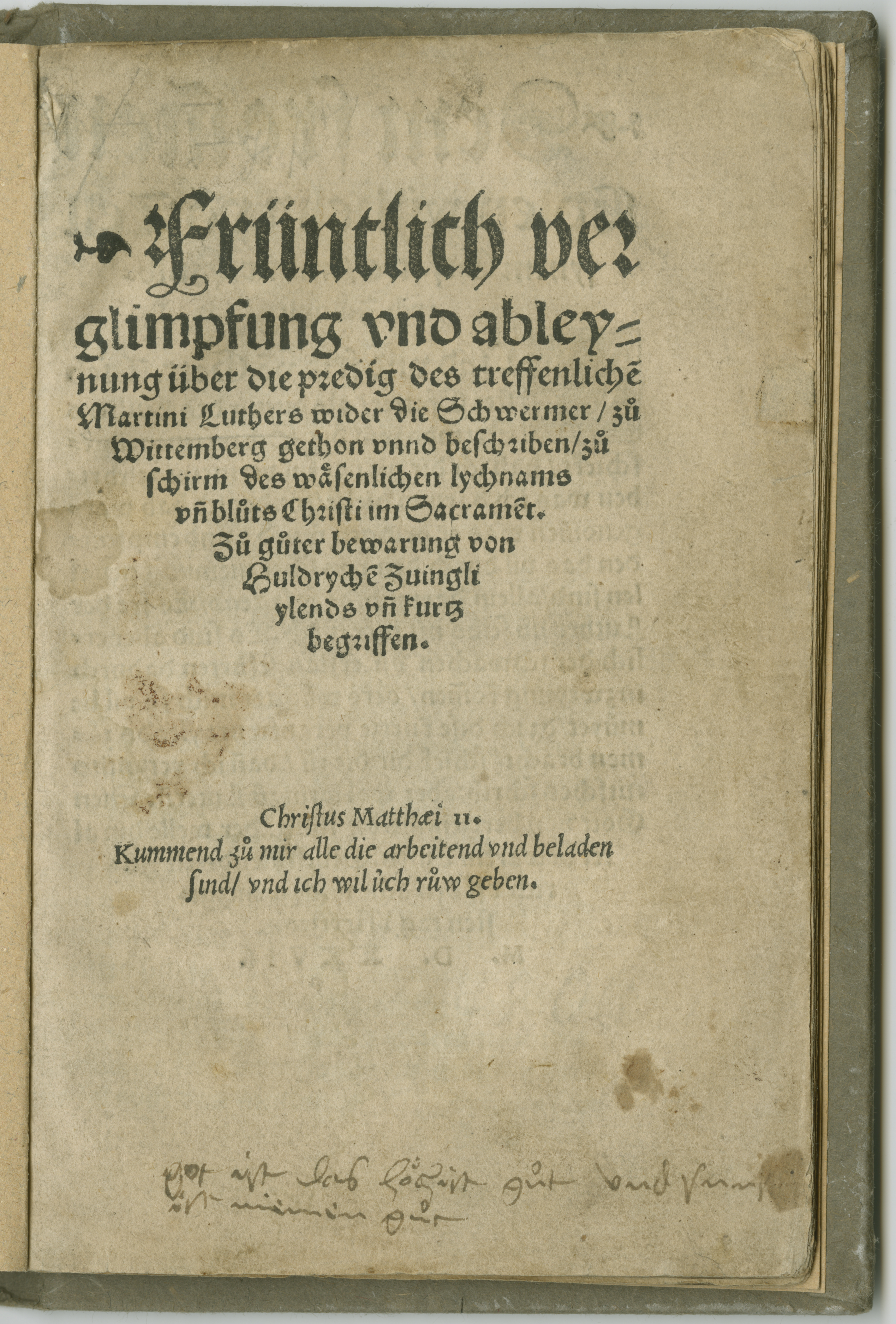
TextFrüntlich verglimpfung vnd ableynung über die predig des treffenliche[n] Martini Luthers wider die Schwermer : zuo Wittemberg gethon vnnd beschriben zuo schirm des wäsenlichen lychnams vn[d] bluts Christi im Sacrame[n]t
Zwingli, Ulrich, 1484-1531Summary: In a sermon against religious fanatics (Wider die Schwärmer), Luther had asserted the real presence of Christ in the eucharist. Zwingli responds by affirming the Reformed position that the practice of communion is to be seen as a symbolic act.Summary: In a sermon against religious fanatics (Wider die Schwärmer), Luther had asserted the real presence of Christ in the eucharist. Zwingli responds by affirming the Reformed position that the practice of communion is to be seen as a symbolic act. -
 Text
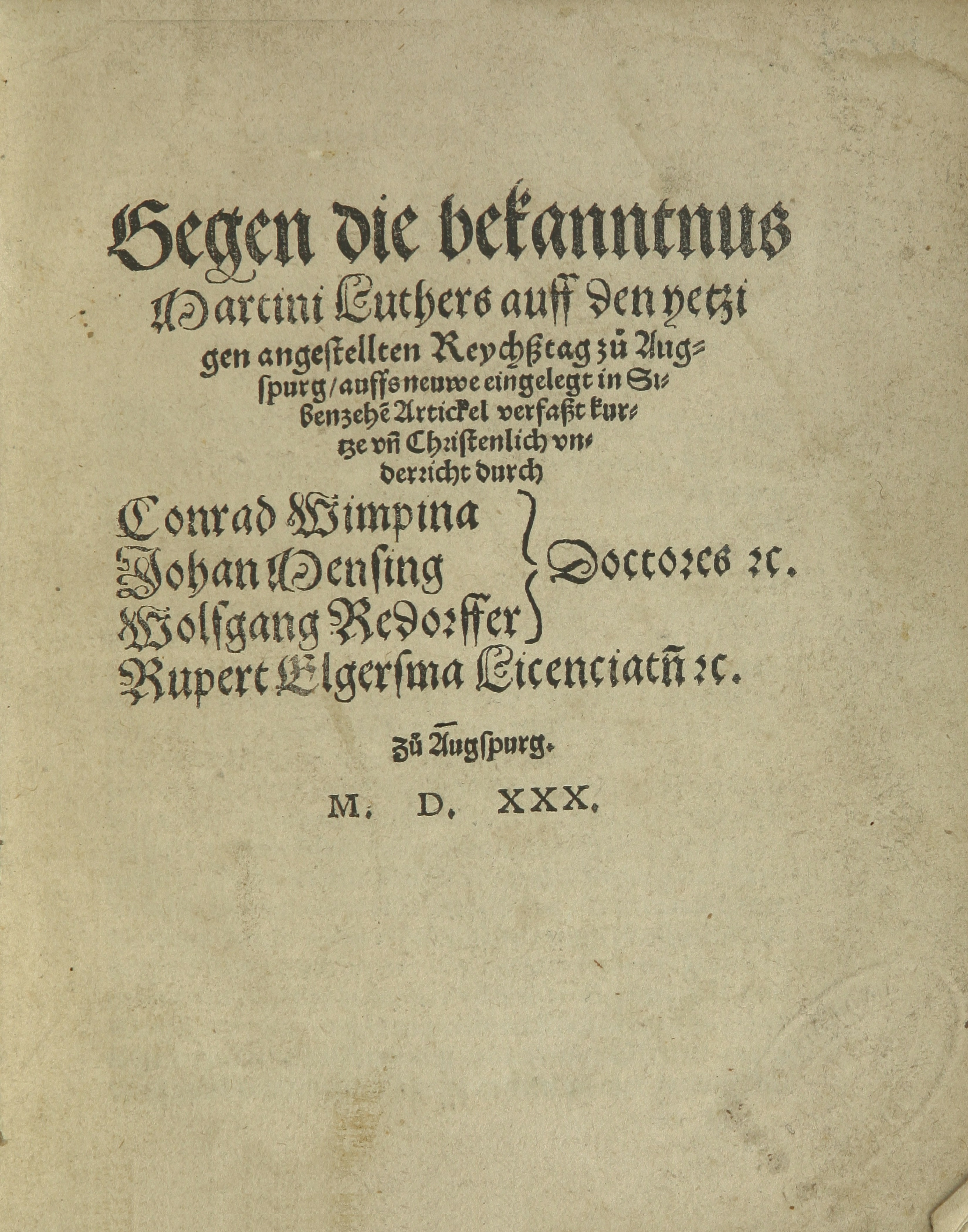
TextGegen die bekanntnus Martini Luthers auff den yetzigen angestellten Reychsstag zuo Augsburg, auff neuwe eingelegt in sibenzehe[n] Artickel verfasst. Kurtze vn[d] Christenlich vnderricht
Wimpina, Konrad, 1460-1531Summary: This pamphlet contains the Catholic response to the first, unauthorized edition of the Schwabach Articles, published in Coburg in 1530. Among the authors of this tract, Konrad Wimpina and Johannes Mensing helped draft the Catholic Confutation of the Augsburg Confession.Summary: This pamphlet contains the Catholic response to the first, unauthorized edition of the Schwabach Articles, published in Coburg in 1530. Among the authors of this tract, Konrad Wimpina and Johannes Mensing helped draft the Catholic Confutation of the Augsburg Confession. -
 Text
TextGeistliche Lieder zu Wittemberg / Anno 1543
Luther, Martin, 1483-1546Summary: Joseph Klug printed the first collection of hymns that Luther prepared specifically for congregational use in Wittenberg in 1529. It followed the church year closely and was revised and reprinted several times. The renowned hymnal printed by Valentin Bapst (Geystlicher Lieder'; Leipzig, 1545) may be seen as a later edition of the Klug hymnal. (Robin Leaver, "Hymnals," in 'The Oxford Encyclopedia of the Reformation' (1996) 2:286-89.)Summary: Joseph Klug printed the first collection of hymns that Luther prepared specifically for congregational use in Wittenberg in 1529. It followed the church year closely and was revised and reprinted several times. The renowned hymnal printed by Valentin Bapst (Geystlicher Lieder'; Leipzig, 1545) may be seen as a later edition of the Klug hymnal. (Robin Leaver, "Hymnals," in 'The Oxford Encyclopedia of the Reformation' (1996) 2:286-89.) -
 Still image
Gespängst der bösen geist
A woodcut depicting a hairy, bipedal beast, labeled as the "spook of the evil ghost," which is found in a vast desert beyond India in the land of Cathay. This type of ghost is said to lead travellers astray by mimicking the voices of their travelling companions.A woodcut depicting a hairy, bipedal beast, labeled as the "spook of the evil ghost," which is found in a vast desert beyond India in the land of Cathay. This type of ghost is said to lead travellers astray by mimicking the voices of their travelling companions. -

-
 Still image
Grapes and grapevines
An ornamental woodcut depicting bunches of grapes on the vine.An ornamental woodcut depicting bunches of grapes on the vine. -
 Still image
Henry II and Cunigunde of Luxembourg
A woodcut showing Holy Roman Emperor Henry II and Cunigunde of Luxembourg holding up a model of the Bamberg Cathedral (left) and the coat of arms of Georg Schenk von Limpurg (right).A woodcut showing Holy Roman Emperor Henry II and Cunigunde of Luxembourg holding up a model of the Bamberg Cathedral (left) and the coat of arms of Georg Schenk von Limpurg (right). -
 Text
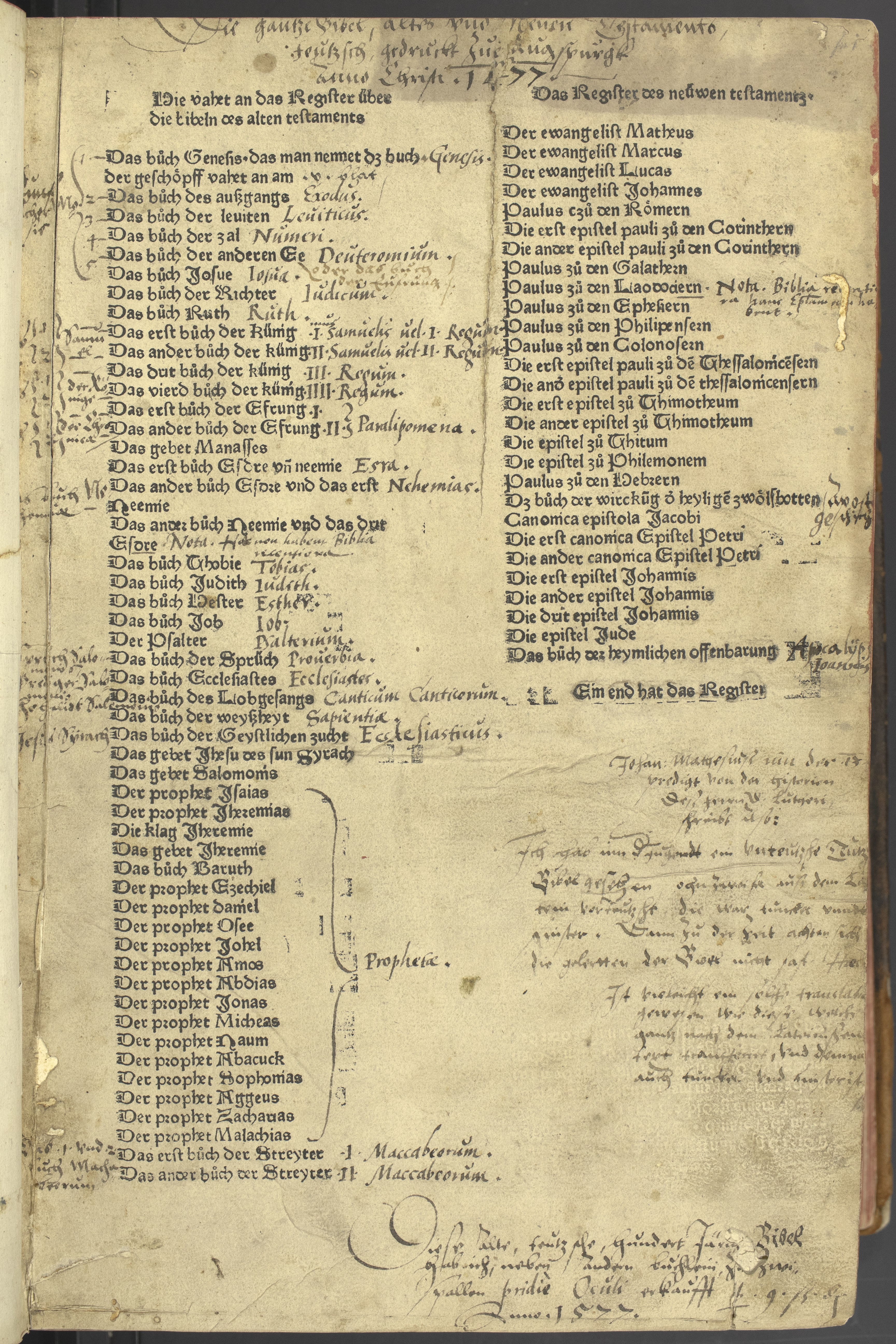
TextHie vahet an das Register über die bibeln des alten testaments
Summary: There were 18 printings of the whole Bible in German before Luther's September Testament of 1522. These were all translated from the Latin vulgate. They are today chiefly remembered as giving the lie to the often expressed assertion that the Catholic Church discouraged the circulation of the Bible in the vernacular. Many church authorities were not pleased to admit that it was necessary to circulate it in German. But they realized that a certain lack of education coupled with the people's desire to know their religious heritage made it necessary to print in German.Summary: There were 18 printings of the whole Bible in German before Luther's September Testament of 1522. These were all translated from the Latin vulgate. They are today chiefly remembered as giving the lie to the often expressed assertion that the Catholic Church discouraged the circulation of the Bible in the vernacular. Many church authorities were not pleased to admit that it was necessary to circulate it in German. But they realized that a certain lack of education coupled with the people's desire to know their religious heritage made it necessary to print in German. -
 Still image
Hieronymus Emser's Coat of Arms
A woodcut depicting Hieronymus Emser's coat of arms which features a shield emblazoned with a goat's head and a helmet crowned with a goat's head. A label to the side of the crest reads "ARMA HIERONYMI EMSER".A woodcut depicting Hieronymus Emser's coat of arms which features a shield emblazoned with a goat's head and a helmet crowned with a goat's head. A label to the side of the crest reads "ARMA HIERONYMI EMSER". -
 Still image
Hieronymus Emser's Coat of Arms
A woodcut depicting Hieronymus Emser's coat of arms which features a shield emblazoned with a goat's head and a helmet crowned with a goat's head. A label to the side of the crest reads "ARMA HIERONYMI EMSER".A woodcut depicting Hieronymus Emser's coat of arms which features a shield emblazoned with a goat's head and a helmet crowned with a goat's head. A label to the side of the crest reads "ARMA HIERONYMI EMSER". -
 Still image
Hieronymus Emser's Coat of Arms
A woodcut depicting Hieronymus Emser's coat of arms which features a shield emblazoned with a goat's head and a helmet crowned with a goat's head. A label to the side of the crest reads "ARMA HIERONYMI EMSER".A woodcut depicting Hieronymus Emser's coat of arms which features a shield emblazoned with a goat's head and a helmet crowned with a goat's head. A label to the side of the crest reads "ARMA HIERONYMI EMSER". -
 Text
TextHistoria de uita et actis reuerendiss. viri D. Mart. Lutheri : uerae theologiae doctoris
Melanchthon, Philipp, 1497-1560Summary: Rare early printing of Melanchthon's biography of Luther.Summary: Rare early printing of Melanchthon's biography of Luther. -
 Text
TextHistoria de uita et actis reuerendissimi uiri D. Martini Lutheri, uerae theologiae doctoris
Melanchthon, Philipp, 1497-1560Summary: Philipp Melanchthon's biography of Martin Luther was first printed in 1548 and reissued numerous times. Included are Melanchthon's obituary of Martin Luther as well as his funeral sermon. The work was edited by Johannes Pollicarius who added some Latin and Greek poetry on Luther's "Here I stand" statement.Summary: Philipp Melanchthon's biography of Martin Luther was first printed in 1548 and reissued numerous times. Included are Melanchthon's obituary of Martin Luther as well as his funeral sermon. The work was edited by Johannes Pollicarius who added some Latin and Greek poetry on Luther's "Here I stand" statement. -
 Still image
Historiated section border of Isocrates' Ad Nicolem Regem de institutione principis
A historiated woodcut border framing the first page of Isocrates' Ad Nicolem Regem de institutione principis. The border features a pair of horn blowers, decorative columns, and floral designs.A historiated woodcut border framing the first page of Isocrates' Ad Nicolem Regem de institutione principis. The border features a pair of horn blowers, decorative columns, and floral designs.