Search
741 resources
741 items
Collection
Richard C. Kessler Reformation Collection
-
 Still image
Christ enters Jerusalem
A woodcut depicting Jesus Christ riding into Jerusalem on a donkey, the apostles behind him, as a man lays his cloak on the road before him.A woodcut depicting Jesus Christ riding into Jerusalem on a donkey, the apostles behind him, as a man lays his cloak on the road before him. -
 Still image
Christ in Glory
Cranach, Lucas, 1472-1553A woodcut depicting Saint John the Apostle's vision from the first chapter of Revelations of a Christ with flaming eyes, surrounded by seven candlesticks and holding seven stars, with a sword emerging from his mouth. The image appears in the September Testament, Martin Luther's first printing of his German New Testament.A woodcut depicting Saint John the Apostle's vision from the first chapter of Revelations of a Christ with flaming eyes, surrounded by seven candlesticks and holding seven stars, with a sword emerging from his mouth. The image appears in the September Testament, Martin Luther's first printing of his German New Testament. -
 Still image
Christ in the Garden of Gethsemane
A woodcut depicting Jesus Christ praying in the Garden of Gethsemane while the apostles sleep around him.A woodcut depicting Jesus Christ praying in the Garden of Gethsemane while the apostles sleep around him. -
 Still image
Christ in the garden of Gethsemane
Graf, Urs, approximately 1485-approximately 1527A woodcut by Urs Graf depicting Christ in the garden of Gethsemane. The image was taken from a 1506 harmony of the Gospel texts of the Passion, edited by Matthias Ringmann, translated by Geiler von Keysersberg and printed by Johann Knobloch in Strasbourg.A woodcut by Urs Graf depicting Christ in the garden of Gethsemane. The image was taken from a 1506 harmony of the Gospel texts of the Passion, edited by Matthias Ringmann, translated by Geiler von Keysersberg and printed by Johann Knobloch in Strasbourg. -
 Still image
Christ is carrying his cross
Graf, Urs, approximately 1485-approximately 1527A woodcut by Urs Graf depicting Christ carrying the Cross. The image was taken from a 1506 harmony of the Gospel texts of the Passion, edited by Matthias Ringmann, translated by Geiler von Keysersberg and printed by Johann Knobloch in Strasbourg.A woodcut by Urs Graf depicting Christ carrying the Cross. The image was taken from a 1506 harmony of the Gospel texts of the Passion, edited by Matthias Ringmann, translated by Geiler von Keysersberg and printed by Johann Knobloch in Strasbourg. -
 Still image
Christ's Resurrection
A woodcut depicting the resurrection of Jesus Christ. Christ is depicted at the top center of the image, surrounded by cherubim. At the bottom right is Christ's open and empty tomb. On the bottom left, a group of cherubim are burying the body of a man, perhaps representing Christ's transformation from a physical body to a spiritual one.A woodcut depicting the resurrection of Jesus Christ. Christ is depicted at the top center of the image, surrounded by cherubim. At the bottom right is Christ's open and empty tomb. On the bottom left, a group of cherubim are burying the body of a man, perhaps representing Christ's transformation from a physical body to a spiritual one. -
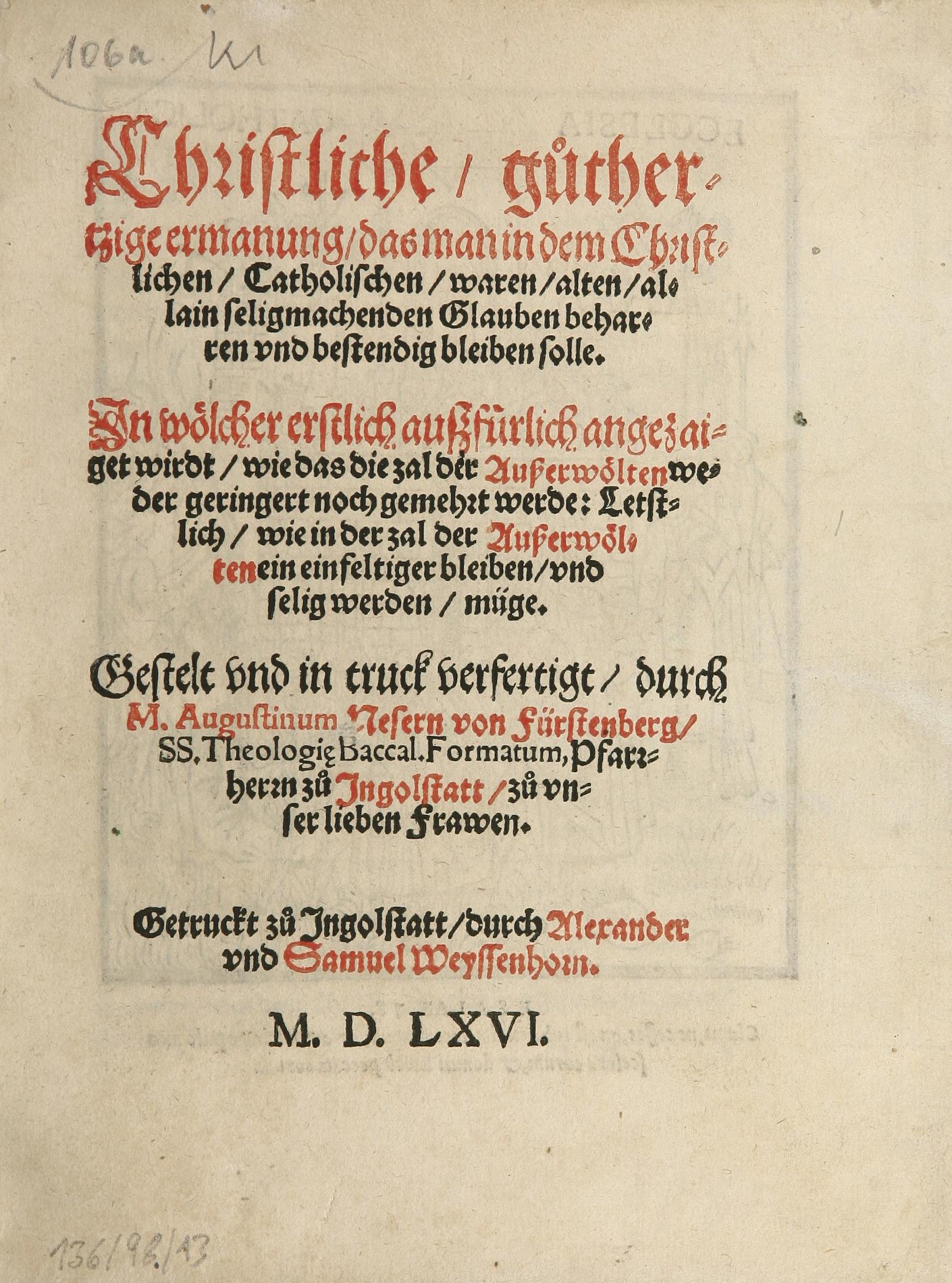 Text
TextChristliche güthertzige Ermanung, das Man in dem Christlichen, Catholischen, waren, alten, allain seligmachenden Glauben beharren vnd bestendig bleiben solle : In wölcher erstlich auszfürlich angezaiget wirdt, wie das die Zal der Ausserwölten weder geringert noch gemehrt werde: letstlich, wie in der Zal der Ausserwölten ein einfeltiger bleiben, vnd selig werden, müge
Neser, AugustinusSummary: Augustinus Neser was a pastor in Ingolstadt. In this hortatory tract he discusses the importance of staying within the Catholic fold.Summary: Augustinus Neser was a pastor in Ingolstadt. In this hortatory tract he discusses the importance of staying within the Catholic fold. -
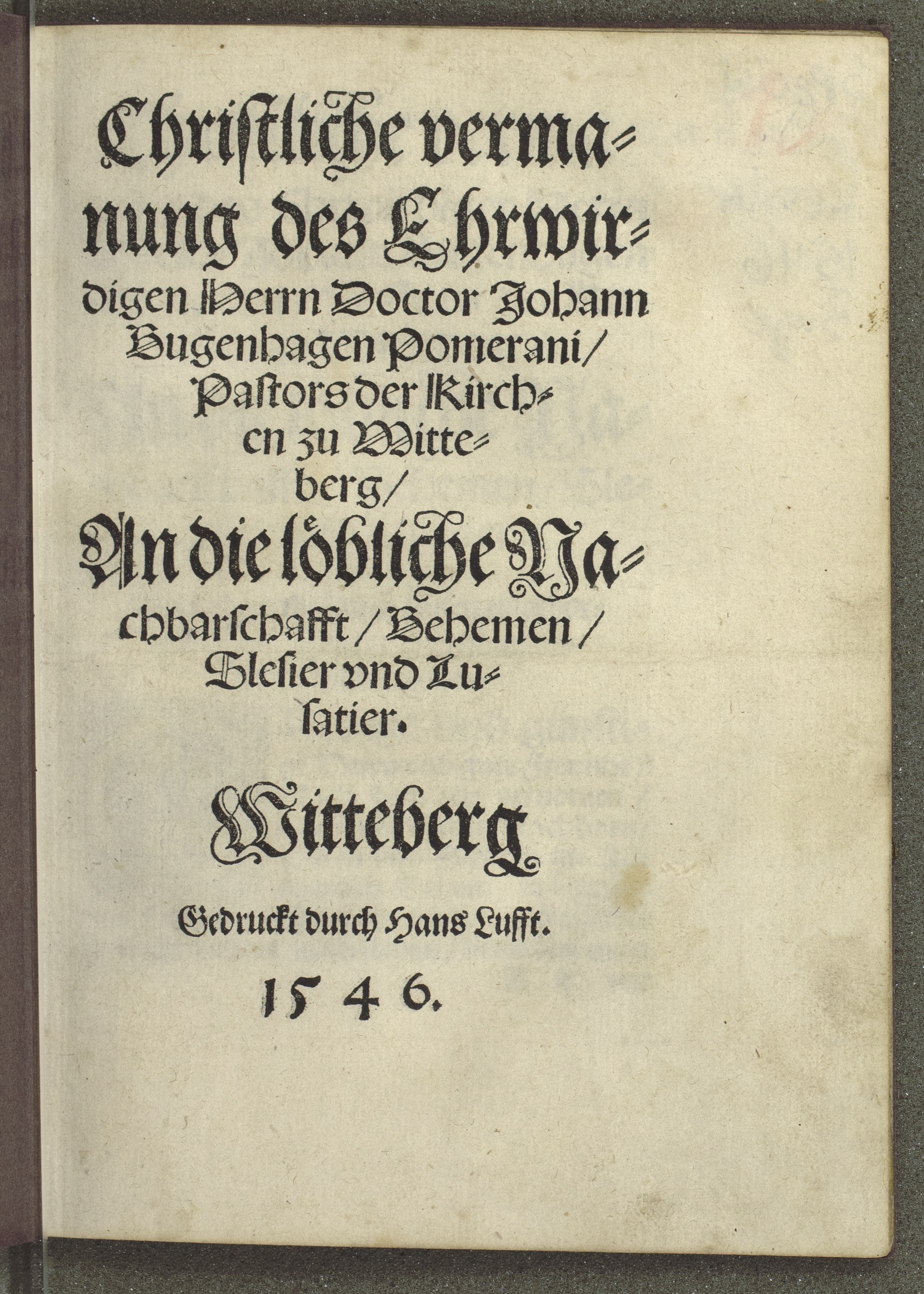 Text
TextChristliche vermanung
Bugenhagen, Johann, 1485-1558Summary: A German translation of Bugenhagen's "Short Admonition Full of Piety" to his neighbors in Bohemia, Silesia, and Lusatia, asking that they not give assistance to the Emperor and his troops in their war against the Protestants.Summary: A German translation of Bugenhagen's "Short Admonition Full of Piety" to his neighbors in Bohemia, Silesia, and Lusatia, asking that they not give assistance to the Emperor and his troops in their war against the Protestants. -
 Text
TextChrysopassus
Eck, Johann, 1486-1543Summary: A significant treatise on predestination. Johann Eck expounds a view of free will and merit, which was soon to come under attack by Martin Luther and other Protestants.Summary: A significant treatise on predestination. Johann Eck expounds a view of free will and merit, which was soon to come under attack by Martin Luther and other Protestants. -
 Still image
Ciborium
A woodcut depicting an elaborate ciborium featuring several decorative spires and a crucifix at the top.A woodcut depicting an elaborate ciborium featuring several decorative spires and a crucifix at the top. -
 Still image
Coat of Arms of Johann "The Constant", Elector of Saxony
Cranach, Lucas, 1472-1553A woodcut depicting the coat of arm sof Johann "the Constant" (or "Steadfast"), Elector of Saxony, who was a supporter of Luther and his movement. The coat of arms features a pair of crossed swords at the center, surrounded by ten fields with varying iconography, including lions, eagles, and a rose. Three helmets with different crests sit above the coat of arms and the entire composition is surrounded by a host of cherubs and a pair of trees.A woodcut depicting the coat of arm sof Johann "the Constant" (or "Steadfast"), Elector of Saxony, who was a supporter of Luther and his movement. The coat of arms features a pair of crossed swords at the center, surrounded by ten fields with varying iconography, including lions, eagles, and a rose. Three helmets with different crests sit above the coat of arms and the entire composition is surrounded by a host of cherubs and a pair of trees. -
![A woodcut version of Johann Reuchlin's coat of arms, featured on the title page of his work De arte cabalistica. The coat of arms includes a shield featuring an altar inscribed with "ARACAPNIONIS" (Ara Capnionis, the "altar of Capnion [Reuchlin]"), topped with burning coals, and encircled with three twisted ropes or garlands. Set atop the shield is a helmet with a cross inscribed on the neck, crowned with another three twisted ropes or garlands and a quartered wheel. Surrounding both helmet and shield are stylized vegitation.](https://digital.pitts.emory.edu/files/large/P_300000152440_P003/P_300000152440_P003_PROD.jpg) Still image
Still imageCoat of Arms of Johann Reuchlin
A woodcut version of Johann Reuchlin's coat of arms, featured on the title page of his work De arte cabalistica. The coat of arms includes a shield featuring an altar inscribed with "ARACAPNIONIS" (Ara Capnionis, the "altar of Capnion [Reuchlin]"), topped with burning coals, and encircled with three twisted ropes or garlands. Set atop the shield is a helmet with a cross inscribed on the neck, crowned with another three twisted ropes or garlands and a quartered wheel. Surrounding both helmet and shield are stylized vegitation.A woodcut version of Johann Reuchlin's coat of arms, featured on the title page of his work De arte cabalistica. The coat of arms includes a shield featuring an altar inscribed with "ARACAPNIONIS" (Ara Capnionis, the "altar of Capnion [Reuchlin]"), topped with burning coals, and encircled with three twisted ropes or garlands. Set atop the shield is a helmet with a cross inscribed on the neck, crowned with another three twisted ropes or garlands and a quartered wheel. Surrounding both helmet and shield are stylized vegitation. -
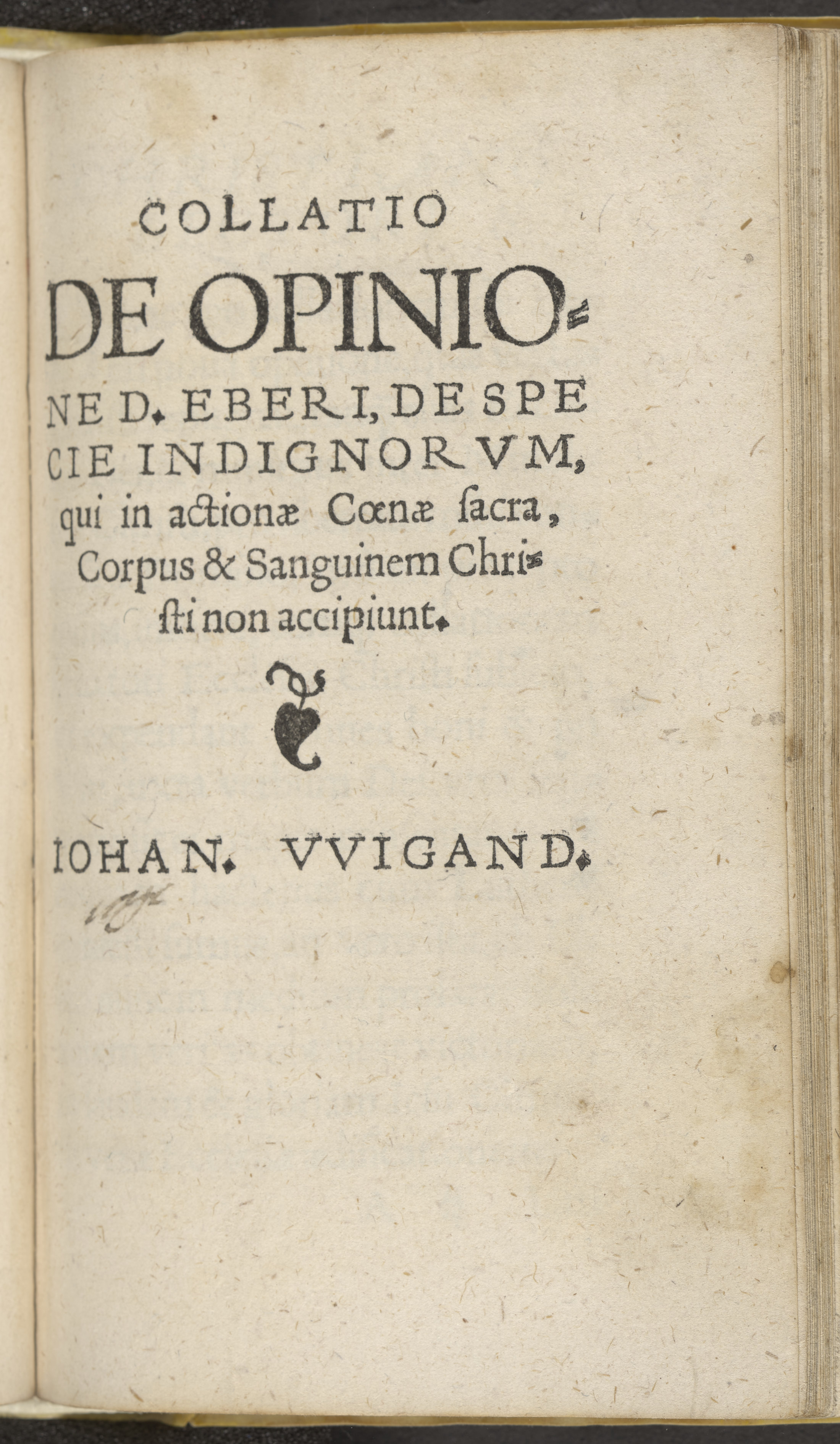 Text
TextCollatio de opinione D. Eberi, de specie Indignorum, qui in actionae coenae sacra, corpus & sanguinem Christi non accipiunt
Wigand, Johann, 1523-1587Summary: Compilation by Johann Wigand of arguments made by the Reformer Paul Eber in support of the real presence of Christ in the eucharist.Summary: Compilation by Johann Wigand of arguments made by the Reformer Paul Eber in support of the real presence of Christ in the eucharist. -
 Still image
Color historiated woodcut title page of Auff das Vermeint Keiserlich Edict : Ausgangen jm 1531 jare nach dem Reichs tage des 1530 Jars. Glosa
A historiated woodcut border of Martin Luther's Auff das Vermeint Keiserlich Edict : Ausgangen jm 1531 jare nach dem Reichs tage des 1530 Jars. Glosa. The scenes are hand colored in greens and reds. At the top and bottom are scenes of a party with musicians and couples dancing at the bottom and a noble couple seated at a table being served a meal. The sides depict the the decapitation of John the Baptist, with Salome depicted on the left holding the severed head on a platter.A historiated woodcut border of Martin Luther's Auff das Vermeint Keiserlich Edict : Ausgangen jm 1531 jare nach dem Reichs tage des 1530 Jars. Glosa. The scenes are hand colored in greens and reds. At the top and bottom are scenes of a party with musicians and couples dancing at the bottom and a noble couple seated at a table being served a meal. The sides depict the the decapitation of John the Baptist, with Salome depicted on the left holding the severed head on a platter. -
 Text
TextCommonefactio De periculis horum temporum : proposita scholasticis Academiae Vuitebergensis, XII. Cal. IXbris, Anno M.D.LXV. Rectore Micaelo Teubero , I.V. doctore
Peucer, Kaspar, 1525-1602Summary: Lecture delivered to the faculty and students of the University of Wittenberg on "the perils of these times" by Kaspar Peucer, Philipp Melanchthon's son-in-law. The perils to which he refers are the military threat of the Turks to the east, and the plague.Summary: Lecture delivered to the faculty and students of the University of Wittenberg on "the perils of these times" by Kaspar Peucer, Philipp Melanchthon's son-in-law. The perils to which he refers are the military threat of the Turks to the east, and the plague. -
 Text
TextConfessio fidei exhibita Inuictiss. Imp. Carolo V. Caesari Aug. in Comicijs Augustae, anno M.D.XXX. Addita est Apologia Confessionis. Wittenbergae
Summary: This is a fine, well-preserved copy of a sixteenth century edition of the "Confessio Augustana and Melanchthon's Apology."Summary: This is a fine, well-preserved copy of a sixteenth century edition of the "Confessio Augustana and Melanchthon's Apology." -
 Text
TextConfession des durchleüchtigen, hochgebornnen Fürsten vnd Herrn, Herrn Christoffs Hertzogen zů Wirtemberg, vnd zů Teckh, Grauen zů Mümppelgart, [et]c. so jr F.G. auff den XXIIII. Januarij, Anno M. D. LII. dem versamelten Concilio zů Triendt durch jhrer F. G. gesandten überantwort
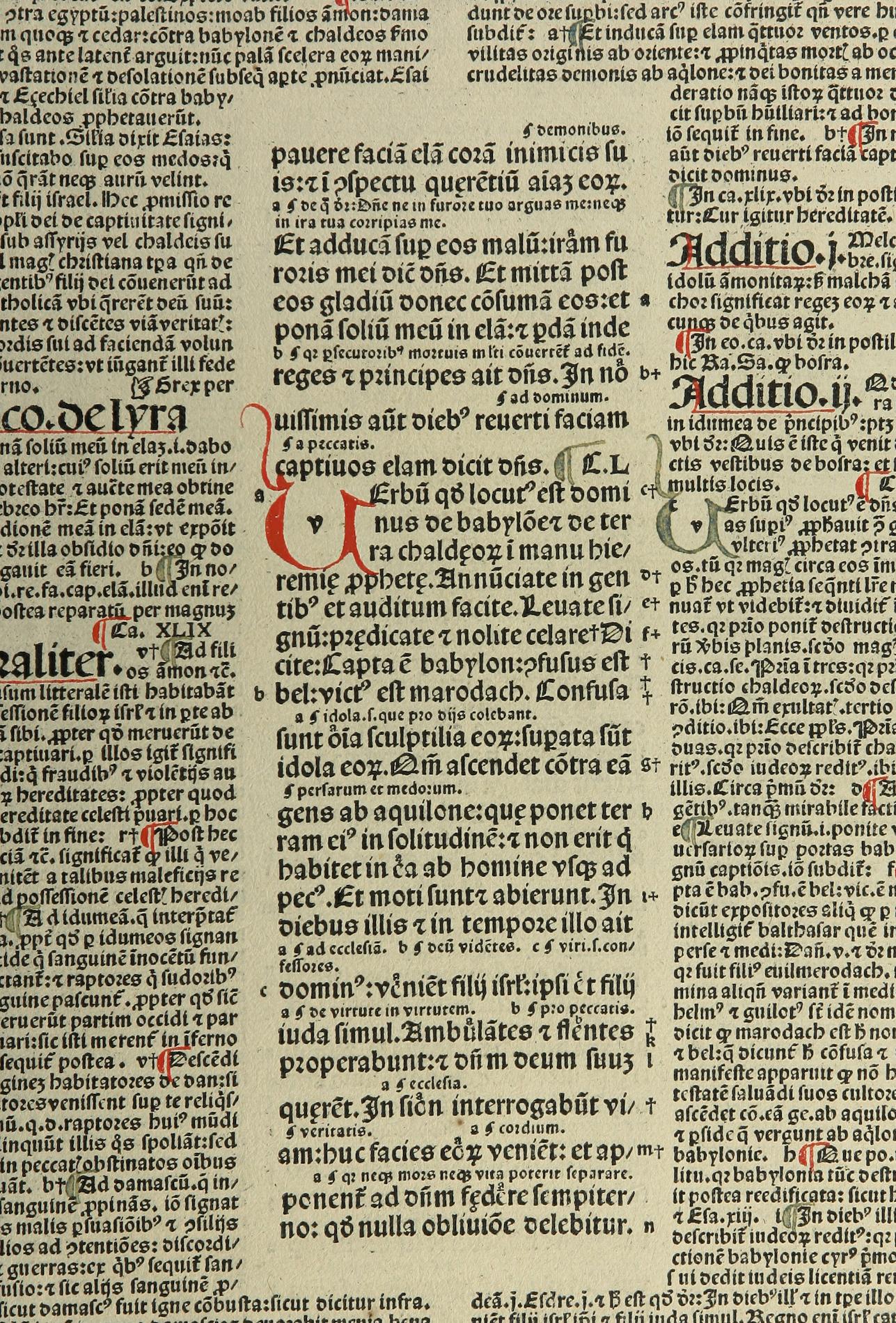
Summary: A 1553 printing of the Württemberg Confession, commissioned by Duke Christoph, drafted by Johannes Brenz in 1551 and signed by other Swabian theologians to be presented at the council of Trent in 1552.Summary: A 1553 printing of the Württemberg Confession, commissioned by Duke Christoph, drafted by Johannes Brenz in 1551 and signed by other Swabian theologians to be presented at the council of Trent in 1552. -
 Text
TextConfutatio XCI. articulorum e tribus Martini Lutheri Teuthonicis sermonibus excerptorum
Cochlaeus, Johannes, 1479-1552Summary: Second printing of the first edition of a tract listing 91 errors in three sermons by Martin Luther.Summary: Second printing of the first edition of a tract listing 91 errors in three sermons by Martin Luther. -
 Text
TextContra Henricum regem Angliae
Luther, Martin, 1483-1546Summary: This is the second and much expanded edition of Luther's reply to Henry VIII's Assertion of the Seven Sacraments. Luther replies quite moderately (for him) to what he feels to be the King's unwarranted assertions on the Catholic Sacraments. This is the second printing of this edition.Summary: This is the second and much expanded edition of Luther's reply to Henry VIII's Assertion of the Seven Sacraments. Luther replies quite moderately (for him) to what he feels to be the King's unwarranted assertions on the Catholic Sacraments. This is the second printing of this edition. -
 Text
TextContra haereticum dikaeusistam de dicto Ioannis: Spiritus arguet munde iustitia uado ad Patrem
Flacius Illyricus, Matthias, 1520-1575Summary: Response by Mathias Flacius Illyricus, among the strictest of the Lutheran theologians of his time, to the views of the early Reformer of Nürnberg, Andreas Osiander, on Justification. Osiander emphasized the believer's being made righteous, as opposed to being declared righteous through Christ. Flacius reports on the title page that he had shared his views on this issue privately in writing with friends, but that they had been published without his permission and in a form unacceptable to him. This edition represents the official response by Flacius.Summary: Response by Mathias Flacius Illyricus, among the strictest of the Lutheran theologians of his time, to the views of the early Reformer of Nürnberg, Andreas Osiander, on Justification. Osiander emphasized the believer's being made righteous, as opposed to being declared righteous through Christ. Flacius reports on the title page that he had shared his views on this issue privately in writing with friends, but that they had been published without his permission and in a form unacceptable to him. This edition represents the official response by Flacius. -
 Text
TextD. Andree Carolstatini doctoris et Archidiaconi VVittenburgensis : CCCLXX: et apologetic[a]e co[n]clusio[n]es p[er] sacris literis & Vuittenburgen[si] ita edit[a]e, vt & lectoribus p[er] futur[a]e sint
Karlstadt, Andreas Rudolff-Bodenstein von, 1486-1541Summary: After Luther had published the Ninety-five Theses, a broad academic debate spread across Germany on the question of the validity of indulgences. The debate was soon joined by Eck of Ingolstadt, representing the Catholic position. Karlstadt, a senior theologian at Wittenberg seems to have taken the lead in defending his colleague with his work, a series of disputations held at the University of Wittenberg beginning May 14, 1518, and continuing beyond July 7, 1518.Summary: After Luther had published the Ninety-five Theses, a broad academic debate spread across Germany on the question of the validity of indulgences. The debate was soon joined by Eck of Ingolstadt, representing the Catholic position. Karlstadt, a senior theologian at Wittenberg seems to have taken the lead in defending his colleague with his work, a series of disputations held at the University of Wittenberg beginning May 14, 1518, and continuing beyond July 7, 1518.