Search
741 resources
741 items
Collection
Richard C. Kessler Reformation Collection
-
 Text
TextDas der frey will nichts sey : Anntwort D. Martini Luther ann Erasmum Rotherdam
Luther, Martin, 1483-1546Summary: German translation by Martin Luther's colleague, Justus Jonas, of "De servo arbitrio". "De servo arbitrio (Concerning the Enslaved Will)" is considered one of Luther's greatest literary productions, and among the most important writings of the Reformation. In it, he defends the idea of the complete inability of the human being to please God, apart from Divine grace.Summary: German translation by Martin Luther's colleague, Justus Jonas, of "De servo arbitrio". "De servo arbitrio (Concerning the Enslaved Will)" is considered one of Luther's greatest literary productions, and among the most important writings of the Reformation. In it, he defends the idea of the complete inability of the human being to please God, apart from Divine grace. -
 Still image
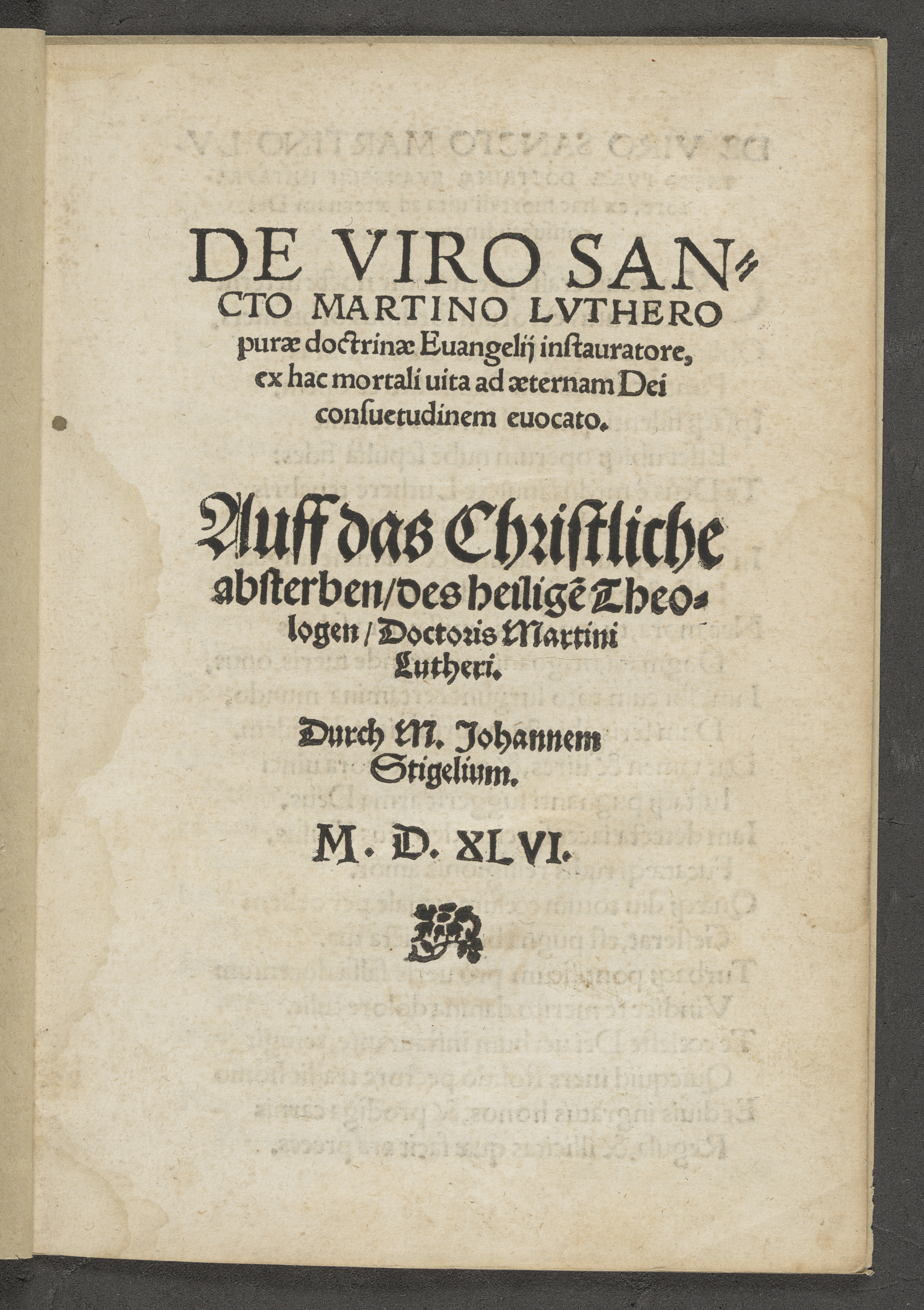
Das erst general - inhaltend die beschzeibung [und] den [circtel] des gantzen erdtreichs und m[o]rcs.
A map of the world including latitude and longitude markers. Personifications of the winds are depicted withing croulds surrounding the map and various monstrous creatures are depicted within the oceans.A map of the world including latitude and longitude markers. Personifications of the winds are depicted withing croulds surrounding the map and various monstrous creatures are depicted within the oceans. -
 Text
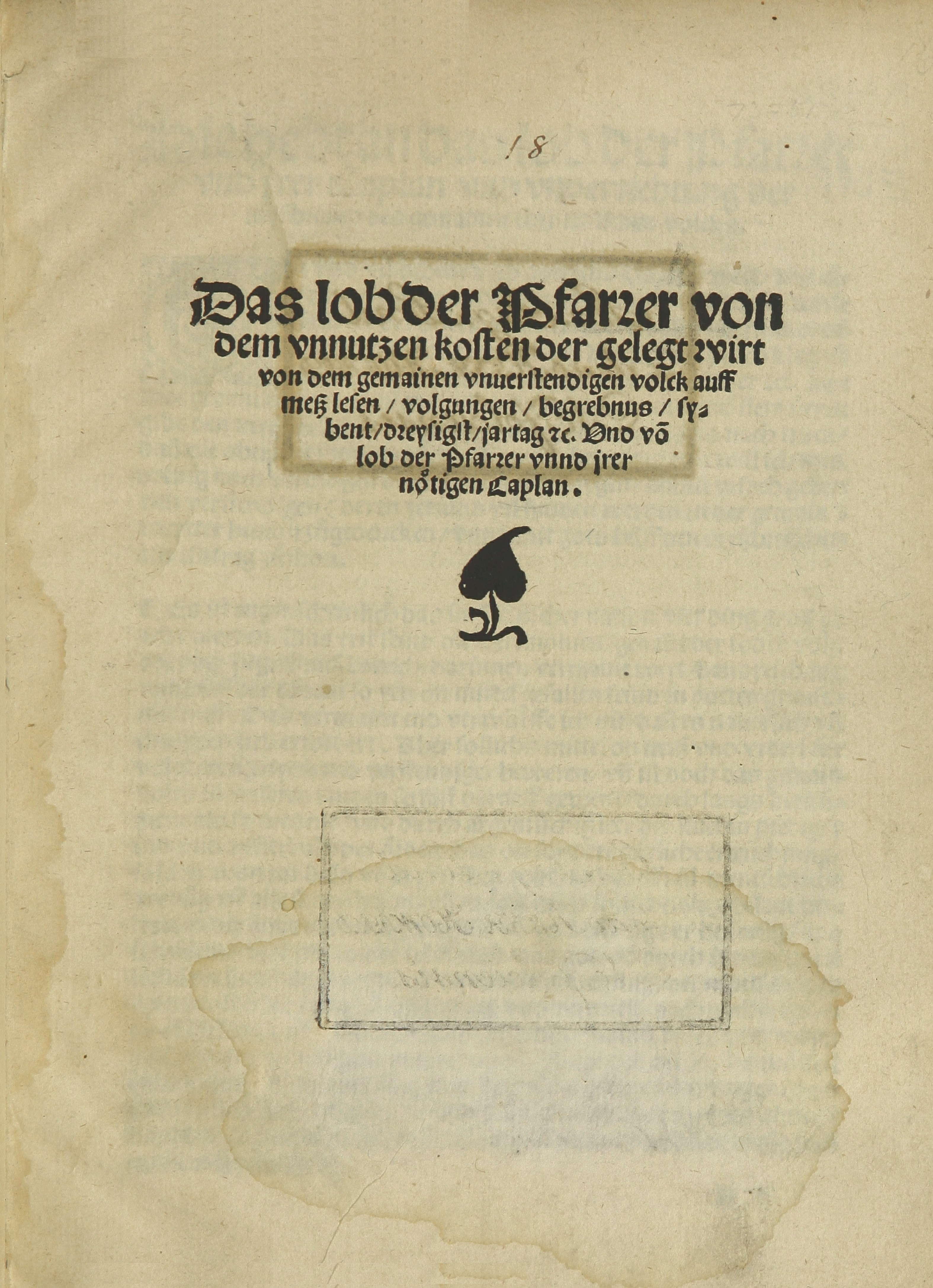
TextDas lob der Pfarrer von dem vnnutzen kosten der gelegt wirt von dem gemainen vnuerstendigen volck auff mess lesen, volgungen, begrebnus, sybent, dreysigst, jartag, rc. : Vnd vo[m] lob der Pfarrer vnnd irer nötigen Caplan.
Eberlin von Günzburg, Johann, approximately 1470-1533Summary: One of the problems that led to the Reformation was the sad state of ecclesiastical finance that forced many priests to change fees for the sacraments and other services. Von Gunzburg subjects such practices to sharp sanitization in the form of "praise of priests."Summary: One of the problems that led to the Reformation was the sad state of ecclesiastical finance that forced many priests to change fees for the sacraments and other services. Von Gunzburg subjects such practices to sharp sanitization in the form of "praise of priests." -
 Text
TextDas schön Confitemini an der zal der CXVIII Psalm
Luther, Martin, 1483-1546Summary: Text in German includes Luther's German translation of Psalms CXVIII from the Hebrew O.T., and is Luther's expanded version of his earlier Latin work.Summary: Text in German includes Luther's German translation of Psalms CXVIII from the Hebrew O.T., and is Luther's expanded version of his earlier Latin work. -
 Text
TextDas schön Confitemini an der zal der cxviij. Psalm
Luther, Martin, 1483-1546Summary: This is the third printing of Luther's German translation of his notes on Psalm 118. An Earlier German translation version had been published by Wenzeslaus Linck. Luther's expanded edition, as reprinted here, differs from Linck's in that it uses Eobanus Hessus' verse translation of the psalm, prepared with Luther's advice, as the scriptural text. Text in German includes Luther's German translation of Psalms CXVIII from the Hebrew O.T., and is Luther's expanded version of his earlier Latin work.Summary: This is the third printing of Luther's German translation of his notes on Psalm 118. An Earlier German translation version had been published by Wenzeslaus Linck. Luther's expanded edition, as reprinted here, differs from Linck's in that it uses Eobanus Hessus' verse translation of the psalm, prepared with Luther's advice, as the scriptural text. Text in German includes Luther's German translation of Psalms CXVIII from the Hebrew O.T., and is Luther's expanded version of his earlier Latin work. -
 Text
TextDe Libero arbitrio ΔΙΑΤΡΙΒΗ, sive collatio
Erasmus, Desiderius, -1536Summary: Early edition of Erasmus' treatise on free human will and its limits.Summary: Early edition of Erasmus' treatise on free human will and its limits. -
 Text
TextDe Petro et Roma adversus Velenu[m] Lutheranum, libri quatuor
Cochlaeus, Johannes, 1479-1552Summary: Oldrich Velensky, Latinized as Ulrich Velenus, was a Bohemian Protestant who opposed the papal claims to power based on St. Peter's residence and martyrdom in Rome. Cochlaeus upholds the traditional Catholic view that St. Peter was martyred in Rome in the reign of Nero in this volume against Velensky's criticism.Summary: Oldrich Velensky, Latinized as Ulrich Velenus, was a Bohemian Protestant who opposed the papal claims to power based on St. Peter's residence and martyrdom in Rome. Cochlaeus upholds the traditional Catholic view that St. Peter was martyred in Rome in the reign of Nero in this volume against Velensky's criticism. -
 Text
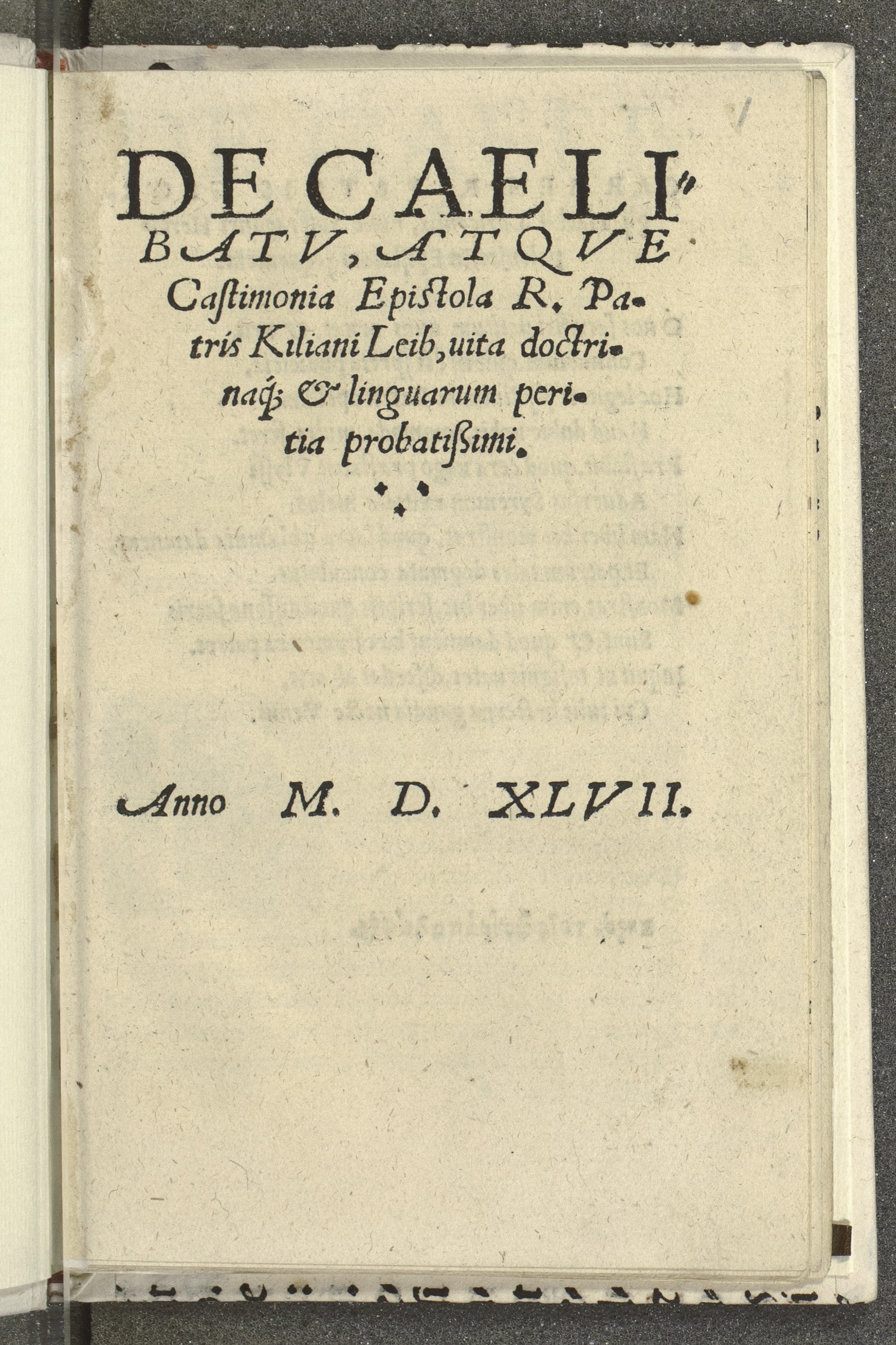
TextDe caelibatu, atque castimonia epistola
Leib, Kilian, 1471-1553Summary: Kilian Leib was the prior of the Augustinian monastery at Rebdorf near Ingolstadt. He was a vehement opponent of the Lutheran movement and was involved in the drafting of the Confutatio Augustana. In this tract he defends priestly celibacy and chastity.Summary: Kilian Leib was the prior of the Augustinian monastery at Rebdorf near Ingolstadt. He was a vehement opponent of the Lutheran movement and was involved in the drafting of the Confutatio Augustana. In this tract he defends priestly celibacy and chastity. -

-
 Text
TextDe coniugio episcoporum et diaconorum : ad venerandum doctorem VVolffgangum Reissenbusch monasterij Lichtembergensis Praeceptorem
Bugenhagen, Johann, 1485-1558Summary: Essay on the historical and Scriptural foundations of clerical marriage, written following the marriage of Wolfgang Reissenbusch, Praeceptor of the Collegial Church of St. Antonius in Lichtenberg.Summary: Essay on the historical and Scriptural foundations of clerical marriage, written following the marriage of Wolfgang Reissenbusch, Praeceptor of the Collegial Church of St. Antonius in Lichtenberg. -
 Text
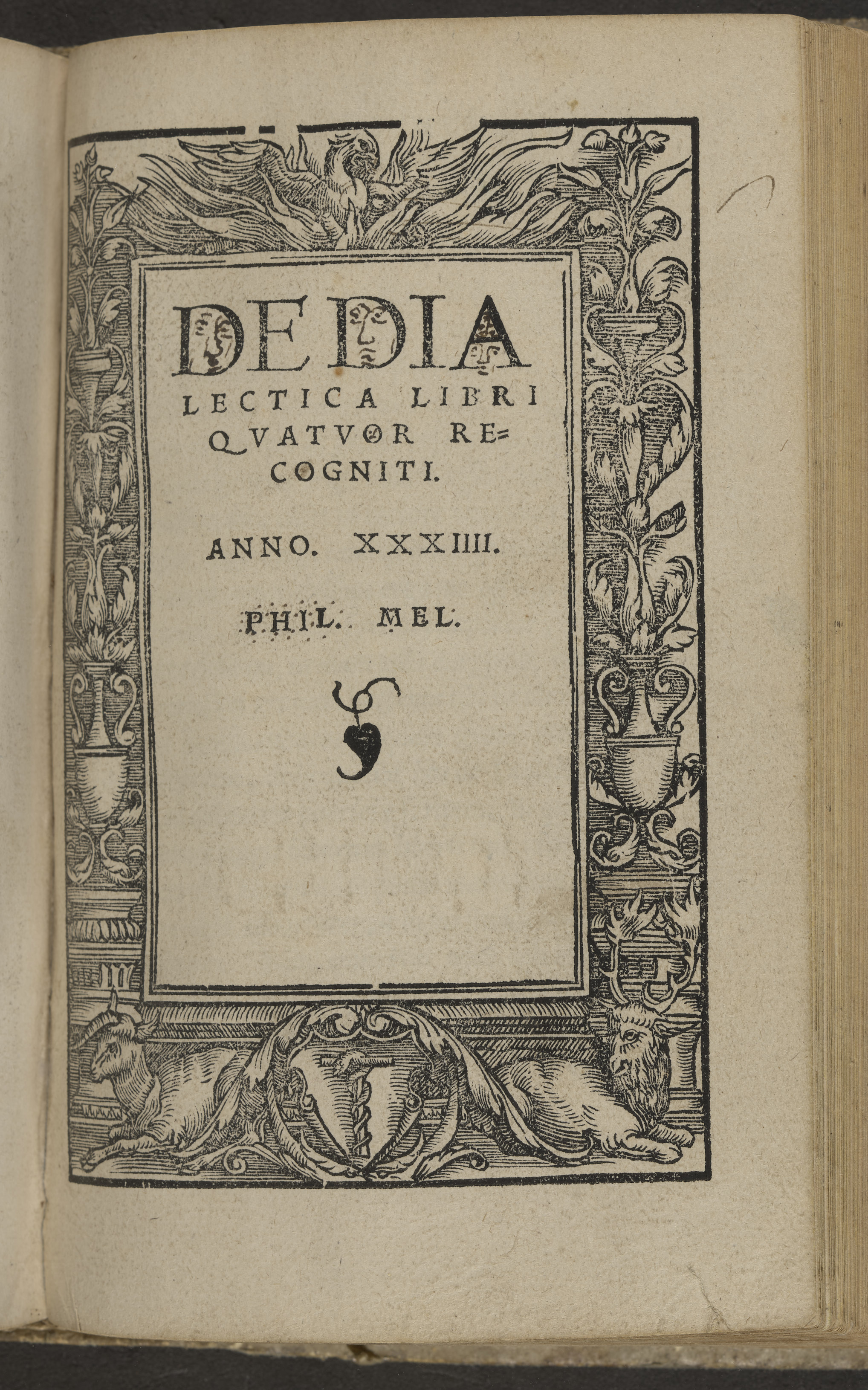
TextDe dialectica libri quatuor recogniti. Anno. XXXIIII
Melanchthon, Philipp, 1497-1560Summary: Melanchthon wrote three versions of his book on dialectic, considering only the third to be truly successful. This is a printing from 1534 of the second (1528) version.Summary: Melanchthon wrote three versions of his book on dialectic, considering only the third to be truly successful. This is a printing from 1534 of the second (1528) version. -
 Text
TextDe disputatio[n]e Lipsicensi : quantum ad Boemos obiter deflexa est
Emser, Hieronymus, 1478-1527Summary: A letter by Hieronymus Emser, early opponent of Luther concerning the Leipzig Disputation of 1519, describing Luther's debate with Johann Eck, and Luther's admitting that councils could err.Summary: A letter by Hieronymus Emser, early opponent of Luther concerning the Leipzig Disputation of 1519, describing Luther's debate with Johann Eck, and Luther's admitting that councils could err. -
 Text
TextDe disputatione lipsicensi quantum ad Boemos obiter deflexa est Epistola
Emser, Hieronymus, 1478-1527Summary: This volume includes both Emser's letter on the Leipzig Disputation, and Luther's sharp reply. Luther and Emser became lifelong enemies, a situation only exacerbated by Emser's use of Luther's New Testament as a basis for his own German translation in which he attacks Luther and Lutheranism. The woodcut on the title page shows Emser's coat-of-arms with the prominent goat, which gave Luther the title of his work, "To the Goat in Leipzig." The manuscript note on the title page says the book was purchased in 1520.Summary: This volume includes both Emser's letter on the Leipzig Disputation, and Luther's sharp reply. Luther and Emser became lifelong enemies, a situation only exacerbated by Emser's use of Luther's New Testament as a basis for his own German translation in which he attacks Luther and Lutheranism. The woodcut on the title page shows Emser's coat-of-arms with the prominent goat, which gave Luther the title of his work, "To the Goat in Leipzig." The manuscript note on the title page says the book was purchased in 1520. -
 Text
TextDe diuina institutione Pontificatus Romani Pontificis super tota[m] ecclesiam: a Christo in Petro
Cajetan, Tommaso de Vio, 1469-1534Summary: This is a finely executed and rare edition, dealing with the office of the Pope, with special emphasis on the person of St. Peter. Tommaso de Vio, also called Cajetan, taught philosophy and theology at Padua, Pavia, and Rome, and played an important part in the ecclesiastical affairs of the time, urging the cause of reform.Summary: This is a finely executed and rare edition, dealing with the office of the Pope, with special emphasis on the person of St. Peter. Tommaso de Vio, also called Cajetan, taught philosophy and theology at Padua, Pavia, and Rome, and played an important part in the ecclesiastical affairs of the time, urging the cause of reform. -
 Text
TextDe donatione Constantini quid ueri habeat, eruditorum quorundam iudicium, ut in uersa pagella uidebis
Summary: The Donation of Constantine was a work that told of how the Emperor Constantine I gave secular domination over Italy to the Bishops of Rome. Although purported to have been written in the fourth century, the humanist scholar Lorenzo Valla proved the work, long suspect to be an eighth century forgery. Vall's treatise was one of the first important works of comparative philology, a method invaluable to later biblical scholars and translators.Summary: The Donation of Constantine was a work that told of how the Emperor Constantine I gave secular domination over Italy to the Bishops of Rome. Although purported to have been written in the fourth century, the humanist scholar Lorenzo Valla proved the work, long suspect to be an eighth century forgery. Vall's treatise was one of the first important works of comparative philology, a method invaluable to later biblical scholars and translators. -
 Text
TextDe legis litera, siue carne, & spiritu
Karlstadt, Andreas Rudolff-Bodenstein von, 1486-1541Summary: One of two printings of Karlstadt's treatise on the dichotomy of law and grace.Summary: One of two printings of Karlstadt's treatise on the dichotomy of law and grace. -
 Text
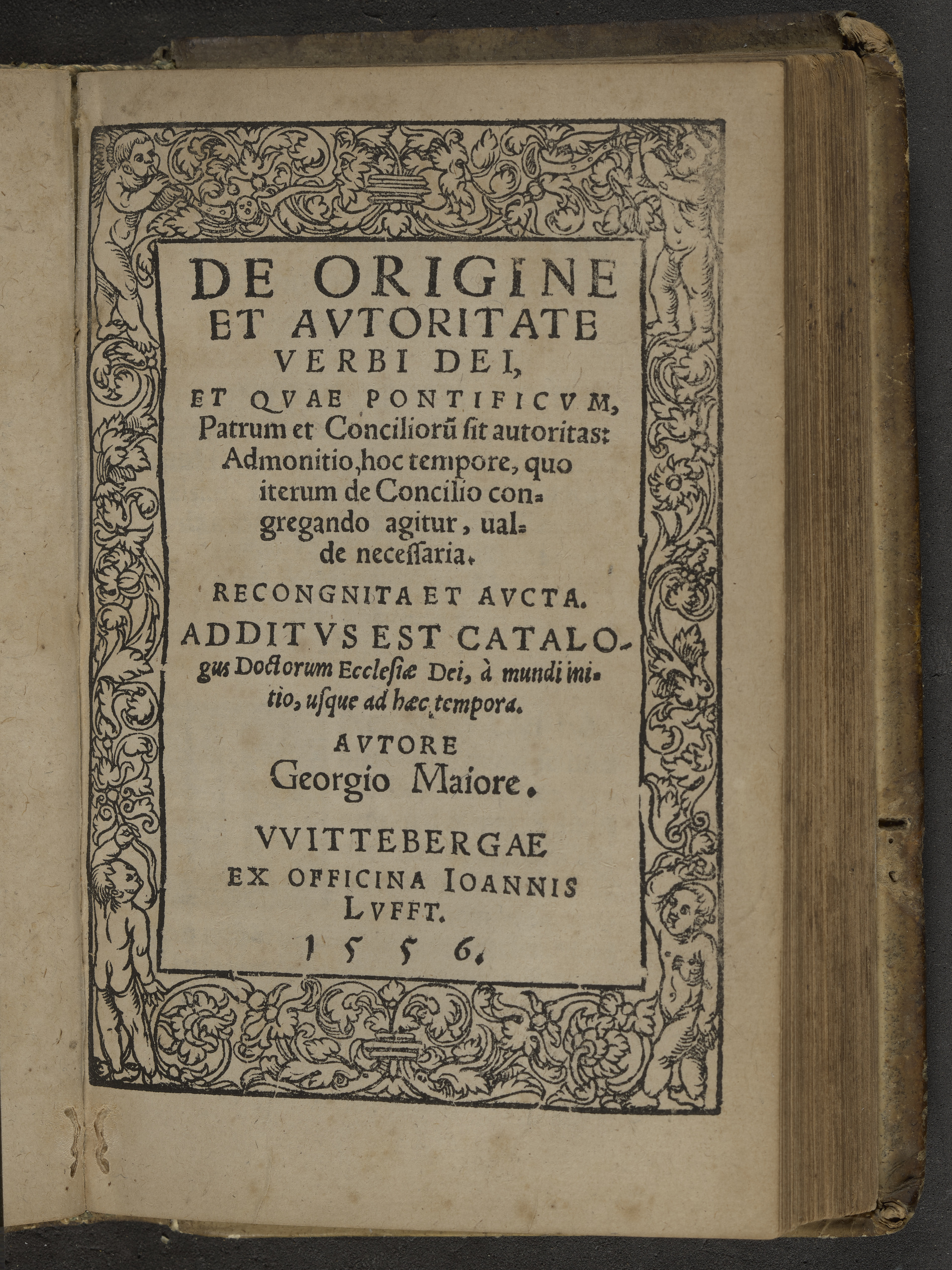
TextDe origine et autoritate Verbi Dei, et quae pontificum, patrum, et concilioru[m] sit autoritas admonitio, hoc tempore, quo iterum de concilio congregando agitur, ualde necessaria : recongnita [sic] et aucta additus est catalogus doctorum ecclesiae Dei, à mundi initio, usque ad haec tempora
Major, Georg, 1502-1574Summary: Tract on the history of Divine Revelation, tracing the teachers of the church from the Creation to the author's own time, by Georg Major, a student of Luther and Melanchthon, and professor at Wittenberg from 1536, with a few brief interruptions, until his death.Summary: Tract on the history of Divine Revelation, tracing the teachers of the church from the Creation to the author's own time, by Georg Major, a student of Luther and Melanchthon, and professor at Wittenberg from 1536, with a few brief interruptions, until his death. -
 Text
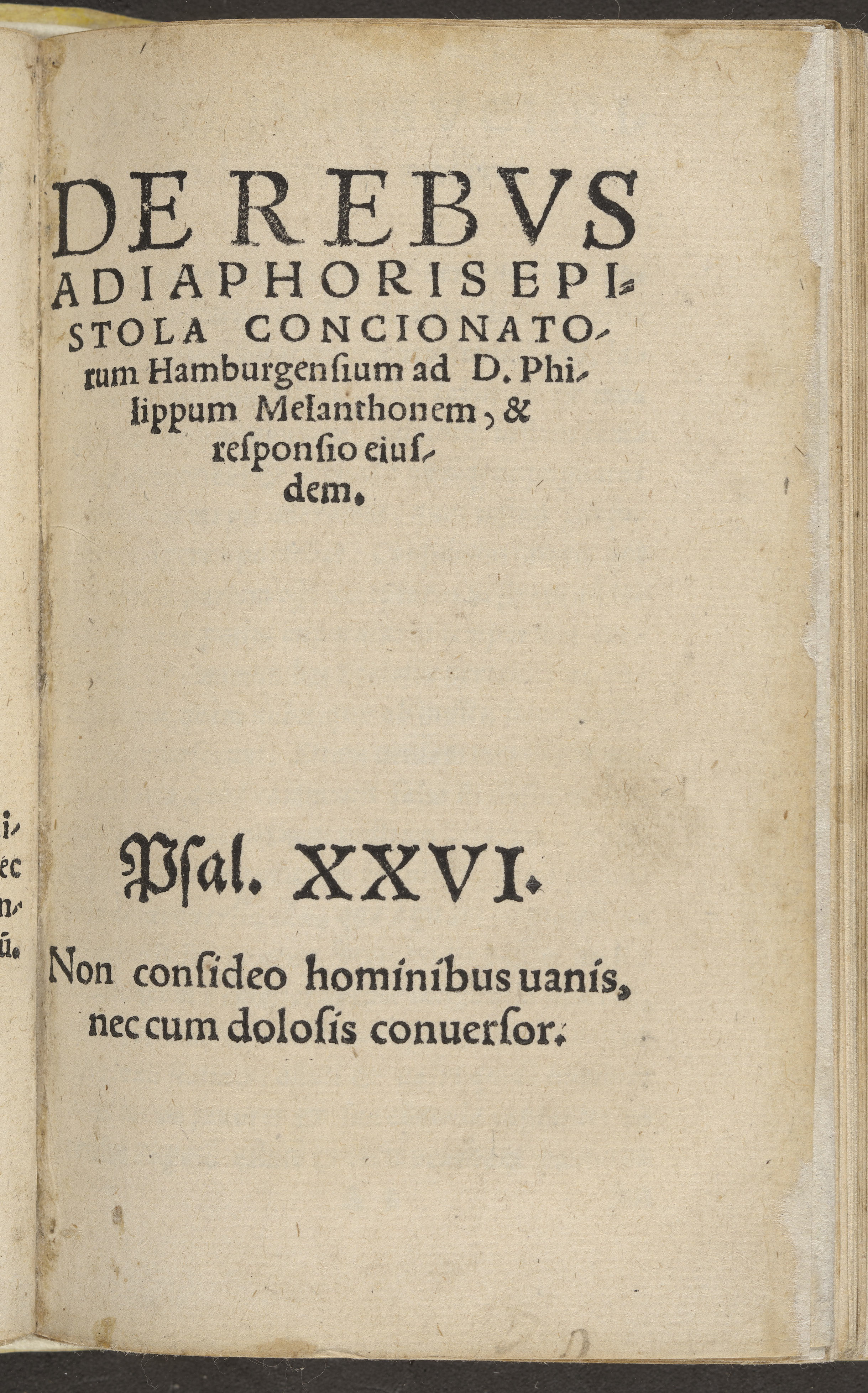
TextDe rebus adiaphoris epistola concionatorum Hamburgensium ad D. Philippum Melanthonem, & responsio eiusdem
Summary: Letter by a counsel of preachers in the city of Hamburg to Philipp Melanchthon regarding the adiaphoristic controversy regarding the re-introduction of some Catholic elements into the liturgy, which Melanchthon viewed as harmless and permissible. Melanchthon's reply is also included in this short booklet.Summary: Letter by a counsel of preachers in the city of Hamburg to Philipp Melanchthon regarding the adiaphoristic controversy regarding the re-introduction of some Catholic elements into the liturgy, which Melanchthon viewed as harmless and permissible. Melanchthon's reply is also included in this short booklet. -
 Text
TextDe servo arbitrio
Luther, Martin, 1483-1546Summary: An important treatise on human free will by Martin Luther, responding to Erasmus' work De libero arbitrio.Summary: An important treatise on human free will by Martin Luther, responding to Erasmus' work De libero arbitrio. -
 Text
TextDe servo arbitrio Martini Lutheri, ad Desiderium Erasmum Roterodamu[m]
Luther, Martin, 1483-1546Summary: "De servo arbitrio (Concerning the Enslaved Will)" is considered one of Martin Luther' greatest literary productions, and among the most important writings of the Reformation. In it, he defends the idea of the complete inability of the human being to please God, apart from Divine grace. His tract is a response to Desiderius Erasmus', "De libero arbitrio (Concerning Free Will)." Erasmus defends the view that salvation is by Divine grace, but wants to leave some room for a person's moral motivation.Summary: "De servo arbitrio (Concerning the Enslaved Will)" is considered one of Martin Luther' greatest literary productions, and among the most important writings of the Reformation. In it, he defends the idea of the complete inability of the human being to please God, apart from Divine grace. His tract is a response to Desiderius Erasmus', "De libero arbitrio (Concerning Free Will)." Erasmus defends the view that salvation is by Divine grace, but wants to leave some room for a person's moral motivation.