Search
26 resources
26 items
Date
1522
-
 Text
TextAin Christlyche vnd vast Wolgegrünte beweysung von dem I[u]ngsten Tag : vnd von seinen zaiche[n] das er auch nit verr meer sein mag
Luther, Martin, 1483-1546Summary: First printing of an early Advent sermon by Luther, focusing on the signs of the impending end of the world.Summary: First printing of an early Advent sermon by Luther, focusing on the signs of the impending end of the world. -
 Text
TextAin Sermo[n] am fPingstmontag [sic] das Ewangelium Joan iij, Also hat Got die Welt lieb gehabt, [et]c.
Luther, Martin, 1483-1546Summary: Sermon preached June 9, 1522, on John III, 16, "For God so loved the world ..."Summary: Sermon preached June 9, 1522, on John III, 16, "For God so loved the world ..." -
 Text
TextAin Sermon Secundum Matheum. [sic] : Sagt von den Phariseyern Vn[d] wie er sey mit seym Bruoder versyenen soll, Kurtzlich Geprediget. In got versamlet. De insignibus D. Saxonie 1522
Luther, Martin, 1483-1546Summary: Sermon preached July 27, 1522, on Matthew 5:20ff. (Unless your righteousness is greater than that of the Pharisees, etc,.).Summary: Sermon preached July 27, 1522, on Matthew 5:20ff. (Unless your righteousness is greater than that of the Pharisees, etc,.). -
 Text
TextAin Sermon vo[n] den Hayltumb[e]n vn[d] Geziert mit Überfluss, Vo[n] hailig[e]n Creütz jn den Kirchen
Luther, Martin, 1483-1546Summary: Sermon by Martin Luther criticizing the adoration of the cross and supposed relics of the Passion.Summary: Sermon by Martin Luther criticizing the adoration of the cross and supposed relics of the Passion. -
 Text
TextAin Sermon von den Hayltumben vnnd gezierd mit vberfluss, Vom hailigen Creutz in den kirchen
Luther, Martin, 1483-1546Summary: A sermon by Luther admonishing the directing of one's attentions not to the wealth of the church and its relics, but to the needs of the poor.Summary: A sermon by Luther admonishing the directing of one's attentions not to the wealth of the church and its relics, but to the needs of the poor. -
 Text
TextAm. [sic] Sermon. Am Pfingstmontag das Evangelium. Joan. iij. : Also hat got die welt lieb gehabt. rc.
Luther, Martin, 1483-1546Summary: Sermon preached June 9, 1522, on John 3:16 (God So Loved The World).Summary: Sermon preached June 9, 1522, on John 3:16 (God So Loved The World). -
 Text
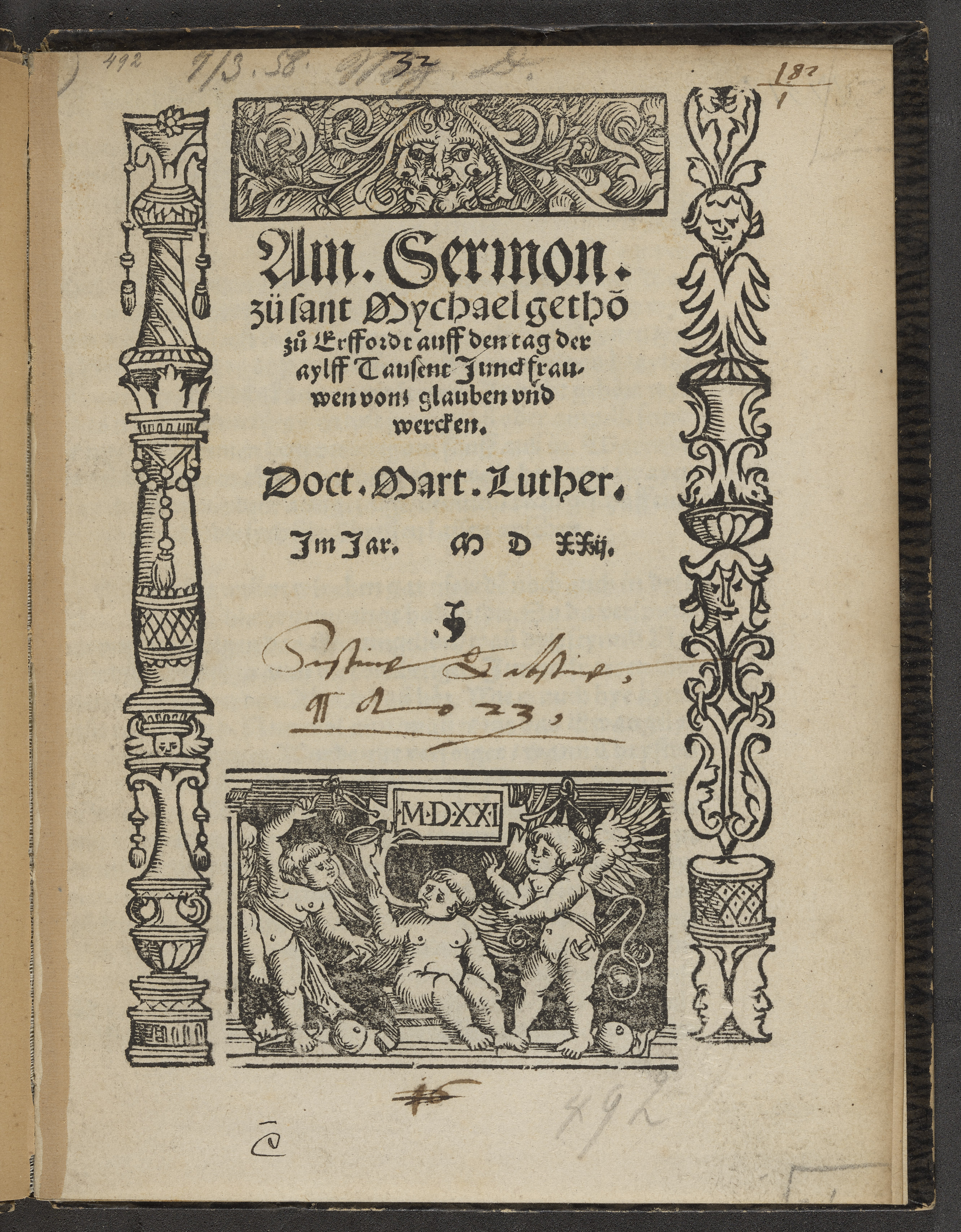
TextAm. [sic] Sermon. zü sant Mychael getho[n] zu Erffordt auff den tag der aylff Tausent junckfrauwen vom glauben vnd wercken
Luther, Martin, 1483-1546Summary: Sermon preached in Erfurt, October 21, 1522, on Matthew 25:1ff. (Wise and Foolish Virgins).Summary: Sermon preached in Erfurt, October 21, 1522, on Matthew 25:1ff. (Wise and Foolish Virgins). -
 Text
TextCaspar Sasgerus Minorita De cultu & ueneratione sanctorum
Schatzgeyer, Kaspar, 1463 or 1464-1527Summary: C. Schatzgeyer here writes on the veneration of the saints, the "friends of God". Catholic theology makes a sharp distinction between paying honor to saints (dulia) and worship of God (latria). This is the first printing of this work. No one knows for sure when it was written and printed.Summary: C. Schatzgeyer here writes on the veneration of the saints, the "friends of God". Catholic theology makes a sharp distinction between paying honor to saints (dulia) and worship of God (latria). This is the first printing of this work. No one knows for sure when it was written and printed. -
 Text
TextContra Henricum regem Angliae
Luther, Martin, 1483-1546Summary: This is the second and much expanded edition of Luther's reply to Henry VIII's Assertion of the Seven Sacraments. Luther replies quite moderately (for him) to what he feels to be the King's unwarranted assertions on the Catholic Sacraments. This is the second printing of this edition.Summary: This is the second and much expanded edition of Luther's reply to Henry VIII's Assertion of the Seven Sacraments. Luther replies quite moderately (for him) to what he feels to be the King's unwarranted assertions on the Catholic Sacraments. This is the second printing of this edition. -
 Text
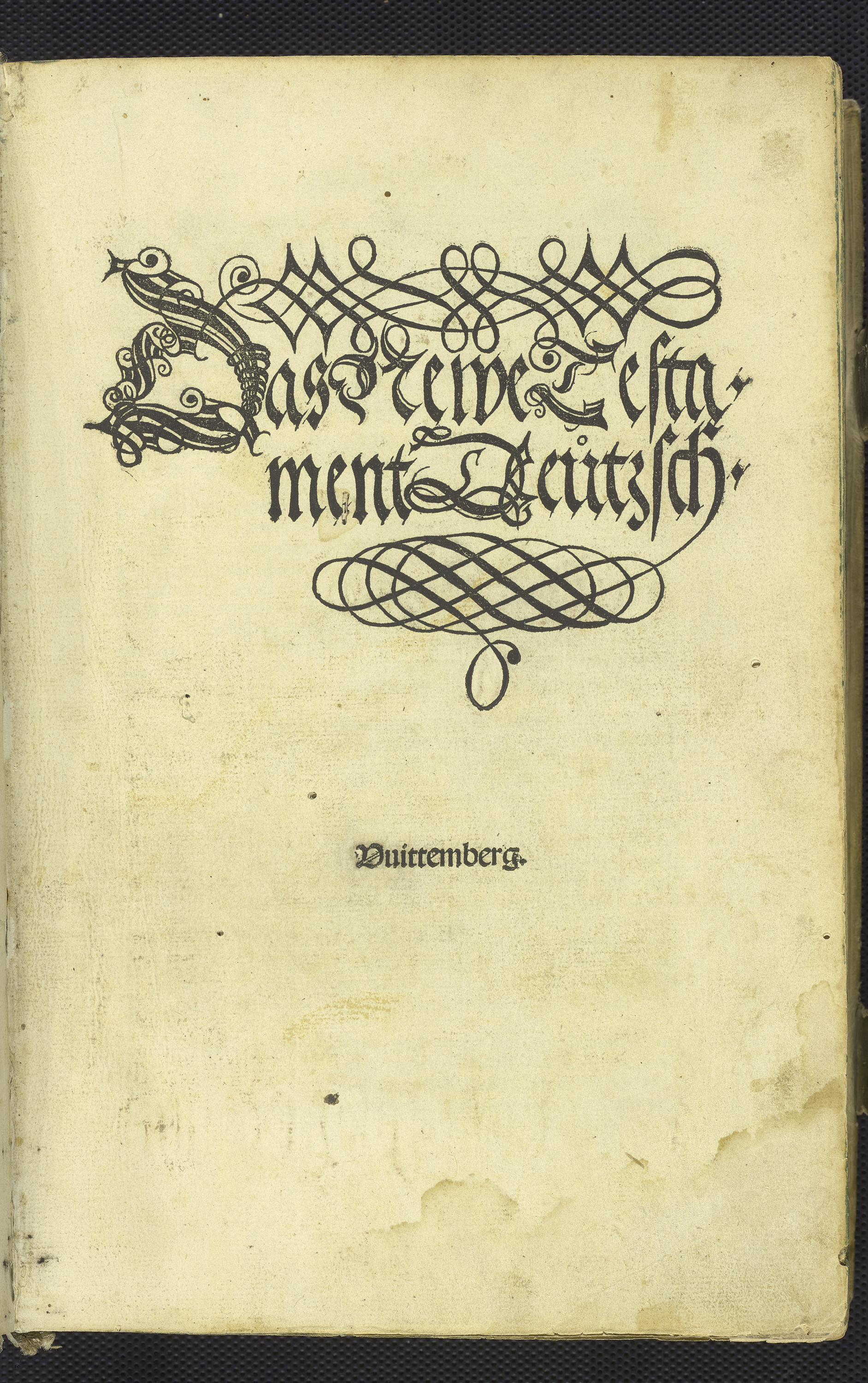
TextDas Newe Testament Deůtzsch
Summary: Luther's translation from the original Greek of the New Testament is a landmark in the history of the German language. His forceful style ensured that his Thuringian-Saxon dialect would provide the standard for High German in years to come. From a religious standpoint, Luther's decision to refer to the original Greek rather than merely to translate the Vulgate ensured that the German New Testament would be much more faithful to the original. Erasmus' New Testament provided the basis for the translation.Summary: Luther's translation from the original Greek of the New Testament is a landmark in the history of the German language. His forceful style ensured that his Thuringian-Saxon dialect would provide the standard for High German in years to come. From a religious standpoint, Luther's decision to refer to the original Greek rather than merely to translate the Vulgate ensured that the German New Testament would be much more faithful to the original. Erasmus' New Testament provided the basis for the translation. -
 Text
TextEin Worhafft geschicht wie es kürtzlich einem prediger Münch zuo Nürmberg mit seinen Ordens brüdern von wegen seiner Eua[n]gelischen predig ergangen ist
Korn, GallusSummary: The tribulation of monks-turned Protestant, and then turned out of their monasteries, made fascinating reading for the newly-converted Protestants. In style, it is analogous to martyrologies, such as Foxe's "Book of Martyrs." G. Korn here relates his sufferings on account of the Gospel as one such monk in Nuremberg.Summary: The tribulation of monks-turned Protestant, and then turned out of their monasteries, made fascinating reading for the newly-converted Protestants. In style, it is analogous to martyrologies, such as Foxe's "Book of Martyrs." G. Korn here relates his sufferings on account of the Gospel as one such monk in Nuremberg. -
 Text
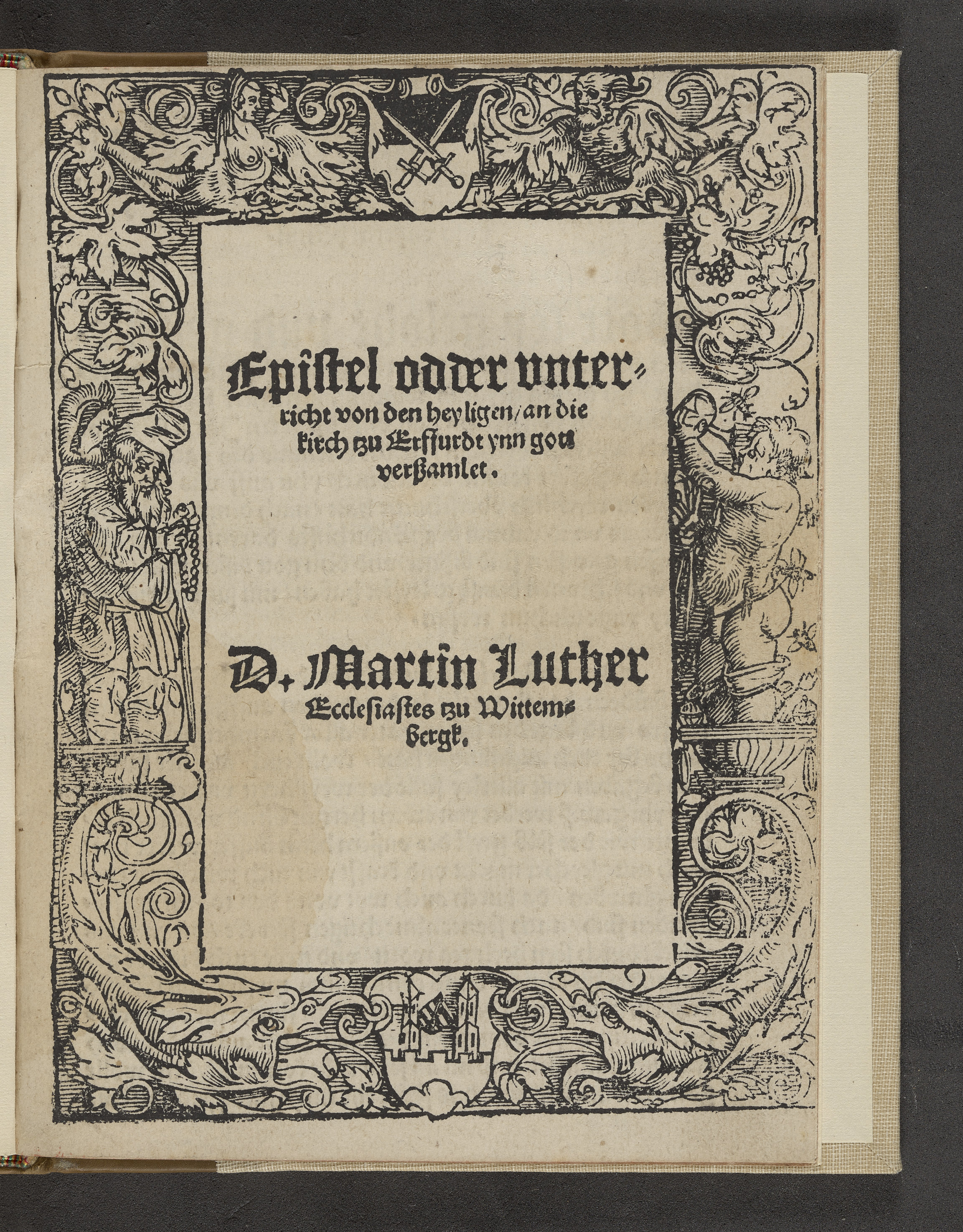
TextEpistel odder vnterricht von den heyligen : an die kirch zu Erfurdt ynn gott verszamelt
Luther, Martin, 1483-1546Summary: First printing of an open letter by Luther to the church of Erfurt on the subject of prayers to the saints.Summary: First printing of an open letter by Luther to the church of Erfurt on the subject of prayers to the saints. -
 Text
TextEyn bett buchlin. : Der czehen gepot. Des glaubens. Des vater vnsers. Des Aue Marien. Etliche verdeutschte Psalmen. Die Epistell sanct Pauls tzu tito, eyn Christlich leben tzu vnterrichten
Luther, Martin, 1483-1546Summary: Text in German includes Luther's translations from Latin of several Psalms from the Hebrew O.T., and the Epistle to Titus from the Greek N.T.Summary: Text in German includes Luther's translations from Latin of several Psalms from the Hebrew O.T., and the Epistle to Titus from the Greek N.T. -
 Text
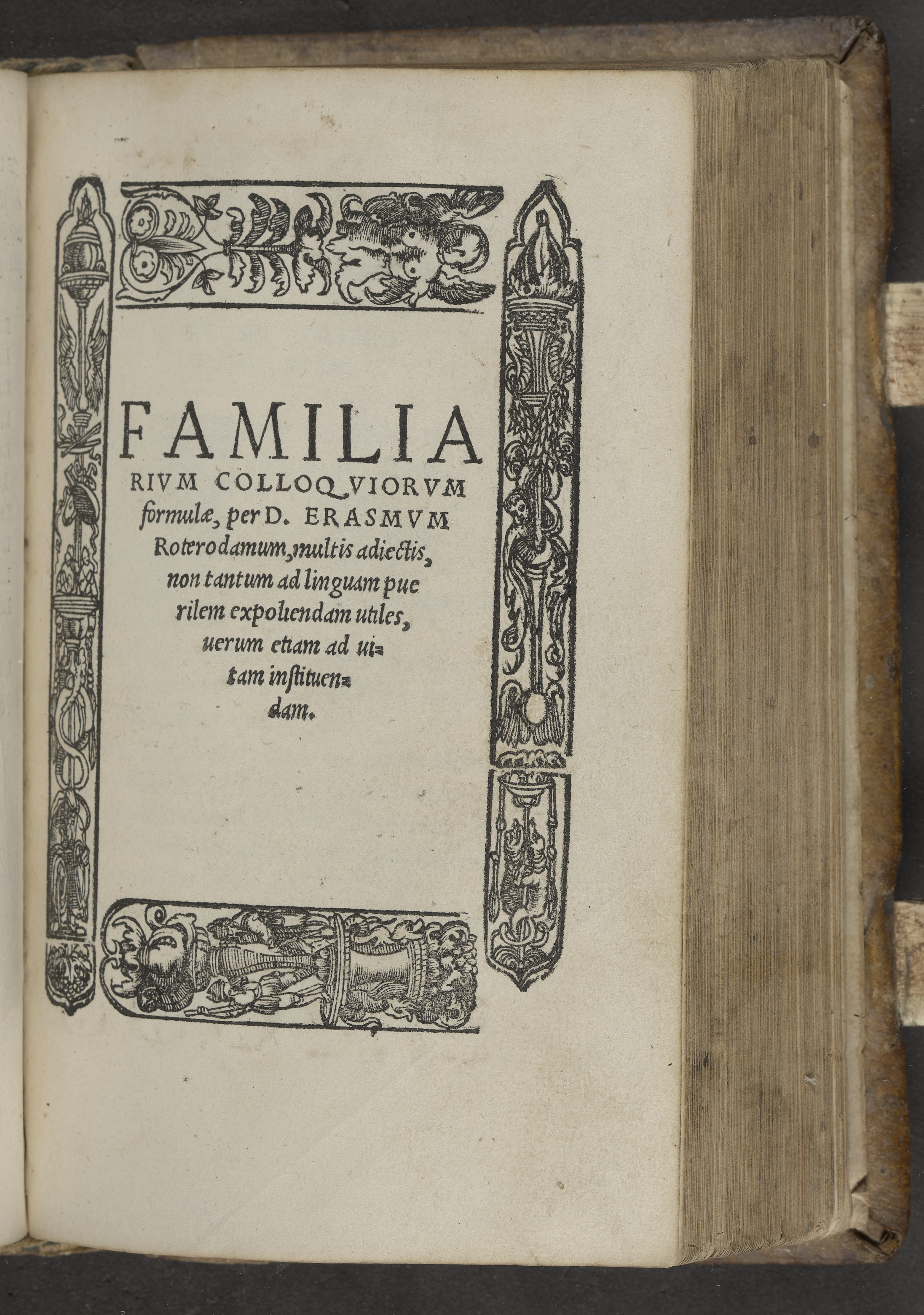
TextFamiliarium colloquiorum formulae
Erasmus, Desiderius, -1536Summary: Fifth edition of Erasmus' Colloquies, a collection of dialogues on Latin conversation and good behavior first published in 1518 as an excercise book for Erasmus's students.Summary: Fifth edition of Erasmus' Colloquies, a collection of dialogues on Latin conversation and good behavior first published in 1518 as an excercise book for Erasmus's students. -
 Text
TextLutheri, Melanch. Carolostadii &c. Propositiones, Wittembergae uiua uoce tractatae, in hocq[ue] pleraeq[ue] aeditae ab auctoribus, ut uel nos absentes cum ipsis agamus, uel certe ut ueritatis, et seductionum admonea[n]tur boni.
Luther, Martin, 1483-1546Summary: It was the practice at Wittenberg for the students to sharpen their logical and debating skills by responding to a set of theses proposed by the professor in the discipline in which they were working. These theses were often collected into book form for the use of the students and for the study of the topics by interested non-students. This group is from the early years of the Reformation, 1521-1522. Theses proposed in the Universität Wittenberg for the granting of doctoral degrees. In most cases the "respondents" are not indicated.Summary: It was the practice at Wittenberg for the students to sharpen their logical and debating skills by responding to a set of theses proposed by the professor in the discipline in which they were working. These theses were often collected into book form for the use of the students and for the study of the topics by interested non-students. This group is from the early years of the Reformation, 1521-1522. Theses proposed in the Universität Wittenberg for the granting of doctoral degrees. In most cases the "respondents" are not indicated. -
 Text
TextReplica contra periculosa scripta post Scrutinium diuine scripture iam pride[m] emissum emanata. ...
Schatzgeyer, Kaspar, 1463 or 1464-1527Summary: Casper Schatzgeyer, or Sasgerus, was a Franciscan friar who became provincial of the Province of Strasbourg in 1517. He wrote about 23 books on theological topics and against members of other orders and sects, notably J. von Staupitz and A. Osiander. This book, however, criticizes two of Luther's tracts: On Monastic Vows and On the Abolition of the Private Mass. Luther persuaded Johann Briessmann to reply, and Schatzgeyer replied to Briessmann. This is the work's first printing.Summary: Casper Schatzgeyer, or Sasgerus, was a Franciscan friar who became provincial of the Province of Strasbourg in 1517. He wrote about 23 books on theological topics and against members of other orders and sects, notably J. von Staupitz and A. Osiander. This book, however, criticizes two of Luther's tracts: On Monastic Vows and On the Abolition of the Private Mass. Luther persuaded Johann Briessmann to reply, and Schatzgeyer replied to Briessmann. This is the work's first printing. -
 Text
TextUom Missbrauch der Messen
Luther, Martin, 1483-1546Summary: Written in Latin in the fall of 1521 under the title De abroganda missa privata, this is the third printing of the first German edition of Martin Luther's important tract on the celebration of private masses. Luther opposed any celebration of the Eucharist that was not accessible to or provided for the congregation at large and felt so strongly about this material that he translated it into German himself.Summary: Written in Latin in the fall of 1521 under the title De abroganda missa privata, this is the third printing of the first German edition of Martin Luther's important tract on the celebration of private masses. Luther opposed any celebration of the Eucharist that was not accessible to or provided for the congregation at large and felt so strongly about this material that he translated it into German himself. -
 Text
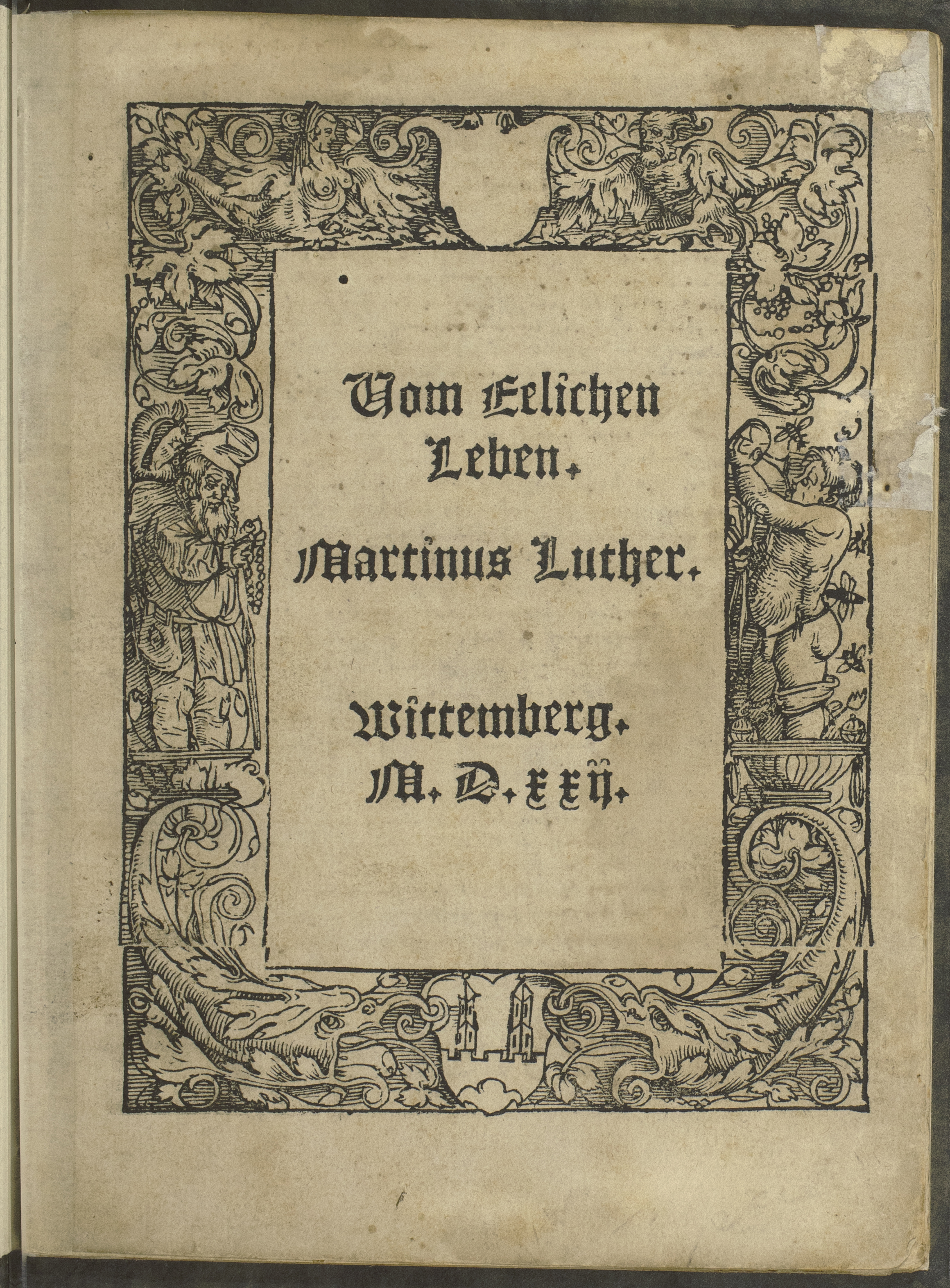
TextUom eelichen Leben
Luther, Martin, 1483-1546Summary: This sermon on marriage is an elaboration of an earlier work no longer extant. In its present form there is no set Bible text, nor is the sermon designed for a particular place in the Church year.Summary: This sermon on marriage is an elaboration of an earlier work no longer extant. In its present form there is no set Bible text, nor is the sermon designed for a particular place in the Church year. -
 Text
TextUom miszbrauch der Messen
Luther, Martin, 1483-1546Summary: Luther always felt a special fondness for this work. Nearly two decades after writing it, he remembered it as being especially powerful. It elicited response from Catholic opponents five years hence. Luther felt so strongly about this material that he translated it into German himself. The abuse of the title refers to the masses sung by chantry priests for individuals. Luther opposed any celebration of the Eucharist that was not accessible to or provided for the congregation at large.Summary: Luther always felt a special fondness for this work. Nearly two decades after writing it, he remembered it as being especially powerful. It elicited response from Catholic opponents five years hence. Luther felt so strongly about this material that he translated it into German himself. The abuse of the title refers to the masses sung by chantry priests for individuals. Luther opposed any celebration of the Eucharist that was not accessible to or provided for the congregation at large. -
 Text
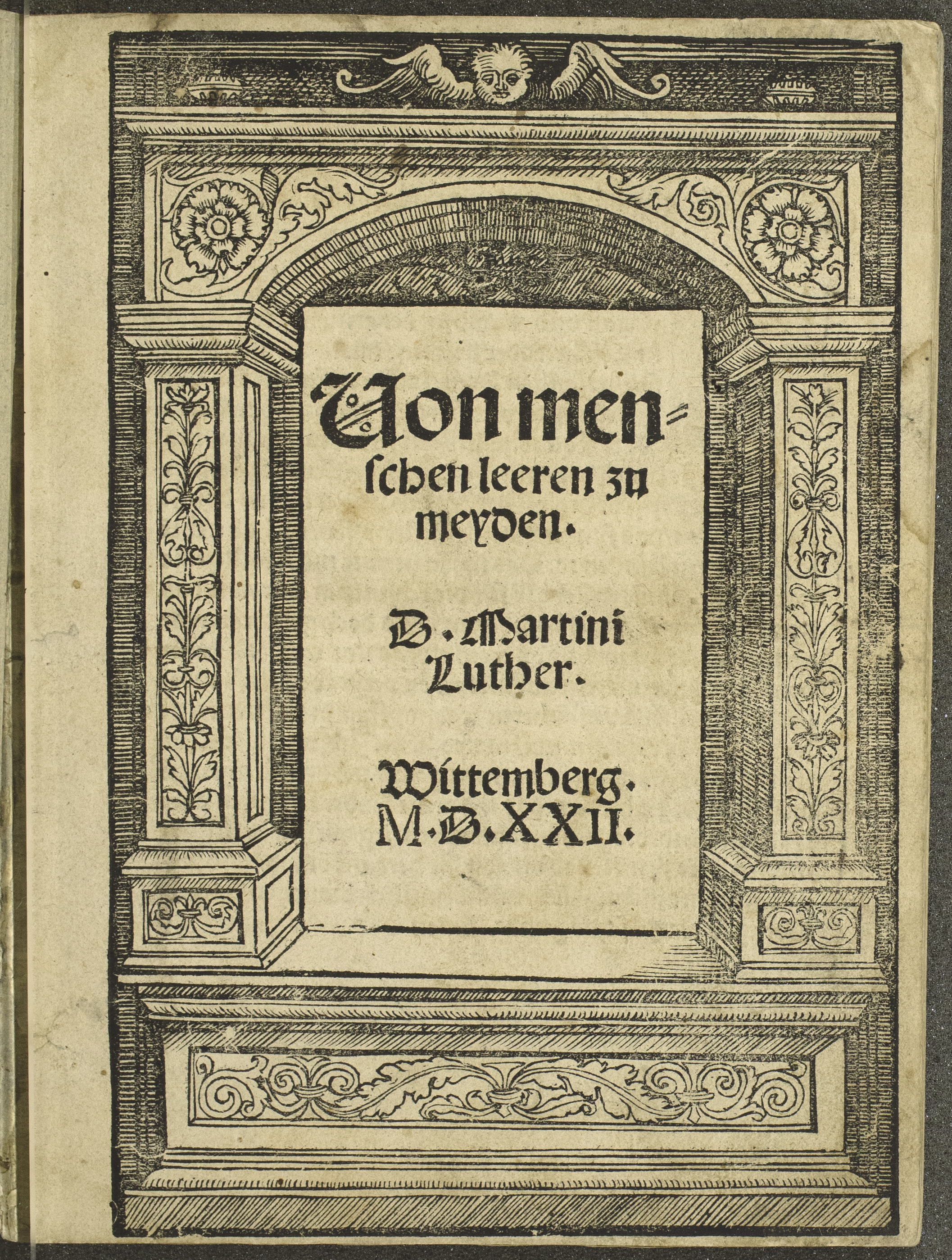
TextUon Menschen leeren zu meyden
Luther, Martin, 1483-1546Summary: First published earlier the same year, Luther's pamphlet Defense of the doctrines of men was one of Luther's most widely read writings with approximately twenty editions appearing in the years 1522 and 1523. Written in honor of Hans von Belepsch who had hosted Luther at the Wartburg as the reformer translated the New Testament. Luther argues that church teachings that have no basis in the Bible, in particular fasting and celibacy, are illegitimate and are to be avoided.Summary: First published earlier the same year, Luther's pamphlet Defense of the doctrines of men was one of Luther's most widely read writings with approximately twenty editions appearing in the years 1522 and 1523. Written in honor of Hans von Belepsch who had hosted Luther at the Wartburg as the reformer translated the New Testament. Luther argues that church teachings that have no basis in the Bible, in particular fasting and celibacy, are illegitimate and are to be avoided. -
 Text
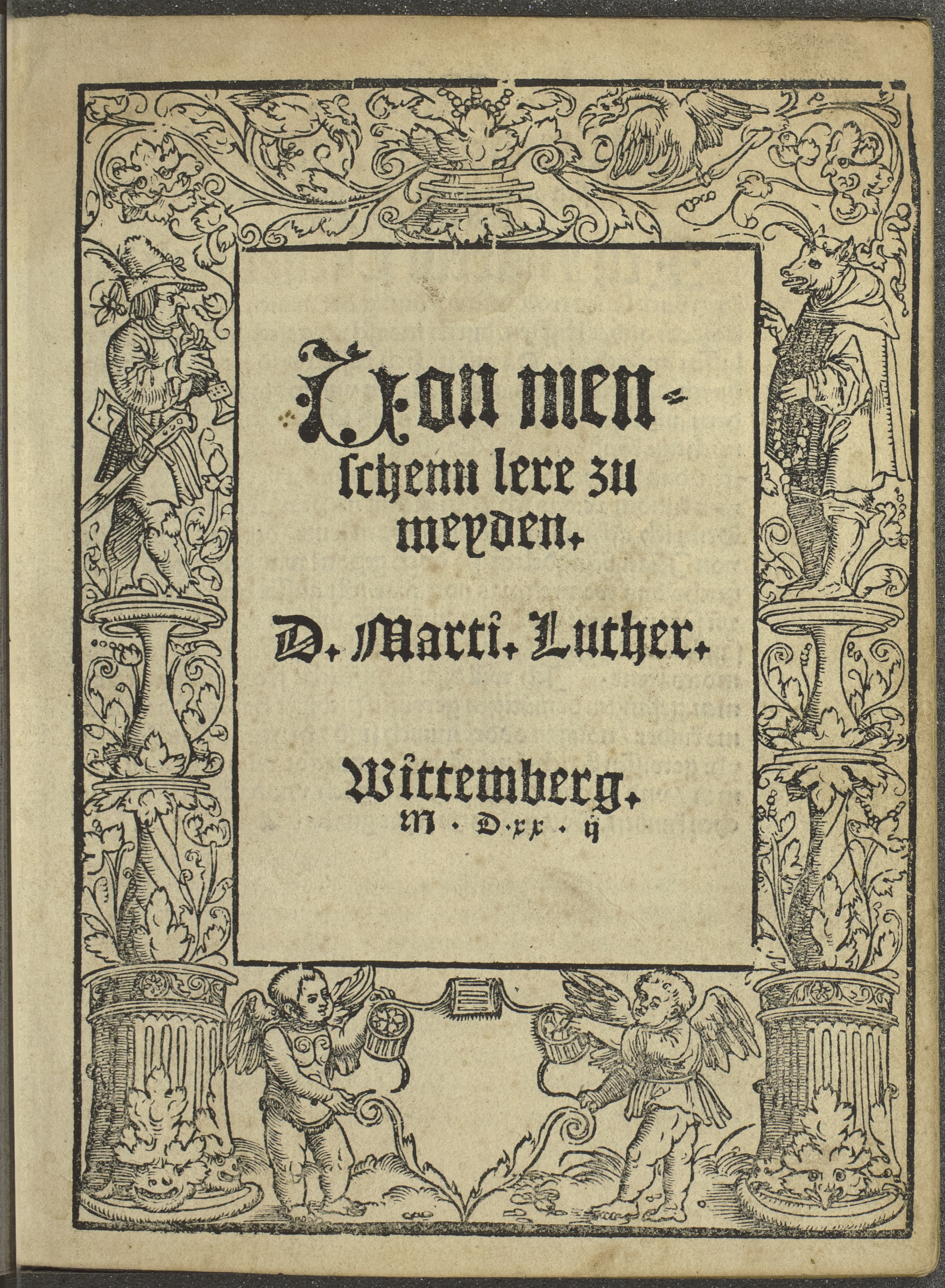
TextUon Menschenn Lere zu meyden
Luther, Martin, 1483-1546Summary: A treatise by Luther on the relationship of belief and practice, intended for those "poor consciences, that lie captive to human laws in cloisters and monastic foundations", as he puts it in his preface. It is also noteworthy that Luther assumes his audience includes both those who could read his writings directly, and those who heard them read by others, when he dedicates his pamphlet "to all who read or hear this little book".Summary: A treatise by Luther on the relationship of belief and practice, intended for those "poor consciences, that lie captive to human laws in cloisters and monastic foundations", as he puts it in his preface. It is also noteworthy that Luther assumes his audience includes both those who could read his writings directly, and those who heard them read by others, when he dedicates his pamphlet "to all who read or hear this little book". -
 Text
TextUon beyder gestalt des Sacraments zu nehmen vnd ander newerung
Luther, Martin, 1483-1546Summary: After Luther published his "Eight Sermons" of 1522, he decided that there was needed a shorter, more concise statement of these sermons' arguments. This is the third printing of the resulting précis.Summary: After Luther published his "Eight Sermons" of 1522, he decided that there was needed a shorter, more concise statement of these sermons' arguments. This is the third printing of the resulting précis. -
 Text
TextVon Mensche[n] Leren zu[o] meiden
Luther, Martin, 1483-1546Summary: Luther addresses the monastic rules of fasting, obedience and celibacy, arguing that they have no foundation in scripture and that a transgression of these rules is therefore no sin. At the same time, Luther warns that a transgression of monastic rules in itself is by no means a sign of faith or internalized piety.Summary: Luther addresses the monastic rules of fasting, obedience and celibacy, arguing that they have no foundation in scripture and that a transgression of these rules is therefore no sin. At the same time, Luther warns that a transgression of monastic rules in itself is by no means a sign of faith or internalized piety. -
 Text
TextVon der Beycht, ob die der Bapst macht habe zuo gebieten
Luther, Martin, 1483-1546Summary: Second Basel printing of an early Luther treatise on Penance, together with a translation and exposition of Psalm 118.Summary: Second Basel printing of an early Luther treatise on Penance, together with a translation and exposition of Psalm 118. -
 Text
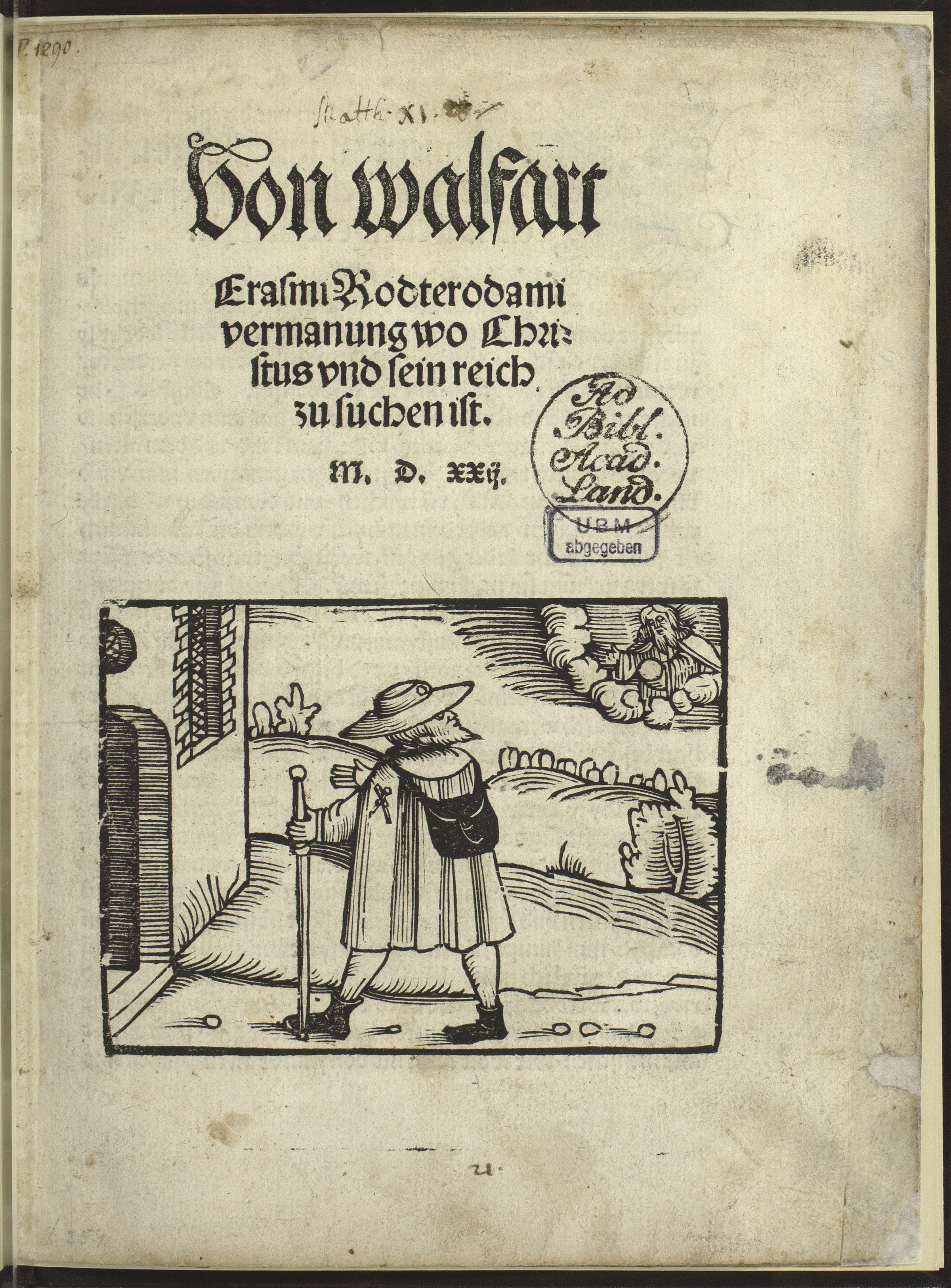
TextVon walfart
Erasmus, Desiderius, -1536Summary: Interpretive pamphlet by Erasmus on the true nature of pilgrimage, as espoused by Jesus in Matthew XI, 28. Erasmus says that true pilgrimage is undertaken with spiritual, and not with physical feet, and, that Jesus receives all sincere pilgrims equally, whether they be clergy or lay, rich or poor, etc.Summary: Interpretive pamphlet by Erasmus on the true nature of pilgrimage, as espoused by Jesus in Matthew XI, 28. Erasmus says that true pilgrimage is undertaken with spiritual, and not with physical feet, and, that Jesus receives all sincere pilgrims equally, whether they be clergy or lay, rich or poor, etc. -
 Text
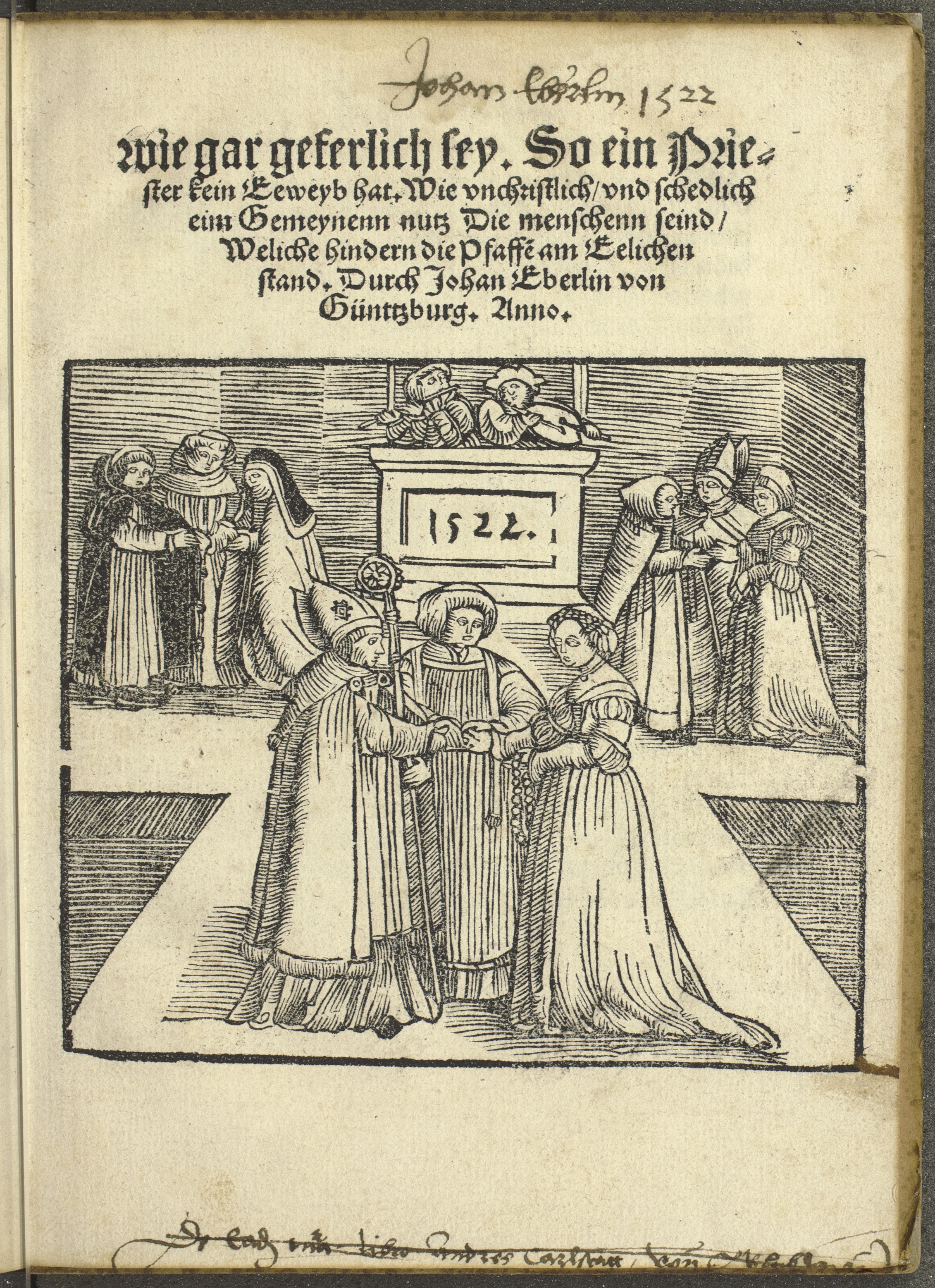
TextWie gar geferlich sey. So ein Priester kein Eeweyb hat : Wie unchristlich, und schedlich eim Gemeynenn nutz die menschenn seind, weliche hindern die Pfaffẽ am Eelichen stand.
Eberlin von Günzburg, Johann, approximately 1470-1533Summary: Johann Eberlin von Günzburg was a former Franciscan who had left the order and joined the Lutheran Reformation in 1521. This is the second edition of his tract on the dangers of priestly celibacy. He himself was married in 1524 and had four children. The title page woodcut shows the wedding of three different priests, including one to a nun.Summary: Johann Eberlin von Günzburg was a former Franciscan who had left the order and joined the Lutheran Reformation in 1521. This is the second edition of his tract on the dangers of priestly celibacy. He himself was married in 1524 and had four children. The title page woodcut shows the wedding of three different priests, including one to a nun.