Search
3 resources
3 items
Date
1536
-
 Text
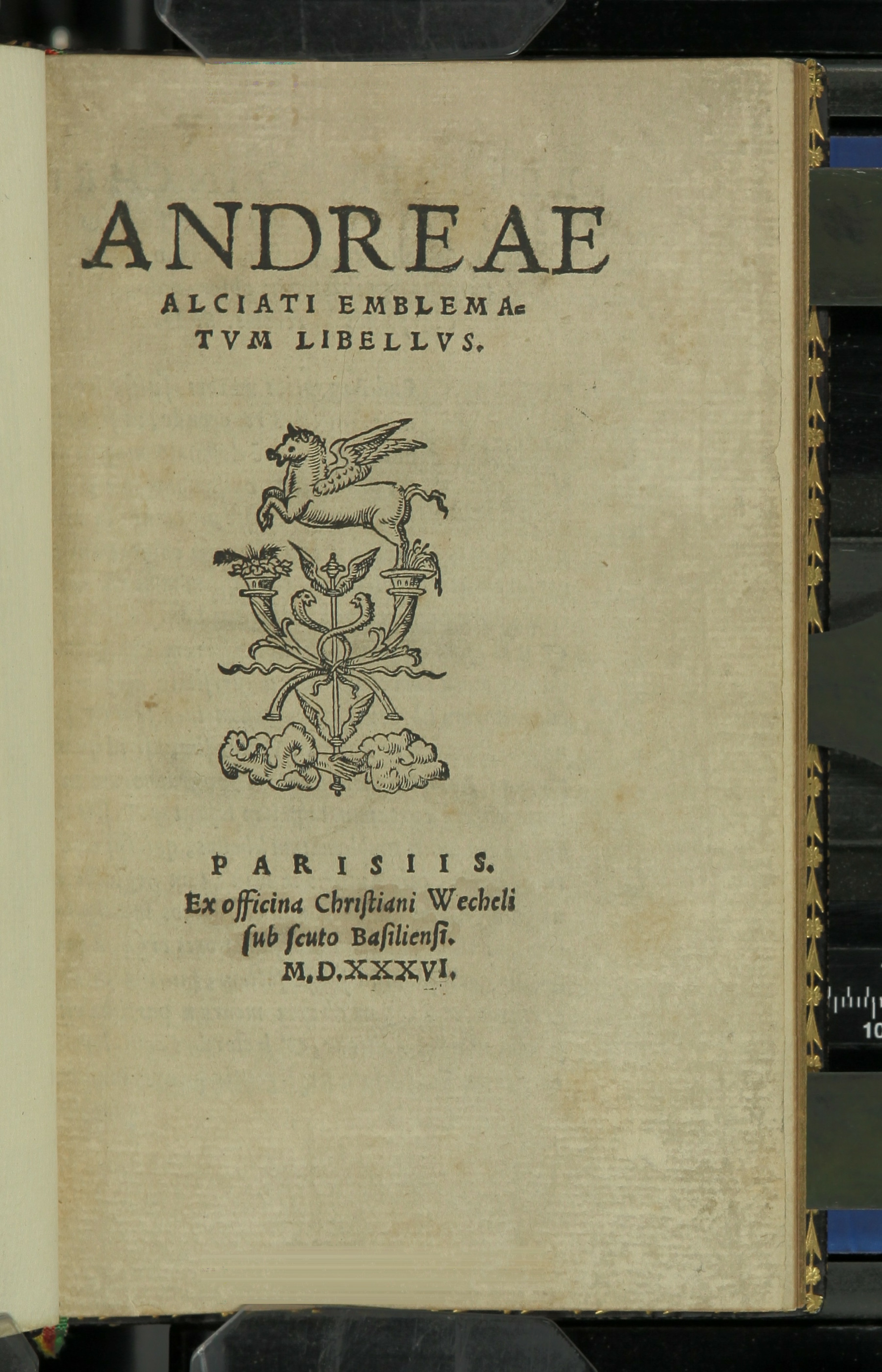
TextAndreae Alciati emblematvm libellvs
Alciati, Andrea, 1492-1550Summary: Third edition of Alciatus in France, "with new woodcuts superior to those of the 'Augsburg' editions" (Landwehr). The emblems are attributed to Mercure Jollat. "It is the Paris edition which set the standard for the popular field of emblem literature (Mortimer, French, no. 13, p. 13). Alciatus was not happy with the two earlier Augsburg editions; but the expanded Wechel edition which appeared in Paris in 1534 with entirely new woodcuts by Jollat set a new standard.Summary: Third edition of Alciatus in France, "with new woodcuts superior to those of the 'Augsburg' editions" (Landwehr). The emblems are attributed to Mercure Jollat. "It is the Paris edition which set the standard for the popular field of emblem literature (Mortimer, French, no. 13, p. 13). Alciatus was not happy with the two earlier Augsburg editions; but the expanded Wechel edition which appeared in Paris in 1534 with entirely new woodcuts by Jollat set a new standard. -
 Text
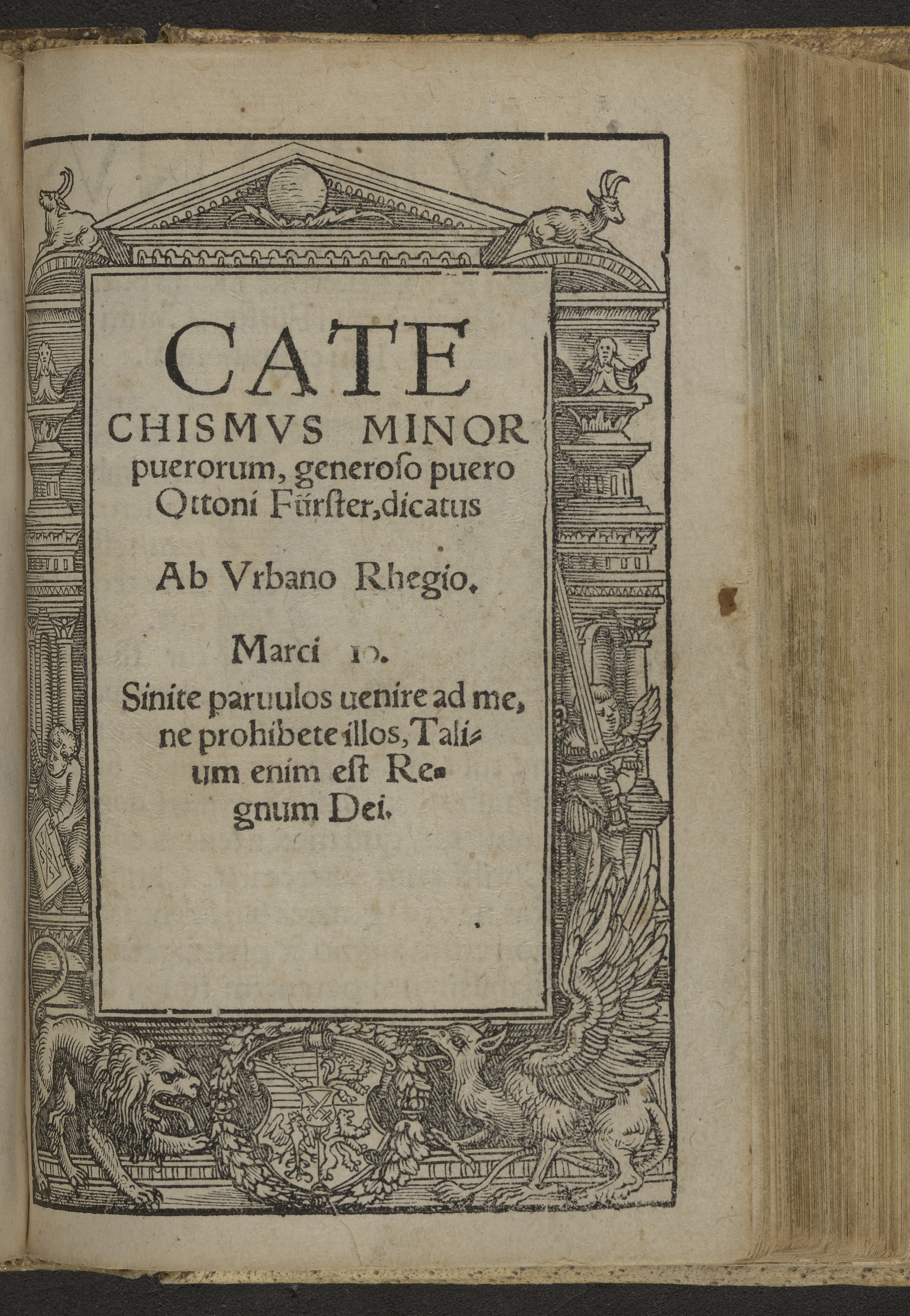
TextCatechismus minor puerorum, generoso puero Ottoni Fürster
Rhegius, Urbanus, 1489-1541Summary: Rhegius was a Reformer, active throughout Germany promoting Lutheran unity in the Holy Roman Empire. In 1530 at the Diet of Augsburg he was befriended by Ernest I, Duke of Brunswick-Luneburg, under whose patronage he returned to Brunswick where he wrote the present work for Ernest's son, Francis Otto (1530-1559). Like many 16th c. catechisms, Rhegius' is in the form of a dialogue, in this instance between the teacher and the pupil (paedagogus et discipulus).Summary: Rhegius was a Reformer, active throughout Germany promoting Lutheran unity in the Holy Roman Empire. In 1530 at the Diet of Augsburg he was befriended by Ernest I, Duke of Brunswick-Luneburg, under whose patronage he returned to Brunswick where he wrote the present work for Ernest's son, Francis Otto (1530-1559). Like many 16th c. catechisms, Rhegius' is in the form of a dialogue, in this instance between the teacher and the pupil (paedagogus et discipulus). -
 Text
TextS.D.n.D. Pauli diuina prouidentia p.p. III : Bullla indictionis sacro sancti generalis concilii
Catholic Church. Pope (1534-1549 : Paul III)Summary: Latin text of the Papal Bull Ad Dominici gregis curam, issued June 4, 1536, for the Council of Mantua which was never held (council eventually took place in Trent).Summary: Latin text of the Papal Bull Ad Dominici gregis curam, issued June 4, 1536, for the Council of Mantua which was never held (council eventually took place in Trent).