Search
2 resources
2 items
Date
1542
-
 Text
TextEin lüstig gesprech der Teuffel vnd etlicher Kriegsleute : Von der flucht des grossen Scharrhansen H. Heinrichs von Braunschweig
Summary: While Henry, the Younger, Duke of Brunswick-Wolfenbüttel, openly identified with the Roman Catholic Church in its struggle against the Reformation, his religious principles were often dictated by political expediency. He is, in fact, said to have permitted Lutheran influences in a variety of instances in his duchy. Defeated by the Lutheran princes of the Schmalkald League, he was driven from his territories, returning after their defeat at the hands of the Imperial army. This dialogue between the devil and some soldiers satyrizes Henry.Summary: While Henry, the Younger, Duke of Brunswick-Wolfenbüttel, openly identified with the Roman Catholic Church in its struggle against the Reformation, his religious principles were often dictated by political expediency. He is, in fact, said to have permitted Lutheran influences in a variety of instances in his duchy. Defeated by the Lutheran princes of the Schmalkald League, he was driven from his territories, returning after their defeat at the hands of the Imperial army. This dialogue between the devil and some soldiers satyrizes Henry. -
 Text
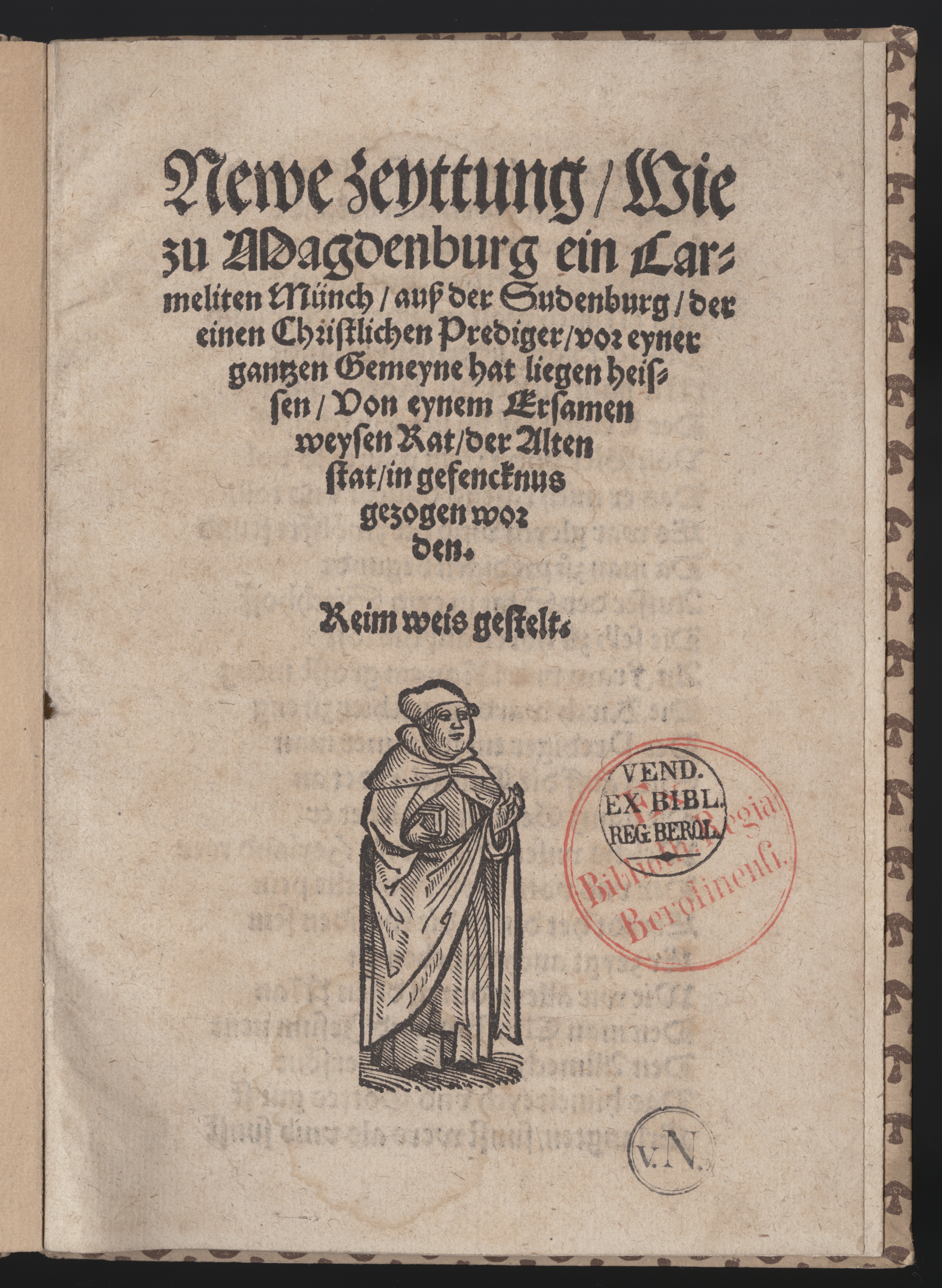
TextNewe zeyttung, Wie zu Magdenburg ein Carmeliten Münch, auss der Sudenburg, der einen Christlichen Prediger, vor eyner gantzen Gemeyne hat liegen heissen, Von eynem Ersamen weysen Rat, der Alten stat, in gefencknus gezogen worden. : Reim weis gestelt.
Summary: Polemic ballad with a total of 142 rhymed lines, relating the story of a drunk Carmelite monk who attends a sermon preached outside the city by a righteous (Lutheran) pastor and who interrupts the preacher, accusing him of lying and misrepresenting Scripture. The people in response rise up and begin to beat him, almost killing him, but the monk is taken away and brought before the city council and the mayor who calls for calm and instructs that the monk should be locked up to await the executioner and thus be placed under God's justice rather than the mob's anger.Summary: Polemic ballad with a total of 142 rhymed lines, relating the story of a drunk Carmelite monk who attends a sermon preached outside the city by a righteous (Lutheran) pastor and who interrupts the preacher, accusing him of lying and misrepresenting Scripture. The people in response rise up and begin to beat him, almost killing him, but the monk is taken away and brought before the city council and the mayor who calls for calm and instructs that the monk should be locked up to await the executioner and thus be placed under God's justice rather than the mob's anger.