Search
4 resources
4 items
Publisher
Gastel, Jörg, active 1523-1540
-
 Text
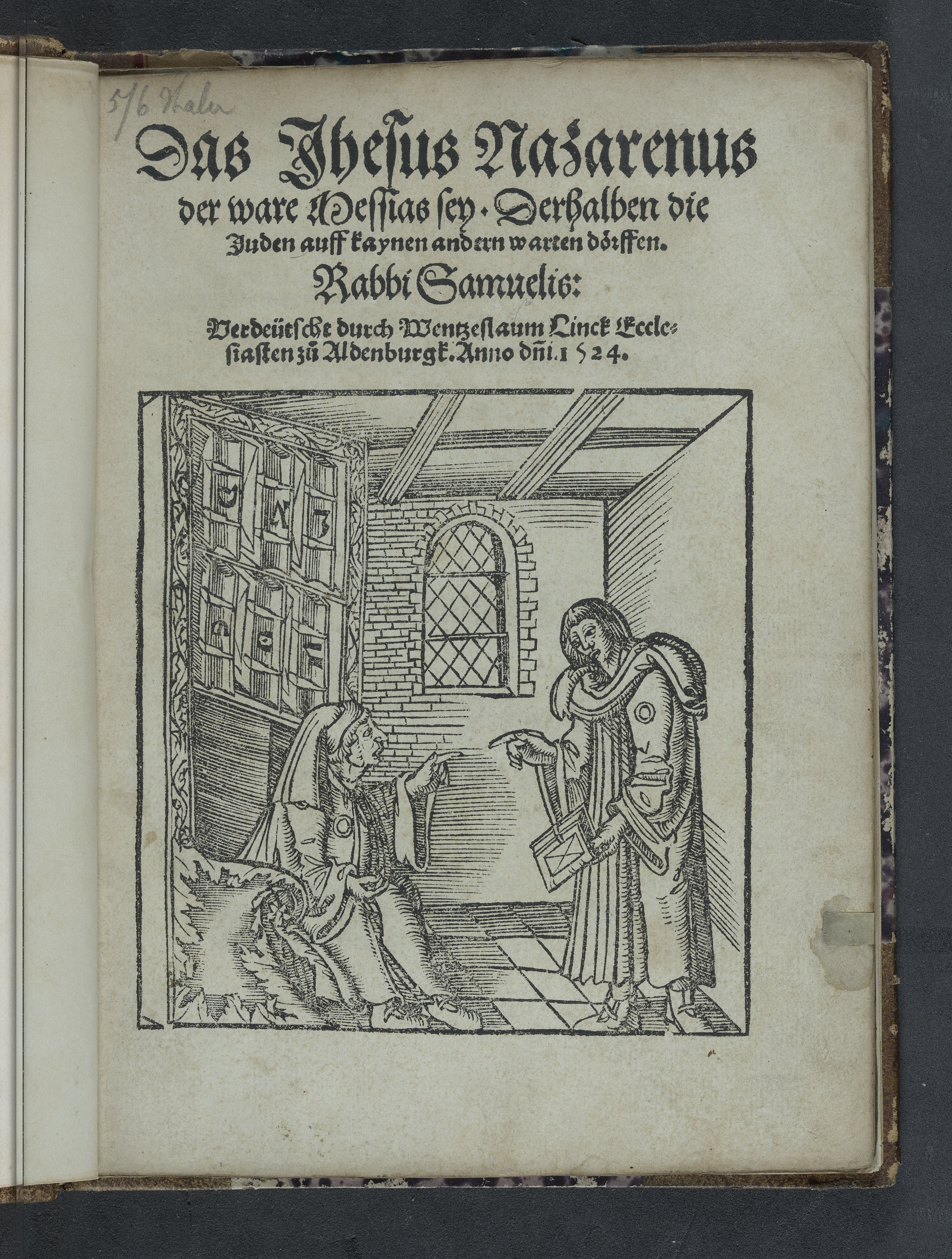
TextDas Jhesus Nazarenus der ware Messias sey : Derhalben die Juden auff kaynen andern warten dörffen
Samuel, MarochitanusSummary: German translation by Wenzeslaus Linck of Epistola contra Judaeorum, thought to be written in Arabic by Samuel of Marocco, an apostate Jew at the beginning of the 11th century and translated into Latin by the Spanish Dominican Alphonsus Bonihominis in the 14th century and widely disseminated. Bonihominis is likely the real author of the work.Summary: German translation by Wenzeslaus Linck of Epistola contra Judaeorum, thought to be written in Arabic by Samuel of Marocco, an apostate Jew at the beginning of the 11th century and translated into Latin by the Spanish Dominican Alphonsus Bonihominis in the 14th century and widely disseminated. Bonihominis is likely the real author of the work. -
 Text
TextErmanunge zum fride auff die zwelff artickel der Bawerschafft yn Schwaben
Luther, Martin, 1483-1546Summary: When Luther wrote this reply to the Swabian peasant' "Twelve Articles and Institution of the Peasants, he was still in hopes that reason might prevail and that bloodshed might be avoided.Summary: When Luther wrote this reply to the Swabian peasant' "Twelve Articles and Institution of the Peasants, he was still in hopes that reason might prevail and that bloodshed might be avoided. -
 Text
TextEyn Sermon von stercke vnnd zuonemen des glaubens vnnd der liebe : Aus der Epistel S. Pauli zuon Eypesernn
Luther, Martin, 1483-1546Summary: Third of six printings to appear in 1525, the year of its initial printing, of this sermon by Luther on the strengthening of faith and love.Summary: Third of six printings to appear in 1525, the year of its initial printing, of this sermon by Luther on the strengthening of faith and love. -
 Text
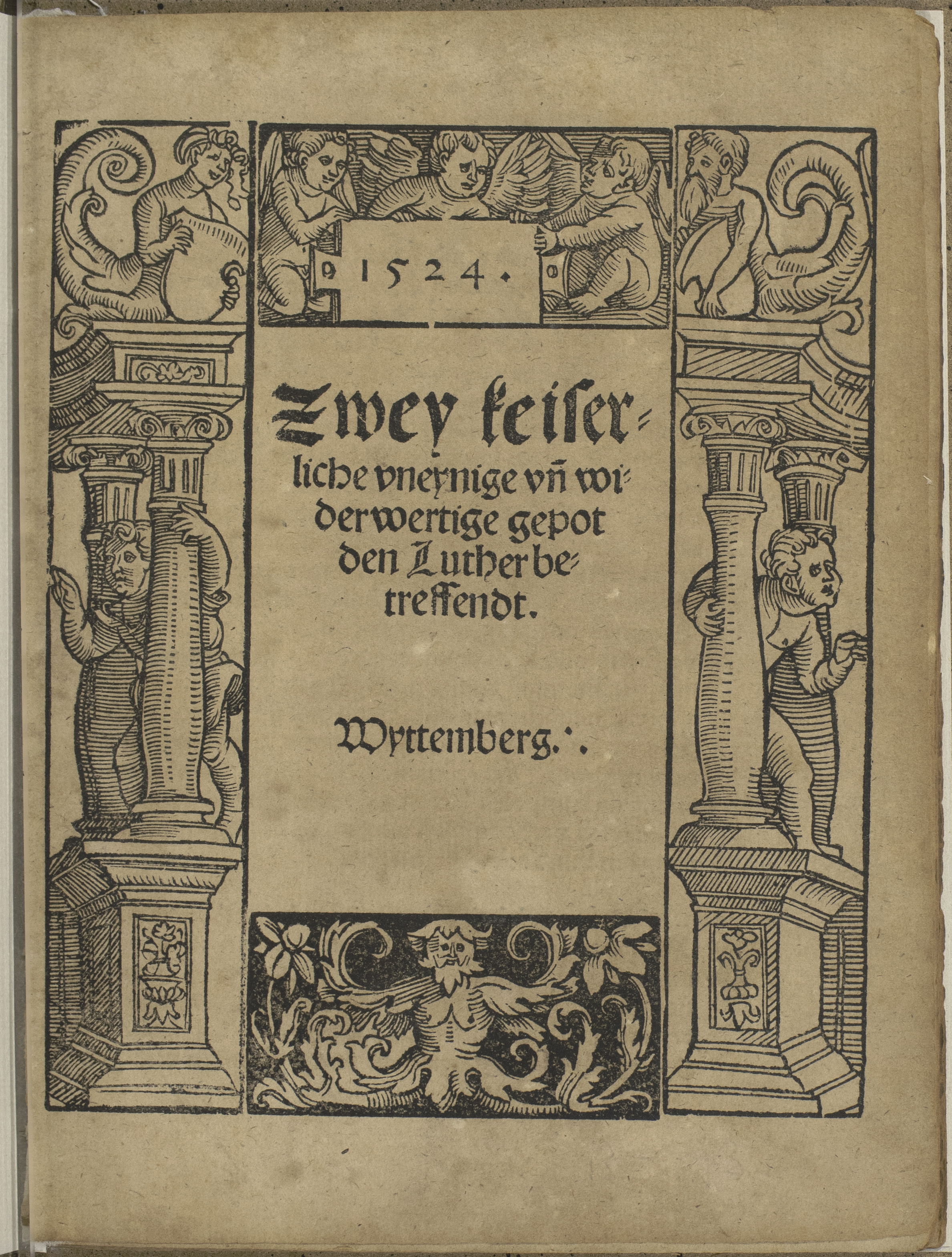
TextZwey keiserliche vneynige vn[d] widerwertige gepot den Luther betreffendt.
Holy Roman Empire. Emperor (1519-1556 : Charles V)Summary: The diet of Nuremberg in 1524 reaffirmed the imperial ban of Luther's person expressed in the edict of Worms, but not the condemnation of his teachings, which were to be addressed at the diet of Speyer. Luther issued both the edict of Worms and the resolutions of the diet of Nuremberg along with his own foreward and comments, in which he calls the emperor a "mad, irrational, senseless, raving and insane fool".Summary: The diet of Nuremberg in 1524 reaffirmed the imperial ban of Luther's person expressed in the edict of Worms, but not the condemnation of his teachings, which were to be addressed at the diet of Speyer. Luther issued both the edict of Worms and the resolutions of the diet of Nuremberg along with his own foreward and comments, in which he calls the emperor a "mad, irrational, senseless, raving and insane fool".