Search
5 resources
5 items
Publisher
Lotter, Melchior, approximately 1490-
-
 Text
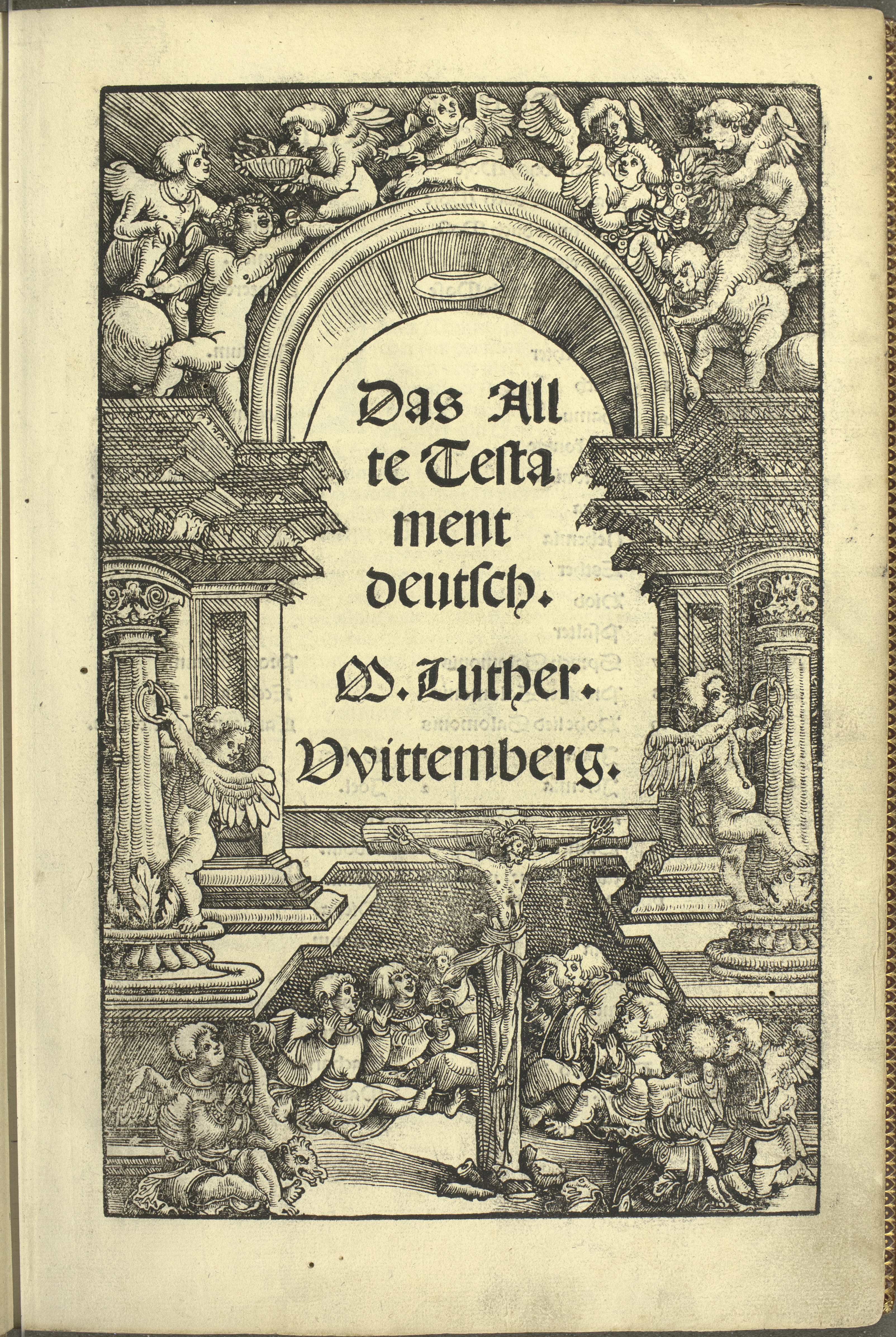
TextDas Allte Testament deutsch
Summary: This is the first printing of the first part of Luther's translation of the Old Testament into idiomatic German. It comprises the Pentateuch, or the five Books of Moses. Scholars long believed that this edition had been destroyed by Luther's friends because of its many printing errors. This printing contains 11 full-page and six initial-figure woodcuts. The volume has been heavily annotated in an early to mid-sixteenth century hand.Summary: This is the first printing of the first part of Luther's translation of the Old Testament into idiomatic German. It comprises the Pentateuch, or the five Books of Moses. Scholars long believed that this edition had been destroyed by Luther's friends because of its many printing errors. This printing contains 11 full-page and six initial-figure woodcuts. The volume has been heavily annotated in an early to mid-sixteenth century hand. -
 Text
TextDas Magnificat Vorteutschet vnd auszgelegt
Luther, Martin, 1483-1546Summary: Luther wrote this exposition of the Magnificent (Luke 1:46-55) in March 1521. He dedicated it to Duke Johann Frederich of Saxony as a token of his thanks to the Duke for his support and encouragement after Luther's condemnation by Pope Leo X. Text in German includes Luther's German translation of the Magnificat from the N.T. Greek of St. Luke's Gospel.Summary: Luther wrote this exposition of the Magnificent (Luke 1:46-55) in March 1521. He dedicated it to Duke Johann Frederich of Saxony as a token of his thanks to the Duke for his support and encouragement after Luther's condemnation by Pope Leo X. Text in German includes Luther's German translation of the Magnificat from the N.T. Greek of St. Luke's Gospel. -
 Text
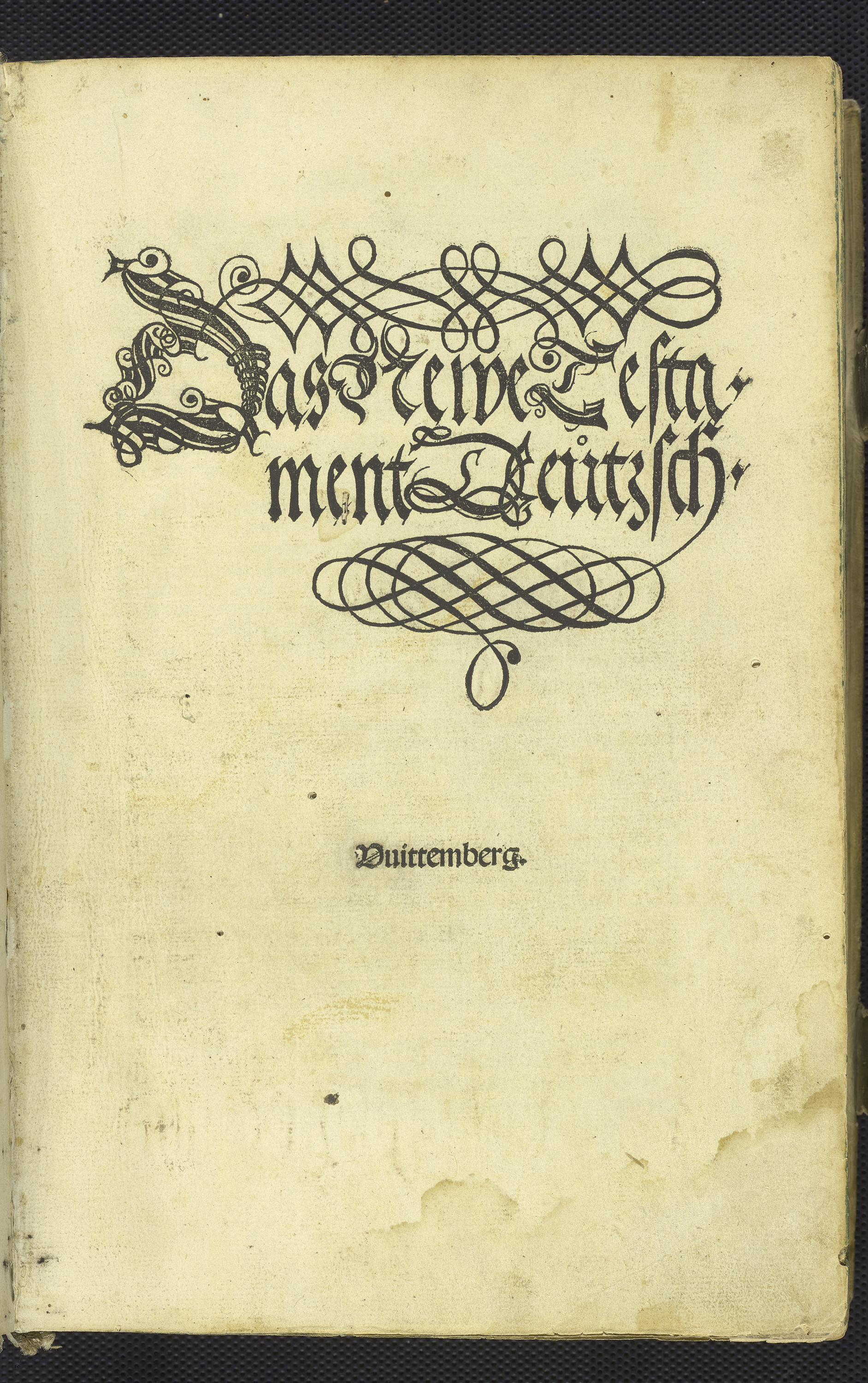
TextDas Newe Testament Deůtzsch
Summary: Luther's translation from the original Greek of the New Testament is a landmark in the history of the German language. His forceful style ensured that his Thuringian-Saxon dialect would provide the standard for High German in years to come. From a religious standpoint, Luther's decision to refer to the original Greek rather than merely to translate the Vulgate ensured that the German New Testament would be much more faithful to the original. Erasmus' New Testament provided the basis for the translation.Summary: Luther's translation from the original Greek of the New Testament is a landmark in the history of the German language. His forceful style ensured that his Thuringian-Saxon dialect would provide the standard for High German in years to come. From a religious standpoint, Luther's decision to refer to the original Greek rather than merely to translate the Vulgate ensured that the German New Testament would be much more faithful to the original. Erasmus' New Testament provided the basis for the translation. -
 Text
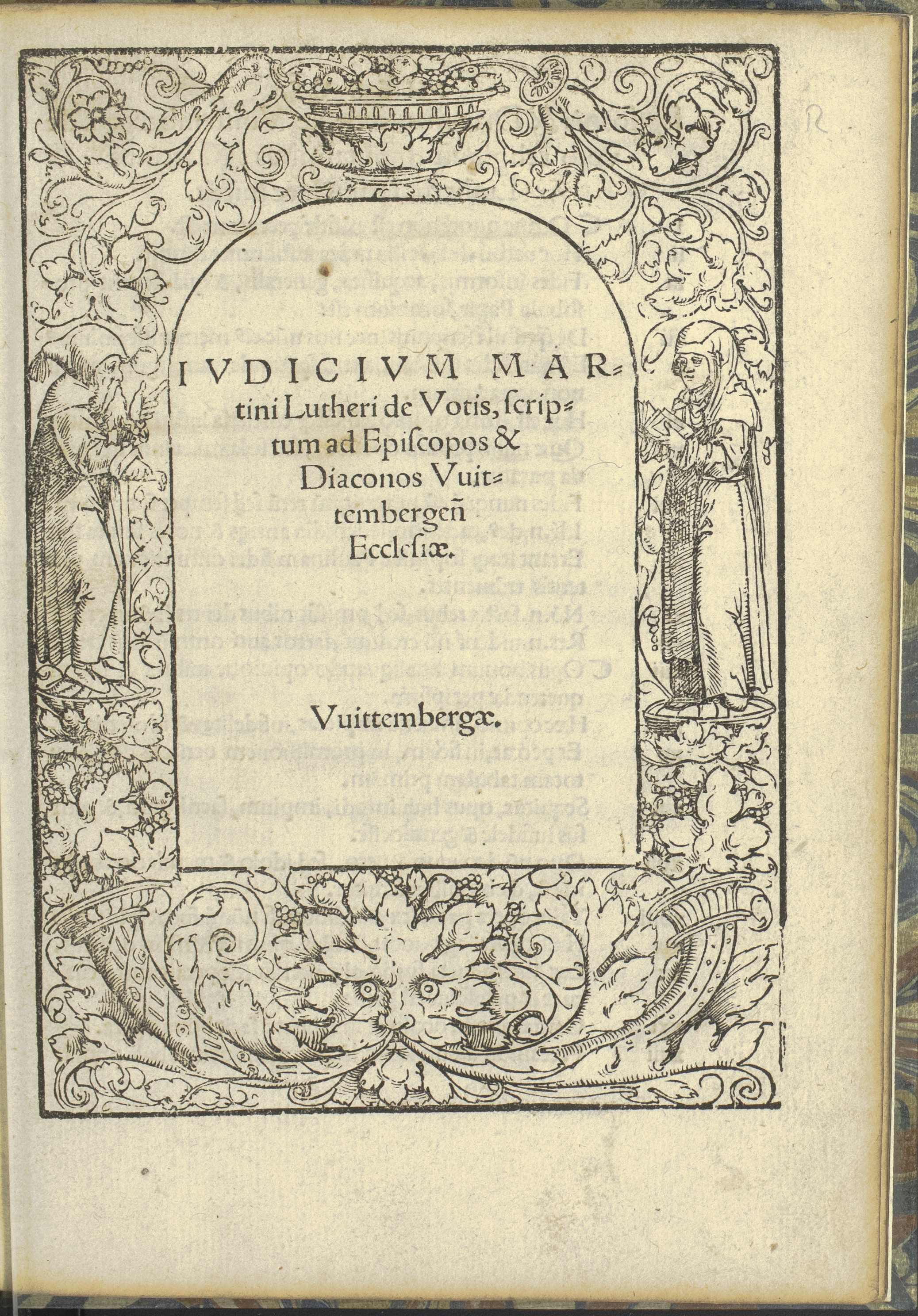
TextIudicium Martini Lutheri de votis : scriptum ad episcopos & diaconos Vuittembergen[sis] ecclesiae
Luther, Martin, 1483-1546Summary: First edition of a short tract written by Luther at Wartburg castle and addressed to the bishop and religious leaders in Wittenberg. In 139 brief statements, Luther warns that religious vows and monastic life do not by themselves bring about the forgiveness of sins.Summary: First edition of a short tract written by Luther at Wartburg castle and addressed to the bishop and religious leaders in Wittenberg. In 139 brief statements, Luther warns that religious vows and monastic life do not by themselves bring about the forgiveness of sins. -
 Text
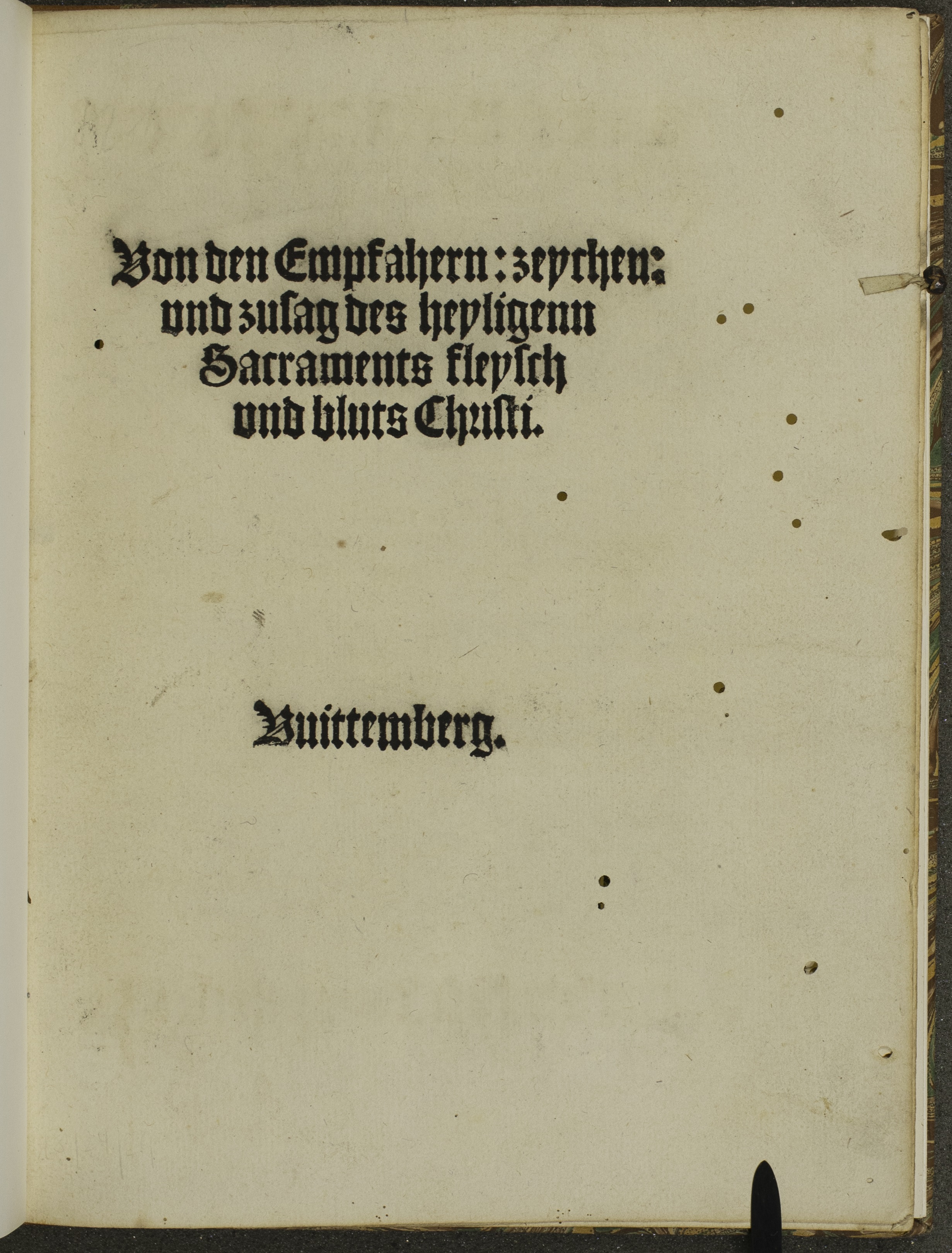
TextVon den Empfahern, zeychen, vnd zusag des heyligenn Sacraments fleysch vnd bluts Christi
Karlstadt, Andreas Rudolff-Bodenstein von, 1486-1541Summary: Karlstadt wrote numerous tracts on the reception of the sacrament in both kinds. This tract deals especially with those who receive the sacrament, what the signs of the sacrament signify, and what promises are given to those who partake.Summary: Karlstadt wrote numerous tracts on the reception of the sacrament in both kinds. This tract deals especially with those who receive the sacrament, what the signs of the sacrament signify, and what promises are given to those who partake.