Search
5 resources
5 items
Publisher
Peypus, Friedrich, 1485-1534
-
 Text
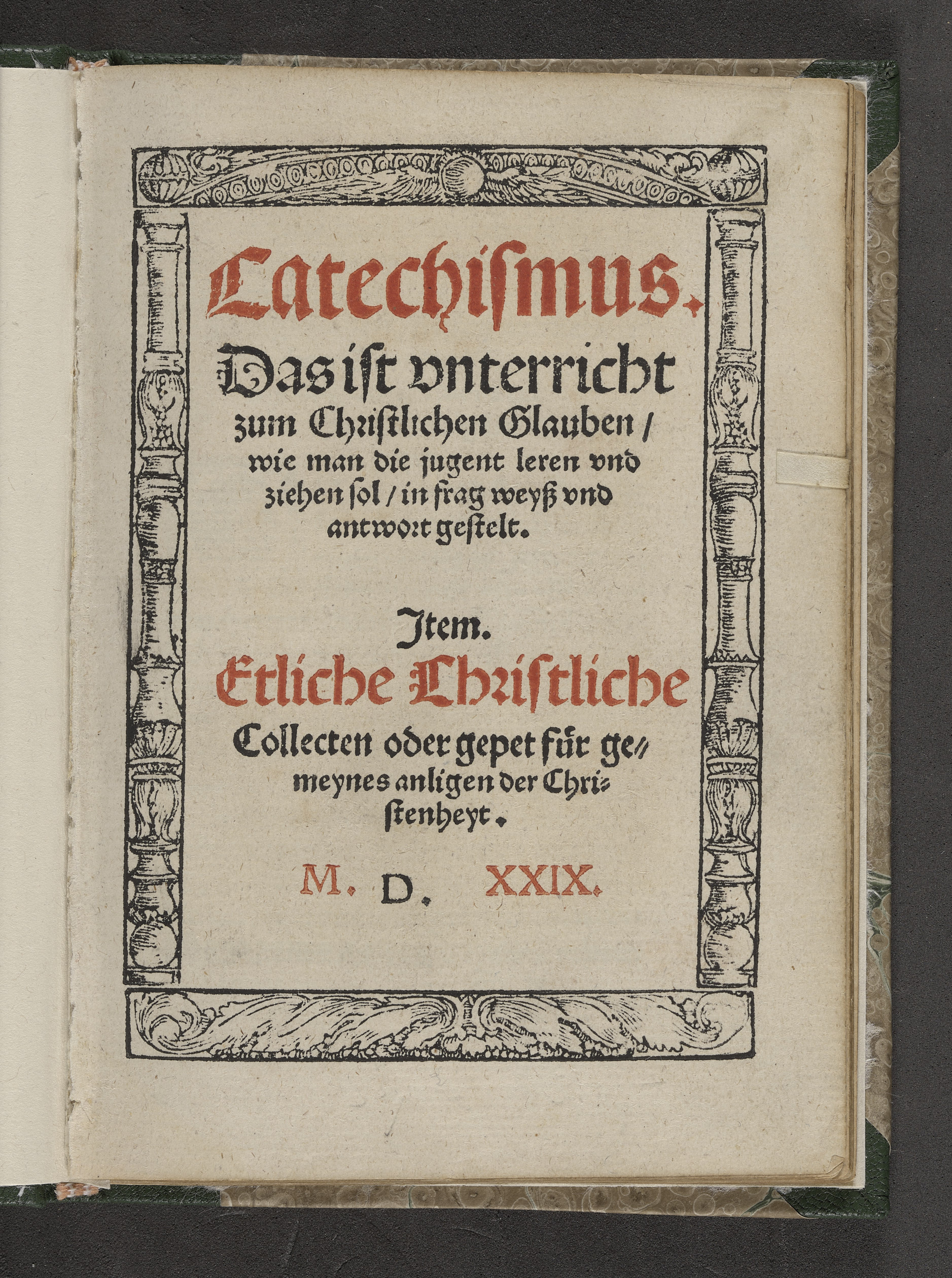
TextCatechismus. Das ist Vnterricht zum christlichen Glauben wie man die Jugent leren vnd ziehen sol, in Frag Weyss vnd Antwort gestelt : Jtem etliche christliche Collecten oder Gepet für gemeynes Anligen der Christenheyt
Althamer, Andreas, approximately 1500-1539Summary: Third printing of the Ansbach Catechism by Andreas Althamer and Johannes Rurer, commissioned by Margrave Georg of Brandenburg. It has been called the first regional catechism of the Protestant movement. It contains 92 questions and answers as well as an appendix with 18 prayers.Summary: Third printing of the Ansbach Catechism by Andreas Althamer and Johannes Rurer, commissioned by Margrave Georg of Brandenburg. It has been called the first regional catechism of the Protestant movement. It contains 92 questions and answers as well as an appendix with 18 prayers. -
 Text
TextDer CXLVII. Psalm Lauda Jerusalem
Luther, Martin, 1483-1546Summary: This is the second printing of Luther's exposition of Psalm 147. Text in German includes M. Luther's German translation of Psalms CXLVII from the Hebrew O.T.Summary: This is the second printing of Luther's exposition of Psalm 147. Text in German includes M. Luther's German translation of Psalms CXLVII from the Hebrew O.T. -
 Text
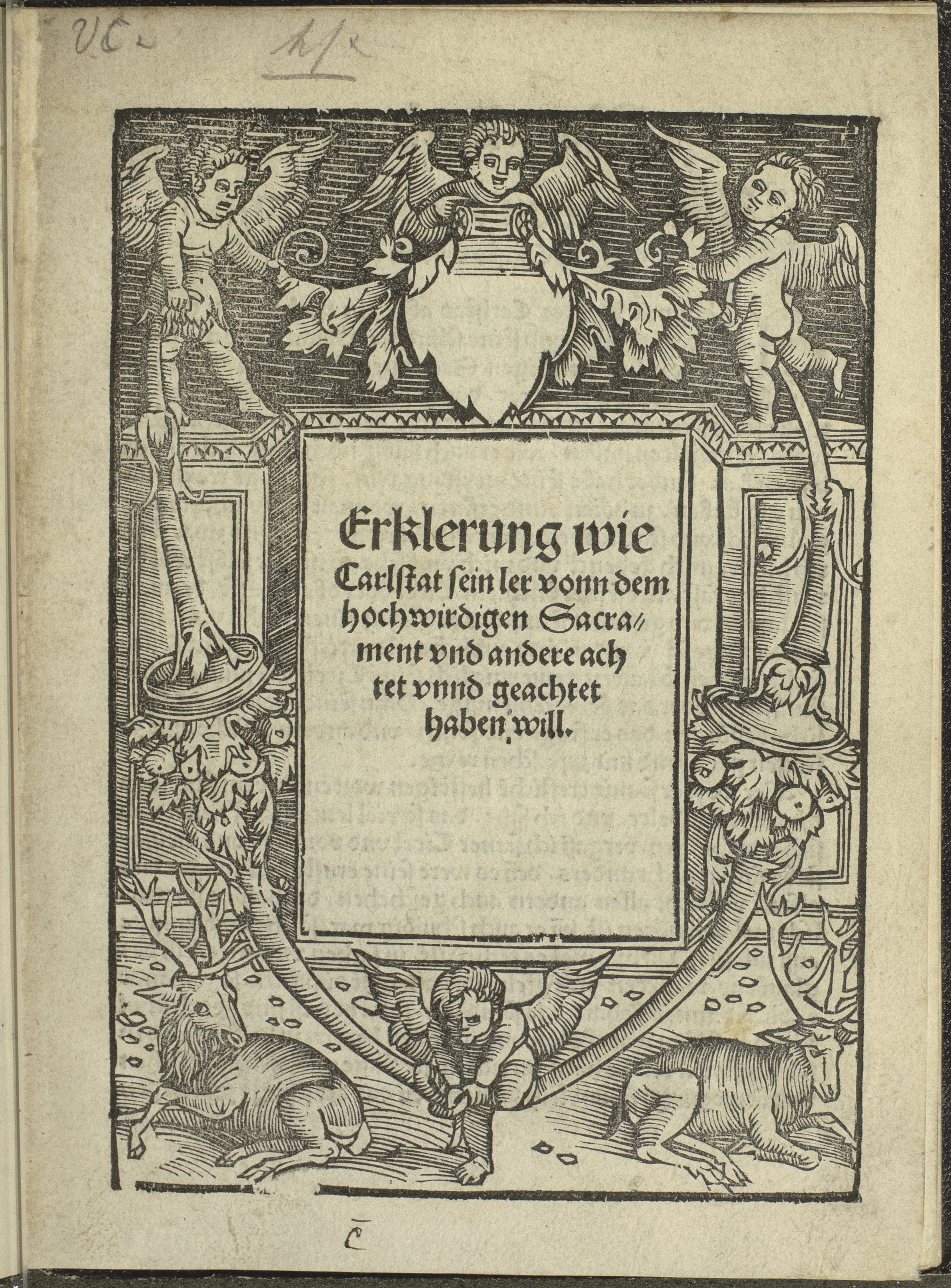
TextErklerung wie Carlstat sein ler vonn dem hochwirdigen Sacrament : vnd andere achtet vnnd geachtet haben will
Karlstadt, Andreas Rudolff-Bodenstein von, 1486-1541Summary: After Karlstadt had been driven out of Saxony, he sought refuge in South Germany. When this proved impossible, he returned to Wittenberg. Karlstadt publish a retraction of his former opinions and then publish nothing else without prior approval. This is the retraction with Luther's preface. Needless to say, Karlstadt did not find these conditions at all acceptable and he was soon on the move again. He came to settle in Switzerland, first in Zurich and finally in Basel, where he died on Christmas Eve, 1541.Summary: After Karlstadt had been driven out of Saxony, he sought refuge in South Germany. When this proved impossible, he returned to Wittenberg. Karlstadt publish a retraction of his former opinions and then publish nothing else without prior approval. This is the retraction with Luther's preface. Needless to say, Karlstadt did not find these conditions at all acceptable and he was soon on the move again. He came to settle in Switzerland, first in Zurich and finally in Basel, where he died on Christmas Eve, 1541. -
 Text
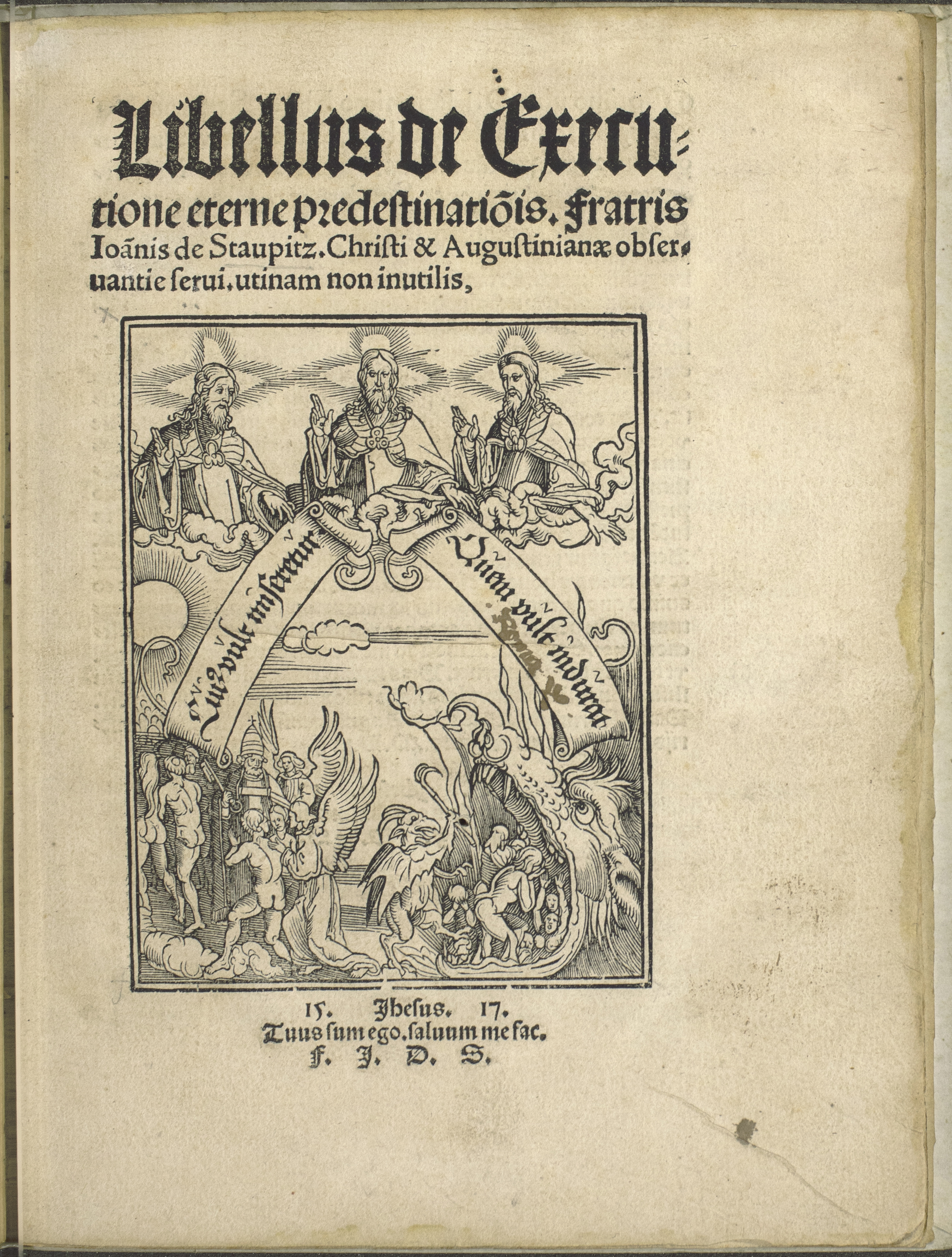
TextLibellus de executione etern[a]e predestinatio[n]is
Staupitz, Johann von, -1524Summary: This is a short work by Staupitz on predestination.Summary: This is a short work by Staupitz on predestination. -
 Text
TextSpeculum passionis domini nostri Ihesu Christi : in quo reluce[n]t hec omnia singulariter vere & absolute, puta omnis [per]fectio yerarchie, Omniu[m] fidelium beatitudo, Omnes virtutes, dona, fructus, et spiritualiu[m] bonoru[m] omnium efficacia, quod in fine prime partis huius speculi manifestissime co[m]probat[um]
Pinder, Ulrich, -1510 or 1519Summary: First edition of Ulrich Pinder's Passion narrative richly illustrated with 77 woodcut images (39 full page). Pinder was medical doctor, who had served as the court physician of the Elector Frederick the Wise of Saxony. After 1493 he was the town physician for the city of Nuremberg, where he also wrote several medical tracts and published a variety of books with the printer Friedrich Peypus. For this work, Pinder employed the services of the engravers Hans Schaufelein, who contributed 39 woodcuts, and Hans Baldung Grien, who contributed 21 woodcuts.Summary: First edition of Ulrich Pinder's Passion narrative richly illustrated with 77 woodcut images (39 full page). Pinder was medical doctor, who had served as the court physician of the Elector Frederick the Wise of Saxony. After 1493 he was the town physician for the city of Nuremberg, where he also wrote several medical tracts and published a variety of books with the printer Friedrich Peypus. For this work, Pinder employed the services of the engravers Hans Schaufelein, who contributed 39 woodcuts, and Hans Baldung Grien, who contributed 21 woodcuts.