Search
23 resources
23 items
Publisher
Rhau-Grunenberg, Johann, active 1508-1525
-
 Text
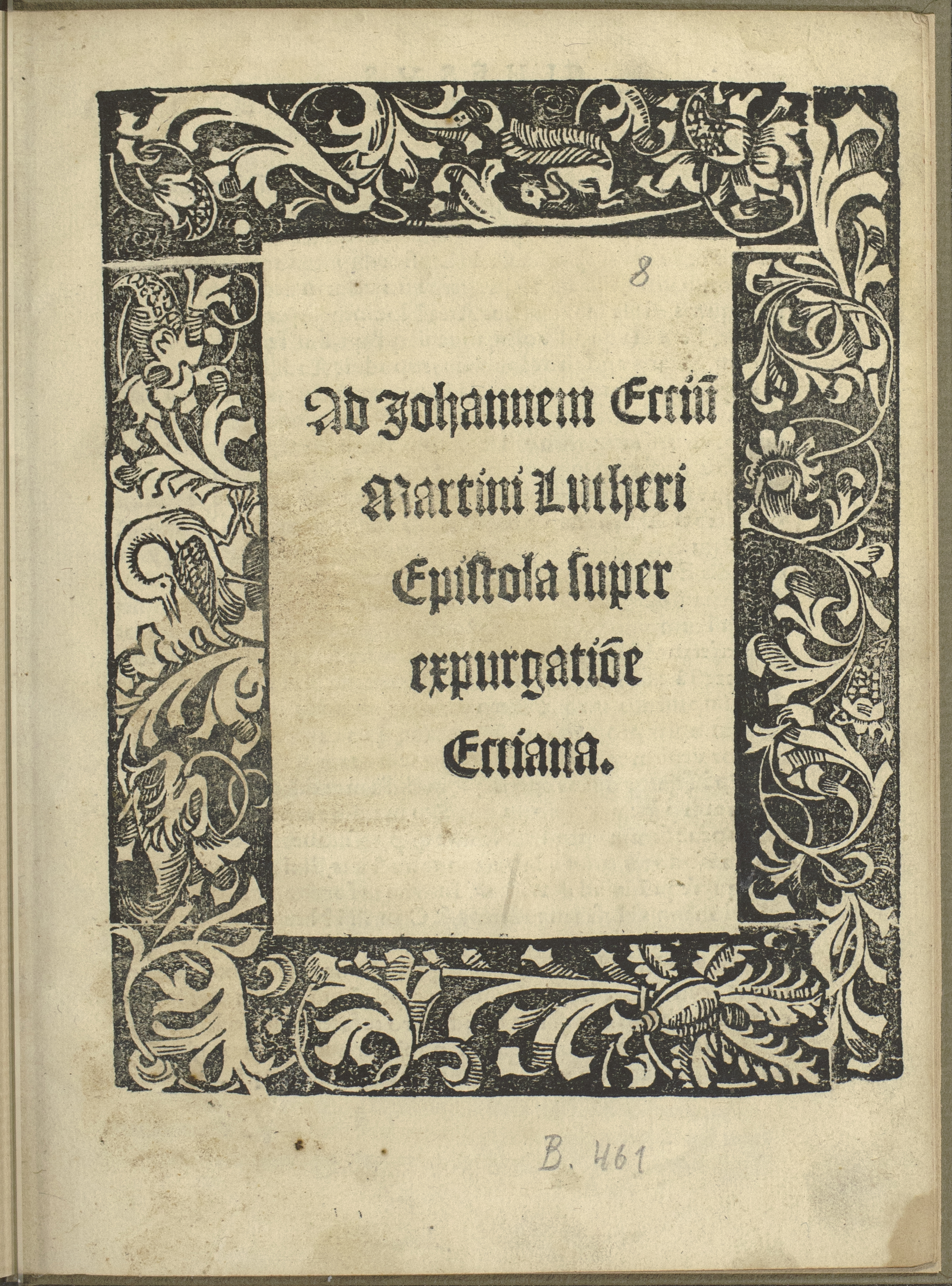
TextAd Johannem Ecciu[m]
Luther, Martin, 1483-1546Summary: A unique printing of an answer by Luther to the attacks of one his earliest opponents, Johann Eck.Summary: A unique printing of an answer by Luther to the attacks of one his earliest opponents, Johann Eck. -
 Text
TextAd aegocerotem Emserianum
Luther, Martin, 1483-1546Summary: First edition of Luther's response to Hieronymus Emser's report of the Leipzig Disputation between Martin Luther, Andreas Bodenstein Karlstadt and Johann Eck. Emser, who had been initially sympathetic to Luther's position had accompanied Eck to Leipzig, where he broke with the reformer. In his report, he tried to associate Luther with the Bohemian reformer Jan Hus, who had been burnt at the stake during the Council of Constance in 1415.Summary: First edition of Luther's response to Hieronymus Emser's report of the Leipzig Disputation between Martin Luther, Andreas Bodenstein Karlstadt and Johann Eck. Emser, who had been initially sympathetic to Luther's position had accompanied Eck to Leipzig, where he broke with the reformer. In his report, he tried to associate Luther with the Bohemian reformer Jan Hus, who had been burnt at the stake during the Council of Constance in 1415. -
 Text
TextD. Andree Carolstatini doctoris et Archidiaconi VVittenburgensis : CCCLXX: et apologetic[a]e co[n]clusio[n]es p[er] sacris literis & Vuittenburgen[si] ita edit[a]e, vt & lectoribus p[er] futur[a]e sint
Karlstadt, Andreas Rudolff-Bodenstein von, 1486-1541Summary: After Luther had published the Ninety-five Theses, a broad academic debate spread across Germany on the question of the validity of indulgences. The debate was soon joined by Eck of Ingolstadt, representing the Catholic position. Karlstadt, a senior theologian at Wittenberg seems to have taken the lead in defending his colleague with his work, a series of disputations held at the University of Wittenberg beginning May 14, 1518, and continuing beyond July 7, 1518.Summary: After Luther had published the Ninety-five Theses, a broad academic debate spread across Germany on the question of the validity of indulgences. The debate was soon joined by Eck of Ingolstadt, representing the Catholic position. Karlstadt, a senior theologian at Wittenberg seems to have taken the lead in defending his colleague with his work, a series of disputations held at the University of Wittenberg beginning May 14, 1518, and continuing beyond July 7, 1518. -
 Text
TextDe votis monasticis
Luther, Martin, 1483-1546Summary: This is the third printing of Luther's treatise on monastic vows.Summary: This is the third printing of Luther's treatise on monastic vows. -
 Text
TextDecem praecepta Witte[n]berge[n]si praedicata populo
Luther, Martin, 1483-1546Summary: The sermons on which this commentary on the Ten Commandments is based were delivered in Wittenberg in 1516-1517. This is the first work of Luther's to be translated into a modern European language. This is the first printing of the work.Summary: The sermons on which this commentary on the Ten Commandments is based were delivered in Wittenberg in 1516-1517. This is the first work of Luther's to be translated into a modern European language. This is the first printing of the work. -
 Text
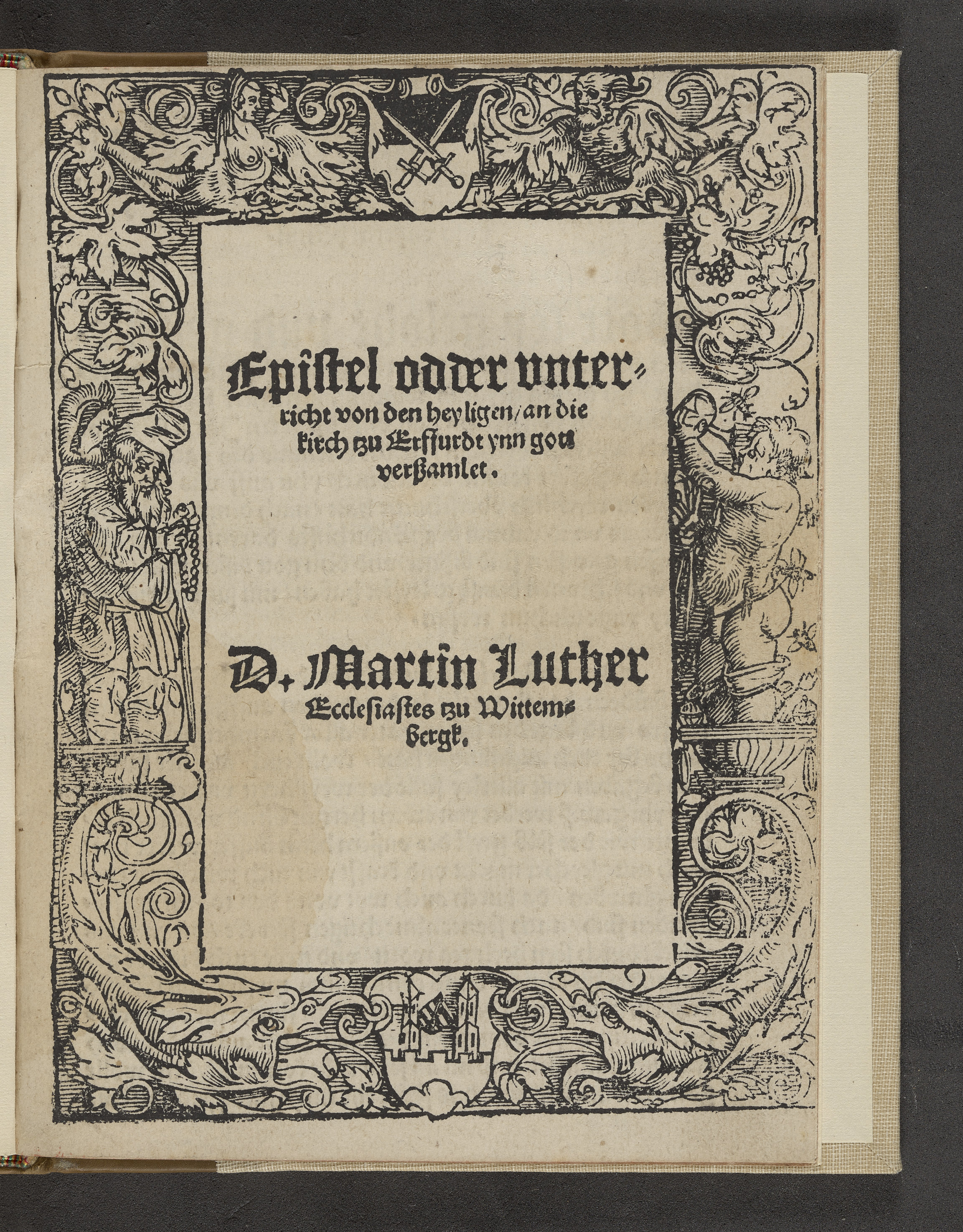
TextEpistel odder vnterricht von den heyligen : an die kirch zu Erfurdt ynn gott verszamelt
Luther, Martin, 1483-1546Summary: First printing of an open letter by Luther to the church of Erfurt on the subject of prayers to the saints.Summary: First printing of an open letter by Luther to the church of Erfurt on the subject of prayers to the saints. -
 Text
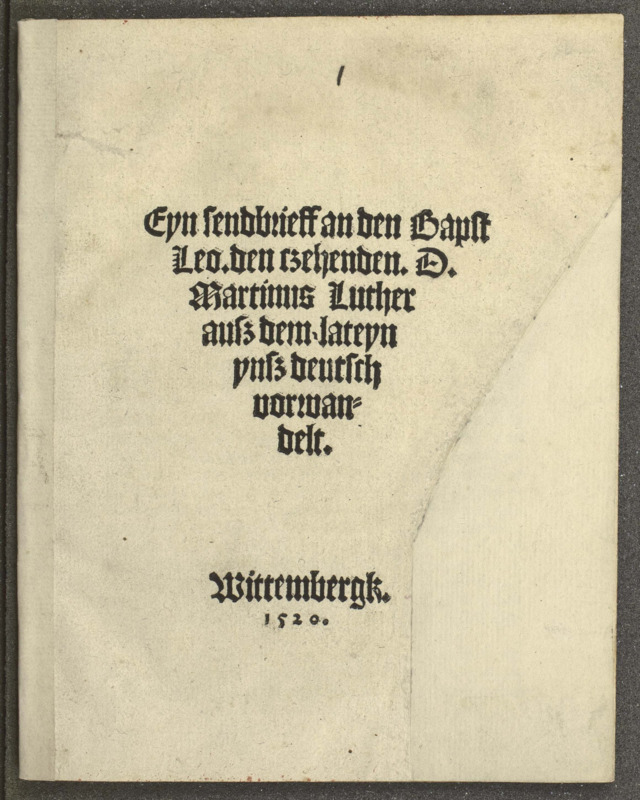
TextEyn Sendbrieff an den Bapst Leo den Czehenden
Luther, Martin, 1483-1546Summary: A letter by Luther to Pope Leo X. Leo had issued his famous bull 'Exsurge Domine' on June 15 1520, demanding that Luther recant his teachings of face excommunication. Luther responded with this letter in September, seeking to explain his position, calling for the church to reform, while emphasizing that his critiques have been directed against abuses within the church, not against the person or office of the pope.Summary: A letter by Luther to Pope Leo X. Leo had issued his famous bull 'Exsurge Domine' on June 15 1520, demanding that Luther recant his teachings of face excommunication. Luther responded with this letter in September, seeking to explain his position, calling for the church to reform, while emphasizing that his critiques have been directed against abuses within the church, not against the person or office of the pope. -
 Text
TextEyn Sermon auff den vierden Sontag nach Ostern : Johannis 16
Luther, Martin, 1483-1546Summary: First edition of a sermon by Martin Luther on the judgment and righteousness of God. In the second part of the sermon Luther denies the judicial authority of the pope and councils.Summary: First edition of a sermon by Martin Luther on the judgment and righteousness of God. In the second part of the sermon Luther denies the judicial authority of the pope and councils. -
 Text
TextEyn Sermon auff den vierdten sontag nach Ostern Johannis .16
Luther, Martin, 1483-1546Summary: Sermon preached May 3, 1523, in the presence of Duke Bogislaus of Pomerania, on John 16:5-14.Summary: Sermon preached May 3, 1523, in the presence of Duke Bogislaus of Pomerania, on John 16:5-14. -
 Text
TextEyn Sermon von dem heyligen hochwirdigen Sacrame[n]t der Tauffe
Luther, Martin, 1483-1546Summary: Second Wittenberg (and first 1520) printing of a sermon by Luther on the Sacrament of Baptism.Summary: Second Wittenberg (and first 1520) printing of a sermon by Luther on the Sacrament of Baptism. -
 Text
TextEyn Sermon von dem hochwirdigen Sacrament des heyligen waren Leychnamss Christi : Vnd von den Bruderschafften
Luther, Martin, 1483-1546Summary: Second of eleven printings, and the second of two Wittenberg printings with t.p. in red and black, of a sermon by Luther on the Lord's Supper.Summary: Second of eleven printings, and the second of two Wittenberg printings with t.p. in red and black, of a sermon by Luther on the Lord's Supper. -
 Text
TextEyn Sermon von der Betrachtu[n]g des Heyligen Leydens Christi
Luther, Martin, 1483-1546Summary: Early Luther sermon on how a Christian ought to view the suffering and death of Christ. First printed in 1519, this is the fifth documented Wittenberg printing of the text.Summary: Early Luther sermon on how a Christian ought to view the suffering and death of Christ. First printed in 1519, this is the fifth documented Wittenberg printing of the text. -
 Text
TextEyn bett buchlin. : Der czehen gepot. Des glaubens. Des vater vnsers. Des Aue Marien. Etliche verdeutschte Psalmen. Die Epistell sanct Pauls tzu tito, eyn Christlich leben tzu vnterrichten
Luther, Martin, 1483-1546Summary: Text in German includes Luther's translations from Latin of several Psalms from the Hebrew O.T., and the Epistle to Titus from the Greek N.T.Summary: Text in German includes Luther's translations from Latin of several Psalms from the Hebrew O.T., and the Epistle to Titus from the Greek N.T. -
 Text
TextEyn deutsch Theologia : das ist Eyn edles Buchleyn, von rechtem vorstand, was Adam vnd Christus sey, vnd wie Adam yn vns sterben, vnd Christus ersteen sall
FranckforterSummary: First printing of Luther's second publication of the "Theologia Deutsch", or "German Theology" of an unknown disciple of the Medieval German mystic, Johannes Tauler (ca. 1300-1361). Luther says in his preface that he has learned more from it than from any other book, the Bible and the works of St. Augustine, excepted, "as to what God, Christ, the human being, and all things are".Summary: First printing of Luther's second publication of the "Theologia Deutsch", or "German Theology" of an unknown disciple of the Medieval German mystic, Johannes Tauler (ca. 1300-1361). Luther says in his preface that he has learned more from it than from any other book, the Bible and the works of St. Augustine, excepted, "as to what God, Christ, the human being, and all things are". -
 Text
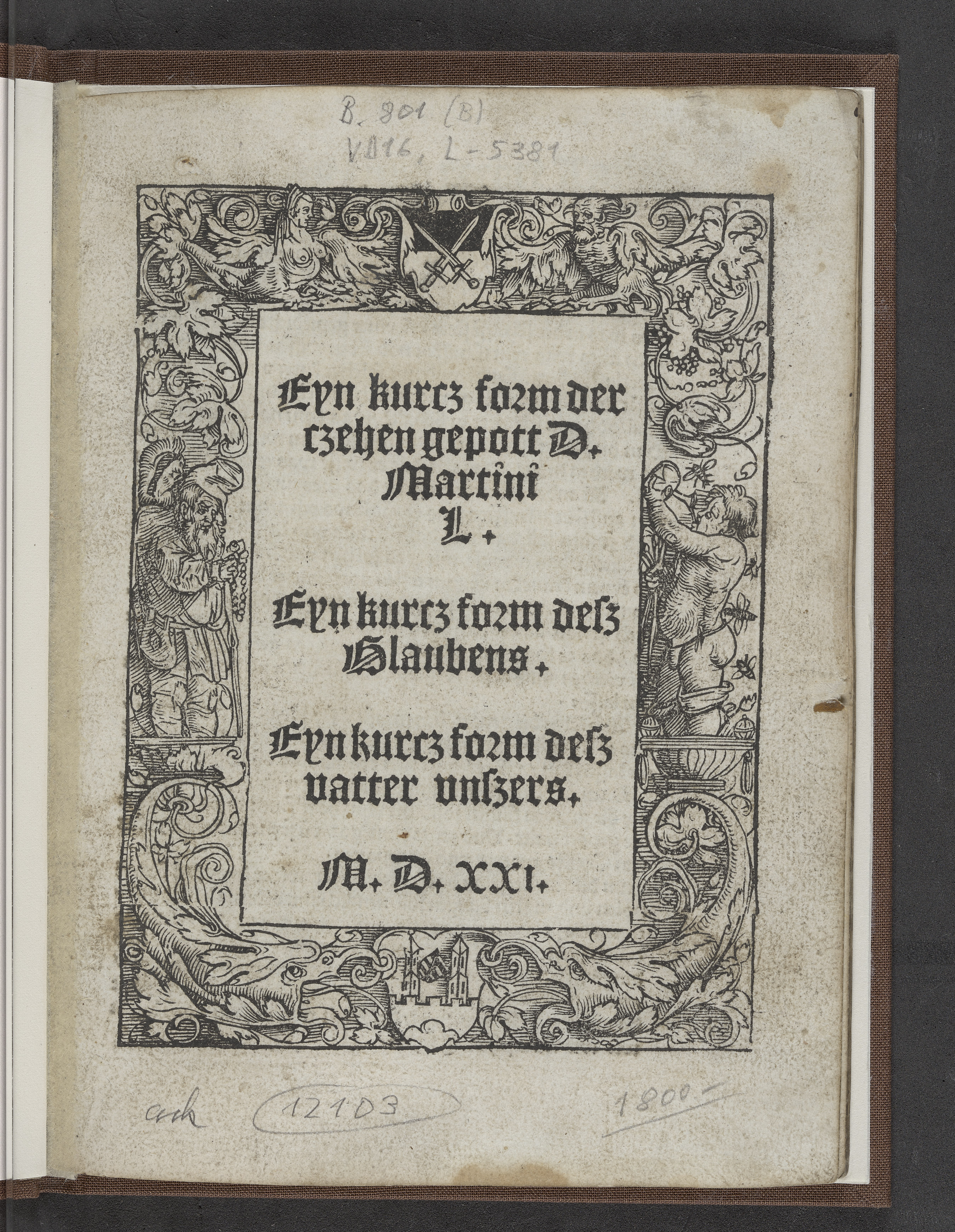
TextEyn kurcz form der czehen gepott
Luther, Martin, 1483-1546Summary: An early predecessor of Luther's Small Catechism, containing a simple explanation of the Ten Commandments, the Apostles' Creed, and the Lord's Prayer.Summary: An early predecessor of Luther's Small Catechism, containing a simple explanation of the Ten Commandments, the Apostles' Creed, and the Lord's Prayer. -
 Text
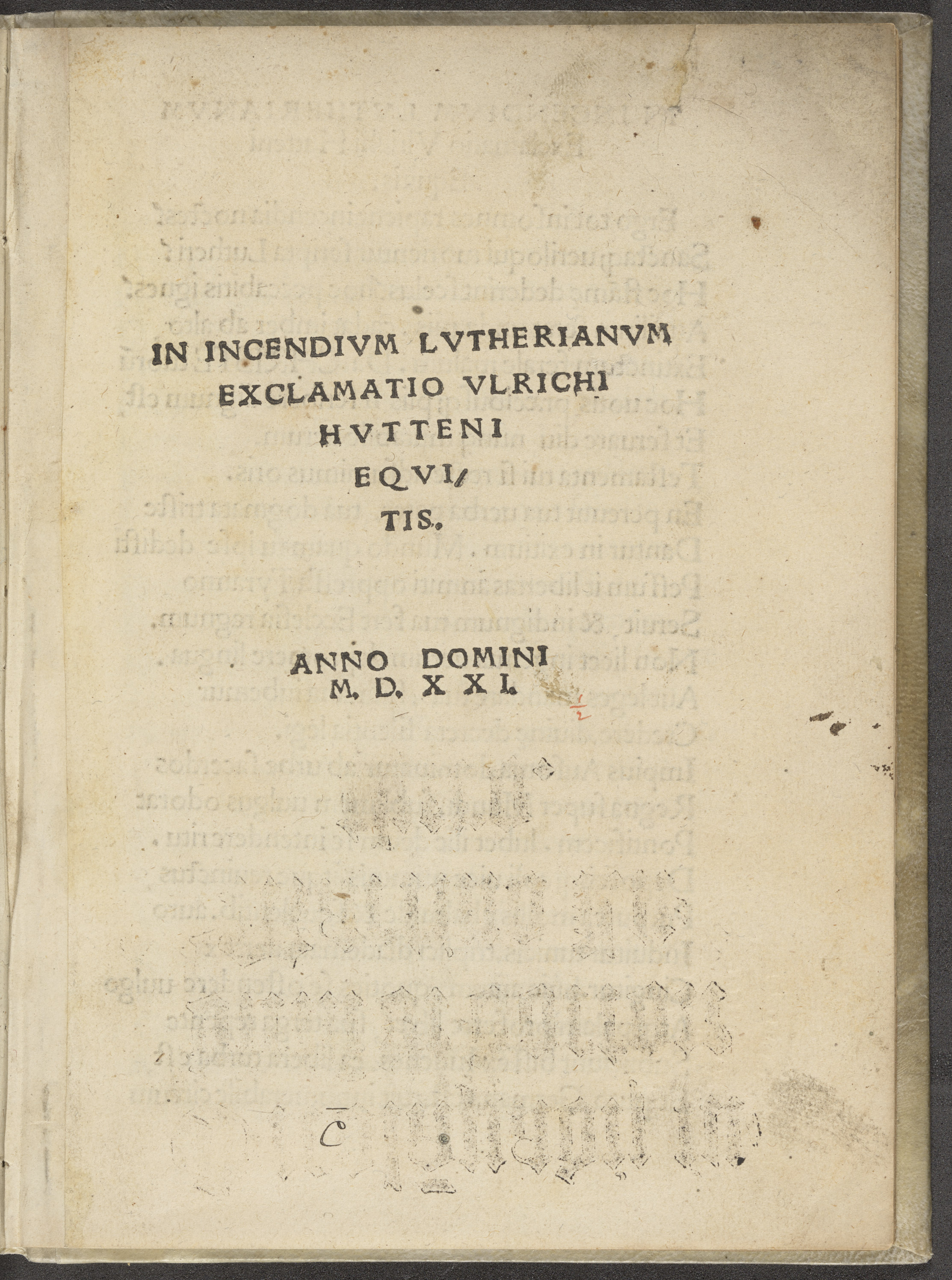
TextIn incendium Lutherianum Exclamatio
Hutten, Ulrich von, 1488-1523Summary: This poem is Hutten's reaction to the burning of Luther's books at Mainz by papal legates.Summary: This poem is Hutten's reaction to the burning of Luther's books at Mainz by papal legates. -
 Text
TextResolutiones Lutheriane super propositio[n]ibus suis Lipsie disputatis
Luther, Martin, 1483-1546Summary: An analysis by Luther of the propositions debated by him, his colleague, Andreas Karlstadt, and Johann Eck at the Leipzig Debate of 1519.Summary: An analysis by Luther of the propositions debated by him, his colleague, Andreas Karlstadt, and Johann Eck at the Leipzig Debate of 1519. -
 Text
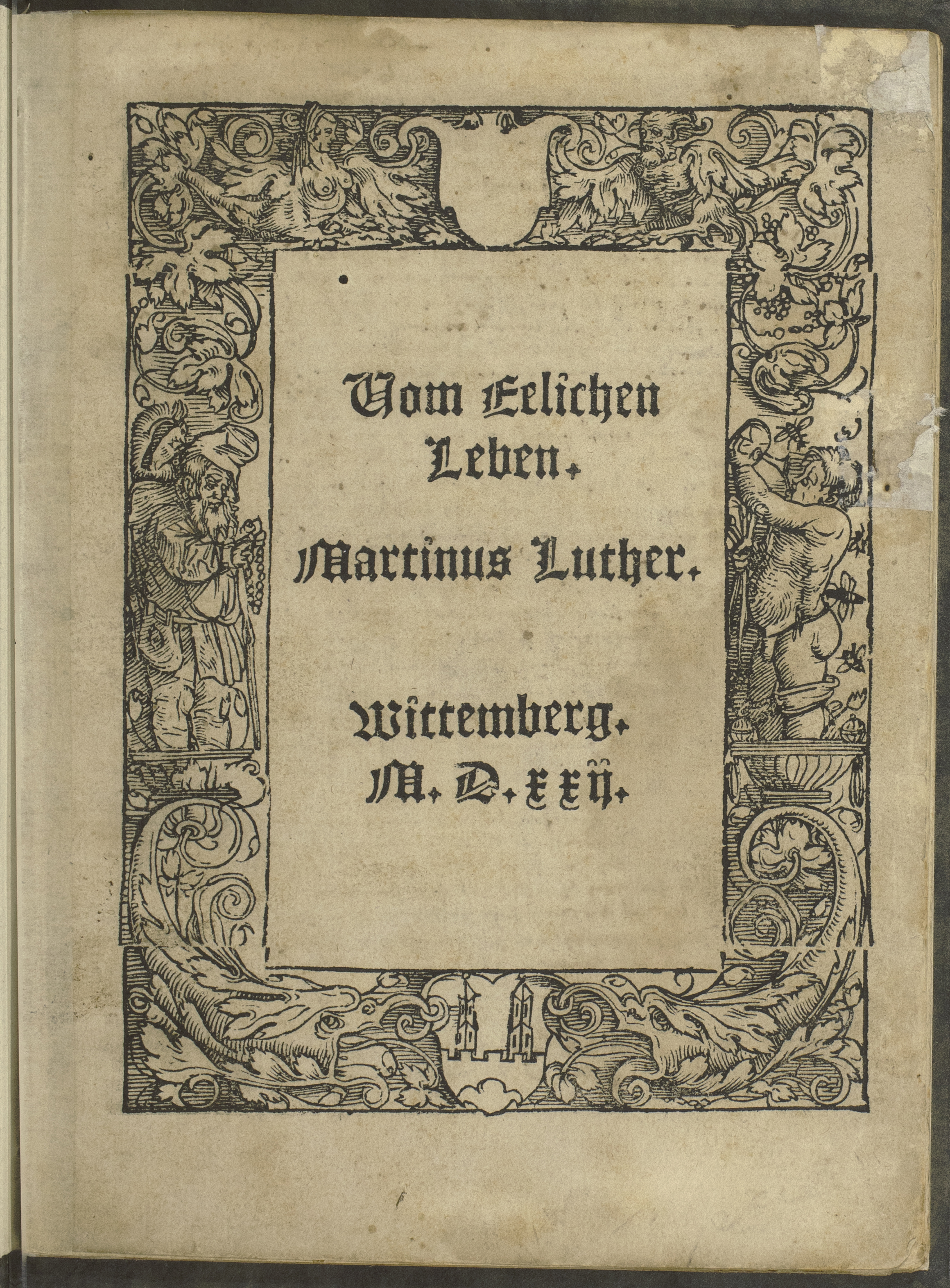
TextUom eelichen Leben
Luther, Martin, 1483-1546Summary: This sermon on marriage is an elaboration of an earlier work no longer extant. In its present form there is no set Bible text, nor is the sermon designed for a particular place in the Church year.Summary: This sermon on marriage is an elaboration of an earlier work no longer extant. In its present form there is no set Bible text, nor is the sermon designed for a particular place in the Church year. -
 Text
TextUom miszbrauch der Messen
Luther, Martin, 1483-1546Summary: Luther always felt a special fondness for this work. Nearly two decades after writing it, he remembered it as being especially powerful. It elicited response from Catholic opponents five years hence. Luther felt so strongly about this material that he translated it into German himself. The abuse of the title refers to the masses sung by chantry priests for individuals. Luther opposed any celebration of the Eucharist that was not accessible to or provided for the congregation at large.Summary: Luther always felt a special fondness for this work. Nearly two decades after writing it, he remembered it as being especially powerful. It elicited response from Catholic opponents five years hence. Luther felt so strongly about this material that he translated it into German himself. The abuse of the title refers to the masses sung by chantry priests for individuals. Luther opposed any celebration of the Eucharist that was not accessible to or provided for the congregation at large. -
 Text
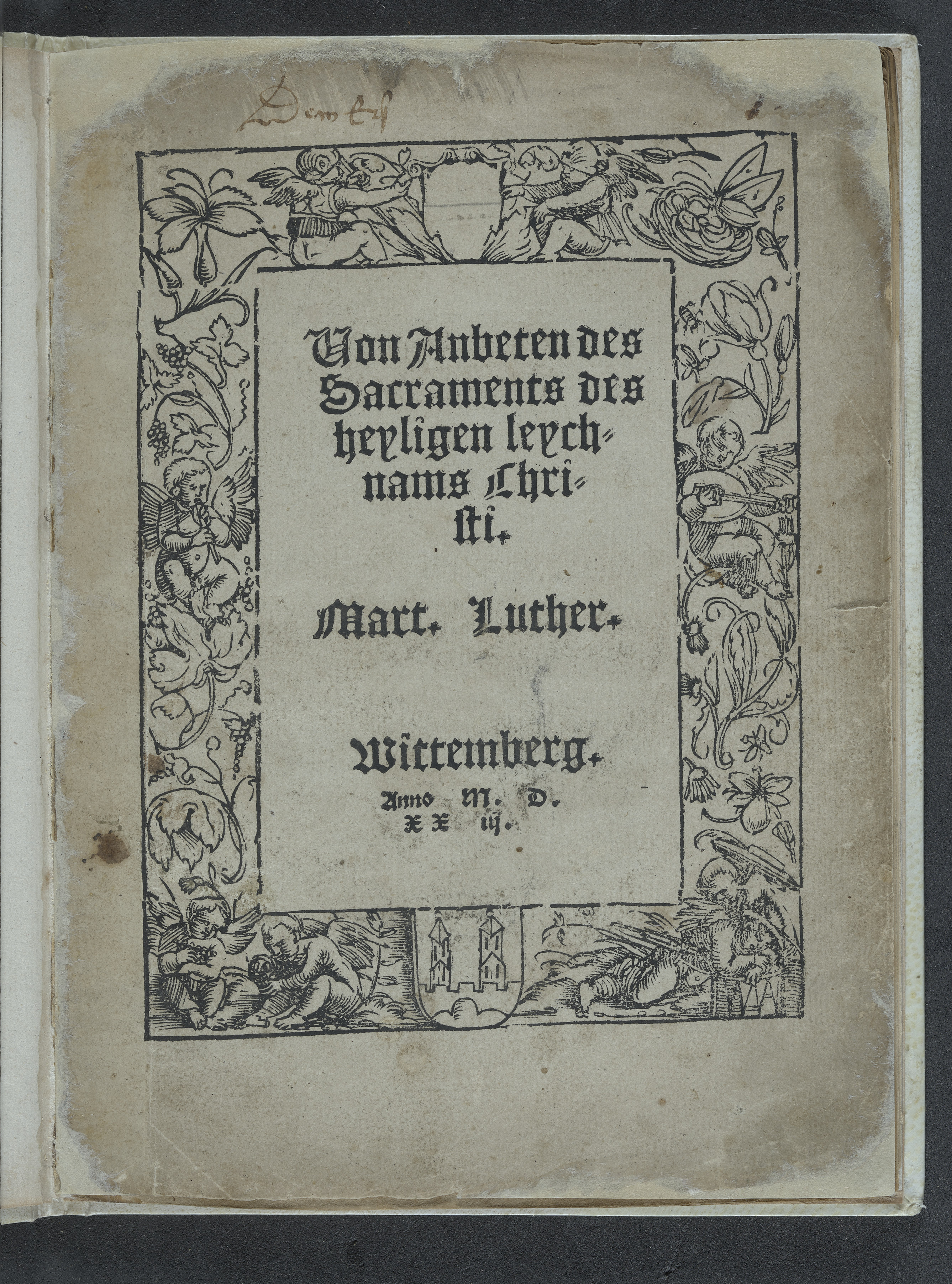
TextUon Anbeten des Sacraments des heyligen leychnams Christi
Luther, Martin, 1483-1546Summary: Second printing of Luther's response to a catechism of the Bohemian Brethren, with special attention to the Adoration of the Host, and to the Real Presence.Summary: Second printing of Luther's response to a catechism of the Bohemian Brethren, with special attention to the Adoration of the Host, and to the Real Presence. -
 Text
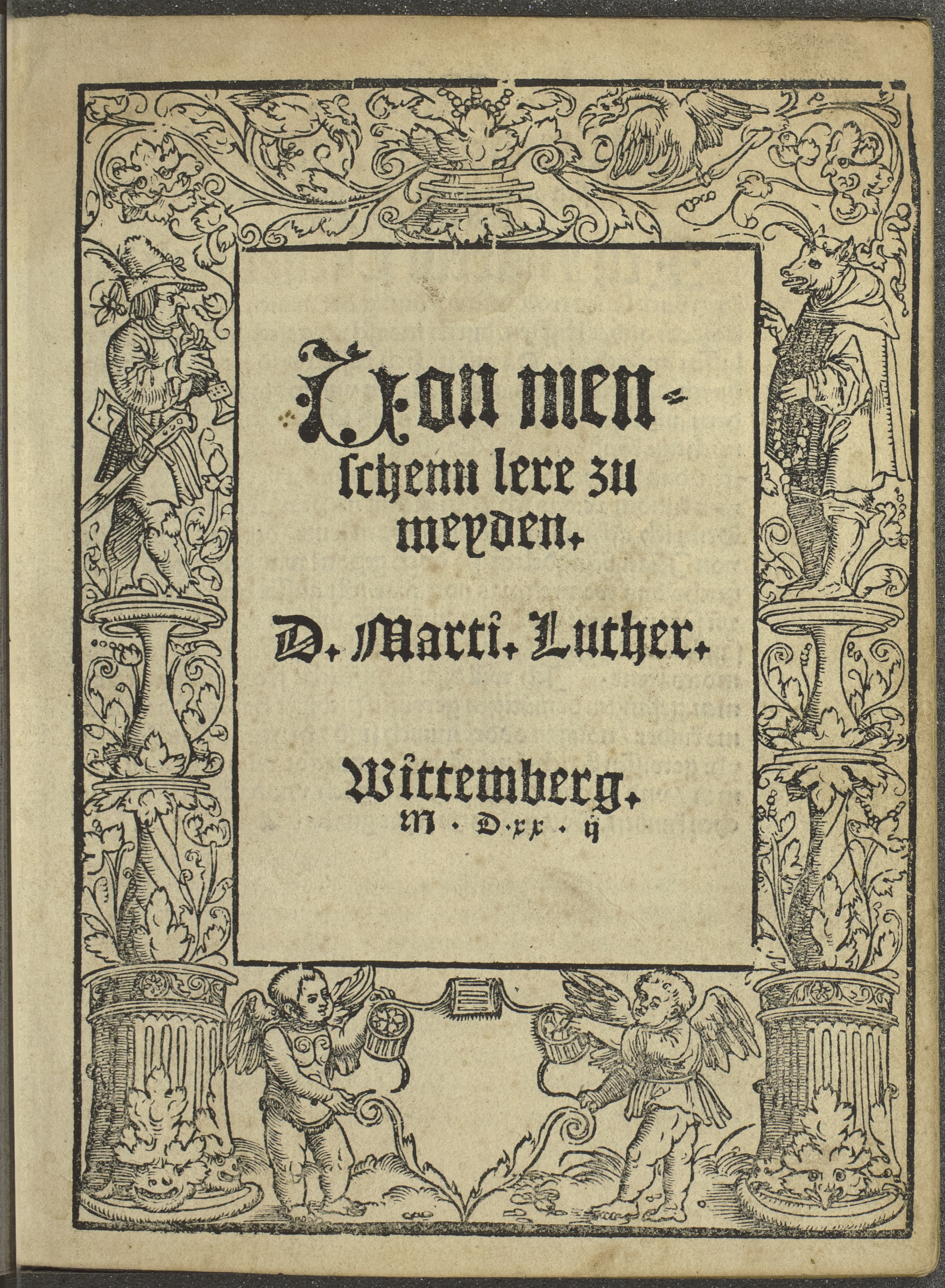
TextUon Menschenn Lere zu meyden
Luther, Martin, 1483-1546Summary: A treatise by Luther on the relationship of belief and practice, intended for those "poor consciences, that lie captive to human laws in cloisters and monastic foundations", as he puts it in his preface. It is also noteworthy that Luther assumes his audience includes both those who could read his writings directly, and those who heard them read by others, when he dedicates his pamphlet "to all who read or hear this little book".Summary: A treatise by Luther on the relationship of belief and practice, intended for those "poor consciences, that lie captive to human laws in cloisters and monastic foundations", as he puts it in his preface. It is also noteworthy that Luther assumes his audience includes both those who could read his writings directly, and those who heard them read by others, when he dedicates his pamphlet "to all who read or hear this little book". -
 Text
TextUon beyder gestalt des Sacraments zu nehmen vnd ander newerung
Luther, Martin, 1483-1546Summary: After Luther published his "Eight Sermons" of 1522, he decided that there was needed a shorter, more concise statement of these sermons' arguments. This is the third printing of the resulting précis.Summary: After Luther published his "Eight Sermons" of 1522, he decided that there was needed a shorter, more concise statement of these sermons' arguments. This is the third printing of the resulting précis. -
 Text
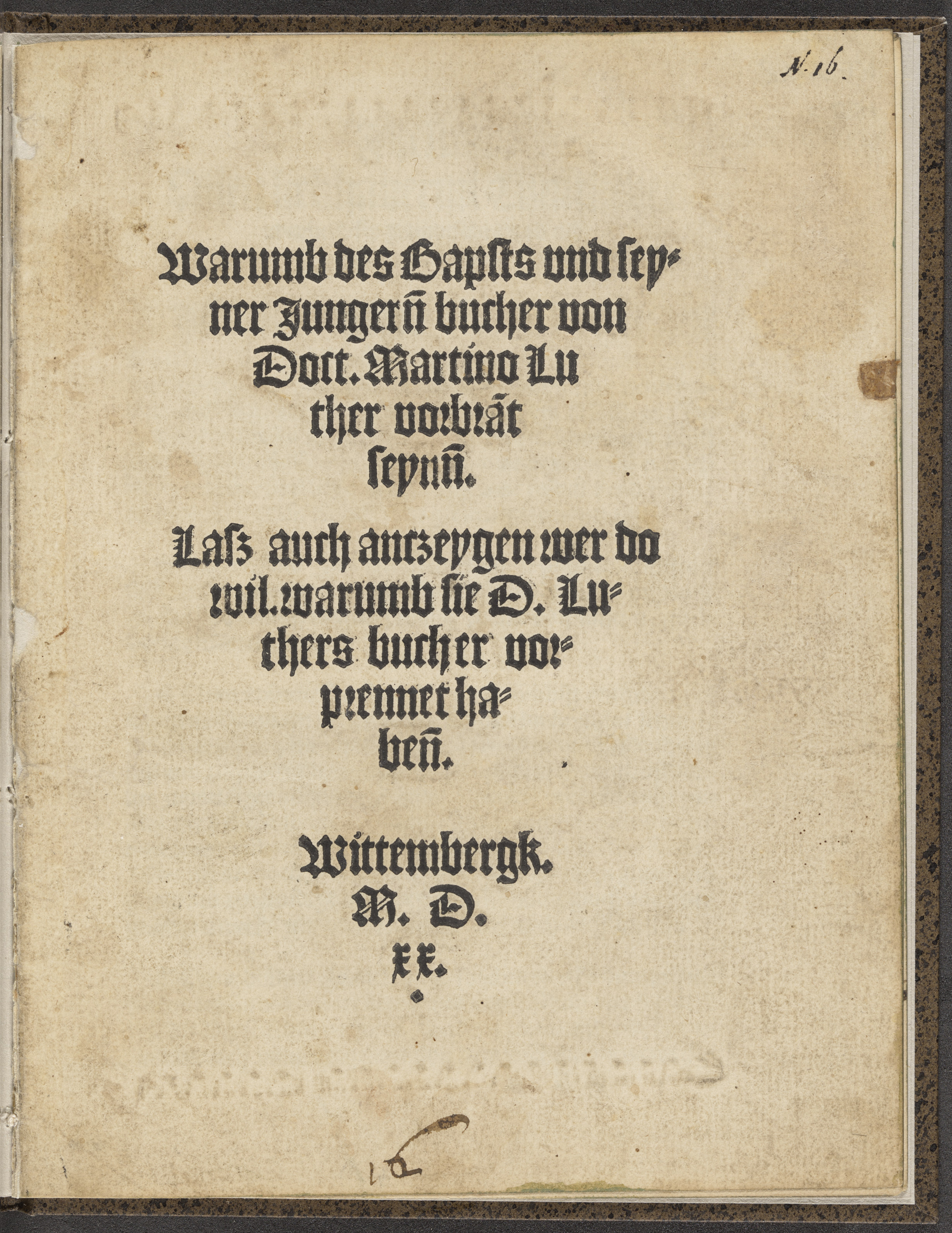
TextWarumb des Bapsts vnd seyner Jungern[n] Bucher von Doct. Martino Luther vorbra[n]t seynn[n] : lass auch anczeygen wer do wil, warumb sie D. Luthers Bucher vorprennet haben[n]
Luther, Martin, 1483-1546Summary: When the time stipulated in the Pope's bull of excommunication had elapsed on December 10, 1520, Luther and some of his students burned the bull and copies of the canon law. This pamphlet details their reasons for doing so. This is the third (of three) printings of the first edition.Summary: When the time stipulated in the Pope's bull of excommunication had elapsed on December 10, 1520, Luther and some of his students burned the bull and copies of the canon law. This pamphlet details their reasons for doing so. This is the third (of three) printings of the first edition.