Search
2 resources
2 items
Subject
Fasting
-
 Text
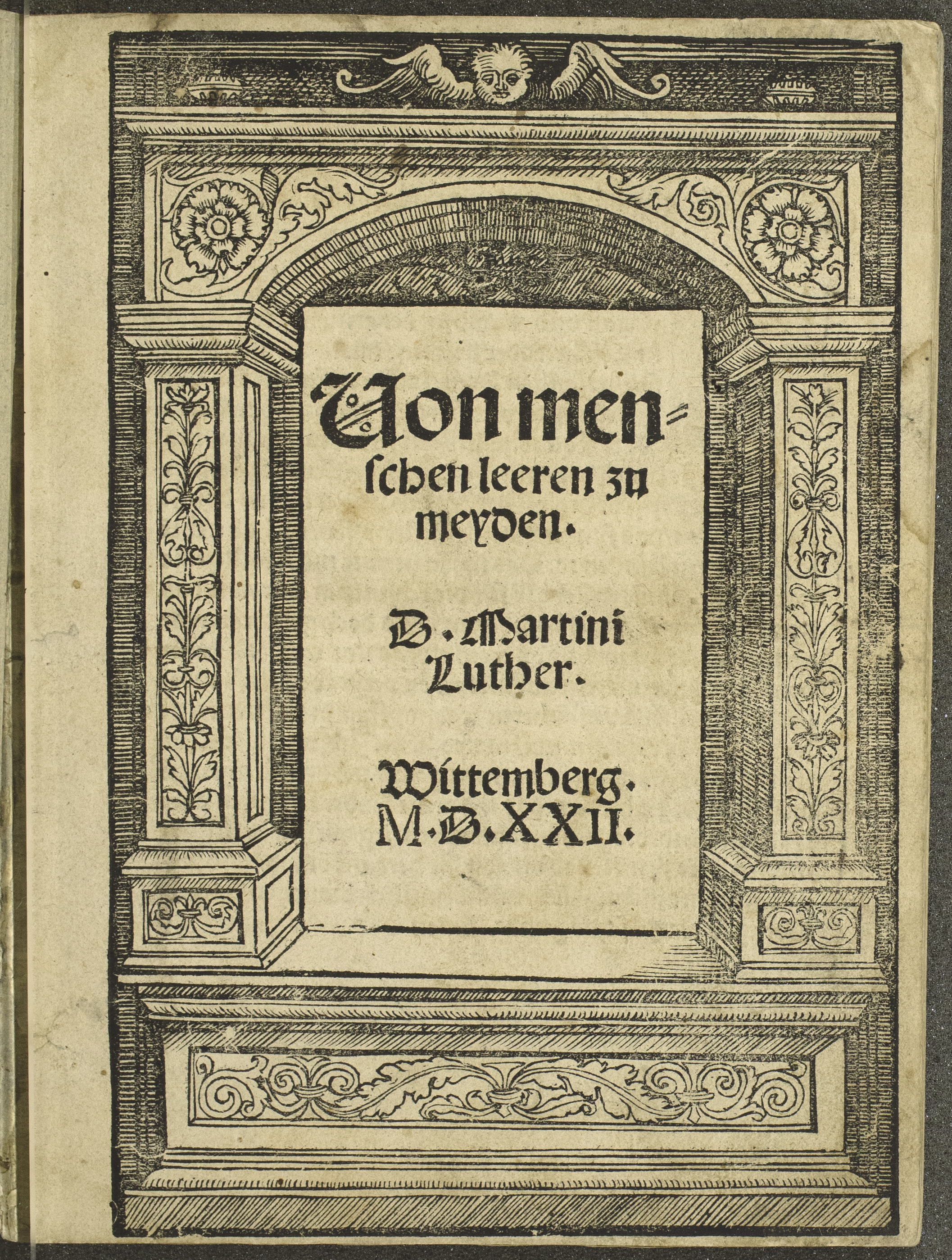
TextUon Menschen leeren zu meyden
Luther, Martin, 1483-1546Summary: First published earlier the same year, Luther's pamphlet Defense of the doctrines of men was one of Luther's most widely read writings with approximately twenty editions appearing in the years 1522 and 1523. Written in honor of Hans von Belepsch who had hosted Luther at the Wartburg as the reformer translated the New Testament. Luther argues that church teachings that have no basis in the Bible, in particular fasting and celibacy, are illegitimate and are to be avoided.Summary: First published earlier the same year, Luther's pamphlet Defense of the doctrines of men was one of Luther's most widely read writings with approximately twenty editions appearing in the years 1522 and 1523. Written in honor of Hans von Belepsch who had hosted Luther at the Wartburg as the reformer translated the New Testament. Luther argues that church teachings that have no basis in the Bible, in particular fasting and celibacy, are illegitimate and are to be avoided. -
 Text
TextVon Mensche[n] Leren zu[o] meiden
Luther, Martin, 1483-1546Summary: Luther addresses the monastic rules of fasting, obedience and celibacy, arguing that they have no foundation in scripture and that a transgression of these rules is therefore no sin. At the same time, Luther warns that a transgression of monastic rules in itself is by no means a sign of faith or internalized piety.Summary: Luther addresses the monastic rules of fasting, obedience and celibacy, arguing that they have no foundation in scripture and that a transgression of these rules is therefore no sin. At the same time, Luther warns that a transgression of monastic rules in itself is by no means a sign of faith or internalized piety.