Richard C. Kessler Reformation Collection
The Richard C. Kessler Reformation Collection was established in 1987, when Richard and Martha Kessler donated their private collection of Reformation imprints and manuscripts to Emory University. These materials were combined with Reformation holdings at the Pitts Theology Library, and an effort was launched to enlarge and sustain this collection in the years to come. An advisory committee of Lutheran laypersons and clergy and of Candler School of Theology faculty and administrators oversees the nurture of the collection and its programs. The Reformation Notes newsletter provides semiannual updates on the growth of the collection, and the Reformation Day at Emory program of music and lectures each October celebrates the collection and its contributions to music, history, and theology.
In the sixteenth century the social and theological movements of central Europe, known collectively as the Reformation, critically shaped religion, law, education and other institutions in the West, and their long shadow has extended even to the present. The purpose of the Kessler Collection is to document these changes by collecting print and manuscript materials down to 1570 by Martin Luther (1483-1546) and those whom he influenced or engaged in debate. In this way historians and theologians will be able to hear the full range of voices that were raised in this dynamic period.
The holdings of the collection now exceed 4,000 items, a mark approximated by only two other libraries in North America; no American library approaches the Kessler Collection's 1,000+ publications by Luther himself.
-
 Text
TextDisticha de uita et praecipuis rebus gestis uiri Dei et...
Stoltz, Johann, circa 1514-1556Twenty distichs (couplets) inspired by important events in the life of Martin Luther. The couplets, in Latin, were composed ca. 1550 and are written on paper. The author's name is found at the end of the piece as is his dedication of it to Johann Kestner. Pencil markings of a later owner are located in the upper left corner of the first page. Originally part of a signature, each of the two leaves has been encapsulated in Mylar for protection.Twenty distichs (couplets) inspired by important events in the life of Martin Luther. The couplets, in Latin, were composed ca. 1550 and are written on paper. The author's name is found at the end of the piece as is his dedication of it to Johann Kestner. Pencil markings of a later owner are located in the upper left corner of the first page. Originally part of a signature, each of the two leaves has been encapsulated in Mylar for protection. -
 Text
TextLetter to Frederick III, Elector of Saxony, ca. 1512
A handwritten letter, in German, addressed to Samsons Schoffler zu Seyda and Mathes Pustewald, concerning the parish of Neuerdorff, and the death of the Rev. Wust.A handwritten letter, in German, addressed to Samsons Schoffler zu Seyda and Mathes Pustewald, concerning the parish of Neuerdorff, and the death of the Rev. Wust. -
 Text
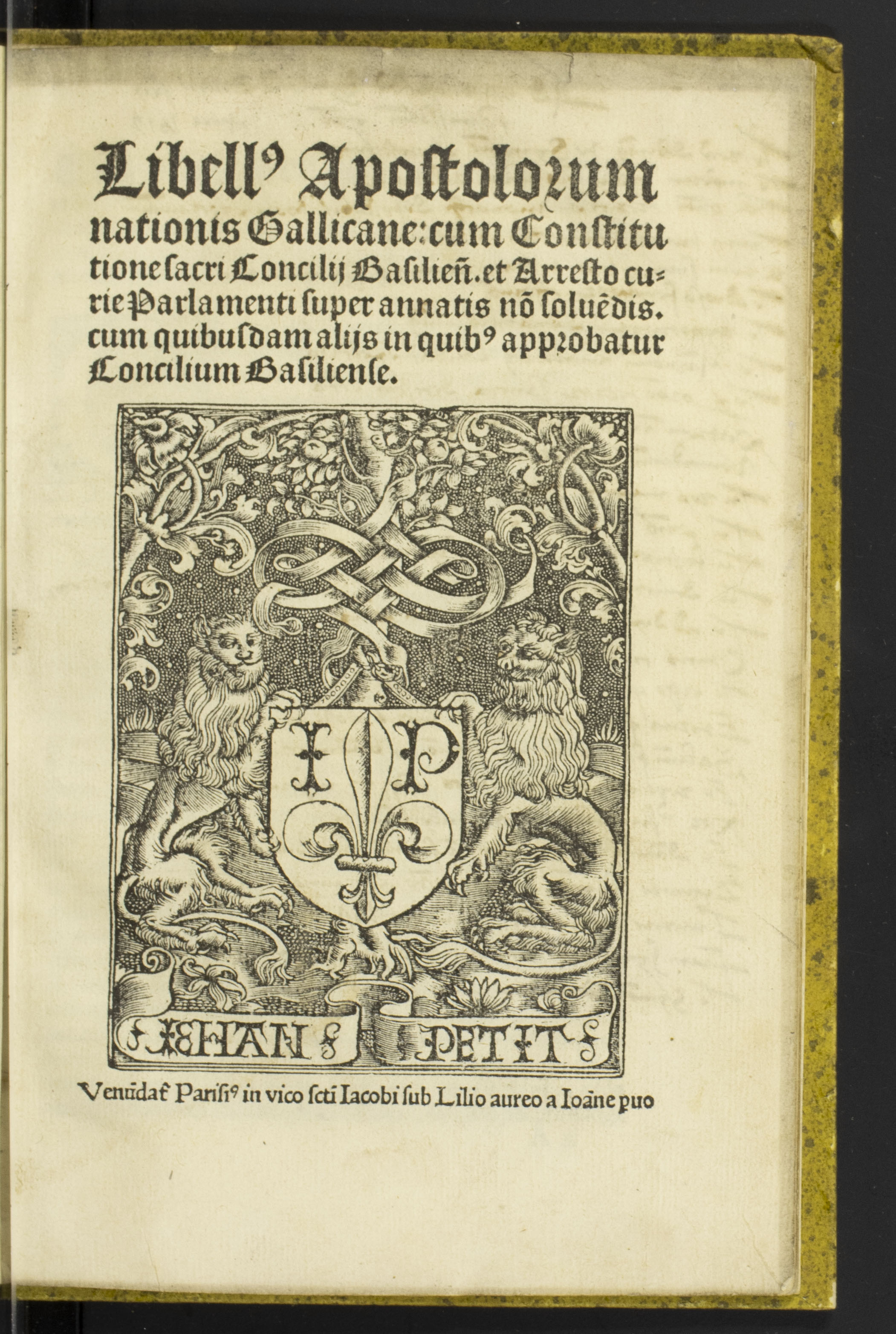
TextLibell[us] Apostolorum nationis Gallicane: cum Constitutione Sacri Concilij Basilien[sis] et arresto curie parlamenti supper annatis no[n] solve[n]dis, cum quibusdam alijs in quib[us] approbatur Concilium Basiliense.
Summary: The Second Council of Pisa (1511-1512), also known as the Conciliabulum of Pisa, was a French initiative to limit the power of Pope Julius II and to strengthen the power of the conciliarists. Pope Julius II condemned the meeting and in response convoked the Fifth Lateran Council, which secured papal authority over conciliarism. This is the first edition of a record of the council published by Jean Petit for a French readership.Summary: The Second Council of Pisa (1511-1512), also known as the Conciliabulum of Pisa, was a French initiative to limit the power of Pope Julius II and to strengthen the power of the conciliarists. Pope Julius II condemned the meeting and in response convoked the Fifth Lateran Council, which secured papal authority over conciliarism. This is the first edition of a record of the council published by Jean Petit for a French readership.
