A woodcut depicting a skeleton (= Death) taking a bishop by the hand and leading him from his pasture and flock. The Bishop holds a crosier, while an hourglass rests in the bottom left corner. The woodcut is accompanied by verses from Matthew 26 and Mark 14 translated into French (top) and then reformatted into verse (bottom).
A woodcut depicting a skeleton (= Death) taking a bishop by the hand and leading him from his pasture and flock. The Bishop holds a crosier, while an hourglass rests in the bottom left corner. The woodcut is accompanied by verses from Matthew 26 and Mark 14 translated into French (top) and then reformatted into verse (bottom).
A woodcut depicting a skeleton (= Death) leading a blind man by his cane. The woodcut is accompanied by a verse from Matthew 15 translated into French (top) and then reformatted into verse (bottom).
A woodcut depicting a skeleton (= Death) leading a blind man by his cane. The woodcut is accompanied by a verse from Matthew 15 translated into French (top) and then reformatted into verse (bottom).
A woodcut depicting a canon holding an hourglass as he is led into a building by a skeleton, representing Death. The woodcut is accompanied by a verse from Matthew 26 translated into French (top) and then reformatted into verse (bottom).
A woodcut depicting a canon holding an hourglass as he is led into a building by a skeleton, representing Death. The woodcut is accompanied by a verse from Matthew 26 translated into French (top) and then reformatted into verse (bottom).
A woodcut of Christ crucified with the Virgin Mary (left) and John the Evangelist (right). A skull sits at the base of the cross and the inscription INRI appears above it.
A woodcut of Christ crucified with the Virgin Mary (left) and John the Evangelist (right). A skull sits at the base of the cross and the inscription INRI appears above it.
A woodcut depicting a skeleton (= Death) fighting a demon over one of three gamblers at a table. The woodcut is accompanied by a verse from Matthew 16 translated into French (top) and then reformatted into verse (bottom).
A woodcut depicting a skeleton (= Death) fighting a demon over one of three gamblers at a table. The woodcut is accompanied by a verse from Matthew 16 translated into French (top) and then reformatted into verse (bottom).
A woodcut depicting Jesus siting on the earth, surrounded by a cloud of witnesses, for the last judgment. The woodcut is accompanied by verses from Romans 14 and Matthew 28 translated into French (top) and then reformatted into verse (bottom).
A woodcut depicting Jesus siting on the earth, surrounded by a cloud of witnesses, for the last judgment. The woodcut is accompanied by verses from Romans 14 and Matthew 28 translated into French (top) and then reformatted into verse (bottom).
A woodcut depicting a skeleton (= Death) tugging at a fleeing peddler. A lion stands at the feet of the peddler, looking away. The woodcut is accompanied by a verse from Matthew 11 translated into French (top) and then reformatted into verse (bottom).
A woodcut depicting a skeleton (= Death) tugging at a fleeing peddler. A lion stands at the feet of the peddler, looking away. The woodcut is accompanied by a verse from Matthew 11 translated into French (top) and then reformatted into verse (bottom).
Evoking the scene of Jesus' baptism, this linocut work depicts a man holding a shell above a boy who kneels beside a river. Two men and a woman look on as a dove descends from the curling clouds gathered over the mountainous background.
Evoking the scene of Jesus' baptism, this linocut work depicts a man holding a shell above a boy who kneels beside a river. Two men and a woman look on as a dove descends from the curling clouds gathered over the mountainous background.
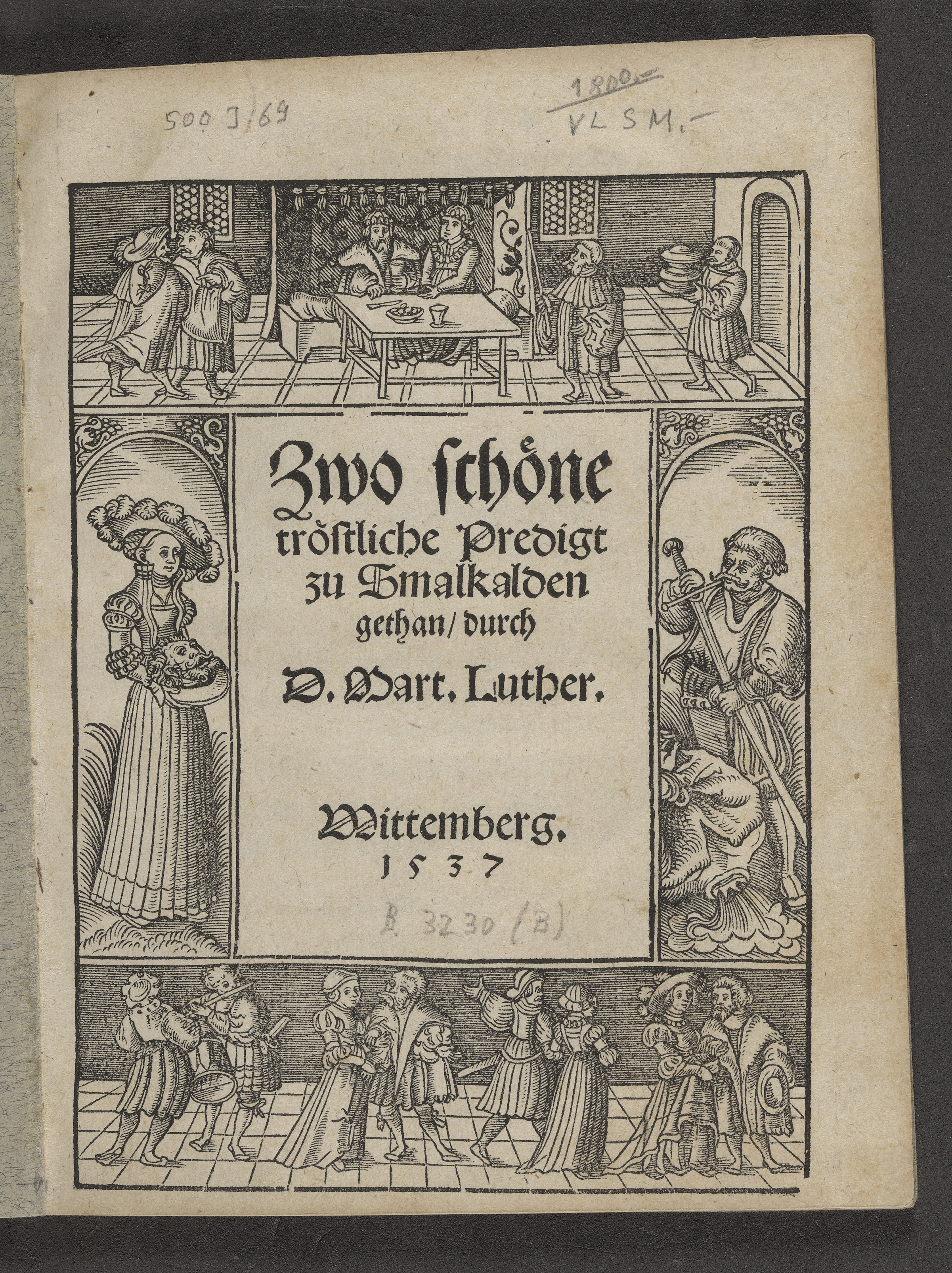
Summary: One sermon expanded by G. Rörer into two, preached February 18, 1537, on text: Matthew IV, 1-11. The subjects are Temptation, and Last Things.
Summary: One sermon expanded by G. Rörer into two, preached February 18, 1537, on text: Matthew IV, 1-11. The subjects are Temptation, and Last Things.
An eight panel folding screen supporting calligraphy of an interpretation of the Eight Beatitudes (Matthew 5) in Chinese. The artist, Rev. Eun-deok Choi, has signed the work with his sobriquet, 義山 (의산; Righteous Mountain). The artist, Rev. Choi, was an acquaintance of the former President of Methodist Theological University in Seoul, Bong-bae Park, and may have originally gifted the work to him. Park, in turn, was a friend and colleague of former Emory University President and US Ambassador to Korea, James T. Laney, and possibly gifted the work to him.
An eight panel folding screen supporting calligraphy of an interpretation of the Eight Beatitudes (Matthew 5) in Chinese. The artist, Rev. Eun-deok Choi, has signed the work with his sobriquet, 義山 (의산; Righteous Mountain). The artist, Rev. Choi, was an acquaintance of the former President of Methodist Theological University in Seoul, Bong-bae Park, and may have originally gifted the work to him. Park, in turn, was a friend and colleague of former Emory University President and US Ambassador to Korea, James T. Laney, and possibly gifted the work to him.
 Still image
 Still image
 Still image
 Still image
 Still image
 Still image
 Still image
 Text
Text Still image
 Text
Text Text
Text Text
Text