Search
41 resources
41 items
Subject
Doctrines
-
![The digital edition of an introduction to and translation of Ulrich Zwingli's "Actio[n] oder Brauch des Nachtmals, Gedechtnus, oder Dancksagung Christi wie sy auff Osteren zu[o] Zürich angehebt wirt, jm Jar alls man zalt M.D. XXV," originally published by Hans Hager in Zürich, Switzerland in 1525. The original text is one of two edition published in 1525 of Zwingli's reform of the mass on the basis of a "biblically based" liturgy.](https://digital.pitts.emory.edu/files/large/P_CSTA005_BD002_300000449107/P_CSTA005_BD002_2016_300000449107_WEST.jpg) Text
TextHuldrych Zwingli: The Implementation of the Lord's Supper
Zwingli, Ulrich, 1484-1531The digital edition of an introduction to and translation of Ulrich Zwingli's "Actio[n] oder Brauch des Nachtmals, Gedechtnus, oder Dancksagung Christi wie sy auff Osteren zu[o] Zürich angehebt wirt, jm Jar alls man zalt M.D. XXV," originally published by Hans Hager in Zürich, Switzerland in 1525. The original text is one of two edition published in 1525 of Zwingli's reform of the mass on the basis of a "biblically based" liturgy.The digital edition of an introduction to and translation of Ulrich Zwingli's "Actio[n] oder Brauch des Nachtmals, Gedechtnus, oder Dancksagung Christi wie sy auff Osteren zu[o] Zürich angehebt wirt, jm Jar alls man zalt M.D. XXV," originally published by Hans Hager in Zürich, Switzerland in 1525. The original text is one of two edition published in 1525 of Zwingli's reform of the mass on the basis of a "biblically based" liturgy. -
 Text
TextLoci communes seu hypotyposes theologicae
Melanchthon, Philipp, 1497-1560Summary: A 1525 printing of this most famous of all Melanchthon's theological works, first published in Wittenberg in 1521. The Loci Communes represent the most comrehensive systematic theology of the Lutheran reformation. Melanchthon continued to revise this work throughout his life.Summary: A 1525 printing of this most famous of all Melanchthon's theological works, first published in Wittenberg in 1521. The Loci Communes represent the most comrehensive systematic theology of the Lutheran reformation. Melanchthon continued to revise this work throughout his life. -
 Text
TextMargarita theologica, continens praecipuos locos doctrinae Christianae, per quaestiones breuiter & ordine explicatos : Omnibus pastoribus, verbi praeconibus, & ecclesiae ministris summè utilis & necessaria
Spangenberg, JohannSummary: Popular doctrinal theology by the Lutheran reformer Johann Spangenberg, based on Melanchthon's Loci Communes, and written for use by pastors and ministers. The work was first published in 1540 and was re-issued and translated numerous times.Summary: Popular doctrinal theology by the Lutheran reformer Johann Spangenberg, based on Melanchthon's Loci Communes, and written for use by pastors and ministers. The work was first published in 1540 and was re-issued and translated numerous times. -
 Text
TextMultiloquus de co[n]citata ex dictis Lutheri seditio[n]e, : ad Inuictissimu[m] & optimu[m] Imperatore[m] ac multo[rum] regno[rum] Rege[m] inclitu[m] etc[etera]. Carolu[m] S.
Dungersheim, Hieronymus, 1465-1540Summary: H. Dungersheim had had a long academic career before the Reformation started. He proved to be a determined foe of Luther. In this rare book he presents "over a hundred" citations from Luther's books written before the Peasants' War (1525) to prove that Luther was a teacher of sedition and tumult.Summary: H. Dungersheim had had a long academic career before the Reformation started. He proved to be a determined foe of Luther. In this rare book he presents "over a hundred" citations from Luther's books written before the Peasants' War (1525) to prove that Luther was a teacher of sedition and tumult. -
 Text
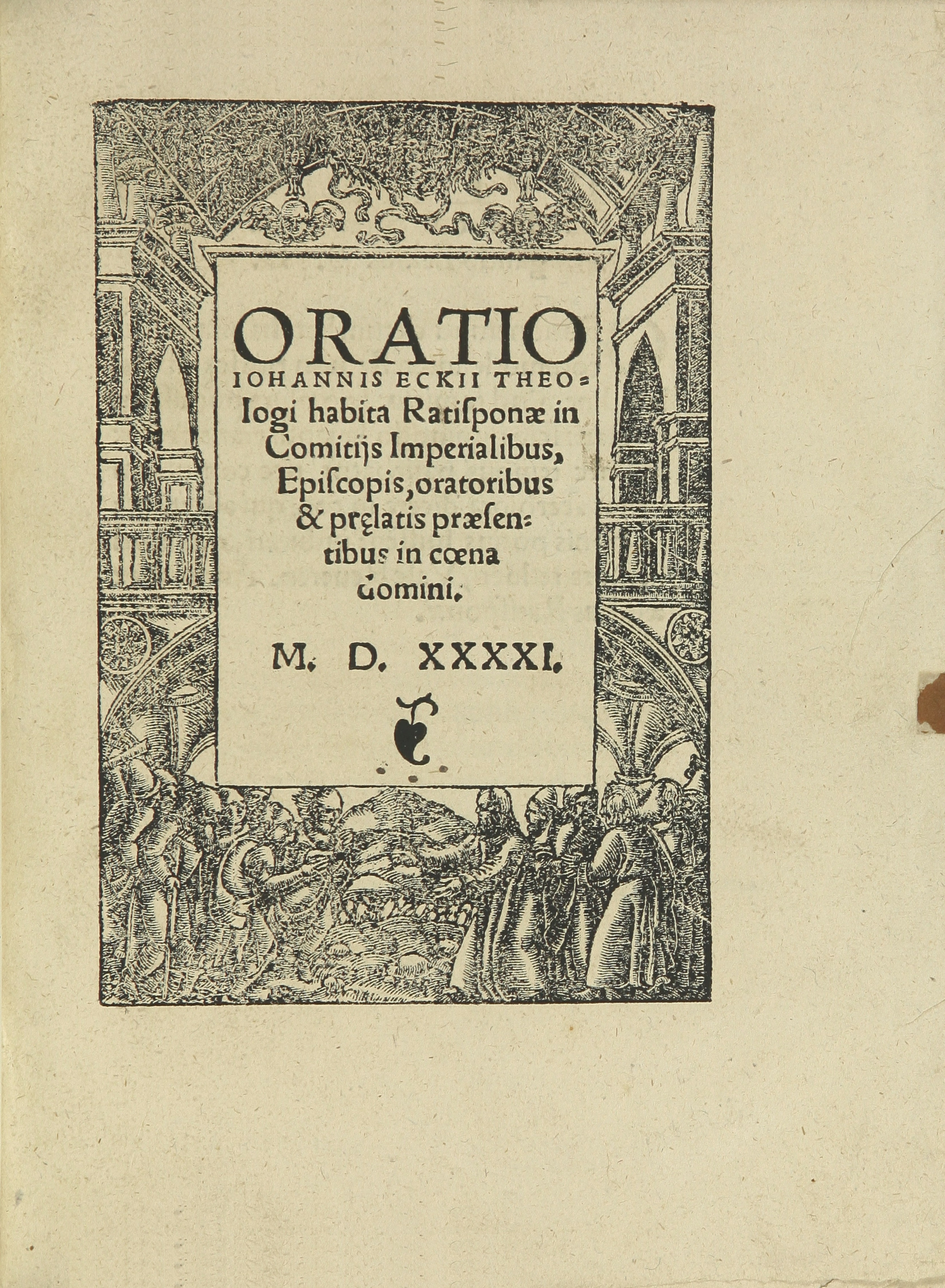
TextOratio
Eck, Johann, 1486-1543Summary: This is the first printing of Eck's speech to the Diet of Regensburg on April 5, 1541, defining the Catholic understanding of the Lord's Supper. The Diet of Regensburg proved to be Eck's last appearance as a major theological political leader, for his health declined and he could no longer bear the weight of these grueling encounters.Summary: This is the first printing of Eck's speech to the Diet of Regensburg on April 5, 1541, defining the Catholic understanding of the Lord's Supper. The Diet of Regensburg proved to be Eck's last appearance as a major theological political leader, for his health declined and he could no longer bear the weight of these grueling encounters. -
 Text
TextParuus catechismus pro pueris in schola
Luther, Martin, 1483-1546Summary: Latin version of Martin Luther's Small Catechism, translated by Johannes SauermannSummary: Latin version of Martin Luther's Small Catechism, translated by Johannes Sauermann -
 Text
TextQuaedam scripta theologorum VVirtembergicorum & Victorini Strigelij unde liquet, quid illi de ipsius papistica synergia sentiant
Strigel, Victorinus, 1524-1569Summary: Collection of documents issued by theologians in the Duchy of Württemberg and Victorinus Strigel concerning Strigel's Psalms commentary and his position in the synergistic controversy. Strigel supported the Philippist position that human will contributes to salvation, an idea that was rejected by the gnesio-Lutherans and by most of the theologians in Württemberg.Summary: Collection of documents issued by theologians in the Duchy of Württemberg and Victorinus Strigel concerning Strigel's Psalms commentary and his position in the synergistic controversy. Strigel supported the Philippist position that human will contributes to salvation, an idea that was rejected by the gnesio-Lutherans and by most of the theologians in Württemberg. -
 Text
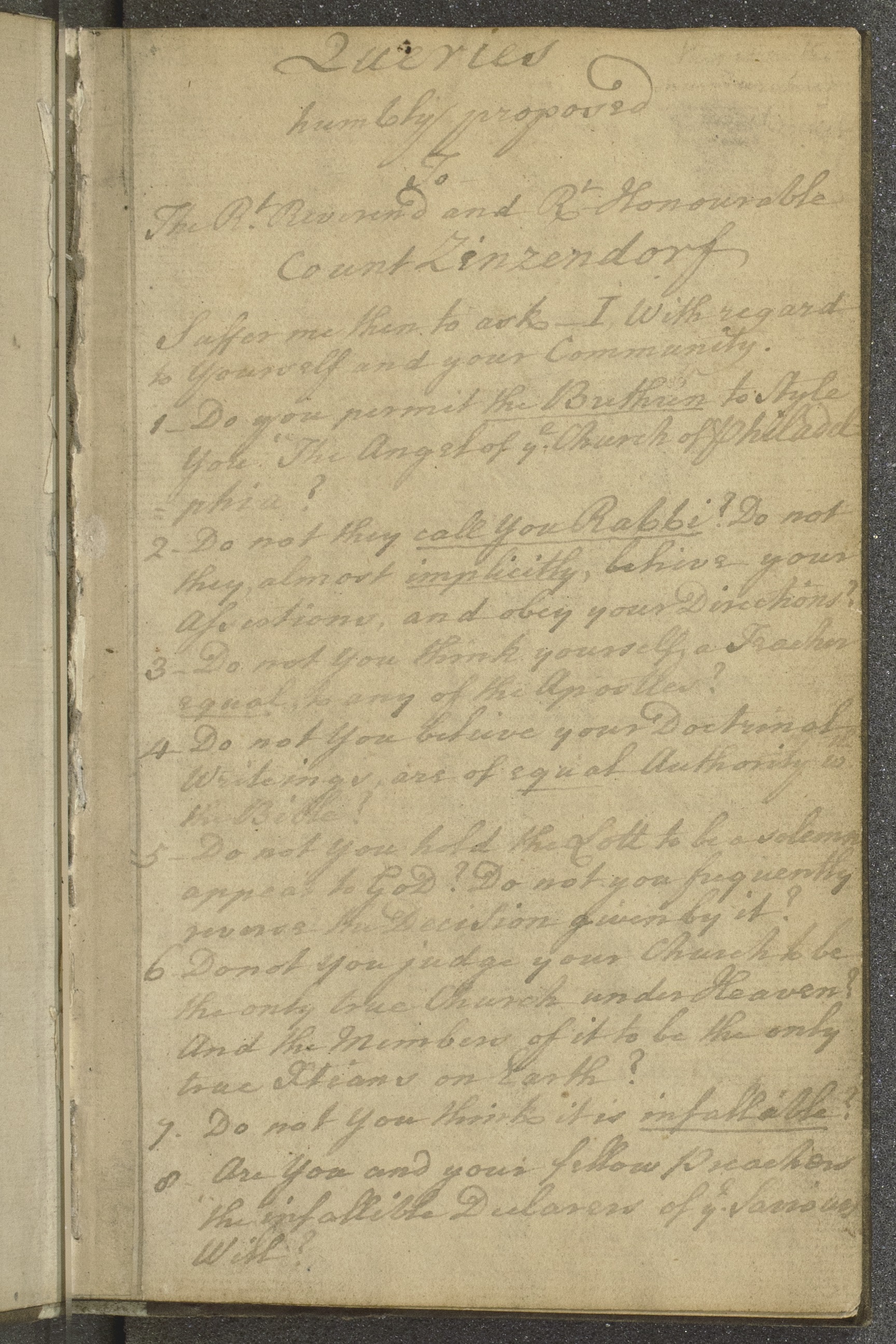
TextQueries humbly proposed to the Rt. Reverend and Rt. Honourable Count Zinzendorf
Bennet, John, 1714-1759Summary: A set of questions written by Bennet, here referred to as queries, posed to Count Niclaus Ludwig graf von Zinzendorf, the founder of the Moravian Church.Summary: A set of questions written by Bennet, here referred to as queries, posed to Count Niclaus Ludwig graf von Zinzendorf, the founder of the Moravian Church. -
 Text
TextReplica F. Sylvestri Prieriat[is] : sacri Palatii Apostolici Magistri, ad F. Martinum Luther Ordinis Eremitaru[m] ; Martinus Luther, optimo lectori salutem ...
Mazzolini, Silvestro, da Prierio, 1456?-1527?Summary: When Luther received the replies of S. Mazzolini, the first man to take up the cudgels against Luther, he found the best course of reply to be a reprinting with notes of Mazzolini's inept rejoinders. Even the Catholics had to admit that Mazzolini's answers simply did not meet Luther's objections. This is the second printing of the work.Summary: When Luther received the replies of S. Mazzolini, the first man to take up the cudgels against Luther, he found the best course of reply to be a reprinting with notes of Mazzolini's inept rejoinders. Even the Catholics had to admit that Mazzolini's answers simply did not meet Luther's objections. This is the second printing of the work. -
 Text
TextReplica contra periculosa scripta post Scrutinium diuine scripture iam pride[m] emissum emanata. ...
Schatzgeyer, Kaspar, 1463 or 1464-1527Summary: Casper Schatzgeyer, or Sasgerus, was a Franciscan friar who became provincial of the Province of Strasbourg in 1517. He wrote about 23 books on theological topics and against members of other orders and sects, notably J. von Staupitz and A. Osiander. This book, however, criticizes two of Luther's tracts: On Monastic Vows and On the Abolition of the Private Mass. Luther persuaded Johann Briessmann to reply, and Schatzgeyer replied to Briessmann. This is the work's first printing.Summary: Casper Schatzgeyer, or Sasgerus, was a Franciscan friar who became provincial of the Province of Strasbourg in 1517. He wrote about 23 books on theological topics and against members of other orders and sects, notably J. von Staupitz and A. Osiander. This book, however, criticizes two of Luther's tracts: On Monastic Vows and On the Abolition of the Private Mass. Luther persuaded Johann Briessmann to reply, and Schatzgeyer replied to Briessmann. This is the work's first printing. -
 Text
TextResolutio[n]es disputationum
Luther, Martin, 1483-1546Summary: This is Luther's final authorized edition of his Ninety-five Theses in book form with his own commentaries. The edition published by Rhau-Grunemberg had been so full of errors, that Luther gave the printing of this edition to Melchior Lotter in Leipzig.Summary: This is Luther's final authorized edition of his Ninety-five Theses in book form with his own commentaries. The edition published by Rhau-Grunemberg had been so full of errors, that Luther gave the printing of this edition to Melchior Lotter in Leipzig. -
 Text
TextResponsio Exulum Turingicorum Ad Inuectiuam D. Iohannis Stosselii : Quam Mense Octobri M.D.LXV. Emisit
Summary: Response singed by 30 gnesio-Luther theologians, who had been expelled from the city of Jena.Summary: Response singed by 30 gnesio-Luther theologians, who had been expelled from the city of Jena. -
 Text
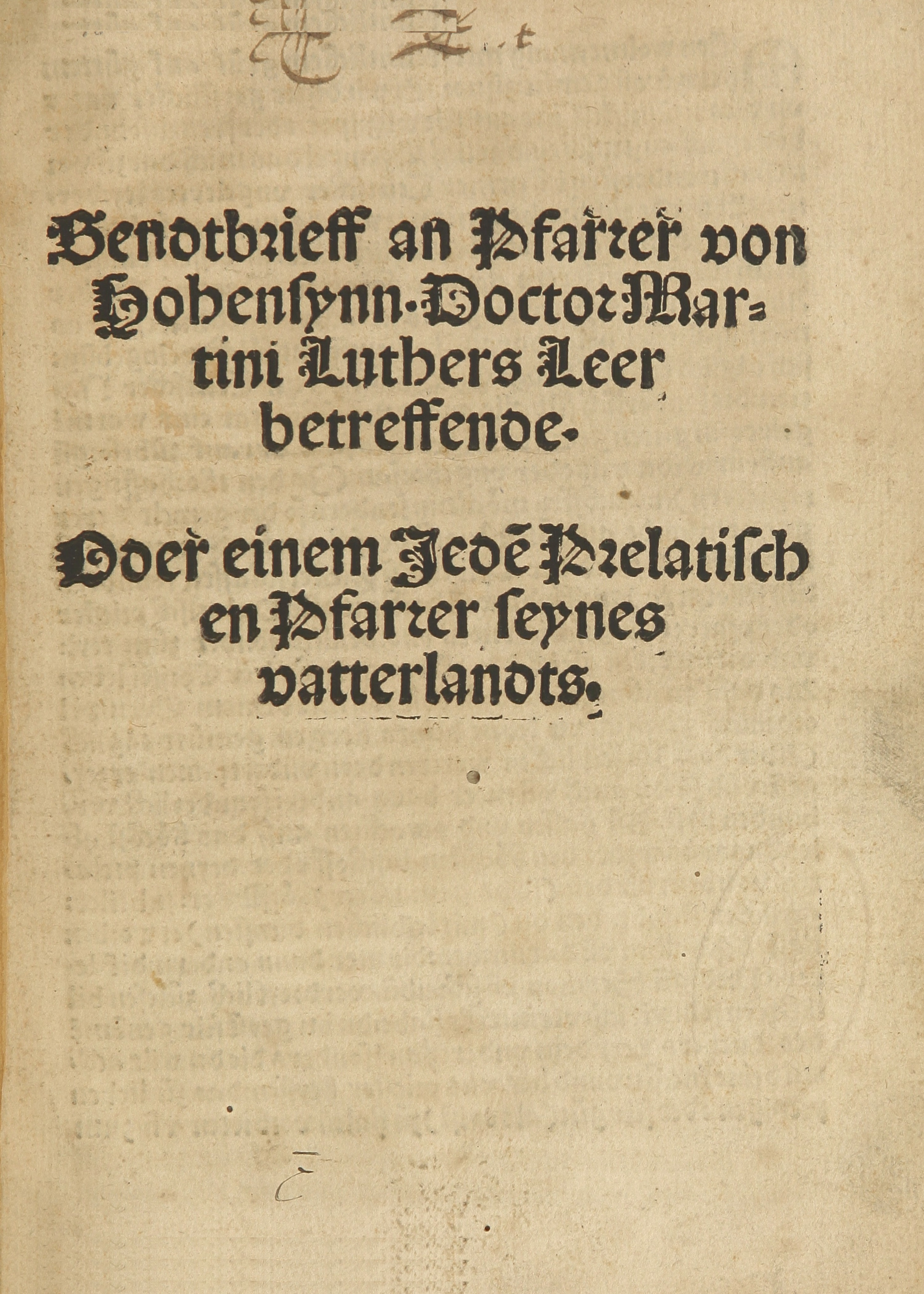
TextSendtbrieff an Pfarrer von Hohensynn. Doctor Martini Luthers Leer betreffende. Oder einem Jede[n] Prelatischen Pfarrer Seynes vaterlandes.
Summary: This is a Catholic pamphlet warning against Luther's errors. "Pastor Highmind" may be pseudonym or the name of a real Pastor von Hohensynn.Summary: This is a Catholic pamphlet warning against Luther's errors. "Pastor Highmind" may be pseudonym or the name of a real Pastor von Hohensynn. -
-
 Text
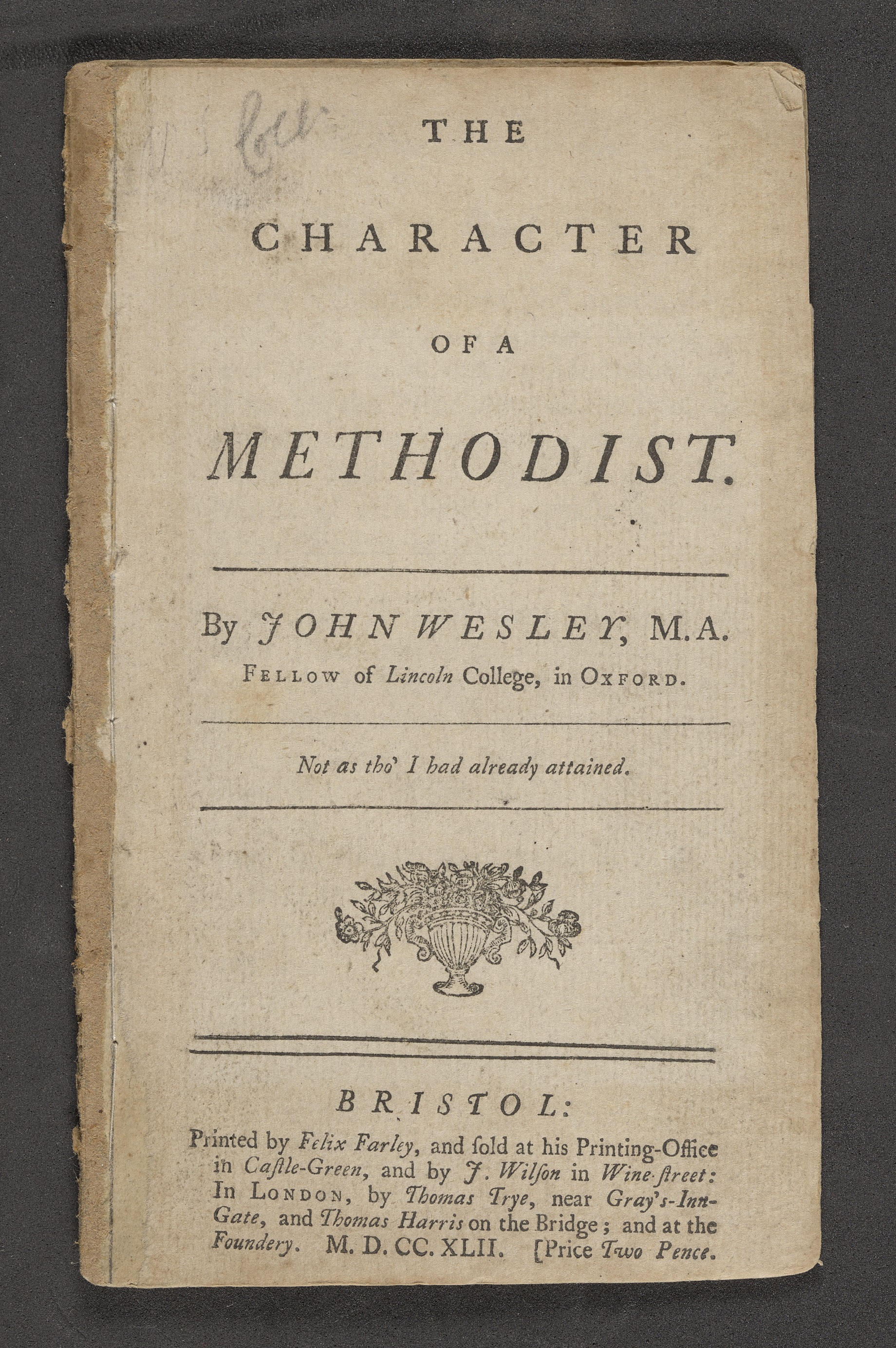
TextThe doctrines and discipline of the Methodist Episcopal Church in America
Methodist Episcopal ChurchSummary:Summary: -
 Text
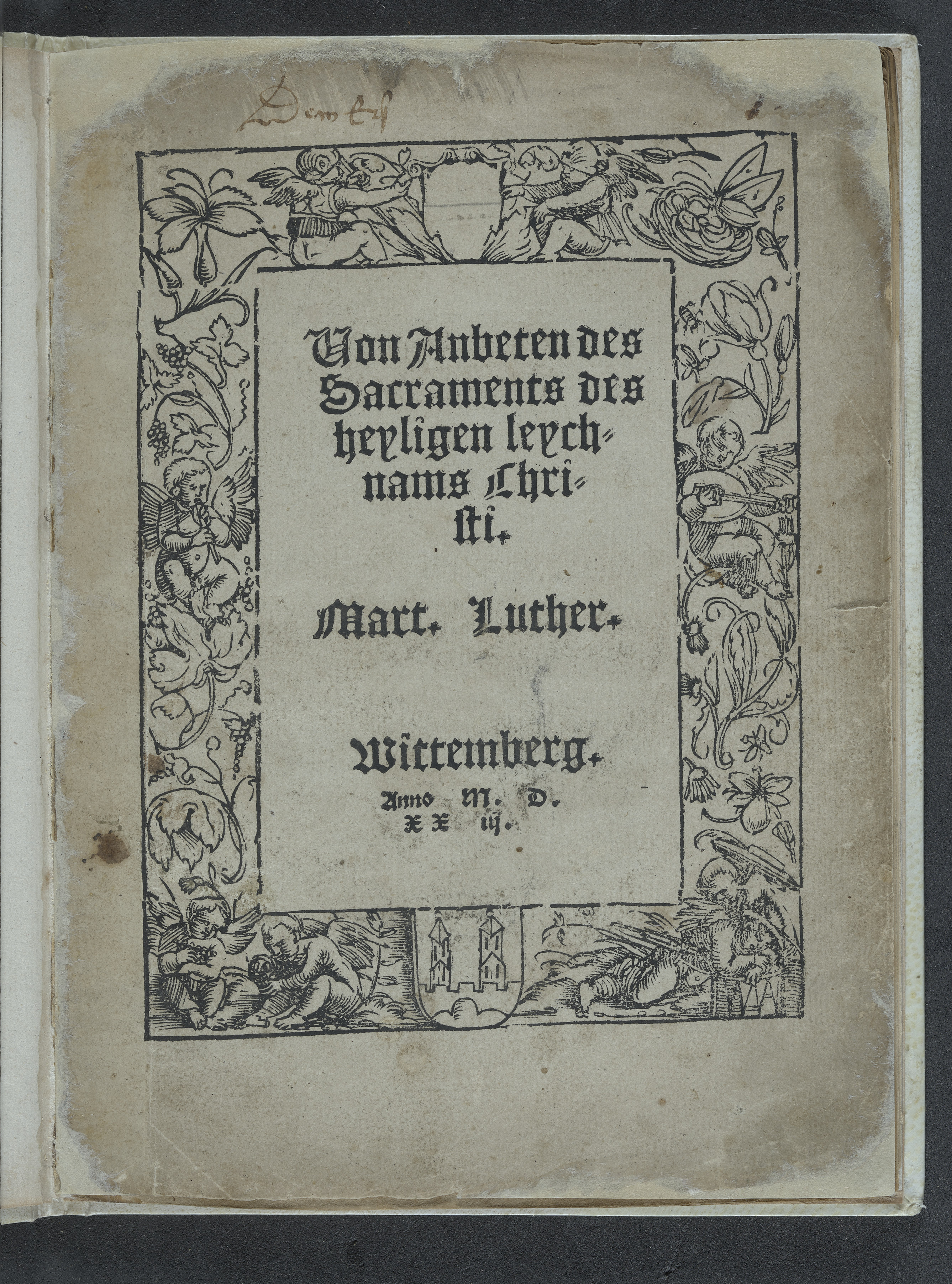
TextUon Anbeten des Sacraments des heyligen leychnams Christi
Luther, Martin, 1483-1546Summary: Second printing of Luther's response to a catechism of the Bohemian Brethren, with special attention to the Adoration of the Host, and to the Real Presence.Summary: Second printing of Luther's response to a catechism of the Bohemian Brethren, with special attention to the Adoration of the Host, and to the Real Presence. -
 Text
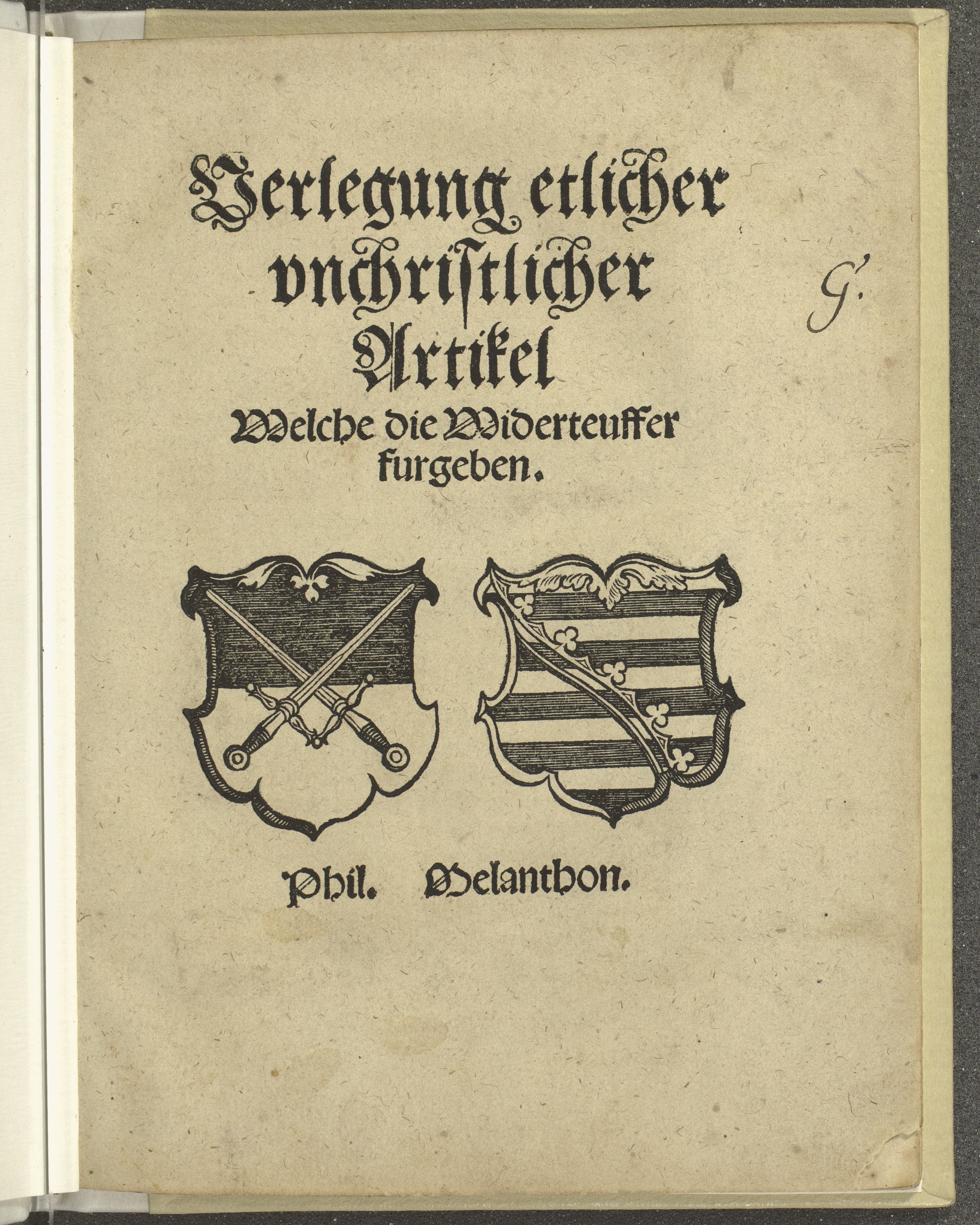
TextVerlegung etlicher vnchristlicher Artikel : Welche die widerteuffer furgeben
Melanchthon, Philipp, 1497-1560Summary: In this piece, Melanchthon sharply attacks the major Anabaptist theological points. This is the second printing of the tract.Summary: In this piece, Melanchthon sharply attacks the major Anabaptist theological points. This is the second printing of the tract. -
 Text
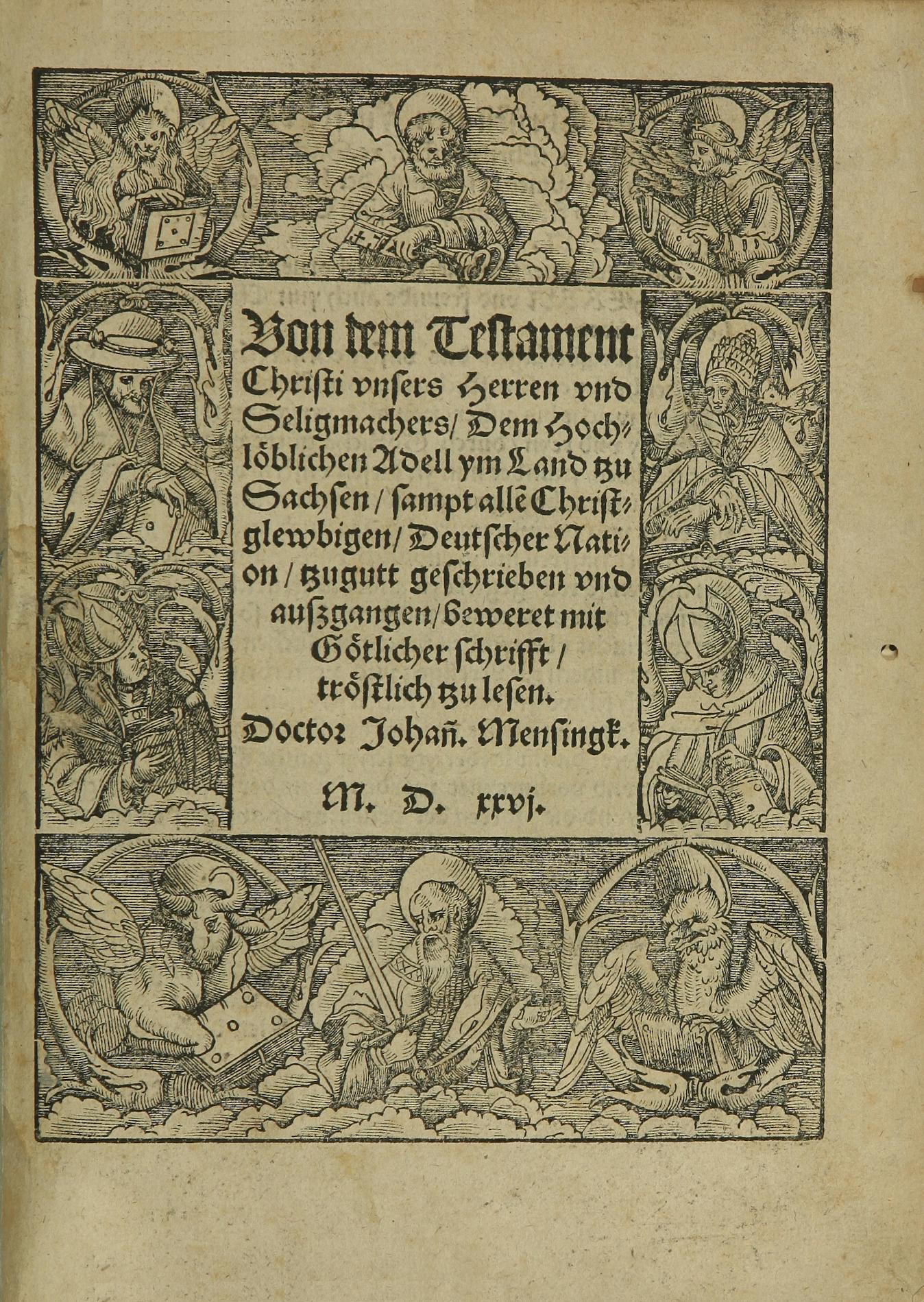
TextVon dem Testament Christi vnsers Herren vnd Seligmachers : Dem Hochlöblichen Adell ym landt zu Sachsen, sampt alle[n] Christglewbigen, Deutscher Nation, tzugutt geschriben vnd auszgangen, beweret mit Götlicher schrifft, tröstlich zu lesen
Mensing, Johannes, active 1495-1541Summary: J. Mensing was a Dominican opponent of Luther. Born in either Mageburg or Zutphen, Holland, he studied in Wittenberg and Frankfurt an der Oder, where he took his doctorate. He preached at Mageburg Cathedral 1522-1524 against the Reformers. In 1530, he was one of the Confutators of the Augsburg Confession. In 1534, he became provincial of the Dominicans, and in 1539, suffragan-bishop of Halberstedt. In this tract, Mensing defends Catholic interpretation of the Lord's Supper through references to scripture.Summary: J. Mensing was a Dominican opponent of Luther. Born in either Mageburg or Zutphen, Holland, he studied in Wittenberg and Frankfurt an der Oder, where he took his doctorate. He preached at Mageburg Cathedral 1522-1524 against the Reformers. In 1530, he was one of the Confutators of the Augsburg Confession. In 1534, he became provincial of the Dominicans, and in 1539, suffragan-bishop of Halberstedt. In this tract, Mensing defends Catholic interpretation of the Lord's Supper through references to scripture. -
 Text
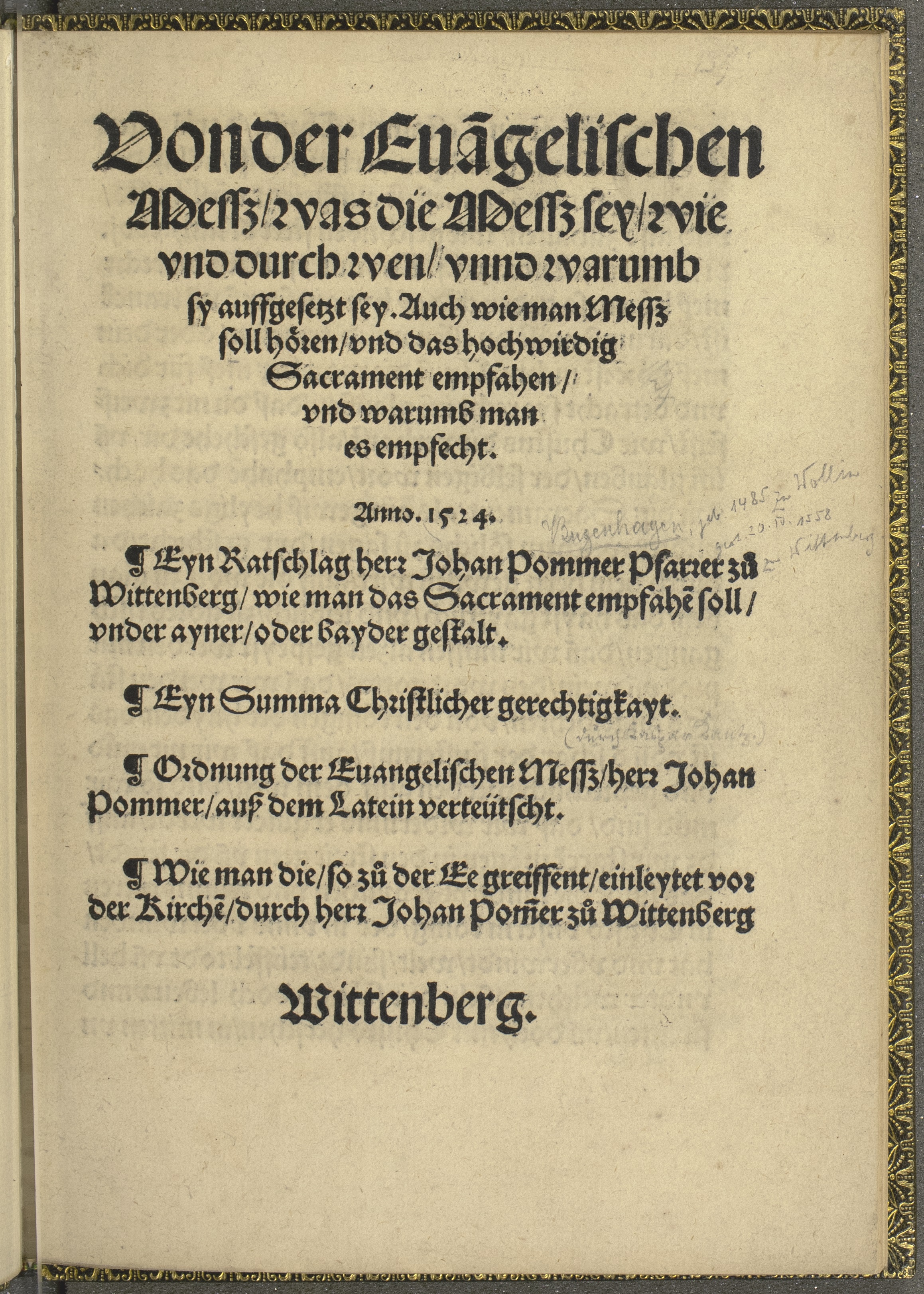
TextVon der Eua[n]gelischen Messz : was die Messz sey, wie vnd durch wen, vnnd warumb sy auffgesetzt sey. : Auch wie man Messz sol hören, vnd das hochwirdig sacrament empfahen, vnd warumb man es empfecht. Anno 1524
Bugenhagen, Johann, 1485-1558Summary: The term "Evangelical Mass" was coined by the Lutherans as their attempt to shop that it was they and not the Catholics who were the preservers of the true tradition of the Lord's Supper. Bugenhagen was, next to Melanchthon, Luther's closest ally in the Protestant struggle. This tract indicates which attributes the Lutherans believed to be necessary for worthy reception of the Lord's Supper.Summary: The term "Evangelical Mass" was coined by the Lutherans as their attempt to shop that it was they and not the Catholics who were the preservers of the true tradition of the Lord's Supper. Bugenhagen was, next to Melanchthon, Luther's closest ally in the Protestant struggle. This tract indicates which attributes the Lutherans believed to be necessary for worthy reception of the Lord's Supper. -
 Text
TextWax Rubbing of the Nestorian Tablet of Sian-fu
A wax rubbing of the tablet, done in sections on four different pieces of tissue paper. The inscription is primarily in Chinese, but there are several Syriac words; and there is a bilingual list of proper names in both languages.A wax rubbing of the tablet, done in sections on four different pieces of tissue paper. The inscription is primarily in Chinese, but there are several Syriac words; and there is a bilingual list of proper names in both languages.