Search
3378 resources
3378 items
Type
Text
-

-
 Text
Agnus Dei (Book of Hours)
A vellum leaf from a Dutch Book of Hours. The recto and verso have decorated borders; the recto contains a six-line historiated initial “S” depicting the head of Christ, the symbol of the “agnus dei” (lamb of God) in the margin, and two two-line decorated initials all in red and blue inks.A vellum leaf from a Dutch Book of Hours. The recto and verso have decorated borders; the recto contains a six-line historiated initial “S” depicting the head of Christ, the symbol of the “agnus dei” (lamb of God) in the margin, and two two-line decorated initials all in red and blue inks. -
 Text
Ain Beweysung, das der war Messias kom[m]en sey, des die Juden noch on Vrsach zůkünfftig sein, warte[n]
Samuel, MarochitanusSummary: German translation by Ludwig Hätzer of Epistola contra Judaeorum, thought to be written in Arabic by Samuel of Marocco, an apostate Jew at the beginning of the 11th century and translated into Latin by the Spanish Dominican Alphonsus Bonihominis in the 14th century and widely disseminated. Bonihominis is likely the real author of the work.Summary: German translation by Ludwig Hätzer of Epistola contra Judaeorum, thought to be written in Arabic by Samuel of Marocco, an apostate Jew at the beginning of the 11th century and translated into Latin by the Spanish Dominican Alphonsus Bonihominis in the 14th century and widely disseminated. Bonihominis is likely the real author of the work. -
 Text
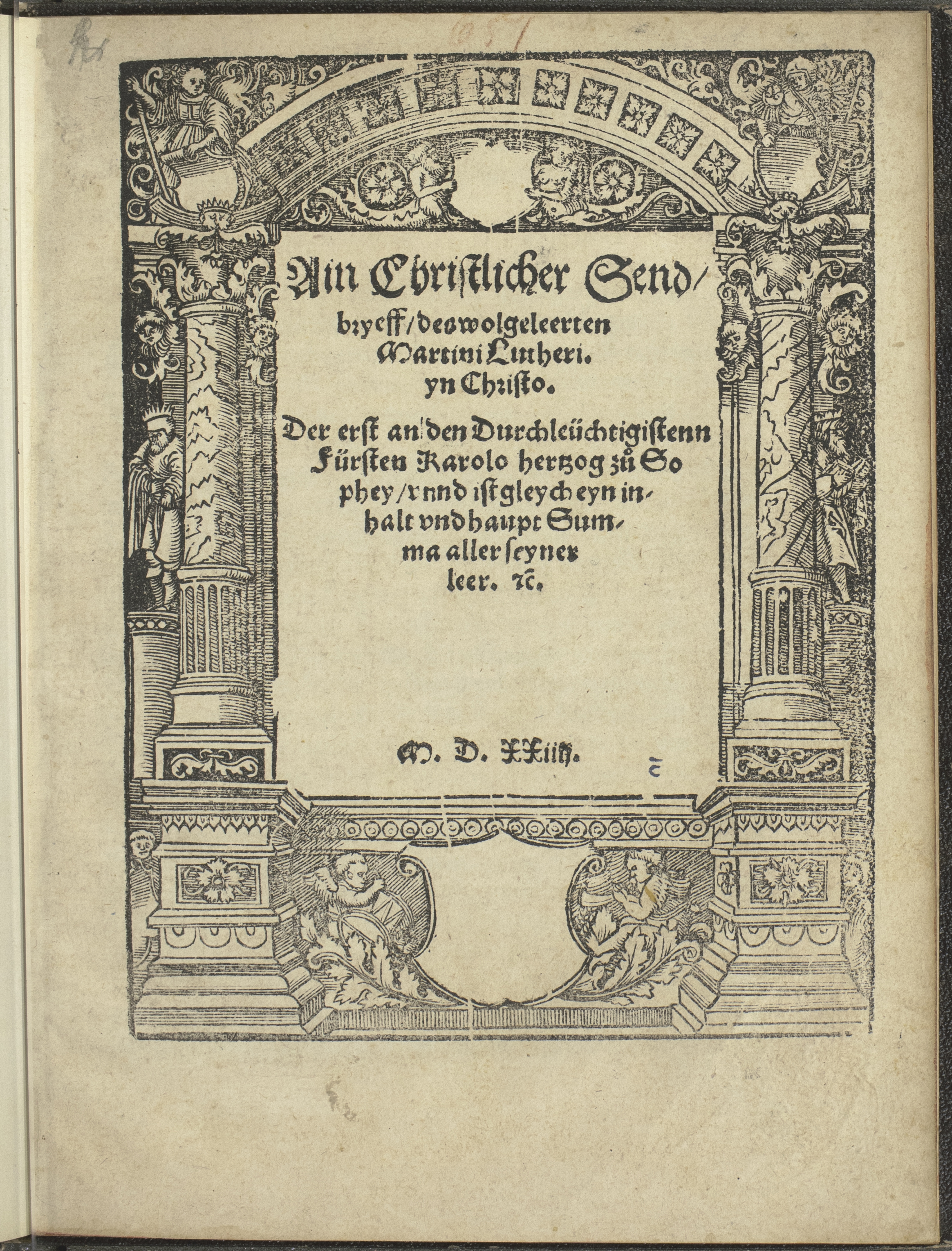
Ain Christlicher Sendbryeff
Luther, Martin, 1483-1546Summary: This work is an anonymous translation to German from Latin of Luther's letter (Ad inlustrissimum principem Carolum Sabaudiae ducem Epistola) to Duke Charles III of Savoy, dated September 7, 1523.Summary: This work is an anonymous translation to German from Latin of Luther's letter (Ad inlustrissimum principem Carolum Sabaudiae ducem Epistola) to Duke Charles III of Savoy, dated September 7, 1523. -
 Text
Ain Christlyche vnd vast Wolgegrünte beweysung von dem I[u]ngsten Tag : vnd von seinen zaiche[n] das er auch nit verr meer sein mag
Luther, Martin, 1483-1546Summary: First printing of an early Advent sermon by Luther, focusing on the signs of the impending end of the world.Summary: First printing of an early Advent sermon by Luther, focusing on the signs of the impending end of the world. -
 Text
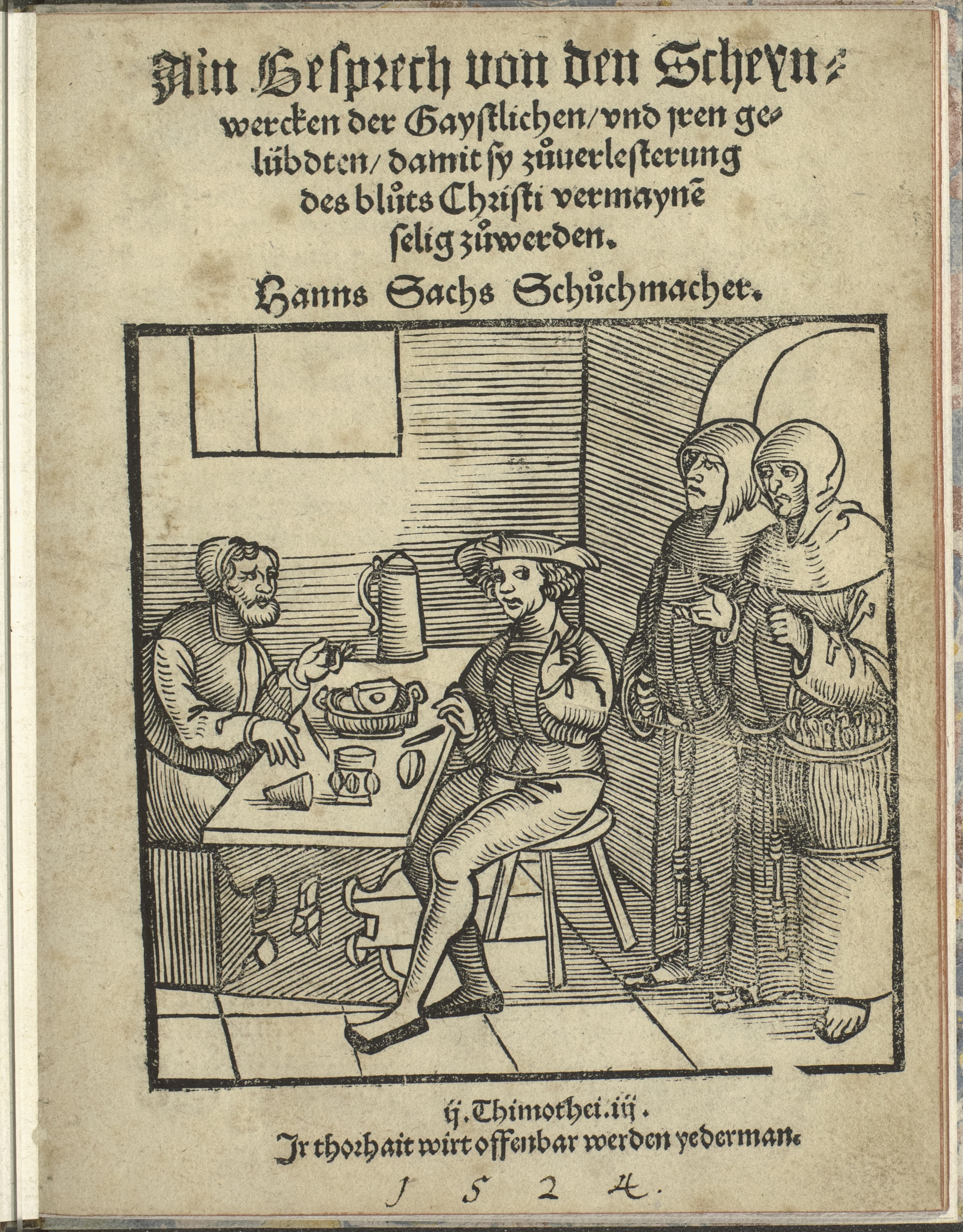
Ain Gesprech von den Scheynwercken der Gaystlichen, vnd jren gelübdten, : damit sy zuouerlesterung des blouts Christi vermayne[n] selig zuowerden
Sachs, Hans, 1494-1576Summary: H. Sachs the Nuremberg "Master-Singer" and shoemaker became an early and ardent supporter of Luther and the Protestant cause. In this "trio-logue" a baker named Peter, a monk named Heinrich, and a shoemaker named Hans discuss questions relating to monastic life and monastic vows. The work is in prose, a change from Sachs' usual rhymed couplet format. This printing is from the same year as the first printing and re-uses the woodcut from the title page of the first printing.Summary: H. Sachs the Nuremberg "Master-Singer" and shoemaker became an early and ardent supporter of Luther and the Protestant cause. In this "trio-logue" a baker named Peter, a monk named Heinrich, and a shoemaker named Hans discuss questions relating to monastic life and monastic vows. The work is in prose, a change from Sachs' usual rhymed couplet format. This printing is from the same year as the first printing and re-uses the woodcut from the title page of the first printing. -
 Text
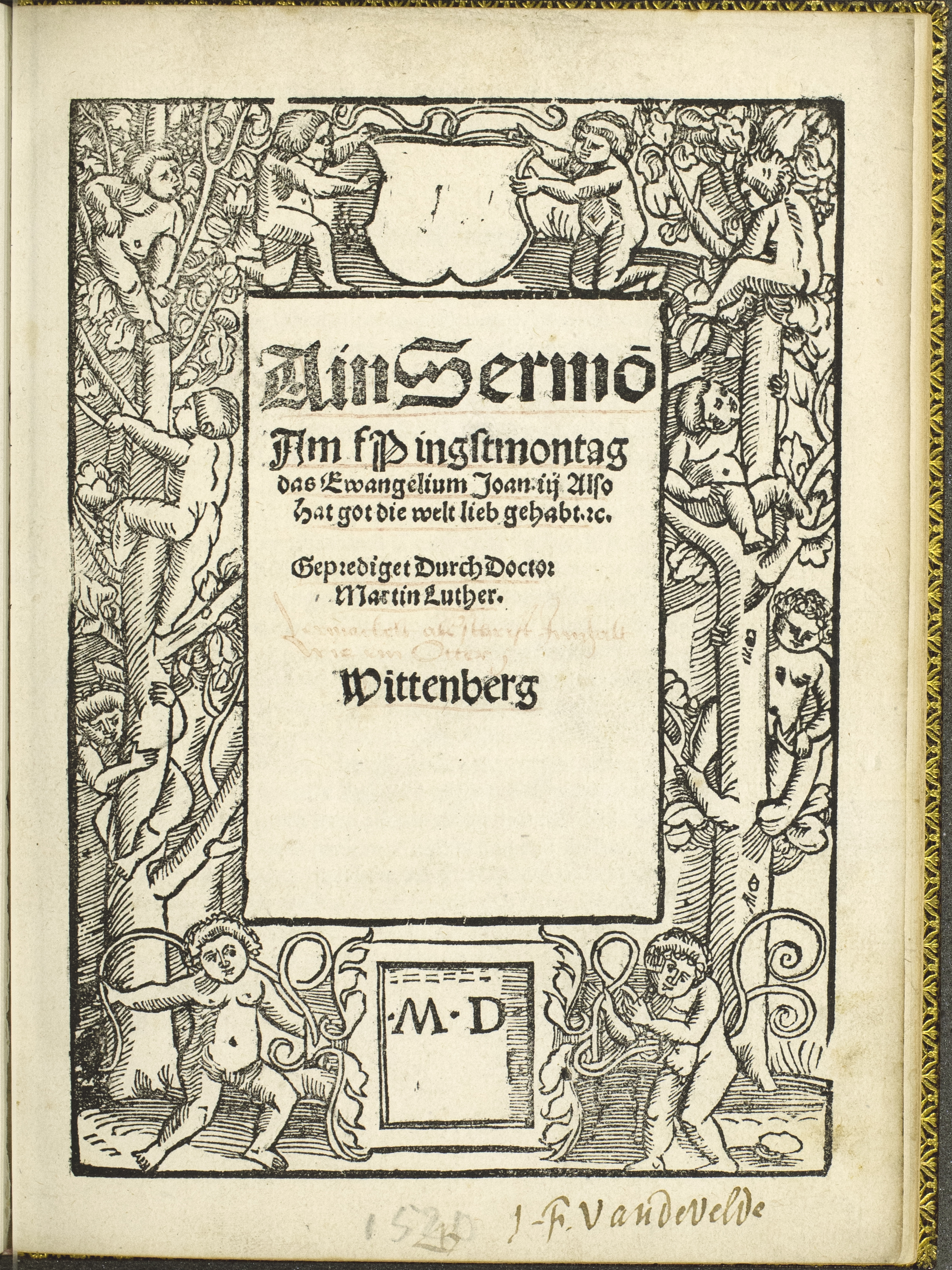
Ain Sermo[n] am fPingstmontag [sic] das Ewangelium Joan iij, Also hat Got die Welt lieb gehabt, [et]c.
Luther, Martin, 1483-1546Summary: Sermon preached June 9, 1522, on John III, 16, "For God so loved the world ..."Summary: Sermon preached June 9, 1522, on John III, 16, "For God so loved the world ..." -
 Text
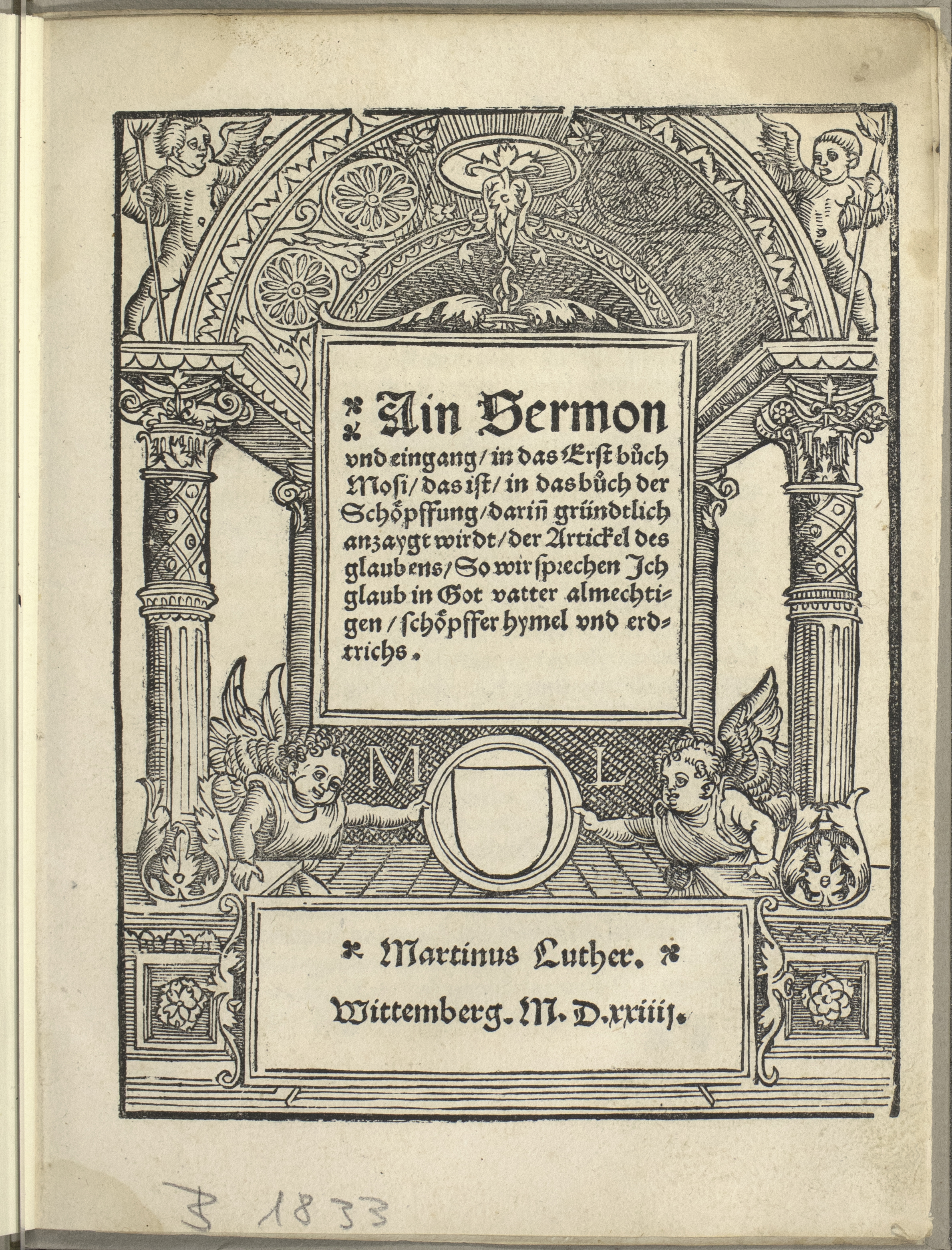
Ain Sermon
Luther, Martin, 1483-1546Summary: Sermon preached August 10, 1522, on Matthew 7:15-23 (Beware of False Prophets).Summary: Sermon preached August 10, 1522, on Matthew 7:15-23 (Beware of False Prophets). -
 Text
Ain Sermon Secundum Matheum. [sic] : Sagt von den Phariseyern Vn[d] wie er sey mit seym Bruoder versyenen soll, Kurtzlich Geprediget. In got versamlet. De insignibus D. Saxonie 1522
Luther, Martin, 1483-1546Summary: Sermon preached July 27, 1522, on Matthew 5:20ff. (Unless your righteousness is greater than that of the Pharisees, etc,.).Summary: Sermon preached July 27, 1522, on Matthew 5:20ff. (Unless your righteousness is greater than that of the Pharisees, etc,.). -
 Text
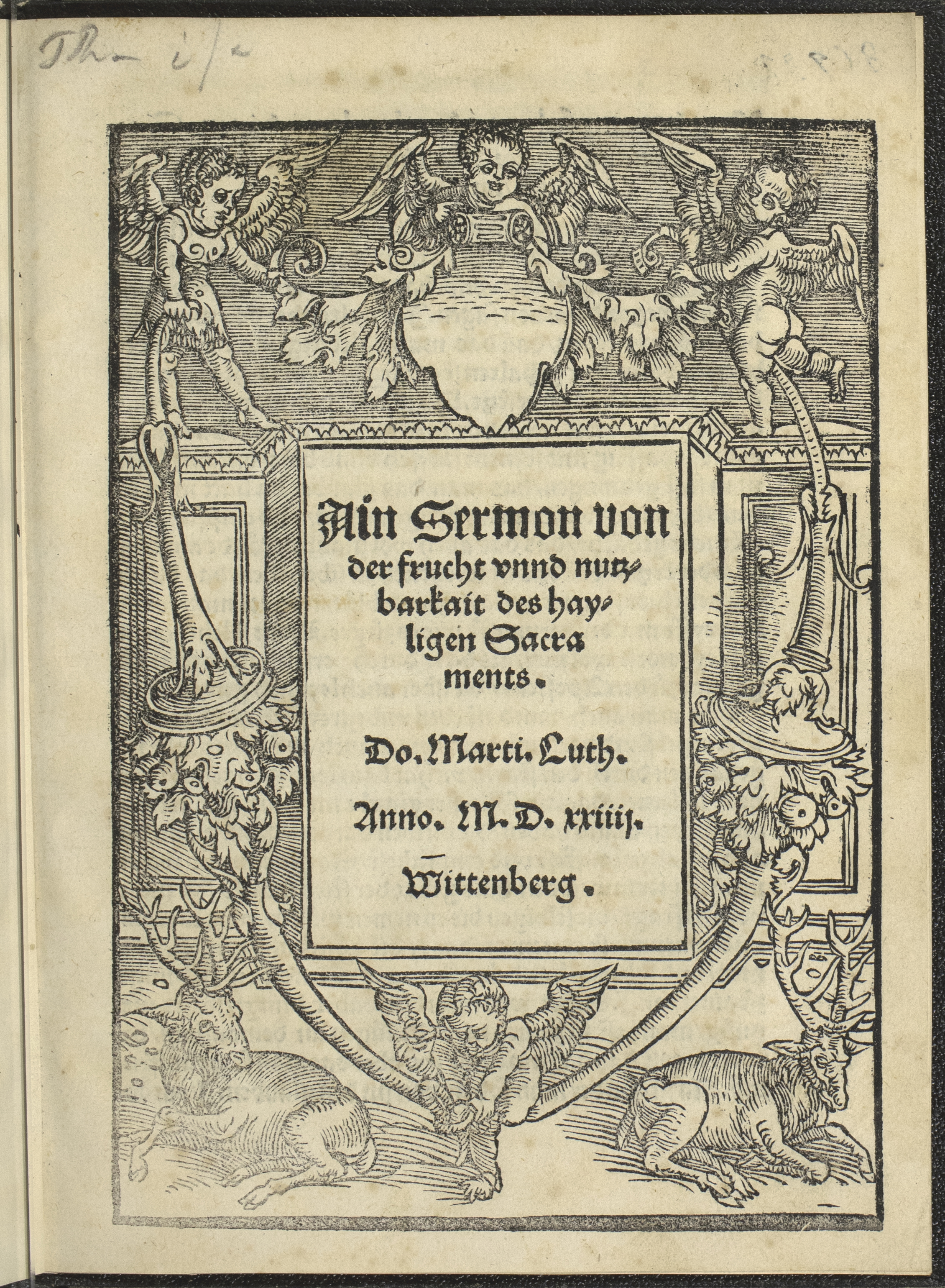
Ain Sermon uon der frucht vnd nutzbarkait des hayligen Sacraments
Luther, Martin, 1483-1546Summary: Sermon preached April 2, 1523 (Maundy Thursday), on the value and efficacy of the Holy Sacrament.Summary: Sermon preached April 2, 1523 (Maundy Thursday), on the value and efficacy of the Holy Sacrament. -
 Text
Ain Sermon vo[n] den Hayltumb[e]n vn[d] Geziert mit Überfluss, Vo[n] hailig[e]n Creütz jn den Kirchen
Luther, Martin, 1483-1546Summary: Sermon by Martin Luther criticizing the adoration of the cross and supposed relics of the Passion.Summary: Sermon by Martin Luther criticizing the adoration of the cross and supposed relics of the Passion. -
 Text
Ain Sermon von den Hayltumben vnnd gezierd mit vberfluss, Vom hailigen Creutz in den kirchen
Luther, Martin, 1483-1546Summary: A sermon by Luther admonishing the directing of one's attentions not to the wealth of the church and its relics, but to the needs of the poor.Summary: A sermon by Luther admonishing the directing of one's attentions not to the wealth of the church and its relics, but to the needs of the poor. -
 Text
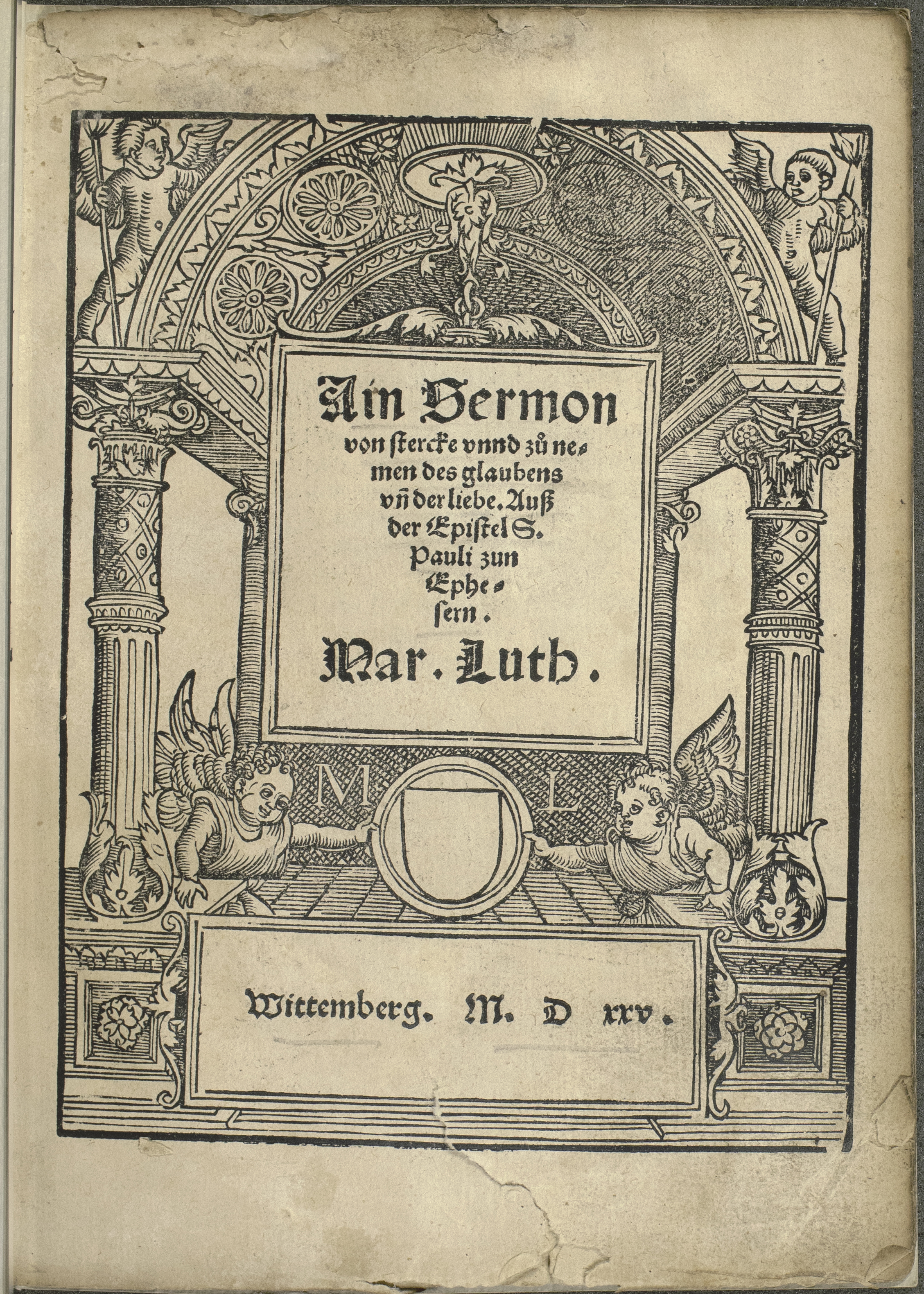
Ain Sermon von stercke vnnd zuo nemen des glaubens vn[d] der liebe : Aus der Epistel S. Pauli zun Eypesernn
Luther, Martin, 1483-1546Summary: Sixth of six printings to appear in 1525, the year of its initial printing, of this sermon by Luther on the strengthening of faith and love.Summary: Sixth of six printings to appear in 1525, the year of its initial printing, of this sermon by Luther on the strengthening of faith and love. -
 Text
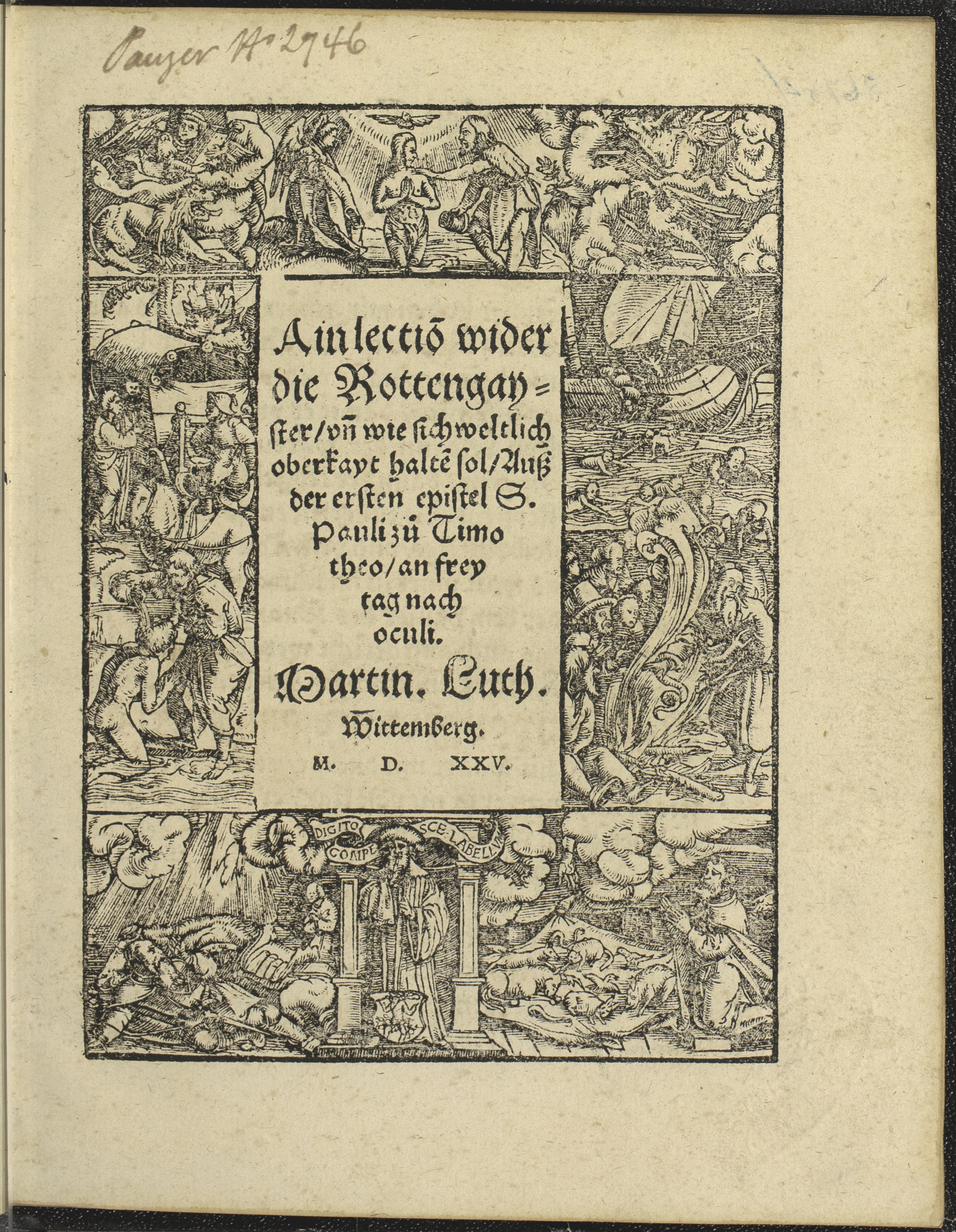
Ain lectio[n] wider die Rottengayster, vn[d] wie sich weltlich oberkayt halte[n] sol, : Auss der ersten epistel S. Pauli zuo Timotheo, an freytag nach Oculi
Luther, Martin, 1483-1546Summary: Sermon preached March 24th, 1525, on Timothy 1:18-2:29.Summary: Sermon preached March 24th, 1525, on Timothy 1:18-2:29. -
 Text
Ain säligs newes jar. : Von der lieb gottes
Staupitz, Johann von, -1524Summary: This is possibly the first printing of J. von Staupitz's tract on the love of God. Written as a New Year's greeting for some of Staupitz's friends, the work was highly valued by Luther and became a spiritual classic, frequently reprinted and re-edited.Summary: This is possibly the first printing of J. von Staupitz's tract on the love of God. Written as a New Year's greeting for some of Staupitz's friends, the work was highly valued by Luther and became a spiritual classic, frequently reprinted and re-edited. -
 Text
Ain schöner Dialogus wie ain Bawr mit aim Frawe[n] Brůder Münch redt : das er die Kutten von jm würfft, und dem Münch Arbayt zůgeben, lustbarlich und lieblich zů lesen
Summary: Polemical dialogue between a peasant and a monk, who had lost his livelihood after the dissolution of his monastery. The peasant advises the monk to try his hand at "real work".Summary: Polemical dialogue between a peasant and a monk, who had lost his livelihood after the dissolution of his monastery. The peasant advises the monk to try his hand at "real work". -
 Text
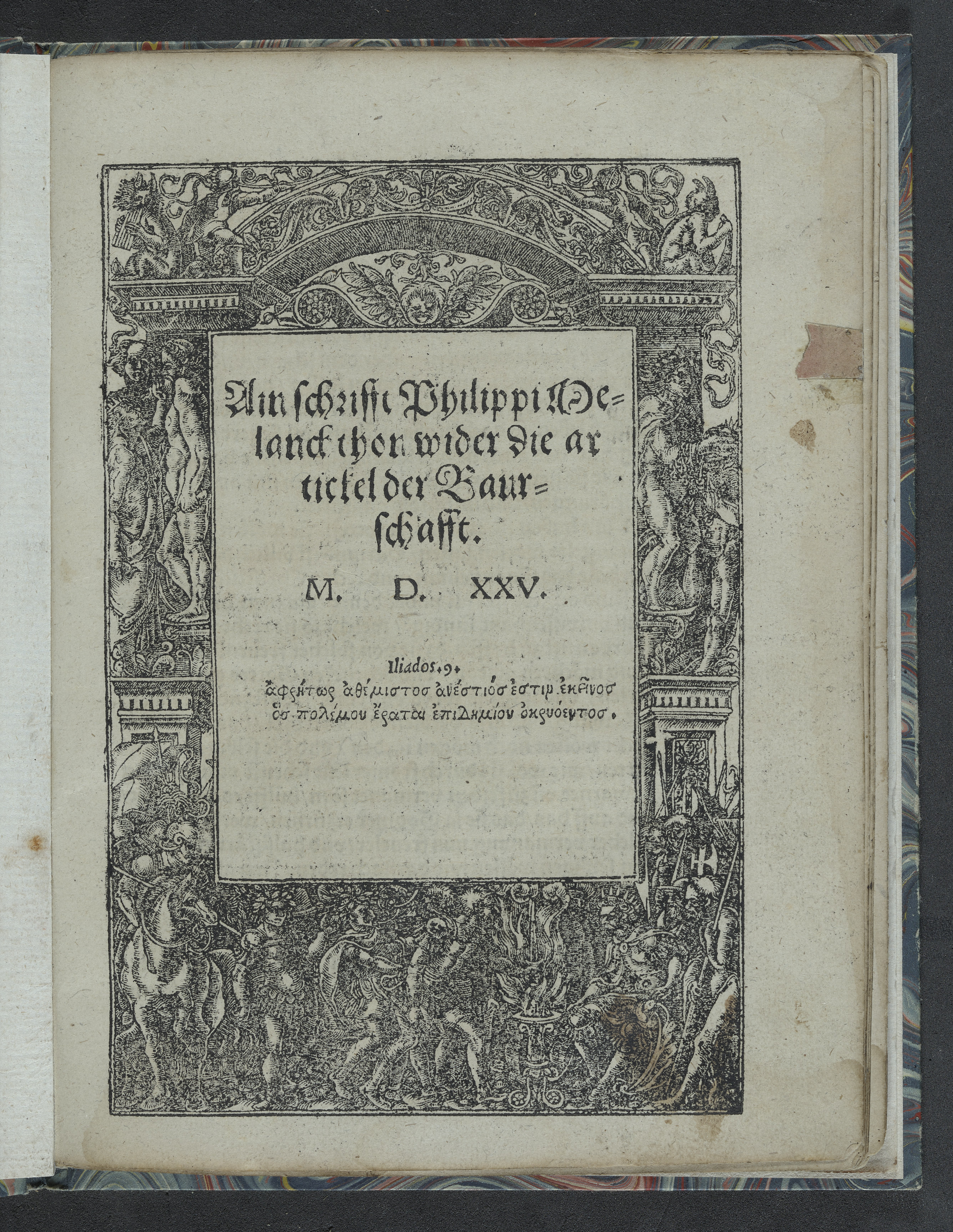
Ain schrifft Philippi Melanchthon wider die artickel der Baurschafft
Melanchthon, Philipp, 1497-1560Summary: Treatise by Melanchthon against the peasants' revolt of the mid 1520's.Summary: Treatise by Melanchthon against the peasants' revolt of the mid 1520's. -
 Text
Ain sermon vo[n] der Beraitung tzüm sterbe[n]
Luther, Martin, 1483-1546Summary: Early sermon of Luther's on preparing for death. One of twenty-two German printings to appear in six years.Summary: Early sermon of Luther's on preparing for death. One of twenty-two German printings to appear in six years. -
 Text
Ainn Sermon oder Predigt von der Aufferstehung Christi
Alber, Matthäus, 1495-1570Summary: First and possibly only edition of a sermon by Mathäus Alber on the resurrection of Christ. Alber was an active reformer in Swabia, particularly in Reutlingen and Esslingen.Summary: First and possibly only edition of a sermon by Mathäus Alber on the resurrection of Christ. Alber was an active reformer in Swabia, particularly in Reutlingen and Esslingen. -
 Text
Akathist to Sts. Martha and Mary as used in the Russian Orthodox Church
Russkai︠a︡ pravoslavnai︠a︡ t︠s︡erkovʹSummary: "Translated from the Slavonic approved by the Moscow Ecclesiastical Censor Committee, May 1912."Summary: "Translated from the Slavonic approved by the Moscow Ecclesiastical Censor Committee, May 1912."