Summary: In 1521, Melanchthon wrote the first Protestant dogmatics, the "Loci Communes." Eck countered in 1525 with his "handbook on Theological Topics". Possibly the most widely reprinted Catholic critique of Lutheran doctrine (Metzler lists 91 contemporary editions). Eck uses the same topical procedure and cites the Bible, Church Fathers, Councils, and Popes heavily in the presentation of his arguments.
Summary: In 1521, Melanchthon wrote the first Protestant dogmatics, the "Loci Communes." Eck countered in 1525 with his "handbook on Theological Topics". Possibly the most widely reprinted Catholic critique of Lutheran doctrine (Metzler lists 91 contemporary editions). Eck uses the same topical procedure and cites the Bible, Church Fathers, Councils, and Popes heavily in the presentation of his arguments.
A woodcut border to Luther's Vier trostliche Psalmen, an die Königin zu Hungern printed in 1527. The border is comprised of a single woodcut depicting an architectural border supported by four columns with cherubs leaning on them (sides) and cherubs holding shields (top corners).
A woodcut border to Luther's Vier trostliche Psalmen, an die Königin zu Hungern printed in 1527. The border is comprised of a single woodcut depicting an architectural border supported by four columns with cherubs leaning on them (sides) and cherubs holding shields (top corners).
A woodcut border to Urbanus Rhegius's Wider den newen Taufforden : notwendige Warnung an alle Christgleubigen printed in 1527. The border is composed of a single woodcut depicting a series of cherubs, some playing instruments (sides and bottom) and a man flanked by floral decorations (top).
A woodcut border to Urbanus Rhegius's Wider den newen Taufforden : notwendige Warnung an alle Christgleubigen printed in 1527. The border is composed of a single woodcut depicting a series of cherubs, some playing instruments (sides and bottom) and a man flanked by floral decorations (top).
Summary: The Black Death ravaged Europe from the fourteenth century onward. Dr. Johann Hess, a pastor from Breslau, asked Luther in 1527 whether it was permissible for a person to flee from plague-infested areas. Luther replied that it was, and then added some public health advice for town and city government officials in plague-ravaged areas. He advocated fumigation of this, the seventh printing of the work.
Summary: The Black Death ravaged Europe from the fourteenth century onward. Dr. Johann Hess, a pastor from Breslau, asked Luther in 1527 whether it was permissible for a person to flee from plague-infested areas. Luther replied that it was, and then added some public health advice for town and city government officials in plague-ravaged areas. He advocated fumigation of this, the seventh printing of the work.
Summary: The Black Death ravaged Europe from the fourteenth century onward. Dr. Johann Hess, a pastor from Breslau, asked Luther in 1527 whether it was permissible for a person to flee from plague-infested areas. Luther replied that it was, and then added some public health advice for town and city government officials in plague-ravaged areas.
Summary: The Black Death ravaged Europe from the fourteenth century onward. Dr. Johann Hess, a pastor from Breslau, asked Luther in 1527 whether it was permissible for a person to flee from plague-infested areas. Luther replied that it was, and then added some public health advice for town and city government officials in plague-ravaged areas.
Summary: An interpretation on 4 Consolation Psalms (Ps. 37, 62, 94, 109), written by Luther for Queen Mary of Hungary, sister of the Emperor Charles V, after the death of her husband Louis in the battle of Mohács.
Summary: An interpretation on 4 Consolation Psalms (Ps. 37, 62, 94, 109), written by Luther for Queen Mary of Hungary, sister of the Emperor Charles V, after the death of her husband Louis in the battle of Mohács.
 Text
Text Still image
 Still image
 Text
Text Text
Text Text
Text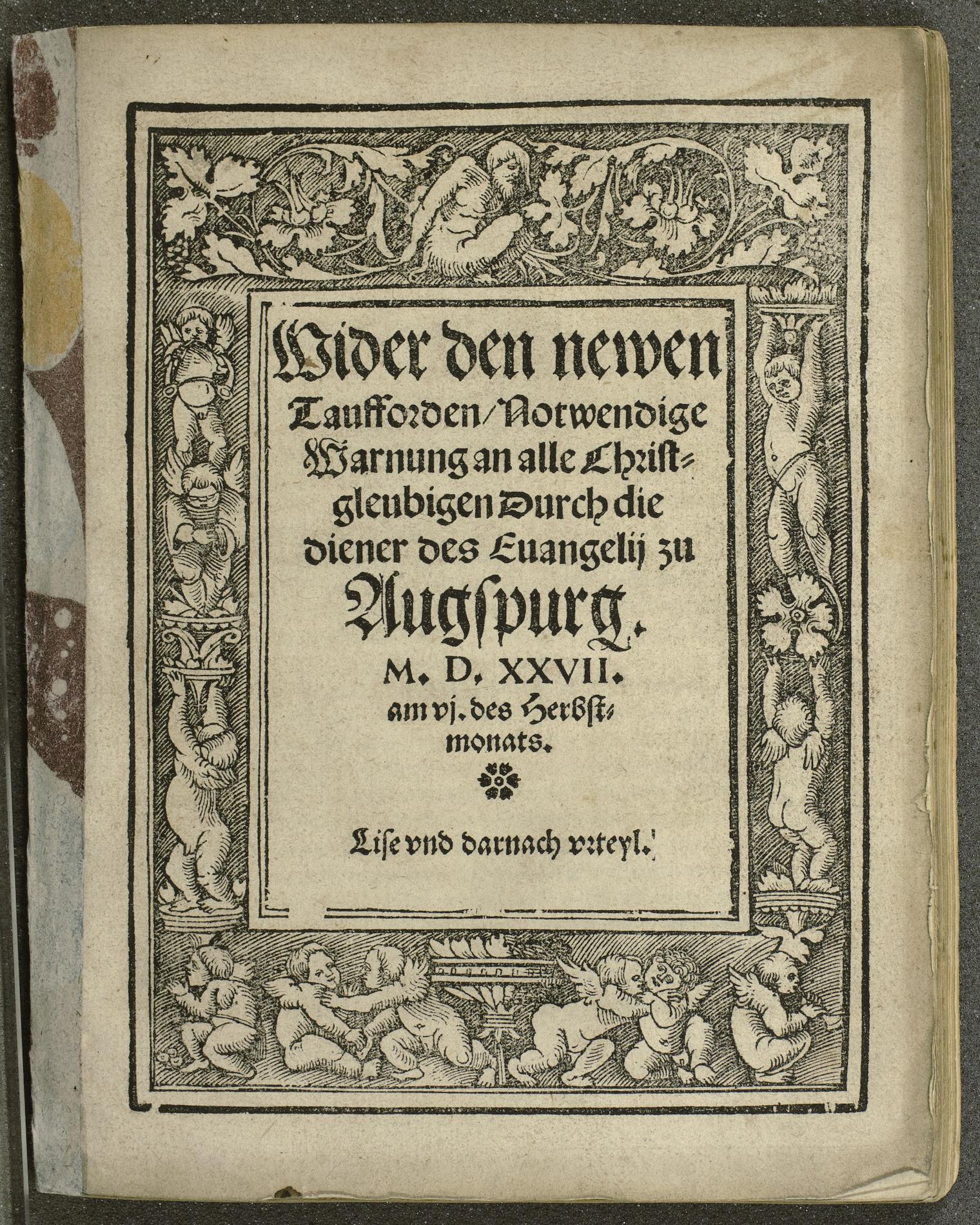 Text
Text