Summary: Parental consent was an issue during the Reformation. Catholic orthodoxy demanded parental consent of the bridal couple as it impacted property. Luther saw value in both sides, arguing that while parents ought not to be able to compel children to marry or prevent weddings, the children ought to seek their parents' consent.
Summary: Parental consent was an issue during the Reformation. Catholic orthodoxy demanded parental consent of the bridal couple as it impacted property. Luther saw value in both sides, arguing that while parents ought not to be able to compel children to marry or prevent weddings, the children ought to seek their parents' consent.
A woodcut border to Luther's Das Eltern die kinder zuo der Ehe nicht zwinge[n] noch hindern, : Vnd die kinder on der elltern willen sich nicht verloben solle[n] printed in 1524. The border consists of a single woodcut depicting cherubs with shields and one with a horn (top), a pair of cherubs holding up floral columns (sides), and a parade of cherubs playing instruments and pulling a cart (bottom).
A woodcut border to Luther's Das Eltern die kinder zuo der Ehe nicht zwinge[n] noch hindern, : Vnd die kinder on der elltern willen sich nicht verloben solle[n] printed in 1524. The border consists of a single woodcut depicting cherubs with shields and one with a horn (top), a pair of cherubs holding up floral columns (sides), and a parade of cherubs playing instruments and pulling a cart (bottom).
A woodcut border to Luther's Widder das blind vnd toll verdamnis der siebenzehen artickel von der elenden schendlichen vniuersitet zu Ingolstat ausgangen printed in 1524. The border is composed of a single woodcut and depicts a cherub flanked by two deer (bottom), decorative plants (sides), and a cherub holding a blank shield flanked by two other cherubs (top).
A woodcut border to Luther's Widder das blind vnd toll verdamnis der siebenzehen artickel von der elenden schendlichen vniuersitet zu Ingolstat ausgangen printed in 1524. The border is composed of a single woodcut and depicts a cherub flanked by two deer (bottom), decorative plants (sides), and a cherub holding a blank shield flanked by two other cherubs (top).
A colored woodcut border to Luther's Uon kauffsshandlung vnd Wucher printed in 1524. The border is composed of a single woodcut and depicts a cherub flanked by two deer (bottom), decorative plants (sides), and a cherub holding a blank shield flanked by two other cherubs (top).
A colored woodcut border to Luther's Uon kauffsshandlung vnd Wucher printed in 1524. The border is composed of a single woodcut and depicts a cherub flanked by two deer (bottom), decorative plants (sides), and a cherub holding a blank shield flanked by two other cherubs (top).
The title page of Martin Luther's Ermanunge zum frid auff die zwölff artickel der bawrschafft in Schwaben featuring a decorative border with seven cherubs harvesting flowers amongst thorny roses.
The title page of Martin Luther's Ermanunge zum frid auff die zwölff artickel der bawrschafft in Schwaben featuring a decorative border with seven cherubs harvesting flowers amongst thorny roses.
Summary: Arsatio Seehofer had studied with Luther at Wittenberg between stays at the University of Ingolstadt. As Ingolstadt increasingly became the focus of the Catholic revival, Seehofer found himself under attack for his "Lutheran" leanings. This is a commentary by Luther on the seventeen points of doctrine that Seehofer was accused of violating. The work also includes a discussion of Paul Speratus' arrest by the authorities at the University of Vienna on similar charges. This is the second printing of these essays.
Summary: Arsatio Seehofer had studied with Luther at Wittenberg between stays at the University of Ingolstadt. As Ingolstadt increasingly became the focus of the Catholic revival, Seehofer found himself under attack for his "Lutheran" leanings. This is a commentary by Luther on the seventeen points of doctrine that Seehofer was accused of violating. The work also includes a discussion of Paul Speratus' arrest by the authorities at the University of Vienna on similar charges. This is the second printing of these essays.
 Text
Text![A woodcut border to Luther's Das Eltern die kinder zuo der Ehe nicht zwinge[n] noch hindern, : Vnd die kinder on der elltern willen sich nicht verloben solle[n] printed in 1524. The border consists of a single woodcut depicting cherubs with shields and one with a horn (top), a pair of cherubs holding up floral columns (sides), and a parade of cherubs playing instruments and pulling a cart (bottom).](https://s3.us-west-2.amazonaws.com/omekacloud-main/large/P_000015281161_P005/P_000015281161_P005_PROD.jpg) Still image
Still image Still image
 Still image
 Still image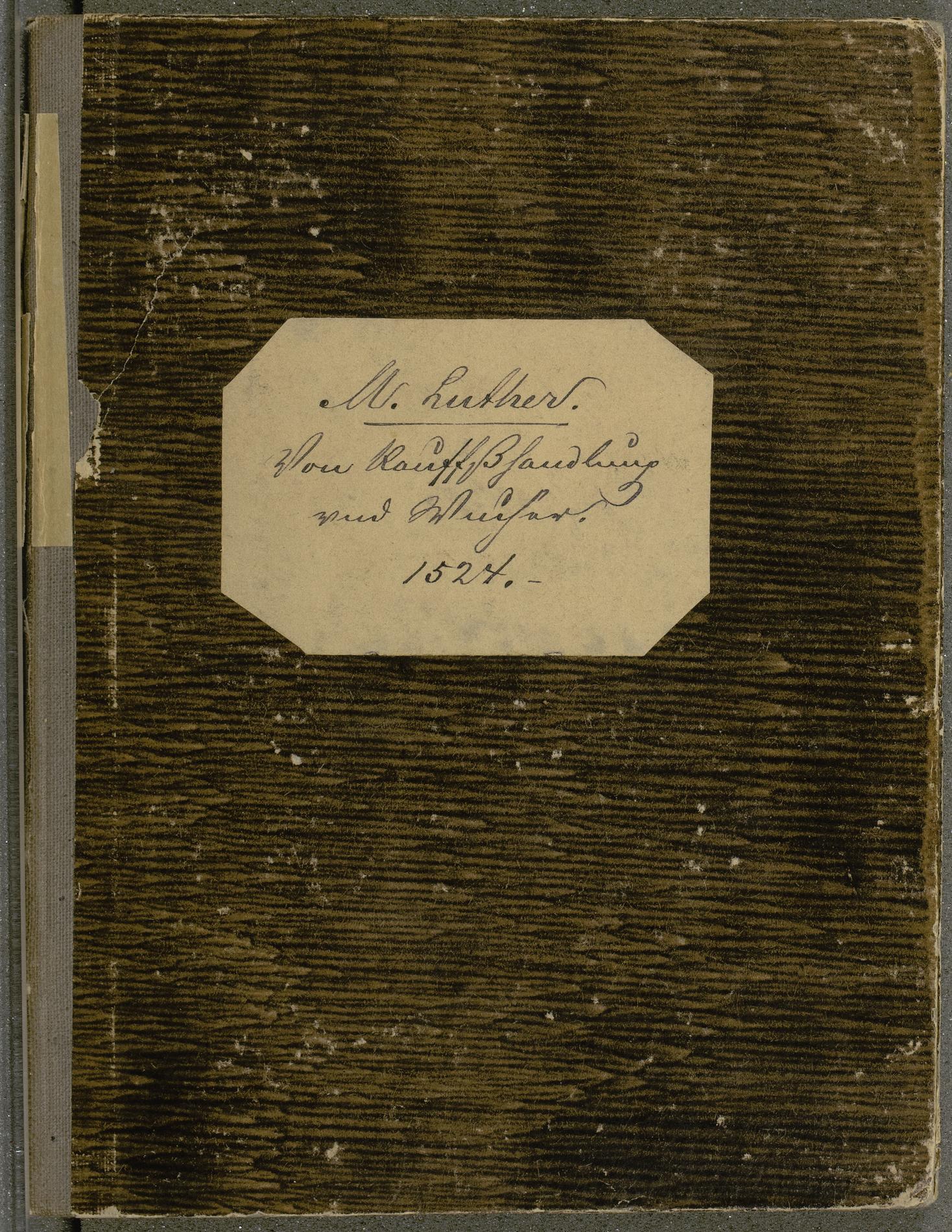
 Text
Text