Search
10 resources
10 items
Publisher
Schirlentz, Nickel
-
 Text
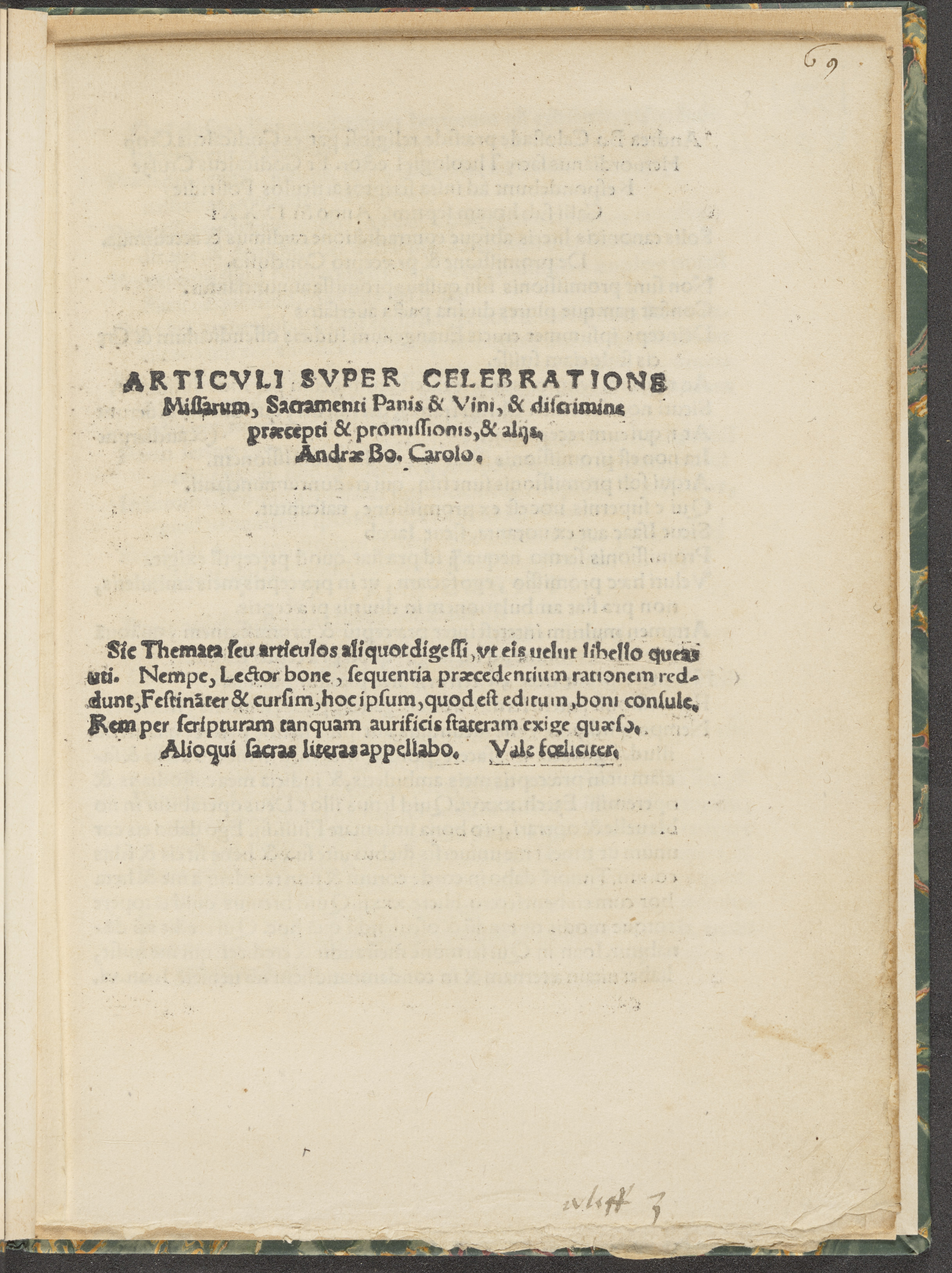
TextArticuli super celebratione Missarum, Sacramenti Panis & Vini : & discrimine praecepti & promissionis, & alijs
Karlstadt, Andreas Rudolff-Bodenstein von, 1486-1541Summary: Karlstadt wrote a great deal on the sacrament of the Lord's Supper. His determination to afford the laity and active part in the celebration was to have disastrous consequences for him both professionally and personally.Summary: Karlstadt wrote a great deal on the sacrament of the Lord's Supper. His determination to afford the laity and active part in the celebration was to have disastrous consequences for him both professionally and personally. -
 Text
TextAuff das Vermeint Keiserlich Edict : Ausgangen jm 1531 jare nach dem Reichs tage des 1530 Jars. Glosa
Luther, Martin, 1483-1546Summary: In response to an ultimatum to the Lutheran princes and cities from Emperor Charles V to return to the pre-Reformation status quo within six months, Luther here issues some of his strongest polemic.Summary: In response to an ultimatum to the Lutheran princes and cities from Emperor Charles V to return to the pre-Reformation status quo within six months, Luther here issues some of his strongest polemic. -
 Text
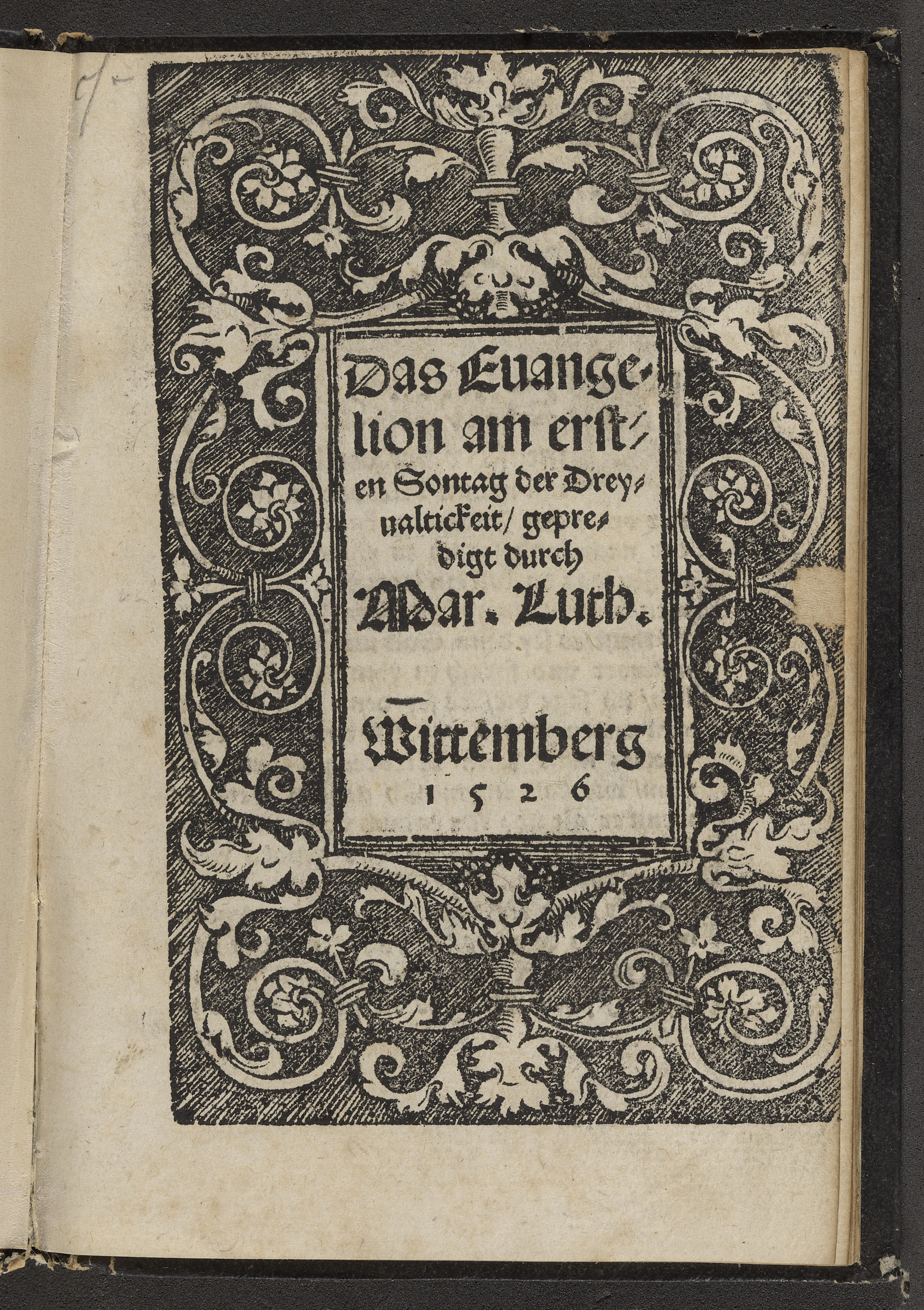
TextDas Euangelion am ersten Sontag der Dreyualtickeit
Luther, Martin, 1483-1546Summary: Sermon preached May 27, 1526, on John 3:1-16 (Nicodemus).Summary: Sermon preached May 27, 1526, on John 3:1-16 (Nicodemus). -
 Text
TextDas Tauff Buchlin
Luther, Martin, 1483-1546Summary: Luther's German translation of the Wittenberg usage of the Catholic rite of Baptism (Ordo baptizandi). The work was reprinted fifteen times between 1523 and 1526, when Luther issued a revised edition.Summary: Luther's German translation of the Wittenberg usage of the Catholic rite of Baptism (Ordo baptizandi). The work was reprinted fifteen times between 1523 and 1526, when Luther issued a revised edition. -
 Text
TextDe legis litera, siue carne, & spiritu
Karlstadt, Andreas Rudolff-Bodenstein von, 1486-1541Summary: One of two printings of Karlstadt's treatise on the dichotomy of law and grace.Summary: One of two printings of Karlstadt's treatise on the dichotomy of law and grace. -
 Text
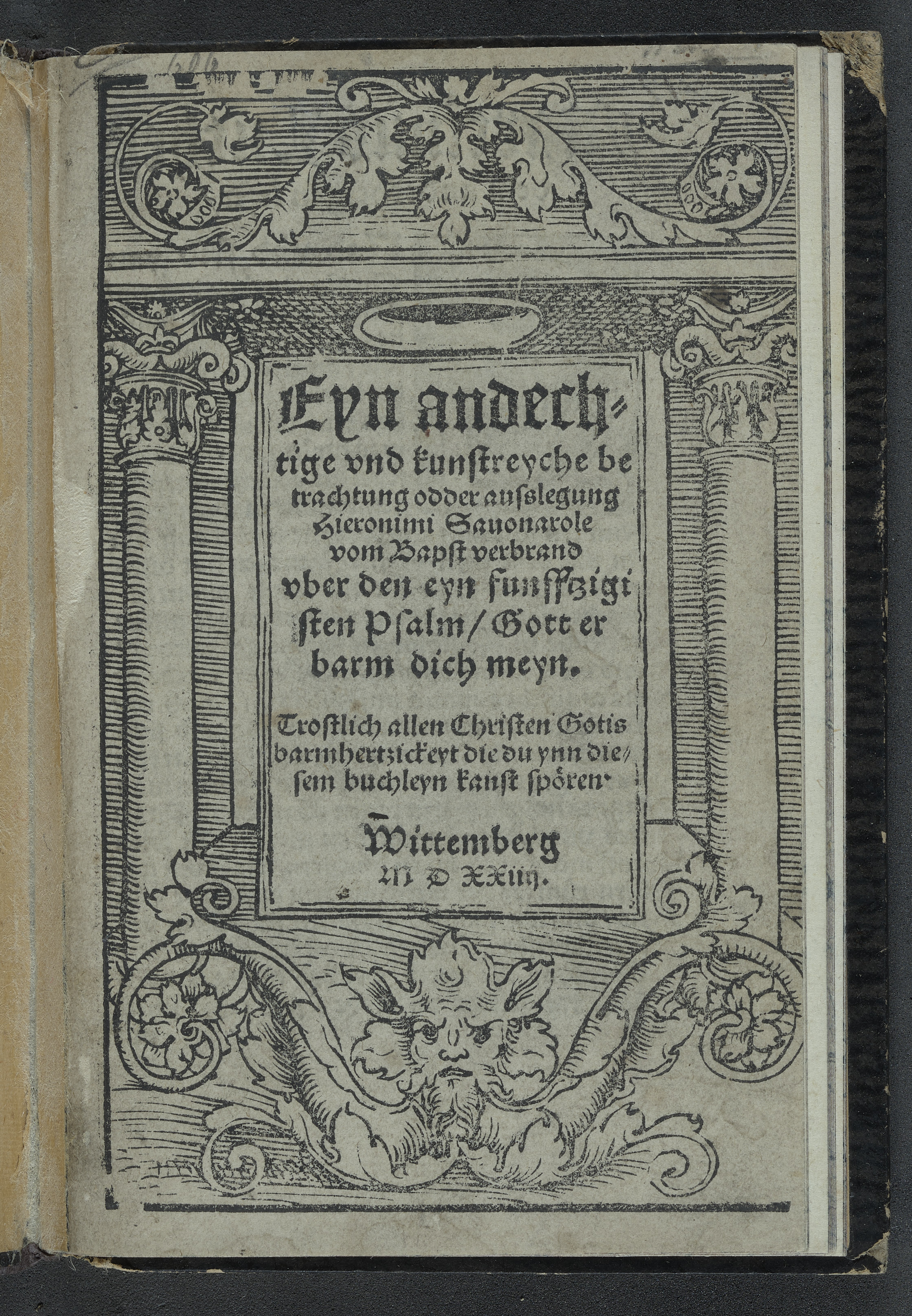
TextEyn andechtige vnd Kunstreyche betrachtung odder ausslegung
Savonarola, Girolamo, 1452-1498Summary: Protestants made Savonarola out to be a martyr, even though he would certainly not have supported their views. This commentary on Psalm 51, "Lord have mercy upon me," was written during his imprisonment in 1498. Luther wrote the introduction to this edition.Summary: Protestants made Savonarola out to be a martyr, even though he would certainly not have supported their views. This commentary on Psalm 51, "Lord have mercy upon me," was written during his imprisonment in 1498. Luther wrote the introduction to this edition. -
 Text
TextUon denn geystlichen vnd kloster gelubden
Luther, Martin, 1483-1546Summary: One of three 1522 printings of an essay on monastic vows written by Luther during his stay at the Wartburg Castle after the Diet of Worms. It is addressed to monks, whose conscience is troubled by the conflict between their vows and their desire to leave the monastic life. Luther frequently referred to this piece throughout his career, and it became one of his most influential works.Summary: One of three 1522 printings of an essay on monastic vows written by Luther during his stay at the Wartburg Castle after the Diet of Worms. It is addressed to monks, whose conscience is troubled by the conflict between their vows and their desire to leave the monastic life. Luther frequently referred to this piece throughout his career, and it became one of his most influential works. -
 Text
TextVon dem falschen Blut vnd Abgott im Thum zu Schwerin. : mit einer schönen Vorrede
Faber, Aegidius, approximately 1490-1558Summary: A. Faber was a Lutheran pastor in Schwerin when he wrote this book in 1533 against the false "blood of Christ" and the "idol" (i.e., the shrine in which the blood was kept) in the Cathedral at Schwerin. Such Holy blood miracles made for exceedingly popular pilgrimage sites in pre-Reformation Germany.Summary: A. Faber was a Lutheran pastor in Schwerin when he wrote this book in 1533 against the false "blood of Christ" and the "idol" (i.e., the shrine in which the blood was kept) in the Cathedral at Schwerin. Such Holy blood miracles made for exceedingly popular pilgrimage sites in pre-Reformation Germany. -
 Text
TextVon gelubden unterrichtung
Karlstadt, Andreas Rudolff-Bodenstein von, 1486-1541Summary: The question of the value and validity of monastic vows arose in Wittenberg because of Luther's tract, On the Freedom of a Christian, as well as because of his advice to monks to leave their monasteries. Karlstadt here argues that vows of monastic obedience prevent men and women from following God's commands. Karlstadt was the first of the Protestant Reformers to repudiate the validity of monastic vows.Summary: The question of the value and validity of monastic vows arose in Wittenberg because of Luther's tract, On the Freedom of a Christian, as well as because of his advice to monks to leave their monasteries. Karlstadt here argues that vows of monastic obedience prevent men and women from following God's commands. Karlstadt was the first of the Protestant Reformers to repudiate the validity of monastic vows. -
 Text
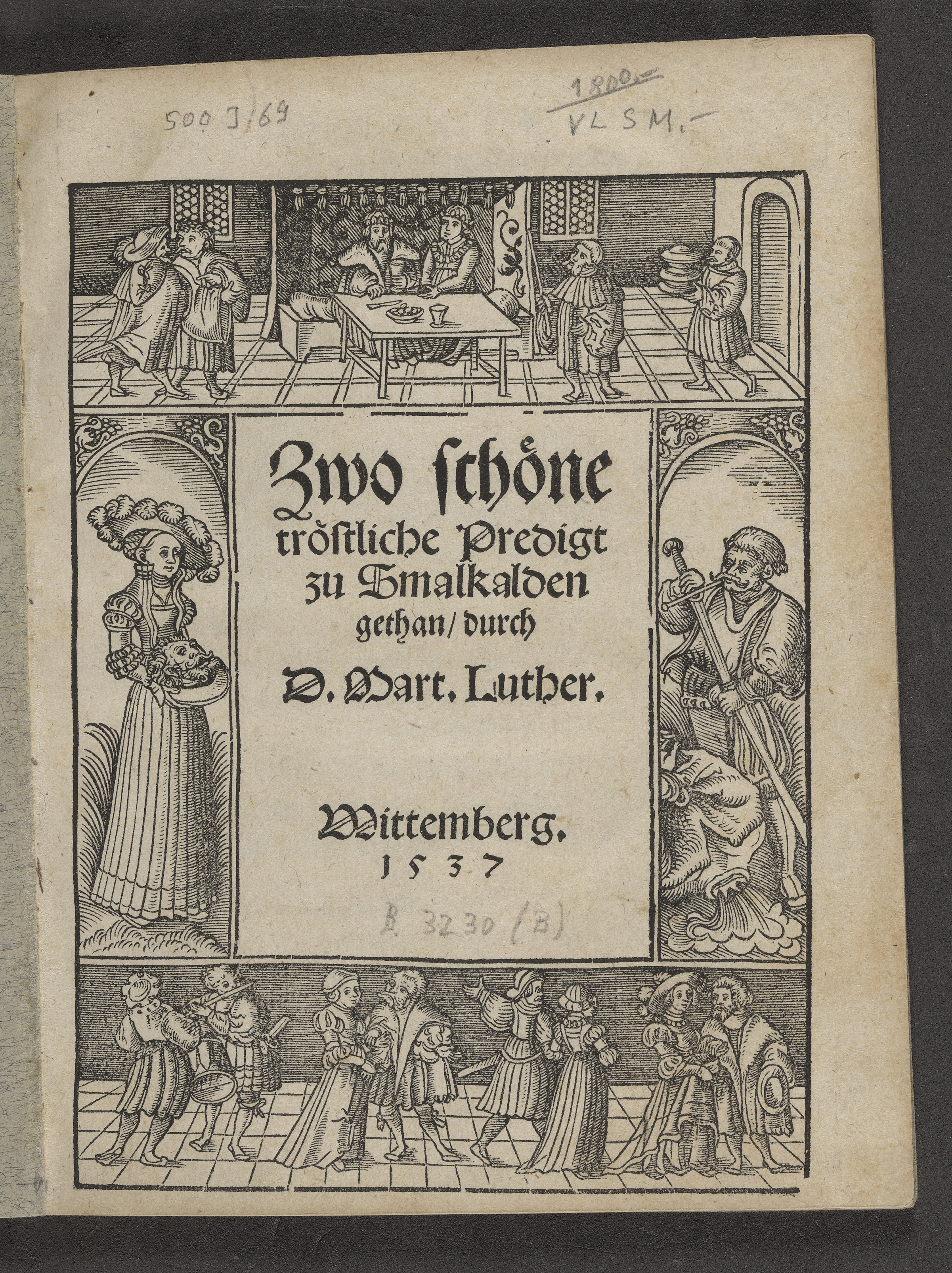
TextZwo schöne tröstliche Predigt zu Smalkalden gethon
Luther, Martin, 1483-1546Summary: One sermon expanded by G. Rörer into two, preached February 18, 1537, on text: Matthew IV, 1-11. The subjects are Temptation, and Last Things.Summary: One sermon expanded by G. Rörer into two, preached February 18, 1537, on text: Matthew IV, 1-11. The subjects are Temptation, and Last Things.