Richard C. Kessler Reformation Collection
The Richard C. Kessler Reformation Collection was established in 1987, when Richard and Martha Kessler donated their private collection of Reformation imprints and manuscripts to Emory University. These materials were combined with Reformation holdings at the Pitts Theology Library, and an effort was launched to enlarge and sustain this collection in the years to come. An advisory committee of Lutheran laypersons and clergy and of Candler School of Theology faculty and administrators oversees the nurture of the collection and its programs. The Reformation Notes newsletter provides semiannual updates on the growth of the collection, and the Reformation Day at Emory program of music and lectures each October celebrates the collection and its contributions to music, history, and theology.
In the sixteenth century the social and theological movements of central Europe, known collectively as the Reformation, critically shaped religion, law, education and other institutions in the West, and their long shadow has extended even to the present. The purpose of the Kessler Collection is to document these changes by collecting print and manuscript materials down to 1570 by Martin Luther (1483-1546) and those whom he influenced or engaged in debate. In this way historians and theologians will be able to hear the full range of voices that were raised in this dynamic period.
The holdings of the collection now exceed 4,000 items, a mark approximated by only two other libraries in North America; no American library approaches the Kessler Collection's 1,000+ publications by Luther himself.
-
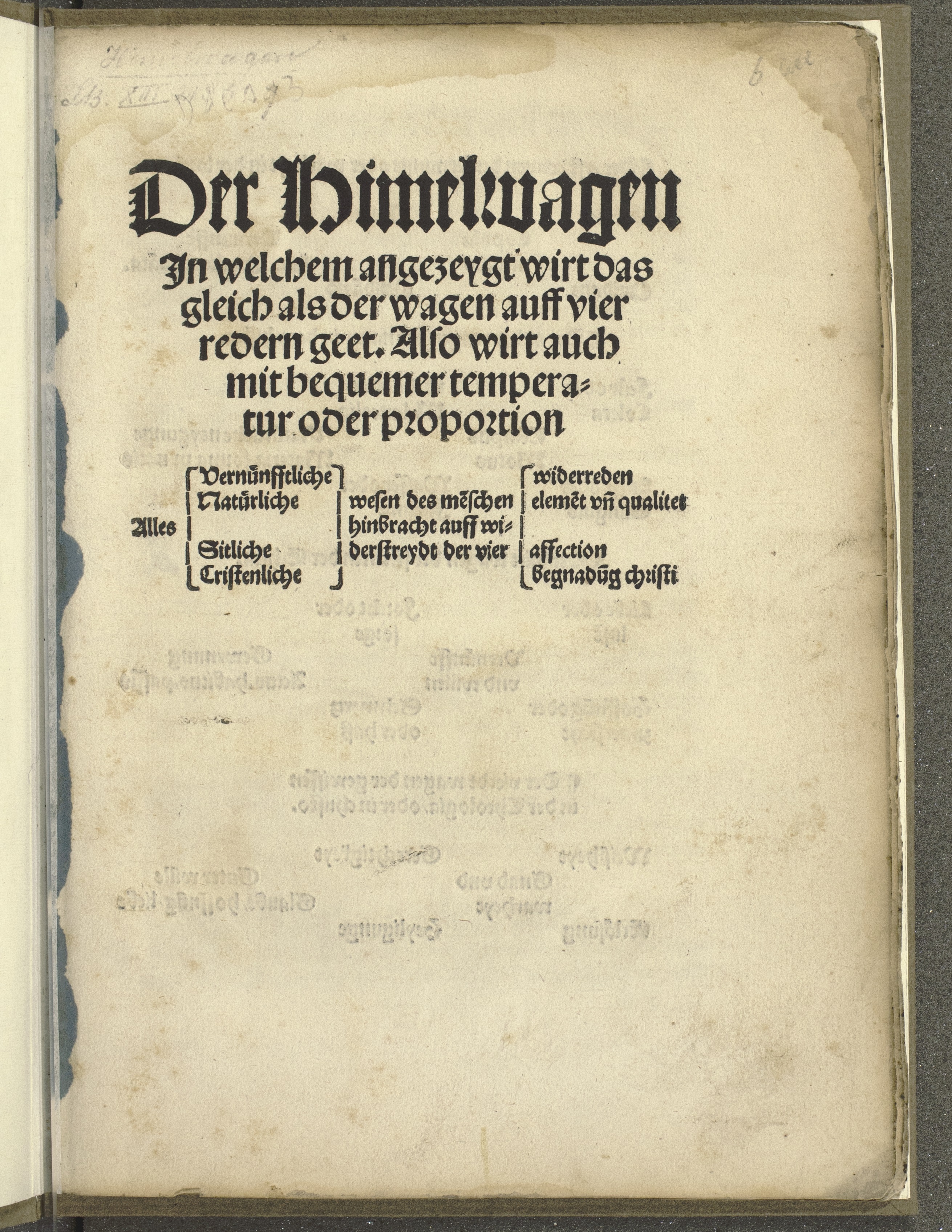 Text
TextDer Himelwagen : in welchem angezeygt wird das gleich als der wagen auff vier redern geet. Also wirt auch mit bequemer temperatur oder proportion Alles Vernünfftigliche Natürliche Sitliche Cristenliche wesen des me[n]schen hinbracht auff widerstreydt der vier widerreden eleme[n]t vn[d] qualitet affection Begnadu[n]g Christi
Summary: Popular piety and "modern" science here make mutual if unusual companions. Science is used to teach piety and piety reinforces a scientific perspective. The smile is that just as a wagon goes on four wheels, so philosophy and human thought proceed on their "fourfold paths"---logic, physics (medicine), ethics and theology.Summary: Popular piety and "modern" science here make mutual if unusual companions. Science is used to teach piety and piety reinforces a scientific perspective. The smile is that just as a wagon goes on four wheels, so philosophy and human thought proceed on their "fourfold paths"---logic, physics (medicine), ethics and theology. -
 Text
TextDe disputatio[n]e Lipsicensi : quantum ad Boemos obiter deflexa est
Emser, Hieronymus, 1478-1527Summary: A letter by Hieronymus Emser, early opponent of Luther concerning the Leipzig Disputation of 1519, describing Luther's debate with Johann Eck, and Luther's admitting that councils could err.Summary: A letter by Hieronymus Emser, early opponent of Luther concerning the Leipzig Disputation of 1519, describing Luther's debate with Johann Eck, and Luther's admitting that councils could err. -
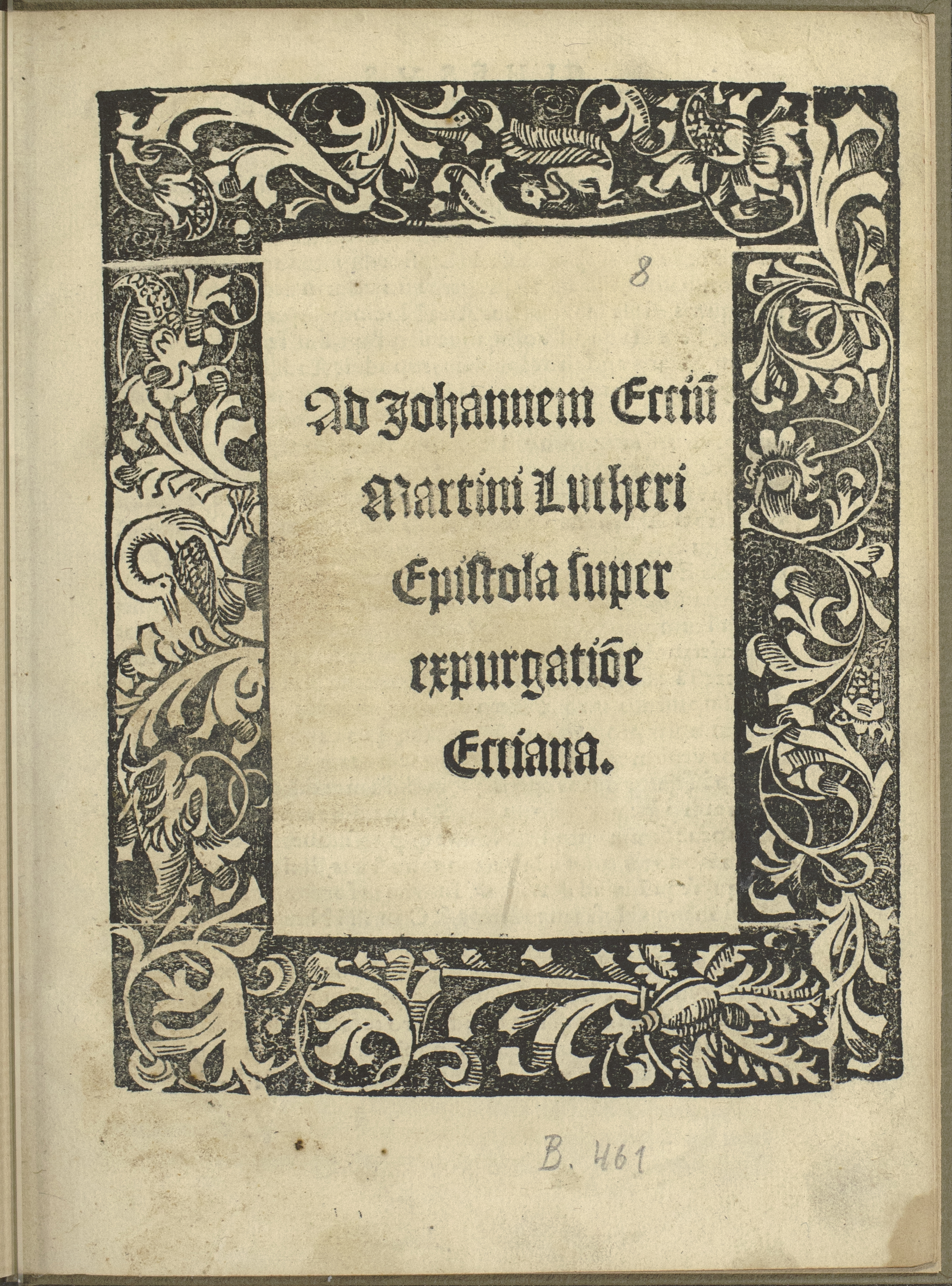 Text
TextAd Johannem Ecciu[m]
Luther, Martin, 1483-1546Summary: A unique printing of an answer by Luther to the attacks of one his earliest opponents, Johann Eck.Summary: A unique printing of an answer by Luther to the attacks of one his earliest opponents, Johann Eck. -
 Text
TextIn Epistolam Pauli ad Galatas, F. Martini Lutheri Augustiniani, commentarius ..
Luther, Martin, 1483-1546Summary: One of six 1519 printings of Luther's lectures on Paul's letter to the Galatians, first held in 1516. Galatians was Luther's favorite biblical book, which had a profound infulence on the formation of his theological thought and his understanding of law and grace.Summary: One of six 1519 printings of Luther's lectures on Paul's letter to the Galatians, first held in 1516. Galatians was Luther's favorite biblical book, which had a profound infulence on the formation of his theological thought and his understanding of law and grace. -
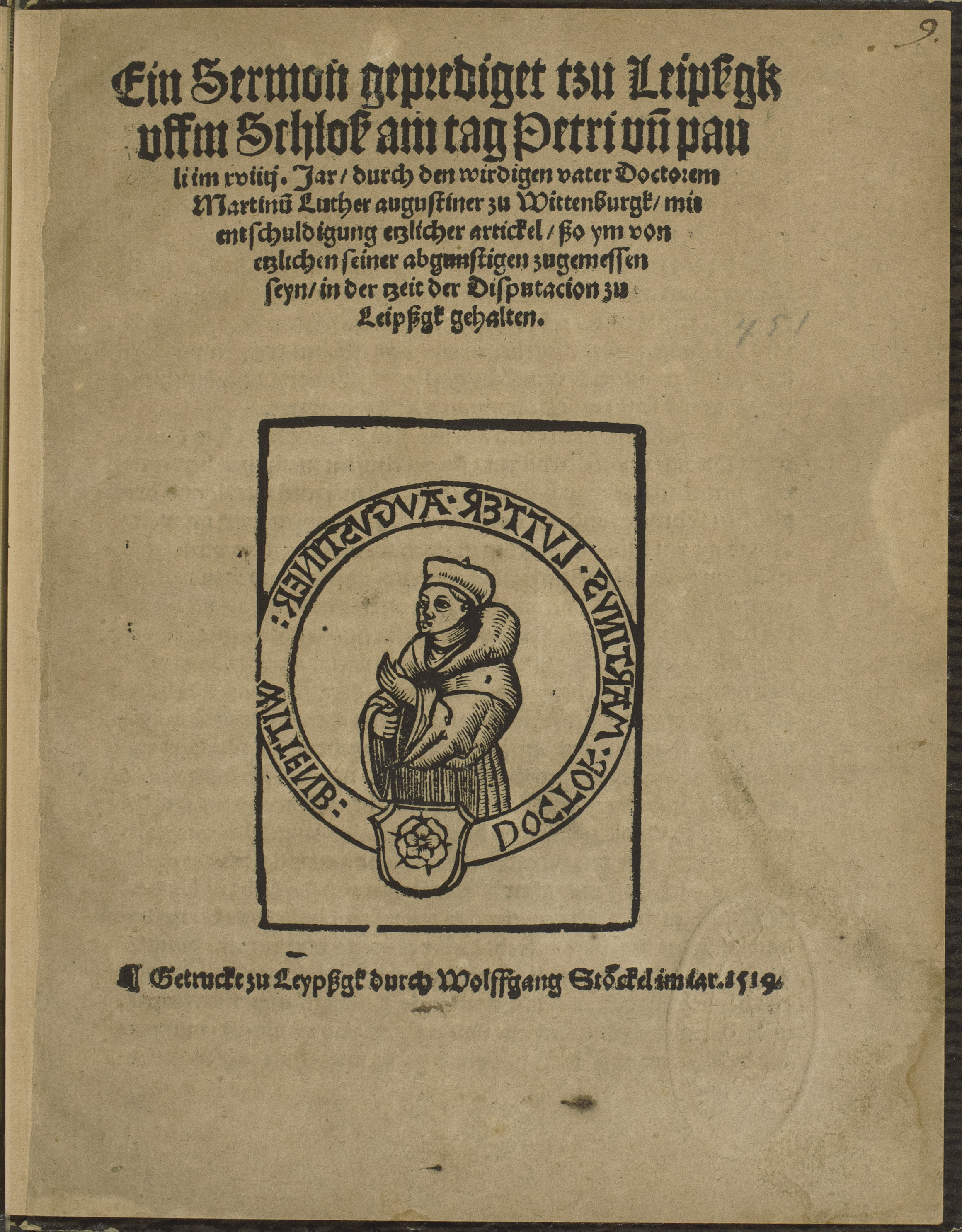 Text
TextEin Sermon geprediget tzu Leipssgk [sic] vffm Schloss am tag Petri vn[d] Pauli im xviiij. Jar
Luther, Martin, 1483-1546Summary: This is the first printing of Luther's sermon preached June 29th, 1519, at the Leipzig Disputation, on text: Matthew 16: 13-19 (Peter's Great Confession, and the presentation of the Keys). The woodcut on the title page is the earliest known portrait of Luther.Summary: This is the first printing of Luther's sermon preached June 29th, 1519, at the Leipzig Disputation, on text: Matthew 16: 13-19 (Peter's Great Confession, and the presentation of the Keys). The woodcut on the title page is the earliest known portrait of Luther. -
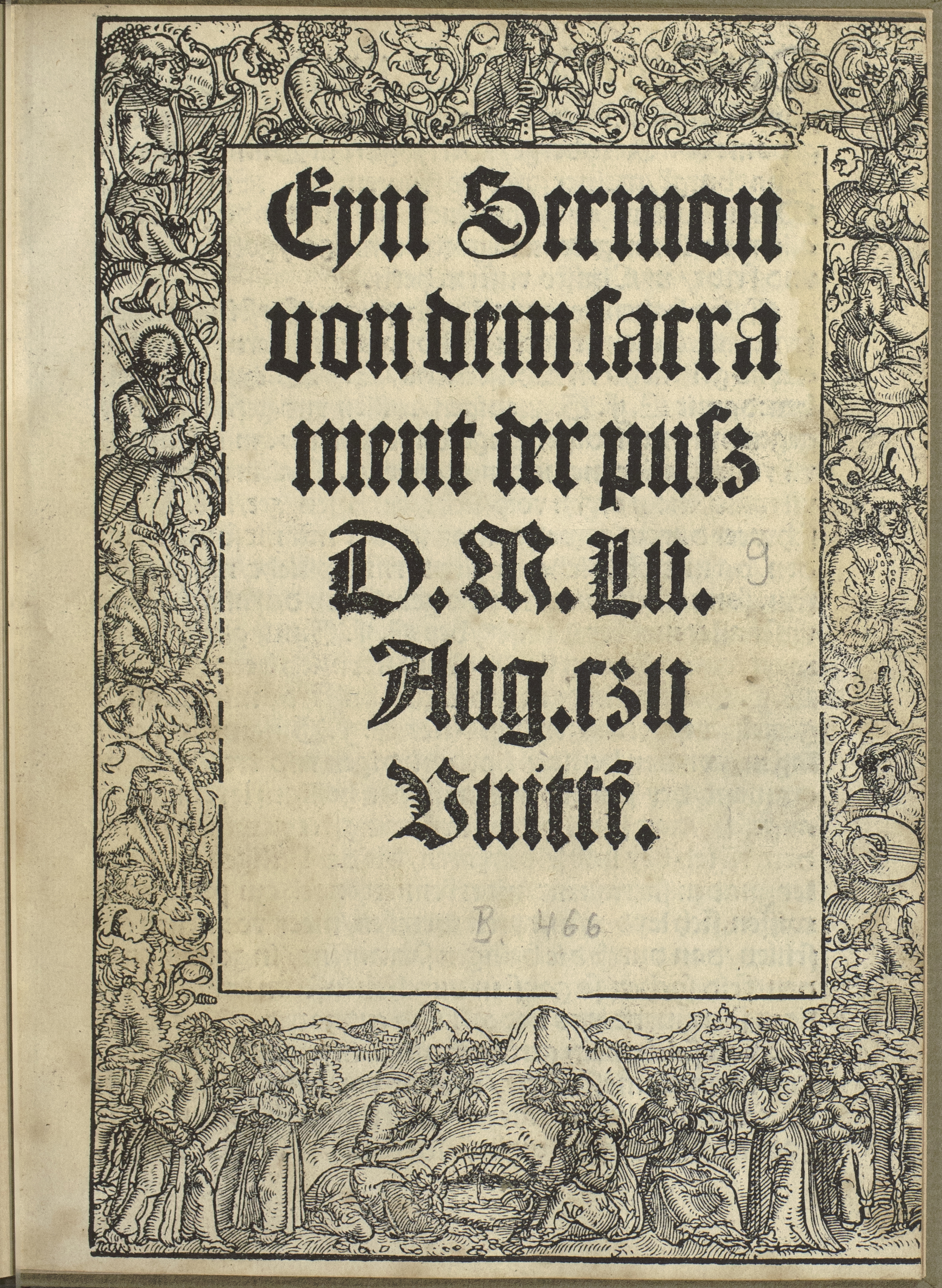 Text
TextEyn Sermon von dem sacrament der pusz
Luther, Martin, 1483-1546Summary: Fifth (and first outside Wittenberg) printing of an early sermon on the Sacrament of Penance by Luther.Summary: Fifth (and first outside Wittenberg) printing of an early sermon on the Sacrament of Penance by Luther. -
 Text
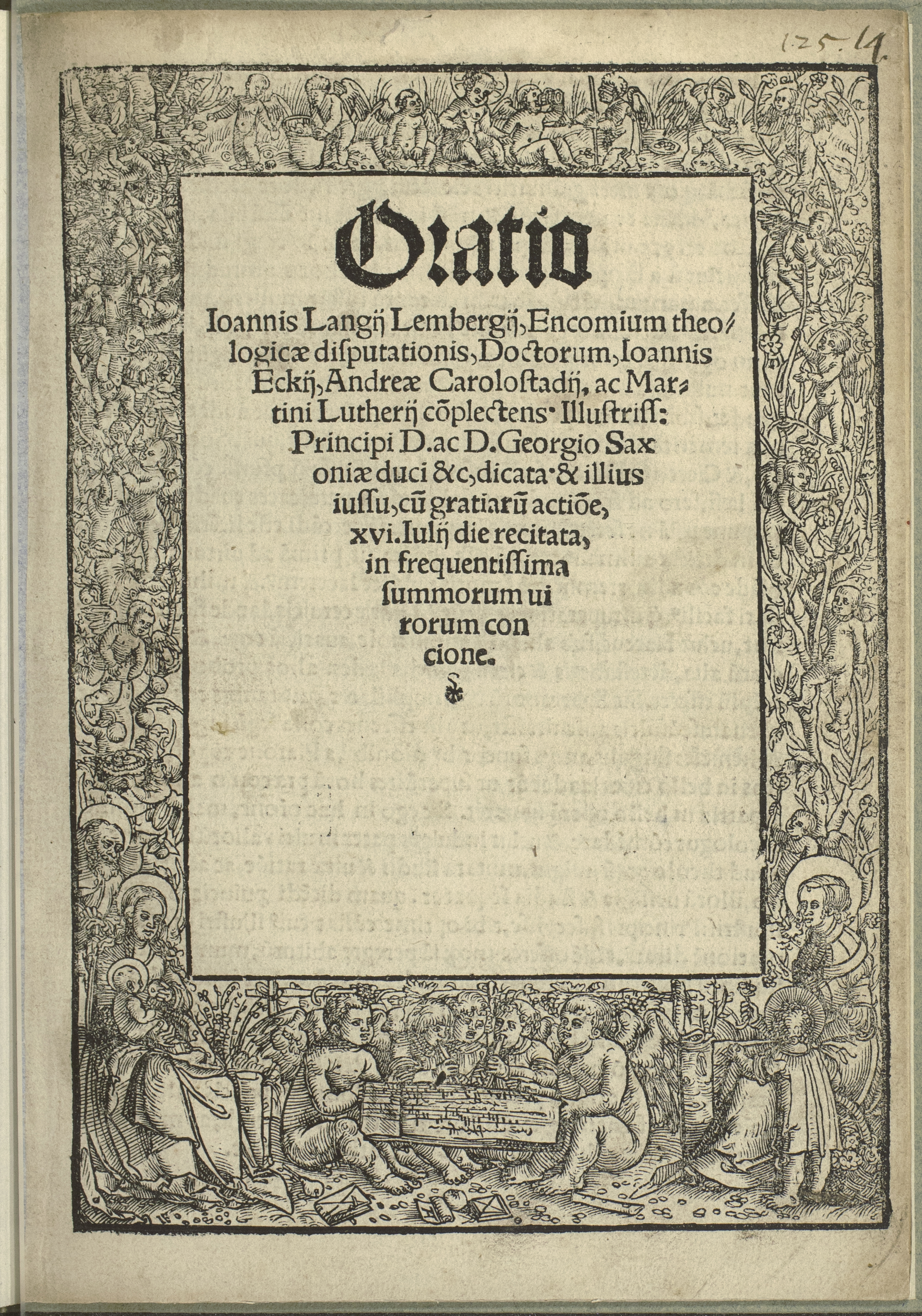
TextOratio
Lange, Johann, 1485-1565Summary: This is the speech by J. Lange von Lemberg, Rector of the University of Leipzig, given at the end of the Leipzig Disputation. Lange von Lemberg takes no sides in the Disputation but praises all the contestants, especially Luther. This is the only printing of the work.Summary: This is the speech by J. Lange von Lemberg, Rector of the University of Leipzig, given at the end of the Leipzig Disputation. Lange von Lemberg takes no sides in the Disputation but praises all the contestants, especially Luther. This is the only printing of the work. -
 Text
TextAuszlegung vnnd Lewterung etzlicher heyligenn Geschrifften : So dem Menschen dienstlich vnd erschieszlich seint zu Christlichem Lebe[n] : kurtzlich berurth vnd angetzeich[n]et in den Figurn vnd Schrifften der Wagen : In Sonderheit, des Creutzes, tzu welchem vnser Goth vnd Herr, den Menschen berufft. Bediengung vnd Vorwort...
Karlstadt, Andreas Rudolff-Bodenstein von, 1486-1541Summary: Only edition of an early work by Karlstadt addressing questions of what constitutes a Christian life.Summary: Only edition of an early work by Karlstadt addressing questions of what constitutes a Christian life. -
 Text
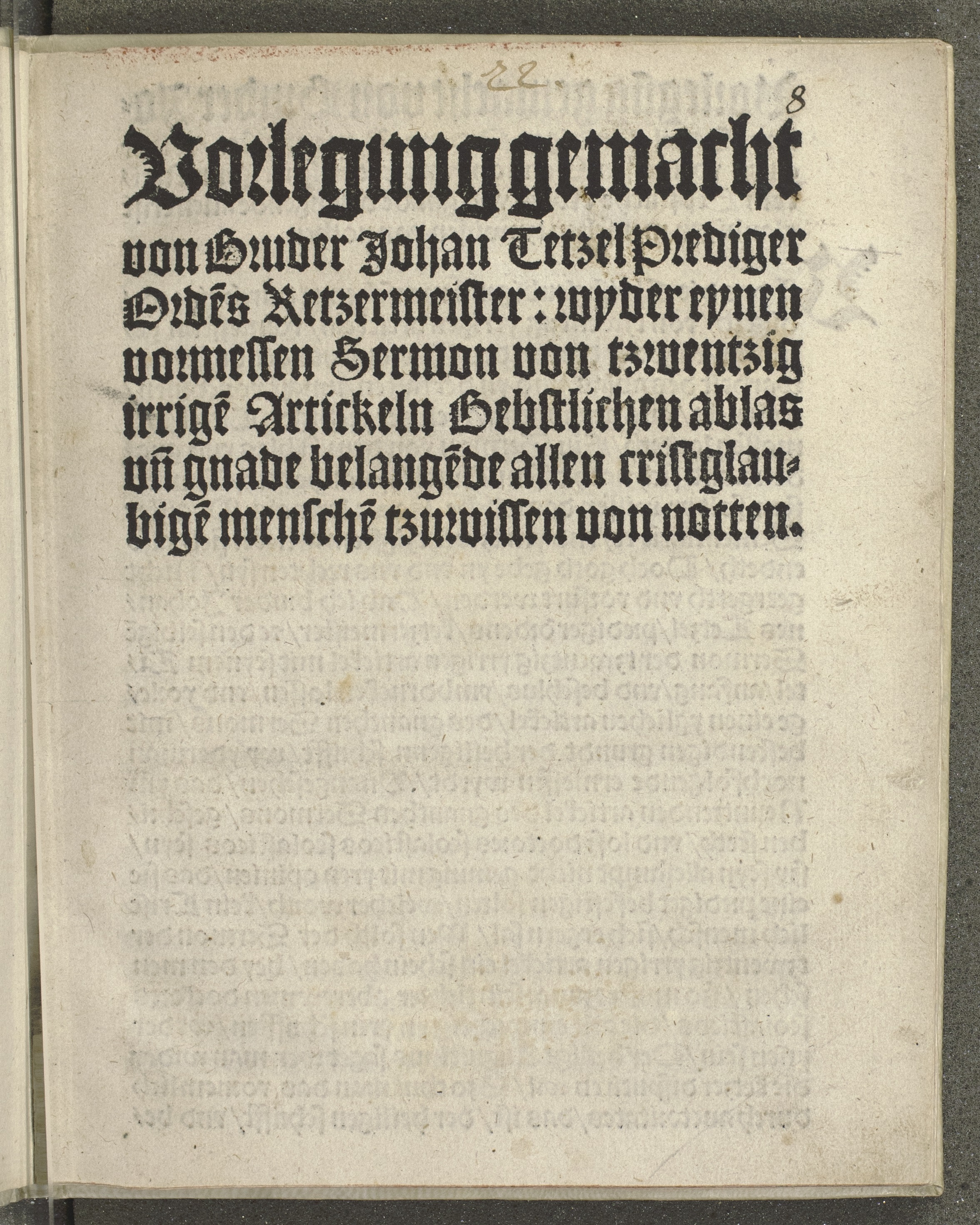
TextVorlegung gemacht von Bruder Johan Tetzel Prediger Orde[n]s Ketzermeister : wyder eynen vormessen Sermon von tzwentzig irrige[n] Artickeln Bebstlichen Ablas vn[d] Gnade belange[n]de allen cristglaubige[n] Mensche[n] tzuwissen von Notten
Tetzel, Johann, 1460-1519Summary: First attack on Luther's "Sermon von dem Ablass und Gnade" (Sermon on indulgences and grace) by Johan Tetzel, a refutation of Luther's position.Summary: First attack on Luther's "Sermon von dem Ablass und Gnade" (Sermon on indulgences and grace) by Johan Tetzel, a refutation of Luther's position. -
 Text
TextAin säligs newes jar. : Von der lieb gottes
Staupitz, Johann von, -1524Summary: This is possibly the first printing of J. von Staupitz's tract on the love of God. Written as a New Year's greeting for some of Staupitz's friends, the work was highly valued by Luther and became a spiritual classic, frequently reprinted and re-edited.Summary: This is possibly the first printing of J. von Staupitz's tract on the love of God. Written as a New Year's greeting for some of Staupitz's friends, the work was highly valued by Luther and became a spiritual classic, frequently reprinted and re-edited. -
 Text
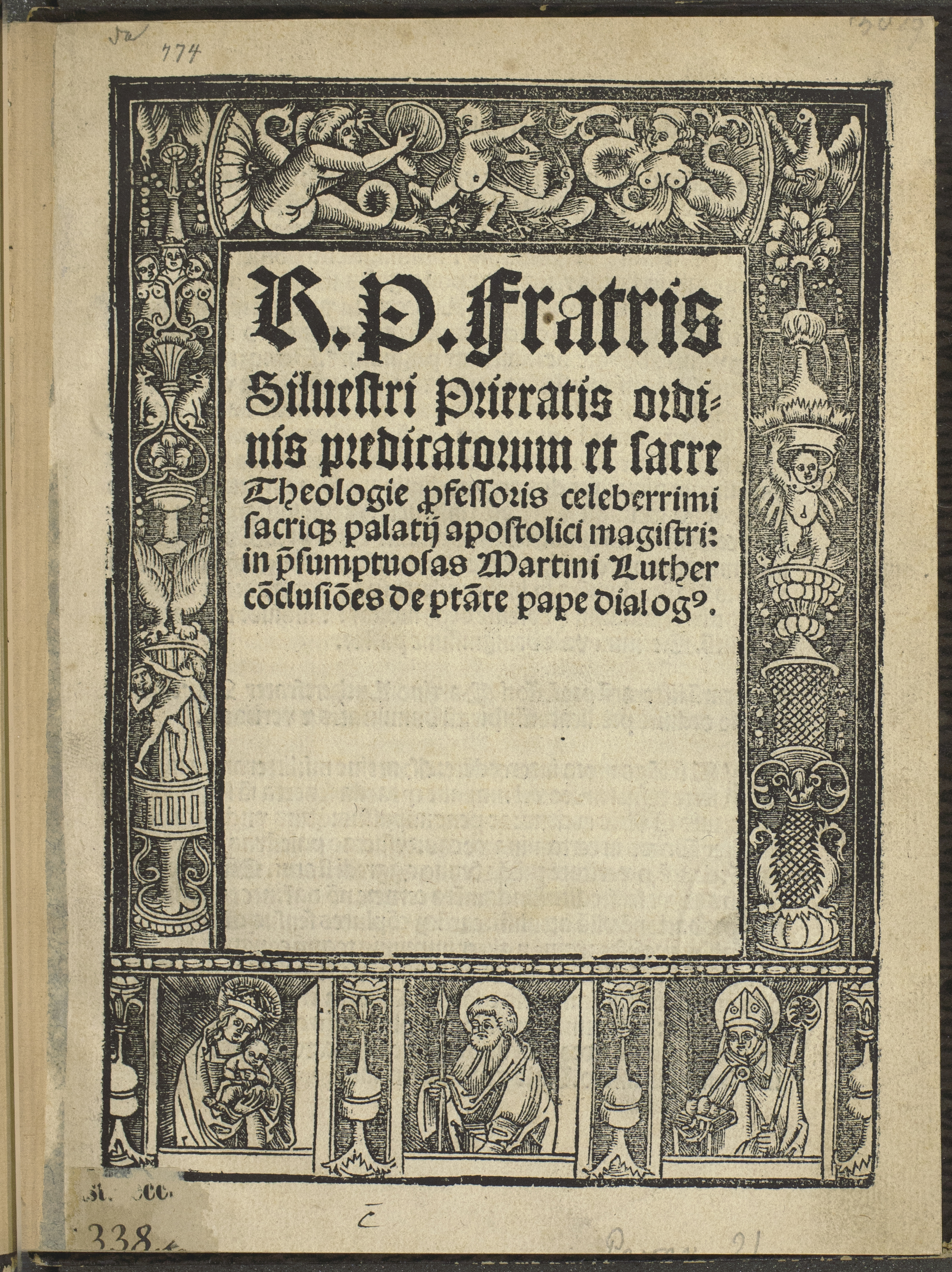
TextR.P. Fratris Siluestri Prieratis ordinis praedicatorum et sacre Theologie p[ro]fessoris celeberrimi sacriq[ue] palatij apostolici magistri: in p[re]sumptuosas Martini Luther co[n]clusio[n]es de p[otes]tate pape dialog[us]
Mazzolini, Silvestro, da Prierio, 1456?-1527?Summary: S. Mazzolini was Master of the Sacred Palace (Vatican) in Rome, censor of books, and one of the first Catholic literary opponents of Luther. This is an early printing of the first work issued in opposition to Luther. Where the printing fits in bibliographically is still a matter of dispute. The work is in dialogue form and contains a refutation of Luther's 95 theses.Summary: S. Mazzolini was Master of the Sacred Palace (Vatican) in Rome, censor of books, and one of the first Catholic literary opponents of Luther. This is an early printing of the first work issued in opposition to Luther. Where the printing fits in bibliographically is still a matter of dispute. The work is in dialogue form and contains a refutation of Luther's 95 theses. -
 Text
TextAusslegung des hundert vnd neundte[n] psalme[n], Dixit d[omin]us domi[n]o meo
Luther, Martin, 1483-1546Summary: The third of three printings of an exposition of Psalm 109 by Luther to be issued in 1518, interpreting the Psalm of the Kingdom and Priesthood of Jesus Christ.Summary: The third of three printings of an exposition of Psalm 109 by Luther to be issued in 1518, interpreting the Psalm of the Kingdom and Priesthood of Jesus Christ. -
 Text
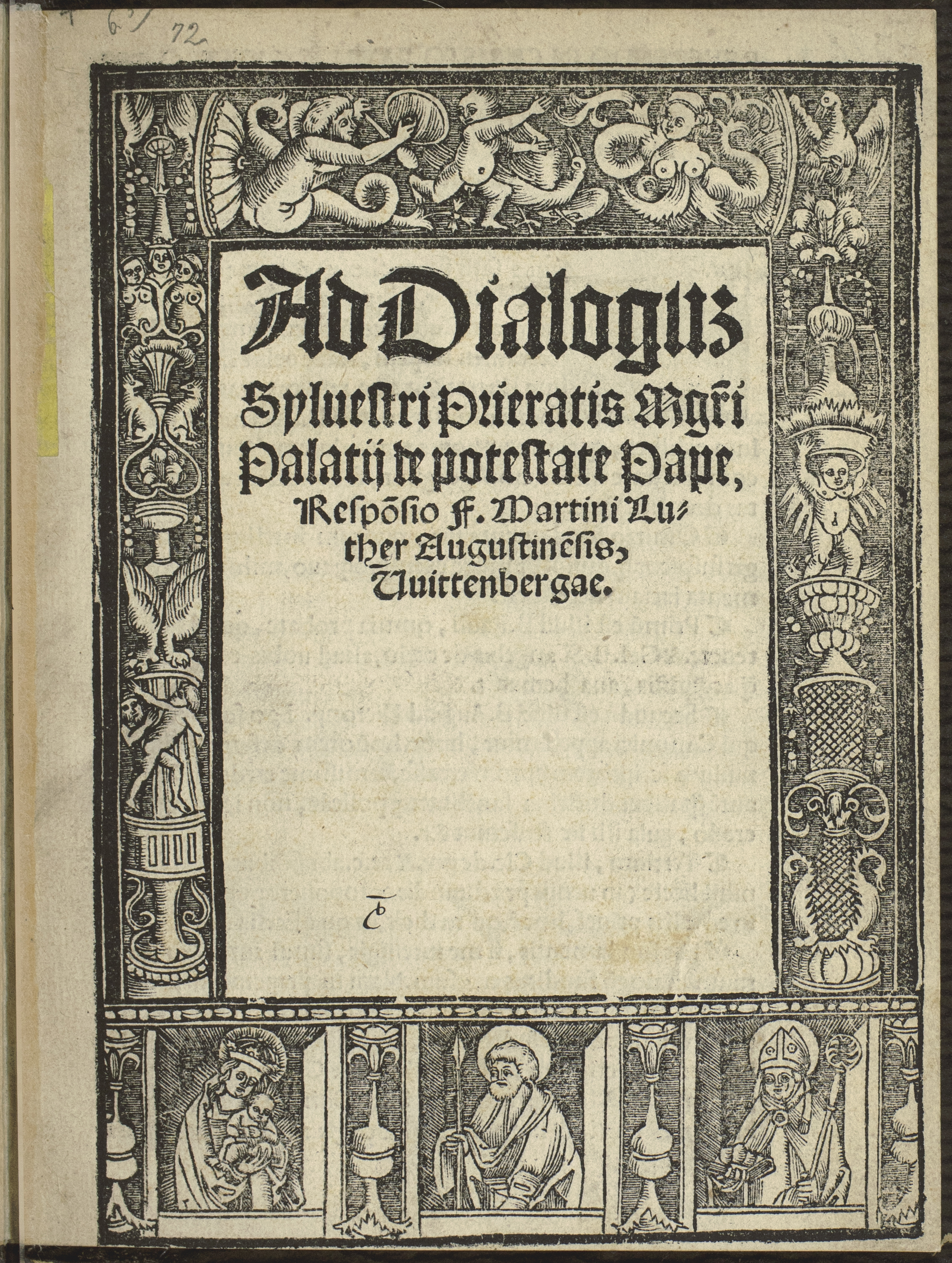
TextAd Dialoguz [i.e. Dialogum] Syluestri Prieratis M[a]g[ist]ri Palatii de potestate Pape Respo[n]sio
Luther, Martin, 1483-1546Summary: When Luther received S. Mazzolini's Dialogue on the 95 Theses, he put it into print at once to show just how weak a piece Mazzolini had written. He followed it up with the present work which includes Mazzolini's text and Luther's reply to it. Even the Pope is said to have been embarrassed by Mazzolini's poor performance in this work. The Dominicans are reported to have bought up the first edition, presumably to prevent its further circulation.Summary: When Luther received S. Mazzolini's Dialogue on the 95 Theses, he put it into print at once to show just how weak a piece Mazzolini had written. He followed it up with the present work which includes Mazzolini's text and Luther's reply to it. Even the Pope is said to have been embarrassed by Mazzolini's poor performance in this work. The Dominicans are reported to have bought up the first edition, presumably to prevent its further circulation. -
 Text
TextEyn deutsch Theologia : das ist Eyn edles Buchleyn, von rechtem vorstand, was Adam vnd Christus sey, vnd wie Adam yn vns sterben, vnd Christus ersteen sall
FranckforterSummary: First printing of Luther's second publication of the "Theologia Deutsch", or "German Theology" of an unknown disciple of the Medieval German mystic, Johannes Tauler (ca. 1300-1361). Luther says in his preface that he has learned more from it than from any other book, the Bible and the works of St. Augustine, excepted, "as to what God, Christ, the human being, and all things are".Summary: First printing of Luther's second publication of the "Theologia Deutsch", or "German Theology" of an unknown disciple of the Medieval German mystic, Johannes Tauler (ca. 1300-1361). Luther says in his preface that he has learned more from it than from any other book, the Bible and the works of St. Augustine, excepted, "as to what God, Christ, the human being, and all things are". -
 Text
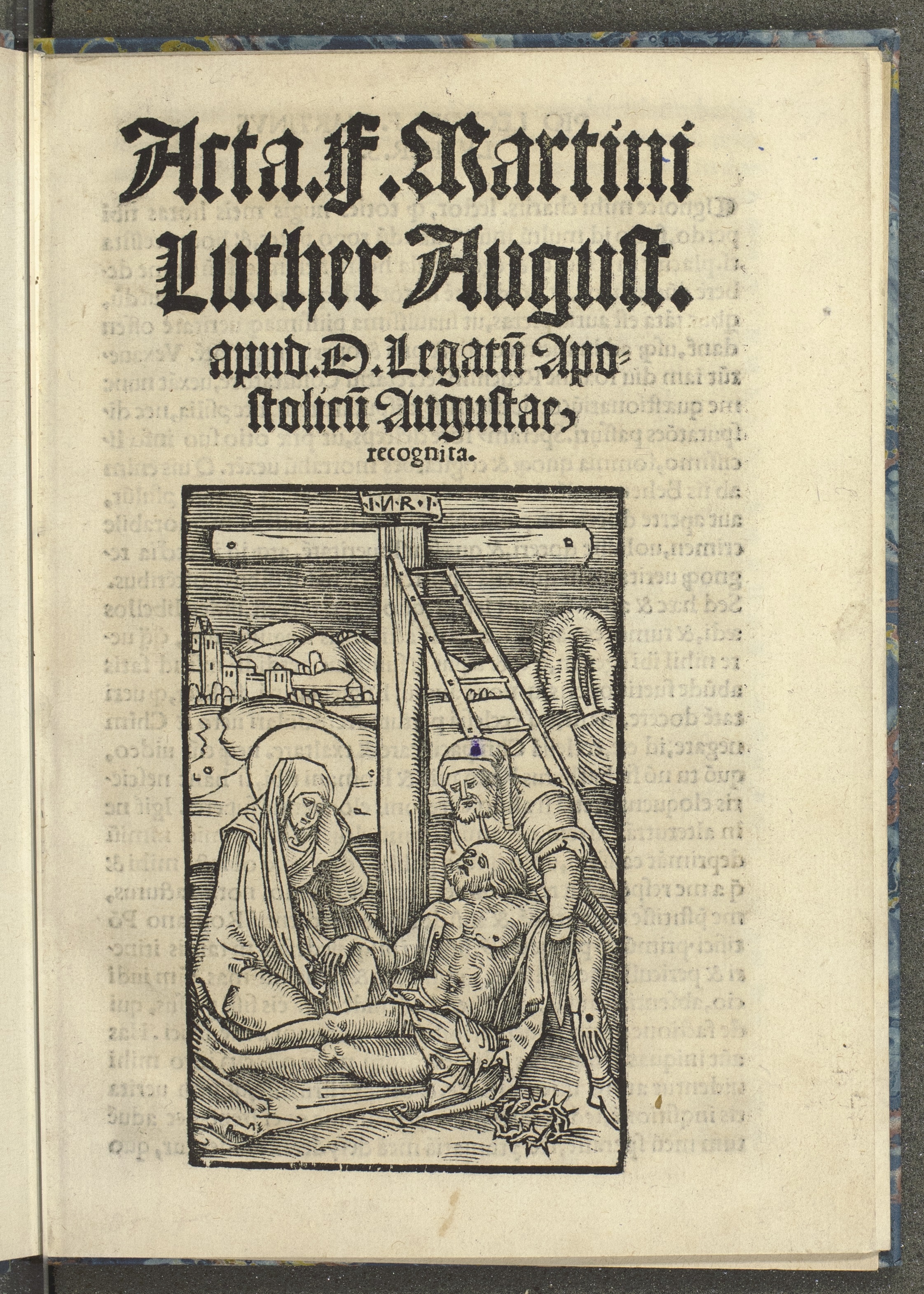
TextActa f. Martini Luther august. apud D. legatu[m] apostolicu[m] Augustae recognitum
Luther, Martin, 1483-1546Summary: In 1518 Luther was summoned to Rome. He appealed to Frederick, Elector of Saxony who was attending the imperial Diet in Augsburg. Frederick negotiated with the Papal Legate Cajetan who finally agreed to a hearing in Augsburg. Luther went there with an imperial escort and then returned safely to Wittenberg. This is Luther's report of what took place in Augsburg. It is the fifth printing of the "Acta Augustana."Summary: In 1518 Luther was summoned to Rome. He appealed to Frederick, Elector of Saxony who was attending the imperial Diet in Augsburg. Frederick negotiated with the Papal Legate Cajetan who finally agreed to a hearing in Augsburg. Luther went there with an imperial escort and then returned safely to Wittenberg. This is Luther's report of what took place in Augsburg. It is the fifth printing of the "Acta Augustana." -
 Text
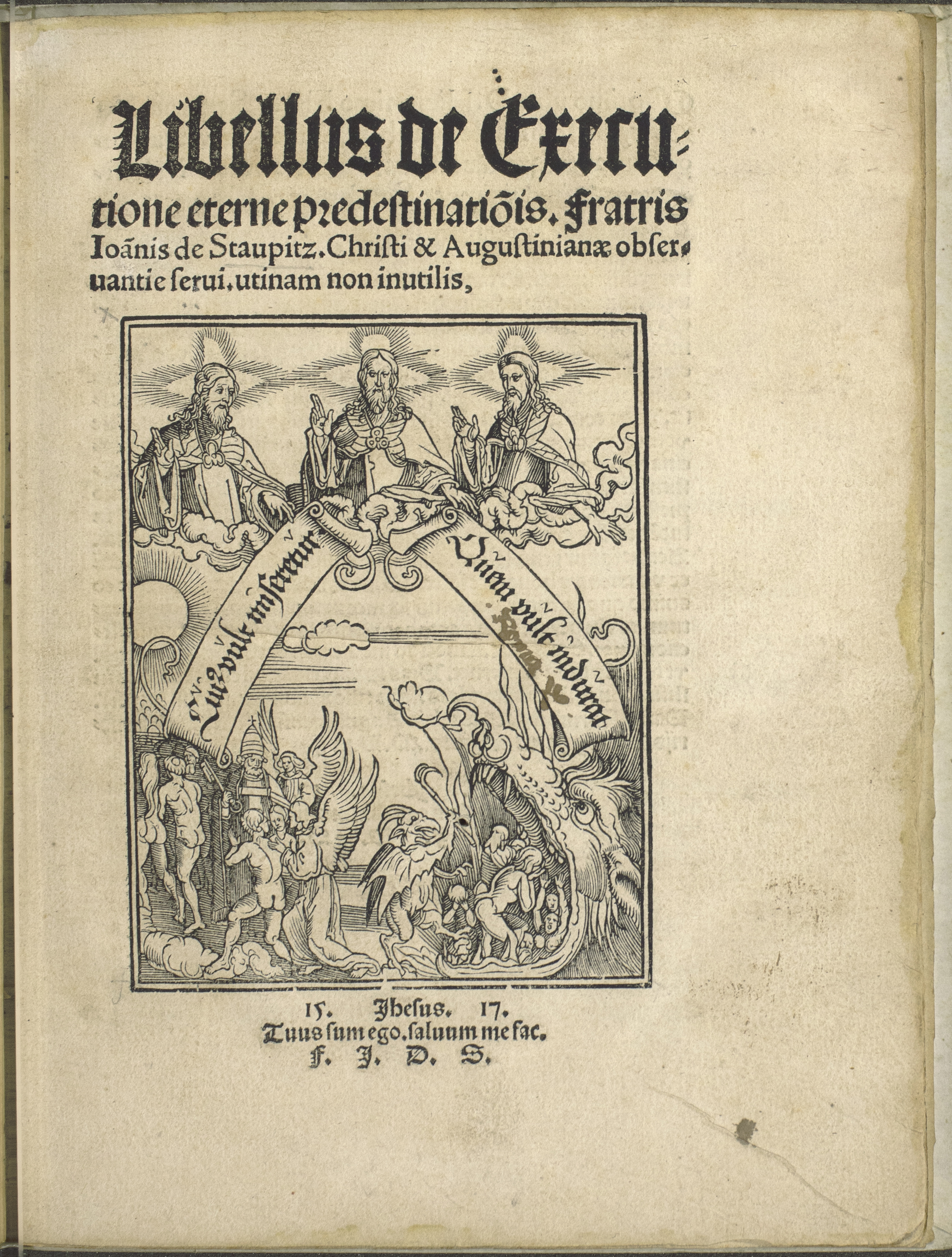
TextLibellus de executione etern[a]e predestinatio[n]is
Staupitz, Johann von, -1524Summary: This is a short work by Staupitz on predestination.Summary: This is a short work by Staupitz on predestination. -
 Text
TextIoannis Revchlin Phorcensis LL. Doc. De arte cabalistica libri tres Leoni X. dicati
Reuchlin, Johann, 1455-1522Summary: Reuchlin had visited Rome in 1490, where he was introduced to Rabbinic literature as well as the cabala.Summary: Reuchlin had visited Rome in 1490, where he was introduced to Rabbinic literature as well as the cabala. -
 Text
TextDis schön Buch gena[n]t der Seelen Paradiss : von waren und volkumen Tugenden sagend
Geiler von Kaysersberg, Johann, 1445-1510Summary: Collection of sermons by the Alsatian preacher Geiler von Kaysersberg, delivered between 1503 and 1505 at the convent of the sisters of the order of St. Mary Magdalene. Geiler was one of the most popular preachers of his day and was sometimes called the German Savonarola. He was a close friend of the Strasbourg humanist Jakob von Wimpheling and was greatly respected by Sebastian Brant, Johann Reuchlin and Philipp Melanchthon.Summary: Collection of sermons by the Alsatian preacher Geiler von Kaysersberg, delivered between 1503 and 1505 at the convent of the sisters of the order of St. Mary Magdalene. Geiler was one of the most popular preachers of his day and was sometimes called the German Savonarola. He was a close friend of the Strasbourg humanist Jakob von Wimpheling and was greatly respected by Sebastian Brant, Johann Reuchlin and Philipp Melanchthon. -
 Text
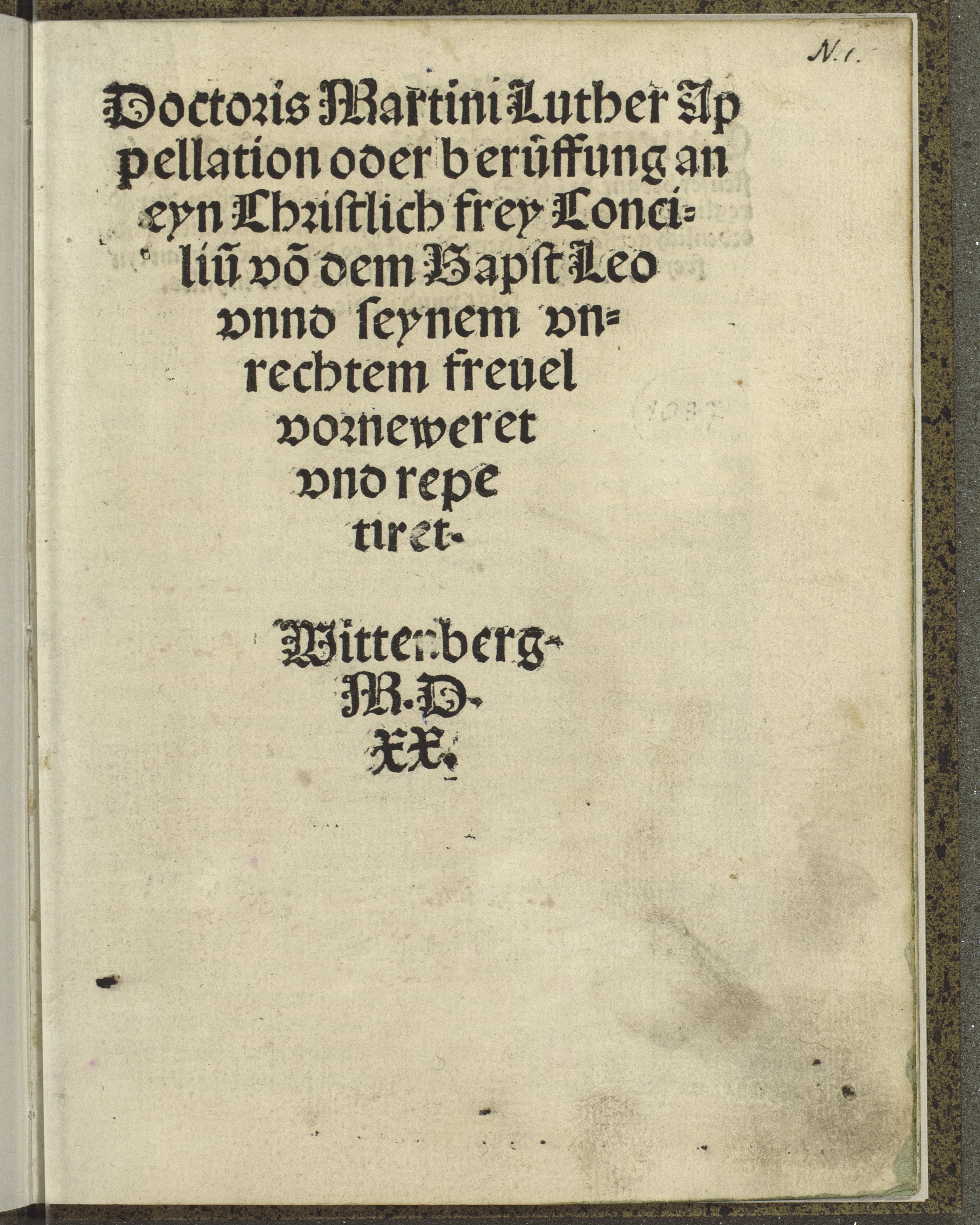
TextDoctoris Martini Luther Appellation oder Berüffung an eyn christlich frey Conciliu[m] vo[n] dem Bapst Leo vnnd seynem vnrechtm Freuel vorneweret vnd repetiret
Luther, Martin, 1483-1546Summary: Despite his lack of success in appealing to the Pope for an Ecumenical Council in 1518, Luther repeats his call in this pamphlet, combining it with a special appeal to the emperor and to the German princes. This is the first printing of this work, produced outside the city of Wittenberg.Summary: Despite his lack of success in appealing to the Pope for an Ecumenical Council in 1518, Luther repeats his call in this pamphlet, combining it with a special appeal to the emperor and to the German princes. This is the first printing of this work, produced outside the city of Wittenberg. -
 Text
TextDas Tauff Buchlin
Luther, Martin, 1483-1546Summary: Luther's German translation of the Wittenberg usage of the Catholic rite of Baptism (Ordo baptizandi). The work was reprinted fifteen times between 1523 and 1526, when Luther issued a revised edition.Summary: Luther's German translation of the Wittenberg usage of the Catholic rite of Baptism (Ordo baptizandi). The work was reprinted fifteen times between 1523 and 1526, when Luther issued a revised edition. -
 Text
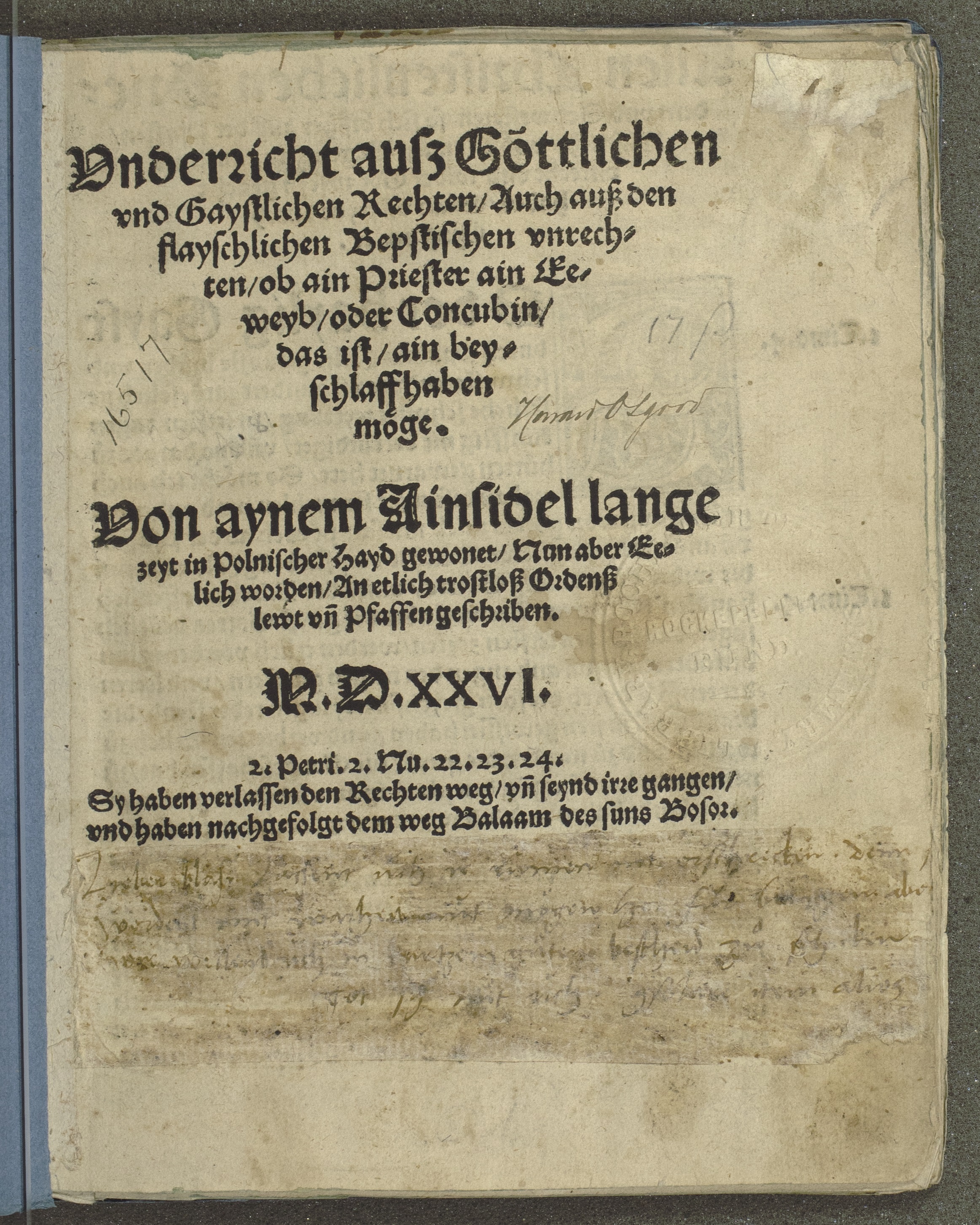
TextVnderricht ausz göttlichen vnd gaystlichen Rechten : Auch ausz den flayschlichen bepstlichen Vnrechten, ob ain Priester ain Eeweyb, oder Concubin, das ist, ain Beyschlaff haben möge
Keller, MichaelSummary: Polemical tract against celibacy, attributed to Michael Keller, who was married August 10, 1526 in Augsburg.Summary: Polemical tract against celibacy, attributed to Michael Keller, who was married August 10, 1526 in Augsburg.

