Richard C. Kessler Reformation Collection
The Richard C. Kessler Reformation Collection was established in 1987, when Richard and Martha Kessler donated their private collection of Reformation imprints and manuscripts to Emory University. These materials were combined with Reformation holdings at the Pitts Theology Library, and an effort was launched to enlarge and sustain this collection in the years to come. An advisory committee of Lutheran laypersons and clergy and of Candler School of Theology faculty and administrators oversees the nurture of the collection and its programs. The Reformation Notes newsletter provides semiannual updates on the growth of the collection, and the Reformation Day at Emory program of music and lectures each October celebrates the collection and its contributions to music, history, and theology.
In the sixteenth century the social and theological movements of central Europe, known collectively as the Reformation, critically shaped religion, law, education and other institutions in the West, and their long shadow has extended even to the present. The purpose of the Kessler Collection is to document these changes by collecting print and manuscript materials down to 1570 by Martin Luther (1483-1546) and those whom he influenced or engaged in debate. In this way historians and theologians will be able to hear the full range of voices that were raised in this dynamic period.
The holdings of the collection now exceed 4,000 items, a mark approximated by only two other libraries in North America; no American library approaches the Kessler Collection's 1,000+ publications by Luther himself.
-
 Text
TextEyn geschicht wie Got eyner Erbarn kloster Jungfrawe[n] ausgeholffen hat
Luther, Martin, 1483-1546Summary: First printing of F. von Oberweimar's narrative of her escape from the convent of New-Helfta. She came to Luther in Wittenberg in 1524, and he published her explanation of her actions.Summary: First printing of F. von Oberweimar's narrative of her escape from the convent of New-Helfta. She came to Luther in Wittenberg in 1524, and he published her explanation of her actions. -
 Text
TextD. Sebastian Meyers, etwan Predicanten zun Barfussern zu Strassburg, Widerrüffung an eyn löblich Freystat Strassburg. Anno M.D.XXiiij
Meyer, Sebastian, 1465-1545?Summary: Public renunciation of his monastic vows and earlier teachings by Sebastian Meyer, a preacher in the city of Strassburg and an early follower of Martin Luther.Summary: Public renunciation of his monastic vows and earlier teachings by Sebastian Meyer, a preacher in the city of Strassburg and an early follower of Martin Luther. -
 Text
TextEyn Gesprech vo[n] de[n] Scheinwercke[n] der Gaistlichen, und yhren gelubde[n] : damit sie zuverlesterung des bluts Christi vermaynen selig zu werden
Sachs, Hans, 1494-1576Summary: One of nine 1524 printings of this short anti-monastic tract by the Nuremberg cobbler and playright Hans Sachs.Summary: One of nine 1524 printings of this short anti-monastic tract by the Nuremberg cobbler and playright Hans Sachs. -
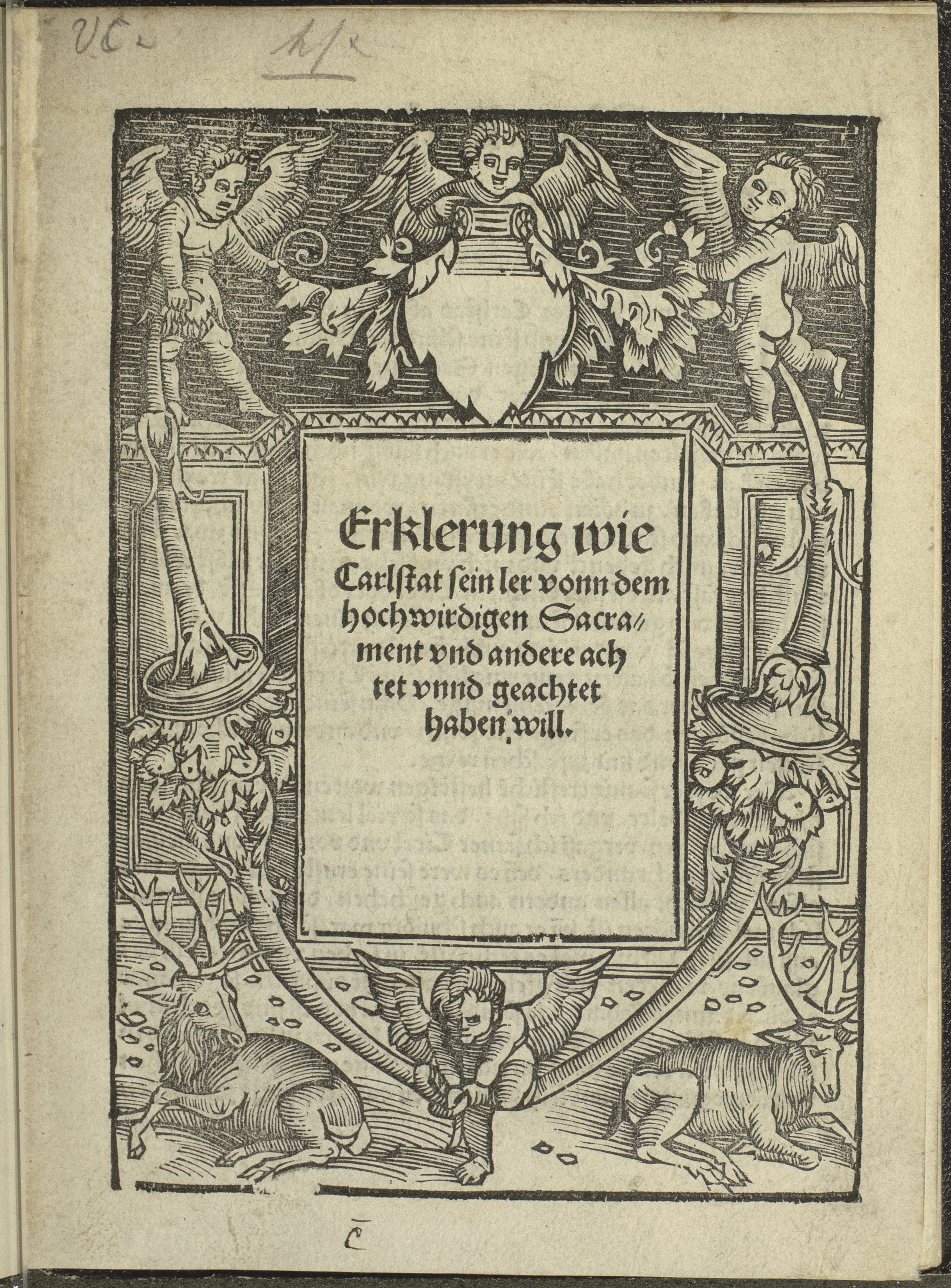 Text
TextErklerung wie Carlstat sein ler vonn dem hochwirdigen Sacrament : vnd andere achtet vnnd geachtet haben will
Karlstadt, Andreas Rudolff-Bodenstein von, 1486-1541Summary: After Karlstadt had been driven out of Saxony, he sought refuge in South Germany. When this proved impossible, he returned to Wittenberg. Karlstadt publish a retraction of his former opinions and then publish nothing else without prior approval. This is the retraction with Luther's preface. Needless to say, Karlstadt did not find these conditions at all acceptable and he was soon on the move again. He came to settle in Switzerland, first in Zurich and finally in Basel, where he died on Christmas Eve, 1541.Summary: After Karlstadt had been driven out of Saxony, he sought refuge in South Germany. When this proved impossible, he returned to Wittenberg. Karlstadt publish a retraction of his former opinions and then publish nothing else without prior approval. This is the retraction with Luther's preface. Needless to say, Karlstadt did not find these conditions at all acceptable and he was soon on the move again. He came to settle in Switzerland, first in Zurich and finally in Basel, where he died on Christmas Eve, 1541. -
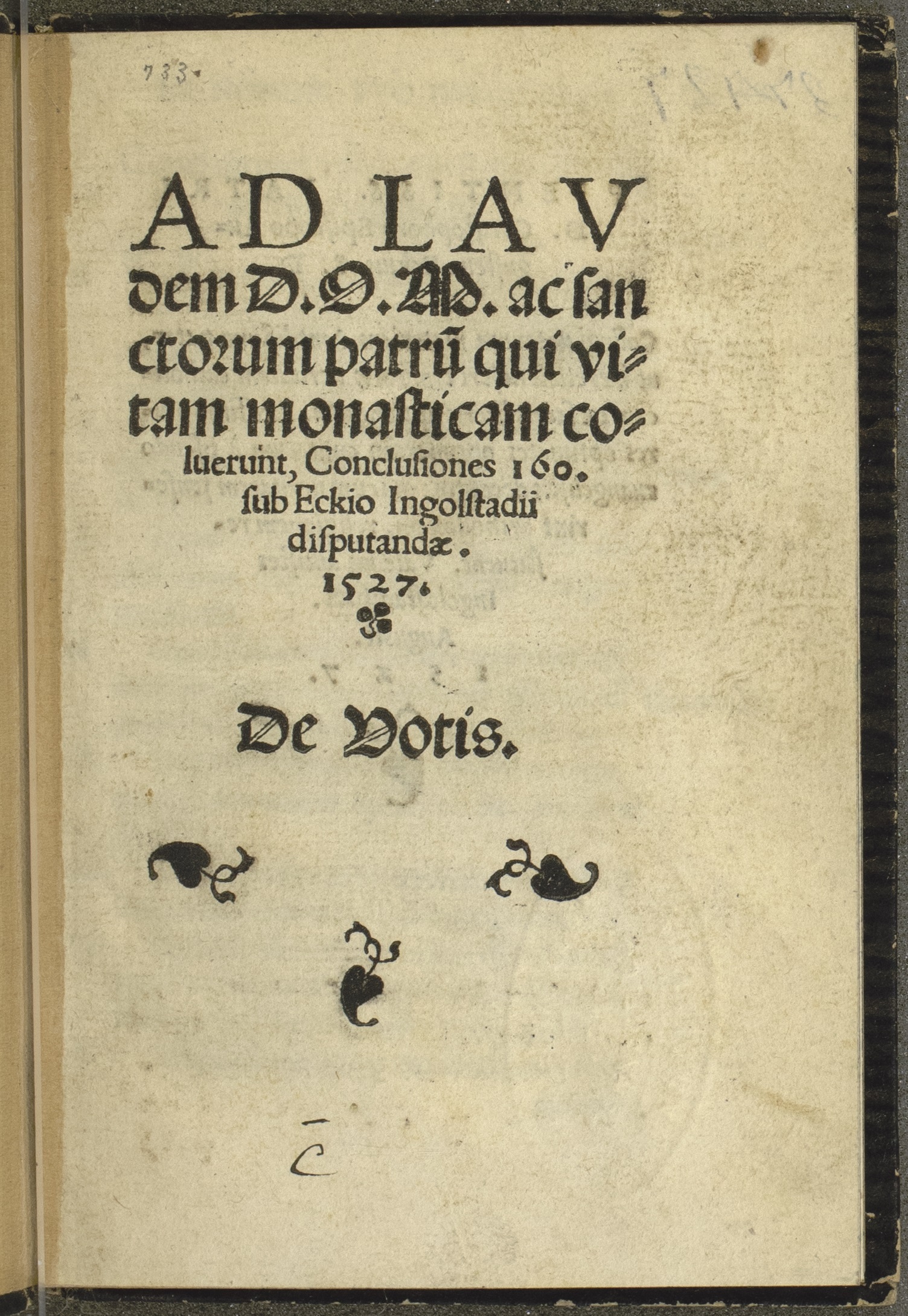 Text
TextAd laudem D.O.M. ac sanctorum patru[m] qui vitam monasticam coluerunt, conclusiones 160
Eck, Johann, 1486-1543Summary: This is another academic disputation by Eck at Ingolstadt on monastic vows including 160 theses "in praise of those men who practice the monastic life."Summary: This is another academic disputation by Eck at Ingolstadt on monastic vows including 160 theses "in praise of those men who practice the monastic life." -
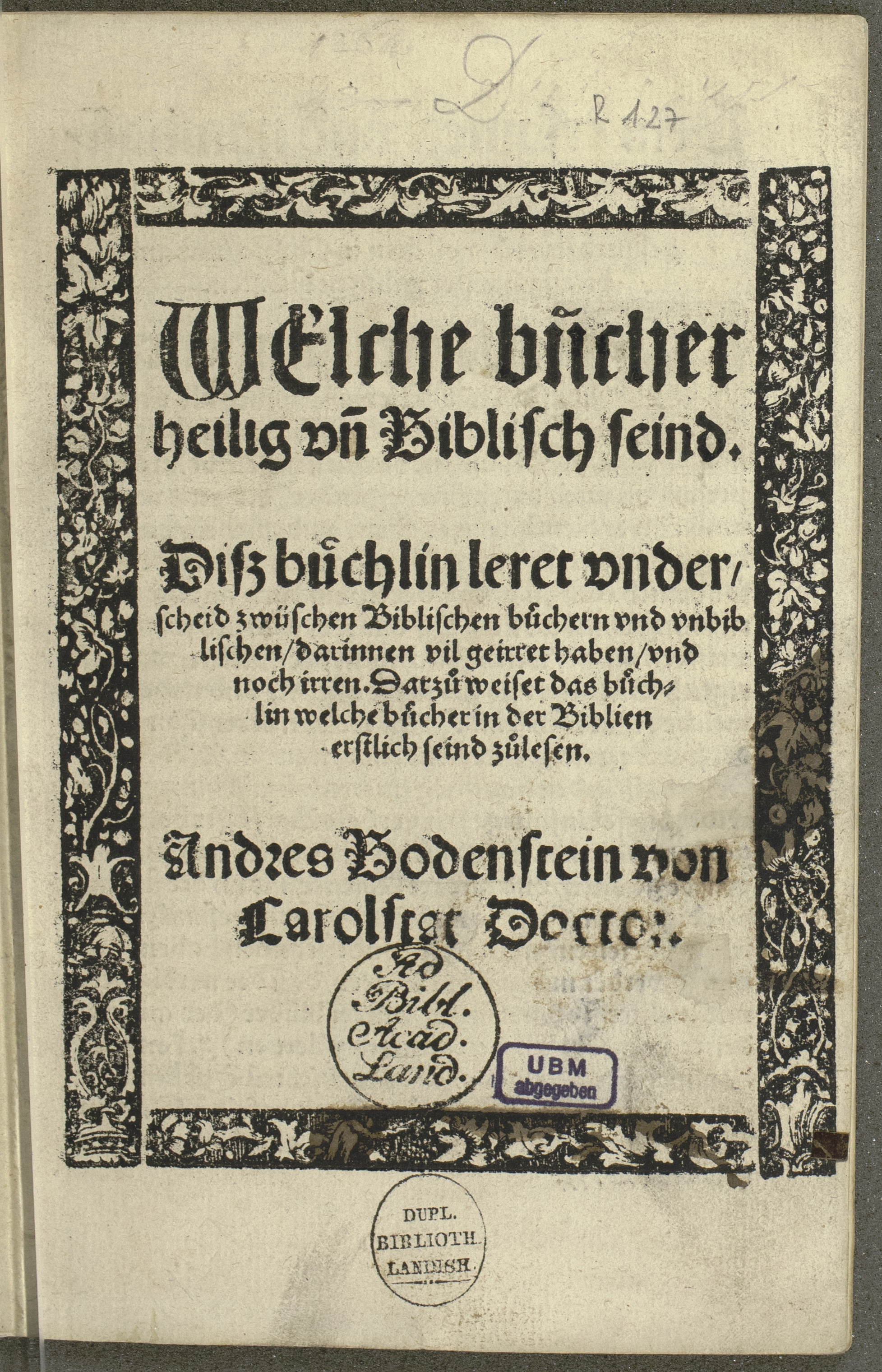 Text
TextWElche [sic] bücher heilig vn[d] Biblisch seind : Disz büchlin leret vnderscheid zwüschen Biblischen büchern vnd vnbiblischen, darinnen vil geirret haben, vnd noch irren : Darzuo weiset das büchlin welche bücher in der Biblien erstlich seind zu[o]lesen
Karlstadt, Andreas Rudolff-Bodenstein von, 1486-1541Summary: Treatise on which books are to be considered canonical, by Andreas Rudolff-Bodenstein von Karlstadt, Luther's more radical Wittenberg colleague.Summary: Treatise on which books are to be considered canonical, by Andreas Rudolff-Bodenstein von Karlstadt, Luther's more radical Wittenberg colleague. -
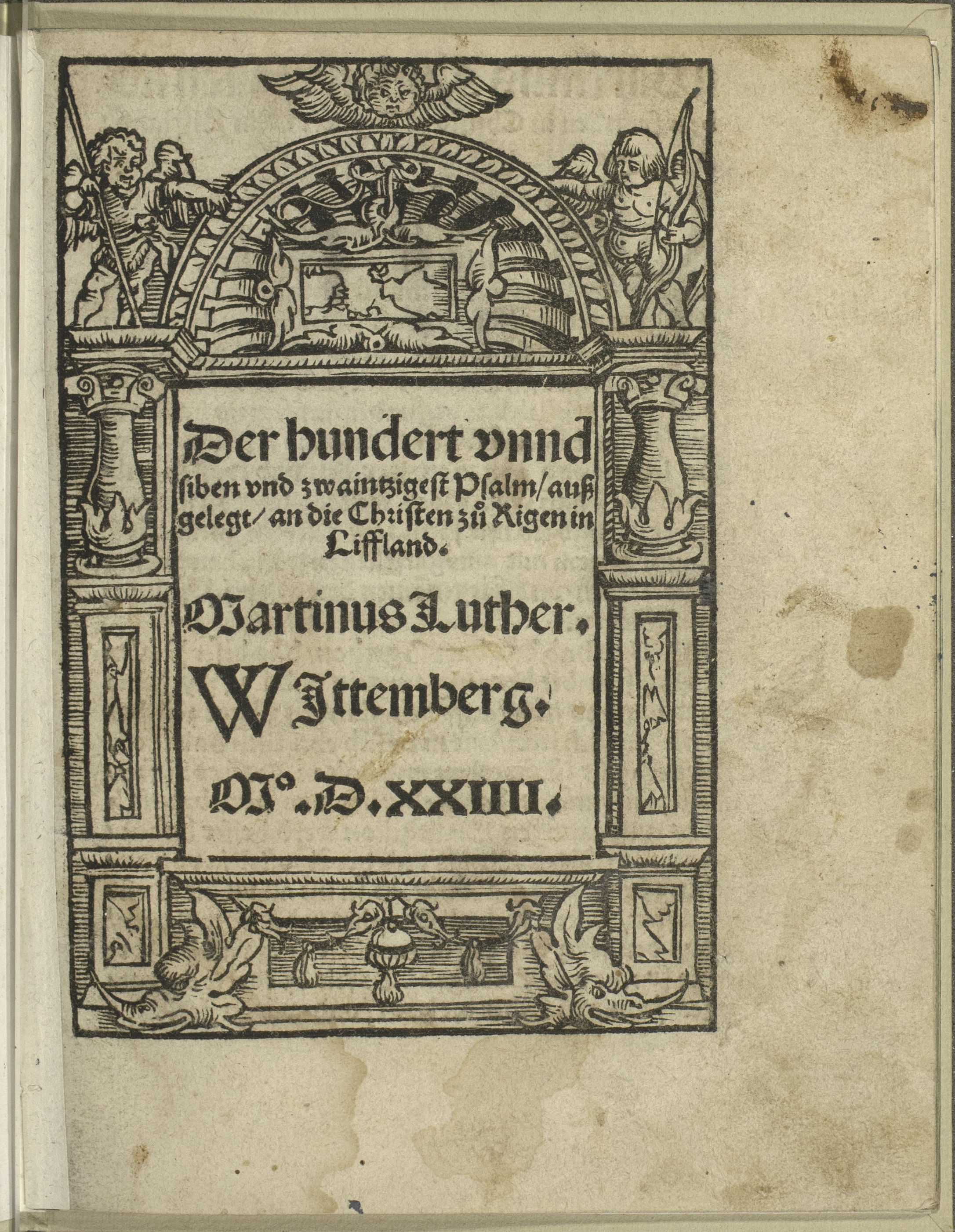 Text
TextDer hundert vnnd siben vnd zwaintzigest Psalm, aussgelegt, an die Christen zuo Rigen in Liffland
Luther, Martin, 1483-1546Summary:Summary: -
 Text
TextDe votis monasticis
Luther, Martin, 1483-1546Summary: This is the third printing of Luther's treatise on monastic vows.Summary: This is the third printing of Luther's treatise on monastic vows. -
 Text
TextD. Andree Carolstatini doctoris et Archidiaconi VVittenburgensis : CCCLXX: et apologetic[a]e co[n]clusio[n]es p[er] sacris literis & Vuittenburgen[si] ita edit[a]e, vt & lectoribus p[er] futur[a]e sint
Karlstadt, Andreas Rudolff-Bodenstein von, 1486-1541Summary: After Luther had published the Ninety-five Theses, a broad academic debate spread across Germany on the question of the validity of indulgences. The debate was soon joined by Eck of Ingolstadt, representing the Catholic position. Karlstadt, a senior theologian at Wittenberg seems to have taken the lead in defending his colleague with his work, a series of disputations held at the University of Wittenberg beginning May 14, 1518, and continuing beyond July 7, 1518.Summary: After Luther had published the Ninety-five Theses, a broad academic debate spread across Germany on the question of the validity of indulgences. The debate was soon joined by Eck of Ingolstadt, representing the Catholic position. Karlstadt, a senior theologian at Wittenberg seems to have taken the lead in defending his colleague with his work, a series of disputations held at the University of Wittenberg beginning May 14, 1518, and continuing beyond July 7, 1518. -
 Text
TextVon gelubden unterrichtung
Karlstadt, Andreas Rudolff-Bodenstein von, 1486-1541Summary: The question of the value and validity of monastic vows arose in Wittenberg because of Luther's tract, On the Freedom of a Christian, as well as because of his advice to monks to leave their monasteries. Karlstadt here argues that vows of monastic obedience prevent men and women from following God's commands. Karlstadt was the first of the Protestant Reformers to repudiate the validity of monastic vows.Summary: The question of the value and validity of monastic vows arose in Wittenberg because of Luther's tract, On the Freedom of a Christian, as well as because of his advice to monks to leave their monasteries. Karlstadt here argues that vows of monastic obedience prevent men and women from following God's commands. Karlstadt was the first of the Protestant Reformers to repudiate the validity of monastic vows. -
 Text
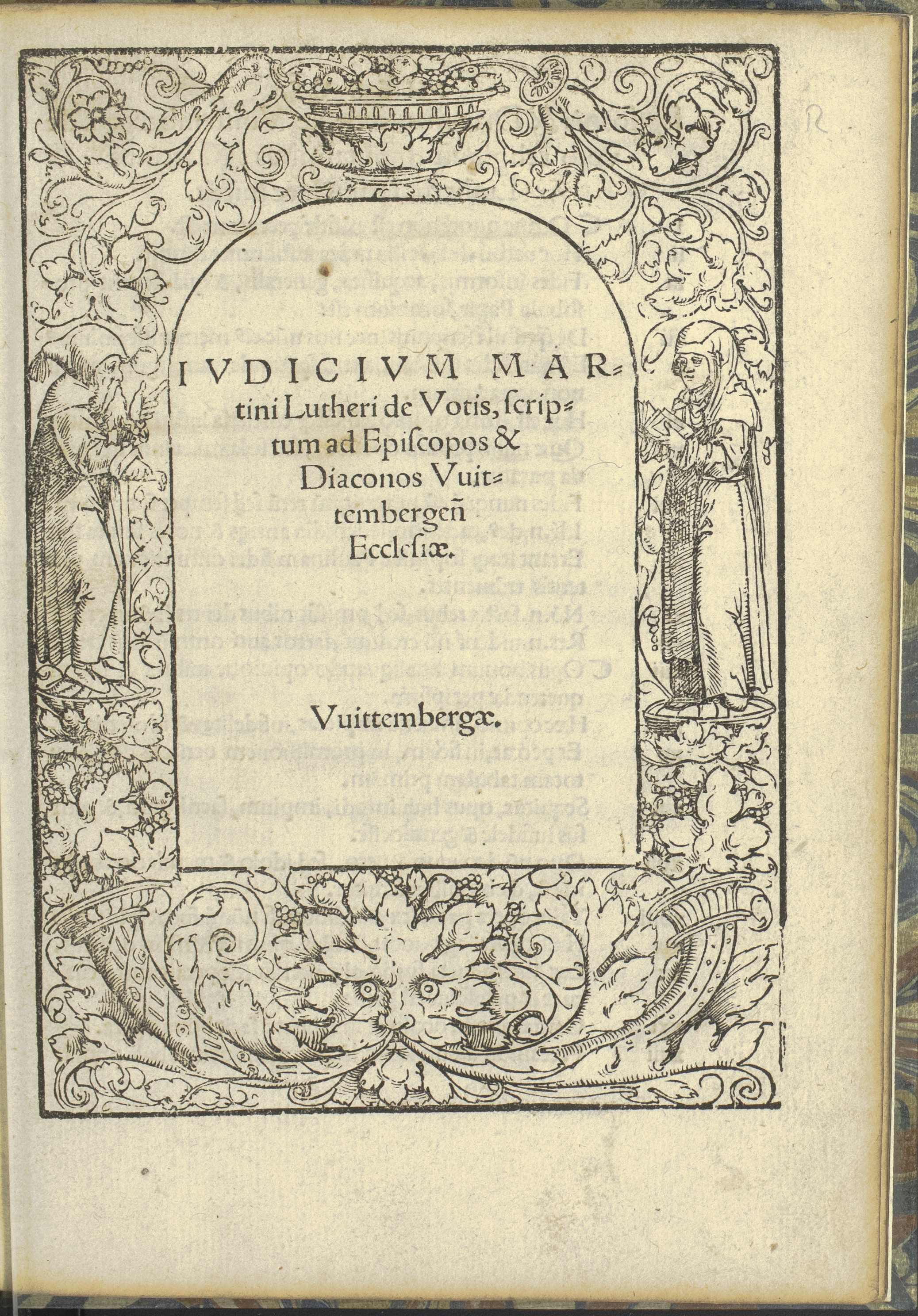
TextIudicium Martini Lutheri de votis : scriptum ad episcopos & diaconos Vuittembergen[sis] ecclesiae
Luther, Martin, 1483-1546Summary: First edition of a short tract written by Luther at Wartburg castle and addressed to the bishop and religious leaders in Wittenberg. In 139 brief statements, Luther warns that religious vows and monastic life do not by themselves bring about the forgiveness of sins.Summary: First edition of a short tract written by Luther at Wartburg castle and addressed to the bishop and religious leaders in Wittenberg. In 139 brief statements, Luther warns that religious vows and monastic life do not by themselves bring about the forgiveness of sins. -
 Text
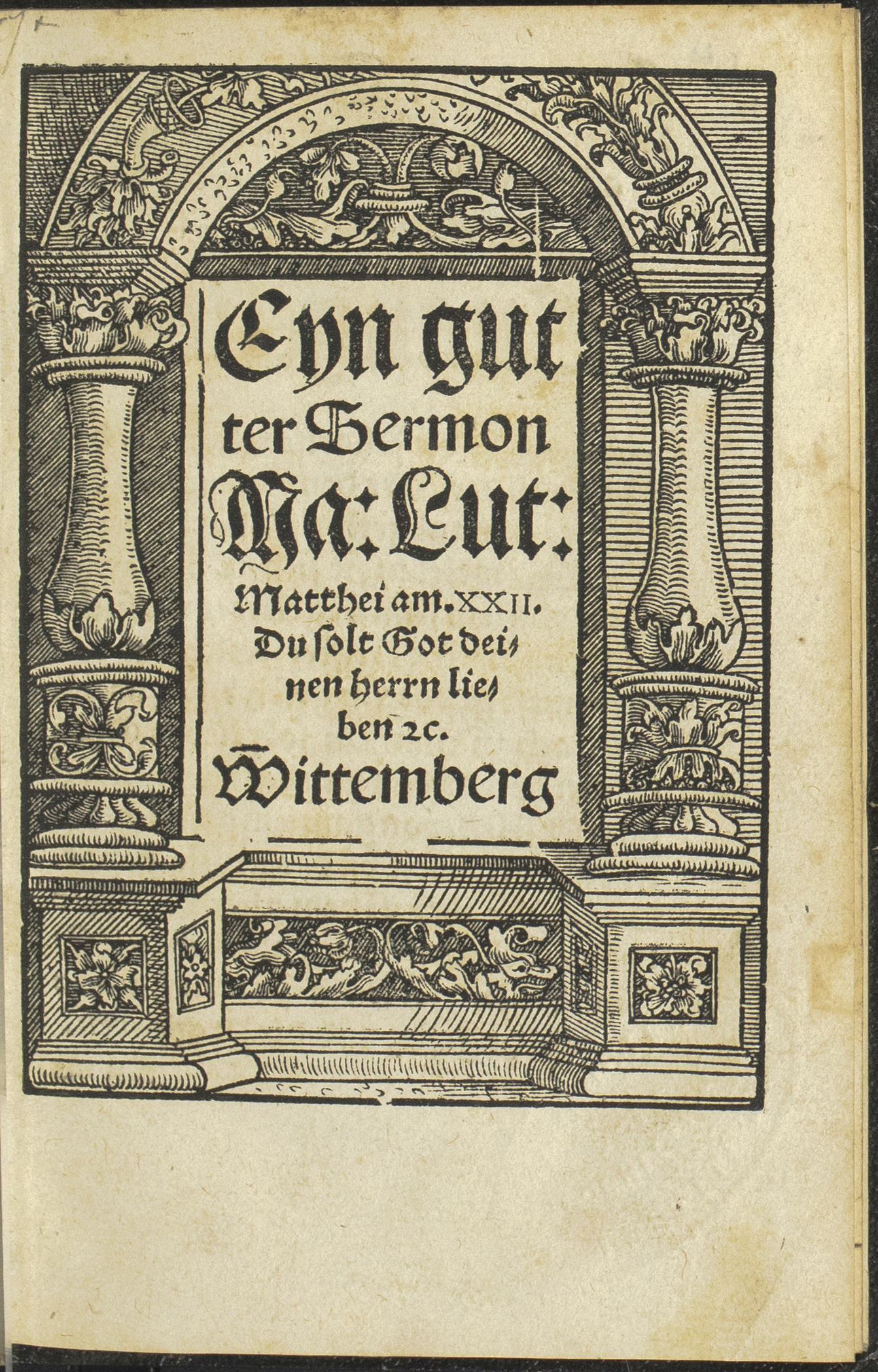
TextEyn gutter Sermon
Luther, Martin, 1483-1546Summary: Sermon preached September 30, 1526, on Matthew 22:34-46 (Jesus in Temple during Passion Week).Summary: Sermon preached September 30, 1526, on Matthew 22:34-46 (Jesus in Temple during Passion Week). -
 Text
TextForma Inquisitionis Hispanicae instituta in inferiori Germania anno 1550
Summary: Instructions for inquisitors in the Netherlands (Lower Germany), published by the Lutheran reformer Matthias Flacius to call attention to the persecution of Protestants. Flacius intended this report to underscore his opposition to any compromises with the Catholic Church, even in liturgical matters, as permitted by the Augsburg Interim of 1548.Summary: Instructions for inquisitors in the Netherlands (Lower Germany), published by the Lutheran reformer Matthias Flacius to call attention to the persecution of Protestants. Flacius intended this report to underscore his opposition to any compromises with the Catholic Church, even in liturgical matters, as permitted by the Augsburg Interim of 1548. -
 Text
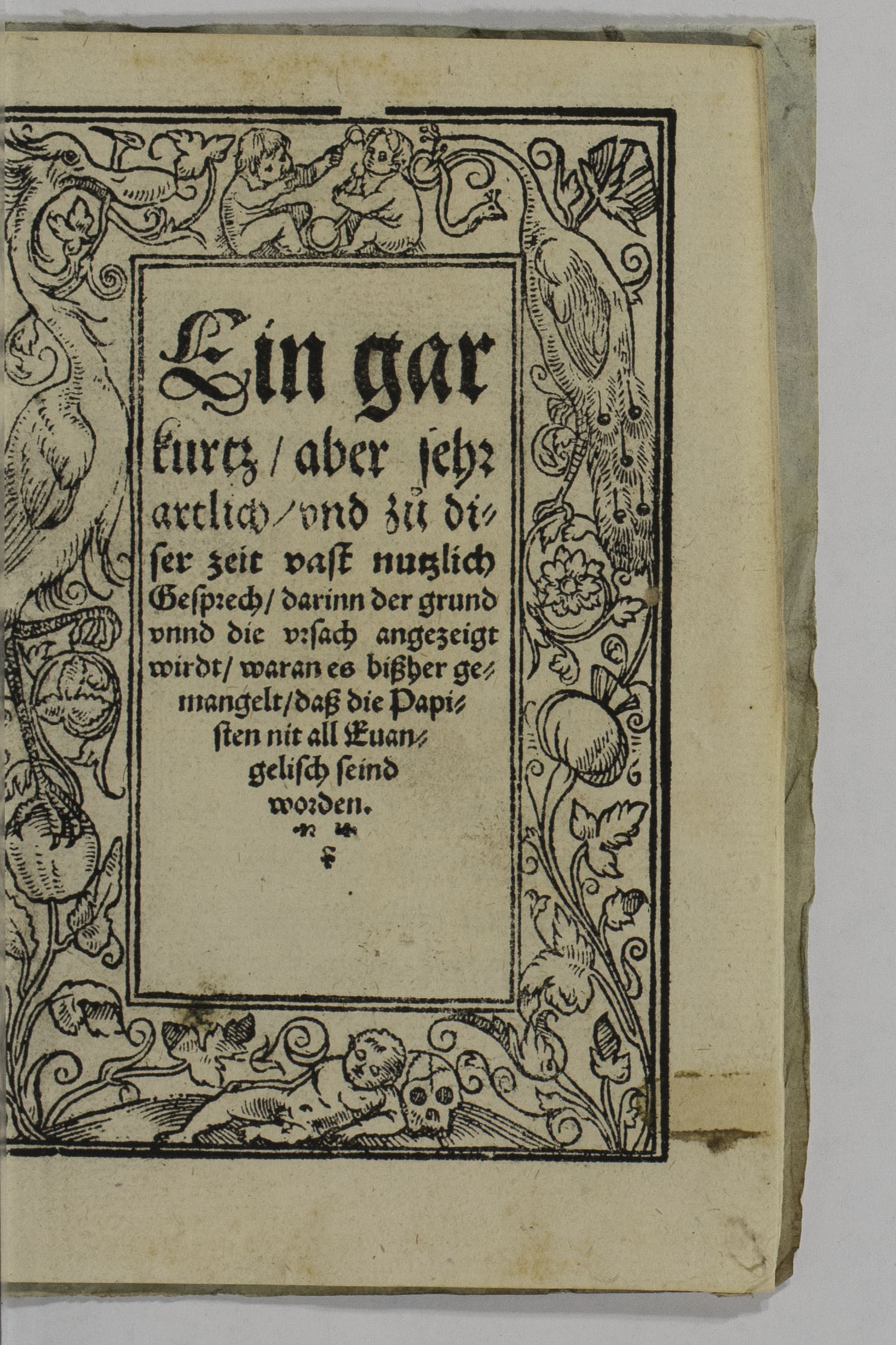
TextEin gar kurtz aber sehr artlich vnd zů diser zeit vast nutzlich Gesprech, darinn der grund vnnd die vrsach angezeigt wirdt waran es bissher gemangelt dass die Papisten nit all Euangelisch seind worden.
Walasser, Adam, -1581Summary: A fictitious dialogue between a Catholic and a Protestant, written by the Catholic theologian Adam Walasser. The discussion includes topics like the authority of tradition outside of Scripture or prayer to the Saints and the Protestant position is presented as reasonable, albeit incorrect by Walasser.Summary: A fictitious dialogue between a Catholic and a Protestant, written by the Catholic theologian Adam Walasser. The discussion includes topics like the authority of tradition outside of Scripture or prayer to the Saints and the Protestant position is presented as reasonable, albeit incorrect by Walasser. -
 Text
TextVorclerung Doctoris Martini Luther etlicher Artickell : ynn seynem Sermon von dem heyligenn sacrament
Luther, Martin, 1483-1546Summary: Fuller explanation of Luther's 1519 sermon: Vom Sakrament des Leichnams Christi und von den Bruderschaften.Summary: Fuller explanation of Luther's 1519 sermon: Vom Sakrament des Leichnams Christi und von den Bruderschaften. -
 Text
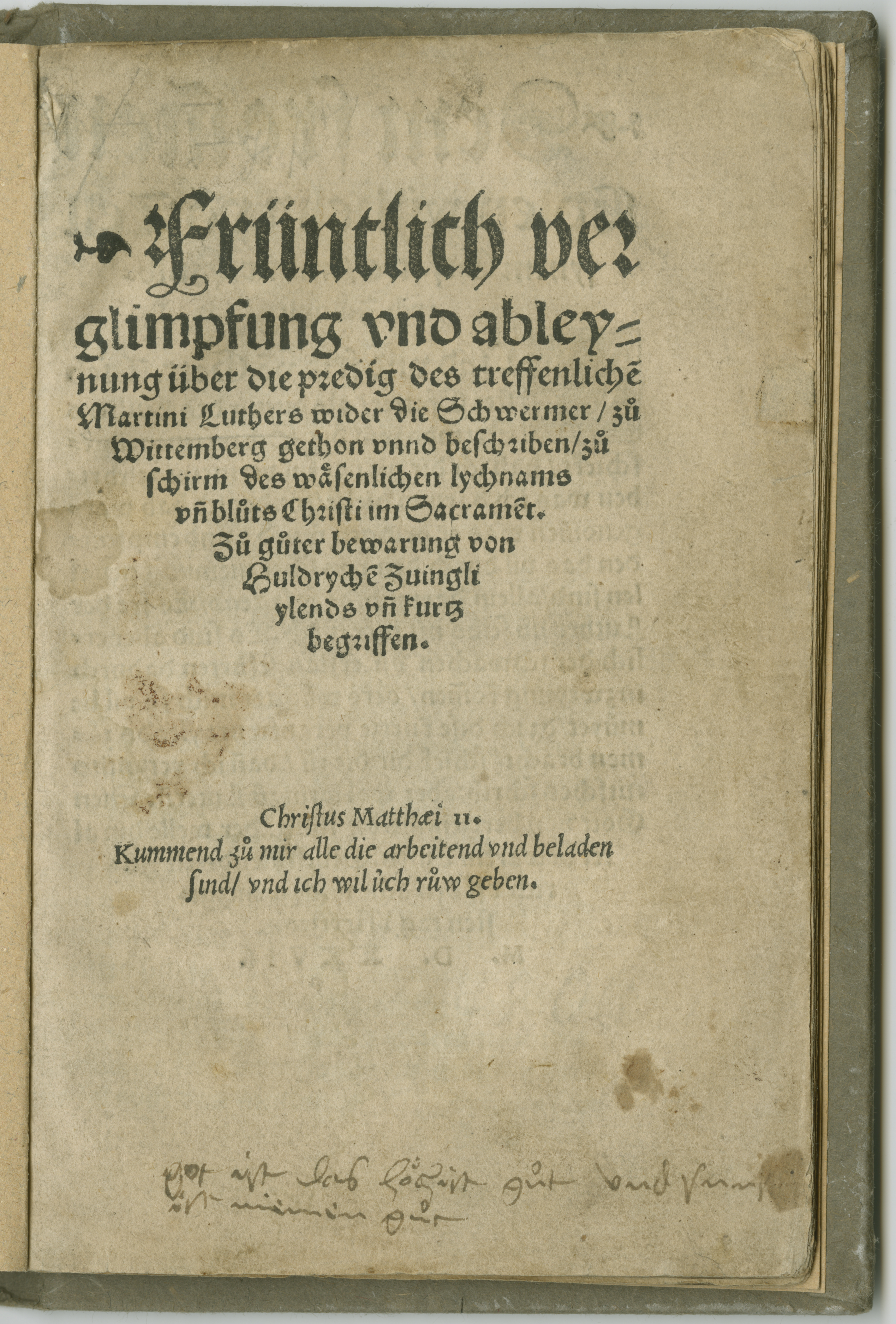
TextFrüntlich verglimpfung vnd ableynung über die predig des treffenliche[n] Martini Luthers wider die Schwermer : zuo Wittemberg gethon vnnd beschriben zuo schirm des wäsenlichen lychnams vn[d] bluts Christi im Sacrame[n]t
Zwingli, Ulrich, 1484-1531Summary: In a sermon against religious fanatics (Wider die Schwärmer), Luther had asserted the real presence of Christ in the eucharist. Zwingli responds by affirming the Reformed position that the practice of communion is to be seen as a symbolic act.Summary: In a sermon against religious fanatics (Wider die Schwärmer), Luther had asserted the real presence of Christ in the eucharist. Zwingli responds by affirming the Reformed position that the practice of communion is to be seen as a symbolic act. -
 Text
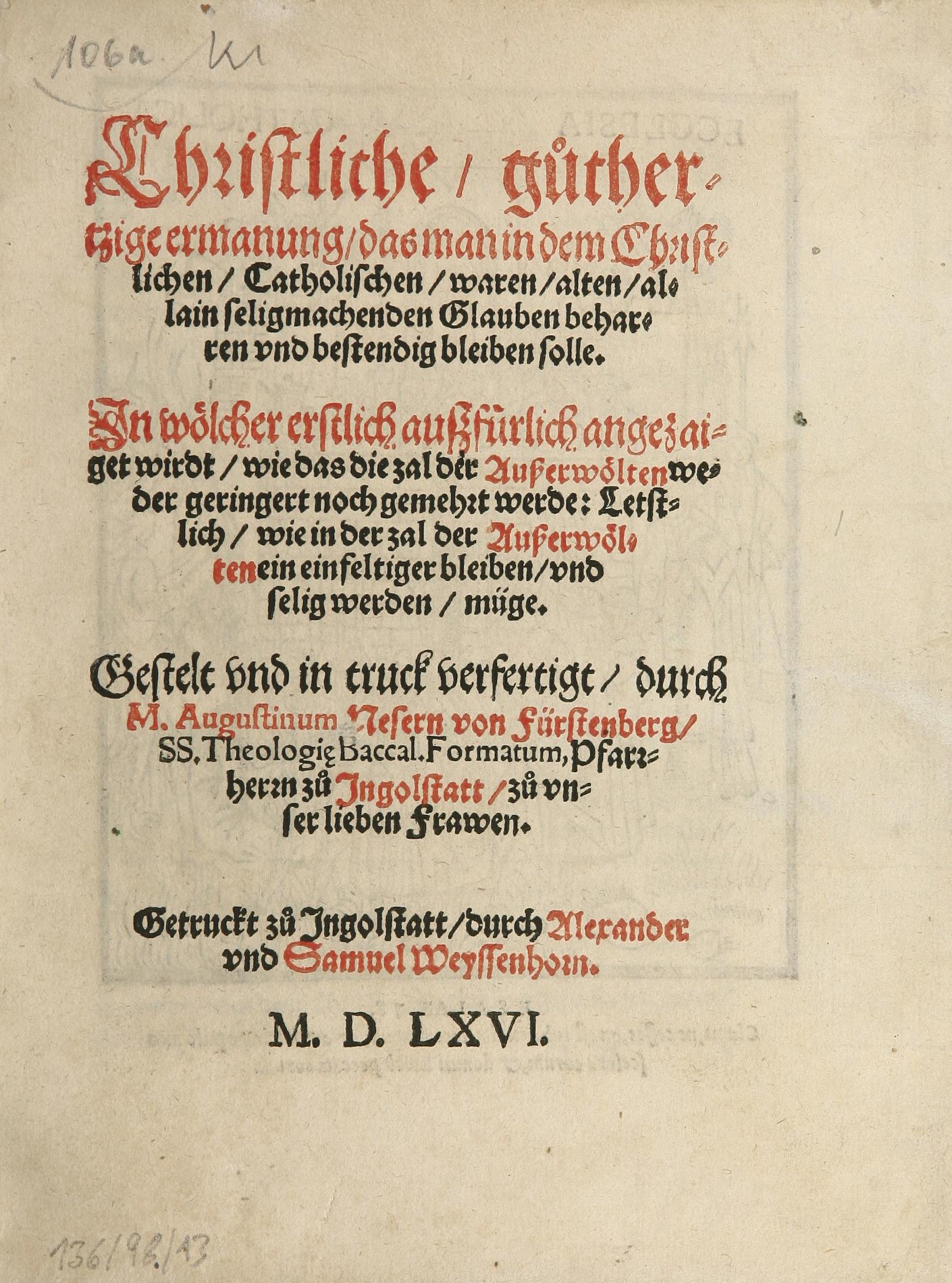
TextChristliche güthertzige Ermanung, das Man in dem Christlichen, Catholischen, waren, alten, allain seligmachenden Glauben beharren vnd bestendig bleiben solle : In wölcher erstlich auszfürlich angezaiget wirdt, wie das die Zal der Ausserwölten weder geringert noch gemehrt werde: letstlich, wie in der Zal der Ausserwölten ein einfeltiger bleiben, vnd selig werden, müge
Neser, AugustinusSummary: Augustinus Neser was a pastor in Ingolstadt. In this hortatory tract he discusses the importance of staying within the Catholic fold.Summary: Augustinus Neser was a pastor in Ingolstadt. In this hortatory tract he discusses the importance of staying within the Catholic fold. -
 Text
TextDisputatio. Secundum, & Octauum Decalogi praecepta, thesibus theologicis explicata, : quae publicè ad disputandum proponentur, pridiè idus Septemb. Quando reuerentia, dignitate, & eruditione praestanti uiro, D. Ioanni Schauppio Eckio, liberalium disciplinarum magistro, et ss. theologiae Licentiato, Officiali Passauiensi, etc. Supremus in professione theologica gradus decernetur.
Theander, Georg, 1508-1570Summary: An academic disputation presented Georg Theander, professor at the University of Ingolstadt, and defended by Sebastian Haydlauff, priest at the church of St. Moritz in Ingolstadt. The disputation was based on 30 theses on the 2nd and 8th commandments.Summary: An academic disputation presented Georg Theander, professor at the University of Ingolstadt, and defended by Sebastian Haydlauff, priest at the church of St. Moritz in Ingolstadt. The disputation was based on 30 theses on the 2nd and 8th commandments. -
 Text
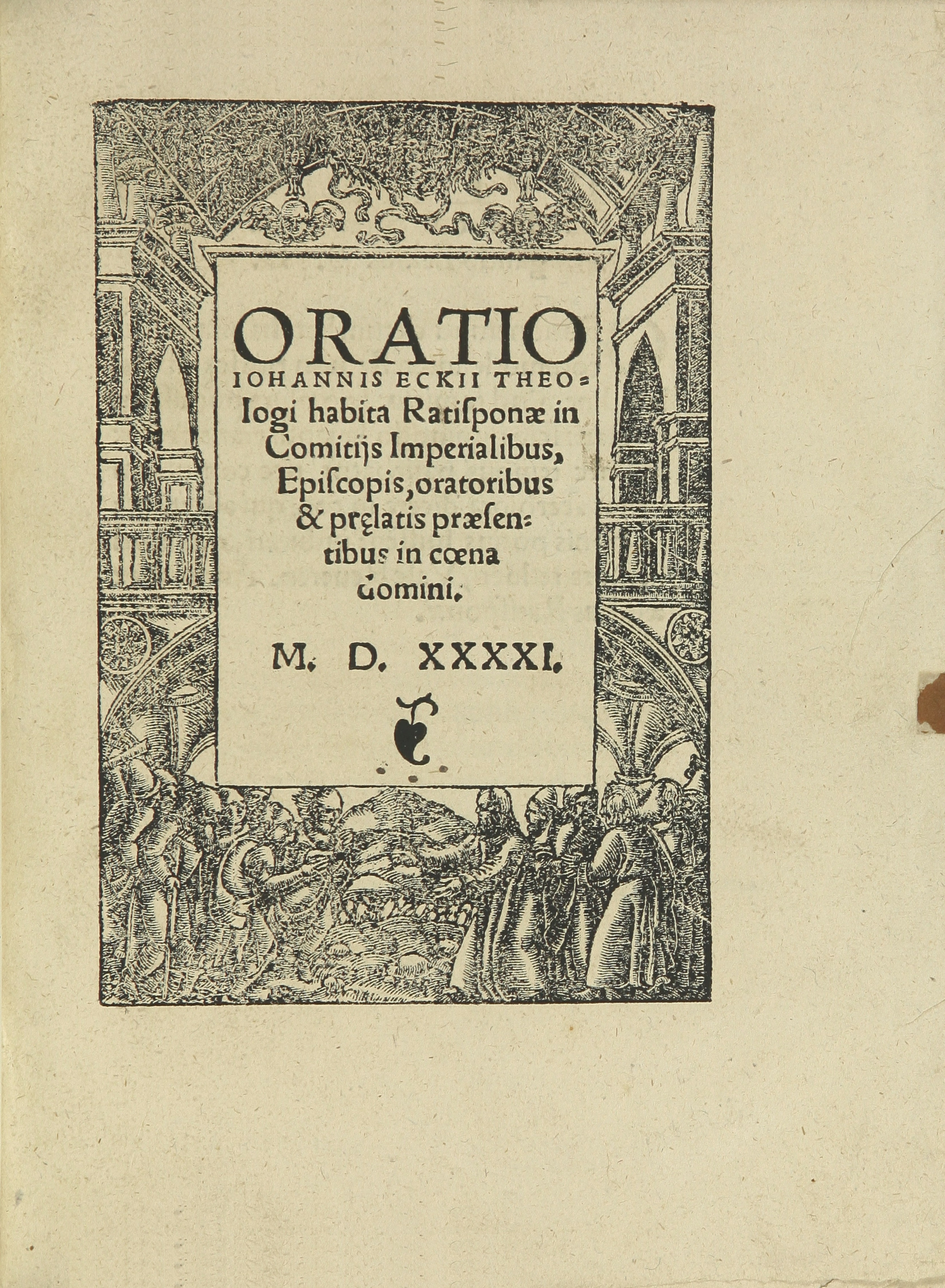
TextOratio
Eck, Johann, 1486-1543Summary: This is the first printing of Eck's speech to the Diet of Regensburg on April 5, 1541, defining the Catholic understanding of the Lord's Supper. The Diet of Regensburg proved to be Eck's last appearance as a major theological political leader, for his health declined and he could no longer bear the weight of these grueling encounters.Summary: This is the first printing of Eck's speech to the Diet of Regensburg on April 5, 1541, defining the Catholic understanding of the Lord's Supper. The Diet of Regensburg proved to be Eck's last appearance as a major theological political leader, for his health declined and he could no longer bear the weight of these grueling encounters. -
 Text
TextEpistolae duae
Haner, Johannes, active 1524-1544Summary: This pamphlet contains two letters on Lutheranism by converts to Catholicism. Witzel's publication of Haner's letter led to the latter's expulsion from the city of Nuremberg.Summary: This pamphlet contains two letters on Lutheranism by converts to Catholicism. Witzel's publication of Haner's letter led to the latter's expulsion from the city of Nuremberg. -
 Text
TextDialogus ad Martinu[m] Lutherum : pro responsione ad impertinentem quanda[m] ipsius epistolam super posita[m] veluti collocutoris vice intermixtam
Dungersheim, Hieronymus, 1465-1540Summary: H. Dungersheim had exchanged several letters with Luther before he wrote this dialogue. It was his first formal controversialist tract, written in 1520, but not published until 1531. Luther burned a manuscript copy of this work when he burned the bull Exsurge Domine on December 10, 1520.Summary: H. Dungersheim had exchanged several letters with Luther before he wrote this dialogue. It was his first formal controversialist tract, written in 1520, but not published until 1531. Luther burned a manuscript copy of this work when he burned the bull Exsurge Domine on December 10, 1520.

