Search
-
 Text
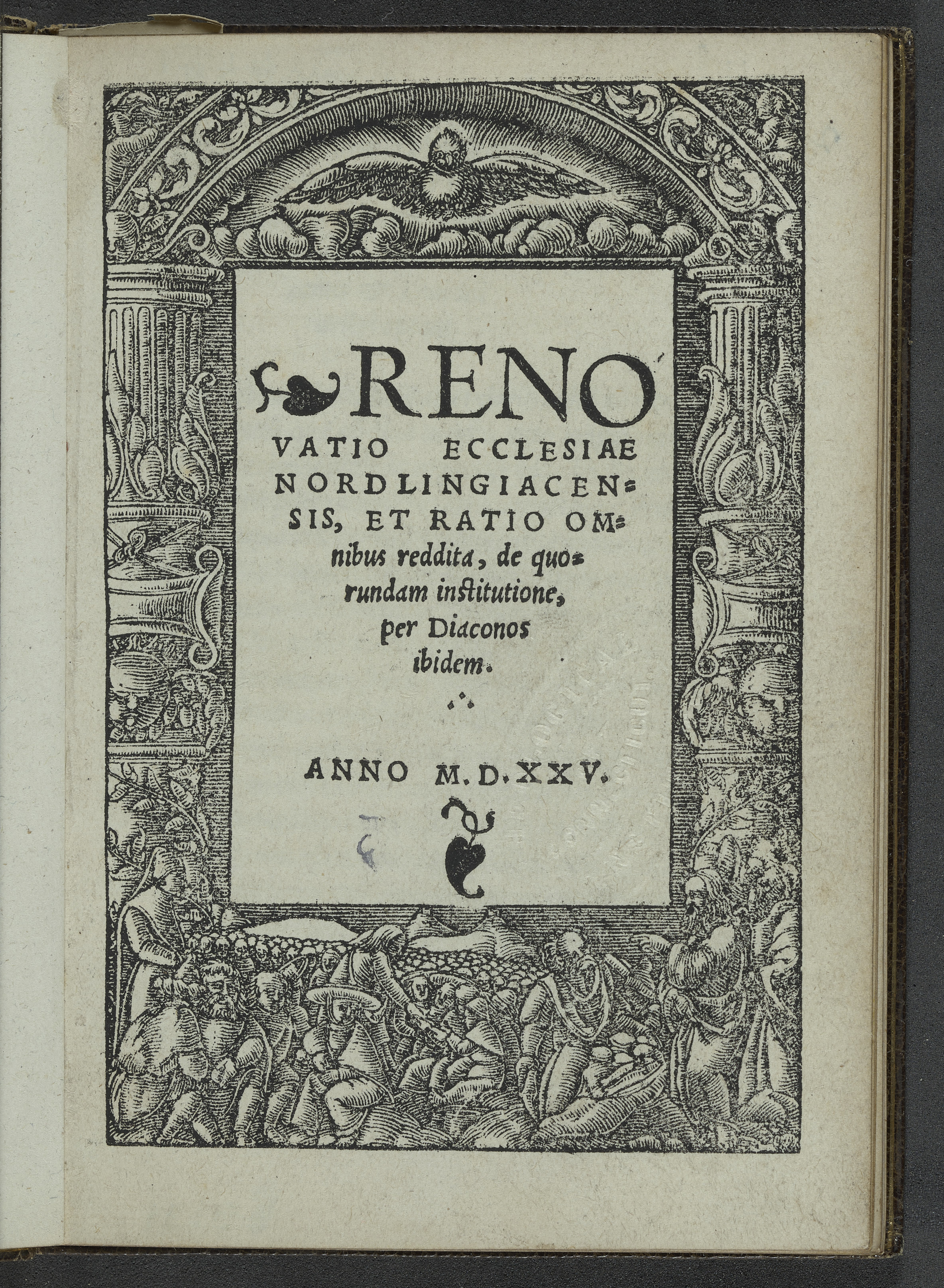
TextRenouatio Ecclesiae Nordlingiacensis, et ratio omnibus reddita, de quorundam institutione
Billican, Theobald, approximately 1490-1554Summary: Theobald Billican was educated at Heidelberg where he became a close friend of Melanchthon. He was drawn to Luther in 1518 when Luther disputed on scholasticism at the University of Heidelberg. This tract on the reformation in Nordlingen attempts to prove that the old "abuses" had been corrected and replaced with "purified" doctrines. Billican consciously constructs his discourse more along Erasmian lines than according to strictly Lutheran models.Summary: Theobald Billican was educated at Heidelberg where he became a close friend of Melanchthon. He was drawn to Luther in 1518 when Luther disputed on scholasticism at the University of Heidelberg. This tract on the reformation in Nordlingen attempts to prove that the old "abuses" had been corrected and replaced with "purified" doctrines. Billican consciously constructs his discourse more along Erasmian lines than according to strictly Lutheran models. -
 Text
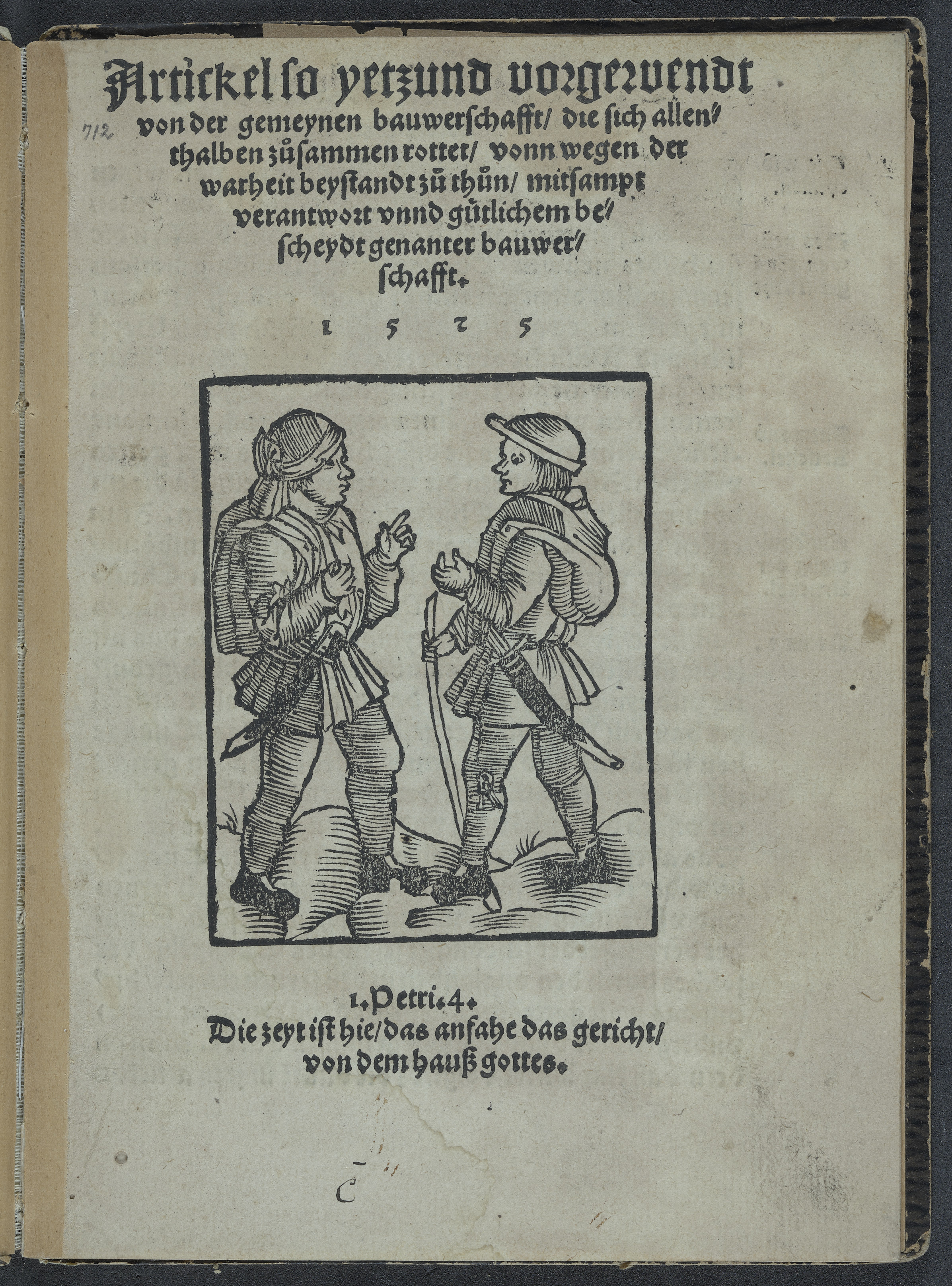
TextArtickel so yetzund vorgerrendt [sic] von der gemeynen bauwerschafft, die sich allenthalben zuosammem rottet vonn wegen der warheit beystandt zuo thuon : mitsampt verantwort vnnd gütlichem bescheydt genanter bauwerschafft
Summary: A sympathetic Strasbourg printing of the Twelve Articles of the Swabian Peasants.Summary: A sympathetic Strasbourg printing of the Twelve Articles of the Swabian Peasants. -
 Text
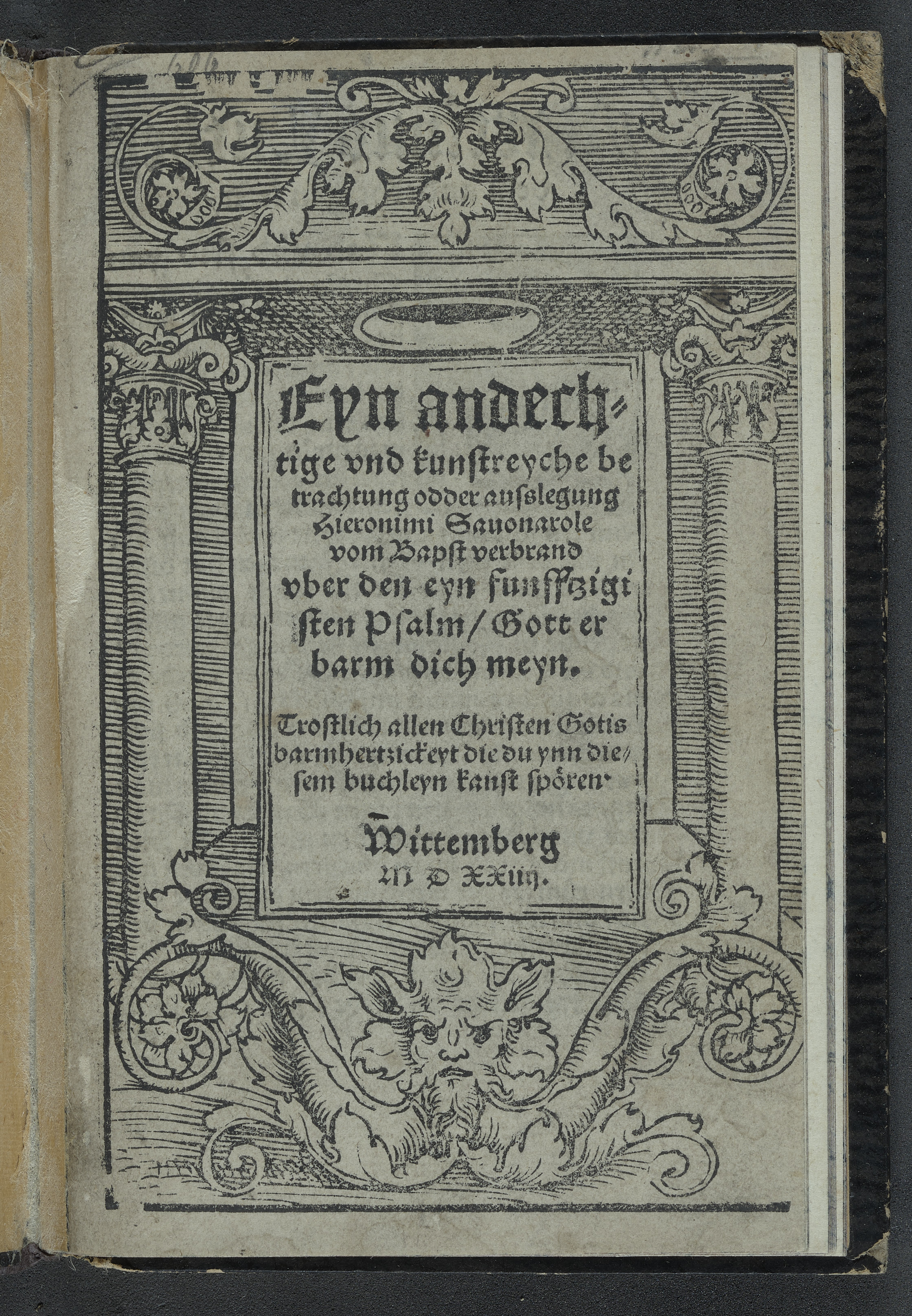
TextEyn andechtige vnd Kunstreyche betrachtung odder ausslegung
Savonarola, Girolamo, 1452-1498Summary: Protestants made Savonarola out to be a martyr, even though he would certainly not have supported their views. This commentary on Psalm 51, "Lord have mercy upon me," was written during his imprisonment in 1498. Luther wrote the introduction to this edition.Summary: Protestants made Savonarola out to be a martyr, even though he would certainly not have supported their views. This commentary on Psalm 51, "Lord have mercy upon me," was written during his imprisonment in 1498. Luther wrote the introduction to this edition. -
 Text
TextAin Beweysung, das der war Messias kom[m]en sey, des die Juden noch on Vrsach zůkünfftig sein, warte[n]
Samuel, MarochitanusSummary: German translation by Ludwig Hätzer of Epistola contra Judaeorum, thought to be written in Arabic by Samuel of Marocco, an apostate Jew at the beginning of the 11th century and translated into Latin by the Spanish Dominican Alphonsus Bonihominis in the 14th century and widely disseminated. Bonihominis is likely the real author of the work.Summary: German translation by Ludwig Hätzer of Epistola contra Judaeorum, thought to be written in Arabic by Samuel of Marocco, an apostate Jew at the beginning of the 11th century and translated into Latin by the Spanish Dominican Alphonsus Bonihominis in the 14th century and widely disseminated. Bonihominis is likely the real author of the work. -
 Text
TextSermon an dem xiii. [sic] Sontag nach Pfingsten
Luther, Martin, 1483-1546Summary: Sermon preached November 1, 1523, on Matthew 18:23-35 (the parable of the forgiven debtor who was unforgiving).Summary: Sermon preached November 1, 1523, on Matthew 18:23-35 (the parable of the forgiven debtor who was unforgiving). -
 Text
TextEin Sermon vnd eingang in das Erst buoch Mosi, das ist, in das buoch der Schöpfung, : darin grüntlich an zaygt wirt, der Artickel des glaube[n]s so wir sprechen, Ich glaub in got vater almechtigen, schöpffer himel vnd erdtrichs
Luther, Martin, 1483-1546Summary: This sermon on Genesis 1:1-5, was preached March 15, 1523. It is the first sermon that lasted until autumn, 1524. The entire series was not printed until 1527.Summary: This sermon on Genesis 1:1-5, was preached March 15, 1523. It is the first sermon that lasted until autumn, 1524. The entire series was not printed until 1527. -
 Text
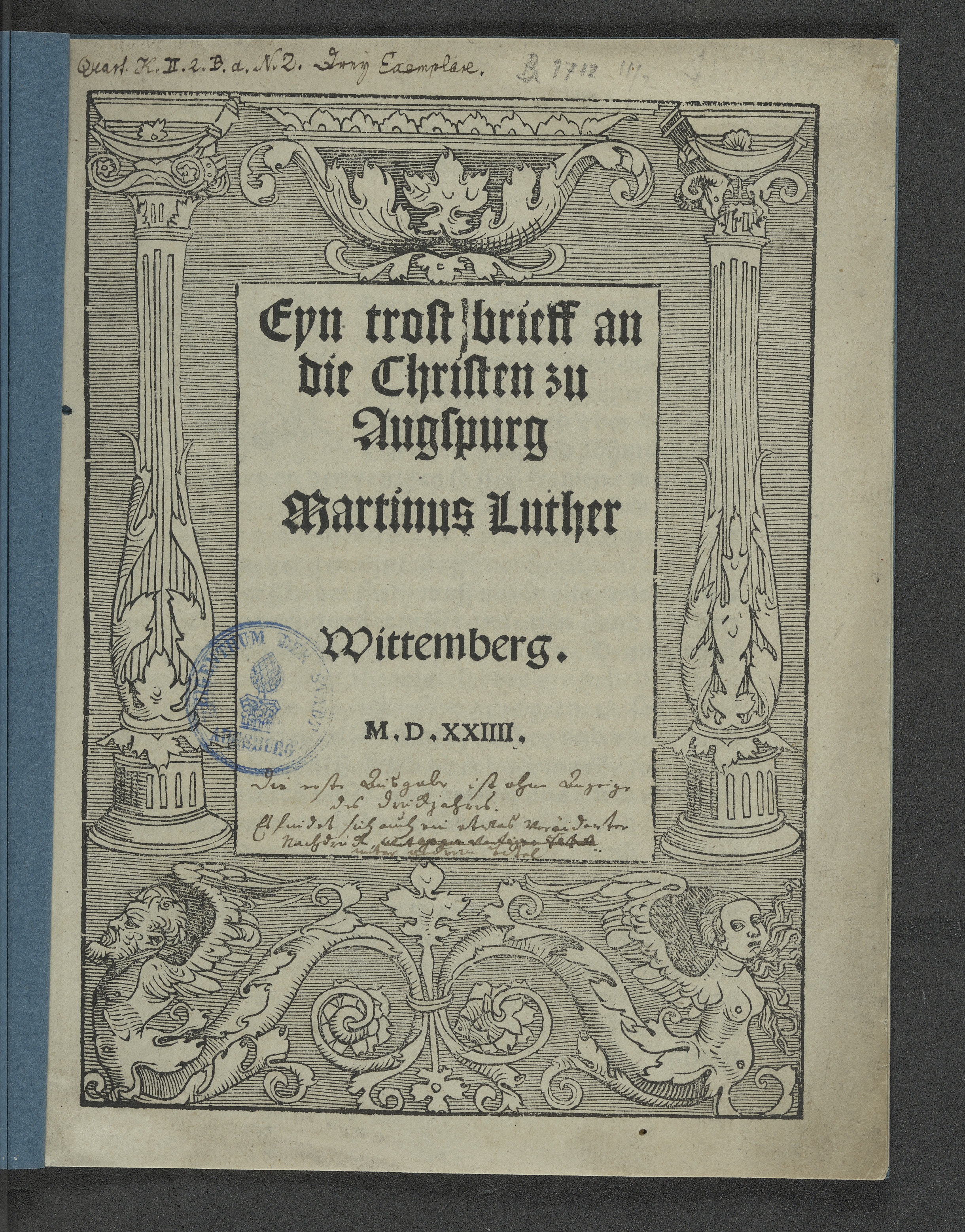
TextEyn trost brieff an die Christen zu Augspurg
Luther, Martin, 1483-1546Summary: A letter of comfort and encouragement written to a group of Augsburg citizens who had been punished for helping to celebrate the marriage of a former Catholic priest.Summary: A letter of comfort and encouragement written to a group of Augsburg citizens who had been punished for helping to celebrate the marriage of a former Catholic priest. -
 Text
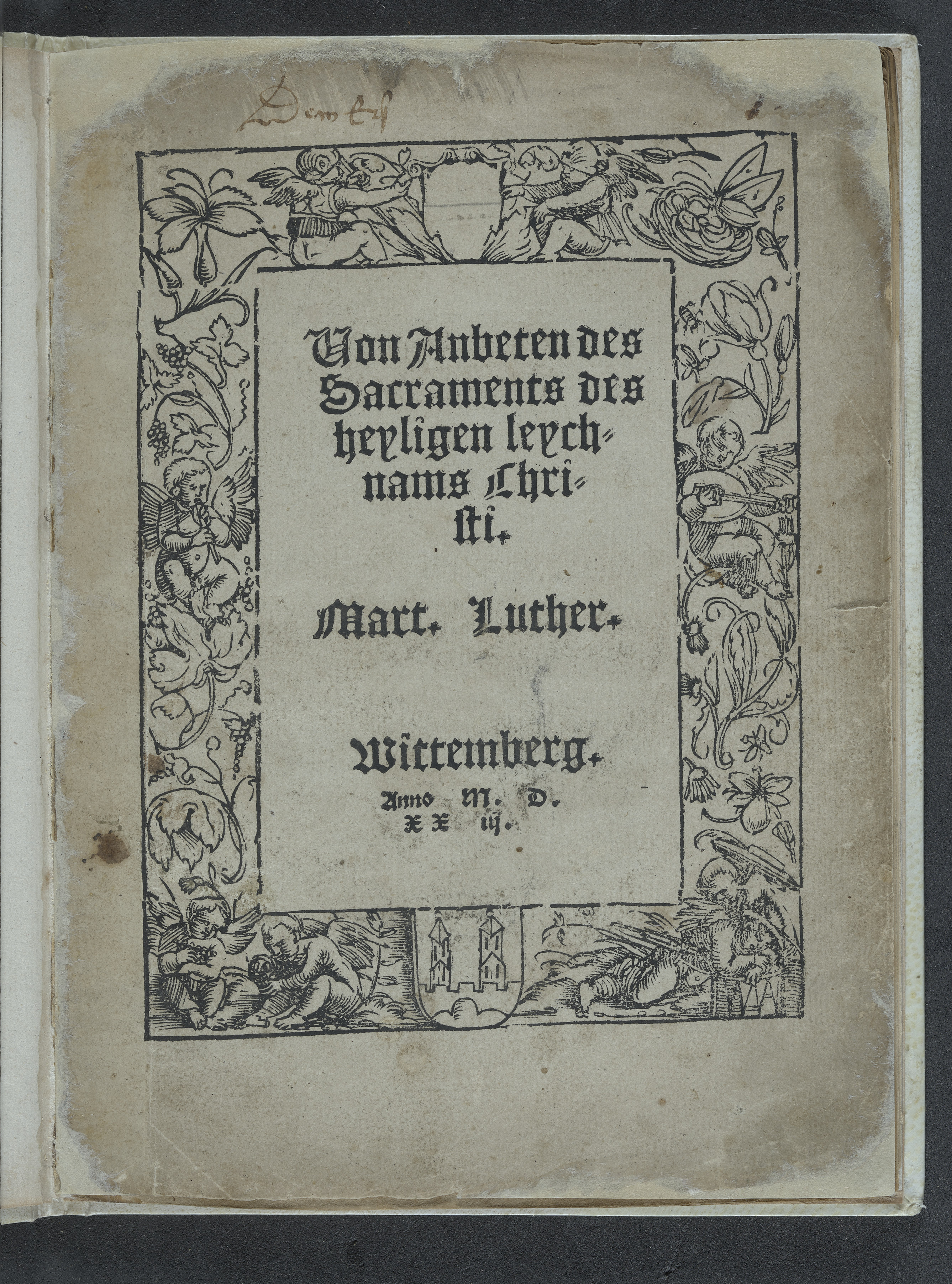
TextUon Anbeten des Sacraments des heyligen leychnams Christi
Luther, Martin, 1483-1546Summary: Second printing of Luther's response to a catechism of the Bohemian Brethren, with special attention to the Adoration of the Host, and to the Real Presence.Summary: Second printing of Luther's response to a catechism of the Bohemian Brethren, with special attention to the Adoration of the Host, and to the Real Presence. -
 Text
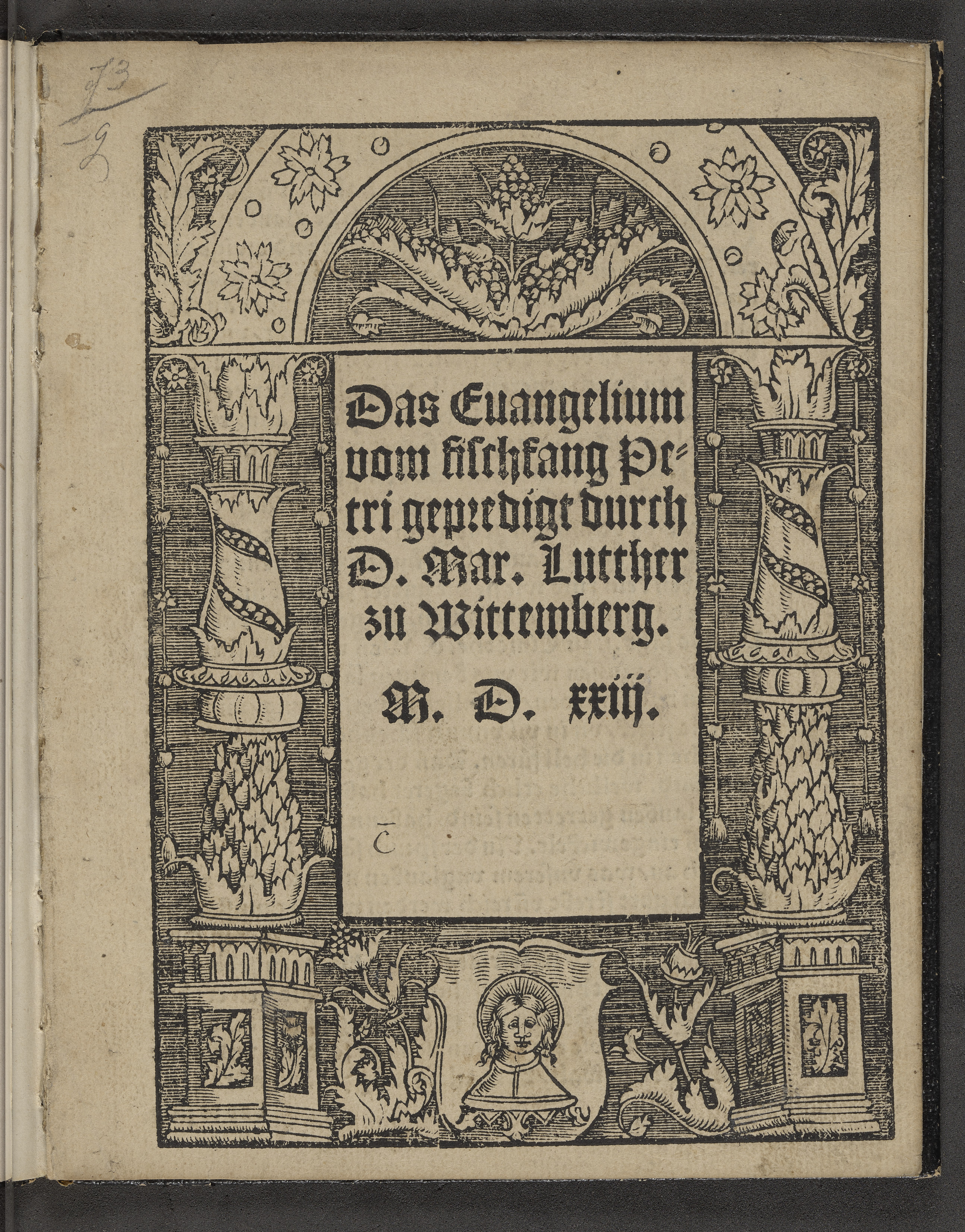
TextDas Euangelium vom fischfang Petri
Luther, Martin, 1483-1546Summary: Sermon preached July 20, 1522, on Luke 5:1-11 (Peter's large catch of fish).Summary: Sermon preached July 20, 1522, on Luke 5:1-11 (Peter's large catch of fish). -
 Text
TextEyn Sermon auff den vierden Sontag nach Ostern : Johannis 16
Luther, Martin, 1483-1546Summary: First edition of a sermon by Martin Luther on the judgment and righteousness of God. In the second part of the sermon Luther denies the judicial authority of the pope and councils.Summary: First edition of a sermon by Martin Luther on the judgment and righteousness of God. In the second part of the sermon Luther denies the judicial authority of the pope and councils. -
 Text
TextUrsach vnd anttwortt das iungkfrawe[n] kloster gottlich v[er]lassen muge[n]
Luther, Martin, 1483-1546Summary: The catalyst for this famous Luther letter was the removal by stealth of nine nuns from the cloister of Nimbschen bei Grimma at Easter in the year 1523. Luther names the nine, which include a sister of Johann Staupitz, Luther's father confessor, and Katharina von Bora, who was to become Luther's wife.Summary: The catalyst for this famous Luther letter was the removal by stealth of nine nuns from the cloister of Nimbschen bei Grimma at Easter in the year 1523. Luther names the nine, which include a sister of Johann Staupitz, Luther's father confessor, and Katharina von Bora, who was to become Luther's wife. -
 Text
TextEin nützlich vnd fast tröstlich predig, oder vnderrichtung, : wie sich ein Christen mensch mit freüdenn bereyten sol zü sterbenn
Luther, Martin, 1483-1546Summary: Sermon prepared at the request of Spalatin for M. Schart on worthy preparation for death, but never preached.Summary: Sermon prepared at the request of Spalatin for M. Schart on worthy preparation for death, but never preached. -
 Text
TextEyn Sermon auff den vierdten sontag nach Ostern Johannis .16
Luther, Martin, 1483-1546Summary: Sermon preached May 3, 1523, in the presence of Duke Bogislaus of Pomerania, on John 16:5-14.Summary: Sermon preached May 3, 1523, in the presence of Duke Bogislaus of Pomerania, on John 16:5-14. -
 Text
TextDrey schön Sermon
Luther, Martin, 1483-1546Summary: Three sermons preached June 10, July 13, 20, 1522, on texts John 10:1 (unlawful entry into sheepfold), Luke 6:36 (Be merciful as God is), and Luke 5:1-11 (Peter's large catch of fish).Summary: Three sermons preached June 10, July 13, 20, 1522, on texts John 10:1 (unlawful entry into sheepfold), Luke 6:36 (Be merciful as God is), and Luke 5:1-11 (Peter's large catch of fish). -
 Text
TextXII. Predig
Luther, Martin, 1483-1546Summary: This collection includes ten sermons from 1522 and two from 1523. Two are indicated from an earlier collection. This collection is a step toward the completion of a postil for saints' festival days.Summary: This collection includes ten sermons from 1522 and two from 1523. Two are indicated from an earlier collection. This collection is a step toward the completion of a postil for saints' festival days. -
 Text
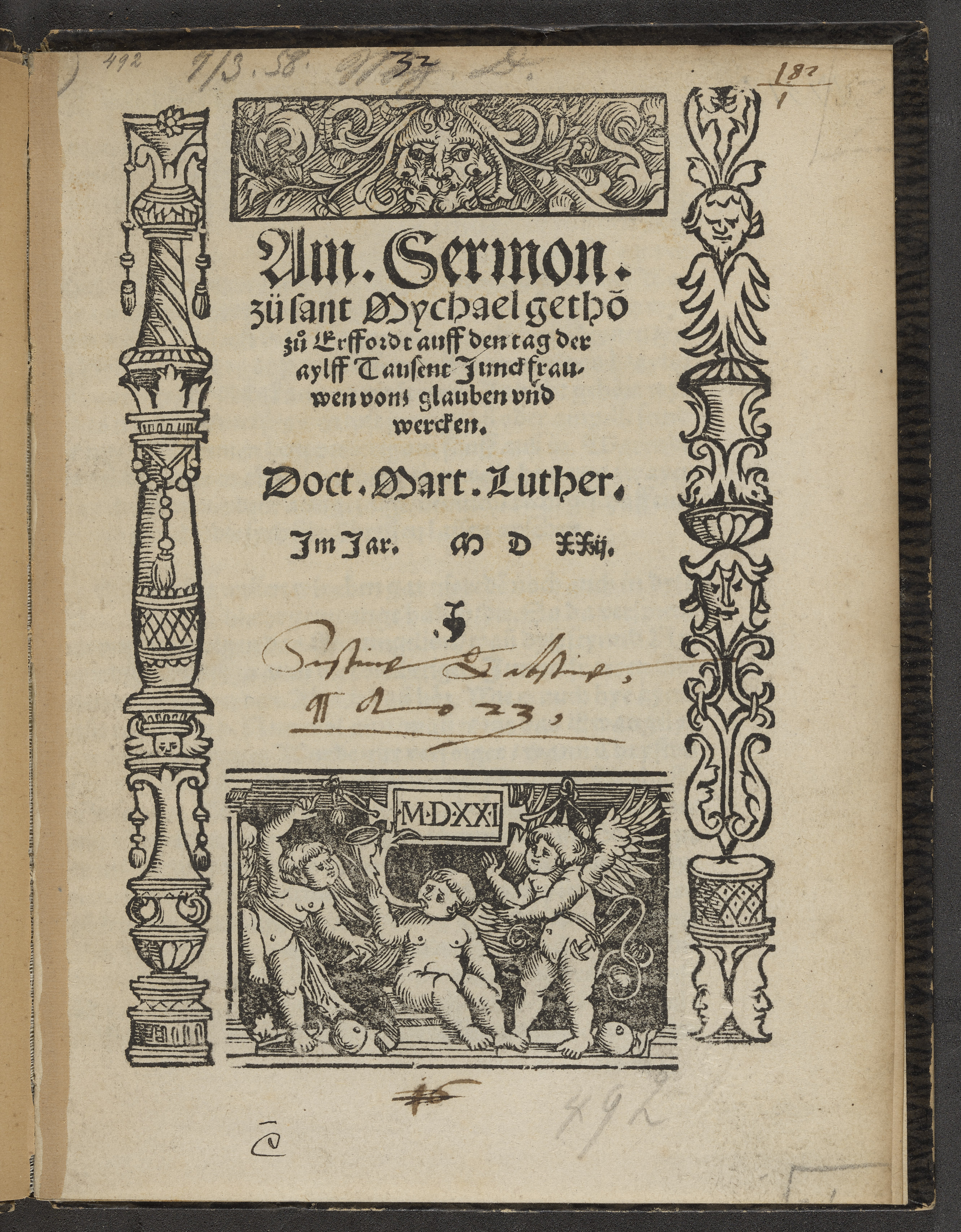
TextAm. [sic] Sermon. zü sant Mychael getho[n] zu Erffordt auff den tag der aylff Tausent junckfrauwen vom glauben vnd wercken
Luther, Martin, 1483-1546Summary: Sermon preached in Erfurt, October 21, 1522, on Matthew 25:1ff. (Wise and Foolish Virgins).Summary: Sermon preached in Erfurt, October 21, 1522, on Matthew 25:1ff. (Wise and Foolish Virgins). -
 Text
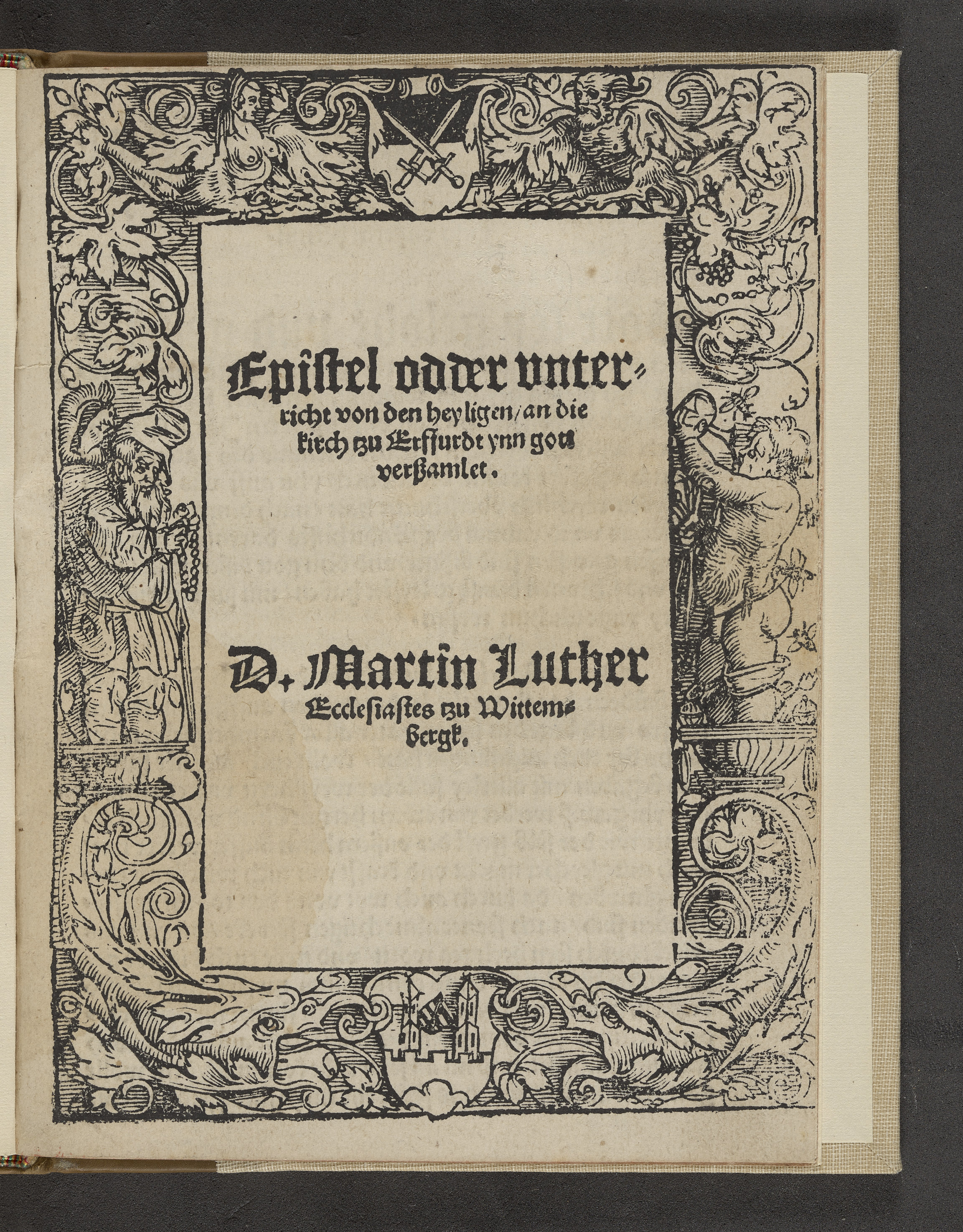
TextEpistel odder vnterricht von den heyligen : an die kirch zu Erfurdt ynn gott verszamelt
Luther, Martin, 1483-1546Summary: First printing of an open letter by Luther to the church of Erfurt on the subject of prayers to the saints.Summary: First printing of an open letter by Luther to the church of Erfurt on the subject of prayers to the saints. -
 Text
TextUon beyder gestalt des Sacraments zu nehmen vnd ander newerung
Luther, Martin, 1483-1546Summary: After Luther published his "Eight Sermons" of 1522, he decided that there was needed a shorter, more concise statement of these sermons' arguments. This is the third printing of the resulting précis.Summary: After Luther published his "Eight Sermons" of 1522, he decided that there was needed a shorter, more concise statement of these sermons' arguments. This is the third printing of the resulting précis. -
 Text
TextInstitutiones rhetoricae
Melanchthon, Philipp, 1497-1560Summary: One of three reprints from the year of its first publication, this work by Melanchthon is one of the earliest textbooks for the study of rhetoric as an integral part of an education in the liberal arts.Summary: One of three reprints from the year of its first publication, this work by Melanchthon is one of the earliest textbooks for the study of rhetoric as an integral part of an education in the liberal arts. -
 Text
TextEyn Sermon von der Betrachtu[n]g des Heyligen Leydens Christi
Luther, Martin, 1483-1546Summary: Early Luther sermon on how a Christian ought to view the suffering and death of Christ. First printed in 1519, this is the fifth documented Wittenberg printing of the text.Summary: Early Luther sermon on how a Christian ought to view the suffering and death of Christ. First printed in 1519, this is the fifth documented Wittenberg printing of the text. -
 Text
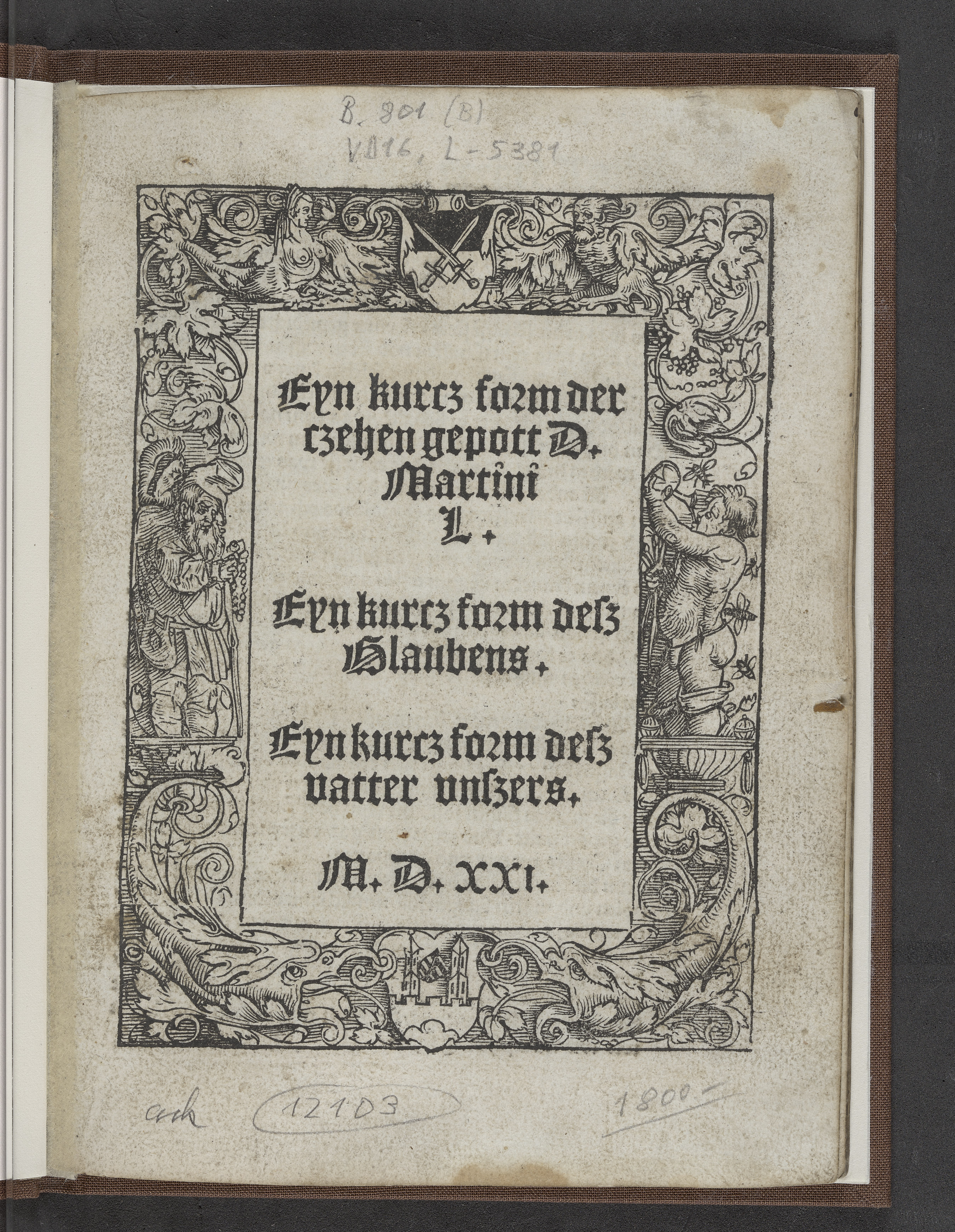
TextEyn kurcz form der czehen gepott
Luther, Martin, 1483-1546Summary: An early predecessor of Luther's Small Catechism, containing a simple explanation of the Ten Commandments, the Apostles' Creed, and the Lord's Prayer.Summary: An early predecessor of Luther's Small Catechism, containing a simple explanation of the Ten Commandments, the Apostles' Creed, and the Lord's Prayer.

Page 189 of 257
