Search
775 resources
775 items
Medium
books
-
 Text
TextTruths as I have seen them : being addresses on the spiritual life
Wilson, George W. (George Washington), 1853-Summary:Summary: -
-
Text
Twice born, or, The two lives of Henry O. Wills, evangelist ...
Wills, Henry O.Summary: "Being a narrative of Mr. Wills's remarkable experiences as a wharf-rat, a sneak-thief, a convict, a soldier, a bounty-jumper, a fakir, a fireman, a ward-heeler, and a plug-ugly. Also, a history of his most wondrous conversion to God, and of his famous achievements as an evangelist."Summary: "Being a narrative of Mr. Wills's remarkable experiences as a wharf-rat, a sneak-thief, a convict, a soldier, a bounty-jumper, a fakir, a fireman, a ward-heeler, and a plug-ugly. Also, a history of his most wondrous conversion to God, and of his famous achievements as an evangelist." -
-
 Text
TextUnterricht der Visitatorn an die Pfarhern in Hertzog Heinrichs zu Sachsen Fürstenthum
Melanchthon, Philipp, 1497-1560Summary: Melanchthon first wrote the Instructions for Church Visitations in 1527 in both German and Latin. He was himself one of the first visitors to put the work to use. As a result some changes were made to the manuscript, and the whole was sent to Luther for the purpose of securing a preface. Luther thought so highly of it that he "adopted" it, and revised it for publication in 1538.Summary: Melanchthon first wrote the Instructions for Church Visitations in 1527 in both German and Latin. He was himself one of the first visitors to put the work to use. As a result some changes were made to the manuscript, and the whole was sent to Luther for the purpose of securing a preface. Luther thought so highly of it that he "adopted" it, and revised it for publication in 1538. -
 Text
TextUom Missbrauch der Messen
Luther, Martin, 1483-1546Summary: Written in Latin in the fall of 1521 under the title De abroganda missa privata, this is the third printing of the first German edition of Martin Luther's important tract on the celebration of private masses. Luther opposed any celebration of the Eucharist that was not accessible to or provided for the congregation at large and felt so strongly about this material that he translated it into German himself.Summary: Written in Latin in the fall of 1521 under the title De abroganda missa privata, this is the third printing of the first German edition of Martin Luther's important tract on the celebration of private masses. Luther opposed any celebration of the Eucharist that was not accessible to or provided for the congregation at large and felt so strongly about this material that he translated it into German himself. -
 Text
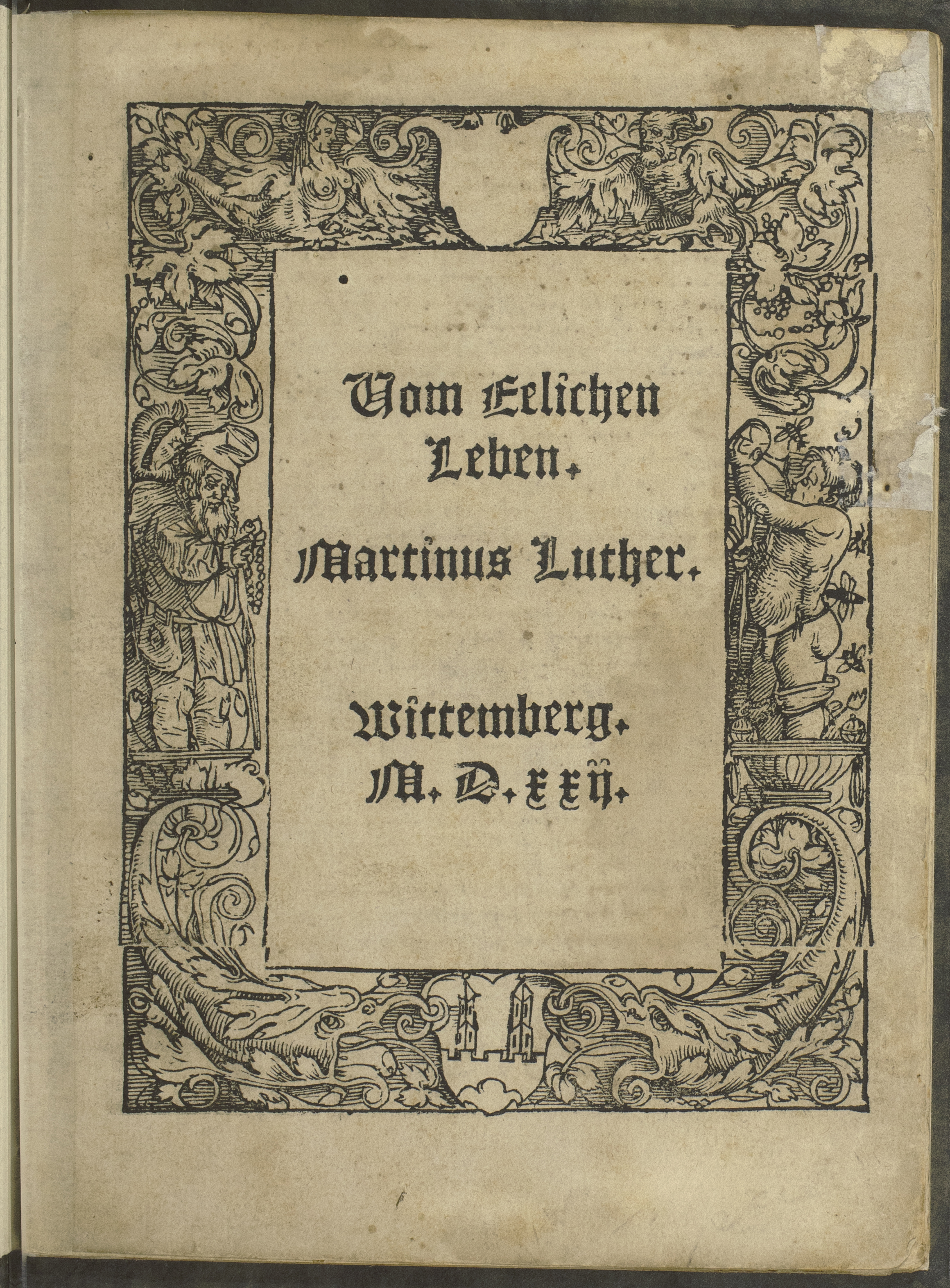
TextUom eelichen Leben
Luther, Martin, 1483-1546Summary: This sermon on marriage is an elaboration of an earlier work no longer extant. In its present form there is no set Bible text, nor is the sermon designed for a particular place in the Church year.Summary: This sermon on marriage is an elaboration of an earlier work no longer extant. In its present form there is no set Bible text, nor is the sermon designed for a particular place in the Church year. -
 Text
TextUom eelichen Leben
Luther, Martin, 1483-1546Summary: This sermon on marriage is an elaboration of an earlier work no longer extant. In its present form there is no set Bible text, nor is the sermon designed for a particular place in the Church year.Summary: This sermon on marriage is an elaboration of an earlier work no longer extant. In its present form there is no set Bible text, nor is the sermon designed for a particular place in the Church year. -
 Text
TextUom miszbrauch der Messen
Luther, Martin, 1483-1546Summary: Luther always felt a special fondness for this work. Nearly two decades after writing it, he remembered it as being especially powerful. It elicited response from Catholic opponents five years hence. Luther felt so strongly about this material that he translated it into German himself. The abuse of the title refers to the masses sung by chantry priests for individuals. Luther opposed any celebration of the Eucharist that was not accessible to or provided for the congregation at large.Summary: Luther always felt a special fondness for this work. Nearly two decades after writing it, he remembered it as being especially powerful. It elicited response from Catholic opponents five years hence. Luther felt so strongly about this material that he translated it into German himself. The abuse of the title refers to the masses sung by chantry priests for individuals. Luther opposed any celebration of the Eucharist that was not accessible to or provided for the congregation at large. -
 Text
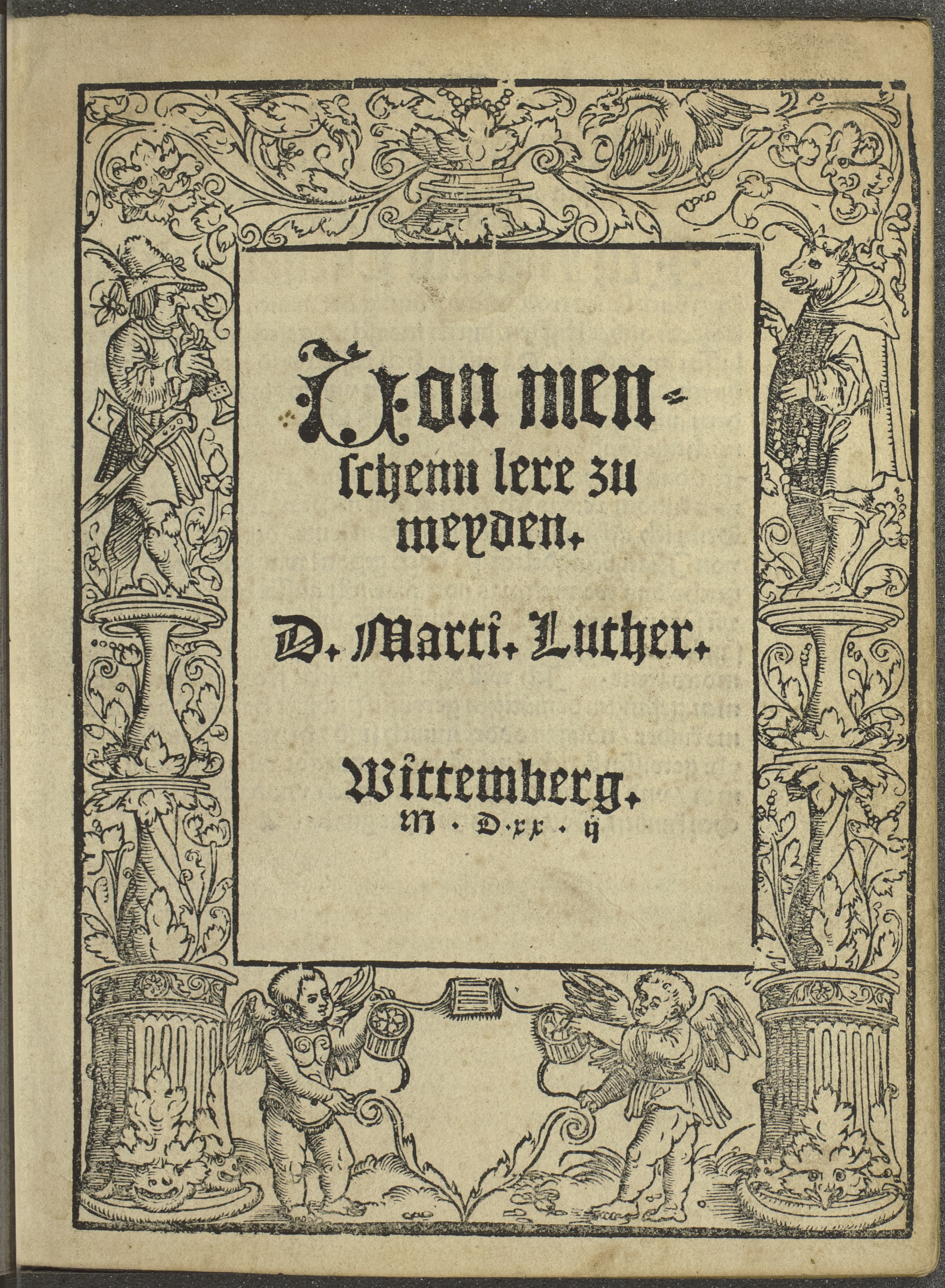
TextUon Menschenn Lere zu meyden
Luther, Martin, 1483-1546Summary: A treatise by Luther on the relationship of belief and practice, intended for those "poor consciences, that lie captive to human laws in cloisters and monastic foundations", as he puts it in his preface. It is also noteworthy that Luther assumes his audience includes both those who could read his writings directly, and those who heard them read by others, when he dedicates his pamphlet "to all who read or hear this little book".Summary: A treatise by Luther on the relationship of belief and practice, intended for those "poor consciences, that lie captive to human laws in cloisters and monastic foundations", as he puts it in his preface. It is also noteworthy that Luther assumes his audience includes both those who could read his writings directly, and those who heard them read by others, when he dedicates his pamphlet "to all who read or hear this little book". -
 Text
TextUon denn geystlichen vnd kloster gelubden
Luther, Martin, 1483-1546Summary: One of three 1522 printings of an essay on monastic vows written by Luther during his stay at the Wartburg Castle after the Diet of Worms. It is addressed to monks, whose conscience is troubled by the conflict between their vows and their desire to leave the monastic life. Luther frequently referred to this piece throughout his career, and it became one of his most influential works.Summary: One of three 1522 printings of an essay on monastic vows written by Luther during his stay at the Wartburg Castle after the Diet of Worms. It is addressed to monks, whose conscience is troubled by the conflict between their vows and their desire to leave the monastic life. Luther frequently referred to this piece throughout his career, and it became one of his most influential works. -
 Text
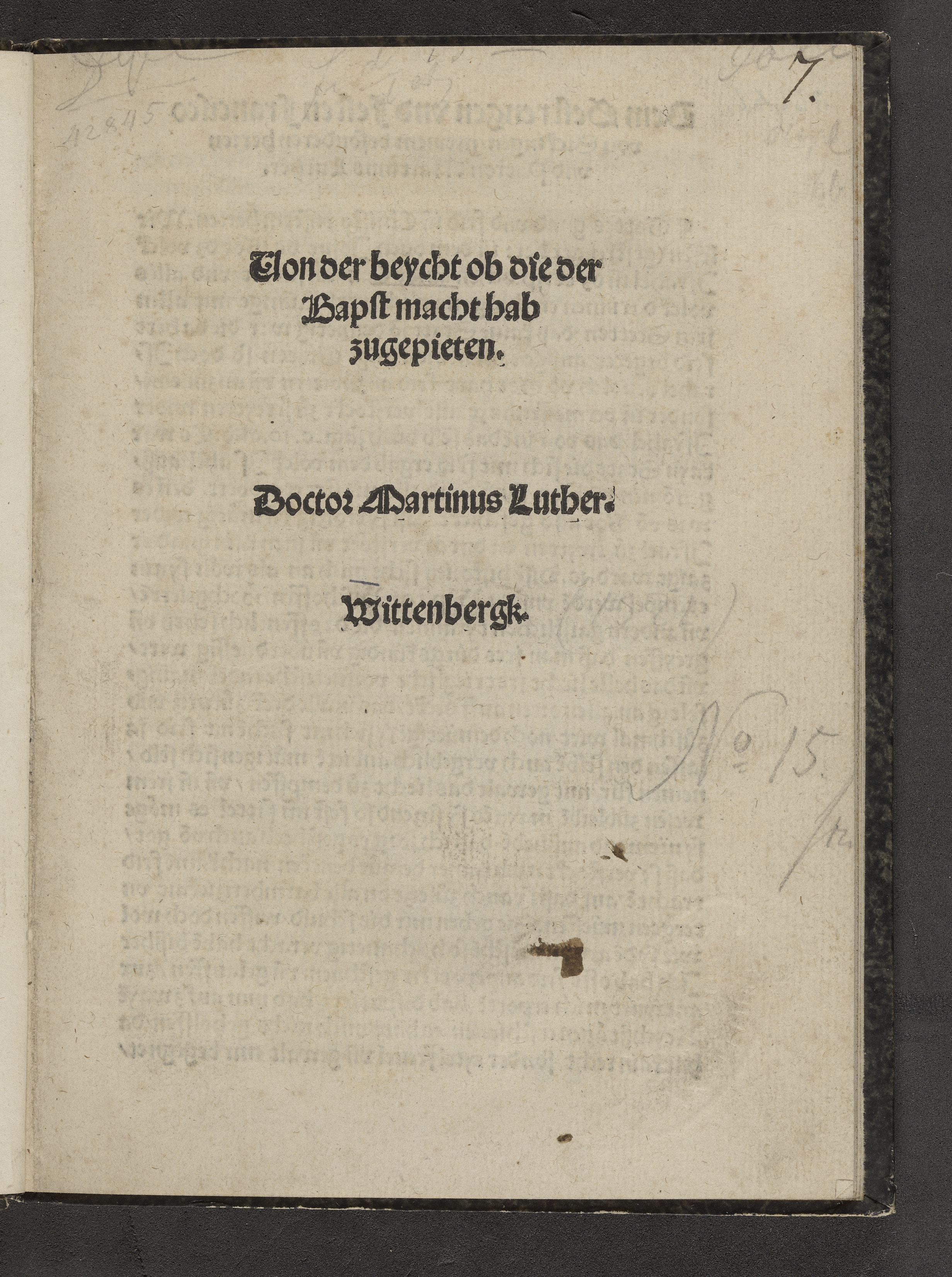
TextUon der beycht ob die der Bapst macht hab zugepieten
Luther, Martin, 1483-1546Summary: This is Luther's tract on auricular confession. The sacrament of penance was the focus of Luther's most vehement criticisms. Not only was the sacrament the course of numerous abuses, indulgence selling among them, but attacks on the efficacy of priestly absolution called into question the sacramental authority of all priests, the pope included.Summary: This is Luther's tract on auricular confession. The sacrament of penance was the focus of Luther's most vehement criticisms. Not only was the sacrament the course of numerous abuses, indulgence selling among them, but attacks on the efficacy of priestly absolution called into question the sacramental authority of all priests, the pope included. -

-
 Text
TextVerba dei : quanto candore & [que] syncere praedicari, quanta[que] solicitudine uniuersi debeant addiscere
Karlstadt, Andreas Rudolff-Bodenstein von,1486-1541.Summary: Only printing of a pamphlet by Karlstadt attacking Johann Eck on issues that emerged during their disputation at Leipzig 1519, in particular the interpretation of scripture and the question of free will and its relation to the grace of God.Summary: Only printing of a pamphlet by Karlstadt attacking Johann Eck on issues that emerged during their disputation at Leipzig 1519, in particular the interpretation of scripture and the question of free will and its relation to the grace of God. -
 Text
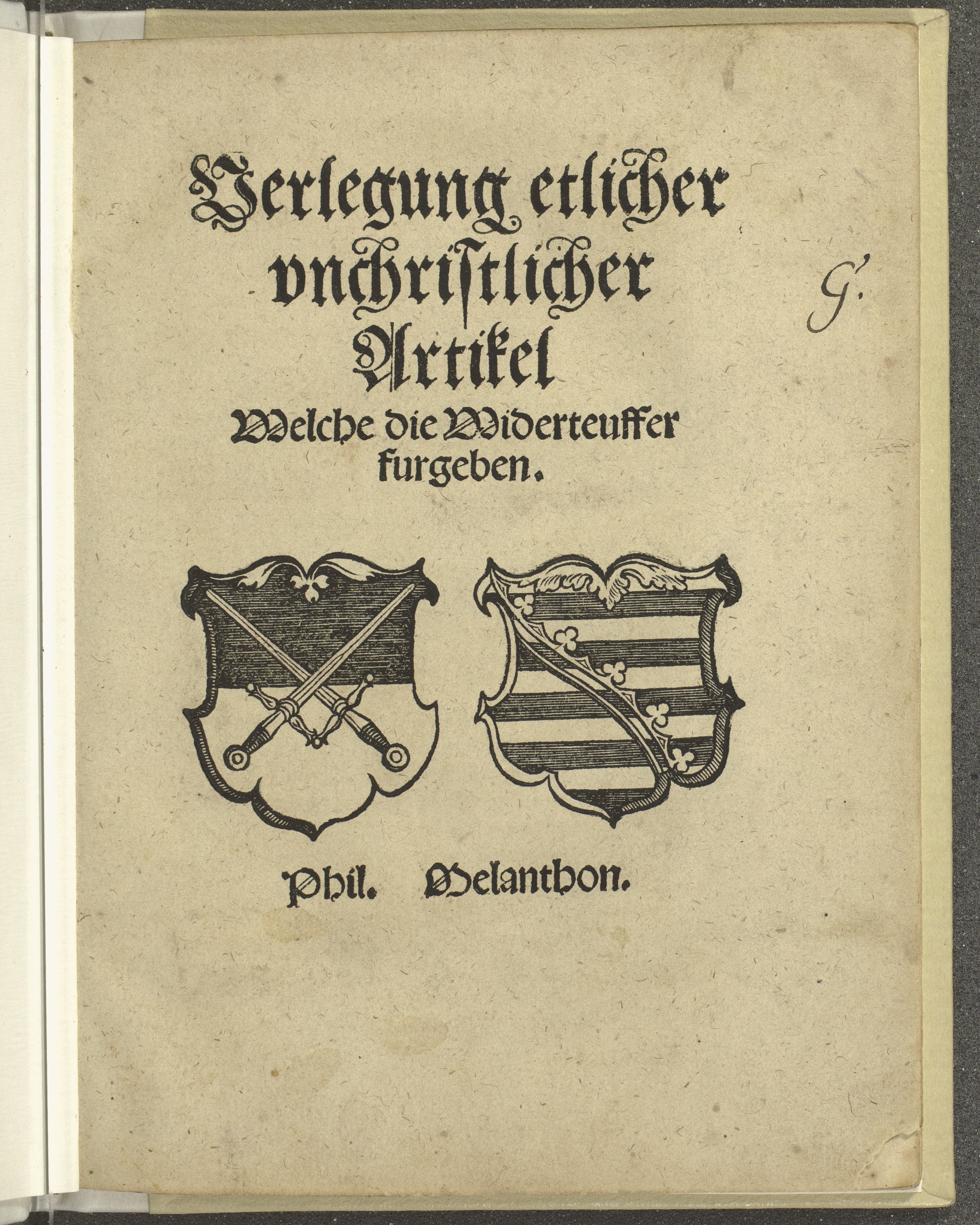
TextVerlegung etlicher vnchristlicher Artikel : Welche die widerteuffer furgeben
Melanchthon, Philipp, 1497-1560Summary: In this piece, Melanchthon sharply attacks the major Anabaptist theological points. This is the second printing of the tract.Summary: In this piece, Melanchthon sharply attacks the major Anabaptist theological points. This is the second printing of the tract. -
 Text
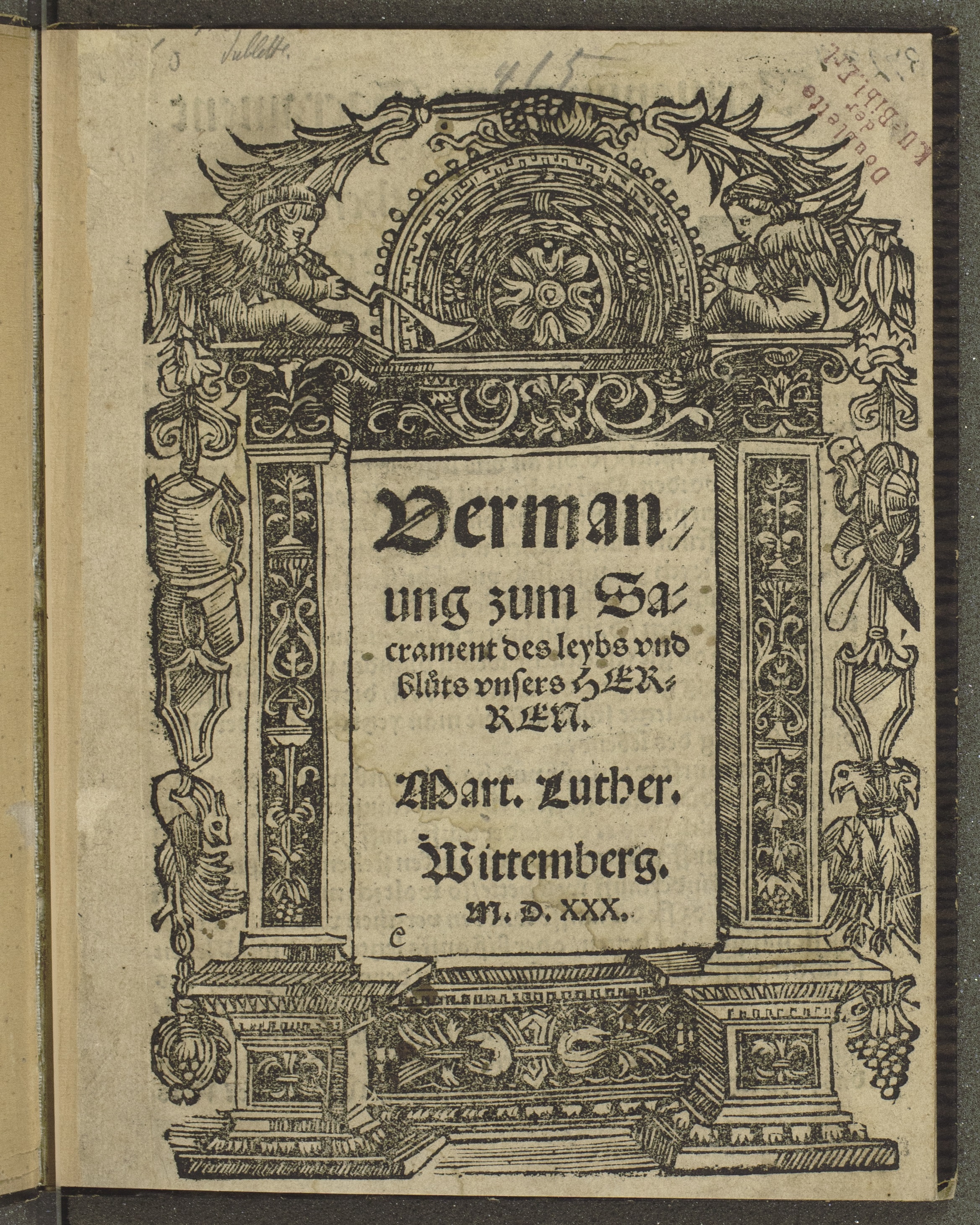
TextVermanung zum Sacrament des leybs vnd bluots vnsers Herren
Luther, Martin, 1483-1546Summary: Luther wrote this "Exhortation to the sacraments" during his stay at Coburg Castle in 1530, during the Diet of Augsburg.Summary: Luther wrote this "Exhortation to the sacraments" during his stay at Coburg Castle in 1530, during the Diet of Augsburg. -
 Text
TextVerwenung der disputatz zü Zürch
Zwingli, Ulrich, 1484-1531Summary: First edition of a brief report of the first Zurich Disputation followed by the 67 Articles read by Zwingli on January 27, 1523. The 67 Articles are often cited in discussions of Luther's 95 Theses and the Augsburg Confession.Summary: First edition of a brief report of the first Zurich Disputation followed by the 67 Articles read by Zwingli on January 27, 1523. The 67 Articles are often cited in discussions of Luther's 95 Theses and the Augsburg Confession. -
 Text
TextVier trostliche Psalmen, an die Königin zu Hungern
Luther, Martin, 1483-1546Summary: An interpretation on 4 Consolation Psalms (Ps. 37, 62, 94, 109), written by Luther for Queen Mary of Hungary, sister of the Emperor Charles V, after the death of her husband Louis in the battle of Mohács.Summary: An interpretation on 4 Consolation Psalms (Ps. 37, 62, 94, 109), written by Luther for Queen Mary of Hungary, sister of the Emperor Charles V, after the death of her husband Louis in the battle of Mohács. -
 Text
TextVo[n] dem elichen sta[n]dt widder Bruder Martin Luter Doctor tzu Witte[n]berg
Alveldt, Augustin von, active 16th centurySummary: This is a copy of A. von Alveld's defense of the Catholic Church's doctrine of clerical celibacy.Summary: This is a copy of A. von Alveld's defense of the Catholic Church's doctrine of clerical celibacy. -
 Text
TextVom Vordienste vnd Rechtfertigungen, des Glaubeus [sic], lieben, vnd guter Werck vn[d] vielen do zu dienstlich Lehr Stucken : |b Vnd auff den Drytten vnd Vierden artickel Lutherischer confession Sampt Philip Melanthonis Apologia vnsers gegenworths Ander teyll : auss warhafftiger Schrifft gruntliche Vorhandelunge jederman in dieser Tzeyt gantz Noth zu wissen
Mensing, Johannes, active 1495-1541Summary: Defense of the Catholic doctrine of good works against the Protestant teaching of salvation by faith alone, written by the Dominican Johann Mensing.Summary: Defense of the Catholic doctrine of good works against the Protestant teaching of salvation by faith alone, written by the Dominican Johann Mensing. -
 Text
TextVon Ceremonien der Kirchen : das ist von eusserlichem dienste Gottes, oder von Leiblicher vbunge Göttlicher Ampter ...
Bachmann, Paul, 1465-1538Summary: Defense of Catholic worship and priestly offices by Paul Bachmann, Abbot of Altzelle, a vehement opponent of Martin Luther.Summary: Defense of Catholic worship and priestly offices by Paul Bachmann, Abbot of Altzelle, a vehement opponent of Martin Luther.