Search
775 resources
775 items
Medium
books
-
 Text
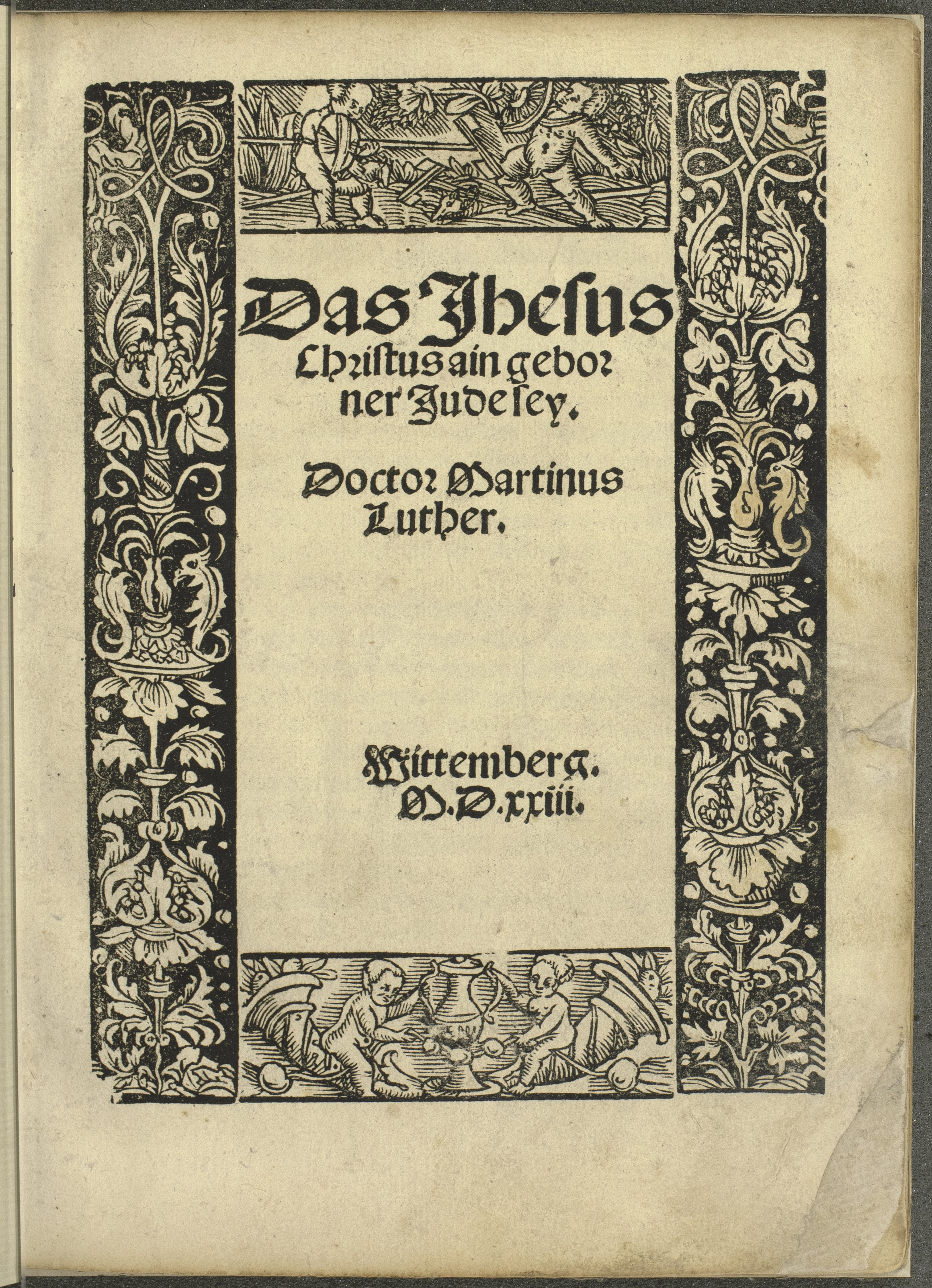
TextDas Ihesus Christus ain geborner Iude sey
Luther, Martin, 1483-1546Summary: The fifth printing of Luther's early treatise, "That Jesus Christ was born a Jew", in which he denies the charges made against him that he did not believe in the Virgin Birth, but rather that Jesus was a naturally born child of Joseph and Mary. In this tract, Luther confesses that he believes that Jesus was born a Jew of the Virgin Mary. He also hopes that his teaching will bring more Jews to convert to Christianity.Summary: The fifth printing of Luther's early treatise, "That Jesus Christ was born a Jew", in which he denies the charges made against him that he did not believe in the Virgin Birth, but rather that Jesus was a naturally born child of Joseph and Mary. In this tract, Luther confesses that he believes that Jesus was born a Jew of the Virgin Mary. He also hopes that his teaching will bring more Jews to convert to Christianity. -
 Text
TextDas Jesus Christus ein geborner Jude sey
Luther, Martin, 1483-1546Summary: Luther was accused by Ferdinand (brother of Charles V) of teaching that Jesus was the seed of Abraham and that Mary was not a virgin either before or after the birth of Jesus. Luther replied with this booklet that demonstrated the human and divine natures of Jesus and showed sensitivity to Jesus' Jewish background. Luther hoped that books like this could be used to convert Jews from their erroneous beliefs.Summary: Luther was accused by Ferdinand (brother of Charles V) of teaching that Jesus was the seed of Abraham and that Mary was not a virgin either before or after the birth of Jesus. Luther replied with this booklet that demonstrated the human and divine natures of Jesus and showed sensitivity to Jesus' Jewish background. Luther hoped that books like this could be used to convert Jews from their erroneous beliefs. -
 Text
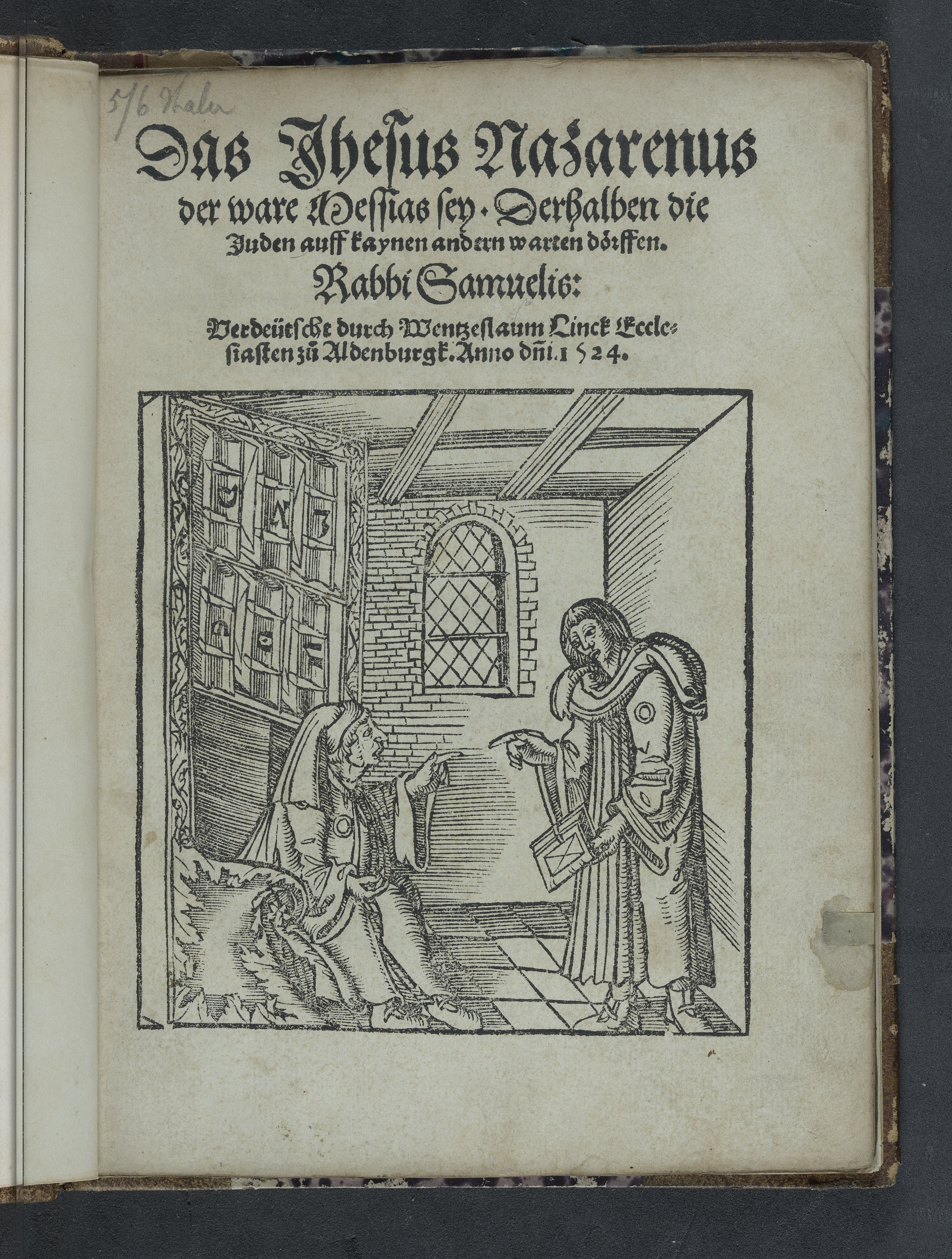
TextDas Jhesus Nazarenus der ware Messias sey : Derhalben die Juden auff kaynen andern warten dörffen
Samuel, MarochitanusSummary: German translation by Wenzeslaus Linck of Epistola contra Judaeorum, thought to be written in Arabic by Samuel of Marocco, an apostate Jew at the beginning of the 11th century and translated into Latin by the Spanish Dominican Alphonsus Bonihominis in the 14th century and widely disseminated. Bonihominis is likely the real author of the work.Summary: German translation by Wenzeslaus Linck of Epistola contra Judaeorum, thought to be written in Arabic by Samuel of Marocco, an apostate Jew at the beginning of the 11th century and translated into Latin by the Spanish Dominican Alphonsus Bonihominis in the 14th century and widely disseminated. Bonihominis is likely the real author of the work. -
 Text
TextDas Magnificat Vorteutschet vnd auszgelegt
Luther, Martin, 1483-1546Summary: Luther wrote this exposition of the Magnificent (Luke 1:46-55) in March 1521. He dedicated it to Duke Johann Frederich of Saxony as a token of his thanks to the Duke for his support and encouragement after Luther's condemnation by Pope Leo X. Text in German includes Luther's German translation of the Magnificat from the N.T. Greek of St. Luke's Gospel.Summary: Luther wrote this exposition of the Magnificent (Luke 1:46-55) in March 1521. He dedicated it to Duke Johann Frederich of Saxony as a token of his thanks to the Duke for his support and encouragement after Luther's condemnation by Pope Leo X. Text in German includes Luther's German translation of the Magnificat from the N.T. Greek of St. Luke's Gospel. -
 Text
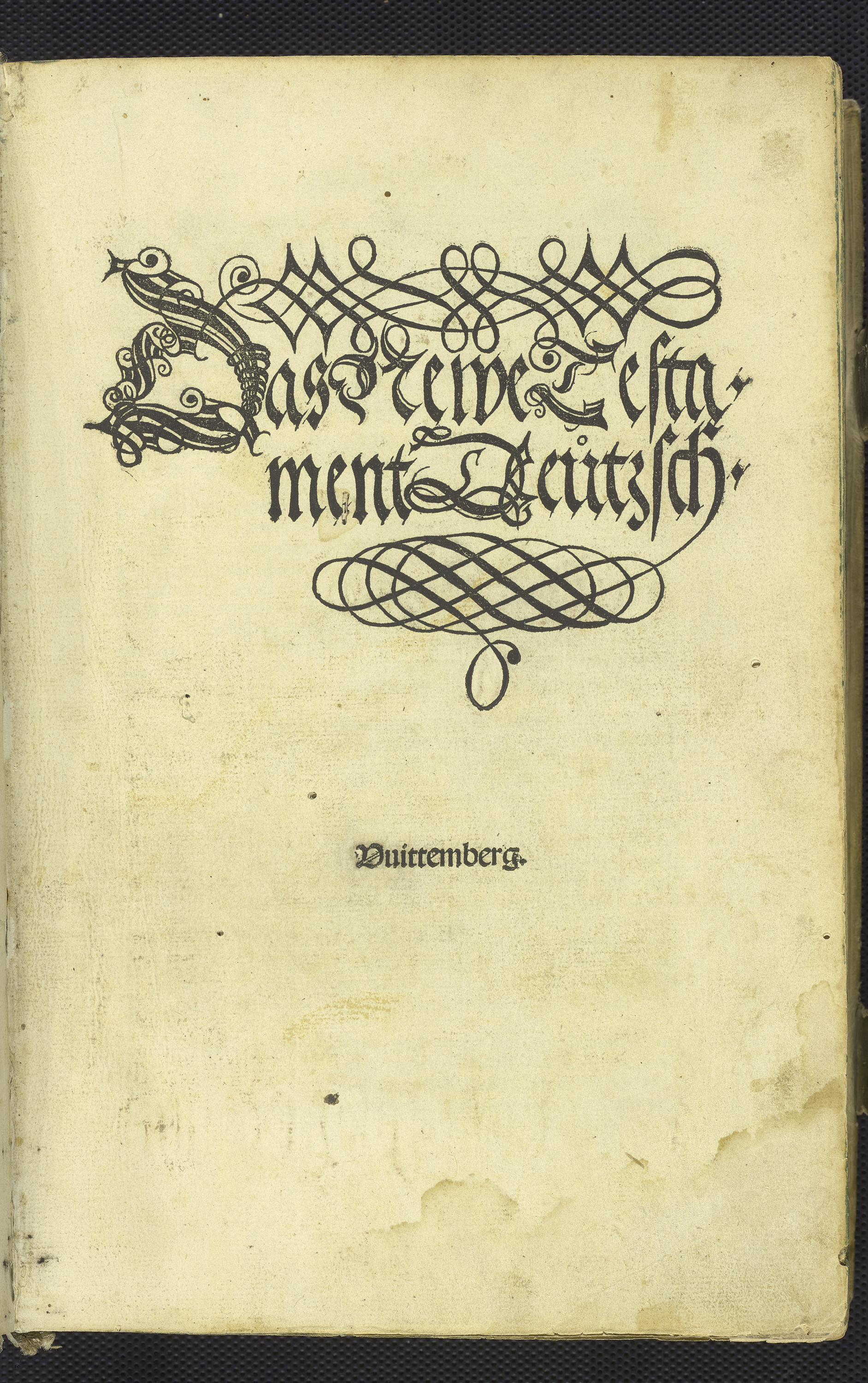
TextDas Newe Testament Deůtzsch
Summary: Luther's translation from the original Greek of the New Testament is a landmark in the history of the German language. His forceful style ensured that his Thuringian-Saxon dialect would provide the standard for High German in years to come. From a religious standpoint, Luther's decision to refer to the original Greek rather than merely to translate the Vulgate ensured that the German New Testament would be much more faithful to the original. Erasmus' New Testament provided the basis for the translation.Summary: Luther's translation from the original Greek of the New Testament is a landmark in the history of the German language. His forceful style ensured that his Thuringian-Saxon dialect would provide the standard for High German in years to come. From a religious standpoint, Luther's decision to refer to the original Greek rather than merely to translate the Vulgate ensured that the German New Testament would be much more faithful to the original. Erasmus' New Testament provided the basis for the translation. -
 Text
TextDas ander teyl widder die hymlischen Propheten, vom Sacrament.
Luther, Martin, 1483-1546Summary: The Second printing of Luther's book, "Against the Heavenly Prophets addresses A. Karlstadt's doctrine of the Sacraments. This is the second printing of this work in its year of issue.Summary: The Second printing of Luther's book, "Against the Heavenly Prophets addresses A. Karlstadt's doctrine of the Sacraments. This is the second printing of this work in its year of issue. -
 Text
TextDas der frey will nichts sey : Anntwort D. Martini Luther ann Erasmum Rotherdam
Luther, Martin, 1483-1546Summary: German translation by Martin Luther's colleague, Justus Jonas, of "De servo arbitrio". "De servo arbitrio (Concerning the Enslaved Will)" is considered one of Luther's greatest literary productions, and among the most important writings of the Reformation. In it, he defends the idea of the complete inability of the human being to please God, apart from Divine grace.Summary: German translation by Martin Luther's colleague, Justus Jonas, of "De servo arbitrio". "De servo arbitrio (Concerning the Enslaved Will)" is considered one of Luther's greatest literary productions, and among the most important writings of the Reformation. In it, he defends the idea of the complete inability of the human being to please God, apart from Divine grace. -
 Text
TextDas schön Confitemini an der zal der CXVIII Psalm
Luther, Martin, 1483-1546Summary: Text in German includes Luther's German translation of Psalms CXVIII from the Hebrew O.T., and is Luther's expanded version of his earlier Latin work.Summary: Text in German includes Luther's German translation of Psalms CXVIII from the Hebrew O.T., and is Luther's expanded version of his earlier Latin work. -
 Text
TextDas schön Confitemini an der zal der cxviij. Psalm
Luther, Martin, 1483-1546Summary: This is the third printing of Luther's German translation of his notes on Psalm 118. An Earlier German translation version had been published by Wenzeslaus Linck. Luther's expanded edition, as reprinted here, differs from Linck's in that it uses Eobanus Hessus' verse translation of the psalm, prepared with Luther's advice, as the scriptural text. Text in German includes Luther's German translation of Psalms CXVIII from the Hebrew O.T., and is Luther's expanded version of his earlier Latin work.Summary: This is the third printing of Luther's German translation of his notes on Psalm 118. An Earlier German translation version had been published by Wenzeslaus Linck. Luther's expanded edition, as reprinted here, differs from Linck's in that it uses Eobanus Hessus' verse translation of the psalm, prepared with Luther's advice, as the scriptural text. Text in German includes Luther's German translation of Psalms CXVIII from the Hebrew O.T., and is Luther's expanded version of his earlier Latin work. -

-
 Text
TextDe Libero arbitrio ΔΙΑΤΡΙΒΗ, sive collatio
Erasmus, Desiderius, -1536Summary: Early edition of Erasmus' treatise on free human will and its limits.Summary: Early edition of Erasmus' treatise on free human will and its limits. -
 Text
TextDe Nithardo Carolimagni nepote, ac tota eiusdem Nithardi prosapia, breue syntagma
Petau, Paul, 1568-1614Engraved portrait of Petau.Engraved portrait of Petau. -

-
 Text
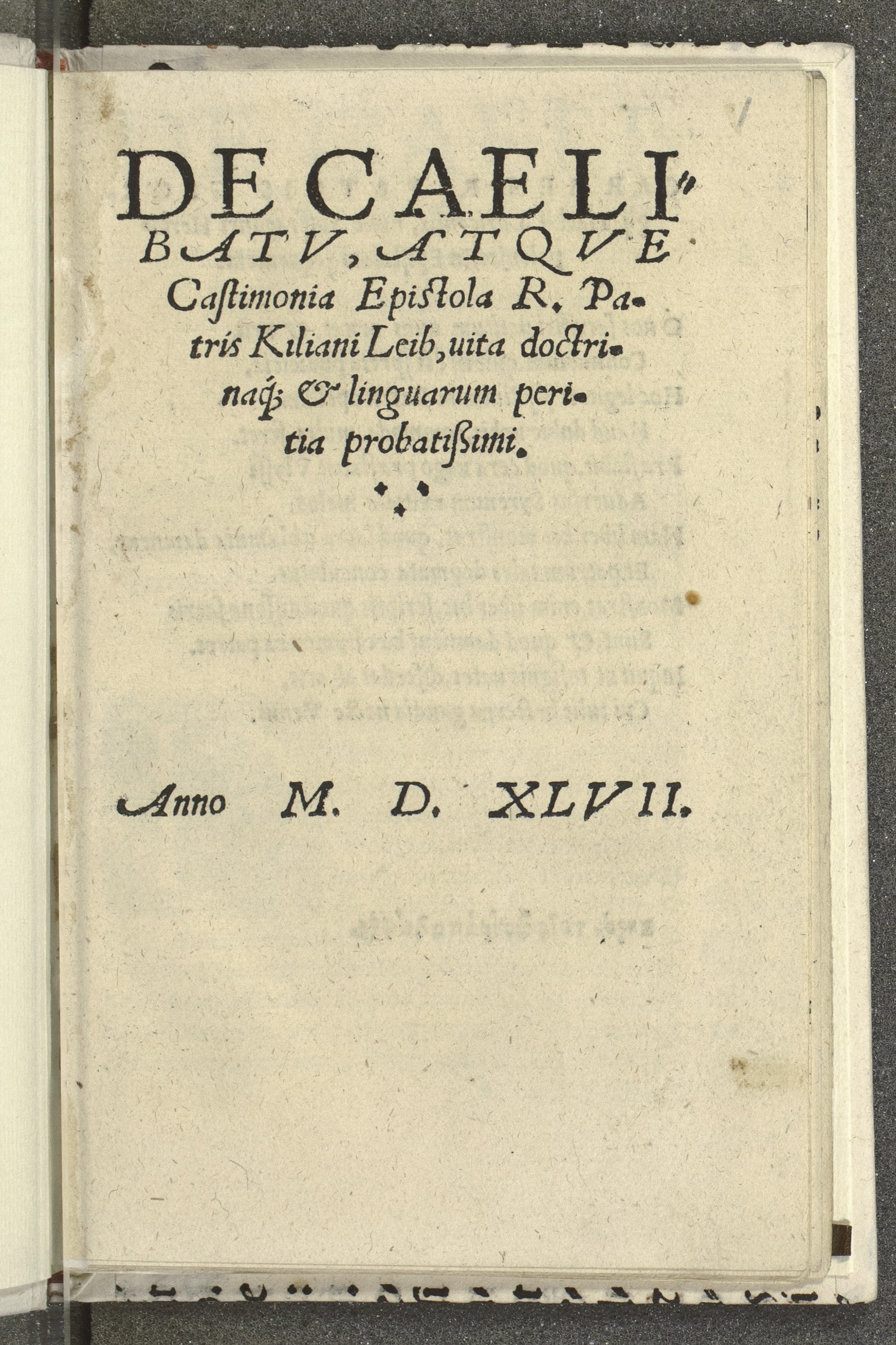
TextDe caelibatu, atque castimonia epistola
Leib, Kilian, 1471-1553Summary: Kilian Leib was the prior of the Augustinian monastery at Rebdorf near Ingolstadt. He was a vehement opponent of the Lutheran movement and was involved in the drafting of the Confutatio Augustana. In this tract he defends priestly celibacy and chastity.Summary: Kilian Leib was the prior of the Augustinian monastery at Rebdorf near Ingolstadt. He was a vehement opponent of the Lutheran movement and was involved in the drafting of the Confutatio Augustana. In this tract he defends priestly celibacy and chastity. -

-
 Text
TextDe coniugio episcoporum et diaconorum : ad venerandum doctorem VVolffgangum Reissenbusch monasterij Lichtembergensis Praeceptorem
Bugenhagen, Johann, 1485-1558Summary: Essay on the historical and Scriptural foundations of clerical marriage, written following the marriage of Wolfgang Reissenbusch, Praeceptor of the Collegial Church of St. Antonius in Lichtenberg.Summary: Essay on the historical and Scriptural foundations of clerical marriage, written following the marriage of Wolfgang Reissenbusch, Praeceptor of the Collegial Church of St. Antonius in Lichtenberg. -
 Text
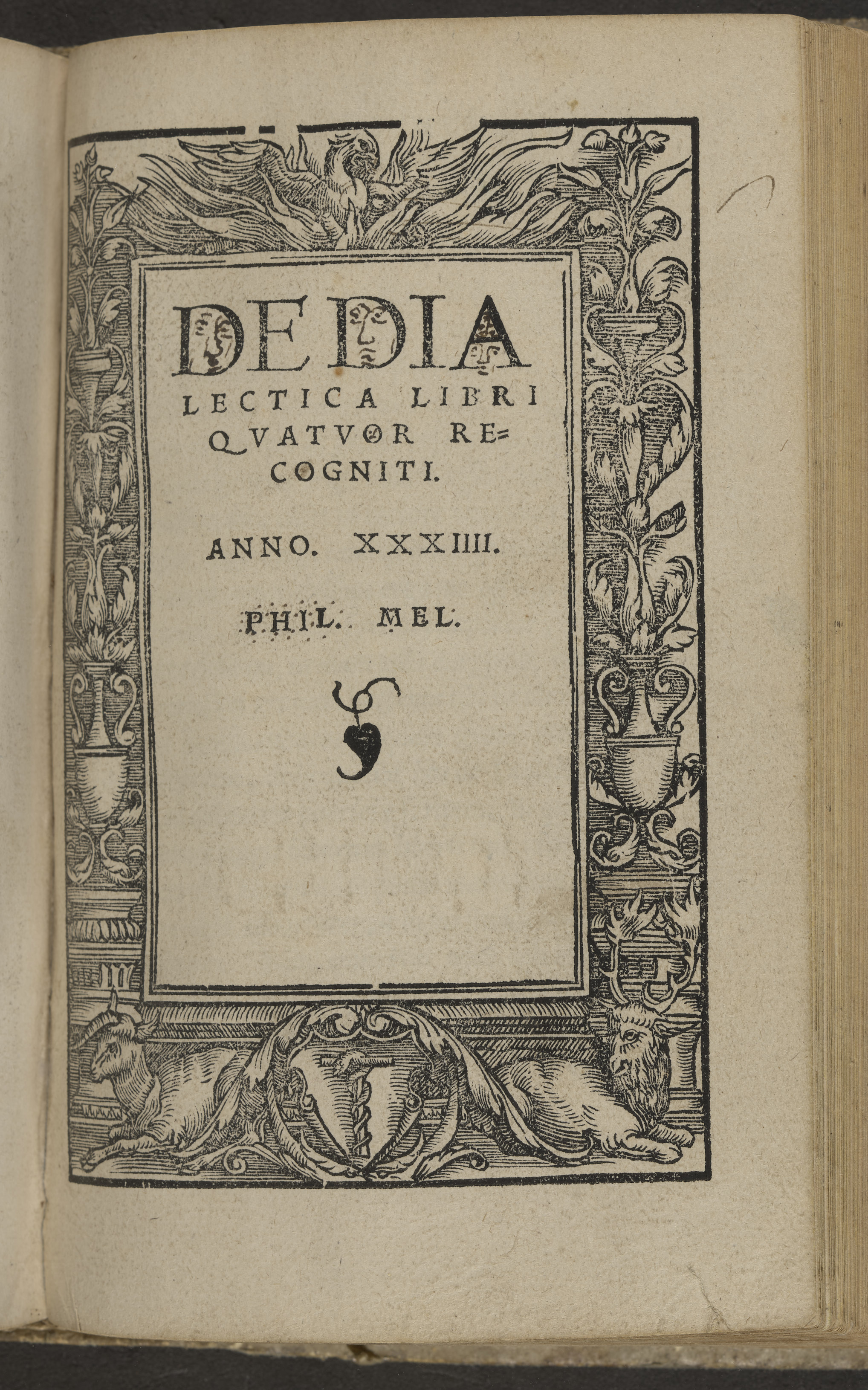
TextDe dialectica libri quatuor recogniti. Anno. XXXIIII
Melanchthon, Philipp, 1497-1560Summary: Melanchthon wrote three versions of his book on dialectic, considering only the third to be truly successful. This is a printing from 1534 of the second (1528) version.Summary: Melanchthon wrote three versions of his book on dialectic, considering only the third to be truly successful. This is a printing from 1534 of the second (1528) version. -
 Text
TextDe disputatio[n]e Lipsicensi : quantum ad Boemos obiter deflexa est
Emser, Hieronymus, 1478-1527Summary: A letter by Hieronymus Emser, early opponent of Luther concerning the Leipzig Disputation of 1519, describing Luther's debate with Johann Eck, and Luther's admitting that councils could err.Summary: A letter by Hieronymus Emser, early opponent of Luther concerning the Leipzig Disputation of 1519, describing Luther's debate with Johann Eck, and Luther's admitting that councils could err. -
 Text
TextDe diuina institutione Pontificatus Romani Pontificis super tota[m] ecclesiam: a Christo in Petro
Cajetan, Tommaso de Vio, 1469-1534Summary: This is a finely executed and rare edition, dealing with the office of the Pope, with special emphasis on the person of St. Peter. Tommaso de Vio, also called Cajetan, taught philosophy and theology at Padua, Pavia, and Rome, and played an important part in the ecclesiastical affairs of the time, urging the cause of reform.Summary: This is a finely executed and rare edition, dealing with the office of the Pope, with special emphasis on the person of St. Peter. Tommaso de Vio, also called Cajetan, taught philosophy and theology at Padua, Pavia, and Rome, and played an important part in the ecclesiastical affairs of the time, urging the cause of reform. -
 Text
TextDe donatione Constantini quid ueri habeat, eruditorum quorundam iudicium, ut in uersa pagella uidebis
Summary: The Donation of Constantine was a work that told of how the Emperor Constantine I gave secular domination over Italy to the Bishops of Rome. Although purported to have been written in the fourth century, the humanist scholar Lorenzo Valla proved the work, long suspect to be an eighth century forgery. Vall's treatise was one of the first important works of comparative philology, a method invaluable to later biblical scholars and translators.Summary: The Donation of Constantine was a work that told of how the Emperor Constantine I gave secular domination over Italy to the Bishops of Rome. Although purported to have been written in the fourth century, the humanist scholar Lorenzo Valla proved the work, long suspect to be an eighth century forgery. Vall's treatise was one of the first important works of comparative philology, a method invaluable to later biblical scholars and translators. -
 Text
TextDe legis litera, siue carne, & spiritu
Karlstadt, Andreas Rudolff-Bodenstein von, 1486-1541Summary: One of two printings of Karlstadt's treatise on the dichotomy of law and grace.Summary: One of two printings of Karlstadt's treatise on the dichotomy of law and grace.