Search
135 resources
135 items
Medium
pamphlets
-
 Text
TextNew Biographical Series - No. 6, John Wesley
A short biography of John Wesley published as part of a series of biographical sketches by the Religious Tract Society.A short biography of John Wesley published as part of a series of biographical sketches by the Religious Tract Society. -

-
 Text
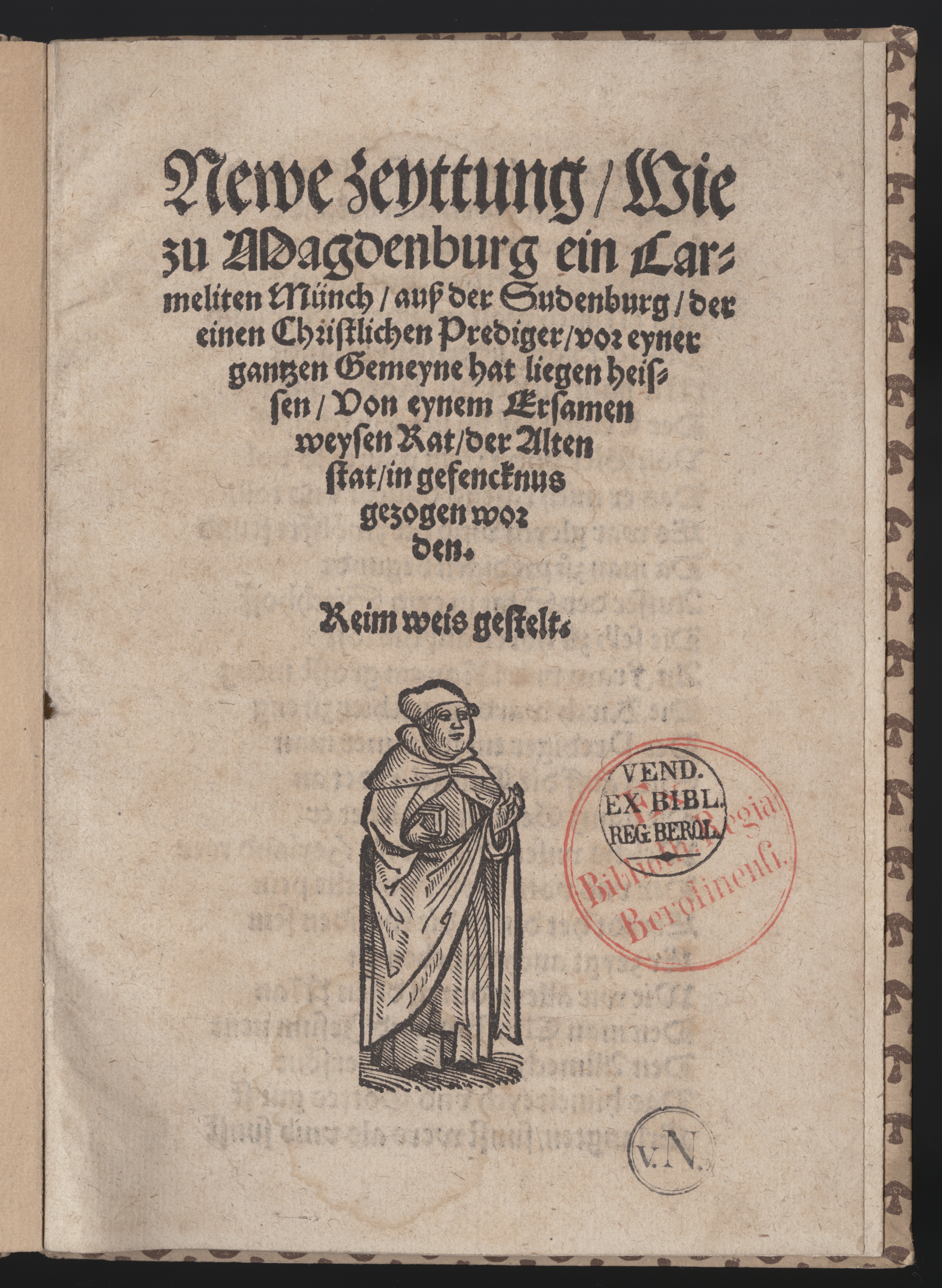
TextNewe zeyttung, Wie zu Magdenburg ein Carmeliten Münch, auss der Sudenburg, der einen Christlichen Prediger, vor eyner gantzen Gemeyne hat liegen heissen, Von eynem Ersamen weysen Rat, der Alten stat, in gefencknus gezogen worden. : Reim weis gestelt.
Summary: Polemic ballad with a total of 142 rhymed lines, relating the story of a drunk Carmelite monk who attends a sermon preached outside the city by a righteous (Lutheran) pastor and who interrupts the preacher, accusing him of lying and misrepresenting Scripture. The people in response rise up and begin to beat him, almost killing him, but the monk is taken away and brought before the city council and the mayor who calls for calm and instructs that the monk should be locked up to await the executioner and thus be placed under God's justice rather than the mob's anger.Summary: Polemic ballad with a total of 142 rhymed lines, relating the story of a drunk Carmelite monk who attends a sermon preached outside the city by a righteous (Lutheran) pastor and who interrupts the preacher, accusing him of lying and misrepresenting Scripture. The people in response rise up and begin to beat him, almost killing him, but the monk is taken away and brought before the city council and the mayor who calls for calm and instructs that the monk should be locked up to await the executioner and thus be placed under God's justice rather than the mob's anger. -
 Text
TextNotes of a journey through Durham and Northumberland in the year 1635
Brereton, William, 1604-1661Summary: A travelogue detailing the areas of Durham and Northumberland.Summary: A travelogue detailing the areas of Durham and Northumberland. -
 Text
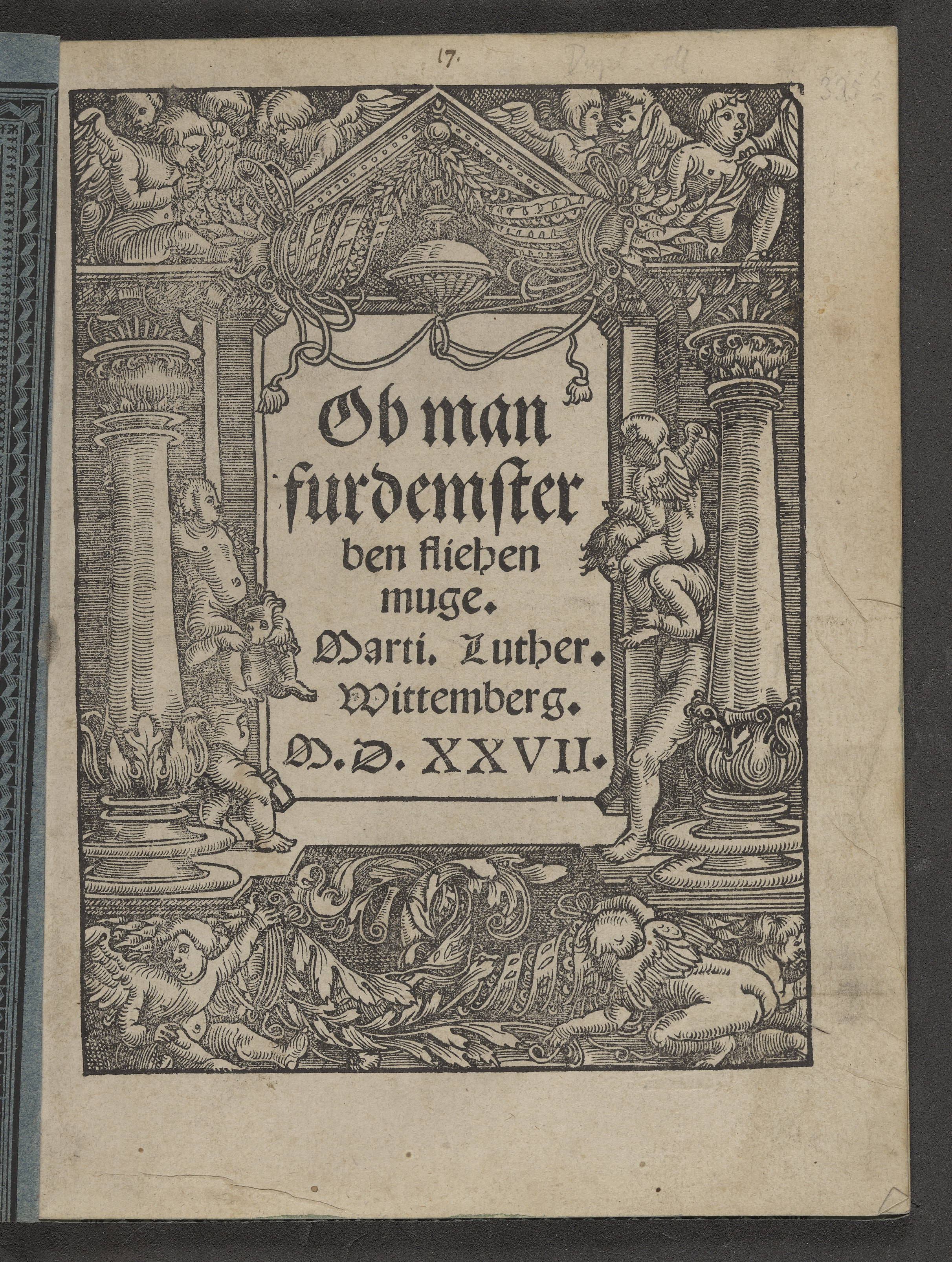
TextOb man fur dem Sterben fliehen muge
Luther, Martin, 1483-1546Summary: The Black Death ravaged Europe from the fourteenth century onward. Dr. Johann Hess, a pastor from Breslau, asked Luther in 1527 whether it was permissible for a person to flee from plague-infested areas. Luther replied that it was, and then added some public health advice for town and city government officials in plague-ravaged areas. He advocated fumigation of this, the seventh printing of the work.Summary: The Black Death ravaged Europe from the fourteenth century onward. Dr. Johann Hess, a pastor from Breslau, asked Luther in 1527 whether it was permissible for a person to flee from plague-infested areas. Luther replied that it was, and then added some public health advice for town and city government officials in plague-ravaged areas. He advocated fumigation of this, the seventh printing of the work. -
 Text
TextOb man fur dem sterben fliehen muge
Luther, Martin, 1483-1546Summary: The Black Death ravaged Europe from the fourteenth century onward. Dr. Johann Hess, a pastor from Breslau, asked Luther in 1527 whether it was permissible for a person to flee from plague-infested areas. Luther replied that it was, and then added some public health advice for town and city government officials in plague-ravaged areas.Summary: The Black Death ravaged Europe from the fourteenth century onward. Dr. Johann Hess, a pastor from Breslau, asked Luther in 1527 whether it was permissible for a person to flee from plague-infested areas. Luther replied that it was, and then added some public health advice for town and city government officials in plague-ravaged areas. -
 Text
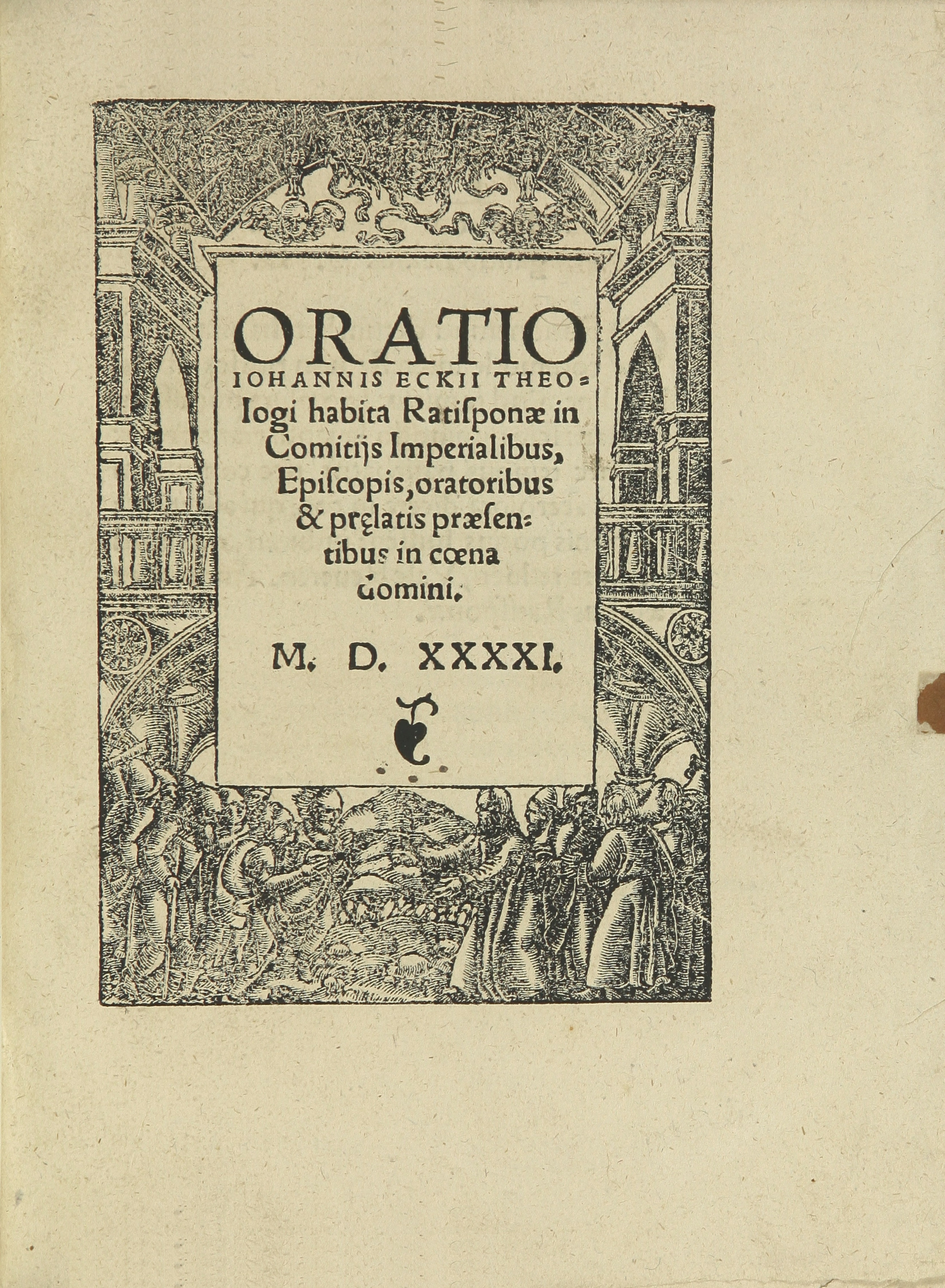
TextOratio
Eck, Johann, 1486-1543Summary: This is the first printing of Eck's speech to the Diet of Regensburg on April 5, 1541, defining the Catholic understanding of the Lord's Supper. The Diet of Regensburg proved to be Eck's last appearance as a major theological political leader, for his health declined and he could no longer bear the weight of these grueling encounters.Summary: This is the first printing of Eck's speech to the Diet of Regensburg on April 5, 1541, defining the Catholic understanding of the Lord's Supper. The Diet of Regensburg proved to be Eck's last appearance as a major theological political leader, for his health declined and he could no longer bear the weight of these grueling encounters. -
 Text
TextOratio in funere Reverendi viri D. Martini Lutheri
Melanchthon, Philipp, 1497-1560Summary: This is the original Latin version of Melanchthon's funeral oration for Luther, preached in Wittenberg, February 22, 1546. The friendship between Luther and Melanchthon was almost legendary, even in their own lifetimes, and this deeply moving oration is an eloquent testimony to the depth of Melanchthon's feelings for his friend of twenty-eight years.Summary: This is the original Latin version of Melanchthon's funeral oration for Luther, preached in Wittenberg, February 22, 1546. The friendship between Luther and Melanchthon was almost legendary, even in their own lifetimes, and this deeply moving oration is an eloquent testimony to the depth of Melanchthon's feelings for his friend of twenty-eight years. -
 Text
TextOrdnu[n]g wie man tauffet, bissher im Latein gehalten, verteütscht : Hierin ist, auss etlichen Ursachen, was die andern, als uberflüssig, veracht haben, nicht aussgelassen
Catholic ChurchSummary: Osiander provides a fuller translation of the traditional Catholic rite of baptism than Münzer or Luther, who had both published baptism liturgies one year earlier, and who had eliminated certain ritual elements.Summary: Osiander provides a fuller translation of the traditional Catholic rite of baptism than Münzer or Luther, who had both published baptism liturgies one year earlier, and who had eliminated certain ritual elements. -
 Text
TextOutline of missionary policy.
Summary: A policy document for missionary work.Summary: A policy document for missionary work. -
 Text
TextPassional Christi vnnd Antichristi
Luther, Martin, 1483-1546Summary: A polemic in the form of thirteen pairs of woodcuts (with captions) depicting scenes from the life of Christ contrasted with scenes from the life of the Pope. The text for the Latin edition was by P. Melanchthon and J. Schwertfeger, while that for the German edition was by M. Luther. The text consists of quotations from the Gospels and the canon law. This collaborative effort between Lukas Cranach and Luther is among the more famous pieces of popular propaganda provided during the reformation. Luther wrote the German texts to accompany Cranach's woodcuts.Summary: A polemic in the form of thirteen pairs of woodcuts (with captions) depicting scenes from the life of Christ contrasted with scenes from the life of the Pope. The text for the Latin edition was by P. Melanchthon and J. Schwertfeger, while that for the German edition was by M. Luther. The text consists of quotations from the Gospels and the canon law. This collaborative effort between Lukas Cranach and Luther is among the more famous pieces of popular propaganda provided during the reformation. Luther wrote the German texts to accompany Cranach's woodcuts. -
 Text
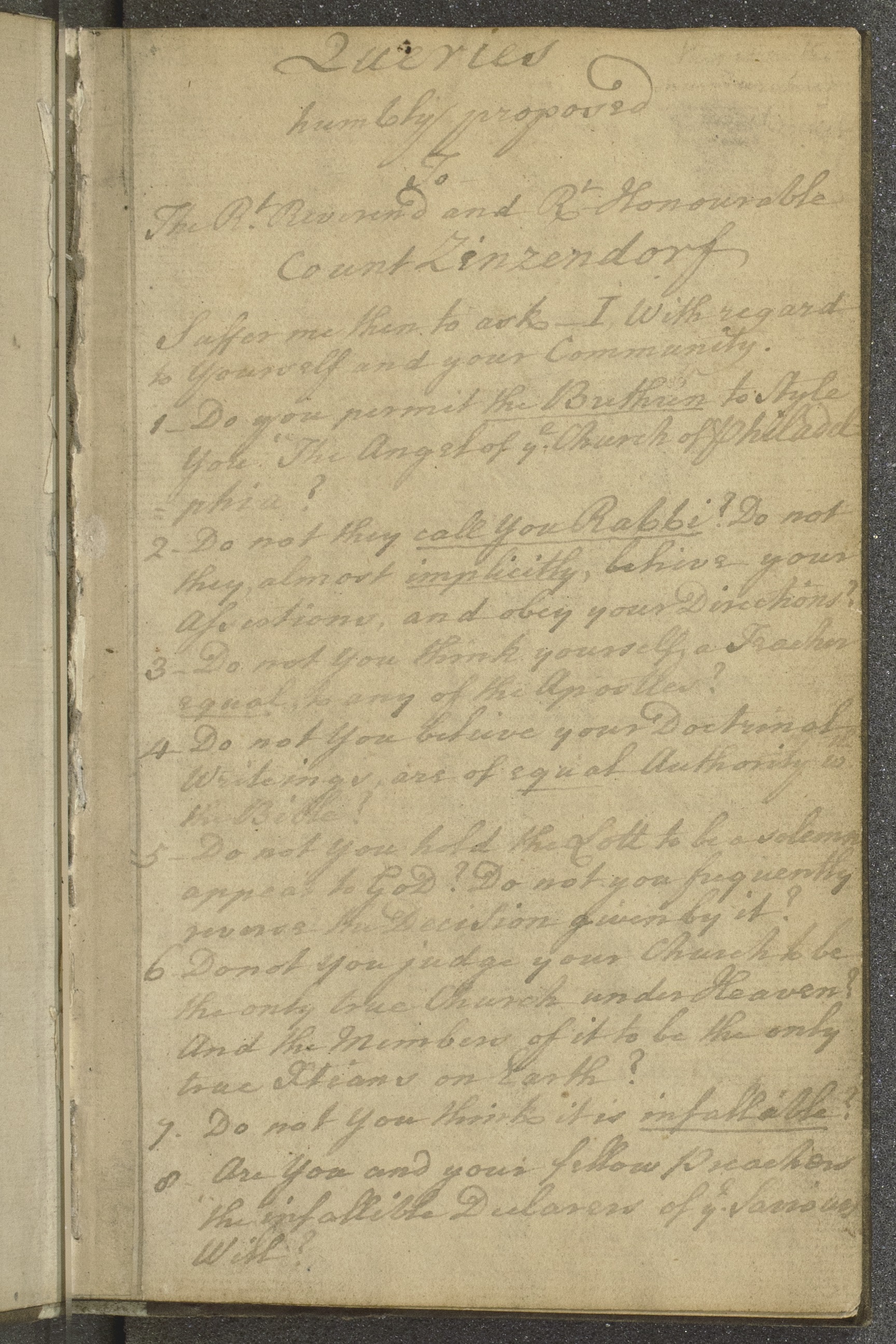
TextQueries humbly proposed to the Rt. Reverend and Rt. Honourable Count Zinzendorf
Bennet, John, 1714-1759Summary: A set of questions written by Bennet, here referred to as queries, posed to Count Niclaus Ludwig graf von Zinzendorf, the founder of the Moravian Church.Summary: A set of questions written by Bennet, here referred to as queries, posed to Count Niclaus Ludwig graf von Zinzendorf, the founder of the Moravian Church. -
 Text
TextRatio, cur synodus illa, quam Paulus Ro. Pontifex eius nominis III, Mantuae celebrandam, parum candide indicit, & se habiturum esse significat, neque aequa inderi possit, neq[ue] utilis Ecclesiae, unde & ab ijs, qui sacrosanctum Euangelium ineffabili Dei
Summary: When Pope Paul III called for a reform council at Mantua in 1536, the Protestants were faced with a dilemma. If they attended the council they would be recognizing the Pope's authority in such matters. If they refused, then it might appear that their calls for a general council had been insincere. The sticky task of responding to the pope's call fell upon Melanchthon. This is an edition of his response.Summary: When Pope Paul III called for a reform council at Mantua in 1536, the Protestants were faced with a dilemma. If they attended the council they would be recognizing the Pope's authority in such matters. If they refused, then it might appear that their calls for a general council had been insincere. The sticky task of responding to the pope's call fell upon Melanchthon. This is an edition of his response. -
 Text
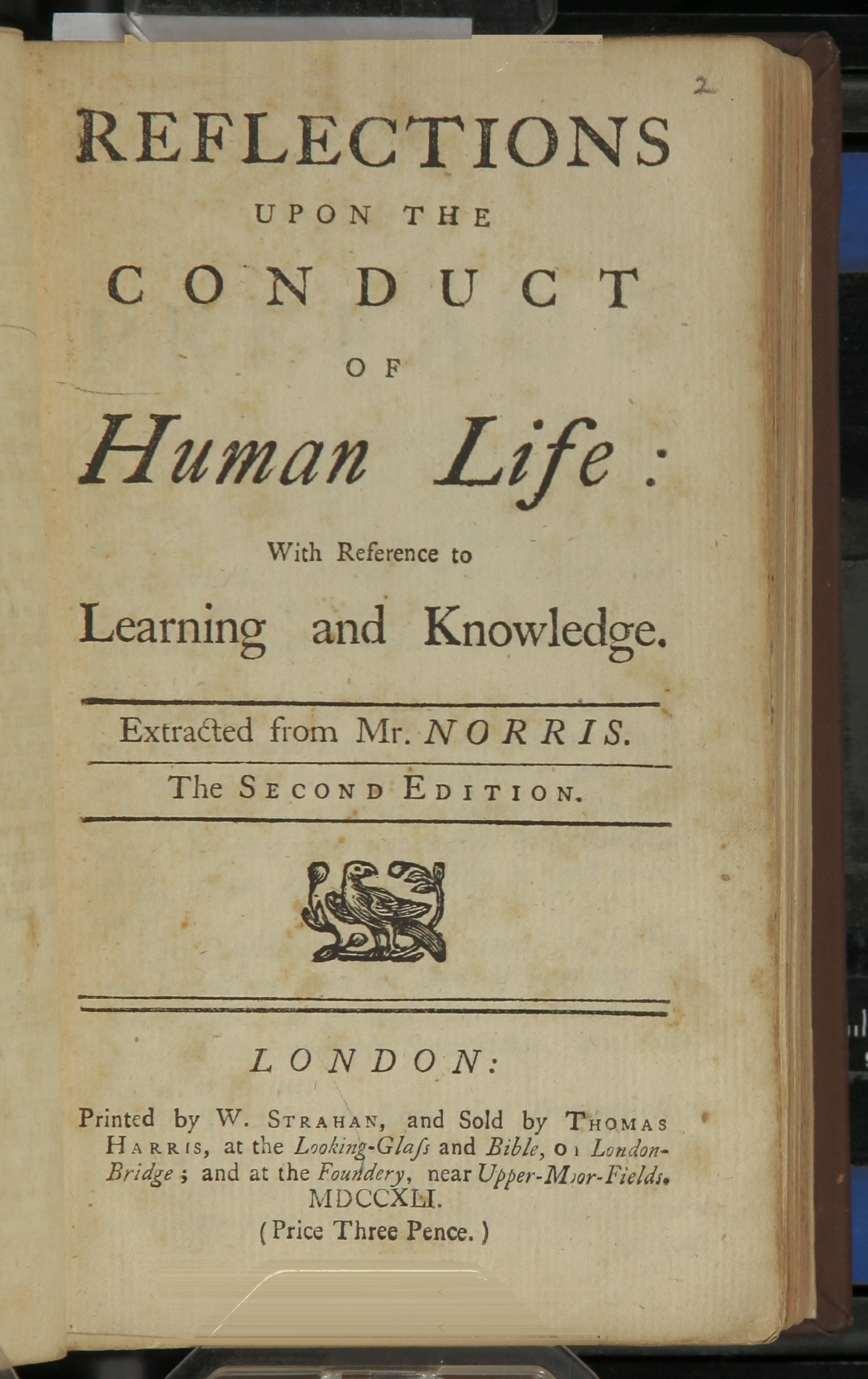
TextReflections upon the conduct of human life: with reference to learning and knowledge
Norris, John, 1657-1711Summary: An extract from a work by John Norris on moral conduct and education. This is bound as no. 2 in Wesley Tract, vol. X.Summary: An extract from a work by John Norris on moral conduct and education. This is bound as no. 2 in Wesley Tract, vol. X. -
 Text
TextReplica F. Sylvestri Prieriat[is] : sacri Palatii Apostolici Magistri, ad F. Martinum Luther Ordinis Eremitaru[m] ; Martinus Luther, optimo lectori salutem ...
Mazzolini, Silvestro, da Prierio, 1456?-1527?Summary: When Luther received the replies of S. Mazzolini, the first man to take up the cudgels against Luther, he found the best course of reply to be a reprinting with notes of Mazzolini's inept rejoinders. Even the Catholics had to admit that Mazzolini's answers simply did not meet Luther's objections. This is the second printing of the work.Summary: When Luther received the replies of S. Mazzolini, the first man to take up the cudgels against Luther, he found the best course of reply to be a reprinting with notes of Mazzolini's inept rejoinders. Even the Catholics had to admit that Mazzolini's answers simply did not meet Luther's objections. This is the second printing of the work. -
 Text
TextReport of the Sixth Deaconess Conference of the Methodist Episcopal Church held at Cincinnati, Ohio, February, 24-27 1893
Methodist Episcopal Church. Deaconnes ConferenceSummary: A report of the National Deaconess Conference of the Methodist Episcopal Church, held in 1893 in Cincinnati, Ohio, incuding a history of the Deaconess Conference's work, recommendations for changes, consecration of new members, and the official minutes of the conference.Summary: A report of the National Deaconess Conference of the Methodist Episcopal Church, held in 1893 in Cincinnati, Ohio, incuding a history of the Deaconess Conference's work, recommendations for changes, consecration of new members, and the official minutes of the conference. -
 Text
TextRules to the ministers of every parish within my diocese ...
Church of England. Diocese of Gloucester. Bishop (1735-1752 : Benson)Summary: A pastoral charge from the Bishop in charge of the Diocese of Gloucester outlining the rules and regulations to which all clergymen in the diocese will be held.Summary: A pastoral charge from the Bishop in charge of the Diocese of Gloucester outlining the rules and regulations to which all clergymen in the diocese will be held. -
 Text
TextS.D.n.D. Pauli diuina prouidentia p.p. III : Bullla indictionis sacro sancti generalis concilii
Catholic Church. Pope (1534-1549 : Paul III)Summary: Latin text of the Papal Bull Ad Dominici gregis curam, issued June 4, 1536, for the Council of Mantua which was never held (council eventually took place in Trent).Summary: Latin text of the Papal Bull Ad Dominici gregis curam, issued June 4, 1536, for the Council of Mantua which was never held (council eventually took place in Trent). -
 Text
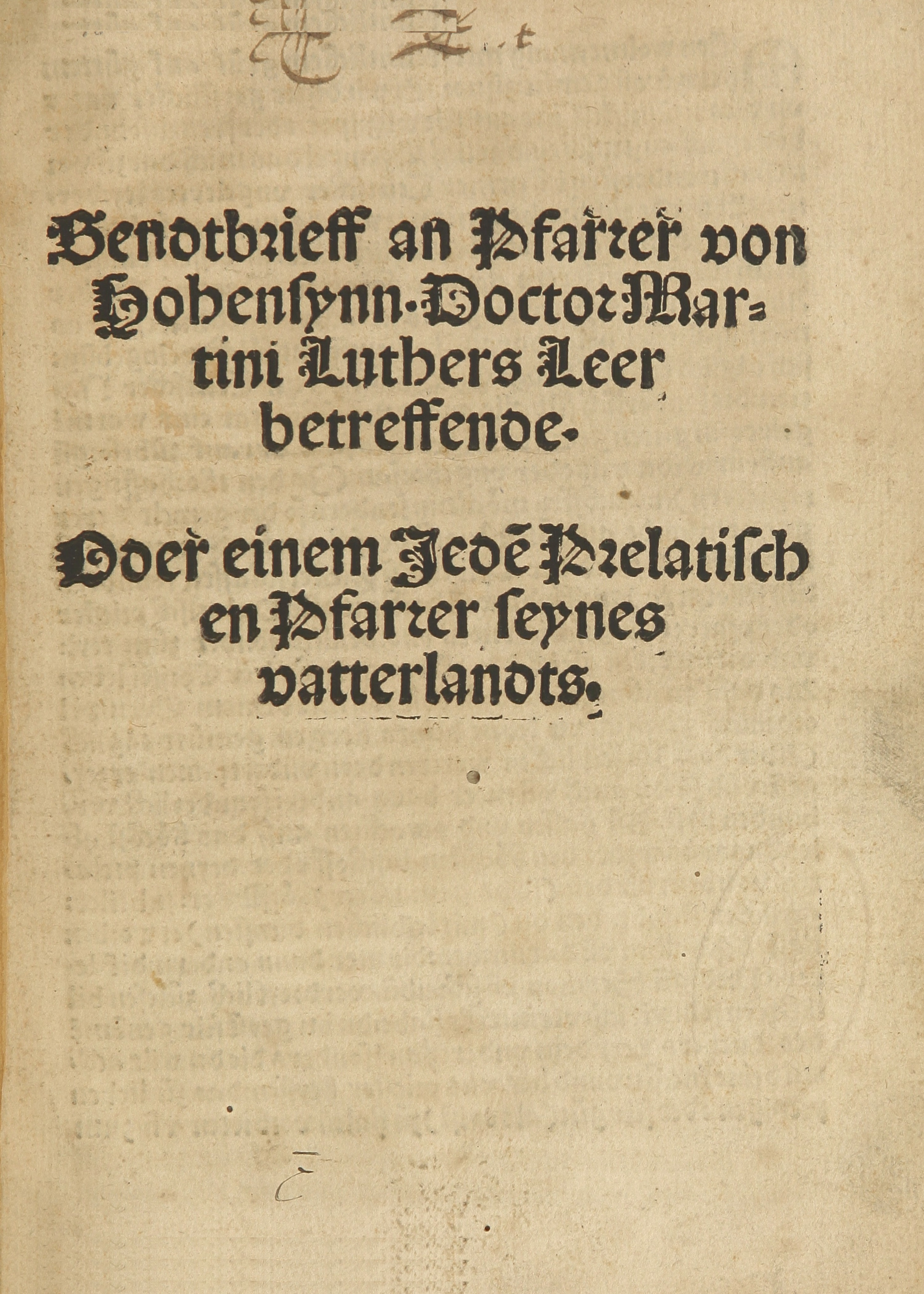
TextSendtbrieff an Pfarrer von Hohensynn. Doctor Martini Luthers Leer betreffende. Oder einem Jede[n] Prelatischen Pfarrer Seynes vaterlandes.
Summary: This is a Catholic pamphlet warning against Luther's errors. "Pastor Highmind" may be pseudonym or the name of a real Pastor von Hohensynn.Summary: This is a Catholic pamphlet warning against Luther's errors. "Pastor Highmind" may be pseudonym or the name of a real Pastor von Hohensynn. -
 Text
TextSepticeps Lutherus : ubiq[ue] sibi, suis scriptis, co[n]trari[us], in visitatione[m] Saxonica[m]
Cochlaeus, Johannes, 1479-1552Summary: J. Cochaeus here portrays Luther as a seven headed monster like Cerebrus who guarded the gate to hell in Greek/Latin mythology. The picture on the title page is one of the most famous images to emerge from the anti-Luther polemics of the period. Each head has a caption and is explained in detail in the text. Doctor (of false doctrine), Martinus (faithless, unlike the saint whose name he bore) Lutherus (untrue to his Catholic family tradition)Ưetc.Summary: J. Cochaeus here portrays Luther as a seven headed monster like Cerebrus who guarded the gate to hell in Greek/Latin mythology. The picture on the title page is one of the most famous images to emerge from the anti-Luther polemics of the period. Each head has a caption and is explained in detail in the text. Doctor (of false doctrine), Martinus (faithless, unlike the saint whose name he bore) Lutherus (untrue to his Catholic family tradition)Ưetc. -
 Text
TextSieben Kopffe Martin Luthers, von acht hohen sachen des Christlichen glaubens
Cochlaeus, Johannes, 1479-1552Summary: This volume consists of translations from J. Cochaeus' Latin work "Septiceps Lutherus. It is cast in dialogue form and discusses eight topics of religion, showing how Luther had departed from Catholic truth in these areas. The title page woodcut was a classic piece of Catholic propaganda, portraying Luther not only as a Doctor and Churchman, but as a Turk, a wild enthusiast (Schwarmer) and "Barrabas."Summary: This volume consists of translations from J. Cochaeus' Latin work "Septiceps Lutherus. It is cast in dialogue form and discusses eight topics of religion, showing how Luther had departed from Catholic truth in these areas. The title page woodcut was a classic piece of Catholic propaganda, portraying Luther not only as a Doctor and Churchman, but as a Turk, a wild enthusiast (Schwarmer) and "Barrabas."