Search
22 resources
22 items
Subject
Ten commandments
-
 Still image
Adam Giving Names: Genesis Chap. II. Ver. 20
Godwin, Abraham, 1763-1835An engraving of a framed image of Adam naming animals as detailed in Genesis 2:20. The framed image sits above a plinth with the inscription: "And Adam gave names to all cattle, and to the fowl of the air, and to every beast of the field:". Above the framed image are symbols of the Old and New Testaments, including the tablets of the Ten Commandments, a Sefer Torah, a Cross, and a crown of thorns flanking a glowing star shape potentially representing the Holy Spirit. The entire composition is surrounded by floral decorations held aloft by three birds.An engraving of a framed image of Adam naming animals as detailed in Genesis 2:20. The framed image sits above a plinth with the inscription: "And Adam gave names to all cattle, and to the fowl of the air, and to every beast of the field:". Above the framed image are symbols of the Old and New Testaments, including the tablets of the Ten Commandments, a Sefer Torah, a Cross, and a crown of thorns flanking a glowing star shape potentially representing the Holy Spirit. The entire composition is surrounded by floral decorations held aloft by three birds. -
 Text
TextAuslegung der zehen Gebot aus dem xix. vnd xx. Capitel des andern Buchs Mosi
Luther, Martin, 1483-1546Summary: Second printing of a collection of sermons by Luther on Exodus 19-20, which includes the 10 commandments. The sermons were given between 1524 and 1527 and were first published in 1528.Summary: Second printing of a collection of sermons by Luther on Exodus 19-20, which includes the 10 commandments. The sermons were given between 1524 and 1527 and were first published in 1528. -
 Text
TextDecem praecepta Witte[n]berge[n]si praedicata populo
Luther, Martin, 1483-1546Summary: The sermons on which this commentary on the Ten Commandments is based were delivered in Wittenberg in 1516-1517. This is the first work of Luther's to be translated into a modern European language. This is the first printing of the work.Summary: The sermons on which this commentary on the Ten Commandments is based were delivered in Wittenberg in 1516-1517. This is the first work of Luther's to be translated into a modern European language. This is the first printing of the work. -
 Text
TextDer .x. gebot ein nutzliche erklerung
Luther, Martin, 1483-1546Summary: Early book on the Ten Commandments and the Seven Deadly Sins by Martin Luther. Originally written in Latin, it is here translated into German by Sebastian Münster, a young Franciscan teacher/scholar, soon to become famous as one of the great Christian Hebraists of his time. This is the first printing of the German translation.Summary: Early book on the Ten Commandments and the Seven Deadly Sins by Martin Luther. Originally written in Latin, it is here translated into German by Sebastian Münster, a young Franciscan teacher/scholar, soon to become famous as one of the great Christian Hebraists of his time. This is the first printing of the German translation. -
 Text
TextDer Zehen Gebot ein nützliche Erklärung
Luther, Martin, 1483-1546This is a 1523 printing of Martin Luther's popular sermon on the Ten Commandments and the Seven Deadly Sins, first printed in 1520 and reprinted numerous times. The work was originally composed in Latin and was translated into German by the cartographer and Christian Hebraist Sebastian Münster.This is a 1523 printing of Martin Luther's popular sermon on the Ten Commandments and the Seven Deadly Sins, first printed in 1520 and reprinted numerous times. The work was originally composed in Latin and was translated into German by the cartographer and Christian Hebraist Sebastian Münster. -
 Text
TextDisputatio. Secundum, & Octauum Decalogi praecepta, thesibus theologicis explicata, : quae publicè ad disputandum proponentur, pridiè idus Septemb. Quando reuerentia, dignitate, & eruditione praestanti uiro, D. Ioanni Schauppio Eckio, liberalium disciplinarum magistro, et ss. theologiae Licentiato, Officiali Passauiensi, etc. Supremus in professione theologica gradus decernetur.
Theander, Georg, 1508-1570Summary: An academic disputation presented Georg Theander, professor at the University of Ingolstadt, and defended by Sebastian Haydlauff, priest at the church of St. Moritz in Ingolstadt. The disputation was based on 30 theses on the 2nd and 8th commandments.Summary: An academic disputation presented Georg Theander, professor at the University of Ingolstadt, and defended by Sebastian Haydlauff, priest at the church of St. Moritz in Ingolstadt. The disputation was based on 30 theses on the 2nd and 8th commandments. -

-
 Text
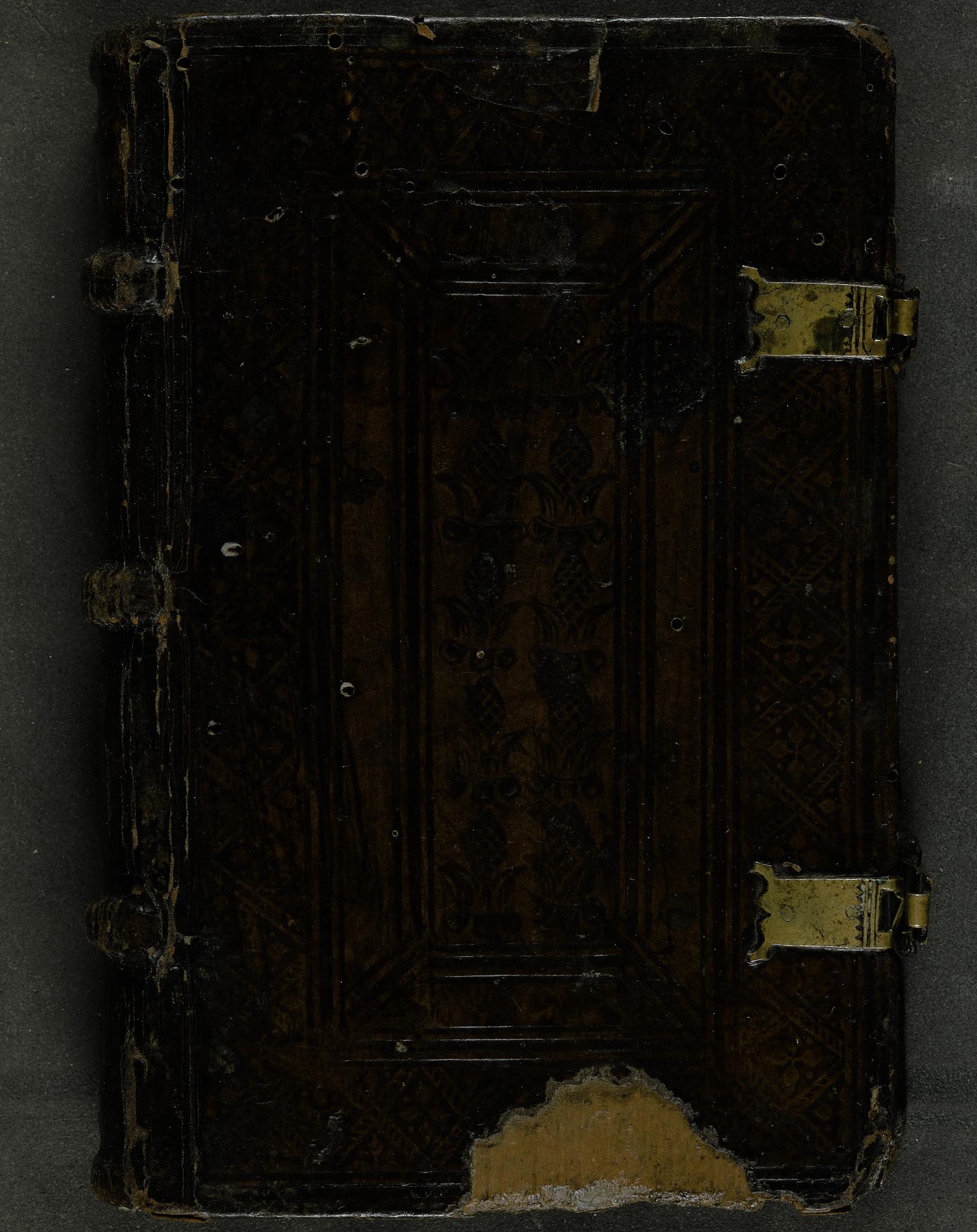
TextEyn bett buchlin. : Der czehen gepot. Des glaubens. Des vater vnsers. Des Aue Marien. Etliche verdeutschte Psalmen. Die Epistell sanct Pauls tzu tito, eyn Christlich leben tzu vnterrichten
Luther, Martin, 1483-1546Summary: Text in German includes Luther's translations from Latin of several Psalms from the Hebrew O.T., and the Epistle to Titus from the Greek N.T.Summary: Text in German includes Luther's translations from Latin of several Psalms from the Hebrew O.T., and the Epistle to Titus from the Greek N.T. -
 Text
TextEyn kurcz form der czehen gepott
Luther, Martin, 1483-1546Summary: An early predecessor of Luther's Small Catechism, containing a simple explanation of the Ten Commandments, the Apostles' Creed, and the Lord's Prayer.Summary: An early predecessor of Luther's Small Catechism, containing a simple explanation of the Ten Commandments, the Apostles' Creed, and the Lord's Prayer. -
 Still image
Historiated title page of De Biblie
Altdorfer, Erhard, approximately 1480-approximately 1570The title page of Martin Luther's Low German translation of the Bible featuring a collection of biblical scenes and symbols based on Lucas Cranach the Elder's painting, "Law and Gospel" (or "Sin and Redemption"). On the left of the image are scenes representing Law/Sin, including: a dead tree, Moses receiving the Ten Commandments, Adam and Eve, the brazen serpent, and a corpse lying atop a tomb.The title page of Martin Luther's Low German translation of the Bible featuring a collection of biblical scenes and symbols based on Lucas Cranach the Elder's painting, "Law and Gospel" (or "Sin and Redemption"). On the left of the image are scenes representing Law/Sin, including: a dead tree, Moses receiving the Ten Commandments, Adam and Eve, the brazen serpent, and a corpse lying atop a tomb. -
 Still image
Pierre D'Ailli, Cardinal de Cambrai
Picart, Bernard, 1673-1733An engraving depicting a portrait of Pierre D'Ailly above a hand emerging from a cloud holding a scale, one side with a pair of tablets (possibly the Ten Commandments) and a crosier, miter, and galero on the other.An engraving depicting a portrait of Pierre D'Ailly above a hand emerging from a cloud holding a scale, one side with a pair of tablets (possibly the Ten Commandments) and a crosier, miter, and galero on the other. -
 Still image
The Eighth Commandment
A woodcut depicting a trial with a judge, a woman kneeling (the accused), and a man delivering a (presumably false) witness statement, representing a violation of the Eighth Commandment (in the Lutheran tradition), "Thou shalt not bear false witness against thy neighbor."A woodcut depicting a trial with a judge, a woman kneeling (the accused), and a man delivering a (presumably false) witness statement, representing a violation of the Eighth Commandment (in the Lutheran tradition), "Thou shalt not bear false witness against thy neighbor." -
 Still image
The Fifth Commandment
A woodcut depicting a man murdering two individuals with an axe, thereby representing a violation of the Fifth Commandment (in the Lutheran tradition), "Thou shalt not murder."A woodcut depicting a man murdering two individuals with an axe, thereby representing a violation of the Fifth Commandment (in the Lutheran tradition), "Thou shalt not murder." -
 Still image
The First Commandment
A woodcut depicting a violation of and proper following of the First Commandment (in the Lutheran tradition), "Thou shalt have no other god before me." On the right, a group of worshipers gather around the crucified Christ thereby following the First Commandment. In contrast, on the left, a group worships an "idol" in the form of a horned figure on a pedestal.A woodcut depicting a violation of and proper following of the First Commandment (in the Lutheran tradition), "Thou shalt have no other god before me." On the right, a group of worshipers gather around the crucified Christ thereby following the First Commandment. In contrast, on the left, a group worships an "idol" in the form of a horned figure on a pedestal. -
 Still image
The Fourth Commandment
A woodcut depicting a son and daughter washing the feet of their mother and father respectively, thereby representing the Fourth Commandment (in the Lutheran tradition), "Honor thy father and thy mother."A woodcut depicting a son and daughter washing the feet of their mother and father respectively, thereby representing the Fourth Commandment (in the Lutheran tradition), "Honor thy father and thy mother." -
 Still image
The Ninth and Tenth Commandments
A pair of woodcuts depicting a man kneeling beside a woman (left) and a two men in a building while a third sits at a table possibly counting money or grain (right), representing the Ninth and Tenth Commandments (in the Lutheran tradition), "Thou shalt not covet thy neighbor's wife, or his slaves, or his animals, or anything of thy neighbor."A pair of woodcuts depicting a man kneeling beside a woman (left) and a two men in a building while a third sits at a table possibly counting money or grain (right), representing the Ninth and Tenth Commandments (in the Lutheran tradition), "Thou shalt not covet thy neighbor's wife, or his slaves, or his animals, or anything of thy neighbor." -
 Still image
The Seventh Commandment
A woodcut depicting a man stealing from another's purse as the victim carries on a conversation, representing a violation of the Seventh Commandment (in the Lutheran tradition), "Thou shalt not steal."A woodcut depicting a man stealing from another's purse as the victim carries on a conversation, representing a violation of the Seventh Commandment (in the Lutheran tradition), "Thou shalt not steal." -
 Still image
The Sixth Commandment
A woodcut depicting a man and woman in bed together, thereby representing a violation of the Sixth Commandment (in the Lutheran tradition), "Thou shalt not commit adultry."A woodcut depicting a man and woman in bed together, thereby representing a violation of the Sixth Commandment (in the Lutheran tradition), "Thou shalt not commit adultry." -
 Still image
The Ten Commandments
Raphael, 1483-1520An engraving depicting God giving Moses the Ten Commandments atop Mount Sinai (left) and Moses returning to the Israellites to show them the tablets.An engraving depicting God giving Moses the Ten Commandments atop Mount Sinai (left) and Moses returning to the Israellites to show them the tablets. -
 Still image
The Ten Commandments and the Golden Calf
A woodcut depicting Moses receiving the Ten Commandments from God (upper right) as the the people of Israel worship the Golden Calf (lower left). On the right, Mount Sinai and Mount Horeb are labeled, as well as the figures of Moses and Joshua.A woodcut depicting Moses receiving the Ten Commandments from God (upper right) as the the people of Israel worship the Golden Calf (lower left). On the right, Mount Sinai and Mount Horeb are labeled, as well as the figures of Moses and Joshua. -
 Still image
The Third Commandment
A woodcut depicting a congregation gathered around a crucified Christ to hear the preaching of the Christian faith, thereby representing the Third Commandment (in the Lutheran tradition), "Remember the sabbath day, to keep it holy."A woodcut depicting a congregation gathered around a crucified Christ to hear the preaching of the Christian faith, thereby representing the Third Commandment (in the Lutheran tradition), "Remember the sabbath day, to keep it holy." -
 Still image
The crucifixion of Christ
Burgkmair, Hans, 1473-1531A woodcut depicting the crucifixion of Jesus Christ, with the Virgin Mary baring a breast on the left and God (or possibly Moses) on the right holding the tablets bearing the Ten Commandments.A woodcut depicting the crucifixion of Jesus Christ, with the Virgin Mary baring a breast on the left and God (or possibly Moses) on the right holding the tablets bearing the Ten Commandments.