Search
-
 Text
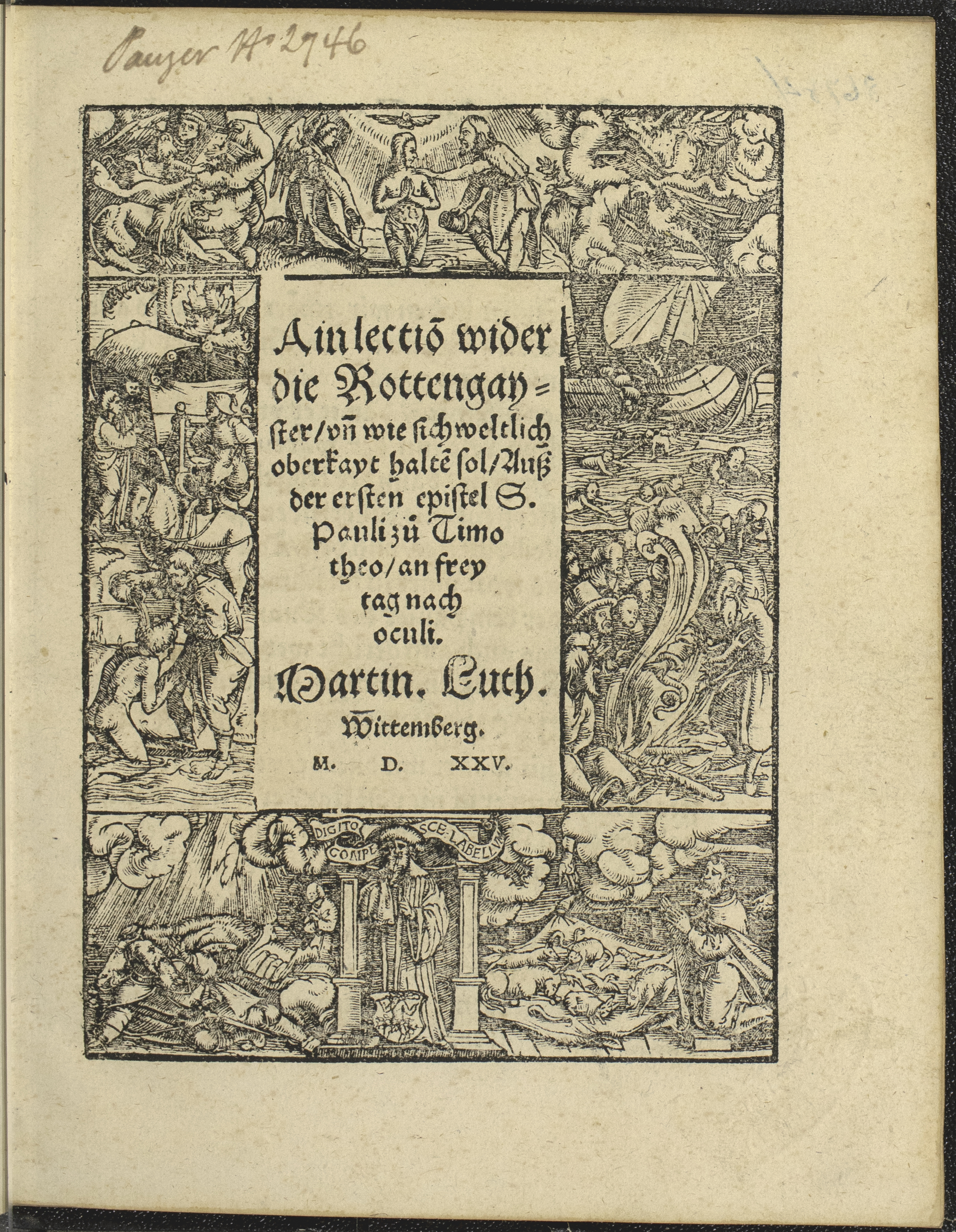
TextAin lectio[n] wider die Rottengayster, vn[d] wie sich weltlich oberkayt halte[n] sol, : Auss der ersten epistel S. Pauli zuo Timotheo, an freytag nach Oculi
Luther, Martin, 1483-1546Summary: Sermon preached March 24th, 1525, on Timothy 1:18-2:29.Summary: Sermon preached March 24th, 1525, on Timothy 1:18-2:29. -
 Text
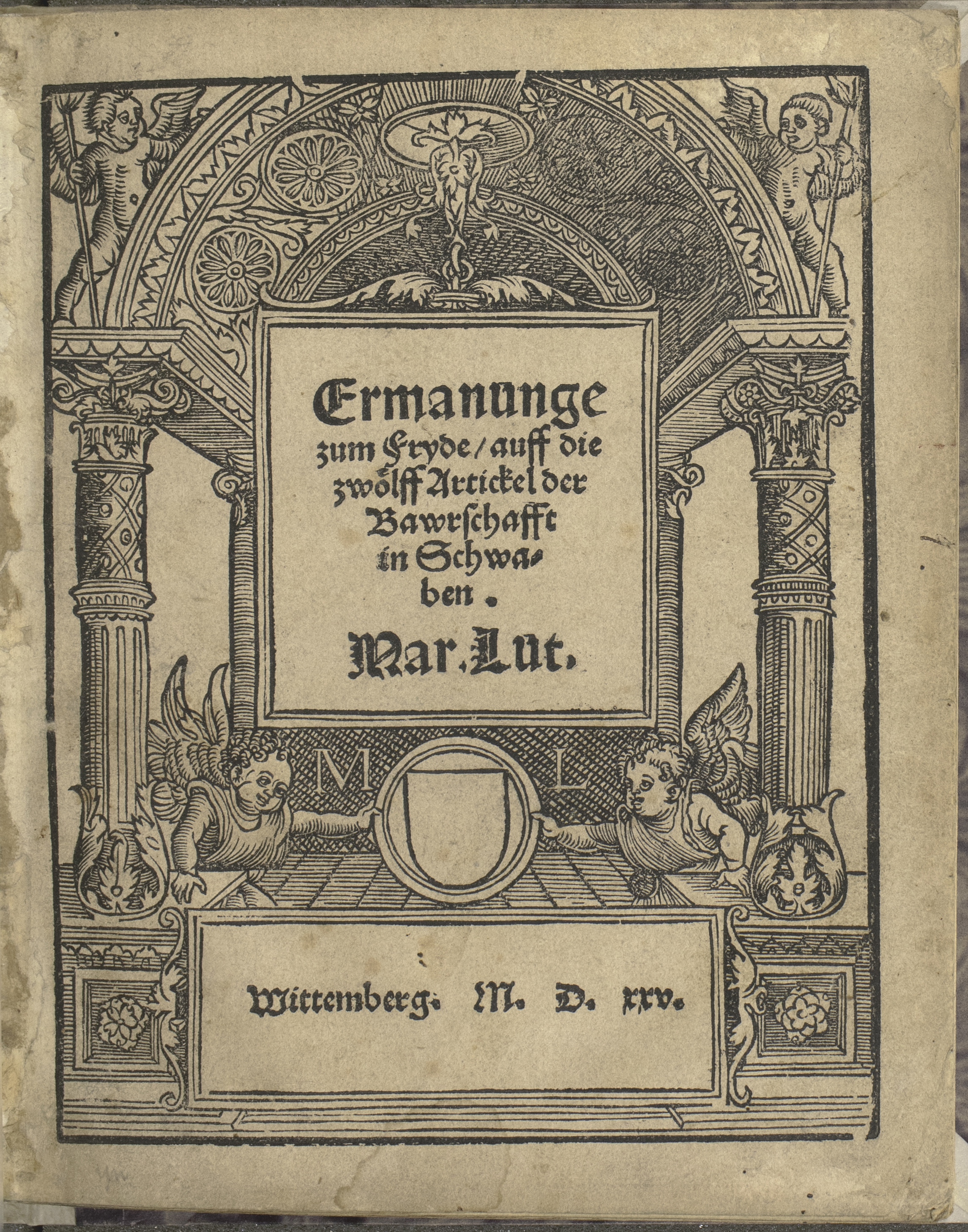
TextErmanunge zum Fryde auff die zwölff Artickel der Bawrshafft in Schwaben
Luther, Martin, 1483-1546Summary: Martin Luther's response to the Twelve Arcticles, a list of demands issued by the leaders of the peasant's revolt to the Swabian League and often seen as the first list of human rights in Europe.Summary: Martin Luther's response to the Twelve Arcticles, a list of demands issued by the leaders of the peasant's revolt to the Swabian League and often seen as the first list of human rights in Europe. -
 Text
TextPhilipps Melanchtons Sendtbrieff an ein Kartheüser, von den dreyen Clostergelübten : Von der Keüschait, Von der Armuot, Und von der gehorsam ; wittenberg, 1524
Melanchthon, Philipp, 1497-1560Summary: First German printing of this treatise by Philipp Melanchthon on the three monastic vows of poverty, chastity, and obedience.Summary: First German printing of this treatise by Philipp Melanchthon on the three monastic vows of poverty, chastity, and obedience. -

-
 Text
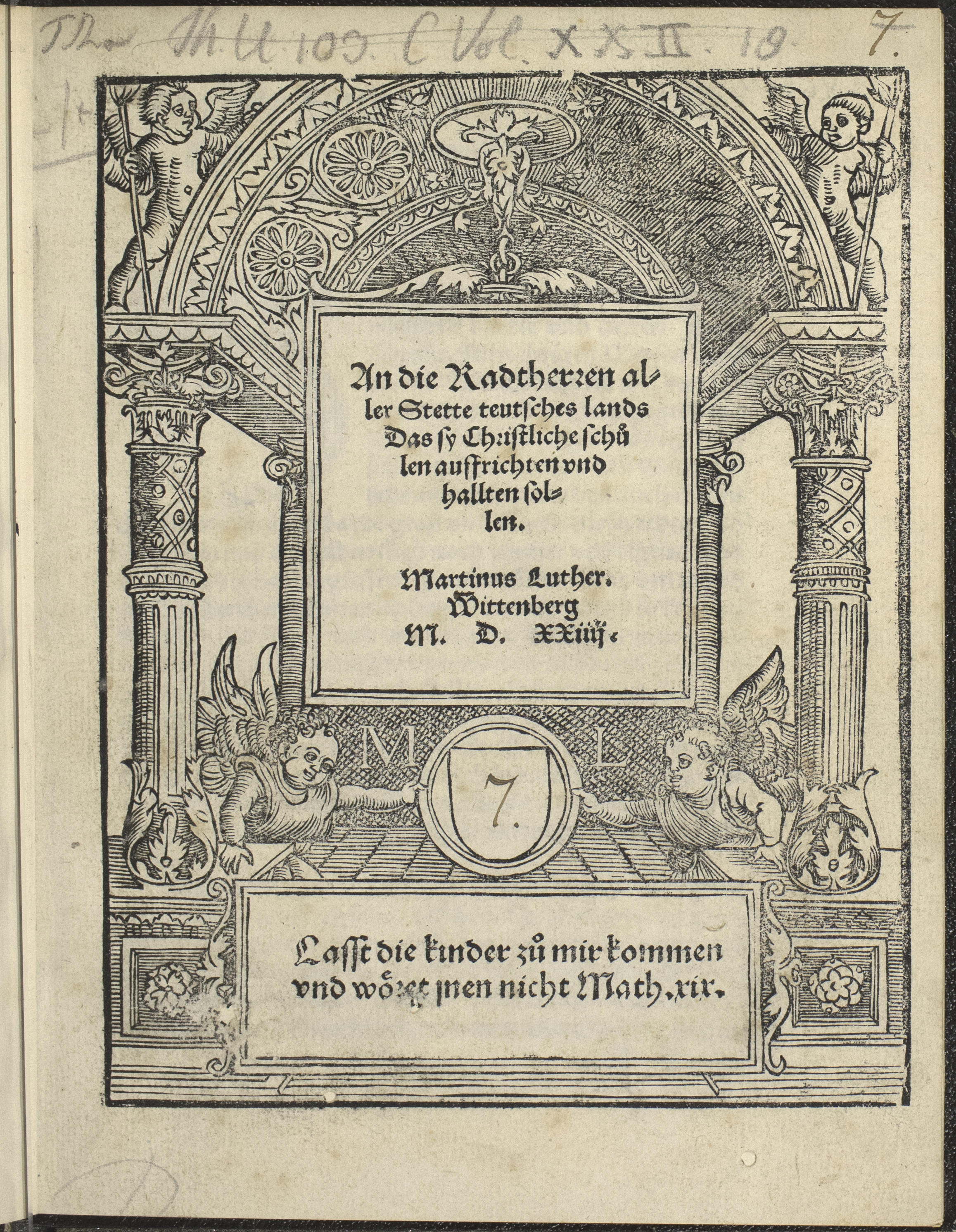
TextAn die Radtherren aller Stette teutsches lands : Das sy Christliche schuolen auffrichten vnd hallten sollen
Luther, Martin, 1483-1546Summary: This is the ninth printing of Luther's treatise addressed top the councilmen of Germany that they should promote the building of schools.Summary: This is the ninth printing of Luther's treatise addressed top the councilmen of Germany that they should promote the building of schools. -
 Text
TextVon eynsetzung vnnd ordnung der diener der Kirchen, das ist der gemaine, : An den Ersamen vn[d] weysen Rathe der Stat Prage des Böhemishcen Landes: auss dem Lateyn in das Teütsch gebracht vnnd gezogen jm Jar 1524.
Luther, Martin, 1483-1546Summary: Translation into German by M. Reinhard of Luther's Latin work: "De instituendis ministris ecclesiae." The attribution of the translation to M. Reinhard is questioned.Summary: Translation into German by M. Reinhard of Luther's Latin work: "De instituendis ministris ecclesiae." The attribution of the translation to M. Reinhard is questioned. -
 Text
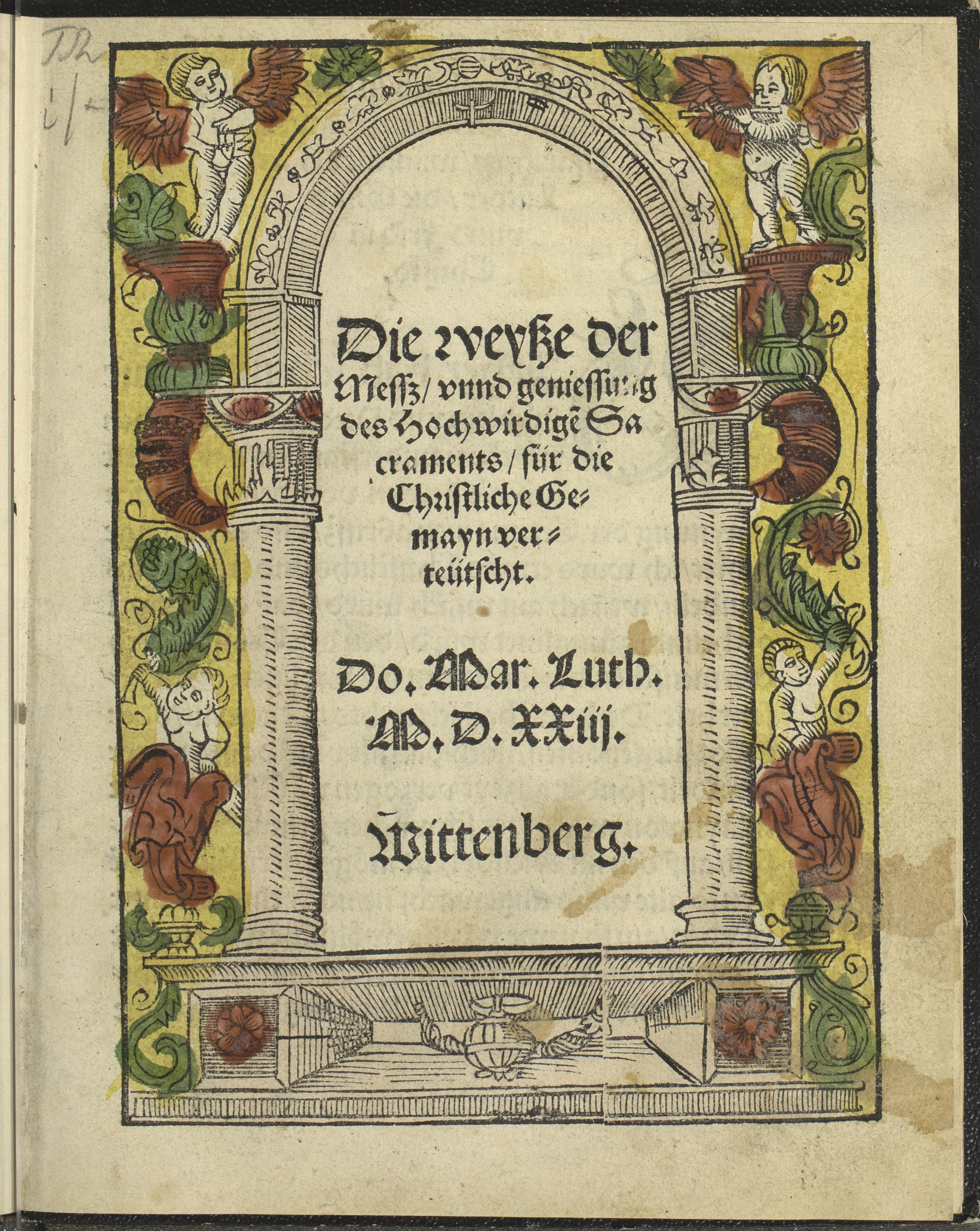
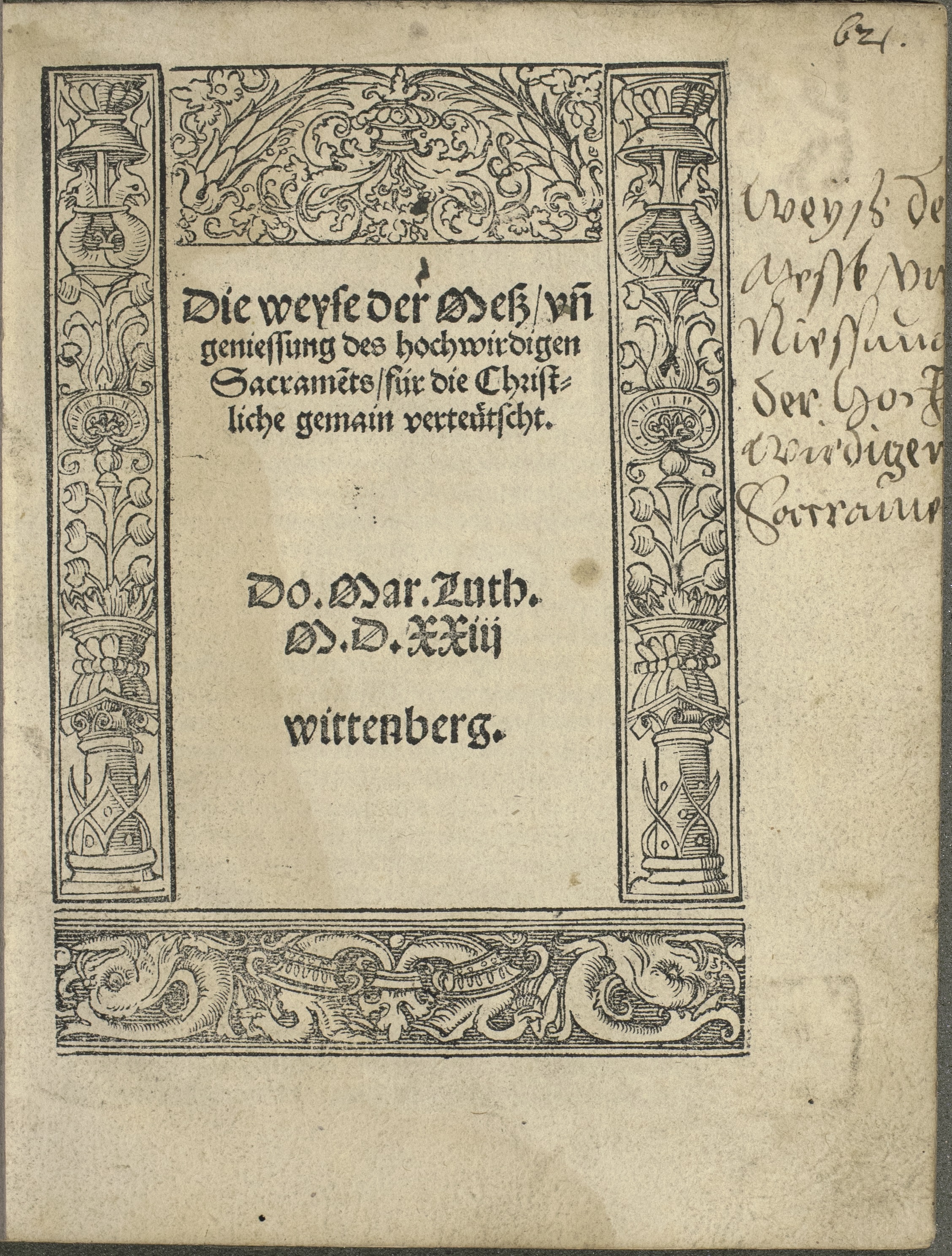
TextDie weysse der Messz, : vnnd geniesung des Hochwirdigen Sacraments, für die Christliche Gemayn verteütscht
Luther, Martin, 1483-1546Summary: Luther wrote his "Formula of the Mass and Communion" in 1523 at the insistence of N. Hausmann, the preacher at the Marienkirche, in Zwickau. Hausmann then wanted a German version to be used in his church. P. Speratus supplied one, and an unnamed Nuremberg translator supplied another. This is that Nuremberg work's first printing.Summary: Luther wrote his "Formula of the Mass and Communion" in 1523 at the insistence of N. Hausmann, the preacher at the Marienkirche, in Zwickau. Hausmann then wanted a German version to be used in his church. P. Speratus supplied one, and an unnamed Nuremberg translator supplied another. This is that Nuremberg work's first printing. -
 Text
TextEyn Brieff an die Fürsten zu Sachsen von dem auffrurischen Geyst
Luther, Martin, 1483-1546Summary: Fourth printing of an open letter by Martin Luther to the princes of Saxony, in which he calls on them to monitor the actions of Thomas Müntzer in order to prevent the outbreak of violence. When war did break out the following year, Luther was one of the harshest critics of the rebelling peasants.Summary: Fourth printing of an open letter by Martin Luther to the princes of Saxony, in which he calls on them to monitor the actions of Thomas Müntzer in order to prevent the outbreak of violence. When war did break out the following year, Luther was one of the harshest critics of the rebelling peasants. -
 Text
TextDie weyse der Mess, vn[d] geniessung des hochwirdigen Sacrame[n]ts, für die Christliche gemain verteütscht
Luther, Martin, 1483-1546Summary: First published in Latin in 1523, Luther defines in this tract the order of the Sunday worship service and the distribution of communion. This pamphlet is an important forerunner of Luther's "Deutsche Messe" (German Mass) published in 1526.Summary: First published in Latin in 1523, Luther defines in this tract the order of the Sunday worship service and the distribution of communion. This pamphlet is an important forerunner of Luther's "Deutsche Messe" (German Mass) published in 1526. -
 Text
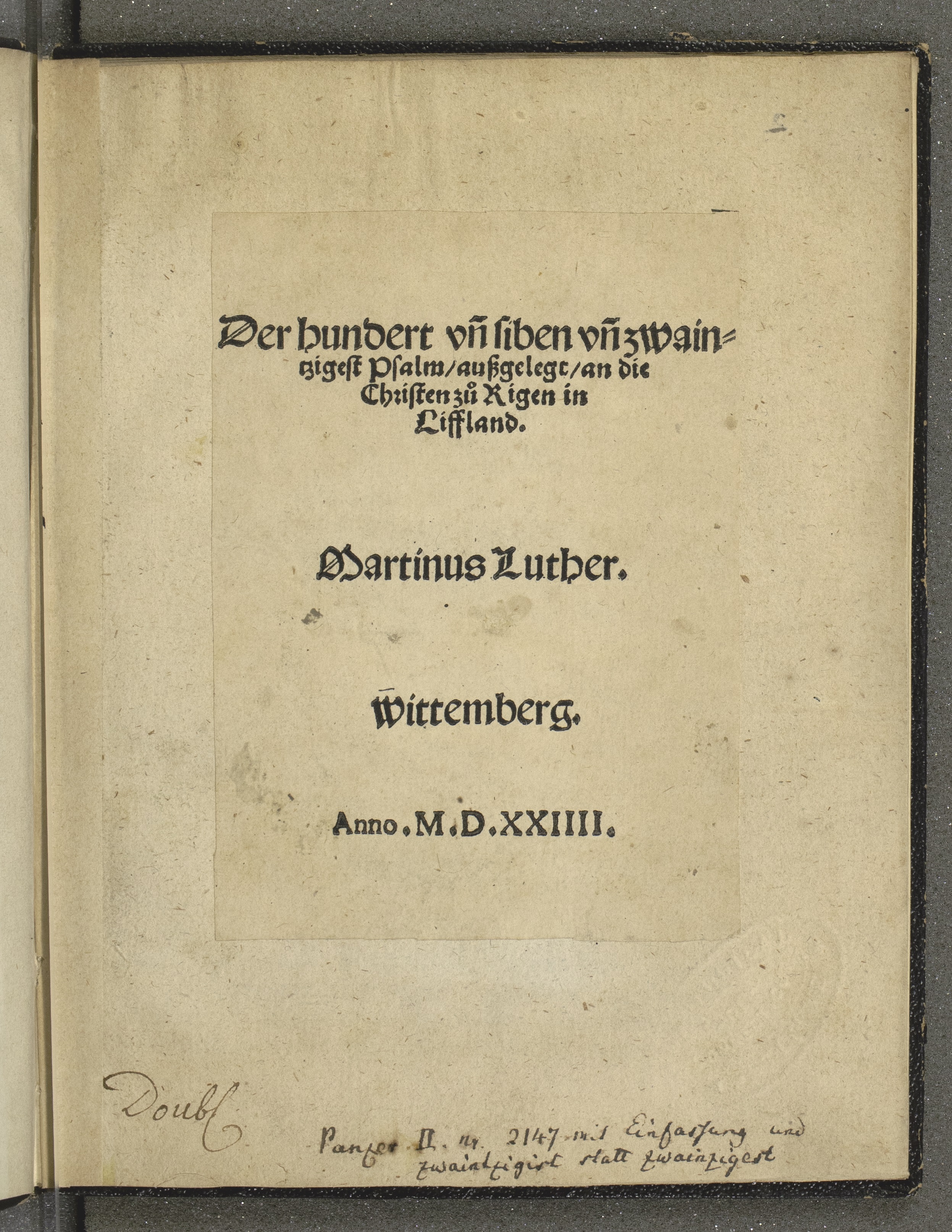
TextDer hundert vn[d] siben vn[d] zwaintzigest Psalm ausgelegt, an die Christen zu Rigen in Liffland
Luther, Martin, 1483-1546Summary: Luther's first attempts to communicate with the Protestants at Riga were unsuccessful. Later, communications were established, and this commentary on Psalm 127 was the result of their request for something edifying. This is the seventh printing of the work.Summary: Luther's first attempts to communicate with the Protestants at Riga were unsuccessful. Later, communications were established, and this commentary on Psalm 127 was the result of their request for something edifying. This is the seventh printing of the work. -
 Text
TextDoctor Martinus Lutthers [sic] verteutschte schrifft an das capitel zuo Witte[n]berg : Wie man die ceremonie[n] der kirchen bessern soll allen hohen vnnd Nydern Stifften ser dienstlich. Wittemberg. M.D.xxiiij.
Luther, Martin, 1483-1546Summary: Luther's letter to the provost, dean and canons of All Saints' Church in Wittenberg, written August 19, 1523, discussing the nature of the mass and his reasons for abolishing masses for the dead and for saints.Summary: Luther's letter to the provost, dean and canons of All Saints' Church in Wittenberg, written August 19, 1523, discussing the nature of the mass and his reasons for abolishing masses for the dead and for saints. -
 Text
TextWider den neuwen Abgott und allten Teuffel der zu Meyssen soll erhaben werden
Luther, Martin, 1483-1546Summary: Polemical tract, written in protest to the canonization of Benno, Bishop of Meissen, in 1523.Summary: Polemical tract, written in protest to the canonization of Benno, Bishop of Meissen, in 1523. -
 Text
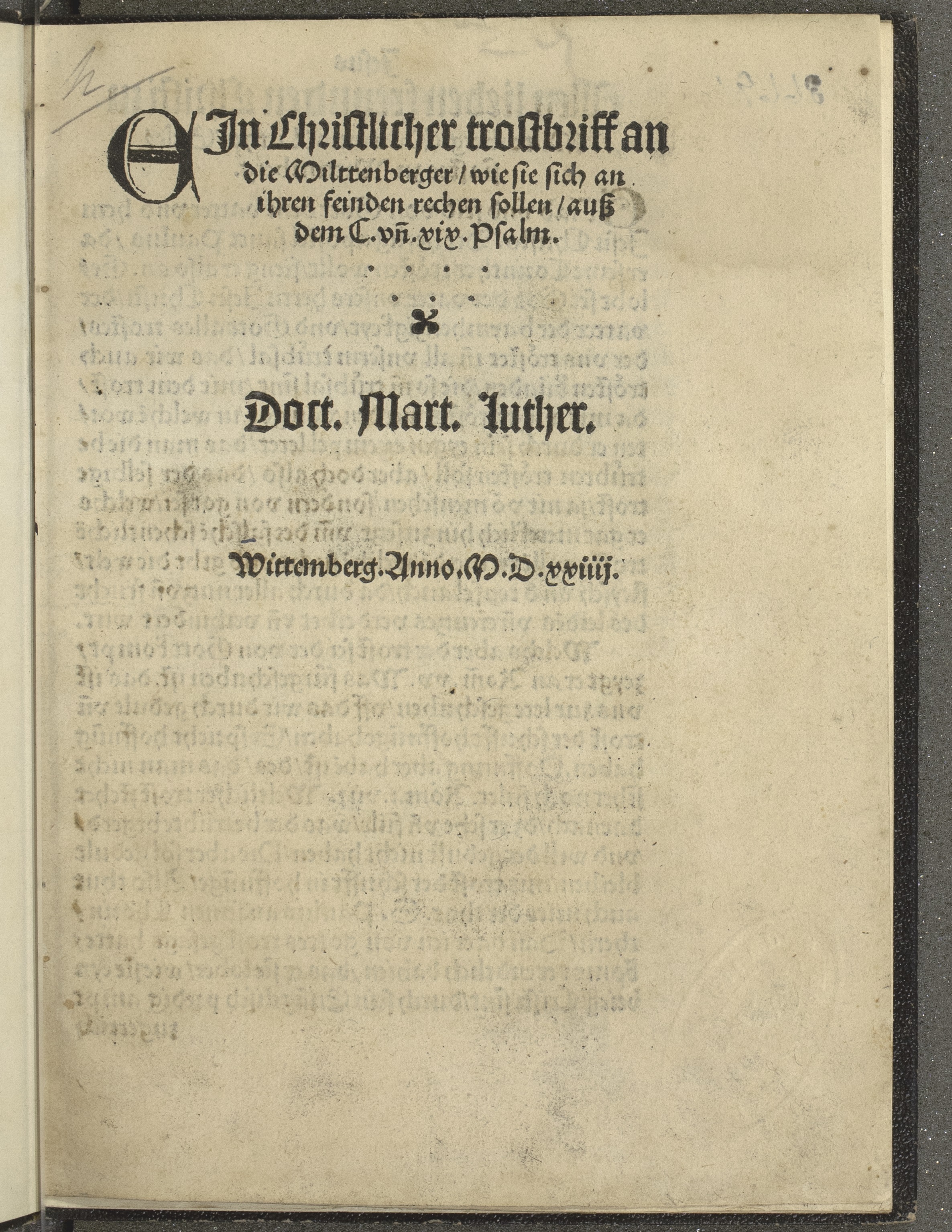
TextEin Christlicher trostbriff an die Milttenberger, : wie sie sich an ihren feinden rechen sollen, auss dem C. vn[d] xix. Psalm.
Luther, Martin, 1483-1546Summary: This is the sixth printing of Luther's letter of consolation to the citizens of Miltenburg. Text in German includes Luther's German translation of Psalms CXX from the Hebrew O.T.Summary: This is the sixth printing of Luther's letter of consolation to the citizens of Miltenburg. Text in German includes Luther's German translation of Psalms CXX from the Hebrew O.T. -
 Text
TextAin Sermon uon der frucht vnd nutzbarkait des hayligen Sacraments
Luther, Martin, 1483-1546Summary: Sermon preached April 2, 1523 (Maundy Thursday), on the value and efficacy of the Holy Sacrament.Summary: Sermon preached April 2, 1523 (Maundy Thursday), on the value and efficacy of the Holy Sacrament. -
 Text
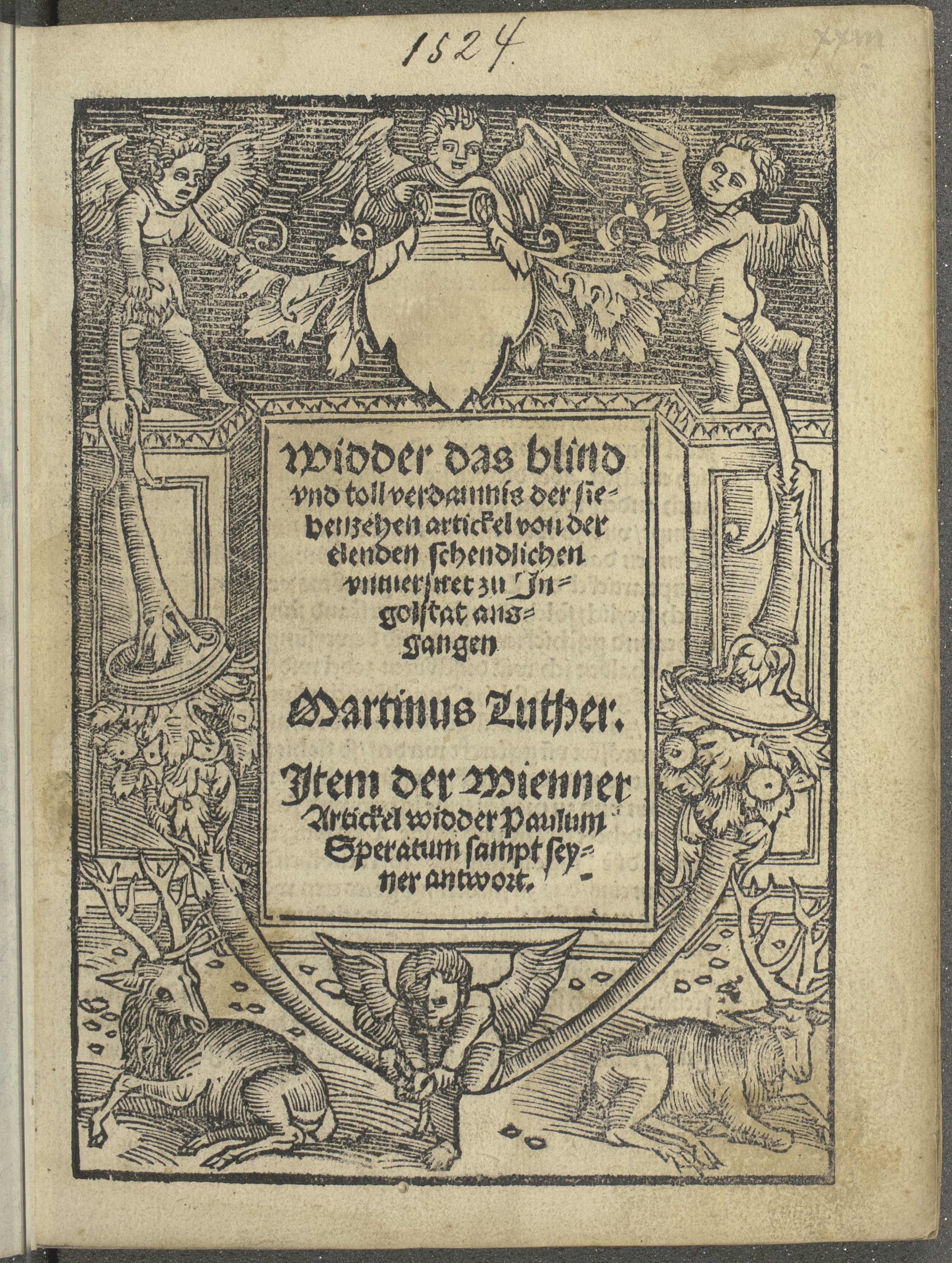
TextWidder das blind vnd toll verdamnis der siebenzehen artickel von der elenden schendlichen vniuersitet zu Ingolstat ausgangen
Luther, Martin, 1483-1546Summary: Arsatio Seehofer had studied with Luther at Wittenberg between stays at the University of Ingolstadt. As Ingolstadt increasingly became the focus of the Catholic revival, Seehofer found himself under attack for his "Lutheran" leanings. This is a commentary by Luther on the seventeen points of doctrine that Seehofer was accused of violating. The work also includes a discussion of Paul Speratus' arrest by the authorities at the University of Vienna on similar charges. This is the second printing of these essays.Summary: Arsatio Seehofer had studied with Luther at Wittenberg between stays at the University of Ingolstadt. As Ingolstadt increasingly became the focus of the Catholic revival, Seehofer found himself under attack for his "Lutheran" leanings. This is a commentary by Luther on the seventeen points of doctrine that Seehofer was accused of violating. The work also includes a discussion of Paul Speratus' arrest by the authorities at the University of Vienna on similar charges. This is the second printing of these essays. -
 Text
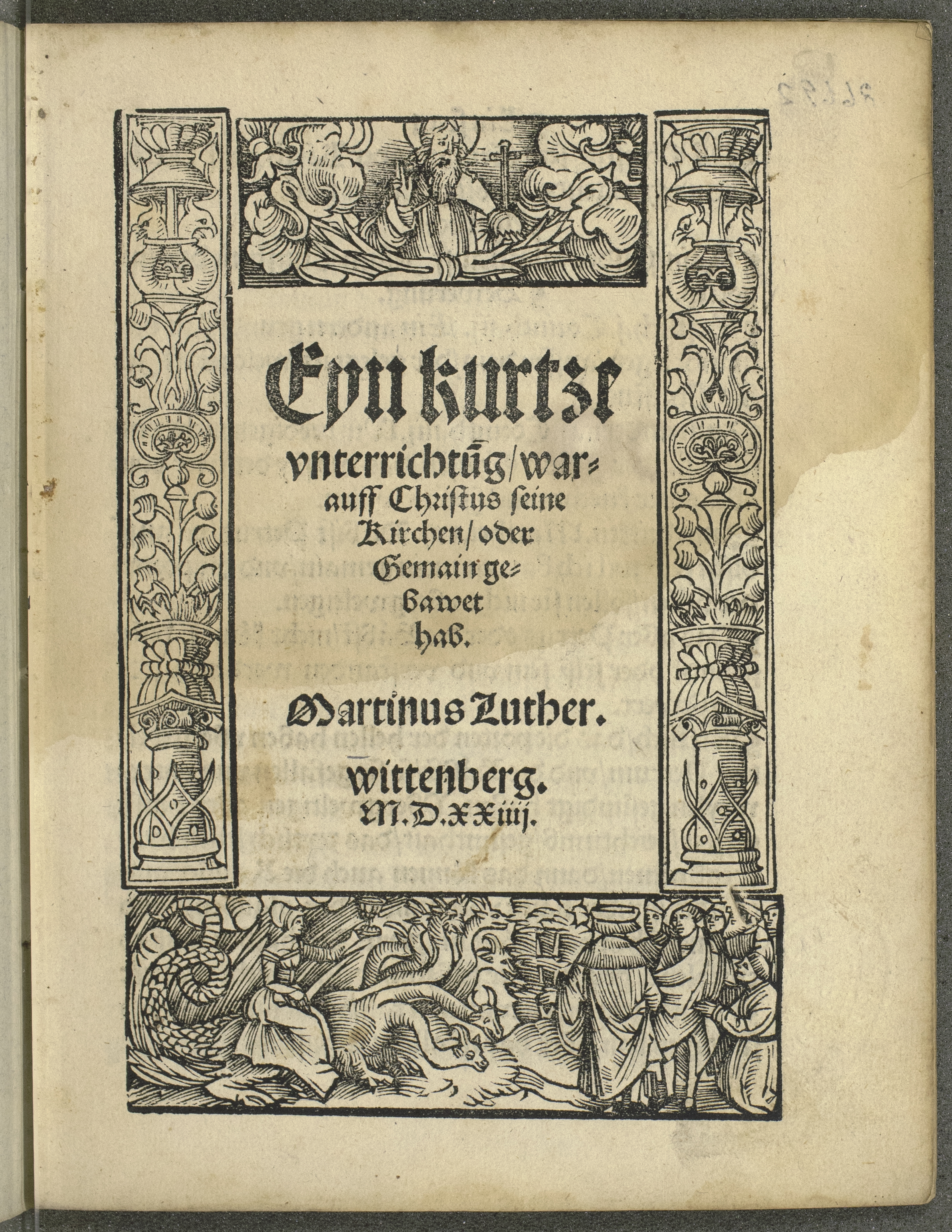
TextEyn kurtze vnterichtu[n]g, warauff Christus seine Kirchen, oder Gemain gebawet hab.
Luther, Martin, 1483-1546Summary: This pamphlet is a German translation of Luther's letter to Duke Albert of Prussia, written in December 1523, and intended to answer several theological questions concerning the foundation of the church and papal supremacy.Summary: This pamphlet is a German translation of Luther's letter to Duke Albert of Prussia, written in December 1523, and intended to answer several theological questions concerning the foundation of the church and papal supremacy. -
 Text
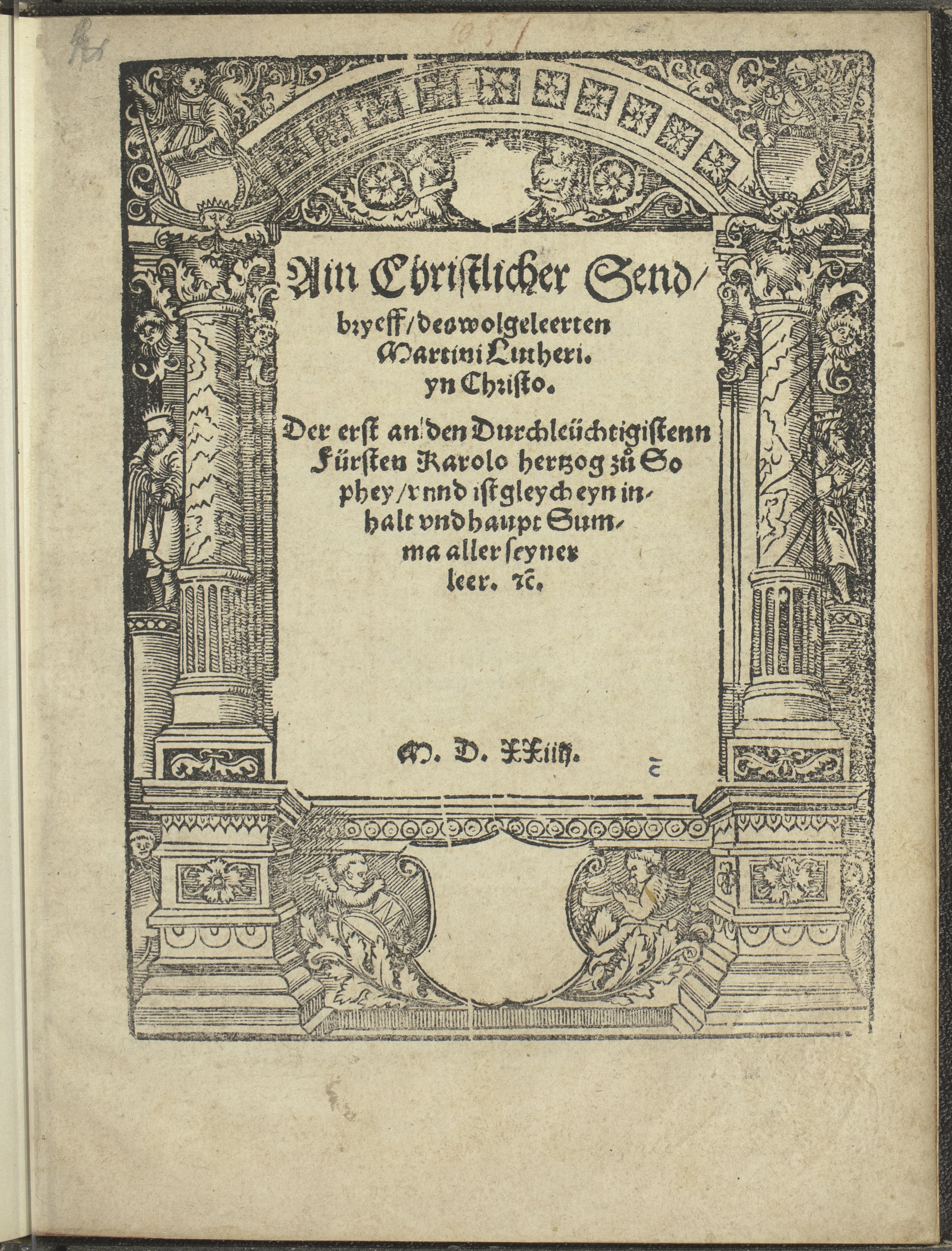
TextAin Christlicher Sendbryeff
Luther, Martin, 1483-1546Summary: This work is an anonymous translation to German from Latin of Luther's letter (Ad inlustrissimum principem Carolum Sabaudiae ducem Epistola) to Duke Charles III of Savoy, dated September 7, 1523.Summary: This work is an anonymous translation to German from Latin of Luther's letter (Ad inlustrissimum principem Carolum Sabaudiae ducem Epistola) to Duke Charles III of Savoy, dated September 7, 1523. -
 Text
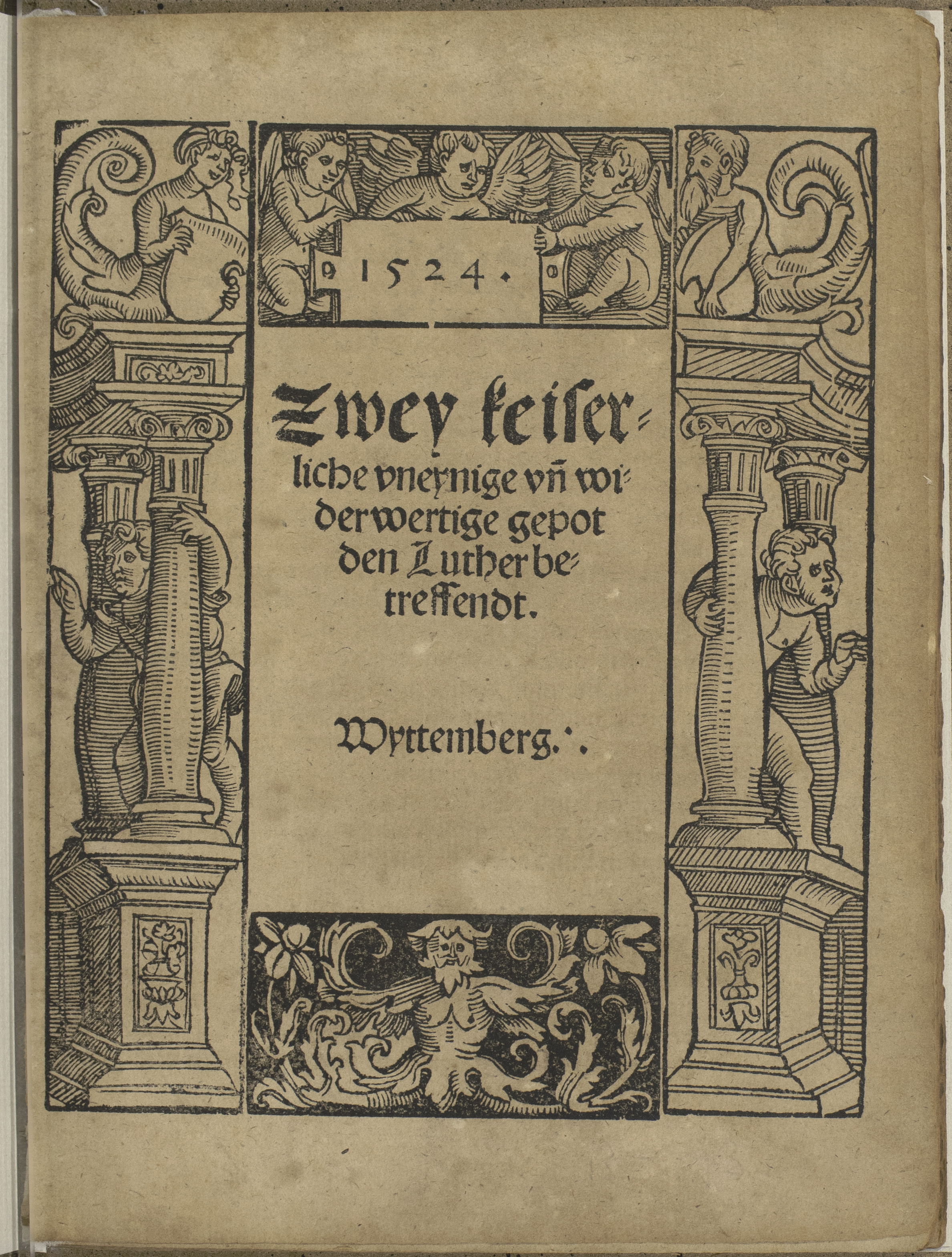
TextZwey keiserliche vneynige vn[d] widerwertige gepot den Luther betreffendt.
Holy Roman Empire. Emperor (1519-1556 : Charles V)Summary: The diet of Nuremberg in 1524 reaffirmed the imperial ban of Luther's person expressed in the edict of Worms, but not the condemnation of his teachings, which were to be addressed at the diet of Speyer. Luther issued both the edict of Worms and the resolutions of the diet of Nuremberg along with his own foreward and comments, in which he calls the emperor a "mad, irrational, senseless, raving and insane fool".Summary: The diet of Nuremberg in 1524 reaffirmed the imperial ban of Luther's person expressed in the edict of Worms, but not the condemnation of his teachings, which were to be addressed at the diet of Speyer. Luther issued both the edict of Worms and the resolutions of the diet of Nuremberg along with his own foreward and comments, in which he calls the emperor a "mad, irrational, senseless, raving and insane fool". -
 Text
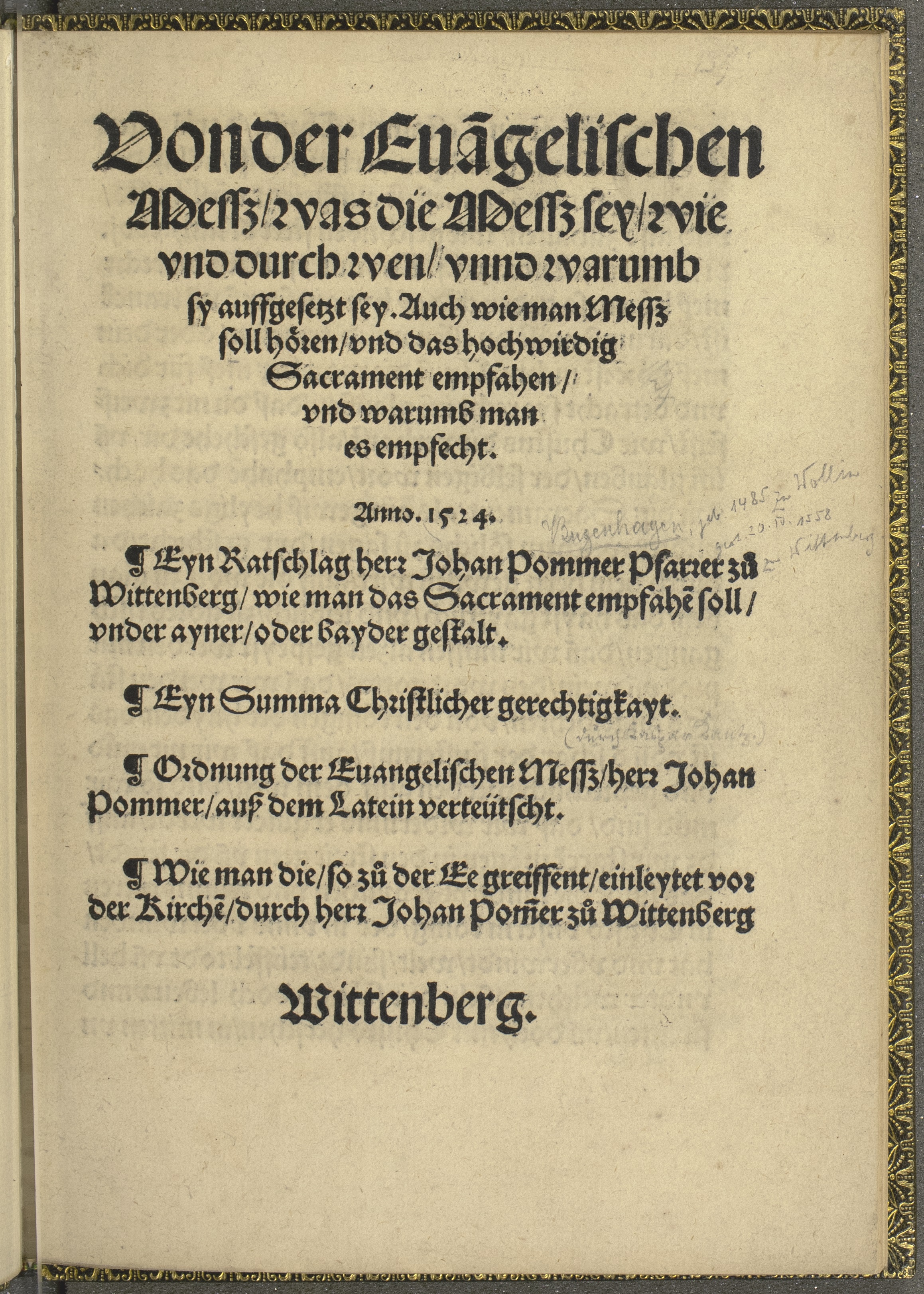
TextVon der Eua[n]gelischen Messz : was die Messz sey, wie vnd durch wen, vnnd warumb sy auffgesetzt sey. : Auch wie man Messz sol hören, vnd das hochwirdig sacrament empfahen, vnd warumb man es empfecht. Anno 1524
Bugenhagen, Johann, 1485-1558Summary: The term "Evangelical Mass" was coined by the Lutherans as their attempt to shop that it was they and not the Catholics who were the preservers of the true tradition of the Lord's Supper. Bugenhagen was, next to Melanchthon, Luther's closest ally in the Protestant struggle. This tract indicates which attributes the Lutherans believed to be necessary for worthy reception of the Lord's Supper.Summary: The term "Evangelical Mass" was coined by the Lutherans as their attempt to shop that it was they and not the Catholics who were the preservers of the true tradition of the Lord's Supper. Bugenhagen was, next to Melanchthon, Luther's closest ally in the Protestant struggle. This tract indicates which attributes the Lutherans believed to be necessary for worthy reception of the Lord's Supper. -
 Text
TextAcht sermon
Luther, Martin, 1483-1546Summary: Second printing of the eight sermons Luther preached on his return from Wartburg Castle, March 9-16, 1522. They dealt with the mass, the Lord's Supper, images, fating, auricular confession, and other topics. These sermons allowed Luther to restore order in Wittenberg and put and end to the Tumults that had griped the city during his absence.Summary: Second printing of the eight sermons Luther preached on his return from Wartburg Castle, March 9-16, 1522. They dealt with the mass, the Lord's Supper, images, fating, auricular confession, and other topics. These sermons allowed Luther to restore order in Wittenberg and put and end to the Tumults that had griped the city during his absence.


Page 221 of 257
