Search
182 resources
182 items
Creator
Luther, Martin, 1483-1546
-
 Text
TextDas Eltern die kinder zuo der Ehe nicht zwinge[n] noch hindern, : Vnd die kinder on der elltern willen sich nicht verloben solle[n]
Luther, Martin, 1483-1546Summary: Parental consent was an issue during the Reformation. Catholic orthodoxy demanded parental consent of the bridal couple as it impacted property. Luther saw value in both sides, arguing that while parents ought not to be able to compel children to marry or prevent weddings, the children ought to seek their parents' consent.Summary: Parental consent was an issue during the Reformation. Catholic orthodoxy demanded parental consent of the bridal couple as it impacted property. Luther saw value in both sides, arguing that while parents ought not to be able to compel children to marry or prevent weddings, the children ought to seek their parents' consent. -
 Text
TextDas Euangelion am ersten Sontag der Dreyualtickeit
Luther, Martin, 1483-1546Summary: Sermon preached May 27, 1526, on John 3:1-16 (Nicodemus).Summary: Sermon preached May 27, 1526, on John 3:1-16 (Nicodemus). -
 Text
TextDas Euangelium vom fischfang Petri
Luther, Martin, 1483-1546Summary: Sermon preached July 20, 1522, on Luke 5:1-11 (Peter's large catch of fish).Summary: Sermon preached July 20, 1522, on Luke 5:1-11 (Peter's large catch of fish). -
 Text
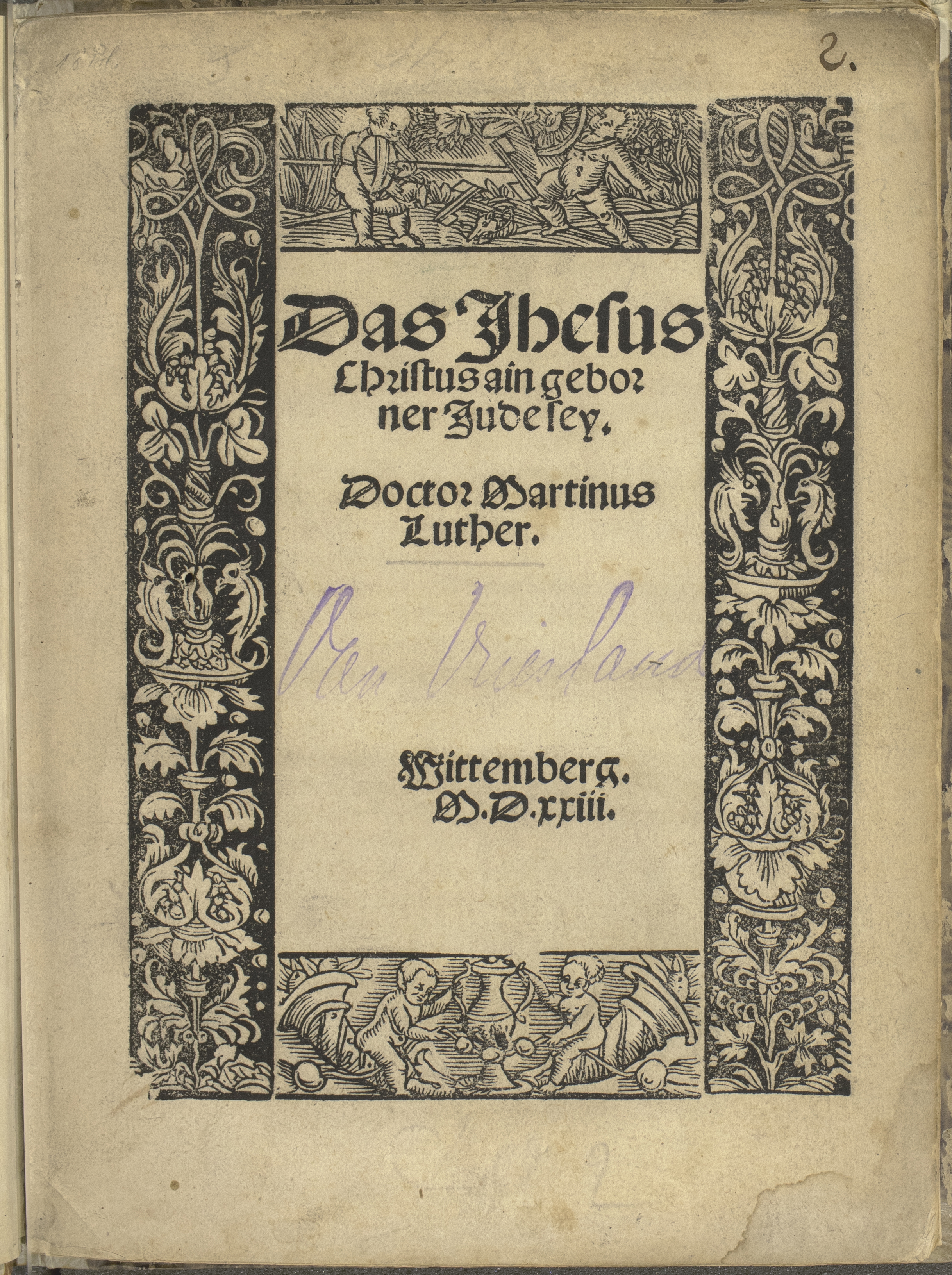
TextDas Ihesus Christus ain geborner Iude sey
Luther, Martin, 1483-1546Summary: The sixth printing (of ten in 1523) of Luther's early treatise, "That Jesus Christ was born a Jew", in which he denies the charges made against him that he did not believe in the Virgin Birth, but rather that Jesus was a naturally born child of Joseph and Mary. In this tract, Luther confesses that he believes that Jesus was born a Jew of the Virgin Mary. He also hopes that his teaching will bring more Jews to convert to Christianity.Summary: The sixth printing (of ten in 1523) of Luther's early treatise, "That Jesus Christ was born a Jew", in which he denies the charges made against him that he did not believe in the Virgin Birth, but rather that Jesus was a naturally born child of Joseph and Mary. In this tract, Luther confesses that he believes that Jesus was born a Jew of the Virgin Mary. He also hopes that his teaching will bring more Jews to convert to Christianity. -
 Text
TextDas Ihesus Christus ain geborner Iude sey
Luther, Martin, 1483-1546Summary: The fifth printing of Luther's early treatise, "That Jesus Christ was born a Jew", in which he denies the charges made against him that he did not believe in the Virgin Birth, but rather that Jesus was a naturally born child of Joseph and Mary. In this tract, Luther confesses that he believes that Jesus was born a Jew of the Virgin Mary. He also hopes that his teaching will bring more Jews to convert to Christianity.Summary: The fifth printing of Luther's early treatise, "That Jesus Christ was born a Jew", in which he denies the charges made against him that he did not believe in the Virgin Birth, but rather that Jesus was a naturally born child of Joseph and Mary. In this tract, Luther confesses that he believes that Jesus was born a Jew of the Virgin Mary. He also hopes that his teaching will bring more Jews to convert to Christianity. -
 Text
TextDas Jesus Christus ein geborner Jude sey
Luther, Martin, 1483-1546Summary: Luther was accused by Ferdinand (brother of Charles V) of teaching that Jesus was the seed of Abraham and that Mary was not a virgin either before or after the birth of Jesus. Luther replied with this booklet that demonstrated the human and divine natures of Jesus and showed sensitivity to Jesus' Jewish background. Luther hoped that books like this could be used to convert Jews from their erroneous beliefs.Summary: Luther was accused by Ferdinand (brother of Charles V) of teaching that Jesus was the seed of Abraham and that Mary was not a virgin either before or after the birth of Jesus. Luther replied with this booklet that demonstrated the human and divine natures of Jesus and showed sensitivity to Jesus' Jewish background. Luther hoped that books like this could be used to convert Jews from their erroneous beliefs. -
 Text
TextDas Magnificat Vorteutschet vnd auszgelegt
Luther, Martin, 1483-1546Summary: Luther wrote this exposition of the Magnificent (Luke 1:46-55) in March 1521. He dedicated it to Duke Johann Frederich of Saxony as a token of his thanks to the Duke for his support and encouragement after Luther's condemnation by Pope Leo X. Text in German includes Luther's German translation of the Magnificat from the N.T. Greek of St. Luke's Gospel.Summary: Luther wrote this exposition of the Magnificent (Luke 1:46-55) in March 1521. He dedicated it to Duke Johann Frederich of Saxony as a token of his thanks to the Duke for his support and encouragement after Luther's condemnation by Pope Leo X. Text in German includes Luther's German translation of the Magnificat from the N.T. Greek of St. Luke's Gospel. -
 Text
TextDas Tauff Buchlin
Luther, Martin, 1483-1546Summary: Luther's German translation of the Wittenberg usage of the Catholic rite of Baptism (Ordo baptizandi). The work was reprinted fifteen times between 1523 and 1526, when Luther issued a revised edition.Summary: Luther's German translation of the Wittenberg usage of the Catholic rite of Baptism (Ordo baptizandi). The work was reprinted fifteen times between 1523 and 1526, when Luther issued a revised edition. -
 Text
TextDas ander teyl widder die hymlischen Propheten, vom Sacrament.
Luther, Martin, 1483-1546Summary: The Second printing of Luther's book, "Against the Heavenly Prophets addresses A. Karlstadt's doctrine of the Sacraments. This is the second printing of this work in its year of issue.Summary: The Second printing of Luther's book, "Against the Heavenly Prophets addresses A. Karlstadt's doctrine of the Sacraments. This is the second printing of this work in its year of issue. -
 Text
TextDas der frey will nichts sey : Anntwort D. Martini Luther ann Erasmum Rotherdam
Luther, Martin, 1483-1546Summary: German translation by Martin Luther's colleague, Justus Jonas, of "De servo arbitrio". "De servo arbitrio (Concerning the Enslaved Will)" is considered one of Luther's greatest literary productions, and among the most important writings of the Reformation. In it, he defends the idea of the complete inability of the human being to please God, apart from Divine grace.Summary: German translation by Martin Luther's colleague, Justus Jonas, of "De servo arbitrio". "De servo arbitrio (Concerning the Enslaved Will)" is considered one of Luther's greatest literary productions, and among the most important writings of the Reformation. In it, he defends the idea of the complete inability of the human being to please God, apart from Divine grace. -
 Text
TextDas schön Confitemini an der zal der CXVIII Psalm
Luther, Martin, 1483-1546Summary: Text in German includes Luther's German translation of Psalms CXVIII from the Hebrew O.T., and is Luther's expanded version of his earlier Latin work.Summary: Text in German includes Luther's German translation of Psalms CXVIII from the Hebrew O.T., and is Luther's expanded version of his earlier Latin work. -
 Text
TextDas schön Confitemini an der zal der cxviij. Psalm
Luther, Martin, 1483-1546Summary: This is the third printing of Luther's German translation of his notes on Psalm 118. An Earlier German translation version had been published by Wenzeslaus Linck. Luther's expanded edition, as reprinted here, differs from Linck's in that it uses Eobanus Hessus' verse translation of the psalm, prepared with Luther's advice, as the scriptural text. Text in German includes Luther's German translation of Psalms CXVIII from the Hebrew O.T., and is Luther's expanded version of his earlier Latin work.Summary: This is the third printing of Luther's German translation of his notes on Psalm 118. An Earlier German translation version had been published by Wenzeslaus Linck. Luther's expanded edition, as reprinted here, differs from Linck's in that it uses Eobanus Hessus' verse translation of the psalm, prepared with Luther's advice, as the scriptural text. Text in German includes Luther's German translation of Psalms CXVIII from the Hebrew O.T., and is Luther's expanded version of his earlier Latin work. -
-
 Text
TextDe servo arbitrio
Luther, Martin, 1483-1546Summary: An important treatise on human free will by Martin Luther, responding to Erasmus' work De libero arbitrio.Summary: An important treatise on human free will by Martin Luther, responding to Erasmus' work De libero arbitrio. -
 Text
TextDe servo arbitrio Martini Lutheri, ad Desiderium Erasmum Roterodamu[m]
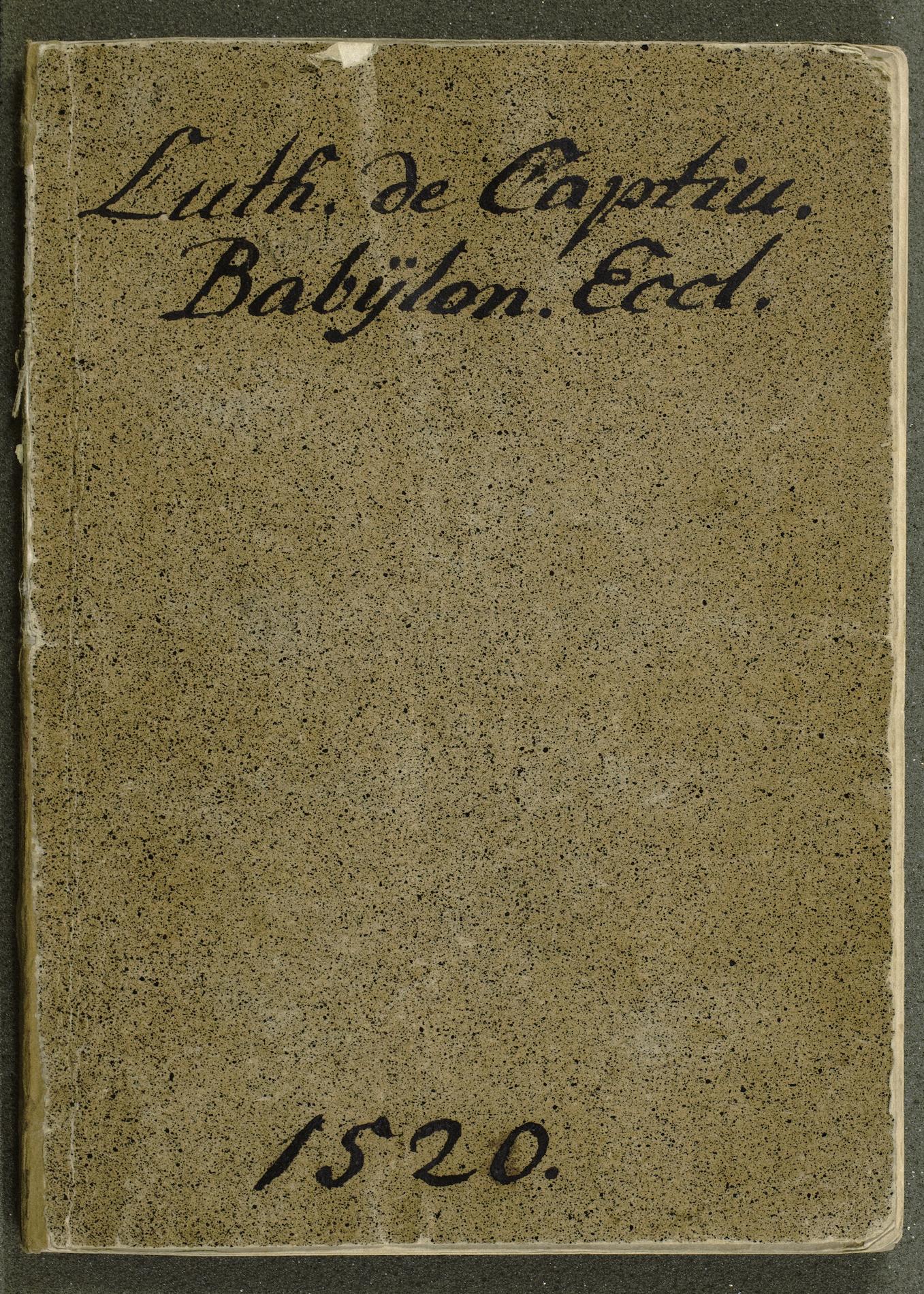
Luther, Martin, 1483-1546Summary: "De servo arbitrio (Concerning the Enslaved Will)" is considered one of Martin Luther' greatest literary productions, and among the most important writings of the Reformation. In it, he defends the idea of the complete inability of the human being to please God, apart from Divine grace. His tract is a response to Desiderius Erasmus', "De libero arbitrio (Concerning Free Will)." Erasmus defends the view that salvation is by Divine grace, but wants to leave some room for a person's moral motivation.Summary: "De servo arbitrio (Concerning the Enslaved Will)" is considered one of Martin Luther' greatest literary productions, and among the most important writings of the Reformation. In it, he defends the idea of the complete inability of the human being to please God, apart from Divine grace. His tract is a response to Desiderius Erasmus', "De libero arbitrio (Concerning Free Will)." Erasmus defends the view that salvation is by Divine grace, but wants to leave some room for a person's moral motivation. -
 Text
TextDe votis monasticis
Luther, Martin, 1483-1546Summary: This is the third printing of Luther's treatise on monastic vows.Summary: This is the third printing of Luther's treatise on monastic vows. -
 Text
TextDecem praecepta Witte[n]berge[n]si praedicata populo
Luther, Martin, 1483-1546Summary: The sermons on which this commentary on the Ten Commandments is based were delivered in Wittenberg in 1516-1517. This is the first work of Luther's to be translated into a modern European language. This is the first printing of the work.Summary: The sermons on which this commentary on the Ten Commandments is based were delivered in Wittenberg in 1516-1517. This is the first work of Luther's to be translated into a modern European language. This is the first printing of the work. -
 Text
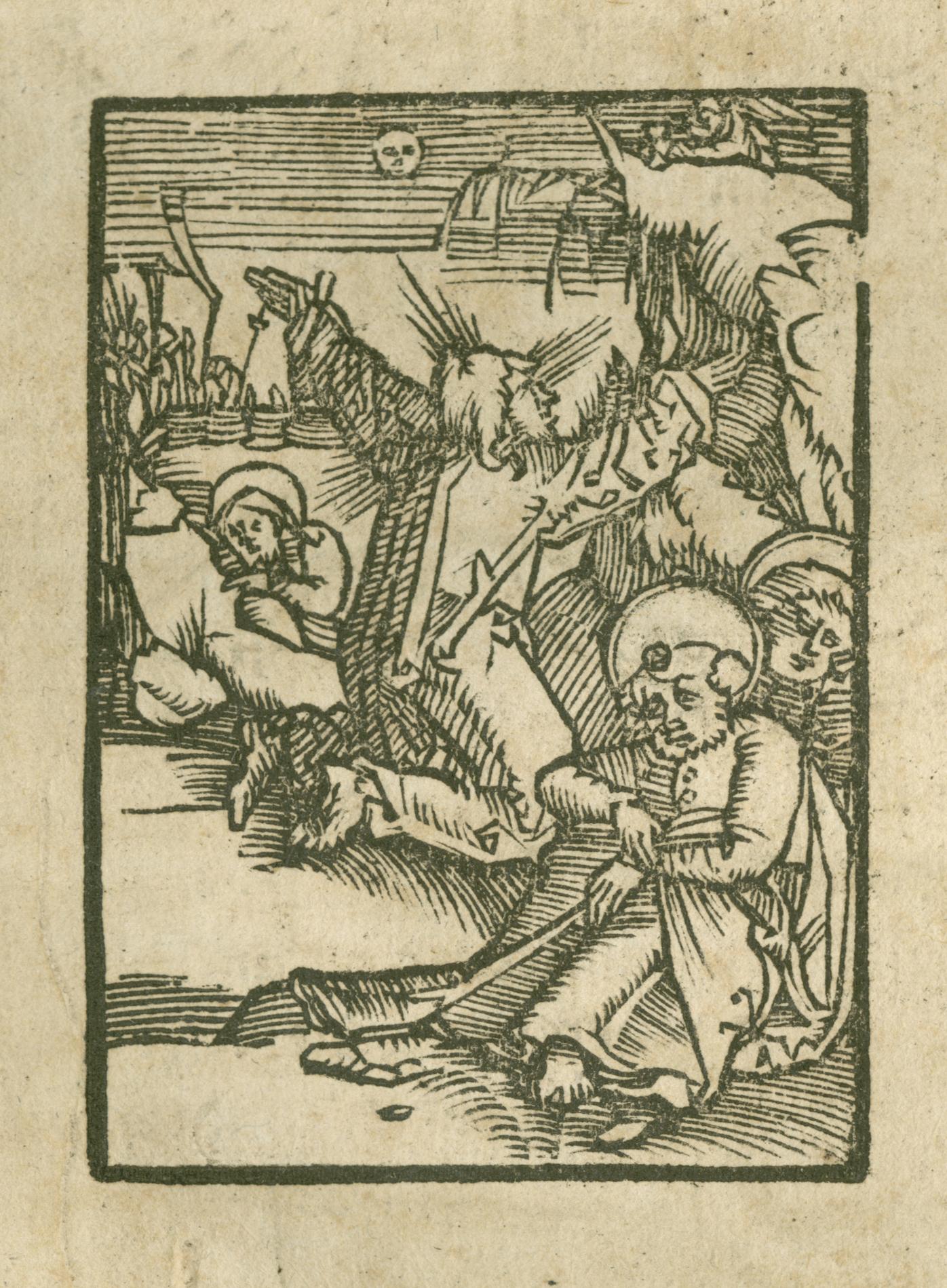
TextDeclaration entiere des fondemens de la doctrine Chrestiene. faicte sur l'Epistre de S. Paul aux Galatie[n]s : en laquele est co[n]tenue vne vraye & parfaicte exposition de la iustification qui est par la foy en Iesus Christ.
Luther, Martin, 1483-1546Summary: Rare first French printing of Luther's lectures on Galatians.Summary: Rare first French printing of Luther's lectures on Galatians. -
 Text
TextDer .x. gebot ein nutzliche erklerung
Luther, Martin, 1483-1546Summary: Early book on the Ten Commandments and the Seven Deadly Sins by Martin Luther. Originally written in Latin, it is here translated into German by Sebastian Münster, a young Franciscan teacher/scholar, soon to become famous as one of the great Christian Hebraists of his time. This is the first printing of the German translation.Summary: Early book on the Ten Commandments and the Seven Deadly Sins by Martin Luther. Originally written in Latin, it is here translated into German by Sebastian Münster, a young Franciscan teacher/scholar, soon to become famous as one of the great Christian Hebraists of his time. This is the first printing of the German translation. -
 Text
TextDer CXLVII. Psalm Lauda Jerusalem
Luther, Martin, 1483-1546Summary: This is the second printing of Luther's exposition of Psalm 147. Text in German includes M. Luther's German translation of Psalms CXLVII from the Hebrew O.T.Summary: This is the second printing of Luther's exposition of Psalm 147. Text in German includes M. Luther's German translation of Psalms CXLVII from the Hebrew O.T. -
 Text
TextDer Zehen Gebot ein nützliche Erklärung
Luther, Martin, 1483-1546This is a 1523 printing of Martin Luther's popular sermon on the Ten Commandments and the Seven Deadly Sins, first printed in 1520 and reprinted numerous times. The work was originally composed in Latin and was translated into German by the cartographer and Christian Hebraist Sebastian Münster.This is a 1523 printing of Martin Luther's popular sermon on the Ten Commandments and the Seven Deadly Sins, first printed in 1520 and reprinted numerous times. The work was originally composed in Latin and was translated into German by the cartographer and Christian Hebraist Sebastian Münster.