Search
183 resources
183 items
Octavo
-
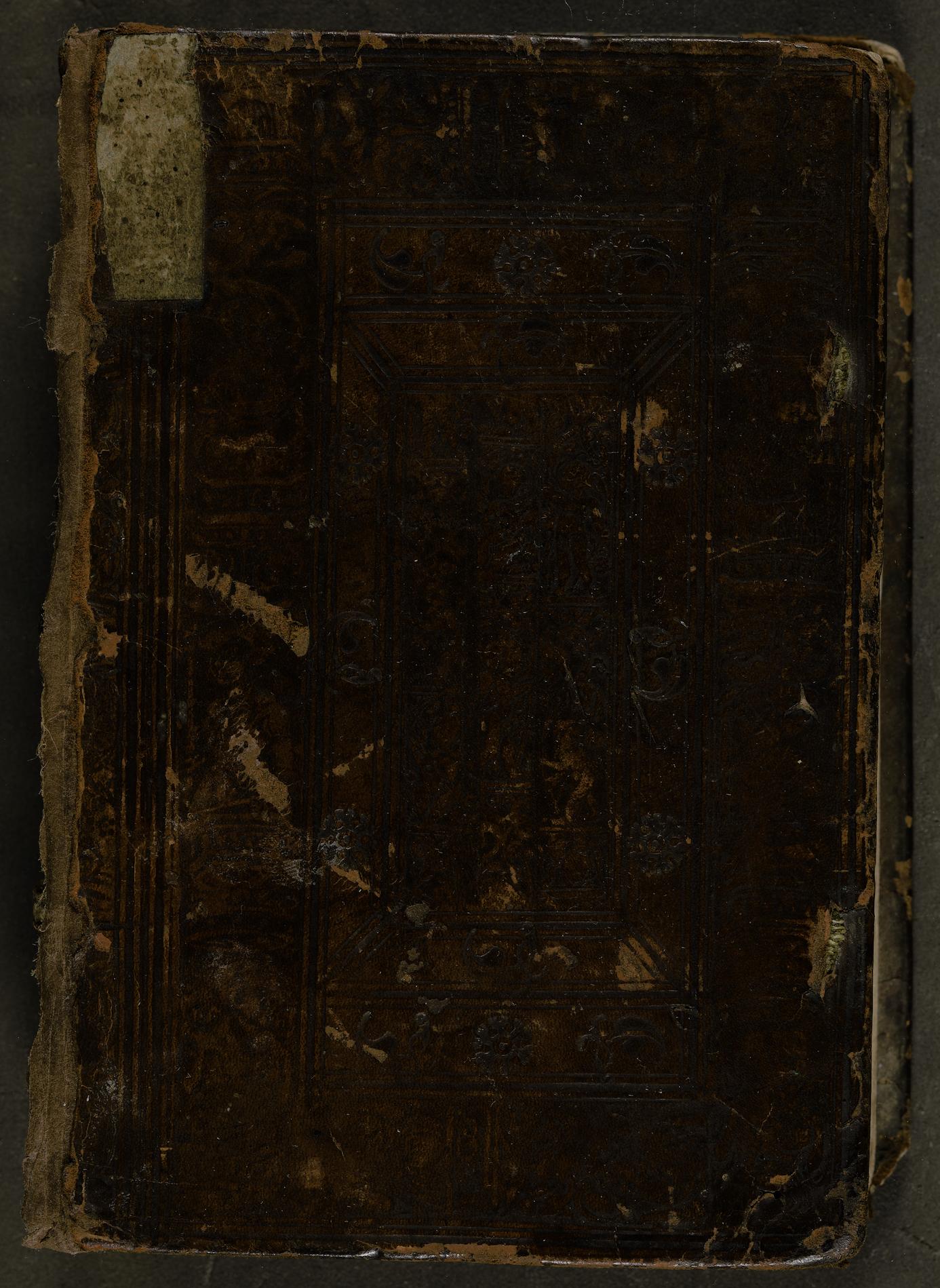 Text
TextConfession des durchleüchtigen, hochgebornnen Fürsten vnd Herrn, Herrn Christoffs Hertzogen zů Wirtemberg, vnd zů Teckh, Grauen zů Mümppelgart, [et]c. so jr F.G. auff den XXIIII. Januarij, Anno M. D. LII. dem versamelten Concilio zů Triendt durch jhrer F. G. gesandten überantwort
Summary: A 1553 printing of the Württemberg Confession, commissioned by Duke Christoph, drafted by Johannes Brenz in 1551 and signed by other Swabian theologians to be presented at the council of Trent in 1552.Summary: A 1553 printing of the Württemberg Confession, commissioned by Duke Christoph, drafted by Johannes Brenz in 1551 and signed by other Swabian theologians to be presented at the council of Trent in 1552. -
 Text
TextContra haereticum dikaeusistam de dicto Ioannis: Spiritus arguet munde iustitia uado ad Patrem
Flacius Illyricus, Matthias, 1520-1575Summary: Response by Mathias Flacius Illyricus, among the strictest of the Lutheran theologians of his time, to the views of the early Reformer of Nürnberg, Andreas Osiander, on Justification. Osiander emphasized the believer's being made righteous, as opposed to being declared righteous through Christ. Flacius reports on the title page that he had shared his views on this issue privately in writing with friends, but that they had been published without his permission and in a form unacceptable to him. This edition represents the official response by Flacius.Summary: Response by Mathias Flacius Illyricus, among the strictest of the Lutheran theologians of his time, to the views of the early Reformer of Nürnberg, Andreas Osiander, on Justification. Osiander emphasized the believer's being made righteous, as opposed to being declared righteous through Christ. Flacius reports on the title page that he had shared his views on this issue privately in writing with friends, but that they had been published without his permission and in a form unacceptable to him. This edition represents the official response by Flacius. -
 Text
TextD. Erasmi Roterodami De praeparatione ad mortem liber : cum primis pius, nunc primum & conscriptus & editus
Erasmus, Desiderius, -1536Summary: Composed by Erasmus of Rotterdam, at the latest, in 1533, this tract on preparing for death first appeared in printed form in Basel at the beginning of 1534. This printing was followed by the Cologne printing in April. It is dedicated to Thomas Boleyn, Earl of Wiltshire and Ormond (1477-1539), the father of Henry VIII's second wife, Anne Boleyn.Summary: Composed by Erasmus of Rotterdam, at the latest, in 1533, this tract on preparing for death first appeared in printed form in Basel at the beginning of 1534. This printing was followed by the Cologne printing in April. It is dedicated to Thomas Boleyn, Earl of Wiltshire and Ormond (1477-1539), the father of Henry VIII's second wife, Anne Boleyn. -
 Text
TextD. Erasmi Roterodami Liber de sarcienda ecclesiae concordia deq[ue] : sedandis opinionum dissidijs, cum alijs nonnullis lectu dignis
Erasmus, Desiderius, -1536Summary: A call for concord and harmony in the church by one of the great Humanists of the time.Summary: A call for concord and harmony in the church by one of the great Humanists of the time. -
![Summary: First edition of the second Latin translation of Luther's Large Catechism, published earlier the same year. This translation was done Vincentius Opsopäus (Vinzenz Heidecker). Issued with it is the first Latin edition of Johann Brenz's catechism, first published in German in 1528 under the title "Fragstuck des christlichen Glaube[n]s für die Jugend zu Schwebische[n] Hall]."](https://s3.us-west-2.amazonaws.com/omekacloud-main/large/P_300000218139/00000001.jpg) Text
TextD. Martini Lutheri theologi, catechismus, lećtu dignissimus, latinus faćtus per Vincentium Obsopoeum : Huic adiećti sunt alij quo[que] gemini Catechismi,Iohannis Brentij ecclesiastae Hallensis, eodem interprete
Luther, Martin, 1483-1546Summary: First edition of the second Latin translation of Luther's Large Catechism, published earlier the same year. This translation was done Vincentius Opsopäus (Vinzenz Heidecker). Issued with it is the first Latin edition of Johann Brenz's catechism, first published in German in 1528 under the title "Fragstuck des christlichen Glaube[n]s für die Jugend zu Schwebische[n] Hall]."Summary: First edition of the second Latin translation of Luther's Large Catechism, published earlier the same year. This translation was done Vincentius Opsopäus (Vinzenz Heidecker). Issued with it is the first Latin edition of Johann Brenz's catechism, first published in German in 1528 under the title "Fragstuck des christlichen Glaube[n]s für die Jugend zu Schwebische[n] Hall]." -
 Text
TextDan. Heinsii Lof-sanck van Iesus Christus den eenigen ende eeuwigen Sone Godes: ende zyne andere nederduytse poemata
Heinsius, Daniel, 1580-1655Signatures: A-T⁸ (T8 blank).Signatures: A-T⁸ (T8 blank). -
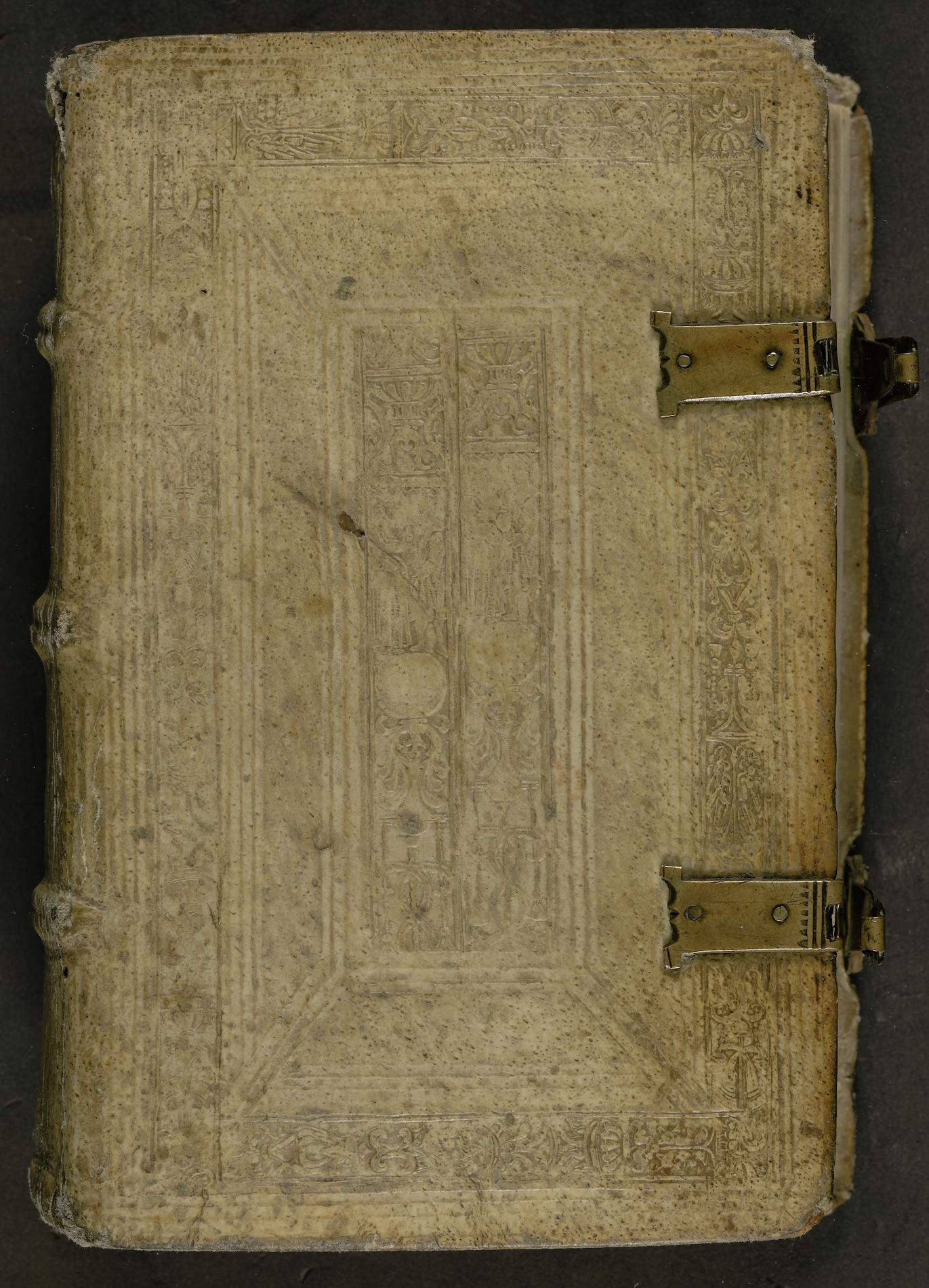 Text
TextDas Buch Judith. : zu Wittemberg verdeudscht
Summary: The Book of Judith was probably written between 175 and 125 B.C. and is part of the literature known as the Apocrypha, composed between the Old and New Testament eras. The Catholic Church accepted the Apocrypha as canonical while Luther did not. The story is of the pious widow Judith who beheads the enemy general Holofernes after he has become drunk. It is reminiscent of Jael's killing of Sisera in Judges 4. This is apparently the only separate printing of this translation, issued the same year as the complete German Bible.Summary: The Book of Judith was probably written between 175 and 125 B.C. and is part of the literature known as the Apocrypha, composed between the Old and New Testament eras. The Catholic Church accepted the Apocrypha as canonical while Luther did not. The story is of the pious widow Judith who beheads the enemy general Holofernes after he has become drunk. It is reminiscent of Jael's killing of Sisera in Judges 4. This is apparently the only separate printing of this translation, issued the same year as the complete German Bible. -
 Text
TextDas Euangelion am ersten Sontag der Dreyualtickeit
Luther, Martin, 1483-1546Summary: Sermon preached May 27, 1526, on John 3:1-16 (Nicodemus).Summary: Sermon preached May 27, 1526, on John 3:1-16 (Nicodemus). -
 text
textDas Vater vnser vnd die zehen Gebot mit jrer Auslegung in etliche Gebet: den einfeltigen zu Gut, für allerley Not vnd Anligen, Leibs vn[d] der Seelen, aus den Schrifften vnserer lieben Preceptoren fein kurtz vnd ordentlich gestellet : Sampt etlichen anderen andechtig Gebetlein vnd schönen Bericht vom Creutz vnd Trübsal
Tribauer, EsaiasSignatures: A-Q⁸ R⁴Signatures: A-Q⁸ R⁴ -
 Text
TextDe Libero arbitrio ΔΙΑΤΡΙΒΗ, sive collatio
Erasmus, Desiderius, -1536Summary: Early edition of Erasmus' treatise on free human will and its limits.Summary: Early edition of Erasmus' treatise on free human will and its limits. -
 Text
TextDe bykorf des gemoeds : honing zaamelende uit allerly bloemen
Luiken, Jan, 1649-1712Summary:Summary: -
 Text
TextDe caelibatu, atque castimonia epistola
Leib, Kilian, 1471-1553Summary: Kilian Leib was the prior of the Augustinian monastery at Rebdorf near Ingolstadt. He was a vehement opponent of the Lutheran movement and was involved in the drafting of the Confutatio Augustana. In this tract he defends priestly celibacy and chastity.Summary: Kilian Leib was the prior of the Augustinian monastery at Rebdorf near Ingolstadt. He was a vehement opponent of the Lutheran movement and was involved in the drafting of the Confutatio Augustana. In this tract he defends priestly celibacy and chastity. -
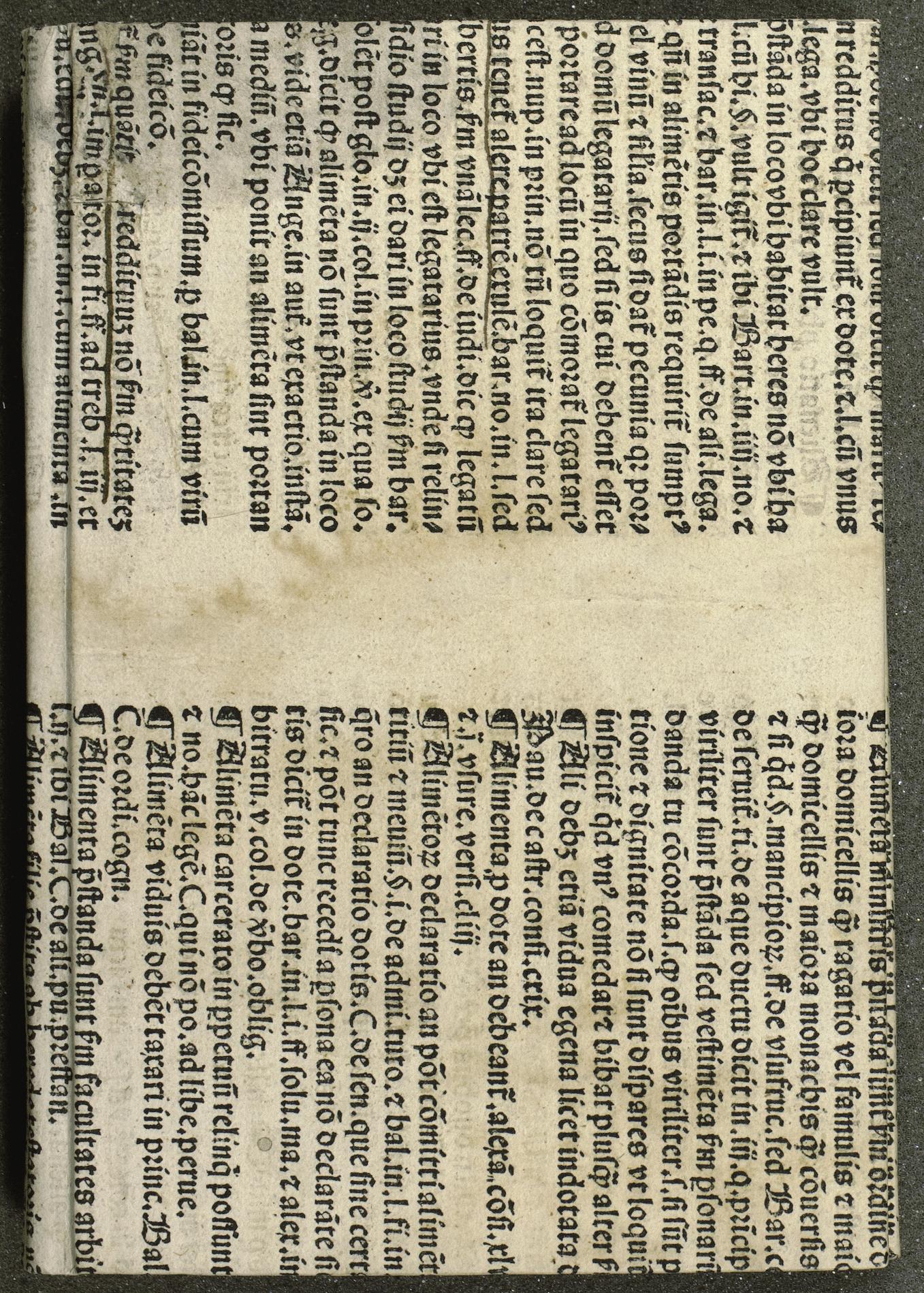 Text
TextDe coniugio episcoporum et diaconorum : ad venerandum doctorem VVolffgangum Reissenbusch monasterij Lichtembergensis Praeceptorem
Bugenhagen, Johann, 1485-1558Summary: Essay on the historical and Scriptural foundations of clerical marriage, written following the marriage of Wolfgang Reissenbusch, Praeceptor of the Collegial Church of St. Antonius in Lichtenberg.Summary: Essay on the historical and Scriptural foundations of clerical marriage, written following the marriage of Wolfgang Reissenbusch, Praeceptor of the Collegial Church of St. Antonius in Lichtenberg. -
 Text
TextDe dialectica libri quatuor recogniti. Anno. XXXIIII
Melanchthon, Philipp, 1497-1560Summary: Melanchthon wrote three versions of his book on dialectic, considering only the third to be truly successful. This is a printing from 1534 of the second (1528) version.Summary: Melanchthon wrote three versions of his book on dialectic, considering only the third to be truly successful. This is a printing from 1534 of the second (1528) version. -
 Text
TextDe origine et autoritate Verbi Dei, et quae pontificum, patrum, et concilioru[m] sit autoritas admonitio, hoc tempore, quo iterum de concilio congregando agitur, ualde necessaria : recongnita [sic] et aucta additus est catalogus doctorum ecclesiae Dei, à mundi initio, usque ad haec tempora
Major, Georg, 1502-1574Summary: Tract on the history of Divine Revelation, tracing the teachers of the church from the Creation to the author's own time, by Georg Major, a student of Luther and Melanchthon, and professor at Wittenberg from 1536, with a few brief interruptions, until his death.Summary: Tract on the history of Divine Revelation, tracing the teachers of the church from the Creation to the author's own time, by Georg Major, a student of Luther and Melanchthon, and professor at Wittenberg from 1536, with a few brief interruptions, until his death. -
 Text
TextDe rebus adiaphoris epistola concionatorum Hamburgensium ad D. Philippum Melanthonem, & responsio eiusdem
Summary: Letter by a counsel of preachers in the city of Hamburg to Philipp Melanchthon regarding the adiaphoristic controversy regarding the re-introduction of some Catholic elements into the liturgy, which Melanchthon viewed as harmless and permissible. Melanchthon's reply is also included in this short booklet.Summary: Letter by a counsel of preachers in the city of Hamburg to Philipp Melanchthon regarding the adiaphoristic controversy regarding the re-introduction of some Catholic elements into the liturgy, which Melanchthon viewed as harmless and permissible. Melanchthon's reply is also included in this short booklet. -
 Text
TextDe servo arbitrio
Luther, Martin, 1483-1546Summary: An important treatise on human free will by Martin Luther, responding to Erasmus' work De libero arbitrio.Summary: An important treatise on human free will by Martin Luther, responding to Erasmus' work De libero arbitrio. -
 Text
TextDe servo arbitrio Martini Lutheri, ad Desiderium Erasmum Roterodamu[m]
Luther, Martin, 1483-1546Summary: "De servo arbitrio (Concerning the Enslaved Will)" is considered one of Martin Luther' greatest literary productions, and among the most important writings of the Reformation. In it, he defends the idea of the complete inability of the human being to please God, apart from Divine grace. His tract is a response to Desiderius Erasmus', "De libero arbitrio (Concerning Free Will)." Erasmus defends the view that salvation is by Divine grace, but wants to leave some room for a person's moral motivation.Summary: "De servo arbitrio (Concerning the Enslaved Will)" is considered one of Martin Luther' greatest literary productions, and among the most important writings of the Reformation. In it, he defends the idea of the complete inability of the human being to please God, apart from Divine grace. His tract is a response to Desiderius Erasmus', "De libero arbitrio (Concerning Free Will)." Erasmus defends the view that salvation is by Divine grace, but wants to leave some room for a person's moral motivation. -
 Text
TextDe werken en vergelding der barmhertigheid, en onbarmhertigheid
Spinniker, Adriaan, 1676-1754Summary:Summary: -
 Still image
Death in the Cemetery
Holbein, Hans, 1497-1543A woodcut depicting a band of skeletons playing musical instruments in a cemetery. The woodcut is accompanied by verses from Revelations 8 and Genesis 7 translated into French (top) and then reformatted into verse (bottom).A woodcut depicting a band of skeletons playing musical instruments in a cemetery. The woodcut is accompanied by verses from Revelations 8 and Genesis 7 translated into French (top) and then reformatted into verse (bottom). -
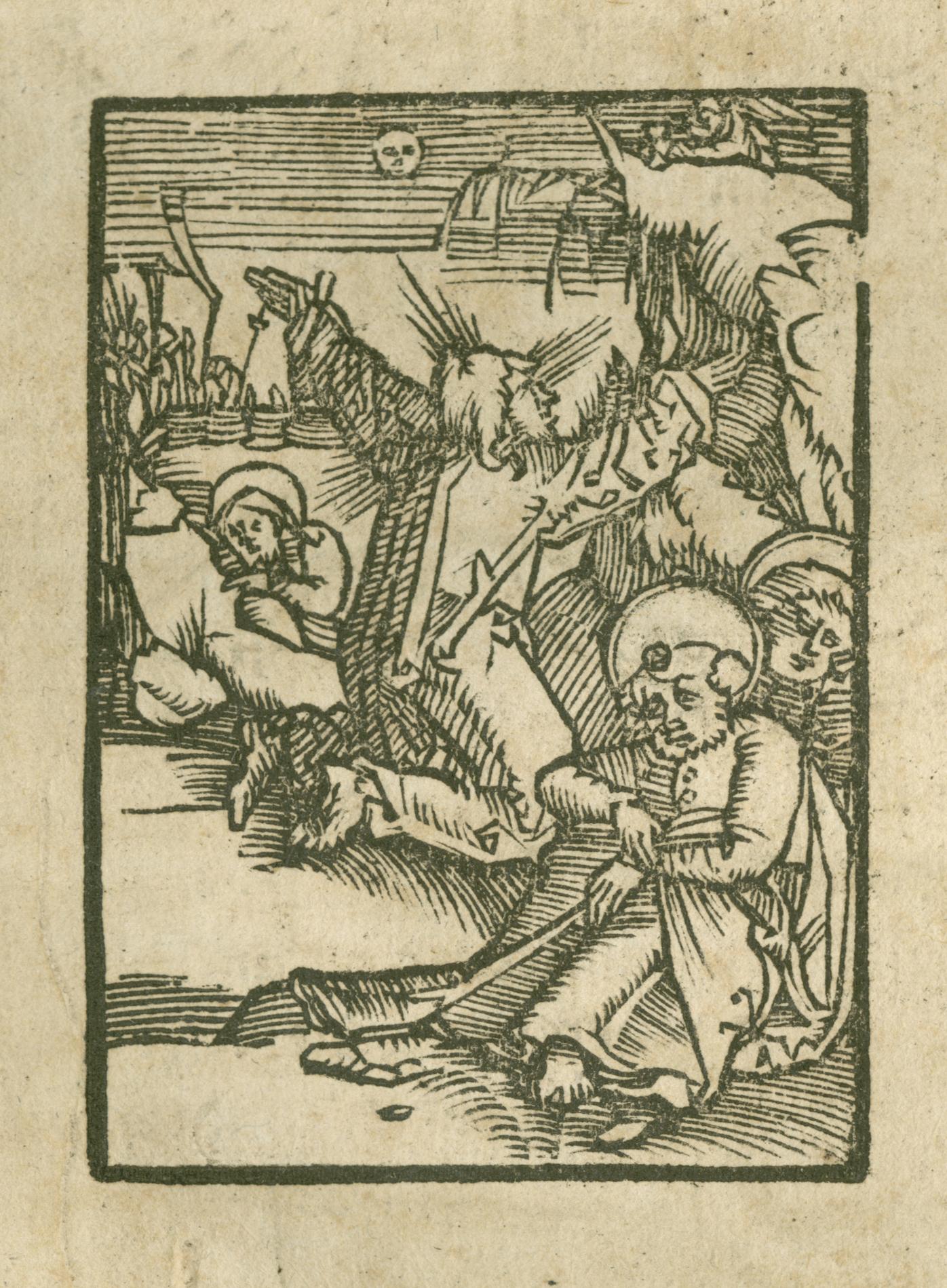 Text
TextDeclaration entiere des fondemens de la doctrine Chrestiene. faicte sur l'Epistre de S. Paul aux Galatie[n]s : en laquele est co[n]tenue vne vraye & parfaicte exposition de la iustification qui est par la foy en Iesus Christ.
Luther, Martin, 1483-1546Summary: Rare first French printing of Luther's lectures on Galatians.Summary: Rare first French printing of Luther's lectures on Galatians.