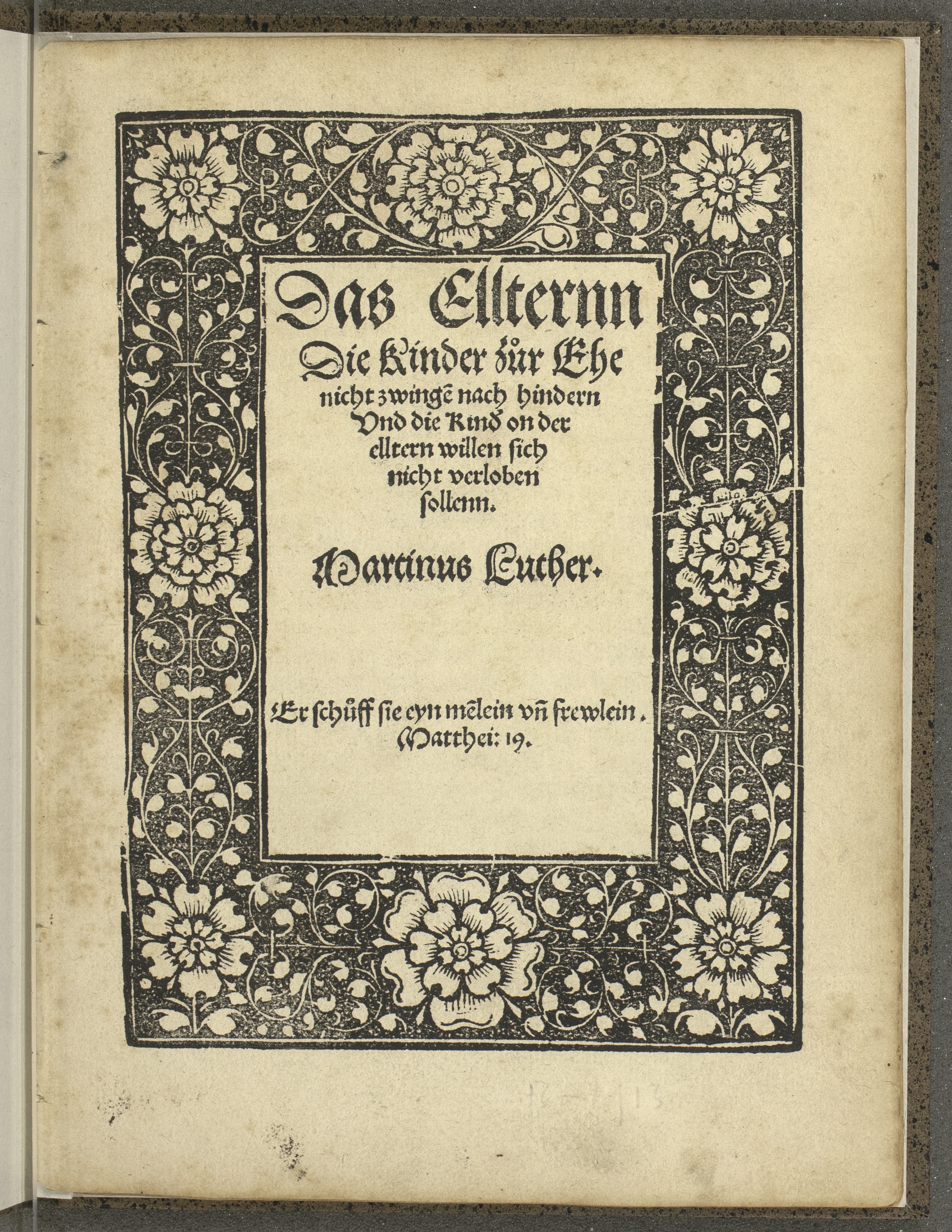
Summary: Parental consent was an issue during the Reformation. Catholic orthodoxy demanded parental consent of the bridal couple as it impacted property. Luther saw value in both sides, arguing that while parents ought not to be able to compel children to marry or prevent weddings, the children ought to seek their parents' consent.
Summary: Parental consent was an issue during the Reformation. Catholic orthodoxy demanded parental consent of the bridal couple as it impacted property. Luther saw value in both sides, arguing that while parents ought not to be able to compel children to marry or prevent weddings, the children ought to seek their parents' consent.
Summary: German translation by Wenzeslaus Linck of Epistola contra Judaeorum, thought to be written in Arabic by Samuel of Marocco, an apostate Jew at the beginning of the 11th century and translated into Latin by the Spanish Dominican Alphonsus Bonihominis in the 14th century and widely disseminated. Bonihominis is likely the real author of the work.
Summary: German translation by Wenzeslaus Linck of Epistola contra Judaeorum, thought to be written in Arabic by Samuel of Marocco, an apostate Jew at the beginning of the 11th century and translated into Latin by the Spanish Dominican Alphonsus Bonihominis in the 14th century and widely disseminated. Bonihominis is likely the real author of the work.
Summary: When Luther wrote this reply to the Swabian peasant' "Twelve Articles and Institution of the Peasants, he was still in hopes that reason might prevail and that bloodshed might be avoided.
Summary: When Luther wrote this reply to the Swabian peasant' "Twelve Articles and Institution of the Peasants, he was still in hopes that reason might prevail and that bloodshed might be avoided.
A woodcut border to Luther's Eyn Sermon von stercke vnnd zuonemen des glaubens vnnd der liebe : Aus der Epistel S. Pauli zuon Eypesernn printed in 1525. The border is composed of four separate woodcuts depicting three cherubs holding a plaque with the date of publication (top), a pair of architectural elements with two men standing between pairs of columns and topped with a female and male siren respectively (sides), and a man's torso with plant-like limbs (bottom).
A woodcut border to Luther's Eyn Sermon von stercke vnnd zuonemen des glaubens vnnd der liebe : Aus der Epistel S. Pauli zuon Eypesernn printed in 1525. The border is composed of four separate woodcuts depicting three cherubs holding a plaque with the date of publication (top), a pair of architectural elements with two men standing between pairs of columns and topped with a female and male siren respectively (sides), and a man's torso with plant-like limbs (bottom).
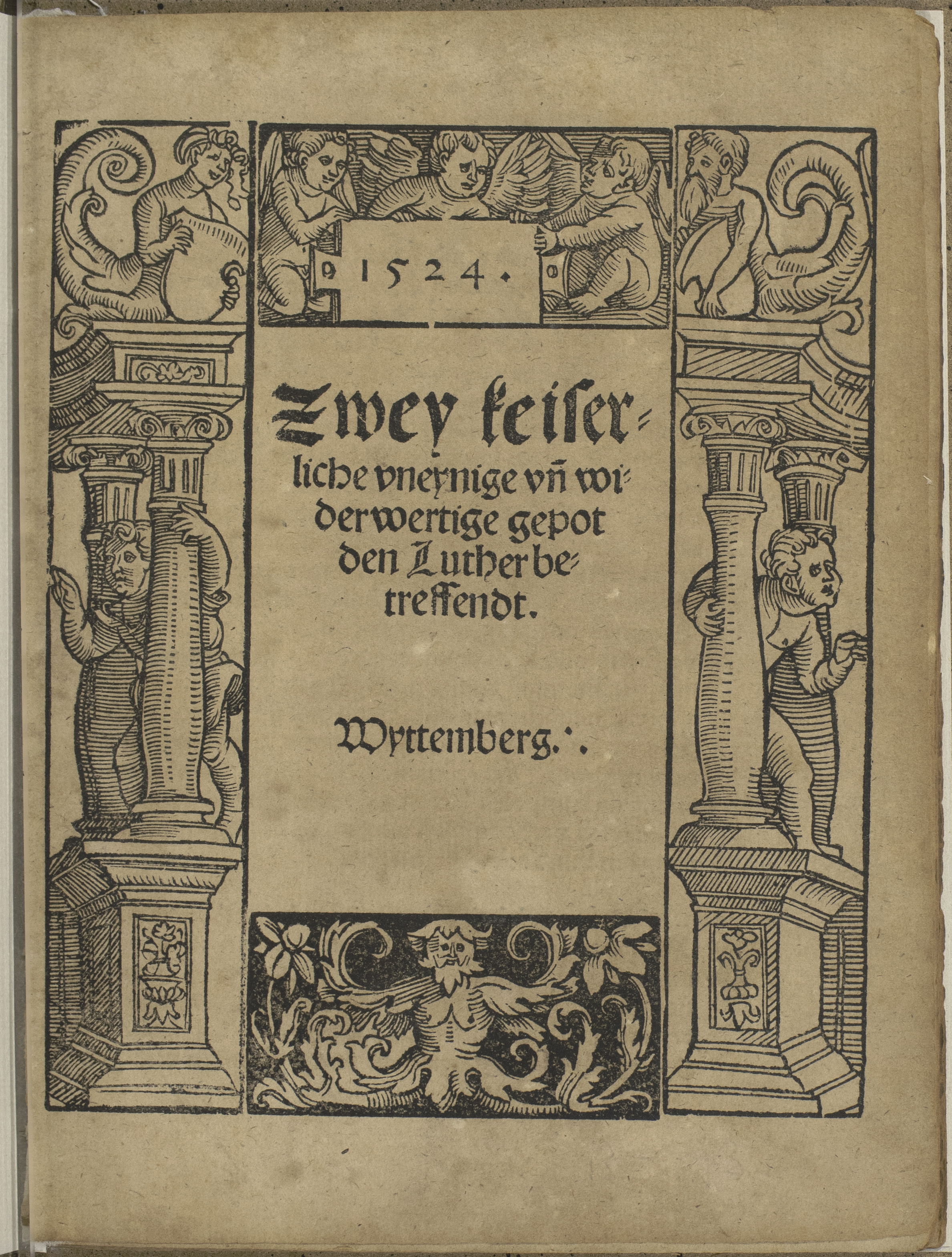
A woodcut border to Zwei kaiserliche uneinige und widerwärtige Gebote den Luther betreffend printed in 1524. The border is composed of four separate woodcuts depicting three cherubs holding a plaque with the date of publication (top), a pair of architectural elements with two men standing between pairs of columns and topped with a female and male siren respectively (sides), and a man's torso with plant-like limbs (bottom).
A woodcut border to Zwei kaiserliche uneinige und widerwärtige Gebote den Luther betreffend printed in 1524. The border is composed of four separate woodcuts depicting three cherubs holding a plaque with the date of publication (top), a pair of architectural elements with two men standing between pairs of columns and topped with a female and male siren respectively (sides), and a man's torso with plant-like limbs (bottom).
Holy Roman Empire. Emperor (1519-1556 : Charles V)
Summary: The diet of Nuremberg in 1524 reaffirmed the imperial ban of Luther's person expressed in the edict of Worms, but not the condemnation of his teachings, which were to be addressed at the diet of Speyer. Luther issued both the edict of Worms and the resolutions of the diet of Nuremberg along with his own foreward and comments, in which he calls the emperor a "mad, irrational, senseless, raving and insane fool".
Summary: The diet of Nuremberg in 1524 reaffirmed the imperial ban of Luther's person expressed in the edict of Worms, but not the condemnation of his teachings, which were to be addressed at the diet of Speyer. Luther issued both the edict of Worms and the resolutions of the diet of Nuremberg along with his own foreward and comments, in which he calls the emperor a "mad, irrational, senseless, raving and insane fool".
 Text
Text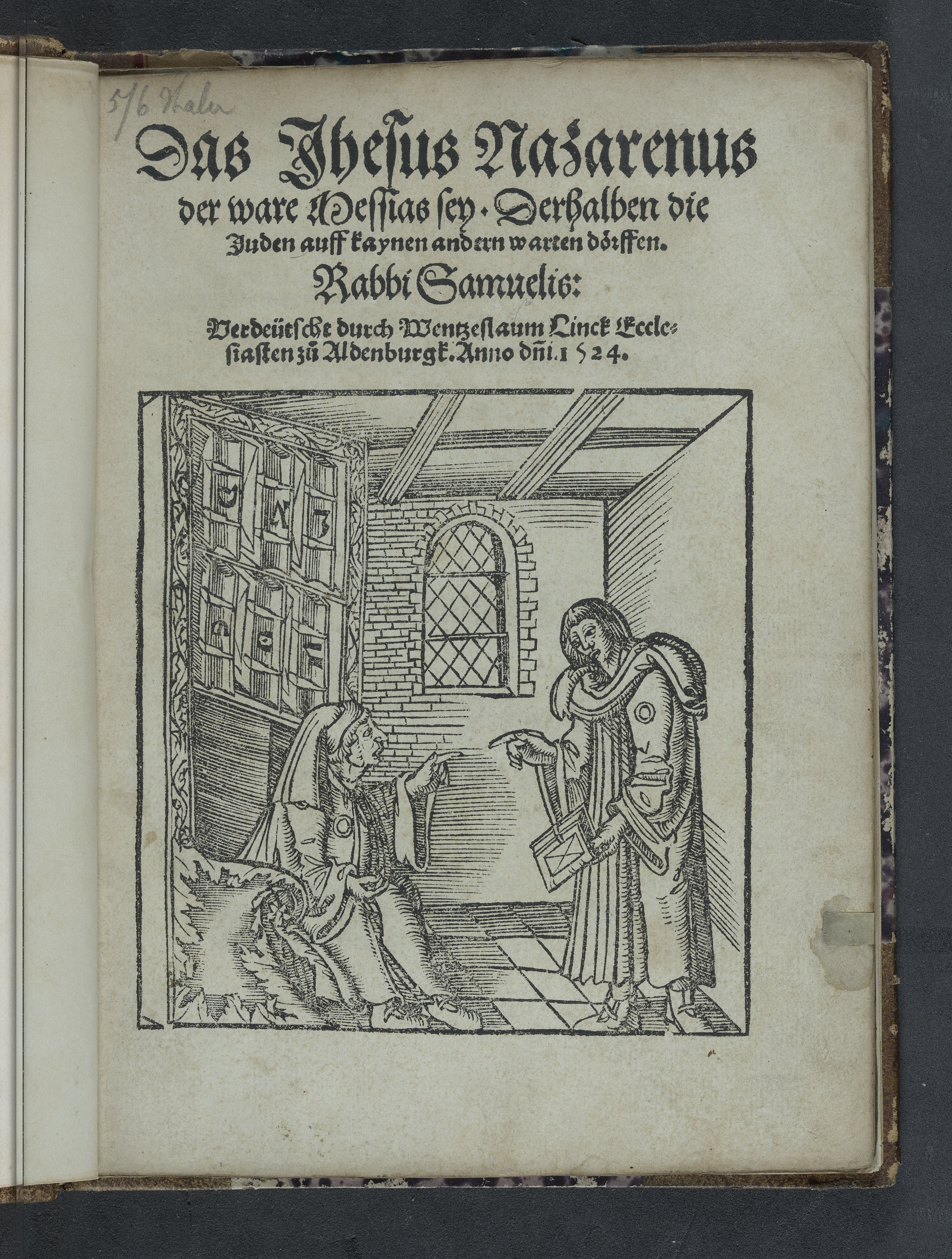 Text
Text Text
Text Text
Text Still image
 Still image
 Text
Text