Search
60 resources
60 items
Subject
Luther, Martin, 1483-1546
-
![Artist Statement: "In the background of the painting appears the 1938 edition of the Korean Bible--especially, Romans 1:17 ("the righteous will live by faith"). The cross of Jesus Christ stands in the middle between Martin Luther [(1483-1546)] on the left and Philipp Melanchton [sic][(1497-1560)] on the right. The cross and the three persons beneath it--John the Baptist, Chranach [sic], and Luther-- originally appeared in the alter painting entitled Law and Grace. It is supposed that Lucas Cranach [the Elder (1472-1553)] drew the first draft of the painting and then his son Lucas Cranach the Younger ([1515]-1586) completed it in 1555. Interestingly, a Korean woman next to them is overhearing the gospel. The building beneath Luther is Jangdaehyeon Church, where the revival movement of the Korean church startedin 1907. Meanwhile, the other building beneath Melanchton [sic] is Wittenberg Castle Church. Luther is portrayed as translating the Bible on the right of the bottom. On the left of the bottom the image of children studying in a Korean traditional schoolhouse was borrowed from Hong-do Kim's Seondang, as if they were studying the Bible. This painting portrays the historical process in which the gospel that Luther rediscovered was appreciated by native Koreans." (from the guide for Min's exhibition, "500 jähriges Reformationsjubiläum, Korea," which ran from July 5-10, 2017, at the Gasthaus Ökumene in Wittenberg and from July 12-August 1, 2017 at the Kreuzkirche Alte Bibliothek in Dresden)](https://s3.us-west-2.amazonaws.com/omekacloud-main/large/2024-04-12_MIN_I003/2024-04-12_MIN_I003.jpg) Still image
Still image500 years of the Reformation, Korea (2016)
Min, Kyeong AhArtist Statement: "In the background of the painting appears the 1938 edition of the Korean Bible--especially, Romans 1:17 ("the righteous will live by faith"). The cross of Jesus Christ stands in the middle between Martin Luther [(1483-1546)] on the left and Philipp Melanchton [sic][(1497-1560)] on the right. The cross and the three persons beneath it--John the Baptist, Chranach [sic], and Luther-- originally appeared in the alter painting entitled Law and Grace.Artist Statement: "In the background of the painting appears the 1938 edition of the Korean Bible--especially, Romans 1:17 ("the righteous will live by faith"). The cross of Jesus Christ stands in the middle between Martin Luther [(1483-1546)] on the left and Philipp Melanchton [sic][(1497-1560)] on the right. The cross and the three persons beneath it--John the Baptist, Chranach [sic], and Luther-- originally appeared in the alter painting entitled Law and Grace. -
![Artist Statement: "Seongsan Bridge appears over the River Han. Across the bridge stands Lotte World Tower, a 123-floor skyscraper that officially opened in 2017. A cross is floating on the river. Martin Luther, while reminding us of his speech at the Diet of Worms, stands just next to Jesus, pointing to him. Several people surrounding them are watching the event of Jesus' crucufixion. All of them are figures borrowed from Yun-Bok Shin's genre paintings. There are also other figures borrowed from Hong-Do Kim's paintings. The blacksmith in Daejanggan (A Blacksmith's Worshop [sic]) is portrayed as nailing Jesus' hand on the cross; the bow in Whalsogi (Archery) is targeted at Jesus' heart; the indiscreet, crying childin Seodang (A Schoolhouse) is described as mourning over the crucifixion of Jesus; the man who hides himself and steals a glance in BBaleteo (A Washing Place) appears next to the crying child; thos who were enjoying boating and drinking in Deon-yudo (Painting of Boating) are represented as a group of people who are indifferent to, or have nothing to do with, the event of the cross." (from the guide for Min's exhibition, "500 jähriges Reformationsjubiläum, Korea," which ran from July 5-10, 2017, at the Gasthaus Ökumene in Wittenberg and from July 12-August 1, 2017 at the Kreuzkirche Alte Bibliothek in Dresden)](https://s3.us-west-2.amazonaws.com/omekacloud-main/large/2024-04-12_MIN_I004/2024-04-12_MIN_I004.jpg) Still image
Still image500 years of the Reformation, Korea (2017)
Min, Kyeong AhArtist Statement: "Seongsan Bridge appears over the River Han. Across the bridge stands Lotte World Tower, a 123-floor skyscraper that officially opened in 2017. A cross is floating on the river. Martin Luther, while reminding us of his speech at the Diet of Worms, stands just next to Jesus, pointing to him. Several people surrounding them are watching the event of Jesus' crucufixion. All of them are figures borrowed from Yun-Bok Shin's genre paintings. There are also other figures borrowed from Hong-Do Kim's paintings.Artist Statement: "Seongsan Bridge appears over the River Han. Across the bridge stands Lotte World Tower, a 123-floor skyscraper that officially opened in 2017. A cross is floating on the river. Martin Luther, while reminding us of his speech at the Diet of Worms, stands just next to Jesus, pointing to him. Several people surrounding them are watching the event of Jesus' crucufixion. All of them are figures borrowed from Yun-Bok Shin's genre paintings. There are also other figures borrowed from Hong-Do Kim's paintings. -
 Text
TextAd Johannem Ecciu[m]
Luther, Martin, 1483-1546Summary: A unique printing of an answer by Luther to the attacks of one his earliest opponents, Johann Eck.Summary: A unique printing of an answer by Luther to the attacks of one his earliest opponents, Johann Eck. -
 Text
TextAin Christlicher Sendbryeff
Luther, Martin, 1483-1546Summary: This work is an anonymous translation to German from Latin of Luther's letter (Ad inlustrissimum principem Carolum Sabaudiae ducem Epistola) to Duke Charles III of Savoy, dated September 7, 1523.Summary: This work is an anonymous translation to German from Latin of Luther's letter (Ad inlustrissimum principem Carolum Sabaudiae ducem Epistola) to Duke Charles III of Savoy, dated September 7, 1523. -
 Text
TextAmbrosii Catharini olim La[n]cinoti co[n]tra Martinu[m] Lutherum super his verbis, Tu es Petrus [et cetera], Et tibi dabo claues regni celorum [et cetera], Mathei xvi. : Dialogus [i?]n minus disertus qua[m] elegans et festiuus : Roffensis Episcopi loca qu[a]edam quibus predicta[m] auctoritate[m] cu[m] duabus alijs Matthei scz xviij. & Ioa[n]nis xx. eiusdem monet[a]e, sed no[n] eiusdem valoris comparat, & discrimen earu[m] euidenti scripturaru[m] testimonio declarat.
Ambrosius Catharinus, Archbishop of Conza, 1484-1553Summary: A selection of criticisms of Luther's views on the spiritual origins of the Papacy by one of his early opponents, Ambrosius Catharinus, edited by another of his early opponents, Hieronymus Emser, and dedicated by Emser to a third Luther opponent, Paul Bachmann, Abbot of Altenzelle.Summary: A selection of criticisms of Luther's views on the spiritual origins of the Papacy by one of his early opponents, Ambrosius Catharinus, edited by another of his early opponents, Hieronymus Emser, and dedicated by Emser to a third Luther opponent, Paul Bachmann, Abbot of Altenzelle. -
 Text
TextAn den Durchleüchtigen Hochgepornen Fürsten vnd Herrn, Herrn Albrechten, Marggraffen zuo Brandenburg, inn Preussen [et]c. Hertzogen [et]c. Ein Sendbrief Doct. Mart. Luth. Wider ettliche Rottengeyster : Wittemberg, M.D.XXXII
Luther, Martin, 1483-1546Summary: Luther's reply to a letter from Duke Albrecht of Brandenburg, concerning the interpretation of John VI with reference to the Lord's Supper.Summary: Luther's reply to a letter from Duke Albrecht of Brandenburg, concerning the interpretation of John VI with reference to the Lord's Supper. -
 Still image
Architectural historiated title page of Deudsch Catechismus
An architectural historiated woodcut border on the title page of Luther's German Catechism. The border consists of a decorative arch, topped with a pair of cherubs supporting a roundel with the Luther rose on the left and a crest with the Lamb of God on the right. At the bottom of the page, the scene of the Crucifixion is depicted with Jesus in the center, flanked by the two thieves, however as the bottom right corner of the page is torn away, the second thief is missing.An architectural historiated woodcut border on the title page of Luther's German Catechism. The border consists of a decorative arch, topped with a pair of cherubs supporting a roundel with the Luther rose on the left and a crest with the Lamb of God on the right. At the bottom of the page, the scene of the Crucifixion is depicted with Jesus in the center, flanked by the two thieves, however as the bottom right corner of the page is torn away, the second thief is missing. -
 Still image
Augustinian Monk
A woodcut full-body portrait of either Martin Luther or Michael Stifel dressed in the garb of an Augustinian monk and holding a book.A woodcut full-body portrait of either Martin Luther or Michael Stifel dressed in the garb of an Augustinian monk and holding a book. -
 Still image
Augustinian Monk
A woodcut full-body portrait of a figure, possibly of Martin Luther, dressed in the garb of an Augustinian monk and holding a book.A woodcut full-body portrait of a figure, possibly of Martin Luther, dressed in the garb of an Augustinian monk and holding a book. -
 Still image
Augustinian Monk with decorative border
A woodcut full-body portrait of either Martin Luther or Michael Stifel dressed in the garb of an Augustinian monk and holding a book. Surrounding the monk is a separate woodcut border featuring cherubs and Wild Men in trees and the coat of arms of the Holy Roman Empire at the bottom.A woodcut full-body portrait of either Martin Luther or Michael Stifel dressed in the garb of an Augustinian monk and holding a book. Surrounding the monk is a separate woodcut border featuring cherubs and Wild Men in trees and the coat of arms of the Holy Roman Empire at the bottom. -
 Text
TextBvlla decimi Leonis, contra errores Martini Lutheri, & sequacium
Summary: First printing of the first edition of Hutten's edition of the papal bull Exsurge Domine, which condemns as heretical 41 statements by Martin Luther and offers Luther 60 days to recant. Hutten issued the bull with the papal coat of arms on the title page, and offers his own glosses, introduction, and call to Leo to keep his bulls to himself, and not to bother the German Protestants any longer.Summary: First printing of the first edition of Hutten's edition of the papal bull Exsurge Domine, which condemns as heretical 41 statements by Martin Luther and offers Luther 60 days to recant. Hutten issued the bull with the papal coat of arms on the title page, and offers his own glosses, introduction, and call to Leo to keep his bulls to himself, and not to bother the German Protestants any longer. -
 Text
TextConfutatio XCI. articulorum e tribus Martini Lutheri Teuthonicis sermonibus excerptorum
Cochlaeus, Johannes, 1479-1552Summary: Second printing of the first edition of a tract listing 91 errors in three sermons by Martin Luther.Summary: Second printing of the first edition of a tract listing 91 errors in three sermons by Martin Luther. -
 Text
TextDe disputatio[n]e Lipsicensi : quantum ad Boemos obiter deflexa est
Emser, Hieronymus, 1478-1527Summary: A letter by Hieronymus Emser, early opponent of Luther concerning the Leipzig Disputation of 1519, describing Luther's debate with Johann Eck, and Luther's admitting that councils could err.Summary: A letter by Hieronymus Emser, early opponent of Luther concerning the Leipzig Disputation of 1519, describing Luther's debate with Johann Eck, and Luther's admitting that councils could err. -
 Still image
Des Ehrwirdigen Herrn Doctoris Martini Lutheri, gottseligen, Triumph, und Verantwortung, wider die gottlosen Schmehschrifft, der newen Münch, der Jesuiter, welche sie vnter dem Titel, Anatomia Lutheri, ausgesprenget haben
Single sheet woodcut depicting Pope Leo X on a throne that is about to topple. Behind him are priests and monks and below them a group of Jesuits, who are trying to support the toppling throne. Leo's key, the symbol of the Petrine office is crumbling in the pope's hands. Facing Leo is Martin Luther holding an open Bible. Below him is a group of reformers led by Philipp Melanchthon, each holding a book (Bible). In the center below Leo is Friedrich Staphylus depicted as Judas Iscariot. Staphylus was a student of Philipp Melanchthon's, who rejoined the Catholic Church in 1553.Single sheet woodcut depicting Pope Leo X on a throne that is about to topple. Behind him are priests and monks and below them a group of Jesuits, who are trying to support the toppling throne. Leo's key, the symbol of the Petrine office is crumbling in the pope's hands. Facing Leo is Martin Luther holding an open Bible. Below him is a group of reformers led by Philipp Melanchthon, each holding a book (Bible). In the center below Leo is Friedrich Staphylus depicted as Judas Iscariot. Staphylus was a student of Philipp Melanchthon's, who rejoined the Catholic Church in 1553. -
 Text
TextDialogus ad Martinu[m] Lutherum : pro responsione ad impertinentem quanda[m] ipsius epistolam super posita[m] veluti collocutoris vice intermixtam
Dungersheim, Hieronymus, 1465-1540Summary: H. Dungersheim had exchanged several letters with Luther before he wrote this dialogue. It was his first formal controversialist tract, written in 1520, but not published until 1531. Luther burned a manuscript copy of this work when he burned the bull Exsurge Domine on December 10, 1520.Summary: H. Dungersheim had exchanged several letters with Luther before he wrote this dialogue. It was his first formal controversialist tract, written in 1520, but not published until 1531. Luther burned a manuscript copy of this work when he burned the bull Exsurge Domine on December 10, 1520. -
 Text
TextDisputatio domini Johannis Eccij et P. Martini Luther in Studio Lipsiensi futura
Luther, Martin, 1483-1546Summary: This is Luther's first public attack on Johannes Eck. Included in this volume are Eck's letter of Dec. 24, 1518 in which he records his theological differences with Karlstadt, and Eck's own 12 theses with Luther's response.Summary: This is Luther's first public attack on Johannes Eck. Included in this volume are Eck's letter of Dec. 24, 1518 in which he records his theological differences with Karlstadt, and Eck's own 12 theses with Luther's response. -
 Text
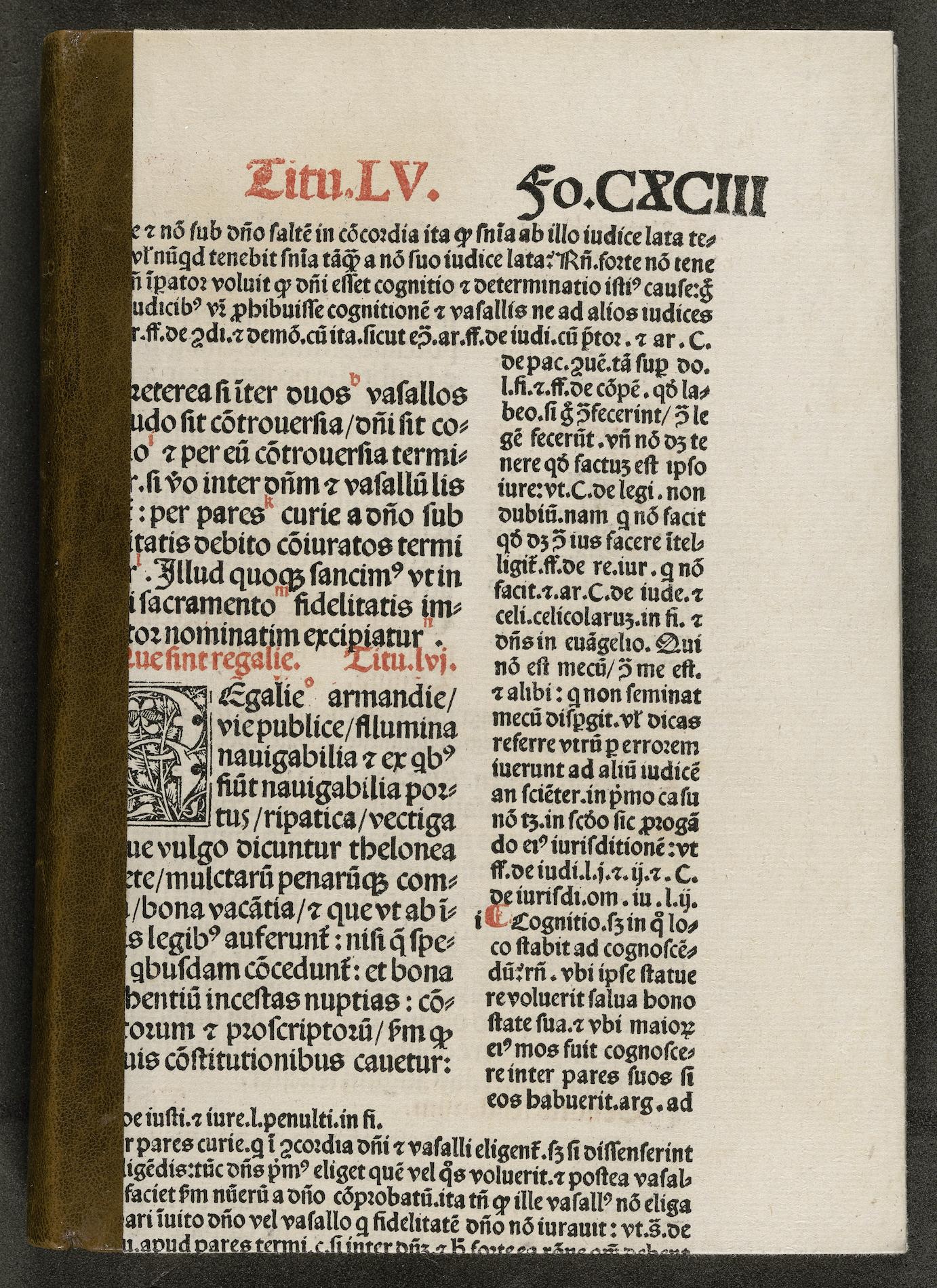
TextDisputatio inter Egregios & praelatus virus ac doctores, Joannem Ecci[um] & Martinum Lutherum in p[rae]sentia notariorum habita
Luther, Martin, 1483-1546Summary: Unique printing of the original notarial protocol of the Leipzig Disputation between Andreas Karlstadt and Martin Luther on the one hand, and Johann Eck, on the other. Includes fully two thirds of the several day debate, and all of the famous "duel" between Luther and Eck on authority in the church. The debates were copied by two notaries, and, at the end of each day's sessions, were verified by two witnesses.Summary: Unique printing of the original notarial protocol of the Leipzig Disputation between Andreas Karlstadt and Martin Luther on the one hand, and Johann Eck, on the other. Includes fully two thirds of the several day debate, and all of the famous "duel" between Luther and Eck on authority in the church. The debates were copied by two notaries, and, at the end of each day's sessions, were verified by two witnesses. -
 Text
TextDisticha de uita et praecipuis rebus gestis uiri Dei et...
Stoltz, Johann, circa 1514-1556Twenty distichs (couplets) inspired by important events in the life of Martin Luther. The couplets, in Latin, were composed ca. 1550 and are written on paper. The author's name is found at the end of the piece as is his dedication of it to Johann Kestner. Pencil markings of a later owner are located in the upper left corner of the first page. Originally part of a signature, each of the two leaves has been encapsulated in Mylar for protection.Twenty distichs (couplets) inspired by important events in the life of Martin Luther. The couplets, in Latin, were composed ca. 1550 and are written on paper. The author's name is found at the end of the piece as is his dedication of it to Johann Kestner. Pencil markings of a later owner are located in the upper left corner of the first page. Originally part of a signature, each of the two leaves has been encapsulated in Mylar for protection. -
 Text
TextEegister [i.e. Register] aller Schrifften des Ehrwirdigen Herrn D. Martini Lutheri, : gerichtet zugleich auff die XIX. Wittenbergischen, vnd XII. Jhenischen Tomos, beyders [sic] des Alten vnd Newen Drucks, allen Liebhabern der Bücher Lutheri gantz nützlich zu gebrauchen
Suevus, Sigismundus, 1526-1596Summary: This is a very rare example of the index prepared to help students find specific works by Luther. Since Luther's writings had been collected in two different sets--the nineteen volume Wittenberg edition, and the twelve volume Jena edition--such an index was necessary.Summary: This is a very rare example of the index prepared to help students find specific works by Luther. Since Luther's writings had been collected in two different sets--the nineteen volume Wittenberg edition, and the twelve volume Jena edition--such an index was necessary. -
 Text
TextEyn Sendbrieff an den Bapst Leo den Czehenden
Luther, Martin, 1483-1546Summary: A letter by Luther to Pope Leo X. Leo had issued his famous bull 'Exsurge Domine' on June 15 1520, demanding that Luther recant his teachings of face excommunication. Luther responded with this letter in September, seeking to explain his position, calling for the church to reform, while emphasizing that his critiques have been directed against abuses within the church, not against the person or office of the pope.Summary: A letter by Luther to Pope Leo X. Leo had issued his famous bull 'Exsurge Domine' on June 15 1520, demanding that Luther recant his teachings of face excommunication. Luther responded with this letter in September, seeking to explain his position, calling for the church to reform, while emphasizing that his critiques have been directed against abuses within the church, not against the person or office of the pope. -
 Text
TextFrüntlich verglimpfung vnd ableynung über die predig des treffenliche[n] Martini Luthers wider die Schwermer : zuo Wittemberg gethon vnnd beschriben zuo schirm des wäsenlichen lychnams vn[d] bluts Christi im Sacrame[n]t
Zwingli, Ulrich, 1484-1531Summary: In a sermon against religious fanatics (Wider die Schwärmer), Luther had asserted the real presence of Christ in the eucharist. Zwingli responds by affirming the Reformed position that the practice of communion is to be seen as a symbolic act.Summary: In a sermon against religious fanatics (Wider die Schwärmer), Luther had asserted the real presence of Christ in the eucharist. Zwingli responds by affirming the Reformed position that the practice of communion is to be seen as a symbolic act. -
 Text
TextGegen die bekanntnus Martini Luthers auff den yetzigen angestellten Reychsstag zuo Augsburg, auff neuwe eingelegt in sibenzehe[n] Artickel verfasst. Kurtze vn[d] Christenlich vnderricht
Wimpina, Konrad, 1460-1531Summary: This pamphlet contains the Catholic response to the first, unauthorized edition of the Schwabach Articles, published in Coburg in 1530. Among the authors of this tract, Konrad Wimpina and Johannes Mensing helped draft the Catholic Confutation of the Augsburg Confession.Summary: This pamphlet contains the Catholic response to the first, unauthorized edition of the Schwabach Articles, published in Coburg in 1530. Among the authors of this tract, Konrad Wimpina and Johannes Mensing helped draft the Catholic Confutation of the Augsburg Confession. -
 Text
TextGirolamo [Hieronomo] Aleandro letter to Raffaele de' Medici, June 1, 1521
Aleandro, Girolamo, 1480-1542A letter from Girolamo Aleandro to his patron, Raffaele de' Medici, concerning the work done at the Diet, including the condemnation and arguments made against Luther. Aleandro discusses the drafting of an offical Imperial decree against Luther and discusses political tensions between the Holy Roman Empire and France.A letter from Girolamo Aleandro to his patron, Raffaele de' Medici, concerning the work done at the Diet, including the condemnation and arguments made against Luther. Aleandro discusses the drafting of an offical Imperial decree against Luther and discusses political tensions between the Holy Roman Empire and France. -
 Text
TextGirolamo [Hieronomo] Aleandro letter to Raffaele de' Medici, May 5, 1520
Aleandro, Girolamo, 1480-1542A letter from Girolamo Aleandro to his patron, Raffaele de' Medici, mentioning Luther's presence in Worms and commending himself further to Raffaele.A letter from Girolamo Aleandro to his patron, Raffaele de' Medici, mentioning Luther's presence in Worms and commending himself further to Raffaele. -
 Text
TextHenry de Lesomet letter to Raffaele de' Medici, April 29, 1521
Lesomet, Henry deA letter from Henry de Lesomet to Raffaele de' Medici concerning correspondence with a Monsieur de Hoochstrate as well as mentioning Luther's departure from Worms and Lesomet's disdain for Luther's opinionsA letter from Henry de Lesomet to Raffaele de' Medici concerning correspondence with a Monsieur de Hoochstrate as well as mentioning Luther's departure from Worms and Lesomet's disdain for Luther's opinions -
 Text
TextJoannis Eckij pro Hieronymo Emser : contra malesanam Luteri venationem responsio, Soli Deo gloria.
Eck, Johann, 1486-1543Summary: First printing of the first edition of a pamphlet by Johann Eck in support of Hieronymus Emser, a theologian in Leipzig and one of Luther's most vehement early opponents.Summary: First printing of the first edition of a pamphlet by Johann Eck in support of Hieronymus Emser, a theologian in Leipzig and one of Luther's most vehement early opponents. -
 Text
TextLetter from Albert of Brandenburg to Julius Plug, July 30, 1540
Albrecht, of Brandenburg, Archbishop and Elector of Mainz, Cardinal, 1490-1545A signed letter in German from Albert of Brandenburg to Julius Plug, dated 30th July 1540. The letter is a request to translate from Latin into German some articles on religion by Luther.A signed letter in German from Albert of Brandenburg to Julius Plug, dated 30th July 1540. The letter is a request to translate from Latin into German some articles on religion by Luther. -
![A letter written to the "Noble and Right worthy Heinrich von Einsiedel" in Gnansteyn. The matter being addressed is the refusal of Brosius Berger to take an oath, thus hindering Katharina Gockritz from getting married. Mention of consultation with Doctor Martin [Luther] is in the letter. With the exception of the upper right corner which is missing, the paper is in good condition. The date "1528" appears in the upper left corner in a different ink.](https://s3.us-west-2.amazonaws.com/omekacloud-main/large/P-MSS122_B001_F001_I001/P-MSS122_B001_F001_I001_P001_PROD.jpg) Text
TextLetter from Georg Spalatin to Heinrich von Einsiedel, October 7, 1528
Spalatin, Georg, 1484-1545A letter written to the "Noble and Right worthy Heinrich von Einsiedel" in Gnansteyn. The matter being addressed is the refusal of Brosius Berger to take an oath, thus hindering Katharina Gockritz from getting married. Mention of consultation with Doctor Martin [Luther] is in the letter. With the exception of the upper right corner which is missing, the paper is in good condition. The date "1528" appears in the upper left corner in a different ink.A letter written to the "Noble and Right worthy Heinrich von Einsiedel" in Gnansteyn. The matter being addressed is the refusal of Brosius Berger to take an oath, thus hindering Katharina Gockritz from getting married. Mention of consultation with Doctor Martin [Luther] is in the letter. With the exception of the upper right corner which is missing, the paper is in good condition. The date "1528" appears in the upper left corner in a different ink. -
 Text
TextLetter from Kaspar Cruciger to Viet Dietrich, July 8, 1544
Cruciger, Kaspar, 1504-1548This letter was written by Cruciger on July 8, 1544 to Veit Dietrich, pastor of St. Sebald’s Church at Nuremberg. In the letter Cruciger discussed personal matters related to himself, Dietrich, Martin Luther, and Philipp Melanchthon. He also writes about the collection of Luther’s sermons he and Dietrich were to publish together in the following year.This letter was written by Cruciger on July 8, 1544 to Veit Dietrich, pastor of St. Sebald’s Church at Nuremberg. In the letter Cruciger discussed personal matters related to himself, Dietrich, Martin Luther, and Philipp Melanchthon. He also writes about the collection of Luther’s sermons he and Dietrich were to publish together in the following year. -
 Still image
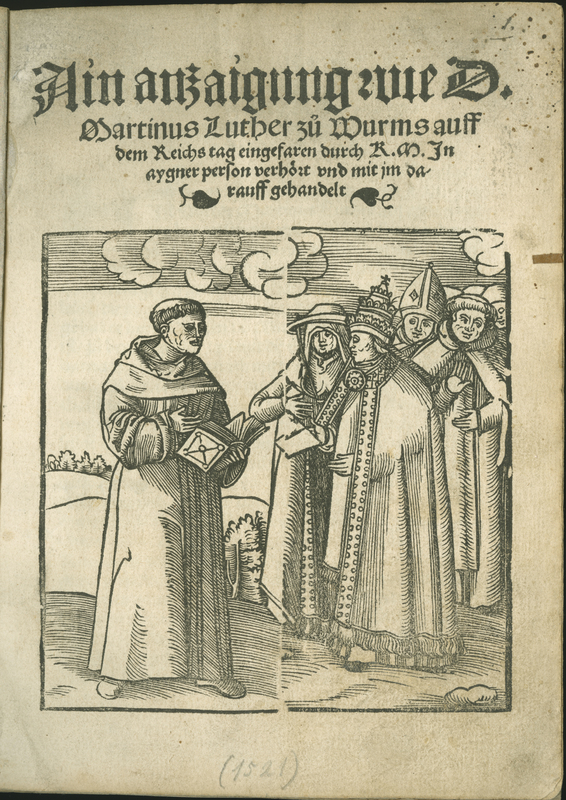
Luther in debate with Cathoic clergy
A woodcut depicting Martin Luther, in the garb of an Augustinian monk, debating a gathering of Catholic clergy members, including the Pope, a cardinal, a bishop, and a monk. This woodcut appears on the title page of a popular anonymous account of Luther's debate before the Diet of Worms in 1521.A woodcut depicting Martin Luther, in the garb of an Augustinian monk, debating a gathering of Catholic clergy members, including the Pope, a cardinal, a bishop, and a monk. This woodcut appears on the title page of a popular anonymous account of Luther's debate before the Diet of Worms in 1521. -
 Still image
Martin Luther
Baldung, Hans, -1545A woodcut portrait of Martin Luther dressed in the traditional garb of an Augustinian monk and holding a book, likely a Bible. This woodcut appears on the title page of the German translation of Luther's work De captivitate Babylonica ecclesiae praeludium.A woodcut portrait of Martin Luther dressed in the traditional garb of an Augustinian monk and holding a book, likely a Bible. This woodcut appears on the title page of the German translation of Luther's work De captivitate Babylonica ecclesiae praeludium. -
 Still image
Martin Luther
Baldung, Hans, -1545A woodcut portrait of Martin Luther dressed in the traditional garb of an Augustinian monk and holding a book, likely a Bible. This woodcut appears on the title page of Luther's work De captivitate Babylonica ecclesiae praeludium.A woodcut portrait of Martin Luther dressed in the traditional garb of an Augustinian monk and holding a book, likely a Bible. This woodcut appears on the title page of Luther's work De captivitate Babylonica ecclesiae praeludium. -
 Still image
Martin Luther
A woodcut portrait of Martin Luther dressed in the traditional garb of an Augustinian monk and holding a book, likely a Bible, and flanked by two decorated pillars. Appears to be done after the woodcut portrait by Hans Baldung.A woodcut portrait of Martin Luther dressed in the traditional garb of an Augustinian monk and holding a book, likely a Bible, and flanked by two decorated pillars. Appears to be done after the woodcut portrait by Hans Baldung. -
 Still image
Martin Luther
A woodcut full-body portrait of Martin Luther dressed in the garb of an Augustinian monk and holding a book.A woodcut full-body portrait of Martin Luther dressed in the garb of an Augustinian monk and holding a book. -
 Still image
Martin Luther
A woodcut portrait of Martin Luther dressed in the traditional garb of an Augustinian monk and holding a book, likely a Bible, with a dove above him, representing the Holy Spirit.A woodcut portrait of Martin Luther dressed in the traditional garb of an Augustinian monk and holding a book, likely a Bible, with a dove above him, representing the Holy Spirit. -
 Still image
Martin Luther
A woodcut portrait of Martin Luther holding a book.A woodcut portrait of Martin Luther holding a book. -
 Still image
Martin Luther and the Holy Spirit
Baldung, Hans, -1545A woodcut portrait of Martin Luther dressed in the traditional garb of an Augustinian monk and holding a book, likely a Bible, with a dove above him, representing the Holy Spirit.A woodcut portrait of Martin Luther dressed in the traditional garb of an Augustinian monk and holding a book, likely a Bible, with a dove above him, representing the Holy Spirit. -
 Still image
Martin Luther and the Holy Spirit
Baldung, Hans, -1545A woodcut portrait of Martin Luther dressed in the traditional garb of an Augustinian monk and holding a book, likely a Bible, with a dove above him, representing the Holy Spirit.A woodcut portrait of Martin Luther dressed in the traditional garb of an Augustinian monk and holding a book, likely a Bible, with a dove above him, representing the Holy Spirit. -
 Still image
Martin Luther and the Holy Spirit
Baldung, Hans, -1545A woodcut portrait of Martin Luther dressed in the traditional garb of an Augustinian monk and holding a book, likely a Bible, with a dove above him, representing the Holy Spirit.A woodcut portrait of Martin Luther dressed in the traditional garb of an Augustinian monk and holding a book, likely a Bible, with a dove above him, representing the Holy Spirit. -
 Still image
Martin Luther and the Holy Spirit
Baldung, Hans, -1545A woodcut portrait of Martin Luther dressed in the traditional garb of an Augustinian monk and holding a book, likely a Bible, with a dove above him, representing the Holy Spirit.A woodcut portrait of Martin Luther dressed in the traditional garb of an Augustinian monk and holding a book, likely a Bible, with a dove above him, representing the Holy Spirit. -
 Still image
Martin Luther and the Holy Spirit
Baldung, Hans, -1545A woodcut portrait of Martin Luther dressed in the traditional garb of an Augustinian monk and holding a book, likely a Bible, with a dove above him, representing the Holy Spirit.A woodcut portrait of Martin Luther dressed in the traditional garb of an Augustinian monk and holding a book, likely a Bible, with a dove above him, representing the Holy Spirit. -
 Still image
Martin Luther as an Augustinian Monk
A woodcut depicting Martin Luther in the garb of an Augustinian Monk. Below Luther is a traditional Luther rose. Surrounding the portrait is an inscription, mirrored as the image was printed in reverse, reading "DOCTOR MARTINUS LUTTER AUGUSTINER: WITTENB:". This is purported to be the earliest depiction of Luther.A woodcut depicting Martin Luther in the garb of an Augustinian Monk. Below Luther is a traditional Luther rose. Surrounding the portrait is an inscription, mirrored as the image was printed in reverse, reading "DOCTOR MARTINUS LUTTER AUGUSTINER: WITTENB:". This is purported to be the earliest depiction of Luther. -
 Still image
Martin Luther as an Augustinian Monk
A woodcut depicting Martin Luther in the garb of an Augustinian Monk. Below Luther is a traditional Luther rose. Surrounding the portrait is an inscription, mirrored as the image was printed in reverse, reading "DOCTOR MARTINUS LUTTER AUGUSTINER: WITTENB:". This is purported to be the earliest depiction of Luther.A woodcut depicting Martin Luther in the garb of an Augustinian Monk. Below Luther is a traditional Luther rose. Surrounding the portrait is an inscription, mirrored as the image was printed in reverse, reading "DOCTOR MARTINUS LUTTER AUGUSTINER: WITTENB:". This is purported to be the earliest depiction of Luther. -
 Still image
Martin Luther as an Augustinian Monk
A woodcut depicting Martin Luther in the garb of an Augustinian Monk. Below Luther is a traditional Luther rose. Surrounding the portrait is an inscription, mirrored as the image was printed in reverse, reading "DOCTOR MARTINUS LUTTER AUGUSTINER: WITTENB:". This is purported to be the earliest depiction of Luther.A woodcut depicting Martin Luther in the garb of an Augustinian Monk. Below Luther is a traditional Luther rose. Surrounding the portrait is an inscription, mirrored as the image was printed in reverse, reading "DOCTOR MARTINUS LUTTER AUGUSTINER: WITTENB:". This is purported to be the earliest depiction of Luther. -
![A woodcut depicting Martin Luther as a seven-headed monster, critiquing his deviation from Catholicism. Each head is labeled (from left to right): Doctor, Martinus, Luther, Ecclesiast, Schwirmer [Schwärmer], Visitieter, and Barrabas. This was a classic piece of Catholic propaganda, portraying Luther not only as a Doctor and Churchman, but as a Turk, a wild enthusiast (Schwarmer) and "Barrabas."](https://s3.us-west-2.amazonaws.com/omekacloud-main/large/P_000015280452_P005/P_000015280452_P005_PROD.jpg) Still image
Still imageMartinus Luther Sieben Kopff
A woodcut depicting Martin Luther as a seven-headed monster, critiquing his deviation from Catholicism. Each head is labeled (from left to right): Doctor, Martinus, Luther, Ecclesiast, Schwirmer [Schwärmer], Visitieter, and Barrabas. This was a classic piece of Catholic propaganda, portraying Luther not only as a Doctor and Churchman, but as a Turk, a wild enthusiast (Schwarmer) and "Barrabas."A woodcut depicting Martin Luther as a seven-headed monster, critiquing his deviation from Catholicism. Each head is labeled (from left to right): Doctor, Martinus, Luther, Ecclesiast, Schwirmer [Schwärmer], Visitieter, and Barrabas. This was a classic piece of Catholic propaganda, portraying Luther not only as a Doctor and Churchman, but as a Turk, a wild enthusiast (Schwarmer) and "Barrabas." -
 Still image
Martinus Lutherus Septiceps
A woodcut depicting Martin Luther as a seven-headed monster, critiquing his deviation from Catholicism. Each head is labeled (from left to right): Doctor, Martinus, Lutherus, Ecclesiastes, Suermerus, Visitactor, and Barrabas. This was a classic piece of Catholic propaganda, portraying Luther not only as a Doctor and Churchman, but as a Turk, a wild enthusiast (Suermerus) and "Barrabas."A woodcut depicting Martin Luther as a seven-headed monster, critiquing his deviation from Catholicism. Each head is labeled (from left to right): Doctor, Martinus, Lutherus, Ecclesiastes, Suermerus, Visitactor, and Barrabas. This was a classic piece of Catholic propaganda, portraying Luther not only as a Doctor and Churchman, but as a Turk, a wild enthusiast (Suermerus) and "Barrabas." -
 Still image
Medallion portraits of Erasmus, Hutten, Luther, and Melanchthon
A set of three woodcuts: two medallion portraits of Erasmus Desidarius and Ulrich van Hutten and one medallion schematic caricature double portrait of Martin Luther and Philip Melanchthon.A set of three woodcuts: two medallion portraits of Erasmus Desidarius and Ulrich van Hutten and one medallion schematic caricature double portrait of Martin Luther and Philip Melanchthon. -
 Text
TextReplica F. Sylvestri Prieriat[is] : sacri Palatii Apostolici Magistri, ad F. Martinum Luther Ordinis Eremitaru[m] ; Martinus Luther, optimo lectori salutem ...
Mazzolini, Silvestro, da Prierio, 1456?-1527?Summary: When Luther received the replies of S. Mazzolini, the first man to take up the cudgels against Luther, he found the best course of reply to be a reprinting with notes of Mazzolini's inept rejoinders. Even the Catholics had to admit that Mazzolini's answers simply did not meet Luther's objections. This is the second printing of the work.Summary: When Luther received the replies of S. Mazzolini, the first man to take up the cudgels against Luther, he found the best course of reply to be a reprinting with notes of Mazzolini's inept rejoinders. Even the Catholics had to admit that Mazzolini's answers simply did not meet Luther's objections. This is the second printing of the work. -
 Text
TextSendtbrieff an Pfarrer von Hohensynn. Doctor Martini Luthers Leer betreffende. Oder einem Jede[n] Prelatischen Pfarrer Seynes vaterlandes.
Summary: This is a Catholic pamphlet warning against Luther's errors. "Pastor Highmind" may be pseudonym or the name of a real Pastor von Hohensynn.Summary: This is a Catholic pamphlet warning against Luther's errors. "Pastor Highmind" may be pseudonym or the name of a real Pastor von Hohensynn. -
![A woodcut depicting Martin Luther as a seven-headed monster, critiquing his deviation from Catholicism. Each head is labeled (from left to right): Doctor, Martinus, Luther, Ecclesiast, Schwirmer [Schwärmer], Visitieter, and Barrabas. This was a classic piece of Catholic propaganda, portraying Luther not only as a Doctor and Churchman, but as a Turk, a wild enthusiast (Schwarmer) and "Barrabas."](https://s3.us-west-2.amazonaws.com/omekacloud-main/large/P_300000132224_P005/P_300000132224_P005-cr_PROD.jpg) Still image
Still imageSieben Köpffe Martini Luthers vom hochwirdigen Sacrament des Altars
A woodcut depicting Martin Luther as a seven-headed monster, critiquing his deviation from Catholicism. Each head is labeled (from left to right): Doctor, Martinus, Luther, Ecclesiast, Schwirmer [Schwärmer], Visitieter, and Barrabas. This was a classic piece of Catholic propaganda, portraying Luther not only as a Doctor and Churchman, but as a Turk, a wild enthusiast (Schwarmer) and "Barrabas."A woodcut depicting Martin Luther as a seven-headed monster, critiquing his deviation from Catholicism. Each head is labeled (from left to right): Doctor, Martinus, Luther, Ecclesiast, Schwirmer [Schwärmer], Visitieter, and Barrabas. This was a classic piece of Catholic propaganda, portraying Luther not only as a Doctor and Churchman, but as a Turk, a wild enthusiast (Schwarmer) and "Barrabas." -
 Text
TextSo That It Pierces & Rings Through the Heart: Activity Guide
Miller, ElizabethAn activity guide designed to accompany the "So That It Pierces & Rings Through The Heart: Martin Luther's September Testament and 500 Years of Vernacular Scripture" exhibition, including a scavenger hunt, matching game, word search, coloring page, and guiding questions.An activity guide designed to accompany the "So That It Pierces & Rings Through The Heart: Martin Luther's September Testament and 500 Years of Vernacular Scripture" exhibition, including a scavenger hunt, matching game, word search, coloring page, and guiding questions. -
 Text
TextVo[n] dem elichen sta[n]dt widder Bruder Martin Luter Doctor tzu Witte[n]berg
Alveldt, Augustin von, active 16th centurySummary: This is a copy of A. von Alveld's defense of the Catholic Church's doctrine of clerical celibacy.Summary: This is a copy of A. von Alveld's defense of the Catholic Church's doctrine of clerical celibacy. -
 Text
TextWarumb des Bapsts vnd seyner Jungern[n] Bucher von Doct. Martino Luther vorbra[n]t seynn[n] : lass auch anczeygen wer do wil, warumb sie D. Luthers Bucher vorprennet haben[n]
Luther, Martin, 1483-1546Summary: When the time stipulated in the Pope's bull of excommunication had elapsed on December 10, 1520, Luther and some of his students burned the bull and copies of the canon law. This pamphlet details their reasons for doing so. This is the third (of three) printings of the first edition.Summary: When the time stipulated in the Pope's bull of excommunication had elapsed on December 10, 1520, Luther and some of his students burned the bull and copies of the canon law. This pamphlet details their reasons for doing so. This is the third (of three) printings of the first edition. -
 Text
TextWas man halten, vnnd Antwurtten soll, von der spaltung zwischen Martin Luther, vnnd Andres Carolstadt
Capito, Wolfgang, 1478-1541Summary:Summary: -
 Text
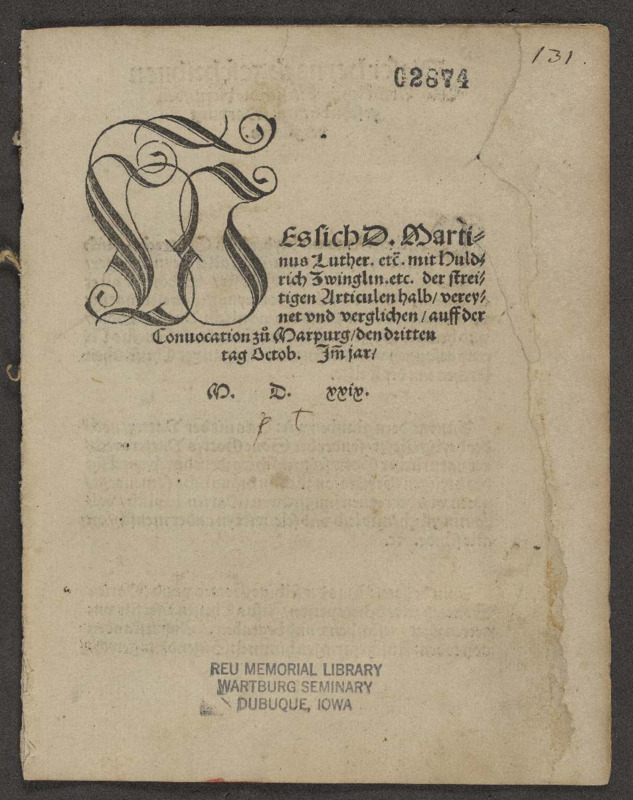
TextWes sich D. Martinus Luther. etc. mit Huldrich Zwinglin. etc. der streitigen Articulen halb, vereynet vnd verglichen auff der Conuocation zu[o] Marpurg, den dritten Tag Octob. Im Jar, M. D. xxix
Colloquy of Marburg (1529)Summary: The Colloquy of Marburg was a meeting arranged at the initiative of Philip of Hessen in an attempt to forge religious unity in Germany and mediate theological differences between Lutherans and Zwinglians. Besides Luther and Zwingli, the meeting was also attended by Johannes Agricola, Johannes Brenz, Martin Bucer, Caspar Hedio, Justus Jonas, Philipp Melanchthon, Johannes Oecolampadius, and Andreas Osiander.Summary: The Colloquy of Marburg was a meeting arranged at the initiative of Philip of Hessen in an attempt to forge religious unity in Germany and mediate theological differences between Lutherans and Zwinglians. Besides Luther and Zwingli, the meeting was also attended by Johannes Agricola, Johannes Brenz, Martin Bucer, Caspar Hedio, Justus Jonas, Philipp Melanchthon, Johannes Oecolampadius, and Andreas Osiander. -
 Text
TextWid' die unselige Auffrure Merten Luders von Wolffgango Wulffer un[d] andern Christgleubige[n] euch zw Wittenberg tzugeschribenn.
Wulffer, Wolfgang, -1538Summary: First printing of a rare pamphlet directed against Martin Luther. Wulffer calls Luther a false prophet and claims that his teachings contain no love, but only self-aggrandizement.Summary: First printing of a rare pamphlet directed against Martin Luther. Wulffer calls Luther a false prophet and claims that his teachings contain no love, but only self-aggrandizement. -
 Text
TextWidder Luthers trostung ann die Christen zu Hall : vber er Georgen yhres Predigers todt, szo viel die entpfahung des hochwirdigen Sacraments belangt
Alveldt, Augustin von, active 16th centurySummary: Luther's Consolation to the Protestants of Halle, published in 1527, provoked this reply from Agustin von Alveld, garuden of the Franciscan Monastery in Halle from 1524-29. Alveld condemns Luther's tract as "Hussisch," in particular with respect to his teachings on the sacrament. Alveld dedicated the work to Albert of Brandenburg, Archbishop of Mainz.Summary: Luther's Consolation to the Protestants of Halle, published in 1527, provoked this reply from Agustin von Alveld, garuden of the Franciscan Monastery in Halle from 1524-29. Alveld condemns Luther's tract as "Hussisch," in particular with respect to his teachings on the sacrament. Alveld dedicated the work to Albert of Brandenburg, Archbishop of Mainz. -
 Text
TextWyder den Wittenbergischen Abtgot Martin Luther
Alveldt, Augustin von, active 16th centurySummary: The Franciscan Augustine of Alveldt wrote this polemical tract in response to Luther's pamphlet "Widder den newen Abgott und alten Teuffel" which criticized the recent canonization of Bishop Benno of Mainz.Summary: The Franciscan Augustine of Alveldt wrote this polemical tract in response to Luther's pamphlet "Widder den newen Abgott und alten Teuffel" which criticized the recent canonization of Bishop Benno of Mainz. -
 Text
TextZwey keiserliche vneynige vn[d] widerwertige gepot den Luther betreffendt.
Holy Roman Empire. Emperor (1519-1556 : Charles V)Summary: The diet of Nuremberg in 1524 reaffirmed the imperial ban of Luther's person expressed in the edict of Worms, but not the condemnation of his teachings, which were to be addressed at the diet of Speyer. Luther issued both the edict of Worms and the resolutions of the diet of Nuremberg along with his own foreward and comments, in which he calls the emperor a "mad, irrational, senseless, raving and insane fool".Summary: The diet of Nuremberg in 1524 reaffirmed the imperial ban of Luther's person expressed in the edict of Worms, but not the condemnation of his teachings, which were to be addressed at the diet of Speyer. Luther issued both the edict of Worms and the resolutions of the diet of Nuremberg along with his own foreward and comments, in which he calls the emperor a "mad, irrational, senseless, raving and insane fool".