Search
164 resources
164 items
Creator
Luther, Martin, 1483-1546
-
 Text
TextAcht Sermon. D. M. Luthers vo[n] im gepredigt zu[o] Wittemberg inn der Fasten : Darinn kurtzlich begryffen von den Messen, Bildtnussen bayderlay gestalt des Sacramennts von denn speysen vnd haimlichen beycht. c. Wittemberg. 1.5.23
Luther, Martin, 1483-1546Summary: One of six 1523 editions of a collection of sermons delivered by Luther in 1522, directed against A. Karlstadt.Summary: One of six 1523 editions of a collection of sermons delivered by Luther in 1522, directed against A. Karlstadt. -
 Text
TextAcht sermon
Luther, Martin, 1483-1546Summary: Second printing of the eight sermons Luther preached on his return from Wartburg Castle, March 9-16, 1522. They dealt with the mass, the Lord's Supper, images, fating, auricular confession, and other topics. These sermons allowed Luther to restore order in Wittenberg and put and end to the Tumults that had griped the city during his absence.Summary: Second printing of the eight sermons Luther preached on his return from Wartburg Castle, March 9-16, 1522. They dealt with the mass, the Lord's Supper, images, fating, auricular confession, and other topics. These sermons allowed Luther to restore order in Wittenberg and put and end to the Tumults that had griped the city during his absence. -
 Text
TextActa f. Martini Luther august. apud D. legatu[m] apostolicu[m] Augustae recognitum
Luther, Martin, 1483-1546Summary: In 1518 Luther was summoned to Rome. He appealed to Frederick, Elector of Saxony who was attending the imperial Diet in Augsburg. Frederick negotiated with the Papal Legate Cajetan who finally agreed to a hearing in Augsburg. Luther went there with an imperial escort and then returned safely to Wittenberg. This is Luther's report of what took place in Augsburg. It is the fifth printing of the "Acta Augustana."Summary: In 1518 Luther was summoned to Rome. He appealed to Frederick, Elector of Saxony who was attending the imperial Diet in Augsburg. Frederick negotiated with the Papal Legate Cajetan who finally agreed to a hearing in Augsburg. Luther went there with an imperial escort and then returned safely to Wittenberg. This is Luther's report of what took place in Augsburg. It is the fifth printing of the "Acta Augustana." -
 Text
TextAd Dialoguz [i.e. Dialogum] Syluestri Prieratis M[a]g[ist]ri Palatii de potestate Pape Respo[n]sio
Luther, Martin, 1483-1546Summary: When Luther received S. Mazzolini's Dialogue on the 95 Theses, he put it into print at once to show just how weak a piece Mazzolini had written. He followed it up with the present work which includes Mazzolini's text and Luther's reply to it. Even the Pope is said to have been embarrassed by Mazzolini's poor performance in this work. The Dominicans are reported to have bought up the first edition, presumably to prevent its further circulation.Summary: When Luther received S. Mazzolini's Dialogue on the 95 Theses, he put it into print at once to show just how weak a piece Mazzolini had written. He followed it up with the present work which includes Mazzolini's text and Luther's reply to it. Even the Pope is said to have been embarrassed by Mazzolini's poor performance in this work. The Dominicans are reported to have bought up the first edition, presumably to prevent its further circulation. -
 Text
TextAd Johannem Ecciu[m]
Luther, Martin, 1483-1546Summary: A unique printing of an answer by Luther to the attacks of one his earliest opponents, Johann Eck.Summary: A unique printing of an answer by Luther to the attacks of one his earliest opponents, Johann Eck. -
 Text
TextAd Serenissimu[m] Principem [et] D[omi]n[u]m Do. Carolum V. : Rho. Caes. Impe. Aug. Hispaniarum rc̄. Rege[m]. Archiducem Austrie rc̄
Luther, Martin, 1483-1546Summary: Fredrick the Wise asked Luther to write to Emperor Charles V after the publication of his Open letter to the Christian Nobility in order to express his loyalty. Spalatin convinced Luther to write this letter of submission and edited it for publication.Summary: Fredrick the Wise asked Luther to write to Emperor Charles V after the publication of his Open letter to the Christian Nobility in order to express his loyalty. Spalatin convinced Luther to write this letter of submission and edited it for publication. -
 Text
TextAd aegocerotem Emserianum
Luther, Martin, 1483-1546Summary: First edition of Luther's response to Hieronymus Emser's report of the Leipzig Disputation between Martin Luther, Andreas Bodenstein Karlstadt and Johann Eck. Emser, who had been initially sympathetic to Luther's position had accompanied Eck to Leipzig, where he broke with the reformer. In his report, he tried to associate Luther with the Bohemian reformer Jan Hus, who had been burnt at the stake during the Council of Constance in 1415.Summary: First edition of Luther's response to Hieronymus Emser's report of the Leipzig Disputation between Martin Luther, Andreas Bodenstein Karlstadt and Johann Eck. Emser, who had been initially sympathetic to Luther's position had accompanied Eck to Leipzig, where he broke with the reformer. In his report, he tried to associate Luther with the Bohemian reformer Jan Hus, who had been burnt at the stake during the Council of Constance in 1415. -
 Text
TextAin Christlicher Sendbryeff
Luther, Martin, 1483-1546Summary: This work is an anonymous translation to German from Latin of Luther's letter (Ad inlustrissimum principem Carolum Sabaudiae ducem Epistola) to Duke Charles III of Savoy, dated September 7, 1523.Summary: This work is an anonymous translation to German from Latin of Luther's letter (Ad inlustrissimum principem Carolum Sabaudiae ducem Epistola) to Duke Charles III of Savoy, dated September 7, 1523. -
 Text
TextAin Christlyche vnd vast Wolgegrünte beweysung von dem I[u]ngsten Tag : vnd von seinen zaiche[n] das er auch nit verr meer sein mag
Luther, Martin, 1483-1546Summary: First printing of an early Advent sermon by Luther, focusing on the signs of the impending end of the world.Summary: First printing of an early Advent sermon by Luther, focusing on the signs of the impending end of the world. -
 Text
TextAin Sermo[n] am fPingstmontag [sic] das Ewangelium Joan iij, Also hat Got die Welt lieb gehabt, [et]c.
Luther, Martin, 1483-1546Summary: Sermon preached June 9, 1522, on John III, 16, "For God so loved the world ..."Summary: Sermon preached June 9, 1522, on John III, 16, "For God so loved the world ..." -
 Text
TextAin Sermon
Luther, Martin, 1483-1546Summary: Sermon preached August 10, 1522, on Matthew 7:15-23 (Beware of False Prophets).Summary: Sermon preached August 10, 1522, on Matthew 7:15-23 (Beware of False Prophets). -
 Text
TextAin Sermon Secundum Matheum. [sic] : Sagt von den Phariseyern Vn[d] wie er sey mit seym Bruoder versyenen soll, Kurtzlich Geprediget. In got versamlet. De insignibus D. Saxonie 1522
Luther, Martin, 1483-1546Summary: Sermon preached July 27, 1522, on Matthew 5:20ff. (Unless your righteousness is greater than that of the Pharisees, etc,.).Summary: Sermon preached July 27, 1522, on Matthew 5:20ff. (Unless your righteousness is greater than that of the Pharisees, etc,.). -
 Text
TextAin Sermon uon der frucht vnd nutzbarkait des hayligen Sacraments
Luther, Martin, 1483-1546Summary: Sermon preached April 2, 1523 (Maundy Thursday), on the value and efficacy of the Holy Sacrament.Summary: Sermon preached April 2, 1523 (Maundy Thursday), on the value and efficacy of the Holy Sacrament. -
 Text
TextAin Sermon vo[n] den Hayltumb[e]n vn[d] Geziert mit Überfluss, Vo[n] hailig[e]n Creütz jn den Kirchen
Luther, Martin, 1483-1546Summary: Sermon by Martin Luther criticizing the adoration of the cross and supposed relics of the Passion.Summary: Sermon by Martin Luther criticizing the adoration of the cross and supposed relics of the Passion. -
 Text
TextAin Sermon von den Hayltumben vnnd gezierd mit vberfluss, Vom hailigen Creutz in den kirchen
Luther, Martin, 1483-1546Summary: A sermon by Luther admonishing the directing of one's attentions not to the wealth of the church and its relics, but to the needs of the poor.Summary: A sermon by Luther admonishing the directing of one's attentions not to the wealth of the church and its relics, but to the needs of the poor. -
 Text
TextAin Sermon von stercke vnnd zuo nemen des glaubens vn[d] der liebe : Aus der Epistel S. Pauli zun Eypesernn
Luther, Martin, 1483-1546Summary: Sixth of six printings to appear in 1525, the year of its initial printing, of this sermon by Luther on the strengthening of faith and love.Summary: Sixth of six printings to appear in 1525, the year of its initial printing, of this sermon by Luther on the strengthening of faith and love. -
 Text
TextAin lectio[n] wider die Rottengayster, vn[d] wie sich weltlich oberkayt halte[n] sol, : Auss der ersten epistel S. Pauli zuo Timotheo, an freytag nach Oculi
Luther, Martin, 1483-1546Summary: Sermon preached March 24th, 1525, on Timothy 1:18-2:29.Summary: Sermon preached March 24th, 1525, on Timothy 1:18-2:29. -
 Text
TextAin sermon vo[n] der Beraitung tzüm sterbe[n]
Luther, Martin, 1483-1546Summary: Early sermon of Luther's on preparing for death. One of twenty-two German printings to appear in six years.Summary: Early sermon of Luther's on preparing for death. One of twenty-two German printings to appear in six years. -
 Text
TextAliquot epistolae
Luther, Martin, 1483-1546Summary: M. Flacius Illyricus issued this edition of Luther's letters from Coburg Castle to the theologians at the Diet of Augsburg in an attempt to strengthen the Protestant resolve during the Interim. Intended for the widest possible distribution, both German and Latin versions were provided.Summary: M. Flacius Illyricus issued this edition of Luther's letters from Coburg Castle to the theologians at the Diet of Augsburg in an attempt to strengthen the Protestant resolve during the Interim. Intended for the widest possible distribution, both German and Latin versions were provided. -
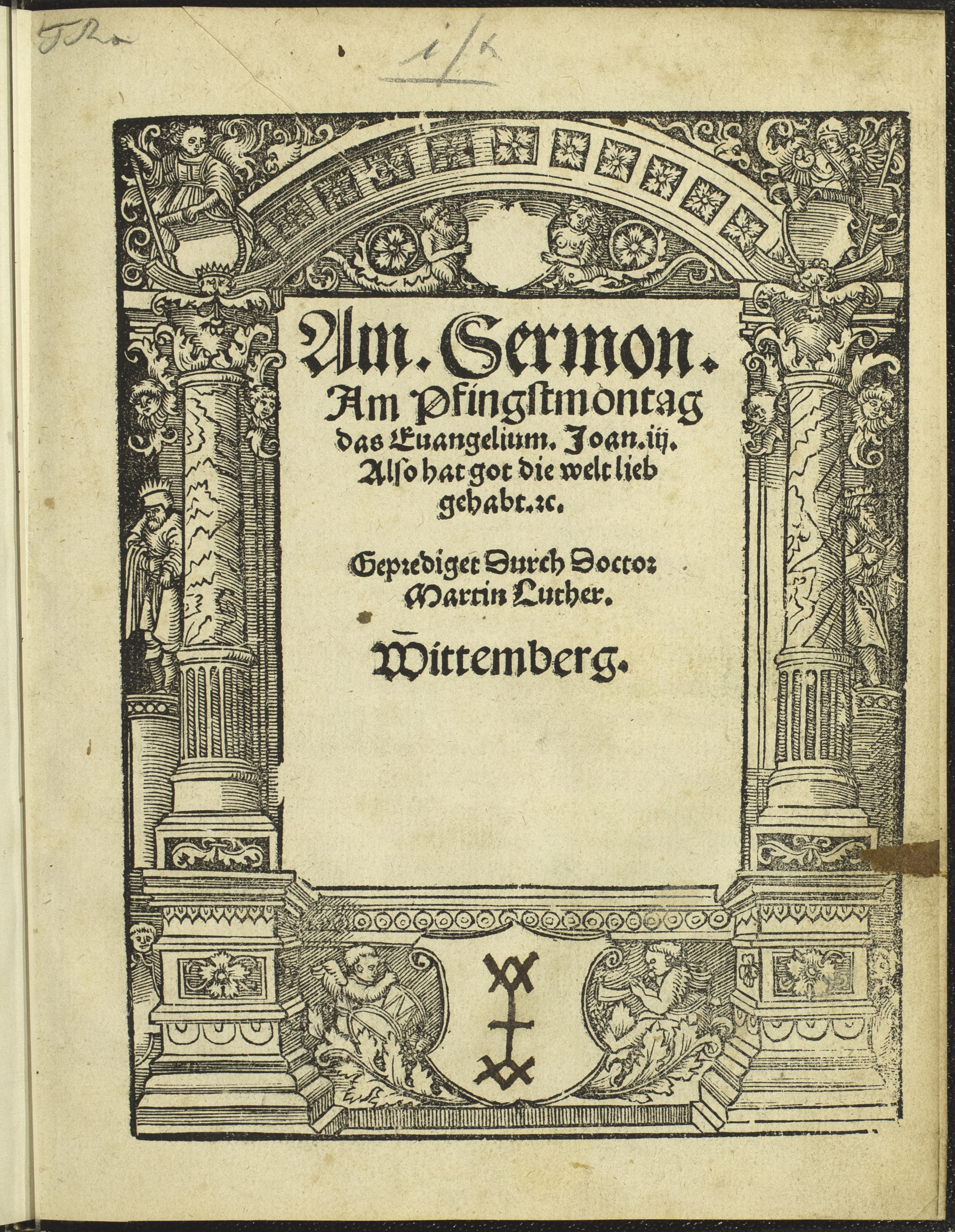 Text
TextAm. [sic] Sermon. Am Pfingstmontag das Evangelium. Joan. iij. : Also hat got die welt lieb gehabt. rc.
Luther, Martin, 1483-1546Summary: Sermon preached June 9, 1522, on John 3:16 (God So Loved The World).Summary: Sermon preached June 9, 1522, on John 3:16 (God So Loved The World). -
 Text
TextAm. [sic] Sermon. zü sant Mychael getho[n] zu Erffordt auff den tag der aylff Tausent junckfrauwen vom glauben vnd wercken
Luther, Martin, 1483-1546Summary: Sermon preached in Erfurt, October 21, 1522, on Matthew 25:1ff. (Wise and Foolish Virgins).Summary: Sermon preached in Erfurt, October 21, 1522, on Matthew 25:1ff. (Wise and Foolish Virgins). -
 Text
TextAn Kurfürsten zu Sachsen vnd Landgrauen zu Hessen
Luther, Martin, 1483-1546Summary: Addressed to Johann Friedrich of Saxony and Philipp of Hesse, relating to the imprisonment of Heinrich of Brunswick as a prisoner of war.Summary: Addressed to Johann Friedrich of Saxony and Philipp of Hesse, relating to the imprisonment of Heinrich of Brunswick as a prisoner of war. -
 Text
TextAn den Christlichen Adel deutscher Nation : von des Christlichen Standes Besserung
Luther, Martin, 1483-1546Summary: Fourth edition of the "Address to the Christian Nobility of the German Nation," one of Luther's most important pamphlets, in which he develops some of the central ideas of his theology, including the principle of universal priesthood. He also discusses the possibility of a German national church.Summary: Fourth edition of the "Address to the Christian Nobility of the German Nation," one of Luther's most important pamphlets, in which he develops some of the central ideas of his theology, including the principle of universal priesthood. He also discusses the possibility of a German national church. -
 Text
TextAn den Durchleüchtigen Hochgebornen Fürsten vnd Herren. Herrn Albrechten, Marggraffen zuo Brandenburg, in Preussen etc. Hertzogen etc.
Luther, Martin, 1483-1546Summary: After Albrecht, Duke of Prussia and last of the Masters of the Teutonic Knights, became a Protestant, he sought out preachers to fill the pulpits in his territory. Some were Lutherans, others were followers of Schwenckfeld. Luther here warns Albrecht about the heretical tendencies of the Schwenckfelders. Albrecht came increasingly under the influence of F. Von Heideck (a Schwenckfelder) and was not especially impressed by Luther's arguments against the use of John 6 in the interpretation of the Lord's Supper.Summary: After Albrecht, Duke of Prussia and last of the Masters of the Teutonic Knights, became a Protestant, he sought out preachers to fill the pulpits in his territory. Some were Lutherans, others were followers of Schwenckfeld. Luther here warns Albrecht about the heretical tendencies of the Schwenckfelders. Albrecht came increasingly under the influence of F. Von Heideck (a Schwenckfelder) and was not especially impressed by Luther's arguments against the use of John 6 in the interpretation of the Lord's Supper. -
 Text
TextAn den Durchleüchtigen Hochgepornen Fürsten vnd Herrn, Herrn Albrechten, Marggraffen zuo Brandenburg, inn Preussen [et]c. Hertzogen [et]c. Ein Sendbrief Doct. Mart. Luth. Wider ettliche Rottengeyster : Wittemberg, M.D.XXXII
Luther, Martin, 1483-1546Summary: Luther's reply to a letter from Duke Albrecht of Brandenburg, concerning the interpretation of John VI with reference to the Lord's Supper.Summary: Luther's reply to a letter from Duke Albrecht of Brandenburg, concerning the interpretation of John VI with reference to the Lord's Supper. -
 Text
TextAn die Herren deütschs Ordens : das sye falsche Keüscheit meyden, und zuor rechten eelichen Keuscheit greiffen, Ermanung
Luther, Martin, 1483-1546Summary: Sixth printing of a letter addressed to Albrecht von Brandenburg (later Albert, Duke of Prussia) the new General of the Teutonic Knights. In response to a question by the general, Luther applies his critique of monastic celibacy to military orders, stressing that it is pleasing to God to have families and to raise children.Summary: Sixth printing of a letter addressed to Albrecht von Brandenburg (later Albert, Duke of Prussia) the new General of the Teutonic Knights. In response to a question by the general, Luther applies his critique of monastic celibacy to military orders, stressing that it is pleasing to God to have families and to raise children. -
 Text
TextAn die Radherrn aller stedte deutsches lands : das sie Christliche schulen auffrichten vnd halten sollen
Luther, Martin, 1483-1546Summary: Radical reformers such as Karlstadt believed that education was unnecessary for faith. Luther argued against such a position, asking all cities to set up schools to teach correct doctrine. He also emphasized the need for teaching Latin and Greek as part of Christian education. This is the first printing of this important tract.Summary: Radical reformers such as Karlstadt believed that education was unnecessary for faith. Luther argued against such a position, asking all cities to set up schools to teach correct doctrine. He also emphasized the need for teaching Latin and Greek as part of Christian education. This is the first printing of this important tract. -
 Text
TextAn die Radtherren aller Stette teutsches lands : Das sy Christliche schuolen auffrichten vnd hallten sollen
Luther, Martin, 1483-1546Summary: This is the ninth printing of Luther's treatise addressed top the councilmen of Germany that they should promote the building of schools.Summary: This is the ninth printing of Luther's treatise addressed top the councilmen of Germany that they should promote the building of schools. -
 Text
TextAn die herren Deutschs Ordens, das sy falsche keuschhait meyden, : Vnd zuor rechten Eelichen Keuschhait greyffen, Ermanu[n]g
Luther, Martin, 1483-1546Summary: In 1523, Albert of Brandenburg-Ansbach, Grand Master of the Teutonic Knights formerly embraced Lutheranism and secularized the lands of the order in Prussia. Luther was named as his court preacher, and was one of Duke Albert's most trusted advisors. This is a letter to the members of the order, advising them to reject their vows of celibacy and marry.Summary: In 1523, Albert of Brandenburg-Ansbach, Grand Master of the Teutonic Knights formerly embraced Lutheranism and secularized the lands of the order in Prussia. Luther was named as his court preacher, and was one of Duke Albert's most trusted advisors. This is a letter to the members of the order, advising them to reject their vows of celibacy and marry. -
 Text
TextAuff das Vermeint Keiserlich Edict : Ausgangen jm 1531 jare nach dem Reichs tage des 1530 Jars. Glosa
Luther, Martin, 1483-1546Summary: In response to an ultimatum to the Lutheran princes and cities from Emperor Charles V to return to the pre-Reformation status quo within six months, Luther here issues some of his strongest polemic.Summary: In response to an ultimatum to the Lutheran princes and cities from Emperor Charles V to return to the pre-Reformation status quo within six months, Luther here issues some of his strongest polemic. -
 Text
TextAuslegu[n]g der Evangelienn, von Ostern biss auffs Advent
Luther, Martin, 1483-1546Summary: This is the summer Section of Luther's postils, as edited by S. Roth. Luther was not at all pleased with Roth's slip-shod editing. Roth took sermons from whatever sources were available, including from other people (notably Bugenhagen) when copies of Luther sermons could not be found. He also conflicted some sermons, condensed others, and rewrote several.Summary: This is the summer Section of Luther's postils, as edited by S. Roth. Luther was not at all pleased with Roth's slip-shod editing. Roth took sermons from whatever sources were available, including from other people (notably Bugenhagen) when copies of Luther sermons could not be found. He also conflicted some sermons, condensed others, and rewrote several. -
 Text
TextAuslegung der Episteln vnd Euangelien vom Advent an, bis auff Ostern
Luther, Martin, 1483-1546Summary: Luther certainly had his problems with printers, as this edition of his "Winter Postil" testifies. Michael Lotter issued this new edition without Luther's approval. The editors took great labors, but found no favor in Wittenberg, and this edition was never reprinted.Summary: Luther certainly had his problems with printers, as this edition of his "Winter Postil" testifies. Michael Lotter issued this new edition without Luther's approval. The editors took great labors, but found no favor in Wittenberg, and this edition was never reprinted. -
 Text
TextAuslegung der zehen Gebot aus dem xix. vnd xx. Capitel des andern Buchs Mosi
Luther, Martin, 1483-1546Summary: Second printing of a collection of sermons by Luther on Exodus 19-20, which includes the 10 commandments. The sermons were given between 1524 and 1527 and were first published in 1528.Summary: Second printing of a collection of sermons by Luther on Exodus 19-20, which includes the 10 commandments. The sermons were given between 1524 and 1527 and were first published in 1528. -
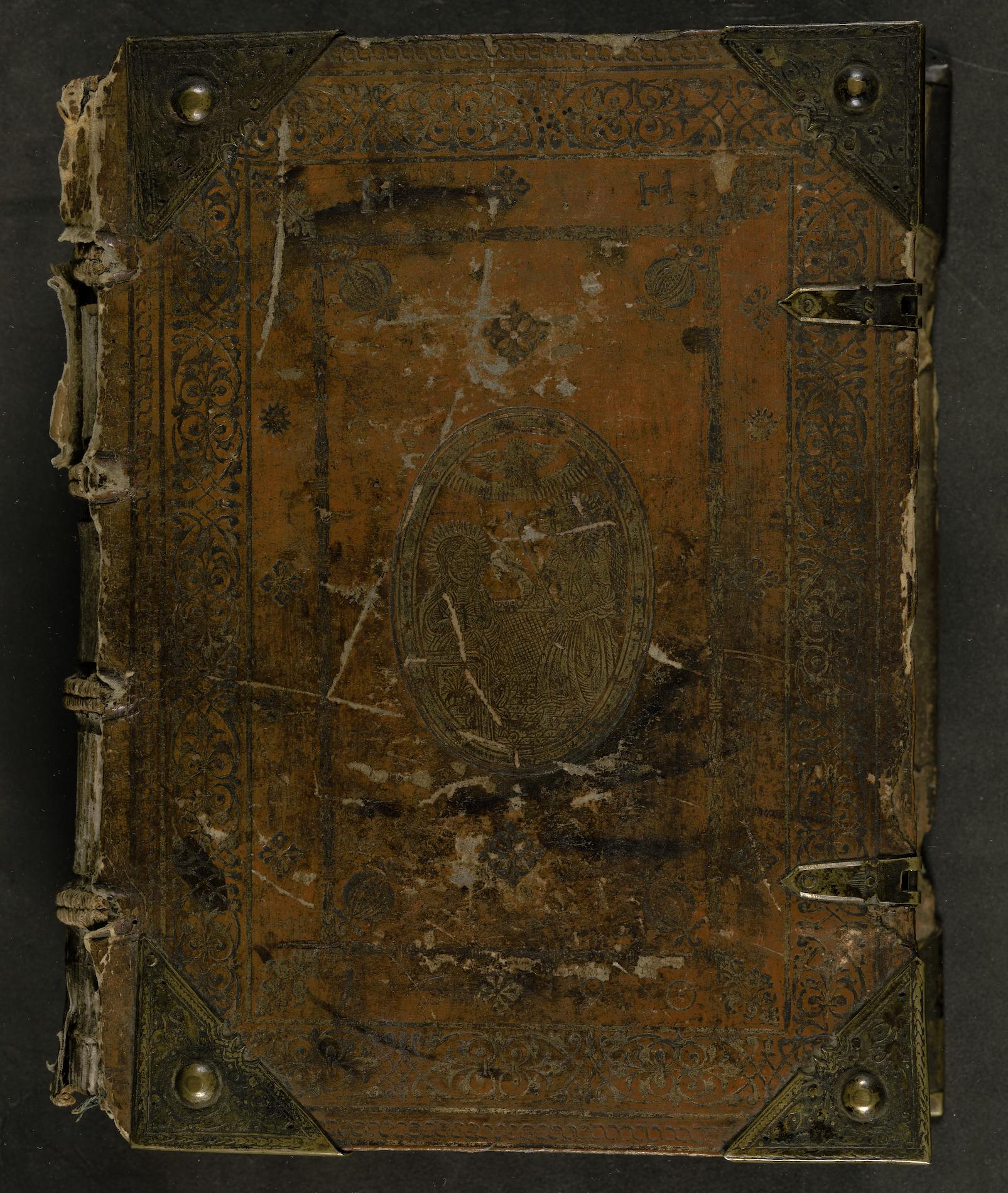 Text
TextAuslegunge der Episteln vn[d] Euangelien von der heyligen drey Königefest bis auff Ostern
Luther, Martin, 1483-1546Summary: This is the second printing of Luther's Lenten Postils separate from other sermon collections. Kohl of Regensburg had issued the first printing the previous year. Of interest is the large initial on page a3a.Summary: This is the second printing of Luther's Lenten Postils separate from other sermon collections. Kohl of Regensburg had issued the first printing the previous year. Of interest is the large initial on page a3a. -
 Text
TextAusslegung des hundert vnd neundte[n] psalme[n], Dixit d[omin]us domi[n]o meo
Luther, Martin, 1483-1546Summary: The third of three printings of an exposition of Psalm 109 by Luther to be issued in 1518, interpreting the Psalm of the Kingdom and Priesthood of Jesus Christ.Summary: The third of three printings of an exposition of Psalm 109 by Luther to be issued in 1518, interpreting the Psalm of the Kingdom and Priesthood of Jesus Christ. -
 Text
TextContra Henricum regem Angliae
Luther, Martin, 1483-1546Summary: This is the second and much expanded edition of Luther's reply to Henry VIII's Assertion of the Seven Sacraments. Luther replies quite moderately (for him) to what he feels to be the King's unwarranted assertions on the Catholic Sacraments. This is the second printing of this edition.Summary: This is the second and much expanded edition of Luther's reply to Henry VIII's Assertion of the Seven Sacraments. Luther replies quite moderately (for him) to what he feels to be the King's unwarranted assertions on the Catholic Sacraments. This is the second printing of this edition. -
![Summary: First edition of the second Latin translation of Luther's Large Catechism, published earlier the same year. This translation was done Vincentius Opsopäus (Vinzenz Heidecker). Issued with it is the first Latin edition of Johann Brenz's catechism, first published in German in 1528 under the title "Fragstuck des christlichen Glaube[n]s für die Jugend zu Schwebische[n] Hall]."](https://s3.us-west-2.amazonaws.com/omekacloud-main/large/P_300000218139/00000001.jpg) Text
TextD. Martini Lutheri theologi, catechismus, lećtu dignissimus, latinus faćtus per Vincentium Obsopoeum : Huic adiećti sunt alij quo[que] gemini Catechismi,Iohannis Brentij ecclesiastae Hallensis, eodem interprete
Luther, Martin, 1483-1546Summary: First edition of the second Latin translation of Luther's Large Catechism, published earlier the same year. This translation was done Vincentius Opsopäus (Vinzenz Heidecker). Issued with it is the first Latin edition of Johann Brenz's catechism, first published in German in 1528 under the title "Fragstuck des christlichen Glaube[n]s für die Jugend zu Schwebische[n] Hall]."Summary: First edition of the second Latin translation of Luther's Large Catechism, published earlier the same year. This translation was done Vincentius Opsopäus (Vinzenz Heidecker). Issued with it is the first Latin edition of Johann Brenz's catechism, first published in German in 1528 under the title "Fragstuck des christlichen Glaube[n]s für die Jugend zu Schwebische[n] Hall]." -
 Text
TextDas Eltern die kinder zuo der Ehe nicht zwinge[n] noch hindern, : Vnd die kinder on der elltern willen sich nicht verloben solle[n]
Luther, Martin, 1483-1546Summary: Parental consent was an issue during the Reformation. Catholic orthodoxy demanded parental consent of the bridal couple as it impacted property. Luther saw value in both sides, arguing that while parents ought not to be able to compel children to marry or prevent weddings, the children ought to seek their parents' consent.Summary: Parental consent was an issue during the Reformation. Catholic orthodoxy demanded parental consent of the bridal couple as it impacted property. Luther saw value in both sides, arguing that while parents ought not to be able to compel children to marry or prevent weddings, the children ought to seek their parents' consent. -
 Text
TextDas Euangelion am ersten Sontag der Dreyualtickeit
Luther, Martin, 1483-1546Summary: Sermon preached May 27, 1526, on John 3:1-16 (Nicodemus).Summary: Sermon preached May 27, 1526, on John 3:1-16 (Nicodemus). -
 Text
TextDas Euangelium vom fischfang Petri
Luther, Martin, 1483-1546Summary: Sermon preached July 20, 1522, on Luke 5:1-11 (Peter's large catch of fish).Summary: Sermon preached July 20, 1522, on Luke 5:1-11 (Peter's large catch of fish). -
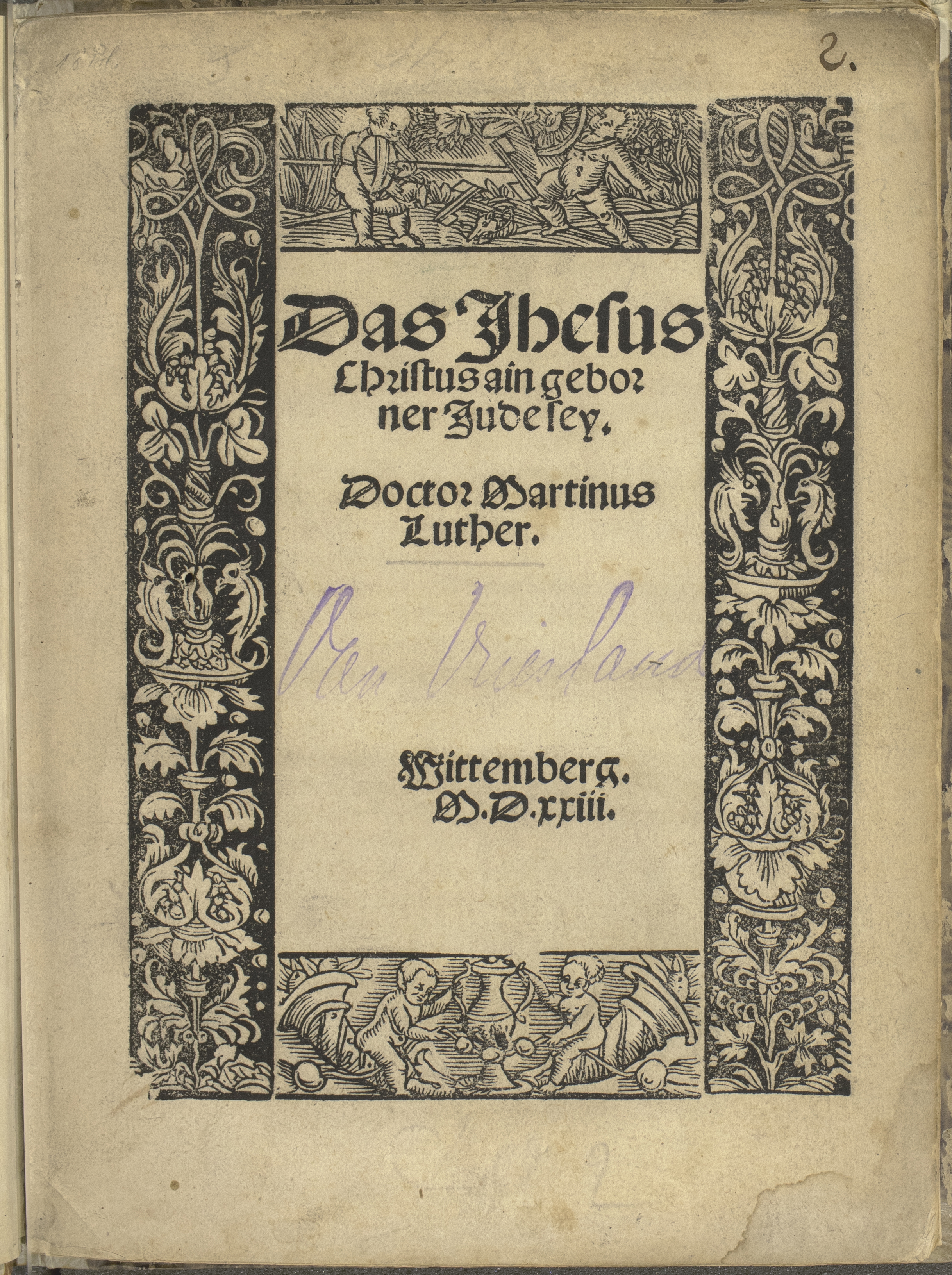 Text
TextDas Ihesus Christus ain geborner Iude sey
Luther, Martin, 1483-1546Summary: The sixth printing (of ten in 1523) of Luther's early treatise, "That Jesus Christ was born a Jew", in which he denies the charges made against him that he did not believe in the Virgin Birth, but rather that Jesus was a naturally born child of Joseph and Mary. In this tract, Luther confesses that he believes that Jesus was born a Jew of the Virgin Mary. He also hopes that his teaching will bring more Jews to convert to Christianity.Summary: The sixth printing (of ten in 1523) of Luther's early treatise, "That Jesus Christ was born a Jew", in which he denies the charges made against him that he did not believe in the Virgin Birth, but rather that Jesus was a naturally born child of Joseph and Mary. In this tract, Luther confesses that he believes that Jesus was born a Jew of the Virgin Mary. He also hopes that his teaching will bring more Jews to convert to Christianity. -
 Text
TextDas Ihesus Christus ain geborner Iude sey
Luther, Martin, 1483-1546Summary: The fifth printing of Luther's early treatise, "That Jesus Christ was born a Jew", in which he denies the charges made against him that he did not believe in the Virgin Birth, but rather that Jesus was a naturally born child of Joseph and Mary. In this tract, Luther confesses that he believes that Jesus was born a Jew of the Virgin Mary. He also hopes that his teaching will bring more Jews to convert to Christianity.Summary: The fifth printing of Luther's early treatise, "That Jesus Christ was born a Jew", in which he denies the charges made against him that he did not believe in the Virgin Birth, but rather that Jesus was a naturally born child of Joseph and Mary. In this tract, Luther confesses that he believes that Jesus was born a Jew of the Virgin Mary. He also hopes that his teaching will bring more Jews to convert to Christianity. -
 Text
TextDas Magnificat Vorteutschet vnd auszgelegt
Luther, Martin, 1483-1546Summary: Luther wrote this exposition of the Magnificent (Luke 1:46-55) in March 1521. He dedicated it to Duke Johann Frederich of Saxony as a token of his thanks to the Duke for his support and encouragement after Luther's condemnation by Pope Leo X. Text in German includes Luther's German translation of the Magnificat from the N.T. Greek of St. Luke's Gospel.Summary: Luther wrote this exposition of the Magnificent (Luke 1:46-55) in March 1521. He dedicated it to Duke Johann Frederich of Saxony as a token of his thanks to the Duke for his support and encouragement after Luther's condemnation by Pope Leo X. Text in German includes Luther's German translation of the Magnificat from the N.T. Greek of St. Luke's Gospel. -
 Text
TextDas Tauff Buchlin
Luther, Martin, 1483-1546Summary: Luther's German translation of the Wittenberg usage of the Catholic rite of Baptism (Ordo baptizandi). The work was reprinted fifteen times between 1523 and 1526, when Luther issued a revised edition.Summary: Luther's German translation of the Wittenberg usage of the Catholic rite of Baptism (Ordo baptizandi). The work was reprinted fifteen times between 1523 and 1526, when Luther issued a revised edition. -
 Text
TextDas ander teyl widder die hymlischen Propheten, vom Sacrament.
Luther, Martin, 1483-1546Summary: The Second printing of Luther's book, "Against the Heavenly Prophets addresses A. Karlstadt's doctrine of the Sacraments. This is the second printing of this work in its year of issue.Summary: The Second printing of Luther's book, "Against the Heavenly Prophets addresses A. Karlstadt's doctrine of the Sacraments. This is the second printing of this work in its year of issue. -
 Text
TextDas der frey will nichts sey : Anntwort D. Martini Luther ann Erasmum Rotherdam
Luther, Martin, 1483-1546Summary: German translation by Martin Luther's colleague, Justus Jonas, of "De servo arbitrio". "De servo arbitrio (Concerning the Enslaved Will)" is considered one of Luther's greatest literary productions, and among the most important writings of the Reformation. In it, he defends the idea of the complete inability of the human being to please God, apart from Divine grace.Summary: German translation by Martin Luther's colleague, Justus Jonas, of "De servo arbitrio". "De servo arbitrio (Concerning the Enslaved Will)" is considered one of Luther's greatest literary productions, and among the most important writings of the Reformation. In it, he defends the idea of the complete inability of the human being to please God, apart from Divine grace. -
 Text
TextDas schön Confitemini an der zal der CXVIII Psalm
Luther, Martin, 1483-1546Summary: Text in German includes Luther's German translation of Psalms CXVIII from the Hebrew O.T., and is Luther's expanded version of his earlier Latin work.Summary: Text in German includes Luther's German translation of Psalms CXVIII from the Hebrew O.T., and is Luther's expanded version of his earlier Latin work. -
 Text
TextDas schön Confitemini an der zal der cxviij. Psalm
Luther, Martin, 1483-1546Summary: This is the third printing of Luther's German translation of his notes on Psalm 118. An Earlier German translation version had been published by Wenzeslaus Linck. Luther's expanded edition, as reprinted here, differs from Linck's in that it uses Eobanus Hessus' verse translation of the psalm, prepared with Luther's advice, as the scriptural text. Text in German includes Luther's German translation of Psalms CXVIII from the Hebrew O.T., and is Luther's expanded version of his earlier Latin work.Summary: This is the third printing of Luther's German translation of his notes on Psalm 118. An Earlier German translation version had been published by Wenzeslaus Linck. Luther's expanded edition, as reprinted here, differs from Linck's in that it uses Eobanus Hessus' verse translation of the psalm, prepared with Luther's advice, as the scriptural text. Text in German includes Luther's German translation of Psalms CXVIII from the Hebrew O.T., and is Luther's expanded version of his earlier Latin work. -
 Text
TextDe servo arbitrio
Luther, Martin, 1483-1546Summary: An important treatise on human free will by Martin Luther, responding to Erasmus' work De libero arbitrio.Summary: An important treatise on human free will by Martin Luther, responding to Erasmus' work De libero arbitrio. -
 Text
TextDe servo arbitrio Martini Lutheri, ad Desiderium Erasmum Roterodamu[m]
Luther, Martin, 1483-1546Summary: "De servo arbitrio (Concerning the Enslaved Will)" is considered one of Martin Luther' greatest literary productions, and among the most important writings of the Reformation. In it, he defends the idea of the complete inability of the human being to please God, apart from Divine grace. His tract is a response to Desiderius Erasmus', "De libero arbitrio (Concerning Free Will)." Erasmus defends the view that salvation is by Divine grace, but wants to leave some room for a person's moral motivation.Summary: "De servo arbitrio (Concerning the Enslaved Will)" is considered one of Martin Luther' greatest literary productions, and among the most important writings of the Reformation. In it, he defends the idea of the complete inability of the human being to please God, apart from Divine grace. His tract is a response to Desiderius Erasmus', "De libero arbitrio (Concerning Free Will)." Erasmus defends the view that salvation is by Divine grace, but wants to leave some room for a person's moral motivation. -
 Text
TextDe votis monasticis
Luther, Martin, 1483-1546Summary: This is the third printing of Luther's treatise on monastic vows.Summary: This is the third printing of Luther's treatise on monastic vows. -
 Text
TextDecem praecepta Witte[n]berge[n]si praedicata populo
Luther, Martin, 1483-1546Summary: The sermons on which this commentary on the Ten Commandments is based were delivered in Wittenberg in 1516-1517. This is the first work of Luther's to be translated into a modern European language. This is the first printing of the work.Summary: The sermons on which this commentary on the Ten Commandments is based were delivered in Wittenberg in 1516-1517. This is the first work of Luther's to be translated into a modern European language. This is the first printing of the work. -
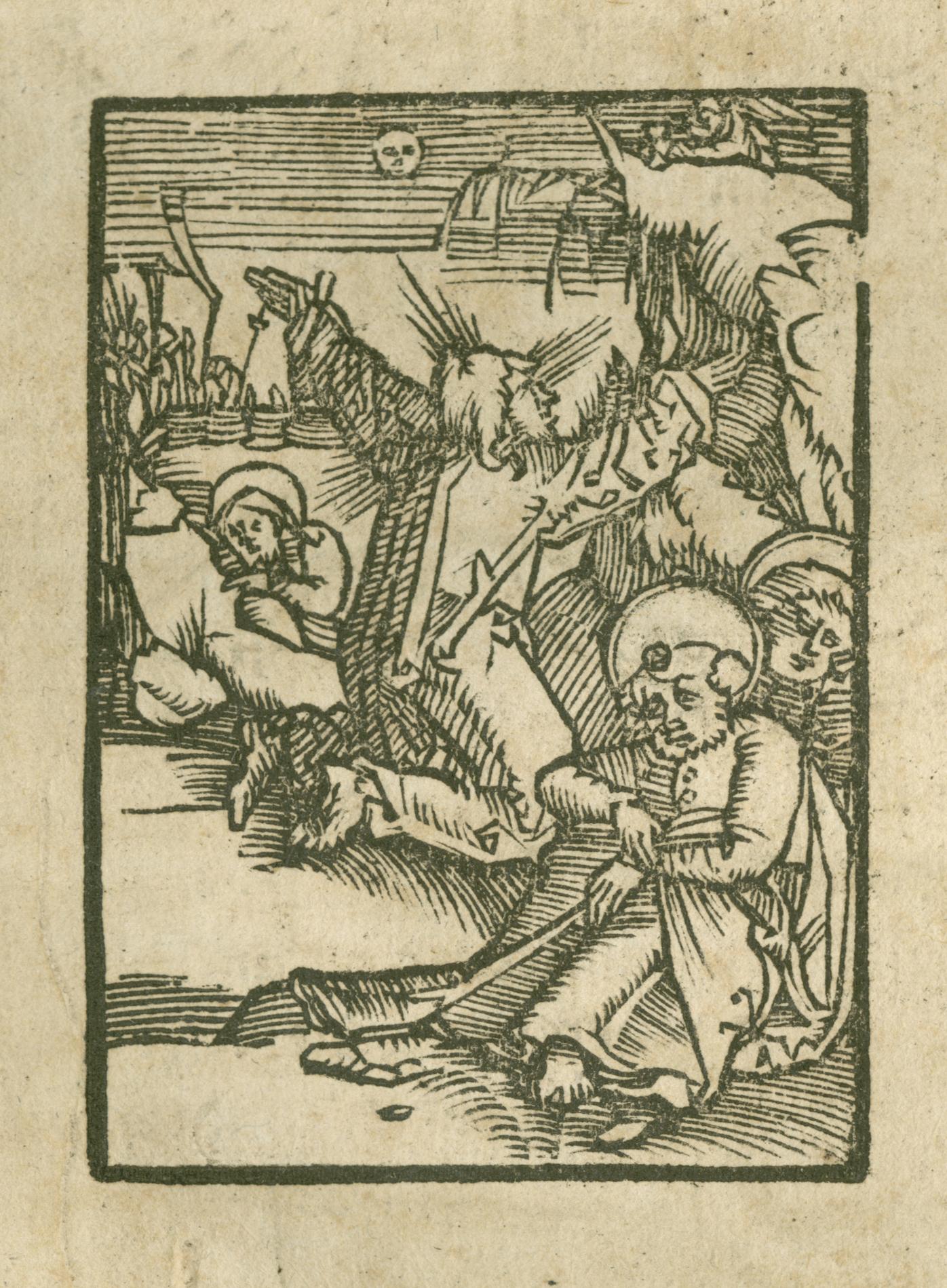 Text
TextDeclaration entiere des fondemens de la doctrine Chrestiene. faicte sur l'Epistre de S. Paul aux Galatie[n]s : en laquele est co[n]tenue vne vraye & parfaicte exposition de la iustification qui est par la foy en Iesus Christ.
Luther, Martin, 1483-1546Summary: Rare first French printing of Luther's lectures on Galatians.Summary: Rare first French printing of Luther's lectures on Galatians. -
 Text
TextDer .x. gebot ein nutzliche erklerung
Luther, Martin, 1483-1546Summary: Early book on the Ten Commandments and the Seven Deadly Sins by Martin Luther. Originally written in Latin, it is here translated into German by Sebastian Münster, a young Franciscan teacher/scholar, soon to become famous as one of the great Christian Hebraists of his time. This is the first printing of the German translation.Summary: Early book on the Ten Commandments and the Seven Deadly Sins by Martin Luther. Originally written in Latin, it is here translated into German by Sebastian Münster, a young Franciscan teacher/scholar, soon to become famous as one of the great Christian Hebraists of his time. This is the first printing of the German translation. -
 Text
TextDer CXLVII. Psalm Lauda Jerusalem
Luther, Martin, 1483-1546Summary: This is the second printing of Luther's exposition of Psalm 147. Text in German includes M. Luther's German translation of Psalms CXLVII from the Hebrew O.T.Summary: This is the second printing of Luther's exposition of Psalm 147. Text in German includes M. Luther's German translation of Psalms CXLVII from the Hebrew O.T. -
 Text
TextDer Zehen Gebot ein nützliche Erklärung
Luther, Martin, 1483-1546This is a 1523 printing of Martin Luther's popular sermon on the Ten Commandments and the Seven Deadly Sins, first printed in 1520 and reprinted numerous times. The work was originally composed in Latin and was translated into German by the cartographer and Christian Hebraist Sebastian Münster.This is a 1523 printing of Martin Luther's popular sermon on the Ten Commandments and the Seven Deadly Sins, first printed in 1520 and reprinted numerous times. The work was originally composed in Latin and was translated into German by the cartographer and Christian Hebraist Sebastian Münster. -
 Text
TextDer hundert vn[d] siben vn[d] zwaintzigest Psalm ausgelegt, an die Christen zu Rigen in Liffland
Luther, Martin, 1483-1546Summary: Luther's first attempts to communicate with the Protestants at Riga were unsuccessful. Later, communications were established, and this commentary on Psalm 127 was the result of their request for something edifying. This is the seventh printing of the work.Summary: Luther's first attempts to communicate with the Protestants at Riga were unsuccessful. Later, communications were established, and this commentary on Psalm 127 was the result of their request for something edifying. This is the seventh printing of the work. -
 Text
TextDer hundert vnd eylffte Psalm aussgelegt
Luther, Martin, 1483-1546Summary: 1531 printing of Luther's commentary on Psalm 111, written 1530 while he was staying at Coburg Fortress during the time of the Diet of Augsburg.Summary: 1531 printing of Luther's commentary on Psalm 111, written 1530 while he was staying at Coburg Fortress during the time of the Diet of Augsburg. -
 Text
TextDer hundert vnnd siben vnd zwaintzigest Psalm, aussgelegt, an die Christen zuo Rigen in Liffland
Luther, Martin, 1483-1546Summary:Summary: -
 Text
TextDie Epistel S. Paul an die Galater
Luther, Martin, 1483-1546Summary: In August 1523, a second revision of Luther's 1519 Galatians commentary was issued by Luther himself. V. Heydnecker (who may have been V. Obsopaeus) prepared this German translation of the work. Text in German includes M. Luther's translation of St. Paul's Epistle to the Galatians from the Greek N.T. Text is translated from M. Luther's Latin work: In epistolam Sancti Pauli ad Galatas commentarius (1519) by V. Heydnecker, who some scholars believe was V. Obsopäus. Text is translation of the 2nd version of Luther's work.Summary: In August 1523, a second revision of Luther's 1519 Galatians commentary was issued by Luther himself. V. Heydnecker (who may have been V. Obsopaeus) prepared this German translation of the work. Text in German includes M. Luther's translation of St. Paul's Epistle to the Galatians from the Greek N.T. Text is translated from M. Luther's Latin work: In epistolam Sancti Pauli ad Galatas commentarius (1519) by V. Heydnecker, who some scholars believe was V. Obsopäus. Text is translation of the 2nd version of Luther's work. -
 Text
TextDie bekentnus Doctoris Martini Luthers auff den yetzigen Angesteltenn Reychstag zu Augspurg einzuolegen : in Siebenzehen Artickel verfasset
Luther, Martin, 1483-1546Summary: One of at least 11 printings produced in 1530 of the Schwabach Articles, 17 articles of faith composed by Luther 1529 in Schwabach. It became one of the foundational documents for the Augsburg Confession.Bound in modern dark green morocco, bordered, blind- and gilt-tooled, with inside dentelles, gold spine title, and gilt edges. Upper board scratched.Summary: One of at least 11 printings produced in 1530 of the Schwabach Articles, 17 articles of faith composed by Luther 1529 in Schwabach. It became one of the foundational documents for the Augsburg Confession.Bound in modern dark green morocco, bordered, blind- and gilt-tooled, with inside dentelles, gold spine title, and gilt edges. Upper board scratched. -
 Text
TextDie weyse der Mess, vn[d] geniessung des hochwirdigen Sacrame[n]ts, für die Christliche gemain verteütscht
Luther, Martin, 1483-1546Summary: First published in Latin in 1523, Luther defines in this tract the order of the Sunday worship service and the distribution of communion. This pamphlet is an important forerunner of Luther's "Deutsche Messe" (German Mass) published in 1526.Summary: First published in Latin in 1523, Luther defines in this tract the order of the Sunday worship service and the distribution of communion. This pamphlet is an important forerunner of Luther's "Deutsche Messe" (German Mass) published in 1526. -
 Text
TextDie weysse der Messz, : vnnd geniesung des Hochwirdigen Sacraments, für die Christliche Gemayn verteütscht
Luther, Martin, 1483-1546Summary: Luther wrote his "Formula of the Mass and Communion" in 1523 at the insistence of N. Hausmann, the preacher at the Marienkirche, in Zwickau. Hausmann then wanted a German version to be used in his church. P. Speratus supplied one, and an unnamed Nuremberg translator supplied another. This is that Nuremberg work's first printing.Summary: Luther wrote his "Formula of the Mass and Communion" in 1523 at the insistence of N. Hausmann, the preacher at the Marienkirche, in Zwickau. Hausmann then wanted a German version to be used in his church. P. Speratus supplied one, and an unnamed Nuremberg translator supplied another. This is that Nuremberg work's first printing. -
 Text
TextDisputaciones circulatim expediendae
Luther, Martin, 1483-1546Summary: This disputation centered around the question of whether the German princes could offer armed resistance to the Emperor, and whether they ought to support him in his war against the Turks. Luther came to believe that any support of the Emperor when he was acting in a religious capacity (in league with the pope) was wrong, because the pope was acting contrary to the Gospel. This is the first (and only) printing of this revised version of these theses. It contains 91 theses, whereas the first version (written before the Emperor and princes had come to terms) contained only 70 theses.Summary: This disputation centered around the question of whether the German princes could offer armed resistance to the Emperor, and whether they ought to support him in his war against the Turks. Luther came to believe that any support of the Emperor when he was acting in a religious capacity (in league with the pope) was wrong, because the pope was acting contrary to the Gospel. This is the first (and only) printing of this revised version of these theses. It contains 91 theses, whereas the first version (written before the Emperor and princes had come to terms) contained only 70 theses. -
 Text
TextDisputatio domini Johannis Eccij et P. Martini Luther in Studio Lipsiensi futura
Luther, Martin, 1483-1546Summary: This is Luther's first public attack on Johannes Eck. Included in this volume are Eck's letter of Dec. 24, 1518 in which he records his theological differences with Karlstadt, and Eck's own 12 theses with Luther's response.Summary: This is Luther's first public attack on Johannes Eck. Included in this volume are Eck's letter of Dec. 24, 1518 in which he records his theological differences with Karlstadt, and Eck's own 12 theses with Luther's response. -
 Text
TextDisputatio et excusatio
Luther, Martin, 1483-1546Summary: A response by Luther to the accusations leveled at him at the Leipzig Disputation by his opponent, Johann Eck.Summary: A response by Luther to the accusations leveled at him at the Leipzig Disputation by his opponent, Johann Eck. -
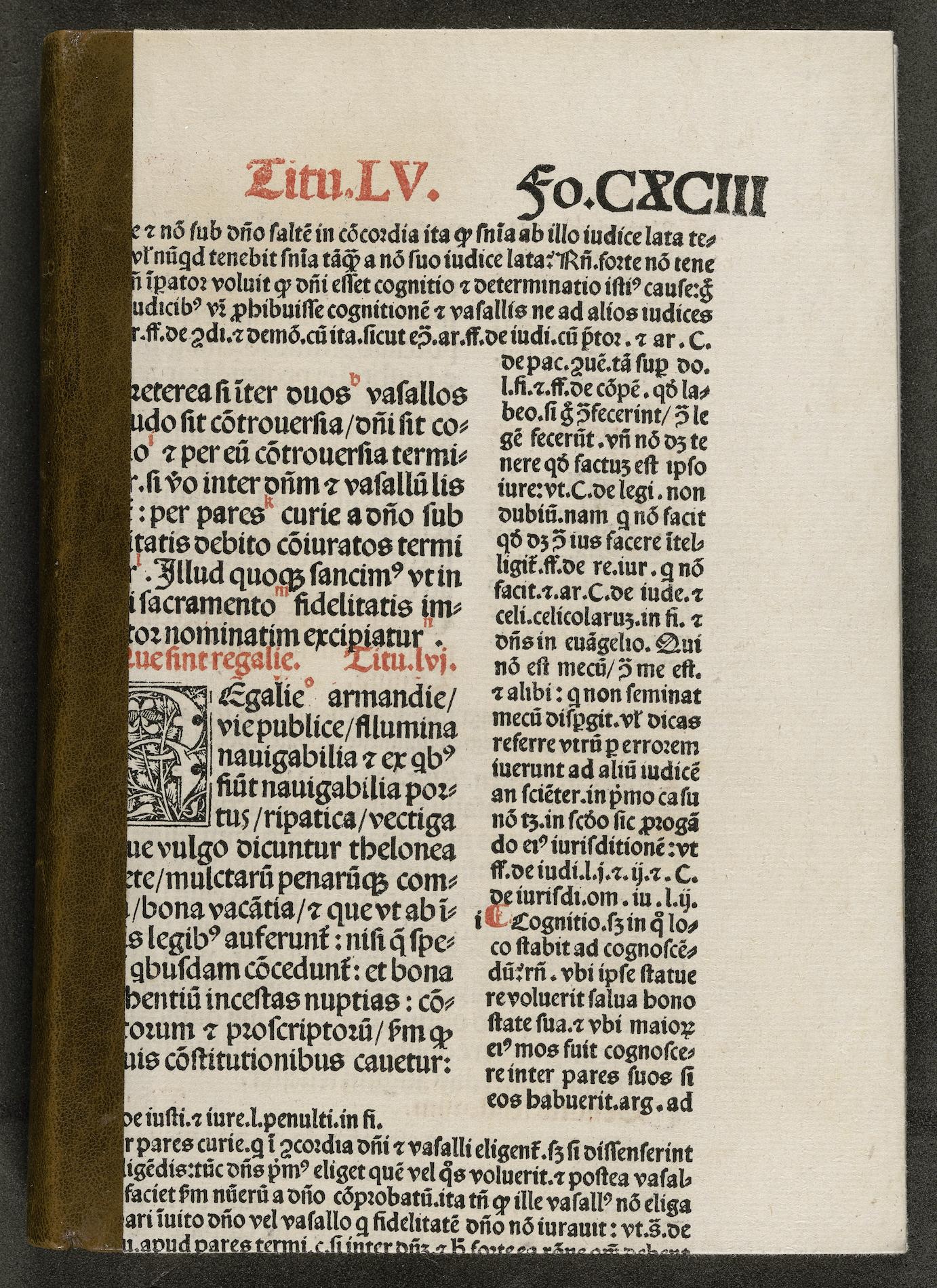 Text
TextDisputatio inter Egregios & praelatus virus ac doctores, Joannem Ecci[um] & Martinum Lutherum in p[rae]sentia notariorum habita
Luther, Martin, 1483-1546Summary: Unique printing of the original notarial protocol of the Leipzig Disputation between Andreas Karlstadt and Martin Luther on the one hand, and Johann Eck, on the other. Includes fully two thirds of the several day debate, and all of the famous "duel" between Luther and Eck on authority in the church. The debates were copied by two notaries, and, at the end of each day's sessions, were verified by two witnesses.Summary: Unique printing of the original notarial protocol of the Leipzig Disputation between Andreas Karlstadt and Martin Luther on the one hand, and Johann Eck, on the other. Includes fully two thirds of the several day debate, and all of the famous "duel" between Luther and Eck on authority in the church. The debates were copied by two notaries, and, at the end of each day's sessions, were verified by two witnesses. -
 Text
TextDoctor Martinus Luther Augustiners Vnterricht auff etlich Artickell die im vonn seynen Abgūrnern auff gelegt vn[d] zu gemessen werden
Luther, Martin, 1483-1546Summary: Luther was persuaded by Karl von Miltitz to write this public statement as a response to certain charges brought against him by his opponents, in particular Mazzolini da Prierio. In this tract, Luther still supports the invocation of the saints, an idea which he abandoned only shortly after.Summary: Luther was persuaded by Karl von Miltitz to write this public statement as a response to certain charges brought against him by his opponents, in particular Mazzolini da Prierio. In this tract, Luther still supports the invocation of the saints, an idea which he abandoned only shortly after. -
 Text
TextDoctor Martinus Luthers antwort auff die tzedel : szo vnter des Officials tzu Stolpen sigel ist ausgangen
Luther, Martin, 1483-1546Summary: The first of five printings in 1520 of an answer to an attack on Luther issued under the seal and authority of Albert, Archbishop of Mainz.Summary: The first of five printings in 1520 of an answer to an attack on Luther issued under the seal and authority of Albert, Archbishop of Mainz. -
 Text
TextDoctor Martinus Lutthers [sic] verteutschte schrifft an das capitel zuo Witte[n]berg : Wie man die ceremonie[n] der kirchen bessern soll allen hohen vnnd Nydern Stifften ser dienstlich. Wittemberg. M.D.xxiiij.
Luther, Martin, 1483-1546Summary: Luther's letter to the provost, dean and canons of All Saints' Church in Wittenberg, written August 19, 1523, discussing the nature of the mass and his reasons for abolishing masses for the dead and for saints.Summary: Luther's letter to the provost, dean and canons of All Saints' Church in Wittenberg, written August 19, 1523, discussing the nature of the mass and his reasons for abolishing masses for the dead and for saints. -
 Text
TextDoctoris Martini Luther Appellation oder Berüffung an eyn christlich frey Conciliu[m] vo[n] dem Bapst Leo vnnd seynem vnrechtm Freuel vorneweret vnd repetiret
Luther, Martin, 1483-1546Summary: Despite his lack of success in appealing to the Pope for an Ecumenical Council in 1518, Luther repeats his call in this pamphlet, combining it with a special appeal to the emperor and to the German princes. This is the first printing of this work, produced outside the city of Wittenberg.Summary: Despite his lack of success in appealing to the Pope for an Ecumenical Council in 1518, Luther repeats his call in this pamphlet, combining it with a special appeal to the emperor and to the German princes. This is the first printing of this work, produced outside the city of Wittenberg. -
 Text
TextDoctoris Martini Luthers kurtz schlussrede von den gelöbten vnd geistlichen leben der klöster
Luther, Martin, 1483-1546Summary: Luther's "Theses on Monasticisms" came about as a partial response to Melanchthon's essay in Loci Communes. Melanchthon revised this section of the Loci to take Luther's criticism into account. Luther's work was translated into German by at least three translators none of whom can be named with certainty.Summary: Luther's "Theses on Monasticisms" came about as a partial response to Melanchthon's essay in Loci Communes. Melanchthon revised this section of the Loci to take Luther's criticism into account. Luther's work was translated into German by at least three translators none of whom can be named with certainty. -
 Text
TextDrey schön Sermon
Luther, Martin, 1483-1546Summary: Three sermons preached June 10, July 13, 20, 1522, on texts John 10:1 (unlawful entry into sheepfold), Luke 6:36 (Be merciful as God is), and Luke 5:1-11 (Peter's large catch of fish).Summary: Three sermons preached June 10, July 13, 20, 1522, on texts John 10:1 (unlawful entry into sheepfold), Luke 6:36 (Be merciful as God is), and Luke 5:1-11 (Peter's large catch of fish). -
 Text
TextEin Christlicher trostbriff an die Milttenberger, : wie sie sich an ihren feinden rechen sollen, auss dem C. vn[d] xix. Psalm.
Luther, Martin, 1483-1546Summary: This is the sixth printing of Luther's letter of consolation to the citizens of Miltenburg. Text in German includes Luther's German translation of Psalms CXX from the Hebrew O.T.Summary: This is the sixth printing of Luther's letter of consolation to the citizens of Miltenburg. Text in German includes Luther's German translation of Psalms CXX from the Hebrew O.T. -
 Text
TextEin Predig vber die Epistel, so man liset von den heiligen Engeln. Apoc. xij. Wittenberg. M.D.Xliiij
Luther, Martin, 1483-1546Summary: Sermon preached September 21, 1544, on text: Revelation XII, 7-12 (St Michael Archangel).Summary: Sermon preached September 21, 1544, on text: Revelation XII, 7-12 (St Michael Archangel). -
 Text
TextEin Predig von de[m] eelichen Stand
Luther, Martin, 1483-1546Summary: One of several printings of Luther's own revision of a sermon on the subject of marriage, printed without his approval earlier the same year.Summary: One of several printings of Luther's own revision of a sermon on the subject of marriage, printed without his approval earlier the same year. -
 Text
TextEin Sendbrieff von Dolmetschen vnd Fürbitte der Heiligen
Luther, Martin, 1483-1546Summary: One of seven 1530 printings of a tract by Luther on his method of translating the Bible. Included is a short discussion on the possibility of intercessory prayer by the saints. The work is prefaced by Wenzeslaus Linck.Summary: One of seven 1530 printings of a tract by Luther on his method of translating the Bible. Included is a short discussion on the possibility of intercessory prayer by the saints. The work is prefaced by Wenzeslaus Linck. -
 Text
TextEin Sermon Doctor Martini Luthers Augustiner zuo Wittemberg, gepredigt an der heyligen drey Künig Tag, nach' mittag, vonn dem reych Christi vn[d] Herodis
Luther, Martin, 1483-1546Summary: Third printing of a sermon by Martin Luther contrasting the respective powers of Christ and Herod, whereby the latter is associated with papal authority.Summary: Third printing of a sermon by Martin Luther contrasting the respective powers of Christ and Herod, whereby the latter is associated with papal authority. -
 Text
TextEin Sermon geprediget tzu Leipssgk [sic] vffm Schloss am tag Petri vn[d] Pauli im xviiij. Jar
Luther, Martin, 1483-1546Summary: This is the first printing of Luther's sermon preached June 29th, 1519, at the Leipzig Disputation, on text: Matthew 16: 13-19 (Peter's Great Confession, and the presentation of the Keys). The woodcut on the title page is the earliest known portrait of Luther.Summary: This is the first printing of Luther's sermon preached June 29th, 1519, at the Leipzig Disputation, on text: Matthew 16: 13-19 (Peter's Great Confession, and the presentation of the Keys). The woodcut on the title page is the earliest known portrait of Luther. -
 Text
TextEin Sermon geprediget tzu Leipssgk vffm Schloss am tag Petri vn[d] pauli ym .xviiij. Jar
Luther, Martin, 1483-1546Summary: Sermon preached June 29, 1519, on text: Matthew XVI, 13-19.Summary: Sermon preached June 29, 1519, on text: Matthew XVI, 13-19. -
 Text
TextEin Sermon oder Predig von dem ablasz vnd gnade
Luther, Martin, 1483-1546Summary: An early sermon by Luther on Indulgences and Grace. First appearing in 1518, this work went through fully fourteen printings in that year alone.Summary: An early sermon by Luther on Indulgences and Grace. First appearing in 1518, this work went through fully fourteen printings in that year alone. -
 Text
TextEin Sermon vnd eingang in das Erst buoch Mosi, das ist, in das buoch der Schöpfung, : darin grüntlich an zaygt wirt, der Artickel des glaube[n]s so wir sprechen, Ich glaub in got vater almechtigen, schöpffer himel vnd erdtrichs
Luther, Martin, 1483-1546Summary: This sermon on Genesis 1:1-5, was preached March 15, 1523. It is the first sermon that lasted until autumn, 1524. The entire series was not printed until 1527.Summary: This sermon on Genesis 1:1-5, was preached March 15, 1523. It is the first sermon that lasted until autumn, 1524. The entire series was not printed until 1527. -
 Text
TextEin Sermon vom Creutz vnd leiden : vnd wie man sich darein schicken sol
Luther, Martin, 1483-1546Summary: The first sermon Luther preached in the Coburg Castle on April 16, 1530. The theme is the Cross and Suffering.Summary: The first sermon Luther preached in the Coburg Castle on April 16, 1530. The theme is the Cross and Suffering. -
 Text
TextEin Sermonn
Luther, Martin, 1483-1546Summary: This is Luther's first sermon for Christmas Day. It was first preached in 1520 and is a simple explanation of the biblical account of the birth of Christ.Summary: This is Luther's first sermon for Christmas Day. It was first preached in 1520 and is a simple explanation of the biblical account of the birth of Christ. -
 Text
TextEin einfeltige Weise zu beten, für einen guten Freund
Luther, Martin, 1483-1546Summary: 1545 printing of a work by Luther on intercessory prayer, first published in 1535.Summary: 1545 printing of a work by Luther on intercessory prayer, first published in 1535. -
 Text
TextEin nützlich vnd fast tröstlich predig, oder vnderrichtung, : wie sich ein Christen mensch mit freüdenn bereyten sol zü sterbenn
Luther, Martin, 1483-1546Summary: Sermon prepared at the request of Spalatin for M. Schart on worthy preparation for death, but never preached.Summary: Sermon prepared at the request of Spalatin for M. Schart on worthy preparation for death, but never preached. -
 Text
TextEine Heer predigt wider den Turcken
Luther, Martin, 1483-1546Summary: This is the third printing, second state, of Luther's sermon against the Turks.Summary: This is the third printing, second state, of Luther's sermon against the Turks. -
 Text
TextEinweyhung eines newen Hauses zum Predigampt Göttlichs Worts erbawet, Im Churfůrstlichen Schloss zu Torgaw
Luther, Martin, 1483-1546Summary: Second edition of a sermon preached on October 5, 1544 on Luke 14 (Healing of the man with dropsy on the Sabbath day). The sermon was preached in Torgau at the dedication of a new chapel in the Elector's Castle and the text was edited by Caspar Creutziger.Summary: Second edition of a sermon preached on October 5, 1544 on Luke 14 (Healing of the man with dropsy on the Sabbath day). The sermon was preached in Torgau at the dedication of a new chapel in the Elector's Castle and the text was edited by Caspar Creutziger. -
 Text
TextEnchiridion : Der kleine Catechismus : Für die gemeine Pfarherr vnd Prediger
Luther, Martin, 1483-1546Summary: A 1565 printing of Luther's Small Catechism.Summary: A 1565 printing of Luther's Small Catechism. -
 Text
TextEnchiridion : Der kleine Catechismus für die gemeine Pfarherr vnd Prediger
Luther, Martin, 1483-1546Summary: Second illustrated edition of Valentin Babst's publication of Luther's small catechism.Summary: Second illustrated edition of Valentin Babst's publication of Luther's small catechism. -
 Text
TextEpistel odder vnterricht von den heyligen : an die kirch zu Erfurdt ynn gott verszamelt
Luther, Martin, 1483-1546Summary: First printing of an open letter by Luther to the church of Erfurt on the subject of prayers to the saints.Summary: First printing of an open letter by Luther to the church of Erfurt on the subject of prayers to the saints. -
 Text
TextEpistola D. Martini Luther ad Georgium Spalatinum &c. de disputatione sua : Eiusdem super Tredecim Proposit[i]o[n]ibus Lipsi[a]e disputatis resolutiones
Luther, Martin, 1483-1546Summary: The Leipzig disputation was a debate between Martin Luther and Andreas Karlstadt on the one hand and Johann Eck on the other. While Karlstadt and Eck found some grounds for agreement on the question of free will, Luther and Eck disagreed vehemently over the question of the pope's authority to establish new articles of faith. This work publishes a letter Luther wrote to his friend Georg Spalatin, as well as 13 theses by Luther refuting Eck's position on the primacy of the pope and the authority of councils.Summary: The Leipzig disputation was a debate between Martin Luther and Andreas Karlstadt on the one hand and Johann Eck on the other. While Karlstadt and Eck found some grounds for agreement on the question of free will, Luther and Eck disagreed vehemently over the question of the pope's authority to establish new articles of faith. This work publishes a letter Luther wrote to his friend Georg Spalatin, as well as 13 theses by Luther refuting Eck's position on the primacy of the pope and the authority of councils. -
 Text
TextErmanunge zum Fryde auff die zwölff Artickel der Bawrshafft in Schwaben
Luther, Martin, 1483-1546Summary: Martin Luther's response to the Twelve Arcticles, a list of demands issued by the leaders of the peasant's revolt to the Swabian League and often seen as the first list of human rights in Europe.Summary: Martin Luther's response to the Twelve Arcticles, a list of demands issued by the leaders of the peasant's revolt to the Swabian League and often seen as the first list of human rights in Europe. -
 Text
TextErmanunge zum fride auff die zwelff artickel der Bawerschafft yn Schwaben
Luther, Martin, 1483-1546Summary: When Luther wrote this reply to the Swabian peasant' "Twelve Articles and Institution of the Peasants, he was still in hopes that reason might prevail and that bloodshed might be avoided.Summary: When Luther wrote this reply to the Swabian peasant' "Twelve Articles and Institution of the Peasants, he was still in hopes that reason might prevail and that bloodshed might be avoided. -
 Text
TextEyn Brieff an die Fürsten zu Sachsen von dem auffrurischen Geyst
Luther, Martin, 1483-1546Summary: Fourth printing of an open letter by Martin Luther to the princes of Saxony, in which he calls on them to monitor the actions of Thomas Müntzer in order to prevent the outbreak of violence. When war did break out the following year, Luther was one of the harshest critics of the rebelling peasants.Summary: Fourth printing of an open letter by Martin Luther to the princes of Saxony, in which he calls on them to monitor the actions of Thomas Müntzer in order to prevent the outbreak of violence. When war did break out the following year, Luther was one of the harshest critics of the rebelling peasants. -
 Text
TextEyn Sendbrieff an den Bapst Leo den Czehenden
Luther, Martin, 1483-1546Summary: A letter by Luther to Pope Leo X. Leo had issued his famous bull 'Exsurge Domine' on June 15 1520, demanding that Luther recant his teachings of face excommunication. Luther responded with this letter in September, seeking to explain his position, calling for the church to reform, while emphasizing that his critiques have been directed against abuses within the church, not against the person or office of the pope.Summary: A letter by Luther to Pope Leo X. Leo had issued his famous bull 'Exsurge Domine' on June 15 1520, demanding that Luther recant his teachings of face excommunication. Luther responded with this letter in September, seeking to explain his position, calling for the church to reform, while emphasizing that his critiques have been directed against abuses within the church, not against the person or office of the pope. -
 Text
TextEyn Sendtbrieff vn[d] verantwortung etzlicher Artickel : an ein Christlilche gemain der Stat Essling
Luther, Martin, 1483-1546Summary: The Reformation in Esslingen was marked by a long series of conflicts and was not resolved until 1531. In this short letter Luther replies to the "Articles on Confession" proposed by J. Lonicer, pastor of Esslingen.Summary: The Reformation in Esslingen was marked by a long series of conflicts and was not resolved until 1531. In this short letter Luther replies to the "Articles on Confession" proposed by J. Lonicer, pastor of Esslingen. -
 Text
TextEyn Sermon auff das Euangelion von dem reychen Man vnd armen Lasaro. Luce am xvi.
Luther, Martin, 1483-1546Summary: This sermon preached June 22, 1522, on the parable of the rich man and Lazarus (Lk. 16:19-31) was initially published under the title of Sermon secundum Lucam am 16. This printing from the city of Erfurt represents a version of the sermon reworked by Luther in 1523.Summary: This sermon preached June 22, 1522, on the parable of the rich man and Lazarus (Lk. 16:19-31) was initially published under the title of Sermon secundum Lucam am 16. This printing from the city of Erfurt represents a version of the sermon reworked by Luther in 1523. -
 Text
TextEyn Sermon auff den vierden Sontag nach Ostern : Johannis 16
Luther, Martin, 1483-1546Summary: First edition of a sermon by Martin Luther on the judgment and righteousness of God. In the second part of the sermon Luther denies the judicial authority of the pope and councils.Summary: First edition of a sermon by Martin Luther on the judgment and righteousness of God. In the second part of the sermon Luther denies the judicial authority of the pope and councils. -
 Text
TextEyn Sermon auff den vierdten sontag nach Ostern Johannis .16
Luther, Martin, 1483-1546Summary: Sermon preached May 3, 1523, in the presence of Duke Bogislaus of Pomerania, on John 16:5-14.Summary: Sermon preached May 3, 1523, in the presence of Duke Bogislaus of Pomerania, on John 16:5-14. -
 Text
TextEyn Sermon von dem heyligen hochwirdigen Sacrame[n]t der Tauffe
Luther, Martin, 1483-1546Summary: Second Wittenberg (and first 1520) printing of a sermon by Luther on the Sacrament of Baptism.Summary: Second Wittenberg (and first 1520) printing of a sermon by Luther on the Sacrament of Baptism. -
 Text
TextEyn Sermon von dem hochwirdigen Sacrament des heyligen waren Leychnamss Christi : Vnd von den Bruderschafften
Luther, Martin, 1483-1546Summary: Second of eleven printings, and the second of two Wittenberg printings with t.p. in red and black, of a sermon by Luther on the Lord's Supper.Summary: Second of eleven printings, and the second of two Wittenberg printings with t.p. in red and black, of a sermon by Luther on the Lord's Supper. -
 Text
TextEyn Sermon von dem sacrament der pusz
Luther, Martin, 1483-1546Summary: Fifth (and first outside Wittenberg) printing of an early sermon on the Sacrament of Penance by Luther.Summary: Fifth (and first outside Wittenberg) printing of an early sermon on the Sacrament of Penance by Luther. -
 Text
TextEyn Sermon von der Betrachtu[n]g des Heyligen Leydens Christi
Luther, Martin, 1483-1546Summary: Early Luther sermon on how a Christian ought to view the suffering and death of Christ. First printed in 1519, this is the fifth documented Wittenberg printing of the text.Summary: Early Luther sermon on how a Christian ought to view the suffering and death of Christ. First printed in 1519, this is the fifth documented Wittenberg printing of the text. -
 Text
TextEyn Sermon von stercke vnnd zuonemen des glaubens vnnd der liebe : Aus der Epistel S. Pauli zuon Eypesernn
Luther, Martin, 1483-1546Summary: Third of six printings to appear in 1525, the year of its initial printing, of this sermon by Luther on the strengthening of faith and love.Summary: Third of six printings to appear in 1525, the year of its initial printing, of this sermon by Luther on the strengthening of faith and love. -
 Text
TextEyn Widerruff vom Fegefeur
Luther, Martin, 1483-1546Summary: Refutation, by Luther, of the teaching of Purgatory.Summary: Refutation, by Luther, of the teaching of Purgatory. -
 Text
TextEyn Wyderrueff vom Fegfewr
Luther, Martin, 1483-1546Summary: One of several 1530 editions of a tract in which Luther rejects the Catholic doctrine of purgatory, a topic not addressed in the Augsburg Confessions.Summary: One of several 1530 editions of a tract in which Luther rejects the Catholic doctrine of purgatory, a topic not addressed in the Augsburg Confessions. -
 Text
TextEyn bett buchlin. : Der czehen gepot. Des glaubens. Des vater vnsers. Des Aue Marien. Etliche verdeutschte Psalmen. Die Epistell sanct Pauls tzu tito, eyn Christlich leben tzu vnterrichten
Luther, Martin, 1483-1546Summary: Text in German includes Luther's translations from Latin of several Psalms from the Hebrew O.T., and the Epistle to Titus from the Greek N.T.Summary: Text in German includes Luther's translations from Latin of several Psalms from the Hebrew O.T., and the Epistle to Titus from the Greek N.T. -
 Text
TextEyn brieff an die Fürsten zu Sachsen von dem auffrurischen geyst
Luther, Martin, 1483-1546Summary: Early sixteenth century Europe experienced a serious agrarian crisis, resulting in widespread discontent among the peasants. Luther often had to defend his views, as he does in a letter to the Saxon princes, against accusations that his writing influenced "the spirit of rebellion."Summary: Early sixteenth century Europe experienced a serious agrarian crisis, resulting in widespread discontent among the peasants. Luther often had to defend his views, as he does in a letter to the Saxon princes, against accusations that his writing influenced "the spirit of rebellion." -
 Text
TextEyn geschicht wie Got eyner Erbarn kloster Jungfrawe[n] ausgeholffen hat
Luther, Martin, 1483-1546Summary: First printing of F. von Oberweimar's narrative of her escape from the convent of New-Helfta. She came to Luther in Wittenberg in 1524, and he published her explanation of her actions.Summary: First printing of F. von Oberweimar's narrative of her escape from the convent of New-Helfta. She came to Luther in Wittenberg in 1524, and he published her explanation of her actions. -
 Text
TextEyn gutter Sermon
Luther, Martin, 1483-1546Summary: Sermon preached September 30, 1526, on Matthew 22:34-46 (Jesus in Temple during Passion Week).Summary: Sermon preached September 30, 1526, on Matthew 22:34-46 (Jesus in Temple during Passion Week). -
 Text
TextEyn kurcz form der czehen gepott
Luther, Martin, 1483-1546Summary: An early predecessor of Luther's Small Catechism, containing a simple explanation of the Ten Commandments, the Apostles' Creed, and the Lord's Prayer.Summary: An early predecessor of Luther's Small Catechism, containing a simple explanation of the Ten Commandments, the Apostles' Creed, and the Lord's Prayer. -
 Text
TextEyn kurtze vnterichtu[n]g, warauff Christus seine Kirchen, oder Gemain gebawet hab.
Luther, Martin, 1483-1546Summary: This pamphlet is a German translation of Luther's letter to Duke Albert of Prussia, written in December 1523, and intended to answer several theological questions concerning the foundation of the church and papal supremacy.Summary: This pamphlet is a German translation of Luther's letter to Duke Albert of Prussia, written in December 1523, and intended to answer several theological questions concerning the foundation of the church and papal supremacy. -
 Text
TextEyn sermon Doctoris Martini Lutthers, durch jn auss gangen, auff das Ewangelion Matthei am V. Es sey dan[n] das ewer Gerechtigkait [etc].
Luther, Martin, 1483-1546Summary: A sermon by Martin Luther on Matthew 5,20 "unless your righteousness exceeds that of the scribes and Pharisees, you will never enter the kingdom of heaven."Summary: A sermon by Martin Luther on Matthew 5,20 "unless your righteousness exceeds that of the scribes and Pharisees, you will never enter the kingdom of heaven." -
 Text
TextEyn sermon geprediget zu Leyptzigk auff dem Schloss am tag Petri vnnd Pauli im .xix. Jar
Luther, Martin, 1483-1546Summary: Sermon preached June 29, 1519, on text: Matthew XVI, 13-19.Summary: Sermon preached June 29, 1519, on text: Matthew XVI, 13-19. -
 Text
TextEyn trost brieff an die Christen zu Augspurg
Luther, Martin, 1483-1546Summary: A letter of comfort and encouragement written to a group of Augsburg citizens who had been punished for helping to celebrate the marriage of a former Catholic priest.Summary: A letter of comfort and encouragement written to a group of Augsburg citizens who had been punished for helping to celebrate the marriage of a former Catholic priest. -
 Text
TextGeistliche Lieder zu Wittemberg / Anno 1543
Luther, Martin, 1483-1546Summary: Joseph Klug printed the first collection of hymns that Luther prepared specifically for congregational use in Wittenberg in 1529. It followed the church year closely and was revised and reprinted several times. The renowned hymnal printed by Valentin Bapst (Geystlicher Lieder'; Leipzig, 1545) may be seen as a later edition of the Klug hymnal. (Robin Leaver, "Hymnals," in 'The Oxford Encyclopedia of the Reformation' (1996) 2:286-89.)Summary: Joseph Klug printed the first collection of hymns that Luther prepared specifically for congregational use in Wittenberg in 1529. It followed the church year closely and was revised and reprinted several times. The renowned hymnal printed by Valentin Bapst (Geystlicher Lieder'; Leipzig, 1545) may be seen as a later edition of the Klug hymnal. (Robin Leaver, "Hymnals," in 'The Oxford Encyclopedia of the Reformation' (1996) 2:286-89.) -
 Text
TextIn Epistolam Pauli ad Galatas, F. Martini Lutheri Augustiniani, commentarius ..
Luther, Martin, 1483-1546Summary: One of six 1519 printings of Luther's lectures on Paul's letter to the Galatians, first held in 1516. Galatians was Luther's favorite biblical book, which had a profound infulence on the formation of his theological thought and his understanding of law and grace.Summary: One of six 1519 printings of Luther's lectures on Paul's letter to the Galatians, first held in 1516. Galatians was Luther's favorite biblical book, which had a profound infulence on the formation of his theological thought and his understanding of law and grace. -
 Text
TextIudicium Martini Lutheri de votis : scriptum ad episcopos & diaconos Vuittembergen[sis] ecclesiae
Luther, Martin, 1483-1546Summary: First edition of a short tract written by Luther at Wartburg castle and addressed to the bishop and religious leaders in Wittenberg. In 139 brief statements, Luther warns that religious vows and monastic life do not by themselves bring about the forgiveness of sins.Summary: First edition of a short tract written by Luther at Wartburg castle and addressed to the bishop and religious leaders in Wittenberg. In 139 brief statements, Luther warns that religious vows and monastic life do not by themselves bring about the forgiveness of sins. -
 Text
TextLutheri, Melanch. Carolostadii &c. Propositiones, Wittembergae uiua uoce tractatae, in hocq[ue] pleraeq[ue] aeditae ab auctoribus, ut uel nos absentes cum ipsis agamus, uel certe ut ueritatis, et seductionum admonea[n]tur boni.
Luther, Martin, 1483-1546Summary: It was the practice at Wittenberg for the students to sharpen their logical and debating skills by responding to a set of theses proposed by the professor in the discipline in which they were working. These theses were often collected into book form for the use of the students and for the study of the topics by interested non-students. This group is from the early years of the Reformation, 1521-1522. Theses proposed in the Universität Wittenberg for the granting of doctoral degrees. In most cases the "respondents" are not indicated.Summary: It was the practice at Wittenberg for the students to sharpen their logical and debating skills by responding to a set of theses proposed by the professor in the discipline in which they were working. These theses were often collected into book form for the use of the students and for the study of the topics by interested non-students. This group is from the early years of the Reformation, 1521-1522. Theses proposed in the Universität Wittenberg for the granting of doctoral degrees. In most cases the "respondents" are not indicated. -
 Text
TextOb man fur dem Sterben fliehen muge
Luther, Martin, 1483-1546Summary: The Black Death ravaged Europe from the fourteenth century onward. Dr. Johann Hess, a pastor from Breslau, asked Luther in 1527 whether it was permissible for a person to flee from plague-infested areas. Luther replied that it was, and then added some public health advice for town and city government officials in plague-ravaged areas. He advocated fumigation of this, the seventh printing of the work.Summary: The Black Death ravaged Europe from the fourteenth century onward. Dr. Johann Hess, a pastor from Breslau, asked Luther in 1527 whether it was permissible for a person to flee from plague-infested areas. Luther replied that it was, and then added some public health advice for town and city government officials in plague-ravaged areas. He advocated fumigation of this, the seventh printing of the work. -
 Text
TextOb man fur dem sterben fliehen muge
Luther, Martin, 1483-1546Summary: The Black Death ravaged Europe from the fourteenth century onward. Dr. Johann Hess, a pastor from Breslau, asked Luther in 1527 whether it was permissible for a person to flee from plague-infested areas. Luther replied that it was, and then added some public health advice for town and city government officials in plague-ravaged areas.Summary: The Black Death ravaged Europe from the fourteenth century onward. Dr. Johann Hess, a pastor from Breslau, asked Luther in 1527 whether it was permissible for a person to flee from plague-infested areas. Luther replied that it was, and then added some public health advice for town and city government officials in plague-ravaged areas. -
 Text
TextOrdenung vn[d] bericht wie es furterhin (mit yenen so das hochwirdig Sacrament empfahen wolle[n]) gehalten soll werden
Luther, Martin, 1483-1546Summary: Early guidance by Luther on how a Christian ought to approach and receive the Lord's Supper. Includes the Words of Institution, the Aaronic Benediction, and a series of questions that ought to be put to everyone wishing to receive the Sacrament, with appropriate answers.Summary: Early guidance by Luther on how a Christian ought to approach and receive the Lord's Supper. Includes the Words of Institution, the Aaronic Benediction, and a series of questions that ought to be put to everyone wishing to receive the Sacrament, with appropriate answers. -
 Text
TextPrimvs tomvs enarrationum in Epistolas & Evangelia : ut vulgo vocant, lectiones illas, quæ in Missa sestis diebus ex historiis Evangelicis & scriptis Apostolicis solentre citari
Luther, Martin, 1483-1546Summary: Part one of Luther's collected sermons on the historical Epistles and Gospels of the Church year, as edited by Martin Bucer, the Reformer of Strasbourg. Bound with part two. Six volumes, in all, were issued, with the last appearing in 1527.Summary: Part one of Luther's collected sermons on the historical Epistles and Gospels of the Church year, as edited by Martin Bucer, the Reformer of Strasbourg. Bound with part two. Six volumes, in all, were issued, with the last appearing in 1527. -
 Text
TextResolutio Lutheriana super propositione sua tercia decima de potestate papae
Luther, Martin, 1483-1546Summary: This is the fifth printing of Luther's defense of his thirteenth proposition, on the power of the Pope, prepared for the Leipzig Disputation.Summary: This is the fifth printing of Luther's defense of his thirteenth proposition, on the power of the Pope, prepared for the Leipzig Disputation. -
 Text
TextResolutio lutheriana [sic] super propositione deci[m]a tertia: de potestate pape
Luther, Martin, 1483-1546Summary: One of the thorniest issues raised in the Leipzig Disputation was the historical precedence of papal authority. Eck argued that from earliest times, the authority of the bishop of Rome was accepted by the other bishops. Luther's thirteenth proposition argued that only much later did the church in Rome claim precedence over the other churches.Summary: One of the thorniest issues raised in the Leipzig Disputation was the historical precedence of papal authority. Eck argued that from earliest times, the authority of the bishop of Rome was accepted by the other bishops. Luther's thirteenth proposition argued that only much later did the church in Rome claim precedence over the other churches. -
 Text
TextResolutio[n]es disputationum
Luther, Martin, 1483-1546Summary: This is Luther's final authorized edition of his Ninety-five Theses in book form with his own commentaries. The edition published by Rhau-Grunemberg had been so full of errors, that Luther gave the printing of this edition to Melchior Lotter in Leipzig.Summary: This is Luther's final authorized edition of his Ninety-five Theses in book form with his own commentaries. The edition published by Rhau-Grunemberg had been so full of errors, that Luther gave the printing of this edition to Melchior Lotter in Leipzig. -
 Text
TextResolutiones Lutherianae super propositionibus suis Lipsiae disputatis
Luther, Martin, 1483-1546Summary: A clarification of Luther's position regarding the Leipzig disputation, a public debate between the Catholic Johann Eck on the one side and Luther and Andreas Karlstadt on the other. The work is preceded by a long letter to Spalatin, dated 15 Aug., 1519.Summary: A clarification of Luther's position regarding the Leipzig disputation, a public debate between the Catholic Johann Eck on the one side and Luther and Andreas Karlstadt on the other. The work is preceded by a long letter to Spalatin, dated 15 Aug., 1519. -
 Text
TextResolutiones Lutheriane super propositio[n]ibus suis Lipsie disputatis
Luther, Martin, 1483-1546Summary: An analysis by Luther of the propositions debated by him, his colleague, Andreas Karlstadt, and Johann Eck at the Leipzig Debate of 1519.Summary: An analysis by Luther of the propositions debated by him, his colleague, Andreas Karlstadt, and Johann Eck at the Leipzig Debate of 1519. -
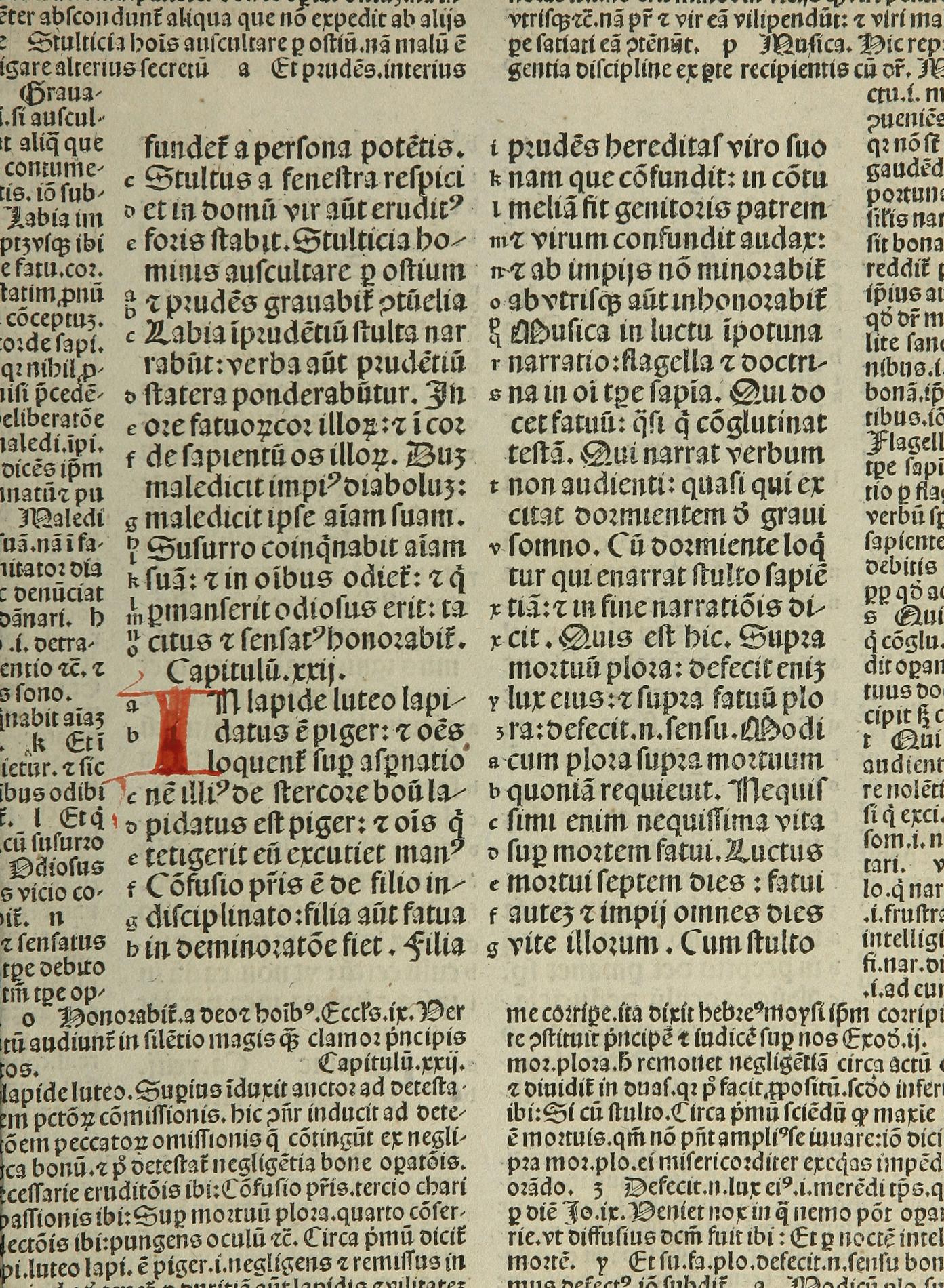 Text
TextSecundvs tomvs enarrationum in Epistolas & Evangelia : ut vulgo vocant, lectiones illas, quæ in Missa sestis diebus ex historiis Evangelicis & scriptis Apostolicis solent recitari
Luther, Martin, 1483-1546Summary: Part two of Luther's collected sermons on the historical Epistles and Gospels of the Church year. Bound with part one. Six volumes, in all, were issued, with the last appearing in 1527.Summary: Part two of Luther's collected sermons on the historical Epistles and Gospels of the Church year. Bound with part one. Six volumes, in all, were issued, with the last appearing in 1527. -
 Text
TextSermo de penitentia
Luther, Martin, 1483-1546Summary: This sermon on penance was written and preached before Easter, 1518. It is a natural sequel to the sermon on Indulgences and grace, although this sermon was preached first. This is the seventh printing of the sermon.Summary: This sermon on penance was written and preached before Easter, 1518. It is a natural sequel to the sermon on Indulgences and grace, although this sermon was preached first. This is the seventh printing of the sermon. -
 Text
TextSermon an dem xiii. [sic] Sontag nach Pfingsten
Luther, Martin, 1483-1546Summary: Sermon preached November 1, 1523, on Matthew 18:23-35 (the parable of the forgiven debtor who was unforgiving).Summary: Sermon preached November 1, 1523, on Matthew 18:23-35 (the parable of the forgiven debtor who was unforgiving). -
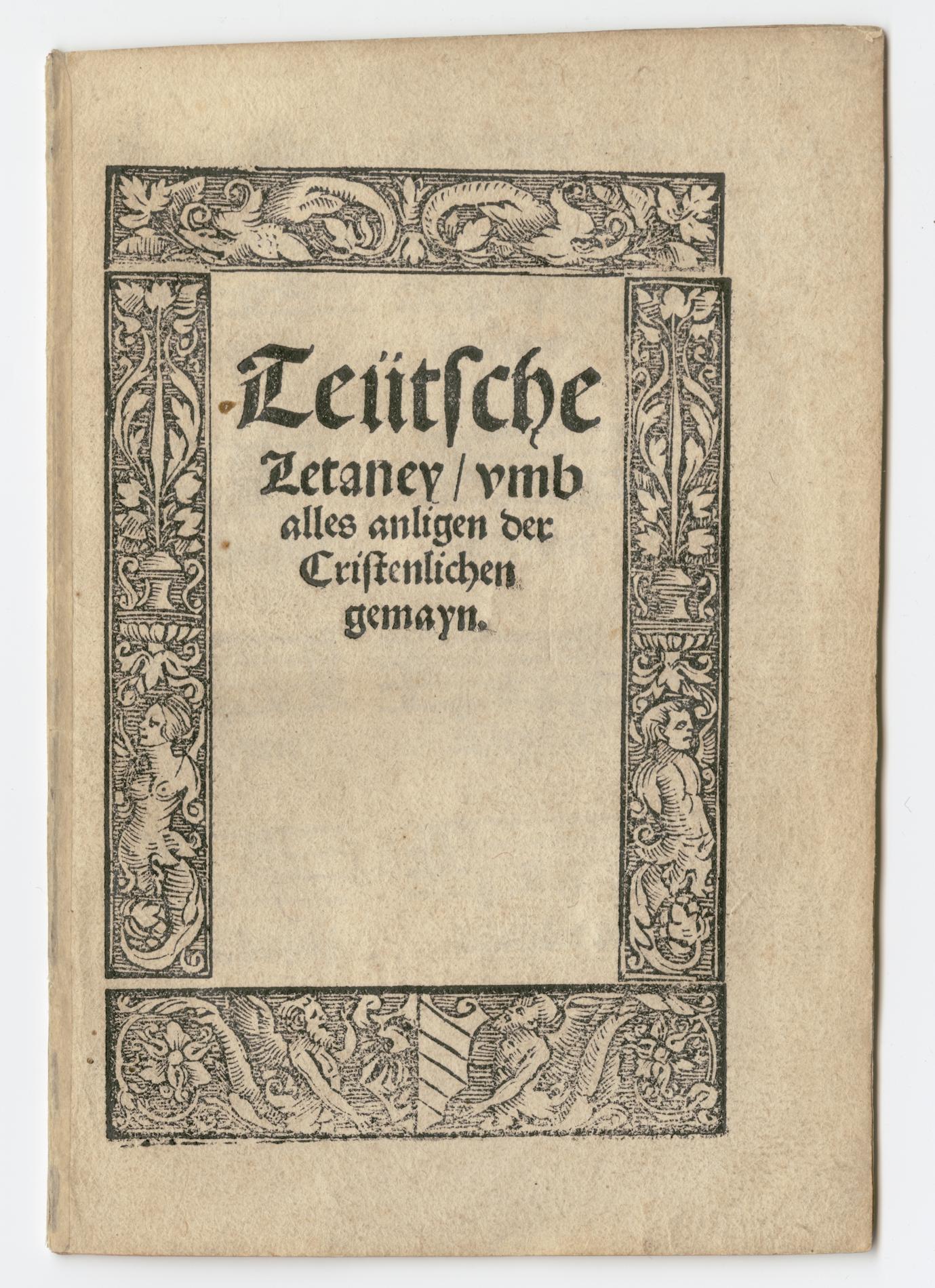 Text
TextTeütsche Letaney, vmb alles anligen der Cristenlichen gemayn
Luther, Martin, 1483-1546Summary: This is Luther's reinstatement of the Litany of "All Saints", containing both the musical notation and German text of the antiphons.Summary: This is Luther's reinstatement of the Litany of "All Saints", containing both the musical notation and German text of the antiphons. -
 Text
TextUom Missbrauch der Messen
Luther, Martin, 1483-1546Summary: Written in Latin in the fall of 1521 under the title De abroganda missa privata, this is the third printing of the first German edition of Martin Luther's important tract on the celebration of private masses. Luther opposed any celebration of the Eucharist that was not accessible to or provided for the congregation at large and felt so strongly about this material that he translated it into German himself.Summary: Written in Latin in the fall of 1521 under the title De abroganda missa privata, this is the third printing of the first German edition of Martin Luther's important tract on the celebration of private masses. Luther opposed any celebration of the Eucharist that was not accessible to or provided for the congregation at large and felt so strongly about this material that he translated it into German himself. -
 Text
TextUom eelichen Leben
Luther, Martin, 1483-1546Summary: This sermon on marriage is an elaboration of an earlier work no longer extant. In its present form there is no set Bible text, nor is the sermon designed for a particular place in the Church year.Summary: This sermon on marriage is an elaboration of an earlier work no longer extant. In its present form there is no set Bible text, nor is the sermon designed for a particular place in the Church year. -
 Text
TextUom eelichen Leben
Luther, Martin, 1483-1546Summary: This sermon on marriage is an elaboration of an earlier work no longer extant. In its present form there is no set Bible text, nor is the sermon designed for a particular place in the Church year.Summary: This sermon on marriage is an elaboration of an earlier work no longer extant. In its present form there is no set Bible text, nor is the sermon designed for a particular place in the Church year. -
 Text
TextUom miszbrauch der Messen
Luther, Martin, 1483-1546Summary: Luther always felt a special fondness for this work. Nearly two decades after writing it, he remembered it as being especially powerful. It elicited response from Catholic opponents five years hence. Luther felt so strongly about this material that he translated it into German himself. The abuse of the title refers to the masses sung by chantry priests for individuals. Luther opposed any celebration of the Eucharist that was not accessible to or provided for the congregation at large.Summary: Luther always felt a special fondness for this work. Nearly two decades after writing it, he remembered it as being especially powerful. It elicited response from Catholic opponents five years hence. Luther felt so strongly about this material that he translated it into German himself. The abuse of the title refers to the masses sung by chantry priests for individuals. Luther opposed any celebration of the Eucharist that was not accessible to or provided for the congregation at large. -
 Text
TextUon Anbeten des Sacraments des heyligen leychnams Christi
Luther, Martin, 1483-1546Summary: Second printing of Luther's response to a catechism of the Bohemian Brethren, with special attention to the Adoration of the Host, and to the Real Presence.Summary: Second printing of Luther's response to a catechism of the Bohemian Brethren, with special attention to the Adoration of the Host, and to the Real Presence. -
 Text
TextUon Menschen leeren zu meyden
Luther, Martin, 1483-1546Summary: First published earlier the same year, Luther's pamphlet Defense of the doctrines of men was one of Luther's most widely read writings with approximately twenty editions appearing in the years 1522 and 1523. Written in honor of Hans von Belepsch who had hosted Luther at the Wartburg as the reformer translated the New Testament. Luther argues that church teachings that have no basis in the Bible, in particular fasting and celibacy, are illegitimate and are to be avoided.Summary: First published earlier the same year, Luther's pamphlet Defense of the doctrines of men was one of Luther's most widely read writings with approximately twenty editions appearing in the years 1522 and 1523. Written in honor of Hans von Belepsch who had hosted Luther at the Wartburg as the reformer translated the New Testament. Luther argues that church teachings that have no basis in the Bible, in particular fasting and celibacy, are illegitimate and are to be avoided. -
 Text
TextUon Menschenn Lere zu meyden
Luther, Martin, 1483-1546Summary: A treatise by Luther on the relationship of belief and practice, intended for those "poor consciences, that lie captive to human laws in cloisters and monastic foundations", as he puts it in his preface. It is also noteworthy that Luther assumes his audience includes both those who could read his writings directly, and those who heard them read by others, when he dedicates his pamphlet "to all who read or hear this little book".Summary: A treatise by Luther on the relationship of belief and practice, intended for those "poor consciences, that lie captive to human laws in cloisters and monastic foundations", as he puts it in his preface. It is also noteworthy that Luther assumes his audience includes both those who could read his writings directly, and those who heard them read by others, when he dedicates his pamphlet "to all who read or hear this little book". -
 Text
TextUon beyder gestalt des Sacraments zu nehmen vnd ander newerung
Luther, Martin, 1483-1546Summary: After Luther published his "Eight Sermons" of 1522, he decided that there was needed a shorter, more concise statement of these sermons' arguments. This is the third printing of the resulting précis.Summary: After Luther published his "Eight Sermons" of 1522, he decided that there was needed a shorter, more concise statement of these sermons' arguments. This is the third printing of the resulting précis. -
 Text
TextUon denn geystlichen vnd kloster gelubden
Luther, Martin, 1483-1546Summary: One of three 1522 printings of an essay on monastic vows written by Luther during his stay at the Wartburg Castle after the Diet of Worms. It is addressed to monks, whose conscience is troubled by the conflict between their vows and their desire to leave the monastic life. Luther frequently referred to this piece throughout his career, and it became one of his most influential works.Summary: One of three 1522 printings of an essay on monastic vows written by Luther during his stay at the Wartburg Castle after the Diet of Worms. It is addressed to monks, whose conscience is troubled by the conflict between their vows and their desire to leave the monastic life. Luther frequently referred to this piece throughout his career, and it became one of his most influential works. -
 Text
TextUon der beycht ob die der Bapst macht hab zugepieten
Luther, Martin, 1483-1546Summary: This is Luther's tract on auricular confession. The sacrament of penance was the focus of Luther's most vehement criticisms. Not only was the sacrament the course of numerous abuses, indulgence selling among them, but attacks on the efficacy of priestly absolution called into question the sacramental authority of all priests, the pope included.Summary: This is Luther's tract on auricular confession. The sacrament of penance was the focus of Luther's most vehement criticisms. Not only was the sacrament the course of numerous abuses, indulgence selling among them, but attacks on the efficacy of priestly absolution called into question the sacramental authority of all priests, the pope included. -
-
 Text
TextUrsach vnd anttwortt das iungkfrawe[n] kloster gottlich v[er]lassen muge[n]
Luther, Martin, 1483-1546Summary: The catalyst for this famous Luther letter was the removal by stealth of nine nuns from the cloister of Nimbschen bei Grimma at Easter in the year 1523. Luther names the nine, which include a sister of Johann Staupitz, Luther's father confessor, and Katharina von Bora, who was to become Luther's wife.Summary: The catalyst for this famous Luther letter was the removal by stealth of nine nuns from the cloister of Nimbschen bei Grimma at Easter in the year 1523. Luther names the nine, which include a sister of Johann Staupitz, Luther's father confessor, and Katharina von Bora, who was to become Luther's wife. -
 Text
TextVermanung zum Sacrament des leybs vnd bluots vnsers Herren
Luther, Martin, 1483-1546Summary: Luther wrote this "Exhortation to the sacraments" during his stay at Coburg Castle in 1530, during the Diet of Augsburg.Summary: Luther wrote this "Exhortation to the sacraments" during his stay at Coburg Castle in 1530, during the Diet of Augsburg. -
 Text
TextVier trostliche Psalmen, an die Königin zu Hungern
Luther, Martin, 1483-1546Summary: An interpretation on 4 Consolation Psalms (Ps. 37, 62, 94, 109), written by Luther for Queen Mary of Hungary, sister of the Emperor Charles V, after the death of her husband Louis in the battle of Mohács.Summary: An interpretation on 4 Consolation Psalms (Ps. 37, 62, 94, 109), written by Luther for Queen Mary of Hungary, sister of the Emperor Charles V, after the death of her husband Louis in the battle of Mohács. -
 Text
TextVon Ehesachen
Luther, Martin, 1483-1546Summary: Second edition of the last of Luther's four tracts on marriage and married life. Luther addresses in particular the issue of secret or private engagements and their status in cases in which one of the parties enters into a public engagement.Summary: Second edition of the last of Luther's four tracts on marriage and married life. Luther addresses in particular the issue of secret or private engagements and their status in cases in which one of the parties enters into a public engagement. -
 Text
TextVon Mensche[n] Leren zu[o] meiden
Luther, Martin, 1483-1546Summary: Luther addresses the monastic rules of fasting, obedience and celibacy, arguing that they have no foundation in scripture and that a transgression of these rules is therefore no sin. At the same time, Luther warns that a transgression of monastic rules in itself is by no means a sign of faith or internalized piety.Summary: Luther addresses the monastic rules of fasting, obedience and celibacy, arguing that they have no foundation in scripture and that a transgression of these rules is therefore no sin. At the same time, Luther warns that a transgression of monastic rules in itself is by no means a sign of faith or internalized piety. -
 Text
TextVon beyder gestalt des Sacraments zü nem[m]en : vnd ander nüwerung
Luther, Martin, 1483-1546When Luther returned from Wartburg Castle, he preached a series of Eight Sermons in an attempt to restore order in Wittenberg. This tract epitomizes the contents of these sermons.When Luther returned from Wartburg Castle, he preached a series of Eight Sermons in an attempt to restore order in Wittenberg. This tract epitomizes the contents of these sermons. -
 Text
TextVon der Beycht, ob die der Bapst macht habe zuo gebieten
Luther, Martin, 1483-1546Summary: Second Basel printing of an early Luther treatise on Penance, together with a translation and exposition of Psalm 118.Summary: Second Basel printing of an early Luther treatise on Penance, together with a translation and exposition of Psalm 118. -
 Text
TextVon eynsetzung vnnd ordnung der diener der Kirchen, das ist der gemaine, : An den Ersamen vn[d] weysen Rathe der Stat Prage des Böhemishcen Landes: auss dem Lateyn in das Teütsch gebracht vnnd gezogen jm Jar 1524.
Luther, Martin, 1483-1546Summary: Translation into German by M. Reinhard of Luther's Latin work: "De instituendis ministris ecclesiae." The attribution of the translation to M. Reinhard is questioned.Summary: Translation into German by M. Reinhard of Luther's Latin work: "De instituendis ministris ecclesiae." The attribution of the translation to M. Reinhard is questioned. -
 Text
TextVonn dem grewel der stillmesse, so man den Canon nennet
Luther, Martin, 1483-1546Summary: Luther here offers his translation of the Canon of the Mass together with a brief treatise against the practice of private masses. Text in German includes Luther's German translation of the Canon from the Latin.Summary: Luther here offers his translation of the Canon of the Mass together with a brief treatise against the practice of private masses. Text in German includes Luther's German translation of the Canon from the Latin. -
 Text
TextVorclerung Doctoris Martini Luther etlicher Artickell : ynn seynem Sermon von dem heyligenn sacrament
Luther, Martin, 1483-1546Summary: Fuller explanation of Luther's 1519 sermon: Vom Sakrament des Leichnams Christi und von den Bruderschaften.Summary: Fuller explanation of Luther's 1519 sermon: Vom Sakrament des Leichnams Christi und von den Bruderschaften. -
 Text
TextVrsach vnd antwort. das Junckfrawen. Kloster.Götlich verlassen mügen.
Luther, Martin, 1483-1546Summary: Fifth printing of Luther's "Reason and Answer that Women may leave their Cloisters in a Godly manner".Summary: Fifth printing of Luther's "Reason and Answer that Women may leave their Cloisters in a Godly manner". -
 Text
TextVszlegung dütsch des Vatter vnser für die einfeltigen leyen
Luther, Martin, 1483-1546Summary: This exposition of the Lord's Prayer had its origins in a series of sermons preached by Luther during Lent, 1517. J. Agricola published his transcripts of these sermons. Luther was dissatisfied with Agricola's edition, however, and re-edited the work. This example is from the seventh printing of Luther's edition.Summary: This exposition of the Lord's Prayer had its origins in a series of sermons preached by Luther during Lent, 1517. J. Agricola published his transcripts of these sermons. Luther was dissatisfied with Agricola's edition, however, and re-edited the work. This example is from the seventh printing of Luther's edition. -
 Text
TextWarumb des Bapsts vnd seyner Jungern[n] Bucher von Doct. Martino Luther vorbra[n]t seynn[n] : lass auch anczeygen wer do wil, warumb sie D. Luthers Bucher vorprennet haben[n]
Luther, Martin, 1483-1546Summary: When the time stipulated in the Pope's bull of excommunication had elapsed on December 10, 1520, Luther and some of his students burned the bull and copies of the canon law. This pamphlet details their reasons for doing so. This is the third (of three) printings of the first edition.Summary: When the time stipulated in the Pope's bull of excommunication had elapsed on December 10, 1520, Luther and some of his students burned the bull and copies of the canon law. This pamphlet details their reasons for doing so. This is the third (of three) printings of the first edition. -
 Text
TextWidder das blind vnd toll verdamnis der siebenzehen artickel von der elenden schendlichen vniuersitet zu Ingolstat ausgangen
Luther, Martin, 1483-1546Summary: Arsatio Seehofer had studied with Luther at Wittenberg between stays at the University of Ingolstadt. As Ingolstadt increasingly became the focus of the Catholic revival, Seehofer found himself under attack for his "Lutheran" leanings. This is a commentary by Luther on the seventeen points of doctrine that Seehofer was accused of violating. The work also includes a discussion of Paul Speratus' arrest by the authorities at the University of Vienna on similar charges. This is the second printing of these essays.Summary: Arsatio Seehofer had studied with Luther at Wittenberg between stays at the University of Ingolstadt. As Ingolstadt increasingly became the focus of the Catholic revival, Seehofer found himself under attack for his "Lutheran" leanings. This is a commentary by Luther on the seventeen points of doctrine that Seehofer was accused of violating. The work also includes a discussion of Paul Speratus' arrest by the authorities at the University of Vienna on similar charges. This is the second printing of these essays. -
 Text
TextWidder die hymelischen propheten von den Bildern vnd Sacrament rc.
Luther, Martin, 1483-1546Summary: This is the ninth printing, in the year of issue, of Luther's "Against the Heavenly Prophets", a work directed at Karlstadt and his followers.Summary: This is the ninth printing, in the year of issue, of Luther's "Against the Heavenly Prophets", a work directed at Karlstadt and his followers. -
 Text
TextWider den neuwen Abgott und allten Teuffel der zu Meyssen soll erhaben werden
Luther, Martin, 1483-1546Summary: Polemical tract, written in protest to the canonization of Benno, Bishop of Meissen, in 1523.Summary: Polemical tract, written in protest to the canonization of Benno, Bishop of Meissen, in 1523. -
 Text
TextXII. Predig
Luther, Martin, 1483-1546Summary: This collection includes ten sermons from 1522 and two from 1523. Two are indicated from an earlier collection. This collection is a step toward the completion of a postil for saints' festival days.Summary: This collection includes ten sermons from 1522 and two from 1523. Two are indicated from an earlier collection. This collection is a step toward the completion of a postil for saints' festival days. -
 Text
TextZwo Predig über der Leiche des Kurfürsten Hertzog Johans zu[o] Sachssen
Luther, Martin, 1483-1546Summary: Two funeral sermons by Martin Luther on the occasion of John the Steadfast, Elector of Saxony, who had founded and headed the Smalcaldic League. John was succeeded by his son Johann Friedrich I.Summary: Two funeral sermons by Martin Luther on the occasion of John the Steadfast, Elector of Saxony, who had founded and headed the Smalcaldic League. John was succeeded by his son Johann Friedrich I. -
 Text
TextZwo schöne tröstliche Predigt zu Smalkalden gethon
Luther, Martin, 1483-1546Summary: One sermon expanded by G. Rörer into two, preached February 18, 1537, on text: Matthew IV, 1-11. The subjects are Temptation, and Last Things.Summary: One sermon expanded by G. Rörer into two, preached February 18, 1537, on text: Matthew IV, 1-11. The subjects are Temptation, and Last Things.
