Search
56 resources
56 items
Subject
Catholic Church
-
 Text
TextA brief history of the Catholic Church in Plumstead
Wood, AlbertSummary: A history of the Catholic Church in Plumstead, England.Summary: A history of the Catholic Church in Plumstead, England. -
 Text
TextA letter to a Roman Catholick
Wesley, John, 1703-1791Summary: A published letter by John Wesley urging understanding and mutual respect between Protestants and Catholics.Summary: A published letter by John Wesley urging understanding and mutual respect between Protestants and Catholics. -
 Text
TextA sermon preached before the King at Chester : on August xxviii, 1687. Being the feast of S. Augustin ...
Sabran, Lewis, 1652-1732Summary: A sermon preached for the Feast of St. Augustine.Summary: A sermon preached for the Feast of St. Augustine. -
 Text
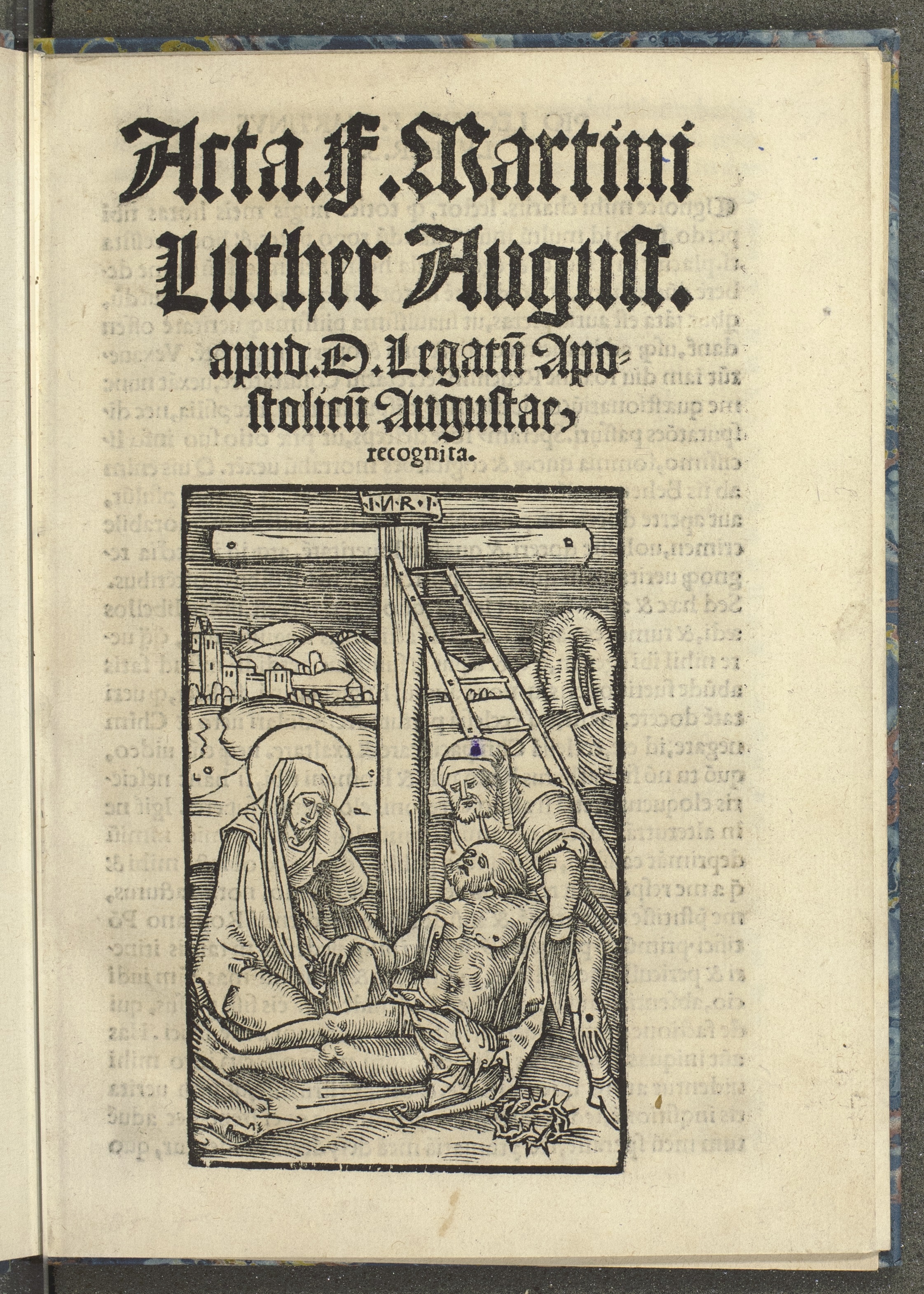
TextActa f. Martini Luther august. apud D. legatu[m] apostolicu[m] Augustae recognitum
Luther, Martin, 1483-1546Summary: In 1518 Luther was summoned to Rome. He appealed to Frederick, Elector of Saxony who was attending the imperial Diet in Augsburg. Frederick negotiated with the Papal Legate Cajetan who finally agreed to a hearing in Augsburg. Luther went there with an imperial escort and then returned safely to Wittenberg. This is Luther's report of what took place in Augsburg. It is the fifth printing of the "Acta Augustana."Summary: In 1518 Luther was summoned to Rome. He appealed to Frederick, Elector of Saxony who was attending the imperial Diet in Augsburg. Frederick negotiated with the Papal Legate Cajetan who finally agreed to a hearing in Augsburg. Luther went there with an imperial escort and then returned safely to Wittenberg. This is Luther's report of what took place in Augsburg. It is the fifth printing of the "Acta Augustana." -
 Text
TextAd criminatricem Martini Luders Uitte[n]bergen[sis] offensione[m] super iudicio iustissimo facto : ad articulos quosdam per minoritas de obserua[n]tia Reuere[n]dissimo Episcopo Brandenburgen[si] oblatos Eckiana responsio; Quia hactenus abusus est Mar. Luderus modestia Eckiana : tande[m] extorsit, vt mordaci, mordaciter quo[que] responderem ...
Eck, Johann, 1486-1543Summary: Johann Eck responds in this early work to Luther's pamphlet "Contra malignum Iohannis Eccii iudicium."Summary: Johann Eck responds in this early work to Luther's pamphlet "Contra malignum Iohannis Eccii iudicium." -
 Text
TextAin schöner Dialogus wie ain Bawr mit aim Frawe[n] Brůder Münch redt : das er die Kutten von jm würfft, und dem Münch Arbayt zůgeben, lustbarlich und lieblich zů lesen
Summary: Polemical dialogue between a peasant and a monk, who had lost his livelihood after the dissolution of his monastery. The peasant advises the monk to try his hand at "real work".Summary: Polemical dialogue between a peasant and a monk, who had lost his livelihood after the dissolution of his monastery. The peasant advises the monk to try his hand at "real work". -
 Text
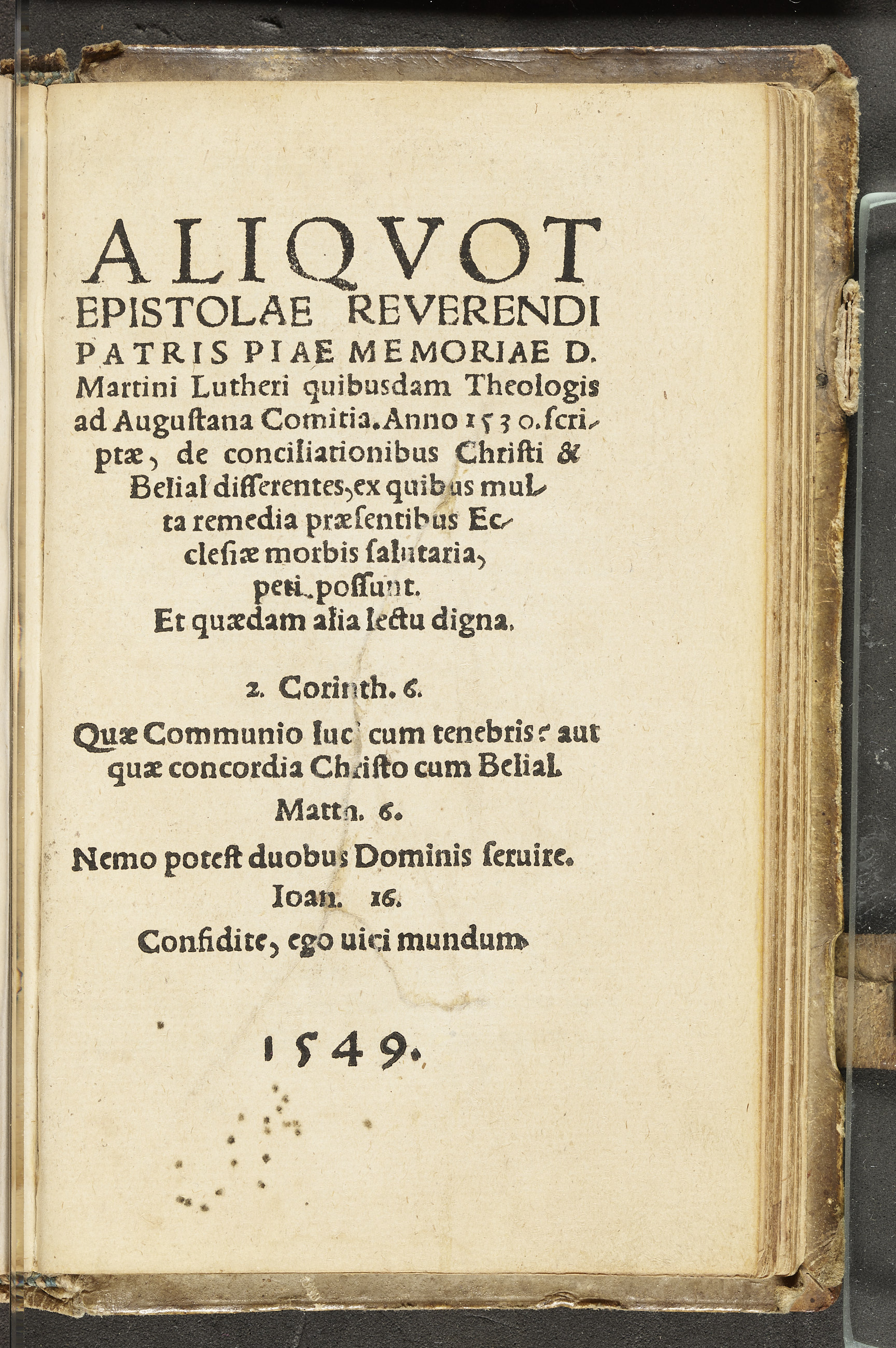
TextAliquot epistolae
Luther, Martin, 1483-1546Summary: M. Flacius Illyricus issued this edition of Luther's letters from Coburg Castle to the theologians at the Diet of Augsburg in an attempt to strengthen the Protestant resolve during the Interim. Intended for the widest possible distribution, both German and Latin versions were provided.Summary: M. Flacius Illyricus issued this edition of Luther's letters from Coburg Castle to the theologians at the Diet of Augsburg in an attempt to strengthen the Protestant resolve during the Interim. Intended for the widest possible distribution, both German and Latin versions were provided. -
 Text
TextAmbrosii Catharini olim La[n]cinoti co[n]tra Martinu[m] Lutherum super his verbis, Tu es Petrus [et cetera], Et tibi dabo claues regni celorum [et cetera], Mathei xvi. : Dialogus [i?]n minus disertus qua[m] elegans et festiuus : Roffensis Episcopi loca qu[a]edam quibus predicta[m] auctoritate[m] cu[m] duabus alijs Matthei scz xviij. & Ioa[n]nis xx. eiusdem monet[a]e, sed no[n] eiusdem valoris comparat, & discrimen earu[m] euidenti scripturaru[m] testimonio declarat.
Ambrosius Catharinus, Archbishop of Conza, 1484-1553Summary: A selection of criticisms of Luther's views on the spiritual origins of the Papacy by one of his early opponents, Ambrosius Catharinus, edited by another of his early opponents, Hieronymus Emser, and dedicated by Emser to a third Luther opponent, Paul Bachmann, Abbot of Altenzelle.Summary: A selection of criticisms of Luther's views on the spiritual origins of the Papacy by one of his early opponents, Ambrosius Catharinus, edited by another of his early opponents, Hieronymus Emser, and dedicated by Emser to a third Luther opponent, Paul Bachmann, Abbot of Altenzelle. -
 Text
TextAn den Christlichen Adel deutscher Nation : von des Christlichen Standes Besserung
Luther, Martin, 1483-1546Summary: Fourth edition of the "Address to the Christian Nobility of the German Nation," one of Luther's most important pamphlets, in which he develops some of the central ideas of his theology, including the principle of universal priesthood. He also discusses the possibility of a German national church.Summary: Fourth edition of the "Address to the Christian Nobility of the German Nation," one of Luther's most important pamphlets, in which he develops some of the central ideas of his theology, including the principle of universal priesthood. He also discusses the possibility of a German national church. -
 Text
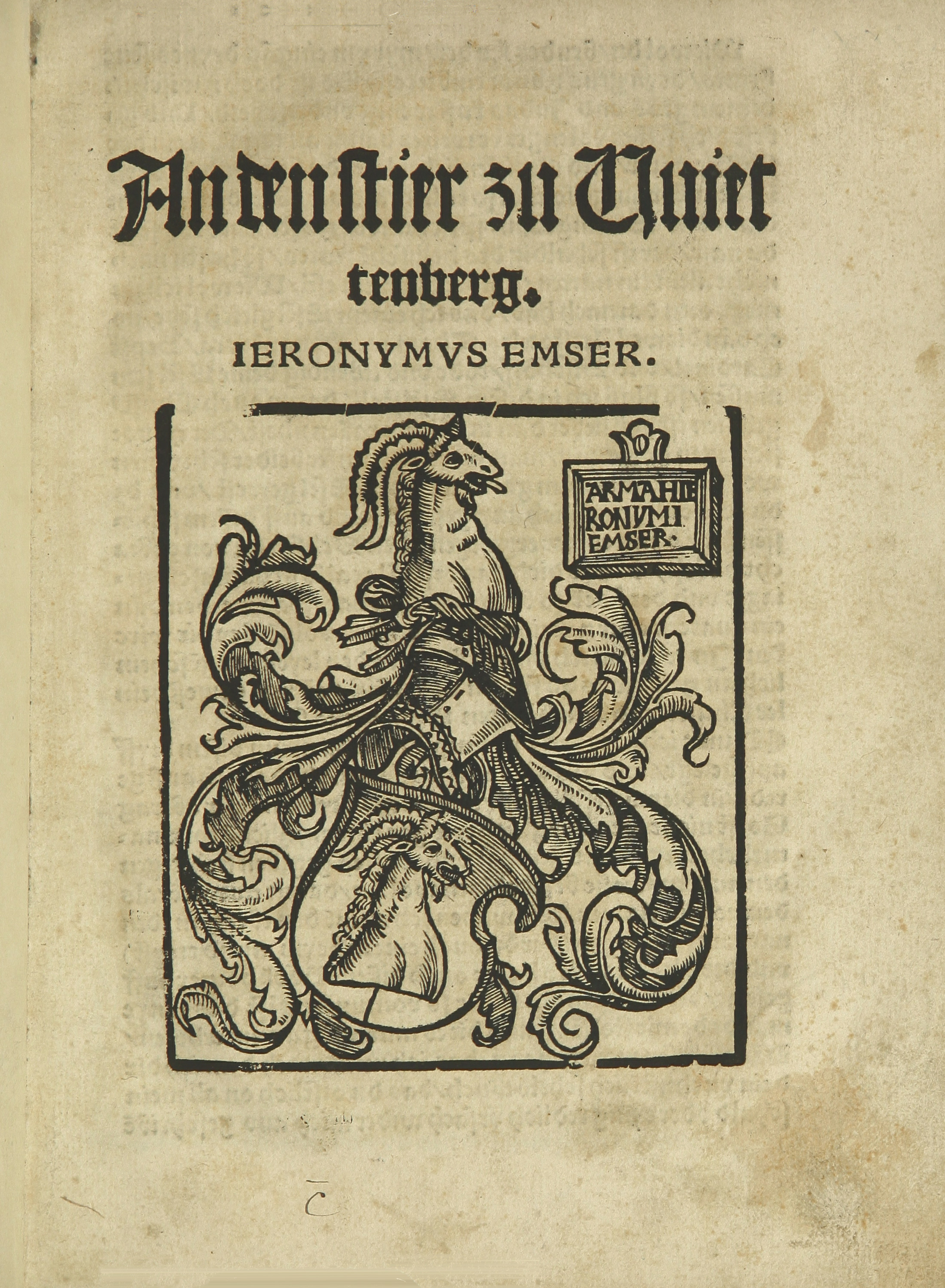
TextAn den Stier zu Uuittenberg
Emser, Hieronymus, 1478-1527Summary: A reply to Martin Luther's "An den Bock zu Leipzig."Summary: A reply to Martin Luther's "An den Bock zu Leipzig." -
 Text
TextAnalectus siue libellus collectaneorum, continens tres tractatus de praecipuis capitibus doctrinae Christianae, quae à Papistis corrumpuntur, & oppugnantur
Selneccer, Nicolaus, 1530-1592Summary: Compilation of three anti-Catholic tracts by the Lutheran theologians and composer of hymns Nicolaus Selneccer.Summary: Compilation of three anti-Catholic tracts by the Lutheran theologians and composer of hymns Nicolaus Selneccer. -
 Text
TextAuff das Vermeint Keiserlich Edict : Ausgangen jm 1531 jare nach dem Reichs tage des 1530 Jars. Glosa
Luther, Martin, 1483-1546Summary: In response to an ultimatum to the Lutheran princes and cities from Emperor Charles V to return to the pre-Reformation status quo within six months, Luther here issues some of his strongest polemic.Summary: In response to an ultimatum to the Lutheran princes and cities from Emperor Charles V to return to the pre-Reformation status quo within six months, Luther here issues some of his strongest polemic. -
 Text
TextCantio de papa romanaque ecclesia, per Boemum quendam ante annos circiter 100 composita, secundum ordinem alphabeti
Summary: Satirical song about the office of the Pope, composed anonymously in response to the execution of Jan Hus in 1415 and published by Matthias Flacius to underscore his opposition to the Catholic Church in all matters following the Interim of Augsburg in 1548.Summary: Satirical song about the office of the Pope, composed anonymously in response to the execution of Jan Hus in 1415 and published by Matthias Flacius to underscore his opposition to the Catholic Church in all matters following the Interim of Augsburg in 1548. -
 Text
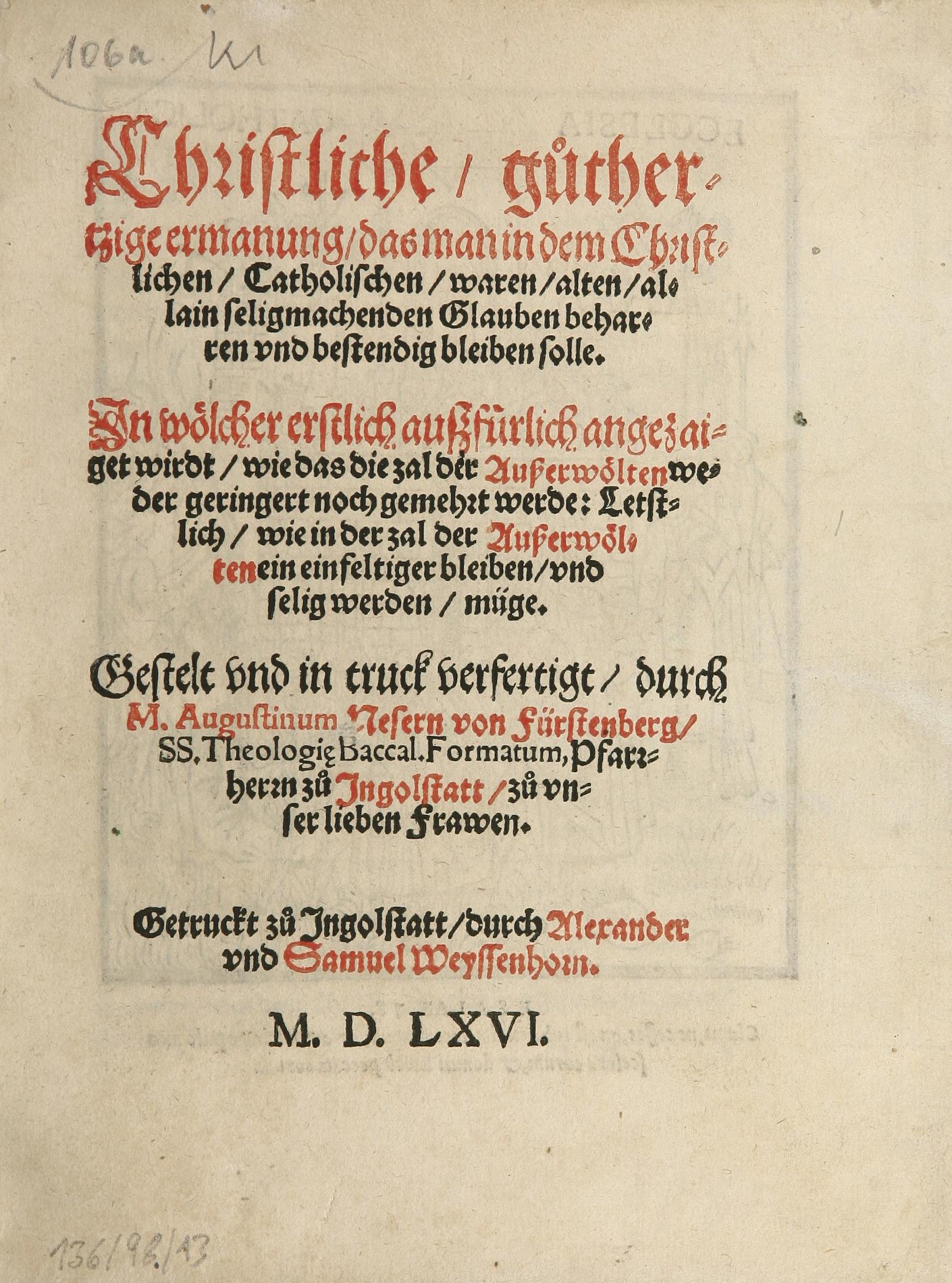
TextChristliche güthertzige Ermanung, das Man in dem Christlichen, Catholischen, waren, alten, allain seligmachenden Glauben beharren vnd bestendig bleiben solle : In wölcher erstlich auszfürlich angezaiget wirdt, wie das die Zal der Ausserwölten weder geringert noch gemehrt werde: letstlich, wie in der Zal der Ausserwölten ein einfeltiger bleiben, vnd selig werden, müge
Neser, AugustinusSummary: Augustinus Neser was a pastor in Ingolstadt. In this hortatory tract he discusses the importance of staying within the Catholic fold.Summary: Augustinus Neser was a pastor in Ingolstadt. In this hortatory tract he discusses the importance of staying within the Catholic fold. -
 Text
TextContra Henricum regem Angliae
Luther, Martin, 1483-1546Summary: This is the second and much expanded edition of Luther's reply to Henry VIII's Assertion of the Seven Sacraments. Luther replies quite moderately (for him) to what he feels to be the King's unwarranted assertions on the Catholic Sacraments. This is the second printing of this edition.Summary: This is the second and much expanded edition of Luther's reply to Henry VIII's Assertion of the Seven Sacraments. Luther replies quite moderately (for him) to what he feels to be the King's unwarranted assertions on the Catholic Sacraments. This is the second printing of this edition. -
 Text
TextDas Tauff Buchlin
Luther, Martin, 1483-1546Summary: Luther's German translation of the Wittenberg usage of the Catholic rite of Baptism (Ordo baptizandi). The work was reprinted fifteen times between 1523 and 1526, when Luther issued a revised edition.Summary: Luther's German translation of the Wittenberg usage of the Catholic rite of Baptism (Ordo baptizandi). The work was reprinted fifteen times between 1523 and 1526, when Luther issued a revised edition. -
 Text
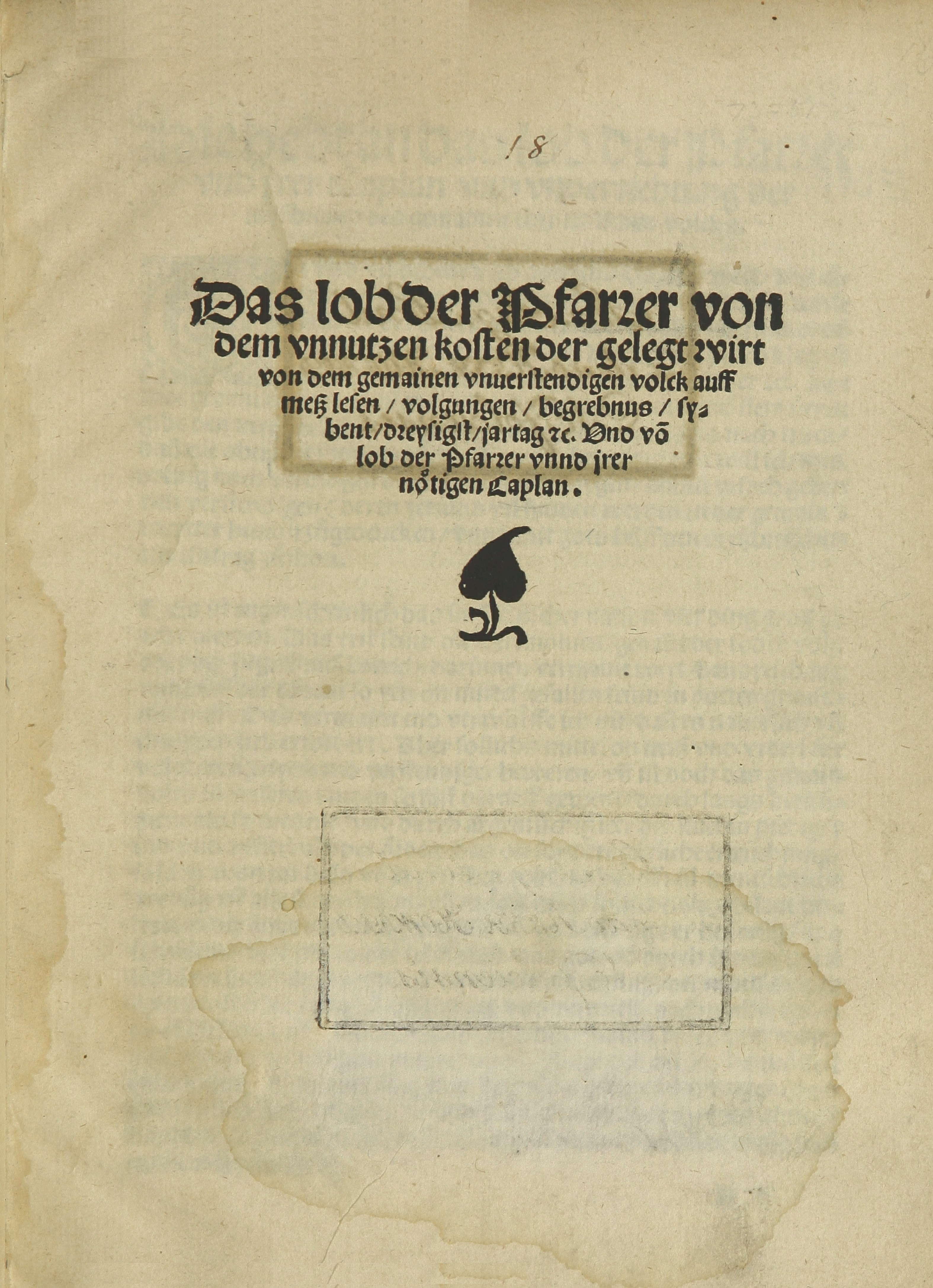
TextDas lob der Pfarrer von dem vnnutzen kosten der gelegt wirt von dem gemainen vnuerstendigen volck auff mess lesen, volgungen, begrebnus, sybent, dreysigst, jartag, rc. : Vnd vo[m] lob der Pfarrer vnnd irer nötigen Caplan.
Eberlin von Günzburg, Johann, approximately 1470-1533Summary: One of the problems that led to the Reformation was the sad state of ecclesiastical finance that forced many priests to change fees for the sacraments and other services. Von Gunzburg subjects such practices to sharp sanitization in the form of "praise of priests."Summary: One of the problems that led to the Reformation was the sad state of ecclesiastical finance that forced many priests to change fees for the sacraments and other services. Von Gunzburg subjects such practices to sharp sanitization in the form of "praise of priests." -
 Text
TextDe Petro et Roma adversus Velenu[m] Lutheranum, libri quatuor
Cochlaeus, Johannes, 1479-1552Summary: Oldrich Velensky, Latinized as Ulrich Velenus, was a Bohemian Protestant who opposed the papal claims to power based on St. Peter's residence and martyrdom in Rome. Cochlaeus upholds the traditional Catholic view that St. Peter was martyred in Rome in the reign of Nero in this volume against Velensky's criticism.Summary: Oldrich Velensky, Latinized as Ulrich Velenus, was a Bohemian Protestant who opposed the papal claims to power based on St. Peter's residence and martyrdom in Rome. Cochlaeus upholds the traditional Catholic view that St. Peter was martyred in Rome in the reign of Nero in this volume against Velensky's criticism. -
 Text
TextDialogus ad Martinu[m] Lutherum : pro responsione ad impertinentem quanda[m] ipsius epistolam super posita[m] veluti collocutoris vice intermixtam
Dungersheim, Hieronymus, 1465-1540Summary: H. Dungersheim had exchanged several letters with Luther before he wrote this dialogue. It was his first formal controversialist tract, written in 1520, but not published until 1531. Luther burned a manuscript copy of this work when he burned the bull Exsurge Domine on December 10, 1520.Summary: H. Dungersheim had exchanged several letters with Luther before he wrote this dialogue. It was his first formal controversialist tract, written in 1520, but not published until 1531. Luther burned a manuscript copy of this work when he burned the bull Exsurge Domine on December 10, 1520. -
 Text
TextDoctor Johan. dietenberger. [sic] Widerlegung des Lutherischen büchlins, da er schreibt von menschen leren zü meiden rc.
Dietenberger, Johann, approximately 1475-1537Summary: Johannes Dietenberger was a preaching monk who later became the grand inquisitor in the dioceses of Mainz and Cologne. He is best known for his German translation of the Bible, published in 1534. This work is an answer to Luther's writings on human doctrines and traditions in the Church.Summary: Johannes Dietenberger was a preaching monk who later became the grand inquisitor in the dioceses of Mainz and Cologne. He is best known for his German translation of the Bible, published in 1534. This work is an answer to Luther's writings on human doctrines and traditions in the Church. -
 Text
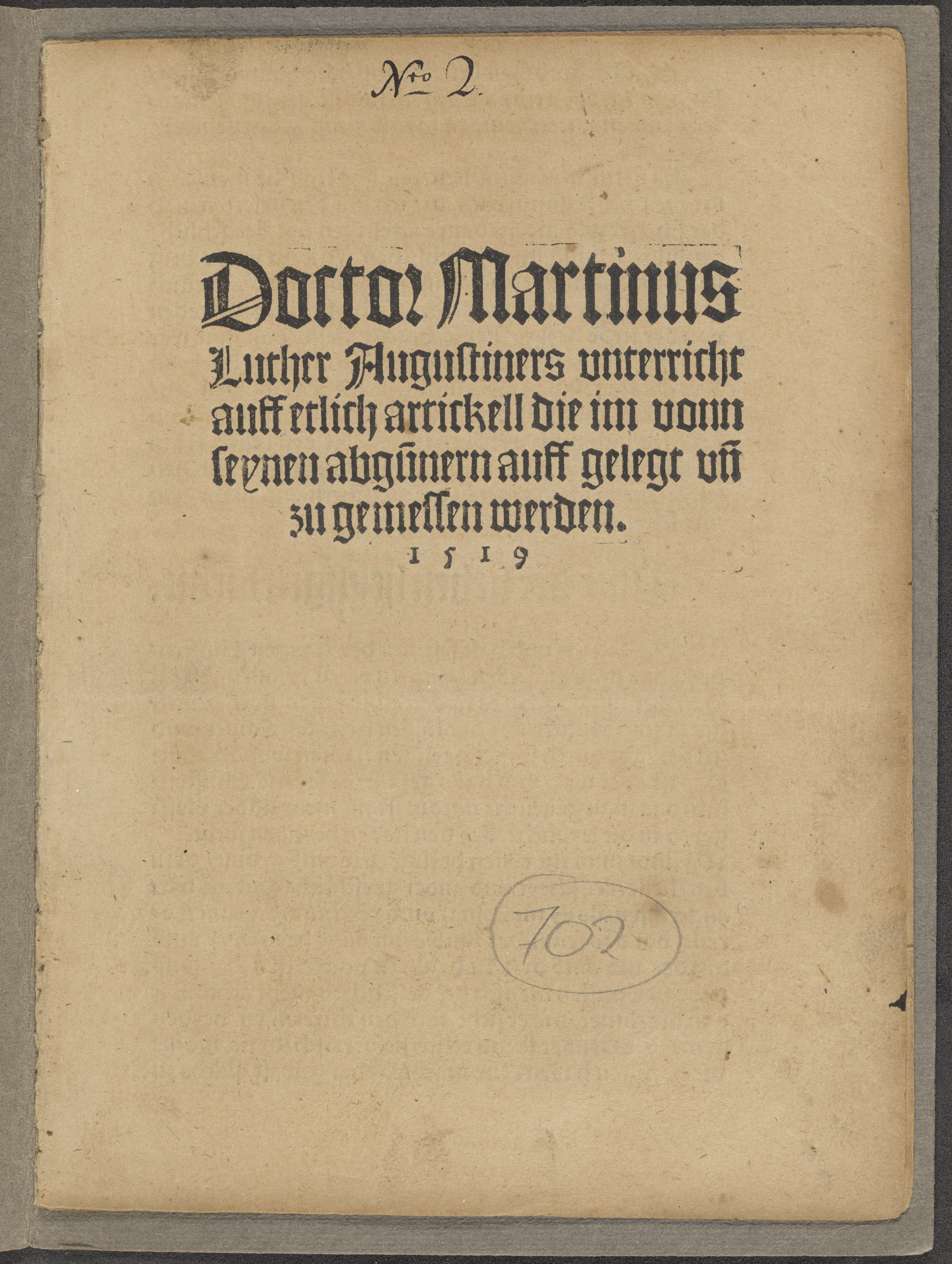
TextDoctor Martinus Luther Augustiners Vnterricht auff etlich Artickell die im vonn seynen Abgūrnern auff gelegt vn[d] zu gemessen werden
Luther, Martin, 1483-1546Summary: Luther was persuaded by Karl von Miltitz to write this public statement as a response to certain charges brought against him by his opponents, in particular Mazzolini da Prierio. In this tract, Luther still supports the invocation of the saints, an idea which he abandoned only shortly after.Summary: Luther was persuaded by Karl von Miltitz to write this public statement as a response to certain charges brought against him by his opponents, in particular Mazzolini da Prierio. In this tract, Luther still supports the invocation of the saints, an idea which he abandoned only shortly after. -
 Text
TextEine Schrifft, wie die Pfarherrn an den Örtern, da man die Papisterey widerumb auffricht, die Euangelisch Lehr, welche sie Lutherisch nennen, verloben vnd verschweren müssen
Summary: An anonymous pamphlet, containing an oath German pastors had to swear to renounce the "Evangelical doctrine, which is called Lutheran" in order to be readmitted to the Roman Catholic Church. The copy of the oath is preceded by two satirical poems regarding the oath, the first one representing the opinion of a wise man, the second one the answer of an unwise man. On the titlepage are two verses from Matthew 10 against the taking of oaths. The work is published by Christian Rödinger, a printer who put his press in service of the Reformation.Summary: An anonymous pamphlet, containing an oath German pastors had to swear to renounce the "Evangelical doctrine, which is called Lutheran" in order to be readmitted to the Roman Catholic Church. The copy of the oath is preceded by two satirical poems regarding the oath, the first one representing the opinion of a wise man, the second one the answer of an unwise man. On the titlepage are two verses from Matthew 10 against the taking of oaths. The work is published by Christian Rödinger, a printer who put his press in service of the Reformation. -
 Text
TextEnchiridion locorum communium aduersus Lutheranos
Eck, Johann, 1486-1543Summary: In 1521, Melanchthon wrote the first Protestant dogmatics, the "Loci Communes." Eck countered in 1525 with his "handbook on Theological Topics". Possibly the most widely reprinted Catholic critique of Lutheran doctrine (Metzler lists 91 contemporary editions). Eck uses the same topical procedure and cites the Bible, Church Fathers, Councils, and Popes heavily in the presentation of his arguments.Summary: In 1521, Melanchthon wrote the first Protestant dogmatics, the "Loci Communes." Eck countered in 1525 with his "handbook on Theological Topics". Possibly the most widely reprinted Catholic critique of Lutheran doctrine (Metzler lists 91 contemporary editions). Eck uses the same topical procedure and cites the Bible, Church Fathers, Councils, and Popes heavily in the presentation of his arguments. -
 Text
TextExcusatio eckij : ad ea que falso sibi Philippus Melanchton gra[m]maticus Vuittenbergen[sis] super theologica disputatione lipsica adscripsit.
Eck, Johann, 1486-1543Summary: The participants in the Leipzig Disputation promised not to print their positions before the faculties of Paris and Louvain had issued their verdicts in the case. Both sides broke their promise. Melanchthon apparently got into print first, for this is Eck's reply to Melanchthon. This is the second printing of the work.Summary: The participants in the Leipzig Disputation promised not to print their positions before the faculties of Paris and Louvain had issued their verdicts in the case. Both sides broke their promise. Melanchthon apparently got into print first, for this is Eck's reply to Melanchthon. This is the second printing of the work. -
 Text
TextEyn Widerruff vom Fegefeur
Luther, Martin, 1483-1546Summary: Refutation, by Luther, of the teaching of Purgatory.Summary: Refutation, by Luther, of the teaching of Purgatory. -
 Text
TextEyn Wyderrueff vom Fegfewr
Luther, Martin, 1483-1546Summary: One of several 1530 editions of a tract in which Luther rejects the Catholic doctrine of purgatory, a topic not addressed in the Augsburg Confessions.Summary: One of several 1530 editions of a tract in which Luther rejects the Catholic doctrine of purgatory, a topic not addressed in the Augsburg Confessions. -
 Text
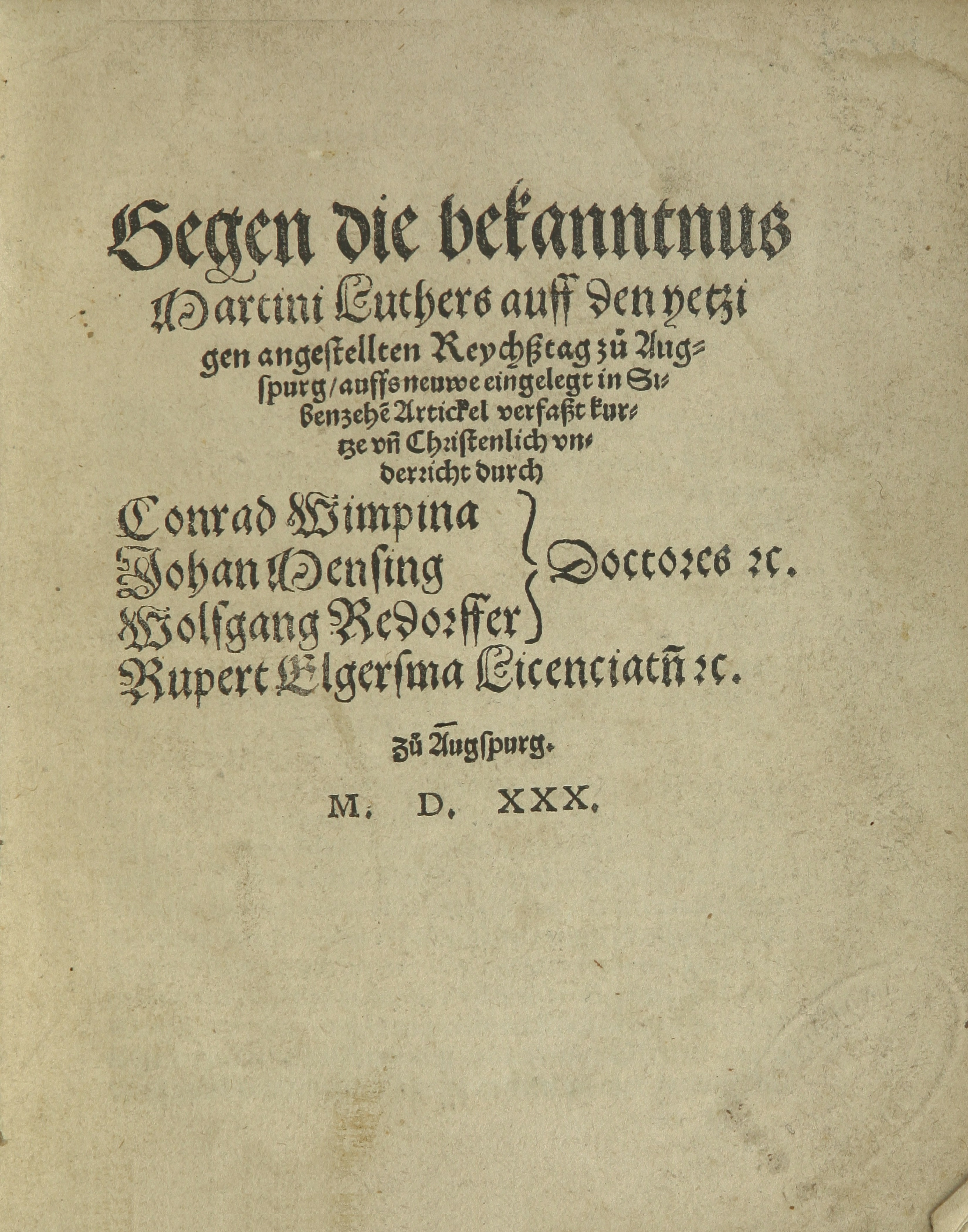
TextGegen die bekanntnus Martini Luthers auff den yetzigen angestellten Reychsstag zuo Augsburg, auff neuwe eingelegt in sibenzehe[n] Artickel verfasst. Kurtze vn[d] Christenlich vnderricht
Wimpina, Konrad, 1460-1531Summary: This pamphlet contains the Catholic response to the first, unauthorized edition of the Schwabach Articles, published in Coburg in 1530. Among the authors of this tract, Konrad Wimpina and Johannes Mensing helped draft the Catholic Confutation of the Augsburg Confession.Summary: This pamphlet contains the Catholic response to the first, unauthorized edition of the Schwabach Articles, published in Coburg in 1530. Among the authors of this tract, Konrad Wimpina and Johannes Mensing helped draft the Catholic Confutation of the Augsburg Confession. -
 Text
TextGründtliche anzaygung vnd bericht, ausz was vrsachen (deren fürnemlich siben seind) so mancherley, vnnd vilfaltige Ketzereyen, zwispaltung vnnd jtzthumb in Christlicher Religion, vnd der hailigen Catholischen Kirchen, von anfang biss auff dise zeit erwachsen seind, vnd jren grund genommen haben
Leib, Kilian, 1471-1553Summary: Second printing of a an anti-Protestant tract by Kilian Leib, prior of the Augustinian monastery at Rebdorf. Leib was a Catholic theologian in the humanist tradition who was a firm opponent of Martin Luther's reforms. In 1530 he had participated in drafting the Catholic response to the Augsburg Confession. In this work, Leib outlines 7 causes for the Lutheran heresy, which include among others an unfavorable constellation of the stars, ordained by God to punish humanity.Summary: Second printing of a an anti-Protestant tract by Kilian Leib, prior of the Augustinian monastery at Rebdorf. Leib was a Catholic theologian in the humanist tradition who was a firm opponent of Martin Luther's reforms. In 1530 he had participated in drafting the Catholic response to the Augsburg Confession. In this work, Leib outlines 7 causes for the Lutheran heresy, which include among others an unfavorable constellation of the stars, ordained by God to punish humanity. -
 Text
TextHistoria delle vite de sommi pontefici : dal Salvator Nostro sino a Gregorio XV
Platina, 1421-1481Summary: Translation, with additions, of Platina's Vitae pontificum.Summary: Translation, with additions, of Platina's Vitae pontificum. -
 Text
TextLiber sententiae magistri Petri Lom. una cum conclusionibus magistri Henrici Gorichen
Peter Lombard, Bishop of Paris, approximately 1100-1160Summary: The Four Books of Sentences by Peter Lombard are a compilation of biblical text, writings of the Church Fathers and of medieval thinkers on various theological topics. It became the standard theological textbook of the Late Middle Ages.Summary: The Four Books of Sentences by Peter Lombard are a compilation of biblical text, writings of the Church Fathers and of medieval thinkers on various theological topics. It became the standard theological textbook of the Late Middle Ages. -
 Text
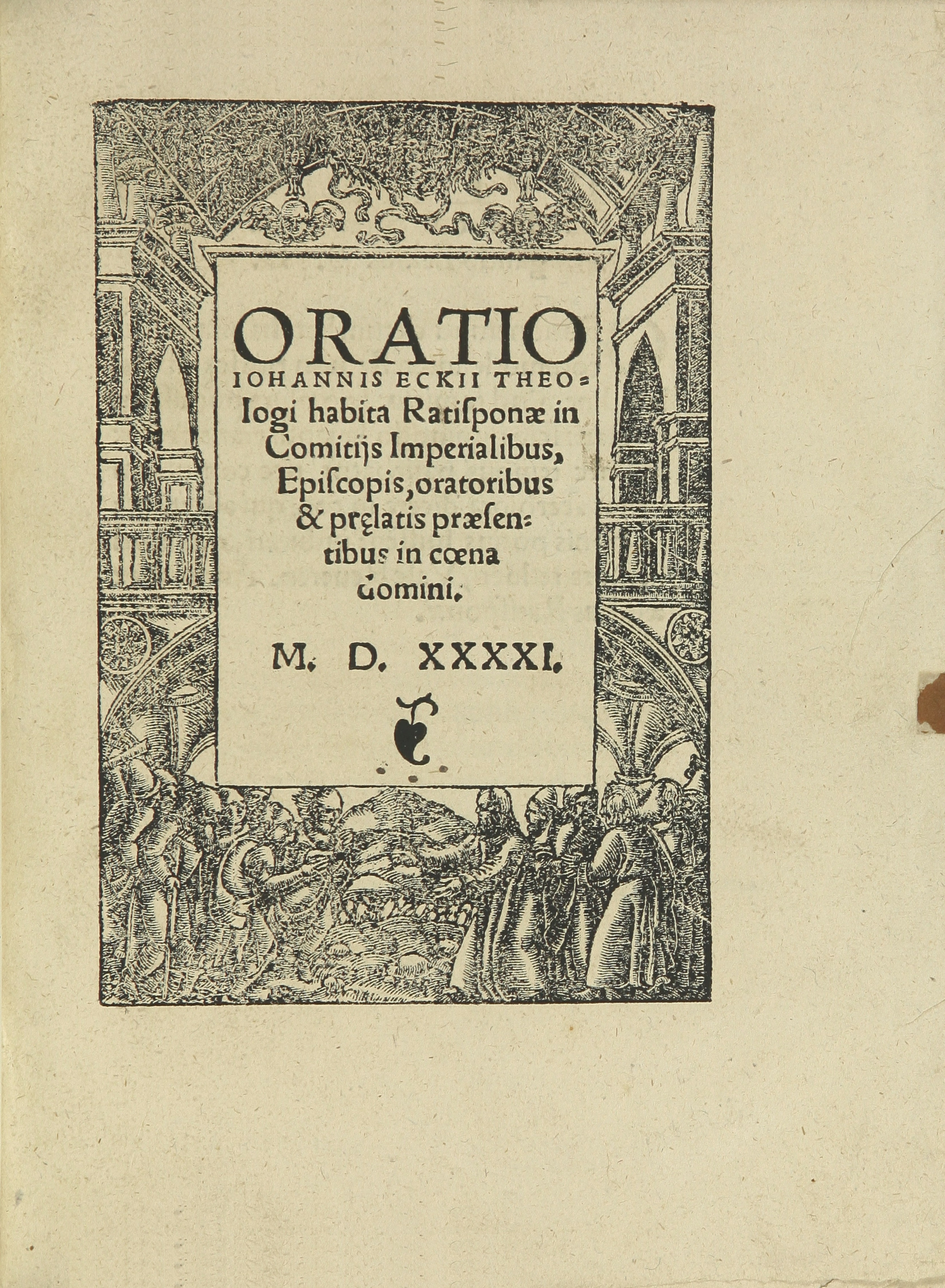
TextOratio
Eck, Johann, 1486-1543Summary: This is the first printing of Eck's speech to the Diet of Regensburg on April 5, 1541, defining the Catholic understanding of the Lord's Supper. The Diet of Regensburg proved to be Eck's last appearance as a major theological political leader, for his health declined and he could no longer bear the weight of these grueling encounters.Summary: This is the first printing of Eck's speech to the Diet of Regensburg on April 5, 1541, defining the Catholic understanding of the Lord's Supper. The Diet of Regensburg proved to be Eck's last appearance as a major theological political leader, for his health declined and he could no longer bear the weight of these grueling encounters. -
 Text
TextOrdnu[n]g wie man tauffet, bissher im Latein gehalten, verteütscht : Hierin ist, auss etlichen Ursachen, was die andern, als uberflüssig, veracht haben, nicht aussgelassen
Catholic ChurchSummary: Osiander provides a fuller translation of the traditional Catholic rite of baptism than Münzer or Luther, who had both published baptism liturgies one year earlier, and who had eliminated certain ritual elements.Summary: Osiander provides a fuller translation of the traditional Catholic rite of baptism than Münzer or Luther, who had both published baptism liturgies one year earlier, and who had eliminated certain ritual elements. -
 Text
TextPontificale Romanum
Catholic ChurchSummary: The Pontificale Romanum contains the liturgical rites for the sacraments of confirmation and Holy orders performed by bishops. The work is called "liber pontificalis" (pontifical or papal book) here, as books bearing pontifical authority often were prior to the 16th century, but it should not be confused with the papal annals, also called Liber Pontificalis, which is used by historians of the early Roman ChurchSummary: The Pontificale Romanum contains the liturgical rites for the sacraments of confirmation and Holy orders performed by bishops. The work is called "liber pontificalis" (pontifical or papal book) here, as books bearing pontifical authority often were prior to the 16th century, but it should not be confused with the papal annals, also called Liber Pontificalis, which is used by historians of the early Roman Church -
 Text
TextPopery calmly considered
Wesley, John, 1703-1791Summary: A tract in which Wesley reflects on a number of doctrines of the Catholic Church.Summary: A tract in which Wesley reflects on a number of doctrines of the Catholic Church. -
 Text
TextRatio, cur synodus illa, quam Paulus Ro. Pontifex eius nominis III, Mantuae celebrandam, parum candide indicit, & se habiturum esse significat, neque aequa inderi possit, neq[ue] utilis Ecclesiae, unde & ab ijs, qui sacrosanctum Euangelium ineffabili Dei
Summary: When Pope Paul III called for a reform council at Mantua in 1536, the Protestants were faced with a dilemma. If they attended the council they would be recognizing the Pope's authority in such matters. If they refused, then it might appear that their calls for a general council had been insincere. The sticky task of responding to the pope's call fell upon Melanchthon. This is an edition of his response.Summary: When Pope Paul III called for a reform council at Mantua in 1536, the Protestants were faced with a dilemma. If they attended the council they would be recognizing the Pope's authority in such matters. If they refused, then it might appear that their calls for a general council had been insincere. The sticky task of responding to the pope's call fell upon Melanchthon. This is an edition of his response. -
 Text
TextReplica F. Sylvestri Prieriat[is] : sacri Palatii Apostolici Magistri, ad F. Martinum Luther Ordinis Eremitaru[m] ; Martinus Luther, optimo lectori salutem ...
Mazzolini, Silvestro, da Prierio, 1456?-1527?Summary: When Luther received the replies of S. Mazzolini, the first man to take up the cudgels against Luther, he found the best course of reply to be a reprinting with notes of Mazzolini's inept rejoinders. Even the Catholics had to admit that Mazzolini's answers simply did not meet Luther's objections. This is the second printing of the work.Summary: When Luther received the replies of S. Mazzolini, the first man to take up the cudgels against Luther, he found the best course of reply to be a reprinting with notes of Mazzolini's inept rejoinders. Even the Catholics had to admit that Mazzolini's answers simply did not meet Luther's objections. This is the second printing of the work. -
 Text
TextReplica contra periculosa scripta post Scrutinium diuine scripture iam pride[m] emissum emanata. ...
Schatzgeyer, Kaspar, 1463 or 1464-1527Summary: Casper Schatzgeyer, or Sasgerus, was a Franciscan friar who became provincial of the Province of Strasbourg in 1517. He wrote about 23 books on theological topics and against members of other orders and sects, notably J. von Staupitz and A. Osiander. This book, however, criticizes two of Luther's tracts: On Monastic Vows and On the Abolition of the Private Mass. Luther persuaded Johann Briessmann to reply, and Schatzgeyer replied to Briessmann. This is the work's first printing.Summary: Casper Schatzgeyer, or Sasgerus, was a Franciscan friar who became provincial of the Province of Strasbourg in 1517. He wrote about 23 books on theological topics and against members of other orders and sects, notably J. von Staupitz and A. Osiander. This book, however, criticizes two of Luther's tracts: On Monastic Vows and On the Abolition of the Private Mass. Luther persuaded Johann Briessmann to reply, and Schatzgeyer replied to Briessmann. This is the work's first printing. -
 Text
TextResolutio[n]es disputationum
Luther, Martin, 1483-1546Summary: This is Luther's final authorized edition of his Ninety-five Theses in book form with his own commentaries. The edition published by Rhau-Grunemberg had been so full of errors, that Luther gave the printing of this edition to Melchior Lotter in Leipzig.Summary: This is Luther's final authorized edition of his Ninety-five Theses in book form with his own commentaries. The edition published by Rhau-Grunemberg had been so full of errors, that Luther gave the printing of this edition to Melchior Lotter in Leipzig. -
 Text
TextS. Isidori hispalensis episcopi ... opera omnia
Isidore, of Seville, Saint, -636Summary: A collection of the works of Saint Isidore, of Seville.Summary: A collection of the works of Saint Isidore, of Seville. -
 Text
TextS.D.n.D. Pauli diuina prouidentia p.p. III : Bullla indictionis sacro sancti generalis concilii
Catholic Church. Pope (1534-1549 : Paul III)Summary: Latin text of the Papal Bull Ad Dominici gregis curam, issued June 4, 1536, for the Council of Mantua which was never held (council eventually took place in Trent).Summary: Latin text of the Papal Bull Ad Dominici gregis curam, issued June 4, 1536, for the Council of Mantua which was never held (council eventually took place in Trent). -
 Text
TextSacrarvm caeremoniarvm sive Ritvvm ecclesiasticorvm S. Rom. ecclesiae. : libri tres
Patrizi Piccolomini, Agostino, approximately 1435-1496Summary:Summary: -
 Text
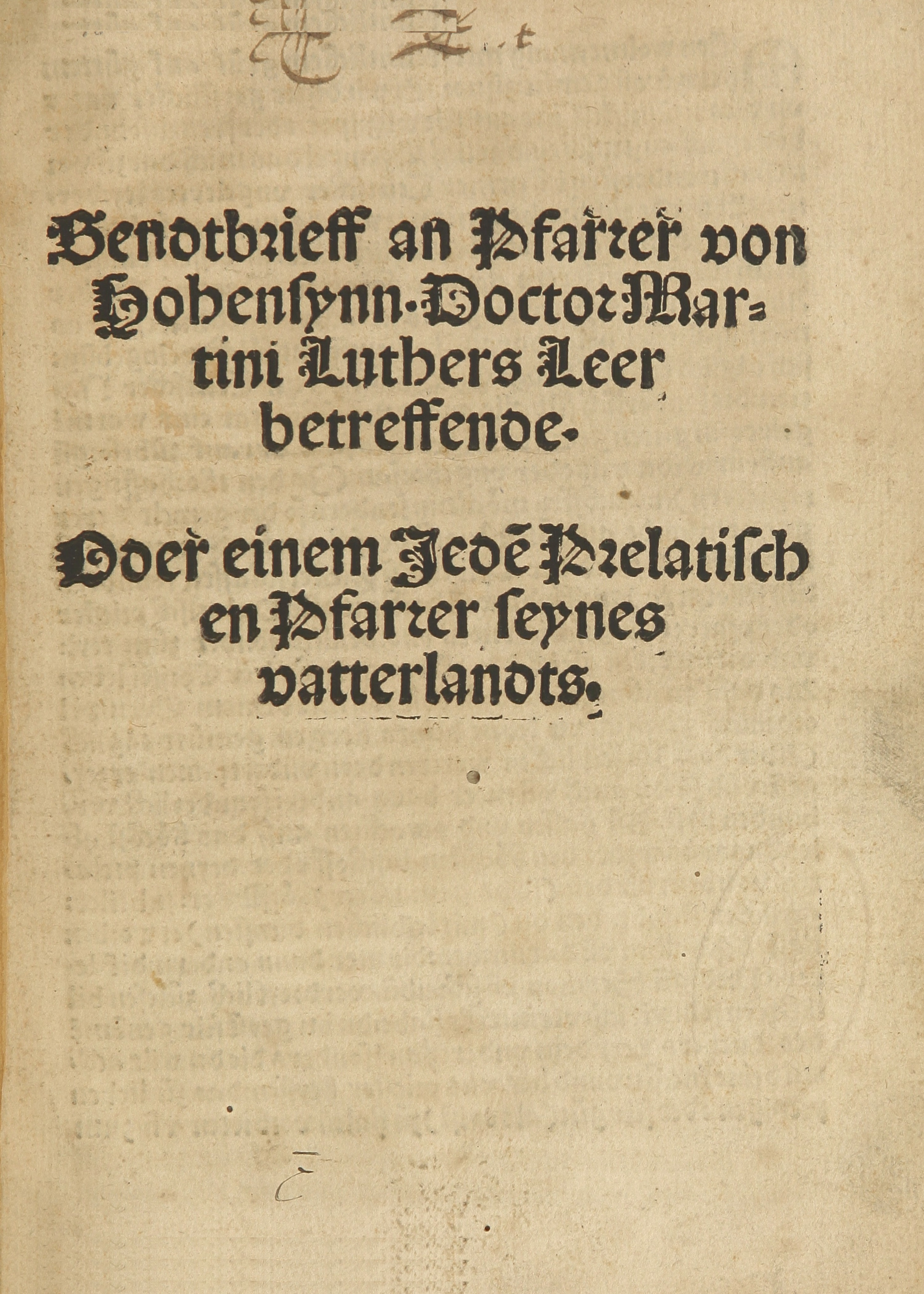
TextSendtbrieff an Pfarrer von Hohensynn. Doctor Martini Luthers Leer betreffende. Oder einem Jede[n] Prelatischen Pfarrer Seynes vaterlandes.
Summary: This is a Catholic pamphlet warning against Luther's errors. "Pastor Highmind" may be pseudonym or the name of a real Pastor von Hohensynn.Summary: This is a Catholic pamphlet warning against Luther's errors. "Pastor Highmind" may be pseudonym or the name of a real Pastor von Hohensynn. -
 Text
TextSerenissimi ac potentissimi Regis Anglie, Christiane fidei defensoris inuictissimi, ad illustrissimos ac clarissimos Saxoni[a]e principes, de coercenda abigendaq[ue] Lutherana factione, & Luthero ipso epistola : Item illustrissimi principis Ducis Georgii ad eundem Regem rescriptio
Henry VIII, King of England, 1491-1547Summary: Response by King Henry VIII of England to Luther's attack on his book, "Assertio septem sacramentorum", on the seven sacraments of the Catholic Church. This printing was issued in Leipzig by Hieronymous Emser, early opponent of Luther, with a reply by his ruler, Duke George of Saxony, and dedicated by Emser to Johann von Schleinitz, bishop of Meissen.Summary: Response by King Henry VIII of England to Luther's attack on his book, "Assertio septem sacramentorum", on the seven sacraments of the Catholic Church. This printing was issued in Leipzig by Hieronymous Emser, early opponent of Luther, with a reply by his ruler, Duke George of Saxony, and dedicated by Emser to Johann von Schleinitz, bishop of Meissen. -
 Text
TextThe catholic doctrine of the Church of England : an exposition of the Thirty-nine articles
Rogers, Thomas, -1616Summary:Summary: -
Text
The works of John Jewel
Jewel, John, 1522-1571Summary: A sermon preached at Paul's cross. Correspondence with Dr. Cole. The reply to Harding's Answer...Summary: A sermon preached at Paul's cross. Correspondence with Dr. Cole. The reply to Harding's Answer... -
Text
The works of John Jewel
Jewel, John, 1522-1571Summary: The reply to Harding's Answer...[cont.] An exposition upon the two Epistles to the Thessalonians. Sermons. A treatise of the sacraments.Summary: The reply to Harding's Answer...[cont.] An exposition upon the two Epistles to the Thessalonians. Sermons. A treatise of the sacraments. -
 Text
TextUom Missbrauch der Messen
Luther, Martin, 1483-1546Summary: Written in Latin in the fall of 1521 under the title De abroganda missa privata, this is the third printing of the first German edition of Martin Luther's important tract on the celebration of private masses. Luther opposed any celebration of the Eucharist that was not accessible to or provided for the congregation at large and felt so strongly about this material that he translated it into German himself.Summary: Written in Latin in the fall of 1521 under the title De abroganda missa privata, this is the third printing of the first German edition of Martin Luther's important tract on the celebration of private masses. Luther opposed any celebration of the Eucharist that was not accessible to or provided for the congregation at large and felt so strongly about this material that he translated it into German himself. -
 Text
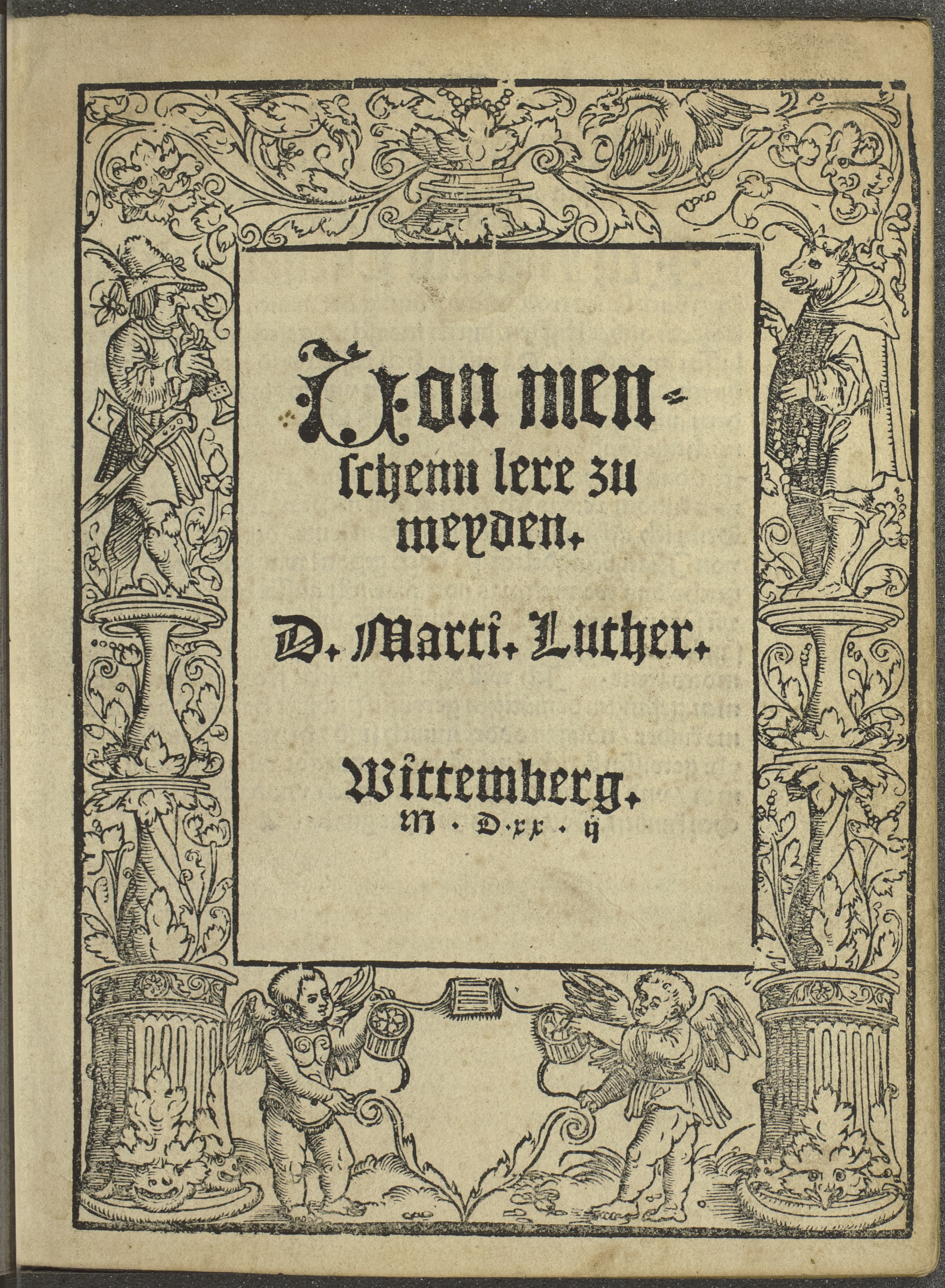
TextUon Menschenn Lere zu meyden
Luther, Martin, 1483-1546Summary: A treatise by Luther on the relationship of belief and practice, intended for those "poor consciences, that lie captive to human laws in cloisters and monastic foundations", as he puts it in his preface. It is also noteworthy that Luther assumes his audience includes both those who could read his writings directly, and those who heard them read by others, when he dedicates his pamphlet "to all who read or hear this little book".Summary: A treatise by Luther on the relationship of belief and practice, intended for those "poor consciences, that lie captive to human laws in cloisters and monastic foundations", as he puts it in his preface. It is also noteworthy that Luther assumes his audience includes both those who could read his writings directly, and those who heard them read by others, when he dedicates his pamphlet "to all who read or hear this little book". -
 Text
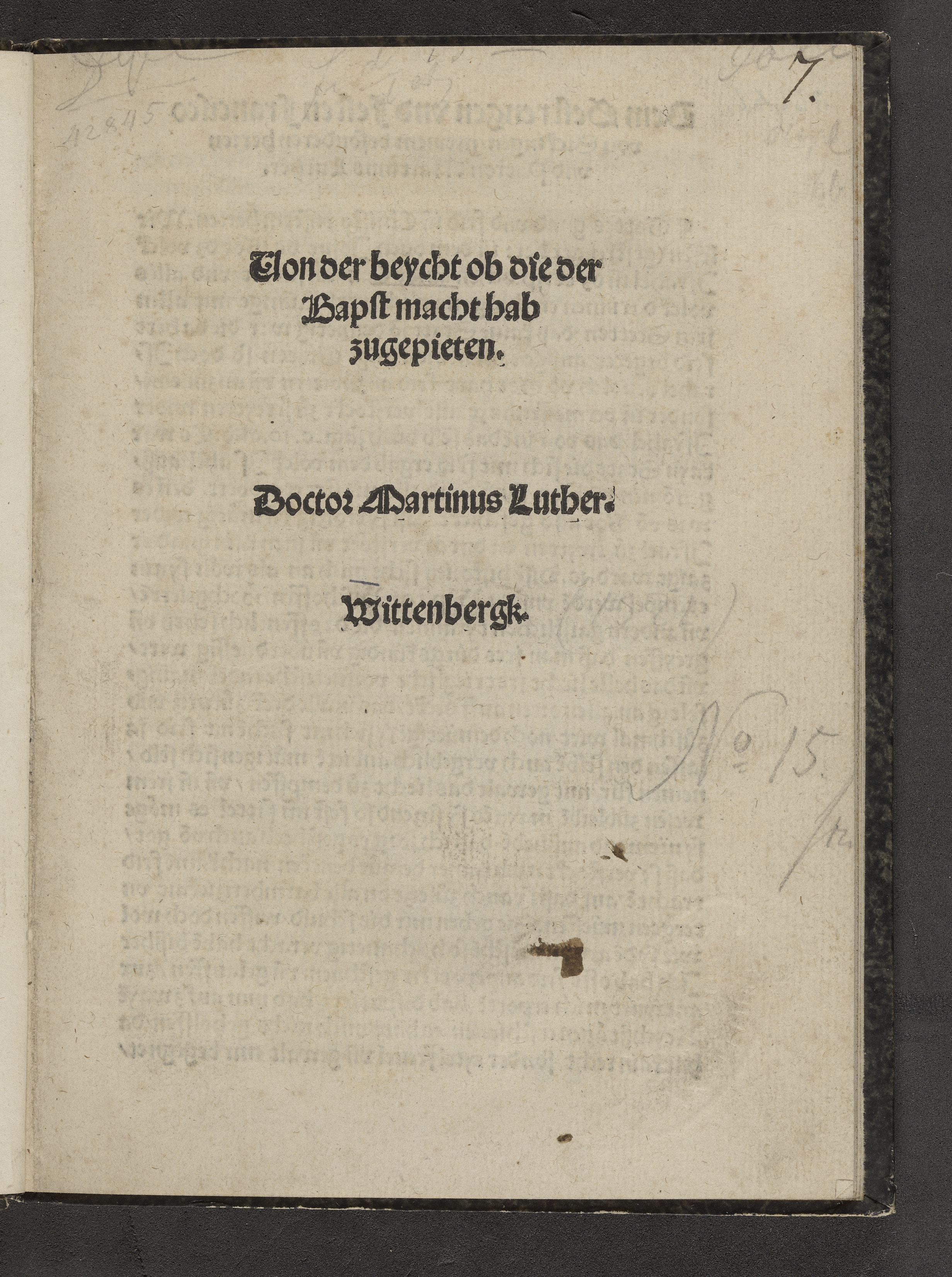
TextUon der beycht ob die der Bapst macht hab zugepieten
Luther, Martin, 1483-1546Summary: This is Luther's tract on auricular confession. The sacrament of penance was the focus of Luther's most vehement criticisms. Not only was the sacrament the course of numerous abuses, indulgence selling among them, but attacks on the efficacy of priestly absolution called into question the sacramental authority of all priests, the pope included.Summary: This is Luther's tract on auricular confession. The sacrament of penance was the focus of Luther's most vehement criticisms. Not only was the sacrament the course of numerous abuses, indulgence selling among them, but attacks on the efficacy of priestly absolution called into question the sacramental authority of all priests, the pope included. -
 Text
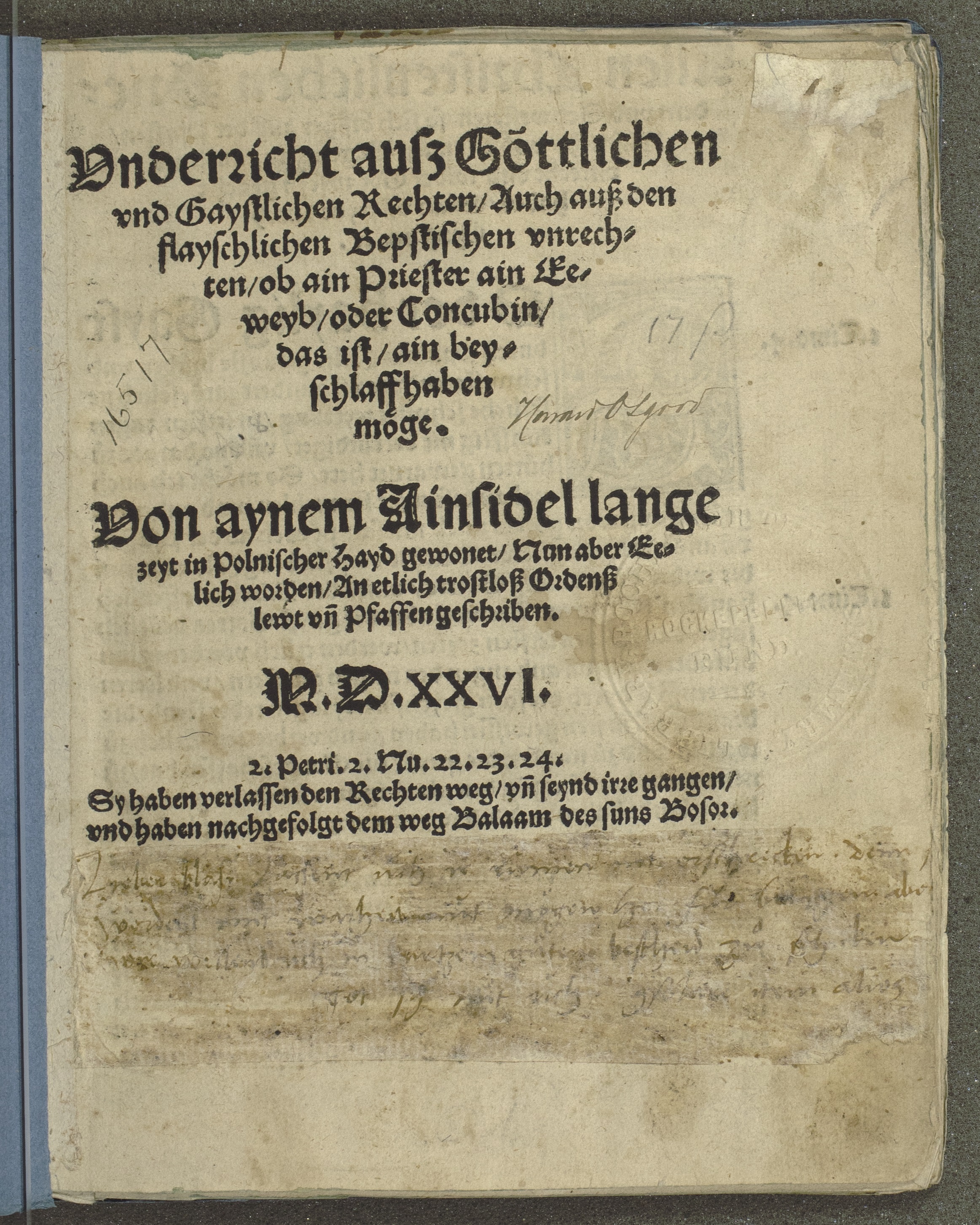
TextVnderricht ausz göttlichen vnd gaystlichen Rechten : Auch ausz den flayschlichen bepstlichen Vnrechten, ob ain Priester ain Eeweyb, oder Concubin, das ist, ain Beyschlaff haben möge
Keller, MichaelSummary: Polemical tract against celibacy, attributed to Michael Keller, who was married August 10, 1526 in Augsburg.Summary: Polemical tract against celibacy, attributed to Michael Keller, who was married August 10, 1526 in Augsburg. -
 Text
TextVon Ceremonien der Kirchen : das ist von eusserlichem dienste Gottes, oder von Leiblicher vbunge Göttlicher Ampter ...
Bachmann, Paul, 1465-1538Summary: Defense of Catholic worship and priestly offices by Paul Bachmann, Abbot of Altzelle, a vehement opponent of Martin Luther.Summary: Defense of Catholic worship and priestly offices by Paul Bachmann, Abbot of Altzelle, a vehement opponent of Martin Luther. -
 Text
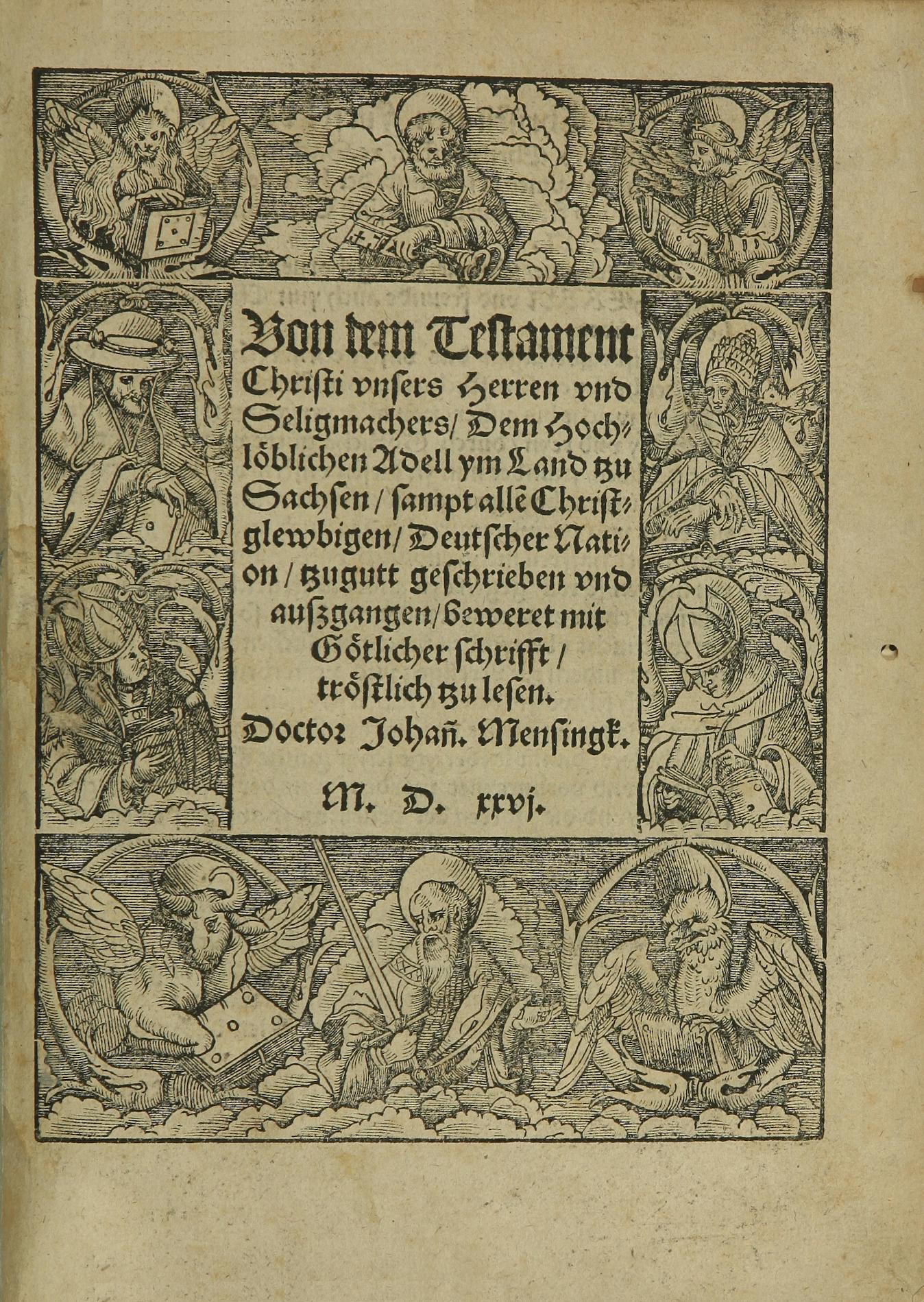
TextVon dem Testament Christi vnsers Herren vnd Seligmachers : Dem Hochlöblichen Adell ym landt zu Sachsen, sampt alle[n] Christglewbigen, Deutscher Nation, tzugutt geschriben vnd auszgangen, beweret mit Götlicher schrifft, tröstlich zu lesen
Mensing, Johannes, active 1495-1541Summary: J. Mensing was a Dominican opponent of Luther. Born in either Mageburg or Zutphen, Holland, he studied in Wittenberg and Frankfurt an der Oder, where he took his doctorate. He preached at Mageburg Cathedral 1522-1524 against the Reformers. In 1530, he was one of the Confutators of the Augsburg Confession. In 1534, he became provincial of the Dominicans, and in 1539, suffragan-bishop of Halberstedt. In this tract, Mensing defends Catholic interpretation of the Lord's Supper through references to scripture.Summary: J. Mensing was a Dominican opponent of Luther. Born in either Mageburg or Zutphen, Holland, he studied in Wittenberg and Frankfurt an der Oder, where he took his doctorate. He preached at Mageburg Cathedral 1522-1524 against the Reformers. In 1530, he was one of the Confutators of the Augsburg Confession. In 1534, he became provincial of the Dominicans, and in 1539, suffragan-bishop of Halberstedt. In this tract, Mensing defends Catholic interpretation of the Lord's Supper through references to scripture. -
 Text
TextVon der Papisten Tauff : vnd andern Caeremonien oder Kirchendiensten ob die nach erkanter vnd angenomener Warheit durch jemand Christlich zu besuchen vnd zu gebrauchen sein
Summary: Only printing of a Lutheran pamphlet by an anonymous preacher from Southern Germany on the subject of baptism and other ceremonies in the Catholic church, with an introduction by Nicolaus Gallus.Summary: Only printing of a Lutheran pamphlet by an anonymous preacher from Southern Germany on the subject of baptism and other ceremonies in the Catholic church, with an introduction by Nicolaus Gallus. -
 Text
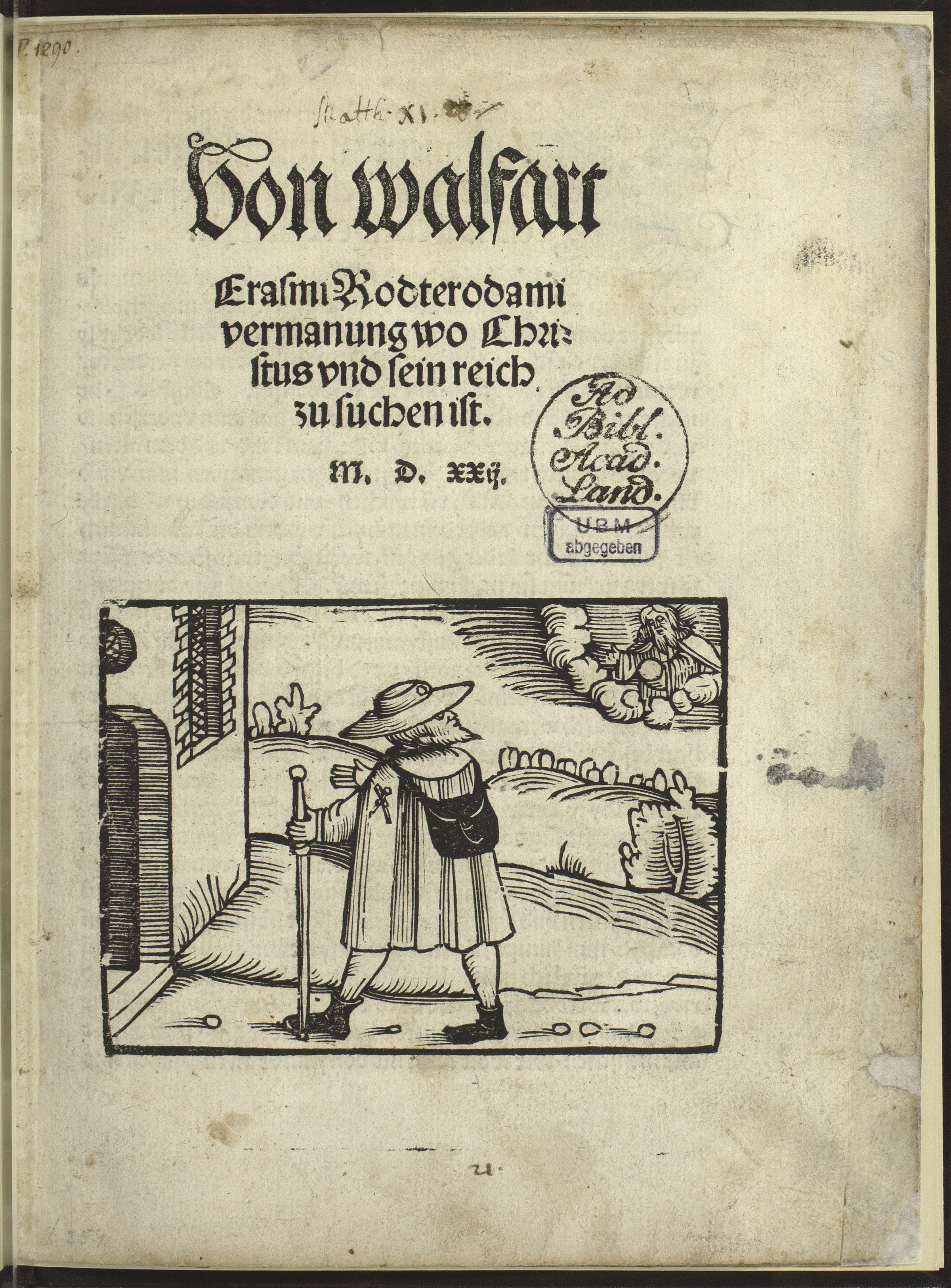
TextVon walfart
Erasmus, Desiderius, -1536Summary: Interpretive pamphlet by Erasmus on the true nature of pilgrimage, as espoused by Jesus in Matthew XI, 28. Erasmus says that true pilgrimage is undertaken with spiritual, and not with physical feet, and, that Jesus receives all sincere pilgrims equally, whether they be clergy or lay, rich or poor, etc.Summary: Interpretive pamphlet by Erasmus on the true nature of pilgrimage, as espoused by Jesus in Matthew XI, 28. Erasmus says that true pilgrimage is undertaken with spiritual, and not with physical feet, and, that Jesus receives all sincere pilgrims equally, whether they be clergy or lay, rich or poor, etc. -
 Text
TextWyder den Wittenbergischen Abtgot Martin Luther
Alveldt, Augustin von, active 16th centurySummary: The Franciscan Augustine of Alveldt wrote this polemical tract in response to Luther's pamphlet "Widder den newen Abgott und alten Teuffel" which criticized the recent canonization of Bishop Benno of Mainz.Summary: The Franciscan Augustine of Alveldt wrote this polemical tract in response to Luther's pamphlet "Widder den newen Abgott und alten Teuffel" which criticized the recent canonization of Bishop Benno of Mainz.
