Search
578 resources
578 items
Language
German
-
 Text
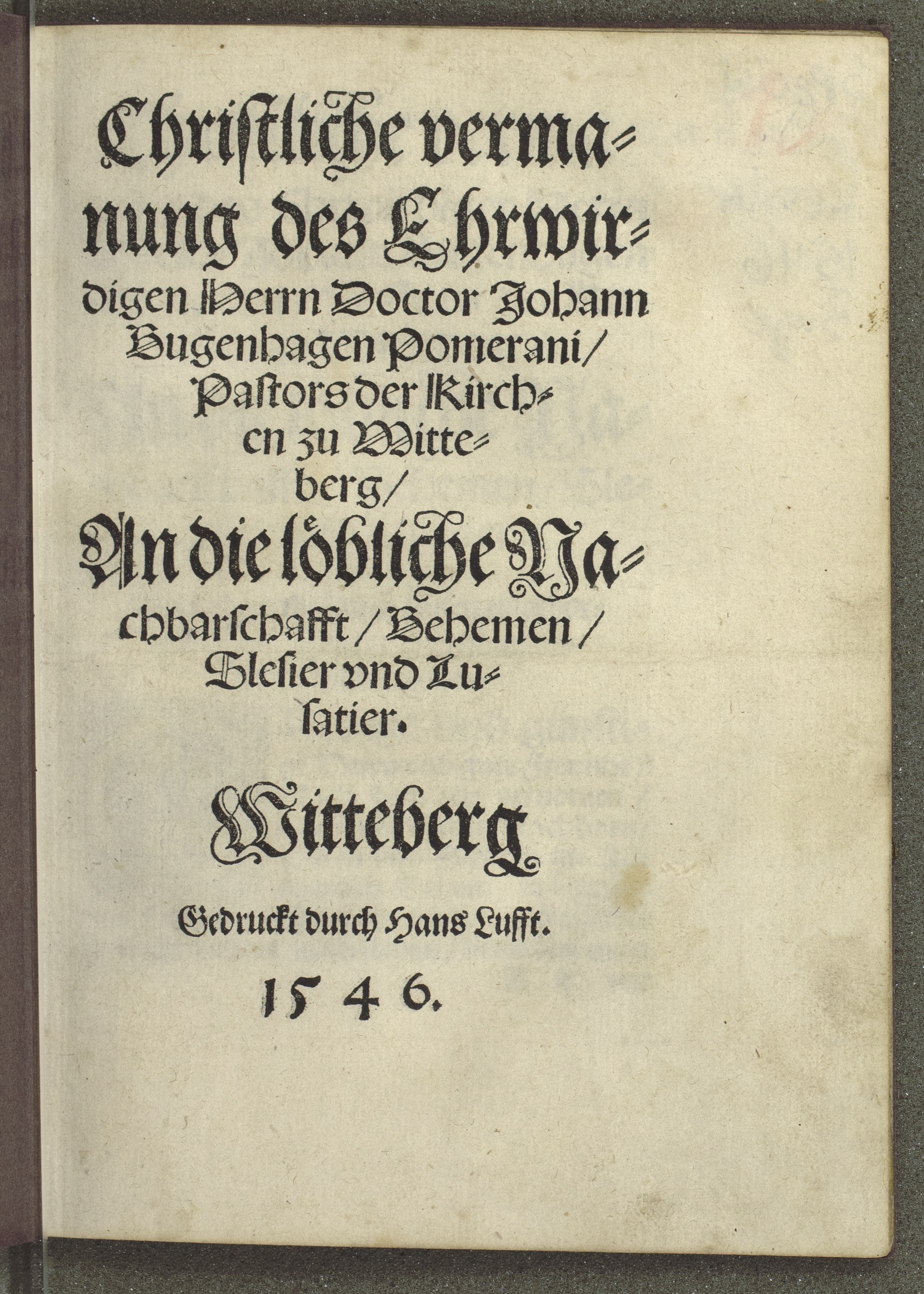
TextChristliche vermanung
Bugenhagen, Johann, 1485-1558Summary: A German translation of Bugenhagen's "Short Admonition Full of Piety" to his neighbors in Bohemia, Silesia, and Lusatia, asking that they not give assistance to the Emperor and his troops in their war against the Protestants.Summary: A German translation of Bugenhagen's "Short Admonition Full of Piety" to his neighbors in Bohemia, Silesia, and Lusatia, asking that they not give assistance to the Emperor and his troops in their war against the Protestants. -
 Still image
Clement, Ecossois, brulé comme héreticus, A. 750
Luiken, Jan, 1649-1712An engraving depicting the death of Clement of Scotland, who was accused of heresy by Saint Boniface and burned at the stake.An engraving depicting the death of Clement of Scotland, who was accused of heresy by Saint Boniface and burned at the stake. -
 Still image
Cointha, martirisée à Alexandrie, A. 252
Luiken, Jan, 1649-1712An engraving depicting Saint Cointha before her martyrdom. The image shows Cointha rejecting the altar of a Roman god as two men bring rope (right) with which to tie her by her feet to a horse to be dragged through the streets.An engraving depicting Saint Cointha before her martyrdom. The image shows Cointha rejecting the altar of a Roman god as two men bring rope (right) with which to tie her by her feet to a horse to be dragged through the streets. -
 Still image
Color historiated woodcut title page of Auff das Vermeint Keiserlich Edict : Ausgangen jm 1531 jare nach dem Reichs tage des 1530 Jars. Glosa
A historiated woodcut border of Martin Luther's Auff das Vermeint Keiserlich Edict : Ausgangen jm 1531 jare nach dem Reichs tage des 1530 Jars. Glosa. The scenes are hand colored in greens and reds. At the top and bottom are scenes of a party with musicians and couples dancing at the bottom and a noble couple seated at a table being served a meal. The sides depict the the decapitation of John the Baptist, with Salome depicted on the left holding the severed head on a platter.A historiated woodcut border of Martin Luther's Auff das Vermeint Keiserlich Edict : Ausgangen jm 1531 jare nach dem Reichs tage des 1530 Jars. Glosa. The scenes are hand colored in greens and reds. At the top and bottom are scenes of a party with musicians and couples dancing at the bottom and a noble couple seated at a table being served a meal. The sides depict the the decapitation of John the Baptist, with Salome depicted on the left holding the severed head on a platter. -
 Text
TextConfession des durchleüchtigen, hochgebornnen Fürsten vnd Herrn, Herrn Christoffs Hertzogen zů Wirtemberg, vnd zů Teckh, Grauen zů Mümppelgart, [et]c. so jr F.G. auff den XXIIII. Januarij, Anno M. D. LII. dem versamelten Concilio zů Triendt durch jhrer F. G. gesandten überantwort
Summary: A 1553 printing of the Württemberg Confession, commissioned by Duke Christoph, drafted by Johannes Brenz in 1551 and signed by other Swabian theologians to be presented at the council of Trent in 1552.Summary: A 1553 printing of the Württemberg Confession, commissioned by Duke Christoph, drafted by Johannes Brenz in 1551 and signed by other Swabian theologians to be presented at the council of Trent in 1552. -
 Text
TextContra haereticum dikaeusistam de dicto Ioannis: Spiritus arguet munde iustitia uado ad Patrem
Flacius Illyricus, Matthias, 1520-1575Summary: Response by Mathias Flacius Illyricus, among the strictest of the Lutheran theologians of his time, to the views of the early Reformer of Nürnberg, Andreas Osiander, on Justification. Osiander emphasized the believer's being made righteous, as opposed to being declared righteous through Christ. Flacius reports on the title page that he had shared his views on this issue privately in writing with friends, but that they had been published without his permission and in a form unacceptable to him. This edition represents the official response by Flacius.Summary: Response by Mathias Flacius Illyricus, among the strictest of the Lutheran theologians of his time, to the views of the early Reformer of Nürnberg, Andreas Osiander, on Justification. Osiander emphasized the believer's being made righteous, as opposed to being declared righteous through Christ. Flacius reports on the title page that he had shared his views on this issue privately in writing with friends, but that they had been published without his permission and in a form unacceptable to him. This edition represents the official response by Flacius. -
 Still image
Cruaictez horibles exercées contre les Chrétiens, sous Diocletien et Maximien, A. 301
Luiken, Jan, 1649-1712An engraving depicting various tortures and executions of Christians during the persecutions ordered under Emperors Diocletian and Maximian. The image shows five different methods of crucifixion (right), people being burned at the stake (center, background), a man being beaten (center), a figure being attacked by dogs (bottom left), and a figure being stabbed, covered in oil, and burned (left), all while the Emperors watch (top left, background).An engraving depicting various tortures and executions of Christians during the persecutions ordered under Emperors Diocletian and Maximian. The image shows five different methods of crucifixion (right), people being burned at the stake (center, background), a man being beaten (center), a figure being attacked by dogs (bottom left), and a figure being stabbed, covered in oil, and burned (left), all while the Emperors watch (top left, background). -
 Text
TextD. Sebastian Meyers, etwan Predicanten zun Barfussern zu Strassburg, Widerrüffung an eyn löblich Freystat Strassburg. Anno M.D.XXiiij
Meyer, Sebastian, 1465-1545?Summary: Public renunciation of his monastic vows and earlier teachings by Sebastian Meyer, a preacher in the city of Strassburg and an early follower of Martin Luther.Summary: Public renunciation of his monastic vows and earlier teachings by Sebastian Meyer, a preacher in the city of Strassburg and an early follower of Martin Luther. -
 Text
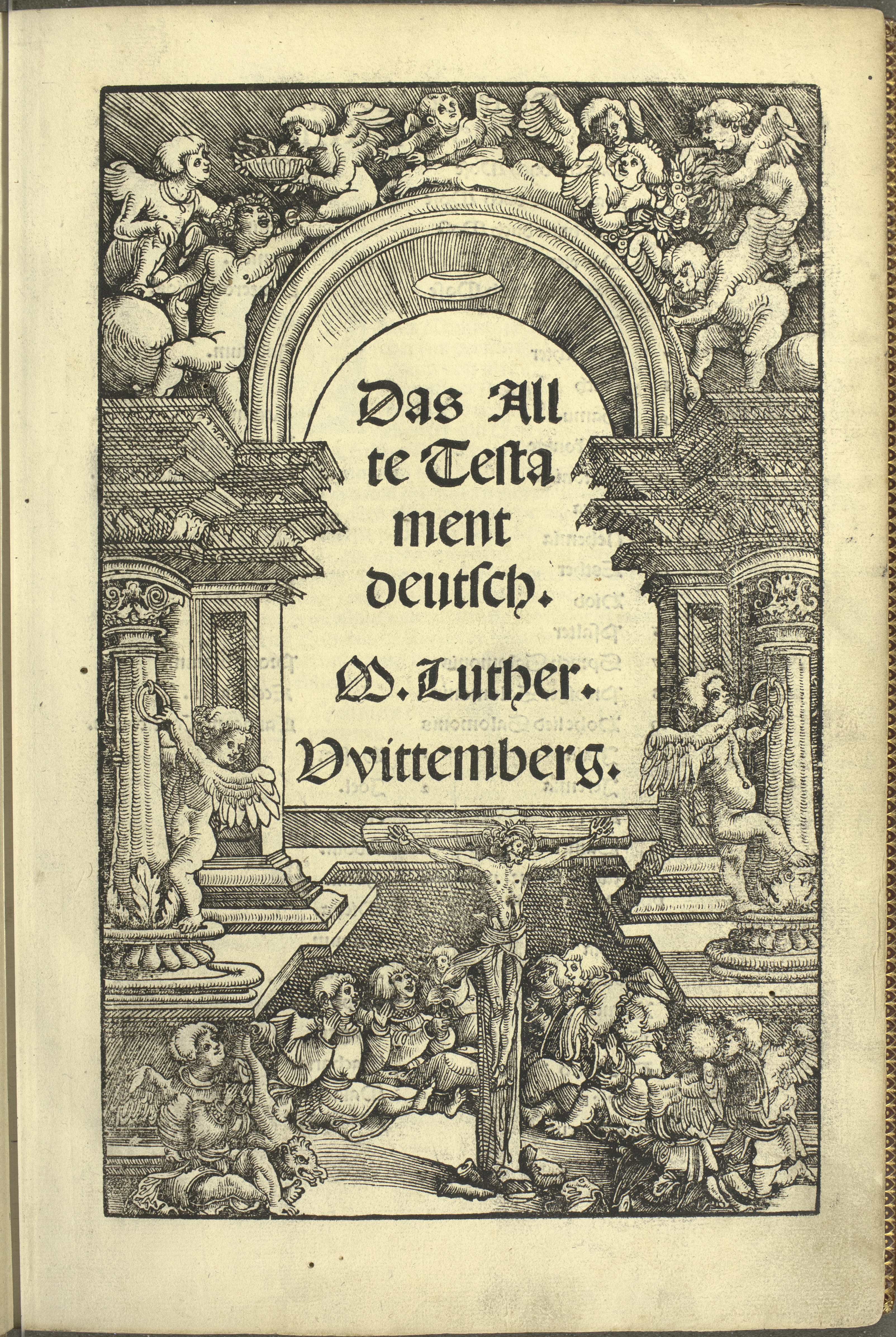
TextDas Allte Testament deutsch
Summary: This is the first printing of the first part of Luther's translation of the Old Testament into idiomatic German. It comprises the Pentateuch, or the five Books of Moses. Scholars long believed that this edition had been destroyed by Luther's friends because of its many printing errors. This printing contains 11 full-page and six initial-figure woodcuts. The volume has been heavily annotated in an early to mid-sixteenth century hand.Summary: This is the first printing of the first part of Luther's translation of the Old Testament into idiomatic German. It comprises the Pentateuch, or the five Books of Moses. Scholars long believed that this edition had been destroyed by Luther's friends because of its many printing errors. This printing contains 11 full-page and six initial-figure woodcuts. The volume has been heavily annotated in an early to mid-sixteenth century hand. -
 Text
TextDas Buch Judith. : zu Wittemberg verdeudscht
Summary: The Book of Judith was probably written between 175 and 125 B.C. and is part of the literature known as the Apocrypha, composed between the Old and New Testament eras. The Catholic Church accepted the Apocrypha as canonical while Luther did not. The story is of the pious widow Judith who beheads the enemy general Holofernes after he has become drunk. It is reminiscent of Jael's killing of Sisera in Judges 4. This is apparently the only separate printing of this translation, issued the same year as the complete German Bible.Summary: The Book of Judith was probably written between 175 and 125 B.C. and is part of the literature known as the Apocrypha, composed between the Old and New Testament eras. The Catholic Church accepted the Apocrypha as canonical while Luther did not. The story is of the pious widow Judith who beheads the enemy general Holofernes after he has become drunk. It is reminiscent of Jael's killing of Sisera in Judges 4. This is apparently the only separate printing of this translation, issued the same year as the complete German Bible. -
 Text
TextDas Elltern die Kinder zuo der Ee nicht zwinge[n] noch hindern : Vnd die Kinder on der Elltern willen sich nicht verloben sollen
Luther, Martin, 1483-1546Open letter to Hans Schott, Knight, by Luther on the subject of filial piety in marriage, i.e. to what extent the wishes of the parent must be taken into account in the choice of a life partner. Parental consent was an issue during the Reformation. Catholic orthodoxy demanded parental consent of the bridal couple as it impacted property. Luther saw value in both sides, arguing that while parents ought not to be able to compel children to marry or prevent weddings, the children ought to seek their parents' consent.Open letter to Hans Schott, Knight, by Luther on the subject of filial piety in marriage, i.e. to what extent the wishes of the parent must be taken into account in the choice of a life partner. Parental consent was an issue during the Reformation. Catholic orthodoxy demanded parental consent of the bridal couple as it impacted property. Luther saw value in both sides, arguing that while parents ought not to be able to compel children to marry or prevent weddings, the children ought to seek their parents' consent. -
 Text
TextDas Elltern die Kinder zur Ehe nicht zwingen noch hyndern : Vnd die kinder on der elltern willen sich nicht verloben sollen
Luther, Martin, 1483-1546Parental consent was an issue during the Reformation. Catholic orthodoxy demanded parental consent of the bridal couple as it impacted property. Luther saw value in both sides, arguing that while parents ought not to be able to compel children to marry or prevent weddings, the children ought to seek their parents' consent.Parental consent was an issue during the Reformation. Catholic orthodoxy demanded parental consent of the bridal couple as it impacted property. Luther saw value in both sides, arguing that while parents ought not to be able to compel children to marry or prevent weddings, the children ought to seek their parents' consent. -
 Text
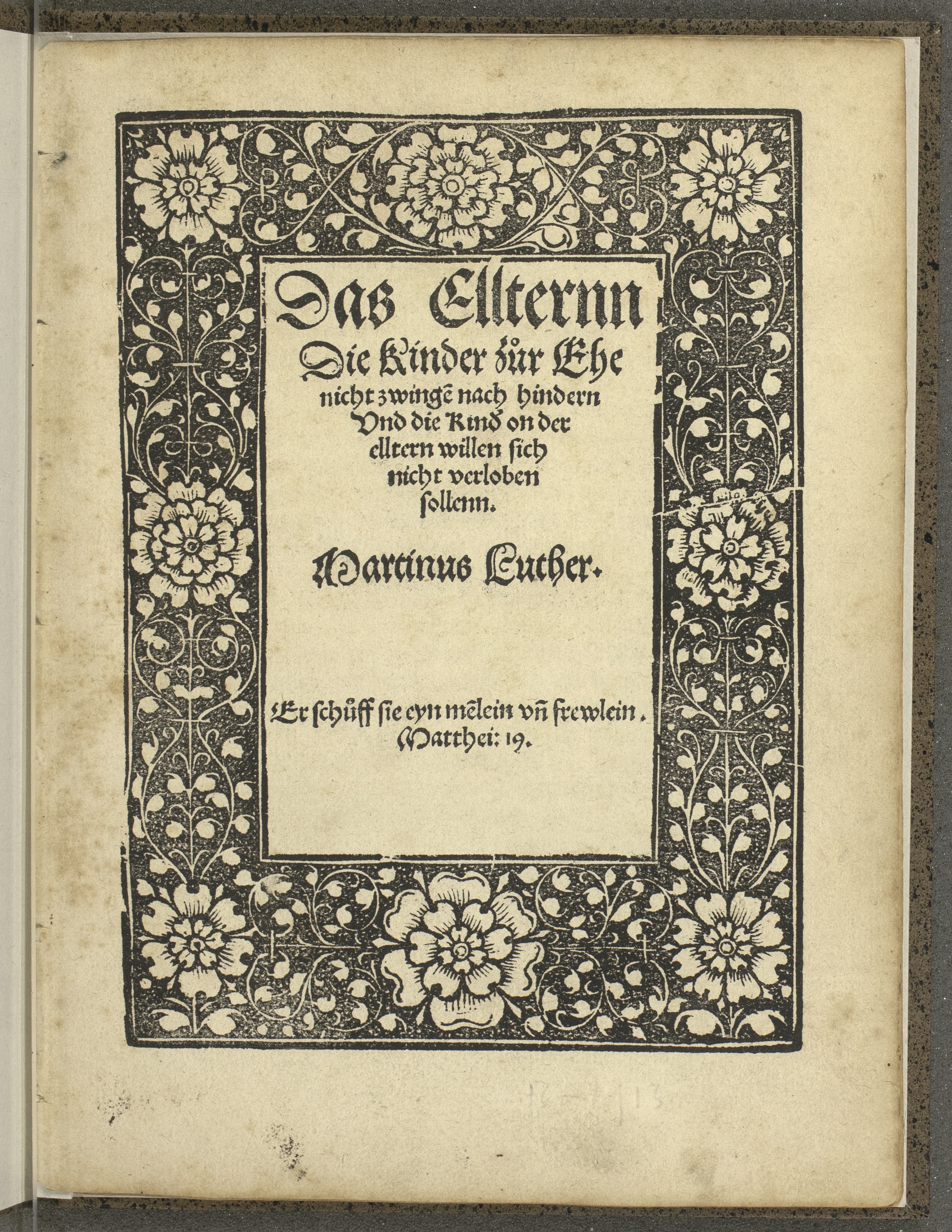
TextDas Ellternn die Kinder zůr Ehe nicht zwinge[n] nach hindern vnd die Kinder on der Elltern willen sich nicht verloben sollenn
Luther, Martin, 1483-1546Summary: Parental consent was an issue during the Reformation. Catholic orthodoxy demanded parental consent of the bridal couple as it impacted property. Luther saw value in both sides, arguing that while parents ought not to be able to compel children to marry or prevent weddings, the children ought to seek their parents' consent.Summary: Parental consent was an issue during the Reformation. Catholic orthodoxy demanded parental consent of the bridal couple as it impacted property. Luther saw value in both sides, arguing that while parents ought not to be able to compel children to marry or prevent weddings, the children ought to seek their parents' consent. -
 Text
TextDas Eltern die kinder zuo der Ehe nicht zwinge[n] noch hindern, : Vnd die kinder on der elltern willen sich nicht verloben solle[n]
Luther, Martin, 1483-1546Summary: Parental consent was an issue during the Reformation. Catholic orthodoxy demanded parental consent of the bridal couple as it impacted property. Luther saw value in both sides, arguing that while parents ought not to be able to compel children to marry or prevent weddings, the children ought to seek their parents' consent.Summary: Parental consent was an issue during the Reformation. Catholic orthodoxy demanded parental consent of the bridal couple as it impacted property. Luther saw value in both sides, arguing that while parents ought not to be able to compel children to marry or prevent weddings, the children ought to seek their parents' consent. -
 Text
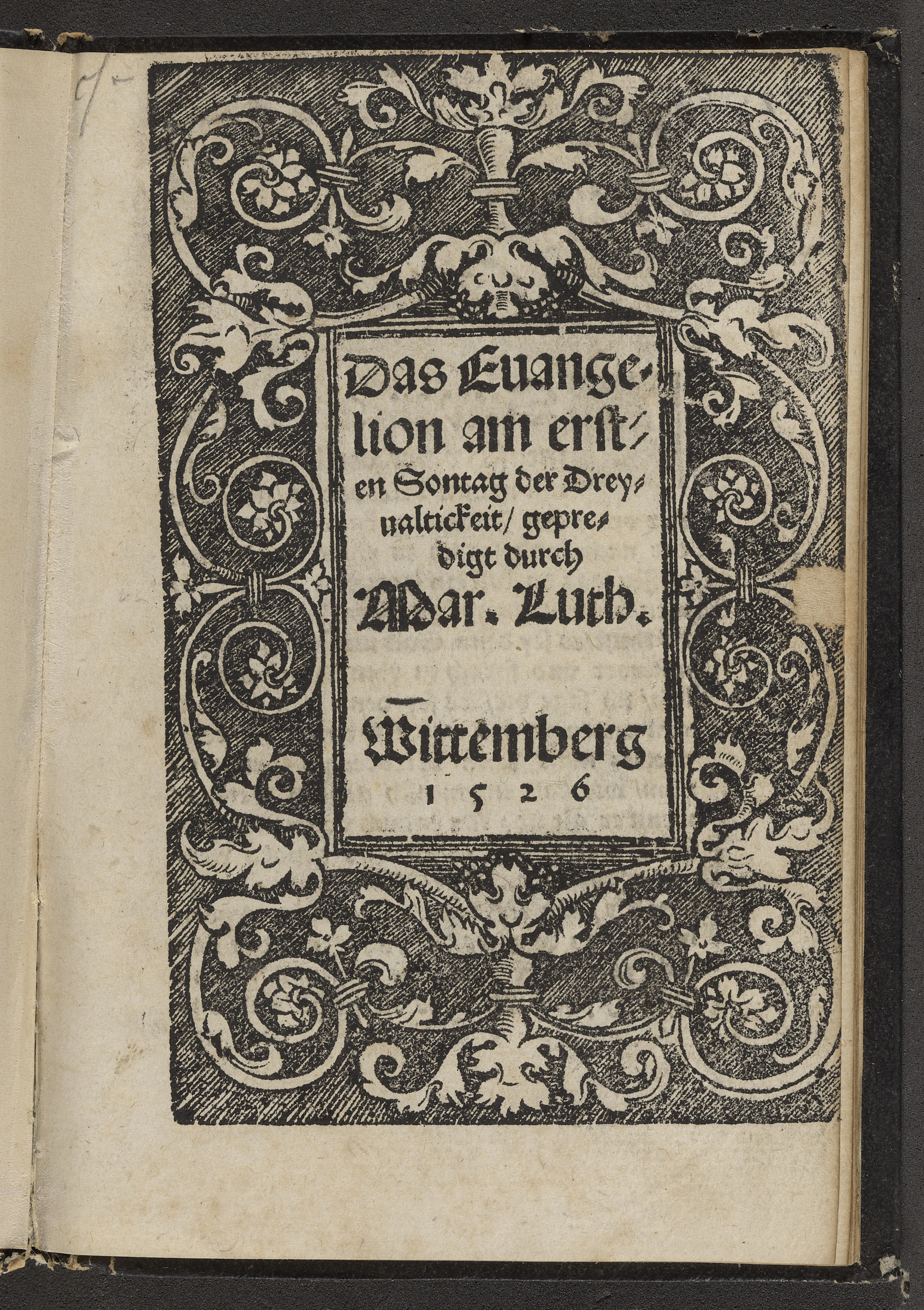
TextDas Euangelion am ersten Sontag der Dreyualtickeit
Luther, Martin, 1483-1546Summary: Sermon preached May 27, 1526, on John 3:1-16 (Nicodemus).Summary: Sermon preached May 27, 1526, on John 3:1-16 (Nicodemus). -
 Text
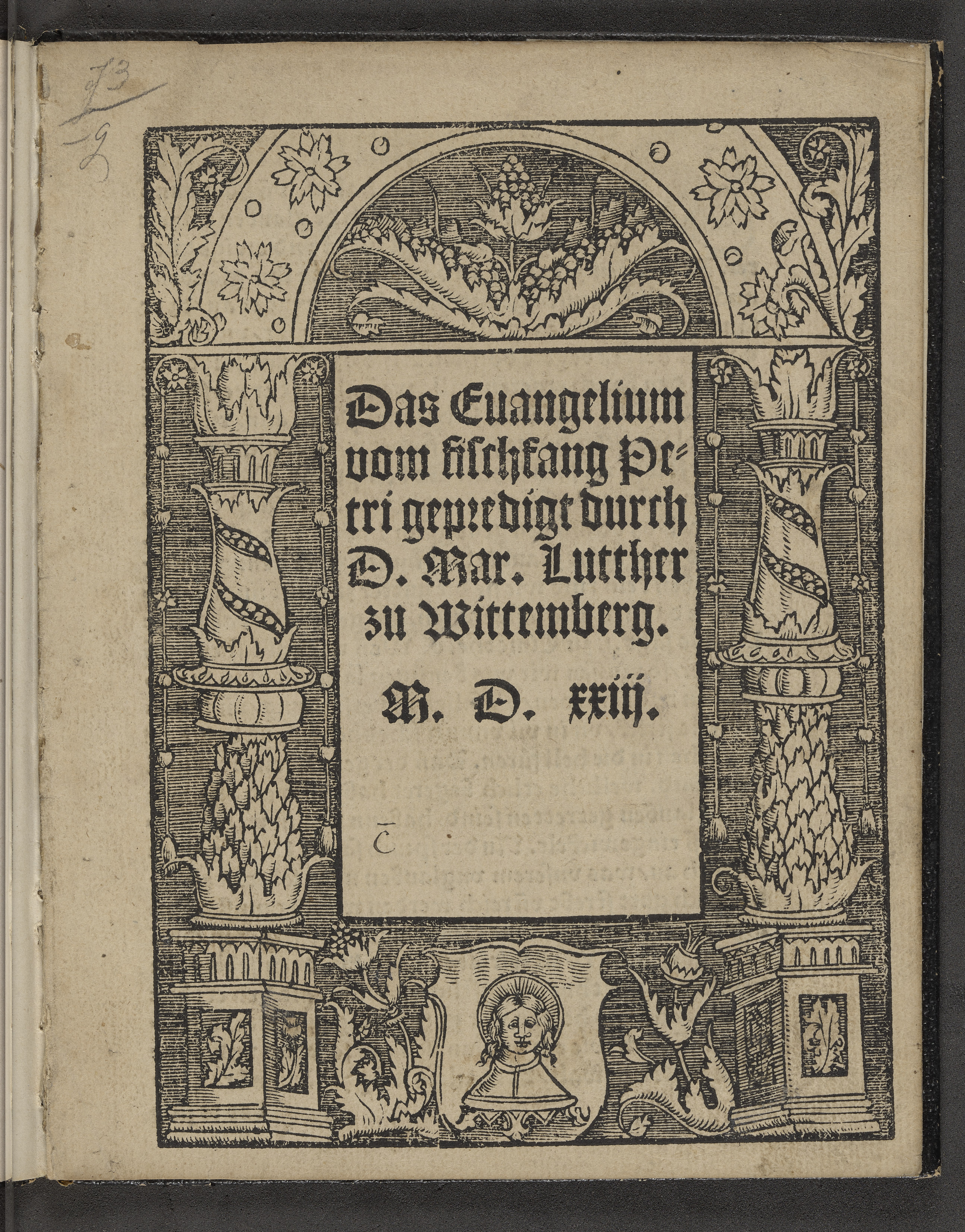
TextDas Euangelium vom fischfang Petri
Luther, Martin, 1483-1546Summary: Sermon preached July 20, 1522, on Luke 5:1-11 (Peter's large catch of fish).Summary: Sermon preached July 20, 1522, on Luke 5:1-11 (Peter's large catch of fish). -
 Text
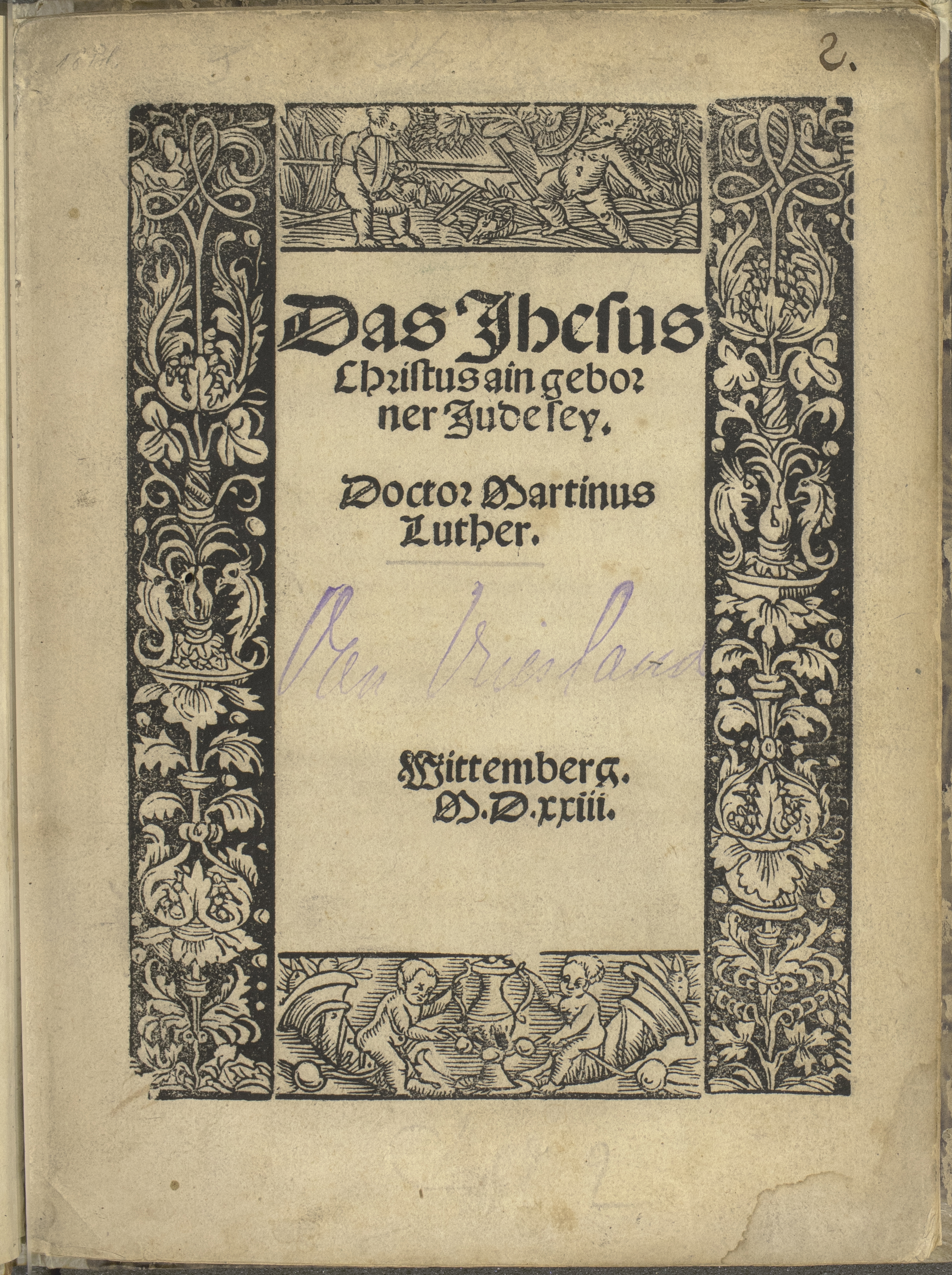
TextDas Ihesus Christus ain geborner Iude sey
Luther, Martin, 1483-1546Summary: The sixth printing (of ten in 1523) of Luther's early treatise, "That Jesus Christ was born a Jew", in which he denies the charges made against him that he did not believe in the Virgin Birth, but rather that Jesus was a naturally born child of Joseph and Mary. In this tract, Luther confesses that he believes that Jesus was born a Jew of the Virgin Mary. He also hopes that his teaching will bring more Jews to convert to Christianity.Summary: The sixth printing (of ten in 1523) of Luther's early treatise, "That Jesus Christ was born a Jew", in which he denies the charges made against him that he did not believe in the Virgin Birth, but rather that Jesus was a naturally born child of Joseph and Mary. In this tract, Luther confesses that he believes that Jesus was born a Jew of the Virgin Mary. He also hopes that his teaching will bring more Jews to convert to Christianity. -
 Text
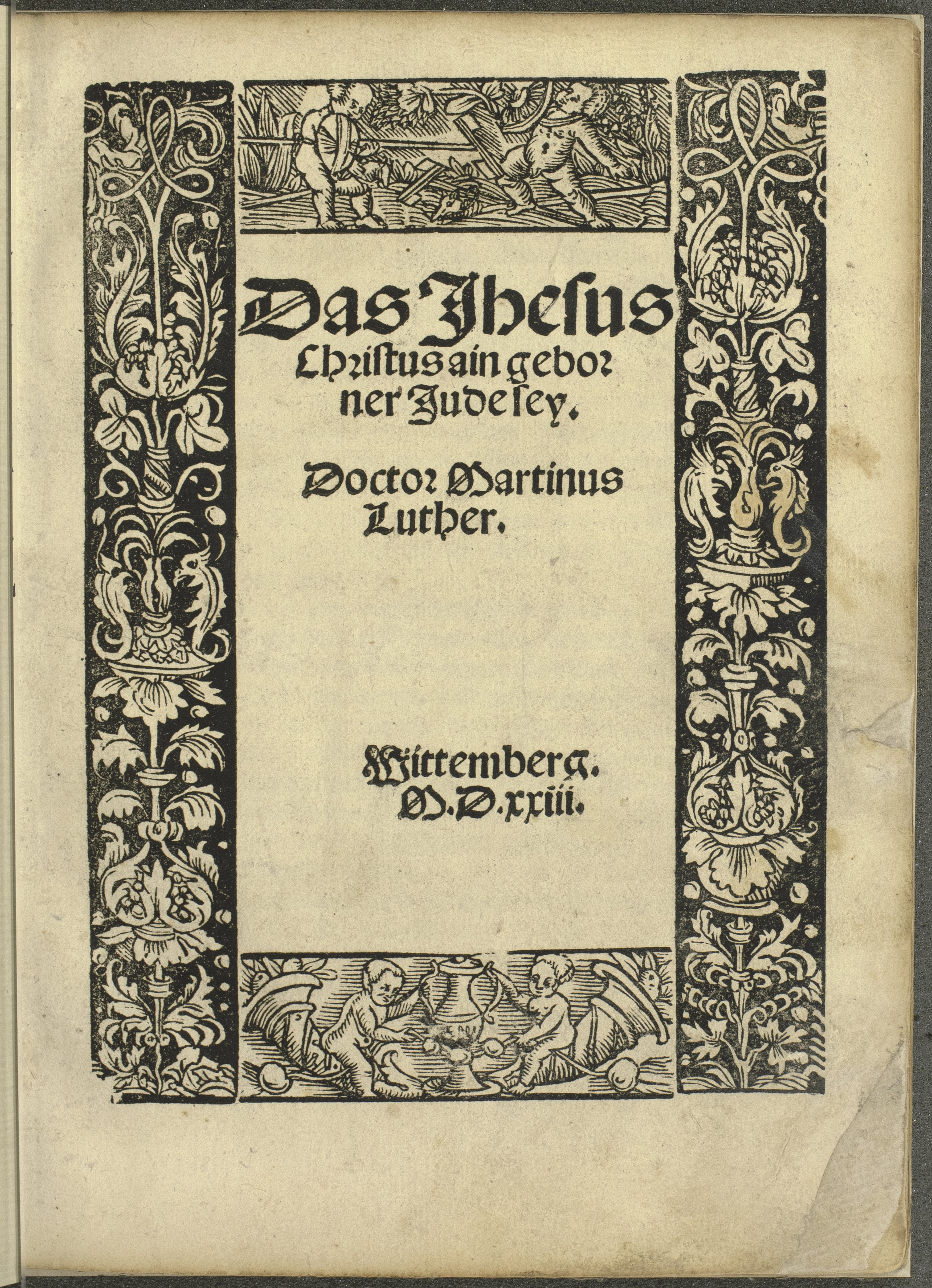
TextDas Ihesus Christus ain geborner Iude sey
Luther, Martin, 1483-1546Summary: The fifth printing of Luther's early treatise, "That Jesus Christ was born a Jew", in which he denies the charges made against him that he did not believe in the Virgin Birth, but rather that Jesus was a naturally born child of Joseph and Mary. In this tract, Luther confesses that he believes that Jesus was born a Jew of the Virgin Mary. He also hopes that his teaching will bring more Jews to convert to Christianity.Summary: The fifth printing of Luther's early treatise, "That Jesus Christ was born a Jew", in which he denies the charges made against him that he did not believe in the Virgin Birth, but rather that Jesus was a naturally born child of Joseph and Mary. In this tract, Luther confesses that he believes that Jesus was born a Jew of the Virgin Mary. He also hopes that his teaching will bring more Jews to convert to Christianity. -
 Text
TextDas Jesus Christus ein geborner Jude sey
Luther, Martin, 1483-1546Summary: Luther was accused by Ferdinand (brother of Charles V) of teaching that Jesus was the seed of Abraham and that Mary was not a virgin either before or after the birth of Jesus. Luther replied with this booklet that demonstrated the human and divine natures of Jesus and showed sensitivity to Jesus' Jewish background. Luther hoped that books like this could be used to convert Jews from their erroneous beliefs.Summary: Luther was accused by Ferdinand (brother of Charles V) of teaching that Jesus was the seed of Abraham and that Mary was not a virgin either before or after the birth of Jesus. Luther replied with this booklet that demonstrated the human and divine natures of Jesus and showed sensitivity to Jesus' Jewish background. Luther hoped that books like this could be used to convert Jews from their erroneous beliefs. -
 Text
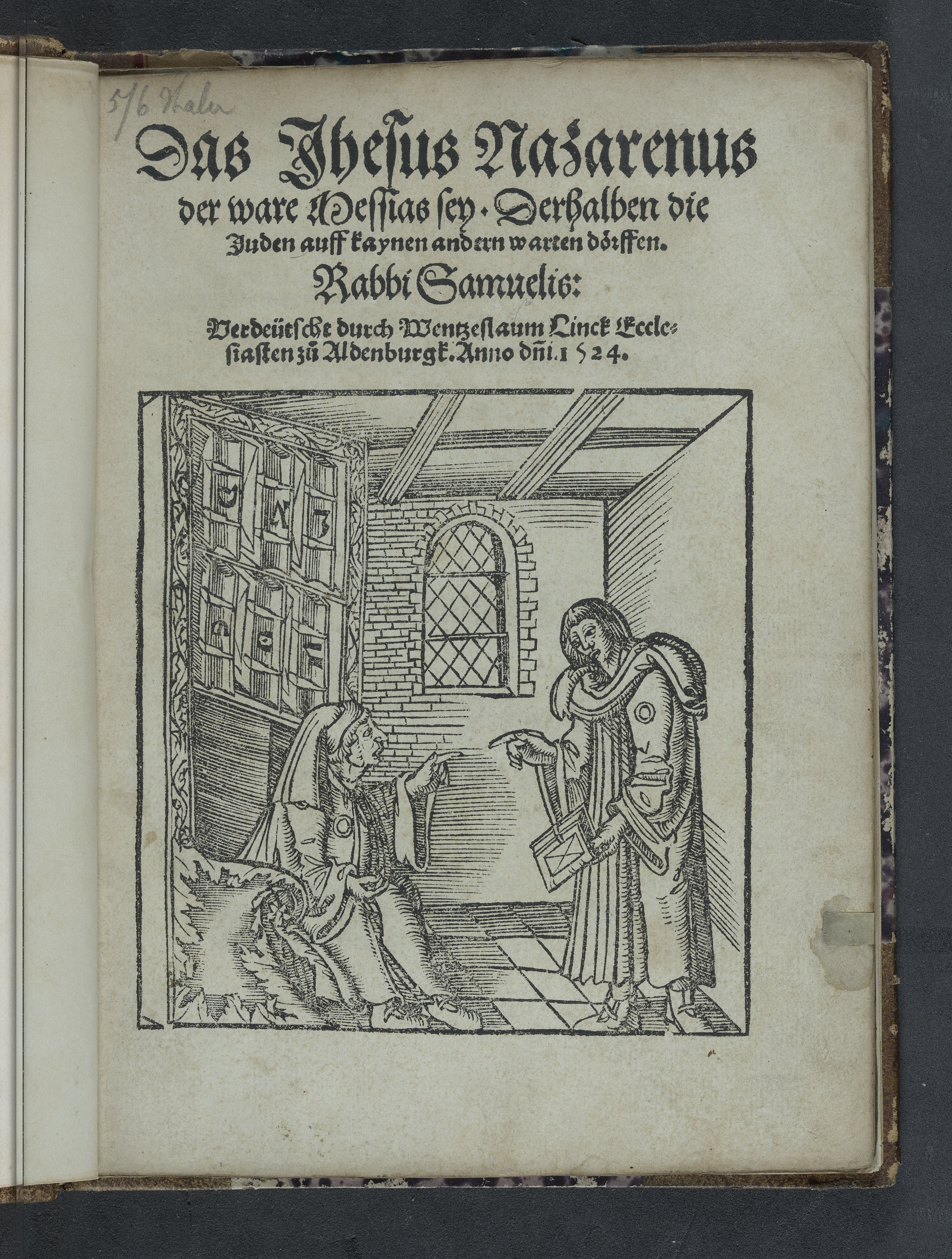
TextDas Jhesus Nazarenus der ware Messias sey : Derhalben die Juden auff kaynen andern warten dörffen
Samuel, MarochitanusSummary: German translation by Wenzeslaus Linck of Epistola contra Judaeorum, thought to be written in Arabic by Samuel of Marocco, an apostate Jew at the beginning of the 11th century and translated into Latin by the Spanish Dominican Alphonsus Bonihominis in the 14th century and widely disseminated. Bonihominis is likely the real author of the work.Summary: German translation by Wenzeslaus Linck of Epistola contra Judaeorum, thought to be written in Arabic by Samuel of Marocco, an apostate Jew at the beginning of the 11th century and translated into Latin by the Spanish Dominican Alphonsus Bonihominis in the 14th century and widely disseminated. Bonihominis is likely the real author of the work. -
 Text
TextDas Magnificat Vorteutschet vnd auszgelegt
Luther, Martin, 1483-1546Summary: Luther wrote this exposition of the Magnificent (Luke 1:46-55) in March 1521. He dedicated it to Duke Johann Frederich of Saxony as a token of his thanks to the Duke for his support and encouragement after Luther's condemnation by Pope Leo X. Text in German includes Luther's German translation of the Magnificat from the N.T. Greek of St. Luke's Gospel.Summary: Luther wrote this exposition of the Magnificent (Luke 1:46-55) in March 1521. He dedicated it to Duke Johann Frederich of Saxony as a token of his thanks to the Duke for his support and encouragement after Luther's condemnation by Pope Leo X. Text in German includes Luther's German translation of the Magnificat from the N.T. Greek of St. Luke's Gospel.