Search
398 resources
398 items
Language
Latin
-
 Still image
Christ enthroned, surrounded by the Apostles : a leaf from the Nuremberg chronicle of 1493
Wolgemut, Michael, 1434-1519Leaf CI of the German Nuremberg Chronicle, with a large woodcut, colorized by hand, depicting Christ enthroned, surrounded by the Apostles.Leaf CI of the German Nuremberg Chronicle, with a large woodcut, colorized by hand, depicting Christ enthroned, surrounded by the Apostles. -
 Still image
Christ's Resurrection
A woodcut depicting the resurrection of Jesus Christ. Christ is depicted at the top center of the image, surrounded by cherubim. At the bottom right is Christ's open and empty tomb. On the bottom left, a group of cherubim are burying the body of a man, perhaps representing Christ's transformation from a physical body to a spiritual one.A woodcut depicting the resurrection of Jesus Christ. Christ is depicted at the top center of the image, surrounded by cherubim. At the bottom right is Christ's open and empty tomb. On the bottom left, a group of cherubim are burying the body of a man, perhaps representing Christ's transformation from a physical body to a spiritual one. -
 Text
TextChrysopassus
Eck, Johann, 1486-1543Summary: A significant treatise on predestination. Johann Eck expounds a view of free will and merit, which was soon to come under attack by Martin Luther and other Protestants.Summary: A significant treatise on predestination. Johann Eck expounds a view of free will and merit, which was soon to come under attack by Martin Luther and other Protestants. -
 Still image
Clemens VII Papa Florentinus
Soye, Philippe deAn engraved portrait of Pope Clement VII, who sat as pope from 1523-1534. The portrait shows Clement VII wearing a simple miter and vestments with his coat of arms featured in the upper right corner. The portrait is labeled "CLEMENS. VII. PAPA. FLORENTINVS".An engraved portrait of Pope Clement VII, who sat as pope from 1523-1534. The portrait shows Clement VII wearing a simple miter and vestments with his coat of arms featured in the upper right corner. The portrait is labeled "CLEMENS. VII. PAPA. FLORENTINVS". -
 Still image
Clementis VIII. Pont. Max. monumentum quod Paulus V. Pont. Max. grati in eum pontificem animi ergo in suo sacello magnificentissime extruxit, tum apposita eius effigie, tum rebus ab eo egregie gestis in marmore expressis, et incisis
An engraving depicting the papal monument of Clement VIII in the Borghese Chapel in the Basilica di Santa Maria Maggiore. The monument sits on the western wall of the chapel and includes a statue of the pope as well as depictions of his life and works.An engraving depicting the papal monument of Clement VIII in the Borghese Chapel in the Basilica di Santa Maria Maggiore. The monument sits on the western wall of the chapel and includes a statue of the pope as well as depictions of his life and works. -
 Still image
Coat of Arms of Johann "The Constant", Elector of Saxony
Cranach, Lucas, 1472-1553A woodcut depicting the coat of arm sof Johann "the Constant" (or "Steadfast"), Elector of Saxony, who was a supporter of Luther and his movement. The coat of arms features a pair of crossed swords at the center, surrounded by ten fields with varying iconography, including lions, eagles, and a rose. Three helmets with different crests sit above the coat of arms and the entire composition is surrounded by a host of cherubs and a pair of trees.A woodcut depicting the coat of arm sof Johann "the Constant" (or "Steadfast"), Elector of Saxony, who was a supporter of Luther and his movement. The coat of arms features a pair of crossed swords at the center, surrounded by ten fields with varying iconography, including lions, eagles, and a rose. Three helmets with different crests sit above the coat of arms and the entire composition is surrounded by a host of cherubs and a pair of trees. -
![A woodcut version of Johann Reuchlin's coat of arms, featured on the title page of his work De arte cabalistica. The coat of arms includes a shield featuring an altar inscribed with "ARACAPNIONIS" (Ara Capnionis, the "altar of Capnion [Reuchlin]"), topped with burning coals, and encircled with three twisted ropes or garlands. Set atop the shield is a helmet with a cross inscribed on the neck, crowned with another three twisted ropes or garlands and a quartered wheel. Surrounding both helmet and shield are stylized vegitation.](https://digital.pitts.emory.edu/files/large/P_300000152440_P003/P_300000152440_P003_PROD.jpg) Still image
Still imageCoat of Arms of Johann Reuchlin
A woodcut version of Johann Reuchlin's coat of arms, featured on the title page of his work De arte cabalistica. The coat of arms includes a shield featuring an altar inscribed with "ARACAPNIONIS" (Ara Capnionis, the "altar of Capnion [Reuchlin]"), topped with burning coals, and encircled with three twisted ropes or garlands. Set atop the shield is a helmet with a cross inscribed on the neck, crowned with another three twisted ropes or garlands and a quartered wheel. Surrounding both helmet and shield are stylized vegitation.A woodcut version of Johann Reuchlin's coat of arms, featured on the title page of his work De arte cabalistica. The coat of arms includes a shield featuring an altar inscribed with "ARACAPNIONIS" (Ara Capnionis, the "altar of Capnion [Reuchlin]"), topped with burning coals, and encircled with three twisted ropes or garlands. Set atop the shield is a helmet with a cross inscribed on the neck, crowned with another three twisted ropes or garlands and a quartered wheel. Surrounding both helmet and shield are stylized vegitation. -
 Still image
Coelvm empyrevm immobile
An Aristotelean diagram of the solar system featureing the earth at the center surrounded by water, air, and fire. Additional celestial bodies are shown in order moving outward from Earth. In order, they are listed as: Lunae (Moon), Mercurii, Veneris (Venus), Solis (Sun), Martis (Mars), Iovis (Jupiter), Saturni, Aplanes seu firmamentum, crystallinum unum, crystalinum alterum, and Primum mobile.An Aristotelean diagram of the solar system featureing the earth at the center surrounded by water, air, and fire. Additional celestial bodies are shown in order moving outward from Earth. In order, they are listed as: Lunae (Moon), Mercurii, Veneris (Venus), Solis (Sun), Martis (Mars), Iovis (Jupiter), Saturni, Aplanes seu firmamentum, crystallinum unum, crystalinum alterum, and Primum mobile. -
 Still image
Coffin of Pope Pius V
Dorigny, Nicolas, 1658-1746An engraving depicting the coffin of Pope Pius V. The side of the coffin features a relief of the Pope in repose and has a decorative lid featuring a crest reading, "CORPUS B. PII. V. PONT. MAX. EX ORD. FF. PRAED." surrounded by cherub heads, roses, and lilies.An engraving depicting the coffin of Pope Pius V. The side of the coffin features a relief of the Pope in repose and has a decorative lid featuring a crest reading, "CORPUS B. PII. V. PONT. MAX. EX ORD. FF. PRAED." surrounded by cherub heads, roses, and lilies. -
 Text
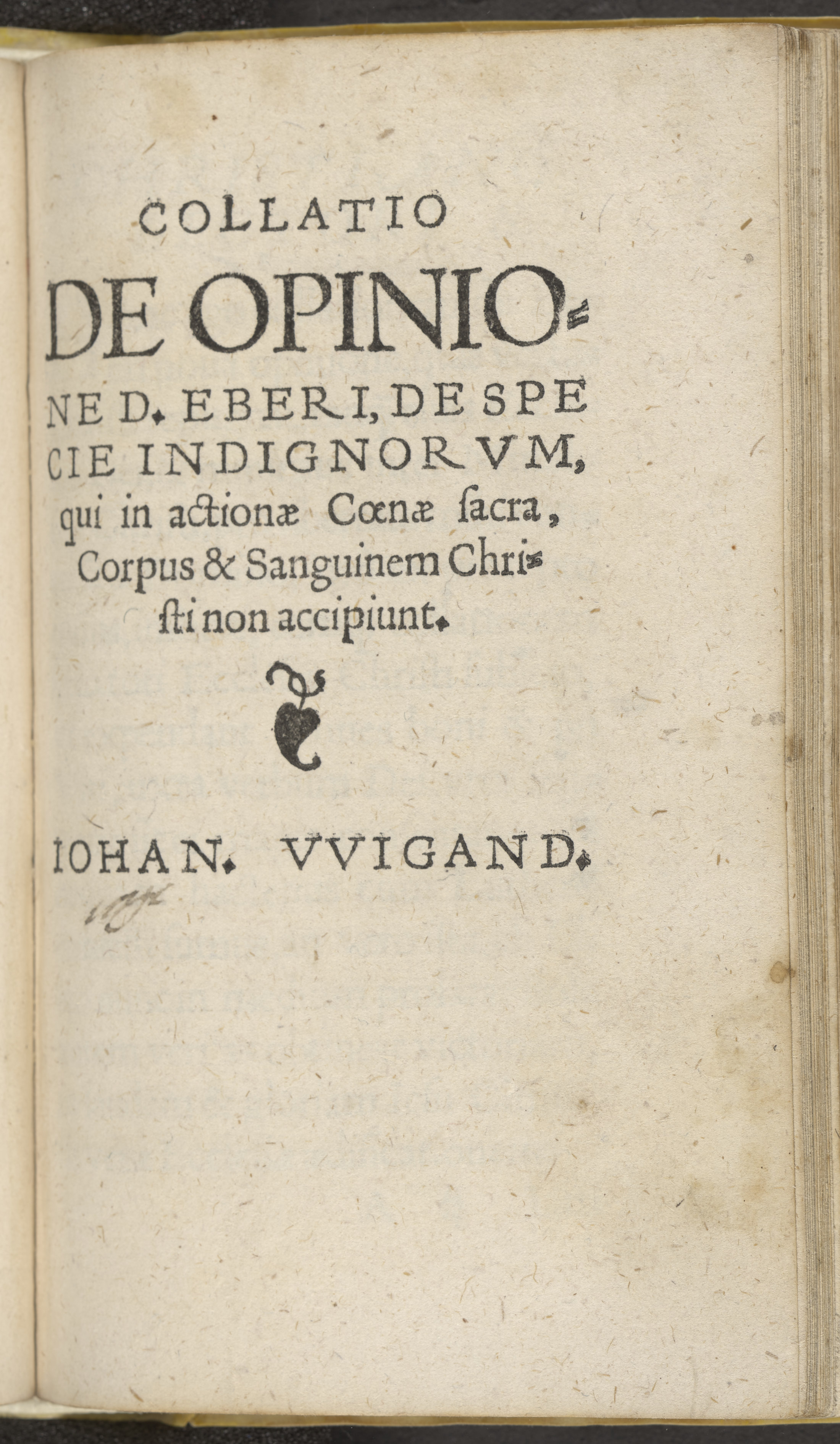
TextCollatio de opinione D. Eberi, de specie Indignorum, qui in actionae coenae sacra, corpus & sanguinem Christi non accipiunt
Wigand, Johann, 1523-1587Summary: Compilation by Johann Wigand of arguments made by the Reformer Paul Eber in support of the real presence of Christ in the eucharist.Summary: Compilation by Johann Wigand of arguments made by the Reformer Paul Eber in support of the real presence of Christ in the eucharist. -
 Text
TextCommonefactio De periculis horum temporum : proposita scholasticis Academiae Vuitebergensis, XII. Cal. IXbris, Anno M.D.LXV. Rectore Micaelo Teubero , I.V. doctore
Peucer, Kaspar, 1525-1602Summary: Lecture delivered to the faculty and students of the University of Wittenberg on "the perils of these times" by Kaspar Peucer, Philipp Melanchthon's son-in-law. The perils to which he refers are the military threat of the Turks to the east, and the plague.Summary: Lecture delivered to the faculty and students of the University of Wittenberg on "the perils of these times" by Kaspar Peucer, Philipp Melanchthon's son-in-law. The perils to which he refers are the military threat of the Turks to the east, and the plague. -
 Artifact
Communion token from the Four Parishes of Perth in Perth, Perthshire, Scotland
A communion token from the Four Parishes of Perth in Perth, Perthshire, Scotland. The token is oval in shape with inscriptions on the obverse, "Pro Rege Lege et Grege" with the Perth coat of arms, and reverse, "Four Parishes of Perth Erected 1807".A communion token from the Four Parishes of Perth in Perth, Perthshire, Scotland. The token is oval in shape with inscriptions on the obverse, "Pro Rege Lege et Grege" with the Perth coat of arms, and reverse, "Four Parishes of Perth Erected 1807". -
 Still image
Conclave of Pope Urban VIII
An woodcut depicting the conclave of Pope Urban VIII. A group of cardinals sits around a table with the pope at the center, flanked by C. di Fiorenza, Francisco di Barbarini, and Antonio di Barbarini. On the bottom right corner of the table is a roll of paper that reads, "Tutto sta male" ("everything is bad").An woodcut depicting the conclave of Pope Urban VIII. A group of cardinals sits around a table with the pope at the center, flanked by C. di Fiorenza, Francisco di Barbarini, and Antonio di Barbarini. On the bottom right corner of the table is a roll of paper that reads, "Tutto sta male" ("everything is bad"). -
![An engraved headpiece to the second, eighth, and fourteenth books of Moyne's epic, "Saint Louys," depicting a pair of thorny vines growing into a crown around three lilies, flanked by a pair of heads blowing air, below which is a banner with the Latin motto, "Concutient non excutient." (They will shake/stike violently [but] they will not shake off/cast out).](https://digital.pitts.emory.edu/files/large/P_300000202024_P169/P_300000202024_P169-cr.jpg) Still image
Still imageConcutient non excutient
Chauveau, François, 1613-1676An engraved headpiece to the second, eighth, and fourteenth books of Moyne's epic, "Saint Louys," depicting a pair of thorny vines growing into a crown around three lilies, flanked by a pair of heads blowing air, below which is a banner with the Latin motto, "Concutient non excutient." (They will shake/stike violently [but] they will not shake off/cast out).An engraved headpiece to the second, eighth, and fourteenth books of Moyne's epic, "Saint Louys," depicting a pair of thorny vines growing into a crown around three lilies, flanked by a pair of heads blowing air, below which is a banner with the Latin motto, "Concutient non excutient." (They will shake/stike violently [but] they will not shake off/cast out). -
 Text
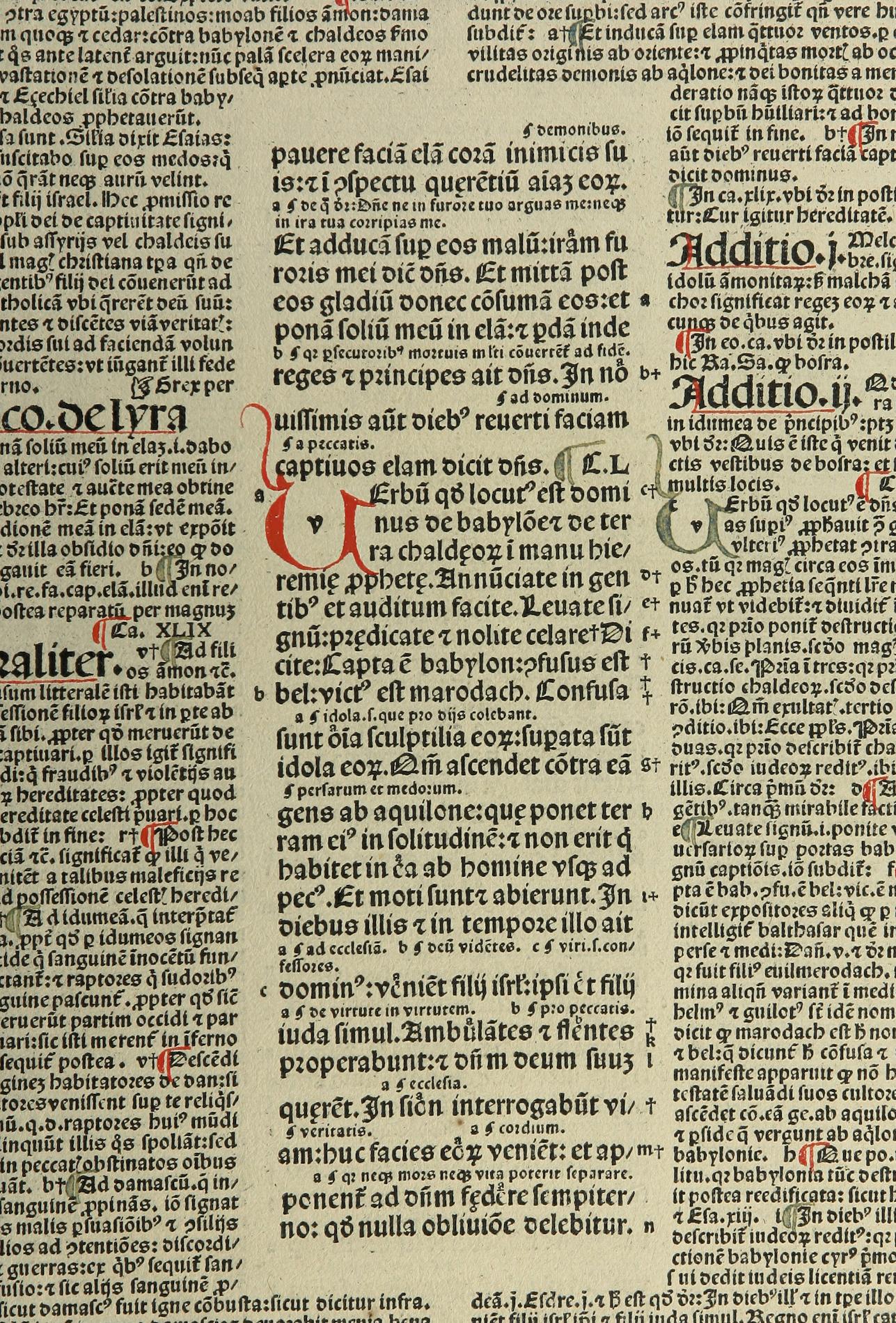
TextConfessio fidei exhibita Inuictiss. Imp. Carolo V. Caesari Aug. in Comicijs Augustae, anno M.D.XXX. Addita est Apologia Confessionis. Wittenbergae
Summary: This is a fine, well-preserved copy of a sixteenth century edition of the "Confessio Augustana and Melanchthon's Apology."Summary: This is a fine, well-preserved copy of a sixteenth century edition of the "Confessio Augustana and Melanchthon's Apology." -
 Text
TextConfutatio XCI. articulorum e tribus Martini Lutheri Teuthonicis sermonibus excerptorum
Cochlaeus, Johannes, 1479-1552Summary: Second printing of the first edition of a tract listing 91 errors in three sermons by Martin Luther.Summary: Second printing of the first edition of a tract listing 91 errors in three sermons by Martin Luther. -
 Still image
Consolari moestos
Galle, Philippe, 1537-1612The act of consoling the afflicted, illustrated and accompanied by scriptural references.The act of consoling the afflicted, illustrated and accompanied by scriptural references. -
 Text
TextContra Henricum regem Angliae
Luther, Martin, 1483-1546Summary: This is the second and much expanded edition of Luther's reply to Henry VIII's Assertion of the Seven Sacraments. Luther replies quite moderately (for him) to what he feels to be the King's unwarranted assertions on the Catholic Sacraments. This is the second printing of this edition.Summary: This is the second and much expanded edition of Luther's reply to Henry VIII's Assertion of the Seven Sacraments. Luther replies quite moderately (for him) to what he feels to be the King's unwarranted assertions on the Catholic Sacraments. This is the second printing of this edition. -
 Text
TextCristianus ad solitariu[m] quendam De ymagine mundi : Honorio.
Honorius, of Autun, approximately 1080-approximately 1156Summary:Summary: -
 Still image
Cross-section of the Borghese Chapel in the Basilica di Santa Maria Maggiore looking east
An engraving depicting a cross-section of the Borghese Chapel in the Basilica di Santa Maria Maggiore, facing east, with a view of the dome and the papal monument of Paul V.An engraving depicting a cross-section of the Borghese Chapel in the Basilica di Santa Maria Maggiore, facing east, with a view of the dome and the papal monument of Paul V. -
 Still image
Cross-section of the Borghese Chapel in the Basilica di Santa Maria Maggiore looking north
An engraving depicting a cross-section of the Borghese Chapel in the Basilica di Santa Maria Maggiore, facing north, with a view of the dome and through the entrance into the nave.An engraving depicting a cross-section of the Borghese Chapel in the Basilica di Santa Maria Maggiore, facing north, with a view of the dome and through the entrance into the nave.