Search
932 resources
932 items
Time Period
Sixteenth century
-
 Text
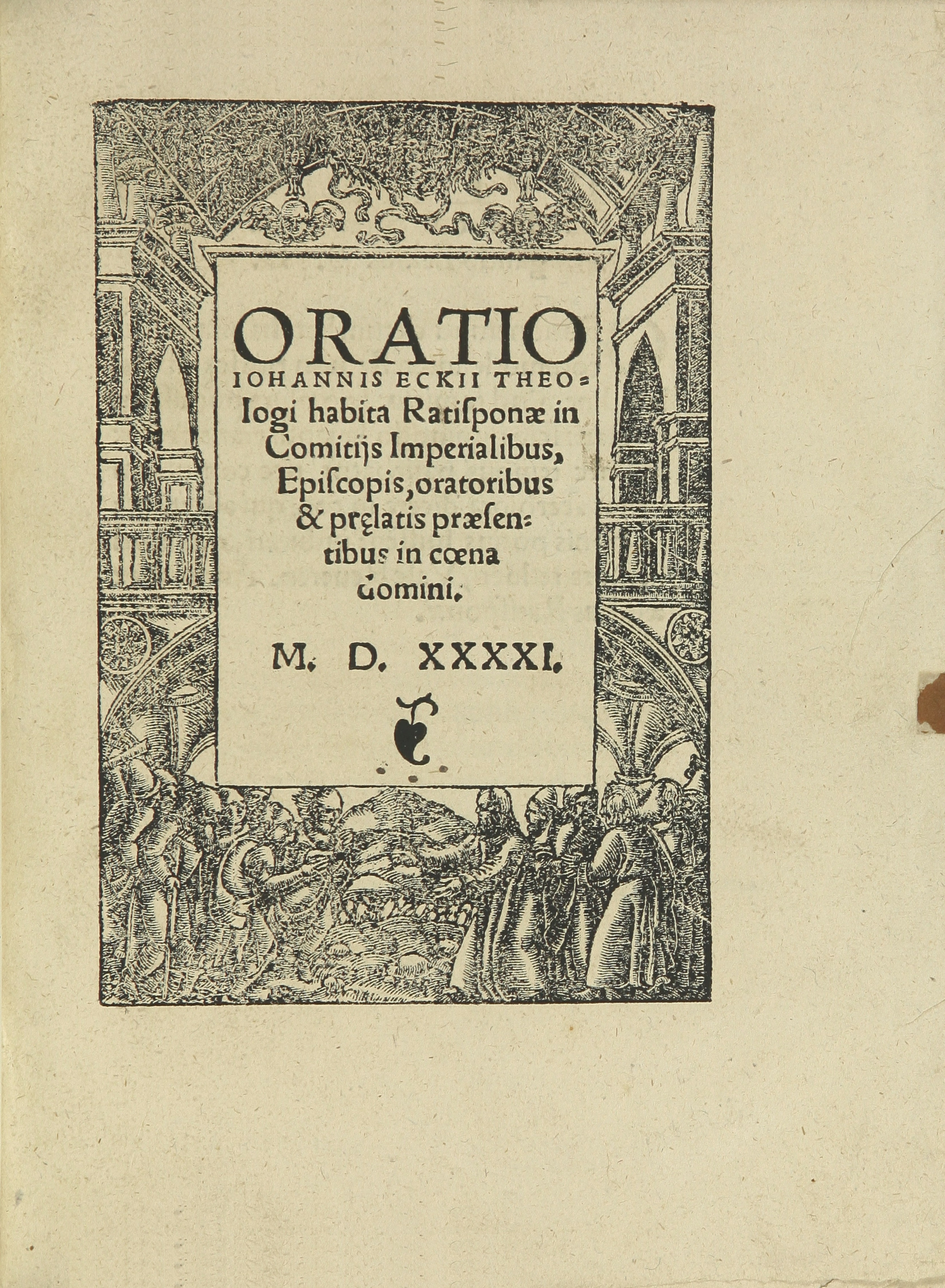
TextOratio
Eck, Johann, 1486-1543Summary: This is the first printing of Eck's speech to the Diet of Regensburg on April 5, 1541, defining the Catholic understanding of the Lord's Supper. The Diet of Regensburg proved to be Eck's last appearance as a major theological political leader, for his health declined and he could no longer bear the weight of these grueling encounters.Summary: This is the first printing of Eck's speech to the Diet of Regensburg on April 5, 1541, defining the Catholic understanding of the Lord's Supper. The Diet of Regensburg proved to be Eck's last appearance as a major theological political leader, for his health declined and he could no longer bear the weight of these grueling encounters. -
 Text
TextOratio in funere Reverendi viri D. Martini Lutheri
Melanchthon, Philipp, 1497-1560Summary: This is the original Latin version of Melanchthon's funeral oration for Luther, preached in Wittenberg, February 22, 1546. The friendship between Luther and Melanchthon was almost legendary, even in their own lifetimes, and this deeply moving oration is an eloquent testimony to the depth of Melanchthon's feelings for his friend of twenty-eight years.Summary: This is the original Latin version of Melanchthon's funeral oration for Luther, preached in Wittenberg, February 22, 1546. The friendship between Luther and Melanchthon was almost legendary, even in their own lifetimes, and this deeply moving oration is an eloquent testimony to the depth of Melanchthon's feelings for his friend of twenty-eight years. -
 Text
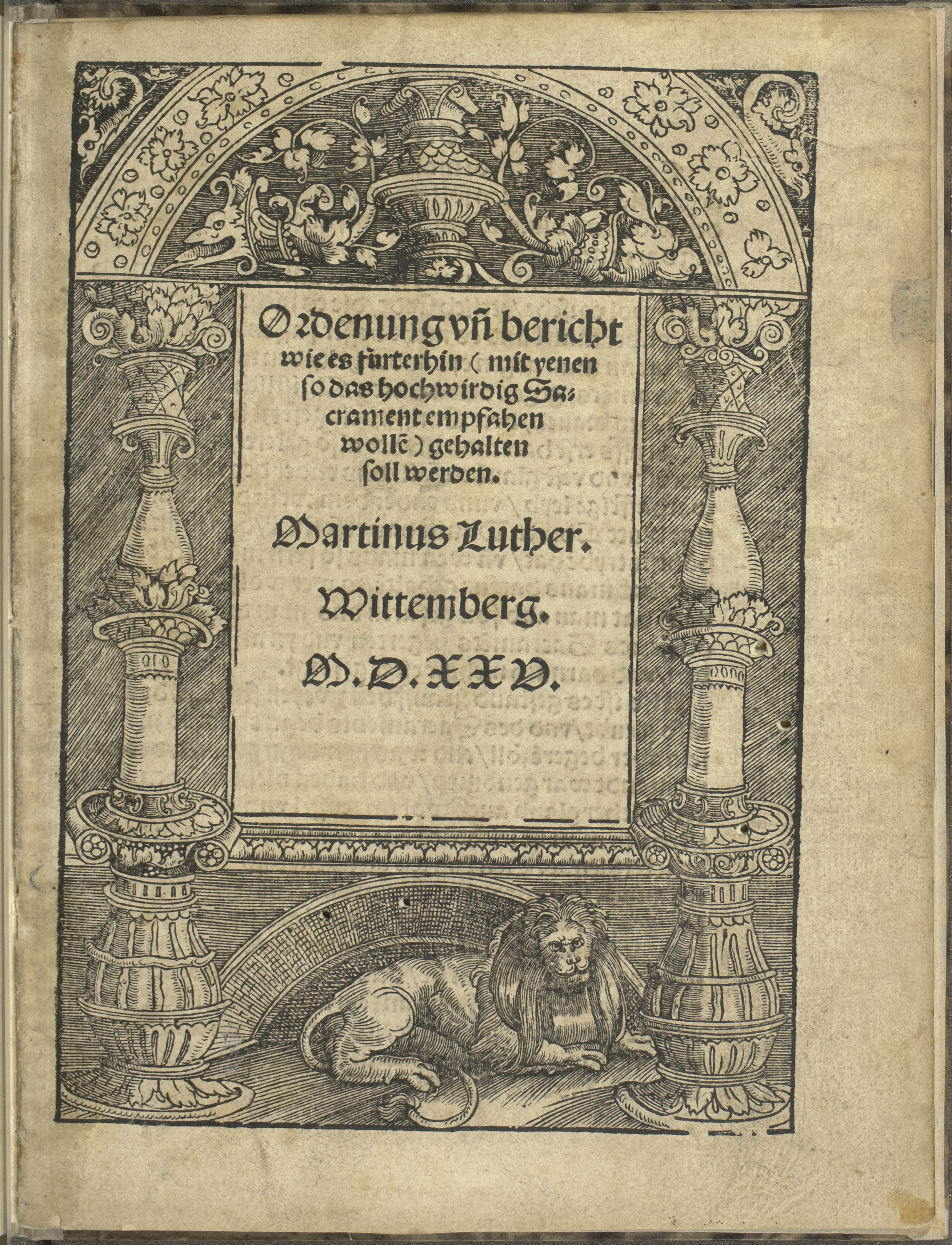
TextOrdenung vn[d] bericht wie es furterhin (mit yenen so das hochwirdig Sacrament empfahen wolle[n]) gehalten soll werden
Luther, Martin, 1483-1546Summary: Early guidance by Luther on how a Christian ought to approach and receive the Lord's Supper. Includes the Words of Institution, the Aaronic Benediction, and a series of questions that ought to be put to everyone wishing to receive the Sacrament, with appropriate answers.Summary: Early guidance by Luther on how a Christian ought to approach and receive the Lord's Supper. Includes the Words of Institution, the Aaronic Benediction, and a series of questions that ought to be put to everyone wishing to receive the Sacrament, with appropriate answers. -
 Still image
Ordination of Priests
A woodcut depicting a bishop ordinating a group of priests. The bishop sits on a riased dias, an attendant beside him, as the men waiting to be ordained kneel before him. The scene is flanked by ornamental scroll work featuring pelicans and snails. This woodcut is reused throughout the work.A woodcut depicting a bishop ordinating a group of priests. The bishop sits on a riased dias, an attendant beside him, as the men waiting to be ordained kneel before him. The scene is flanked by ornamental scroll work featuring pelicans and snails. This woodcut is reused throughout the work. -
 Still image
Ordination of Priests
A woodcut depicting the ordination of priests. A bishop sits, flanked by attendatns, holds out a chalice and plate to a kneeling priest. The scene is flanked by a pair of decorative tiles. The woodcut is reused throughout the work.A woodcut depicting the ordination of priests. A bishop sits, flanked by attendatns, holds out a chalice and plate to a kneeling priest. The scene is flanked by a pair of decorative tiles. The woodcut is reused throughout the work. -
 Still image
Ordination of Sub-deacons
A woodcut depicting the ordination of sub-deacons. A bishop sits on a dias offering a chalice to an ordinee as the bishop's assistants bring forward additional vessels used in the ordination process. The scene is flanked by a pair of cherubs standing atop eagles and holding bags of snakes. This woodcut is reused throughout the work.A woodcut depicting the ordination of sub-deacons. A bishop sits on a dias offering a chalice to an ordinee as the bishop's assistants bring forward additional vessels used in the ordination process. The scene is flanked by a pair of cherubs standing atop eagles and holding bags of snakes. This woodcut is reused throughout the work. -
 Text
TextOrdnu[n]g wie man tauffet, bissher im Latein gehalten, verteütscht : Hierin ist, auss etlichen Ursachen, was die andern, als uberflüssig, veracht haben, nicht aussgelassen
Catholic ChurchSummary: Osiander provides a fuller translation of the traditional Catholic rite of baptism than Münzer or Luther, who had both published baptism liturgies one year earlier, and who had eliminated certain ritual elements.Summary: Osiander provides a fuller translation of the traditional Catholic rite of baptism than Münzer or Luther, who had both published baptism liturgies one year earlier, and who had eliminated certain ritual elements. -
 Text
TextOriginal letters relative to the English Reformation : written during the reigns of King Henry VIII., King Edward VI., and Queen Mary: chiefly from the achives of Zurich
Summary: This volume forms the third series of the Zurich letters, and includes letters from 1531 to 1558.Summary: This volume forms the third series of the Zurich letters, and includes letters from 1531 to 1558. -
Text
Original letters relative to the English Reformation : written during the reigns of King Henry VIII., King Edward VI., and Queen Mary: chiefly from the achives of Zurich
Summary: This volume forms the third series of the Zurich letters, and includes letters from 1531 to 1558.Summary: This volume forms the third series of the Zurich letters, and includes letters from 1531 to 1558. -
 Still image
Ornamental woodcut
An ornamental woodcut depicting a pair of capped figures riding hippocampi and holding shields, flanking a cherub's head.An ornamental woodcut depicting a pair of capped figures riding hippocampi and holding shields, flanking a cherub's head. -
 Still image
Ornamental woodcut
An ornamental woodcut depicting a pair of cherubs amongst some vines. The cherub on the left is riding a stick horse and holding an item similar to a pinwheel. On the right of the image, there is an arm holding an arrow which might be part of another cherub.An ornamental woodcut depicting a pair of cherubs amongst some vines. The cherub on the left is riding a stick horse and holding an item similar to a pinwheel. On the right of the image, there is an arm holding an arrow which might be part of another cherub. -
 Still image
Papal Arms of Leo X
The title page of a printed version of the papal bull against Martin Luther featuring the papal arms of Leo X which incorporates the Medici family crest.The title page of a printed version of the papal bull against Martin Luther featuring the papal arms of Leo X which incorporates the Medici family crest. -
 Text
TextParuus catechismus pro pueris in schola
Luther, Martin, 1483-1546Summary: Latin version of Martin Luther's Small Catechism, translated by Johannes SauermannSummary: Latin version of Martin Luther's Small Catechism, translated by Johannes Sauermann -
 Text
TextPassional Christi vnnd Antichristi
Luther, Martin, 1483-1546Summary: A polemic in the form of thirteen pairs of woodcuts (with captions) depicting scenes from the life of Christ contrasted with scenes from the life of the Pope. The text for the Latin edition was by P. Melanchthon and J. Schwertfeger, while that for the German edition was by M. Luther. The text consists of quotations from the Gospels and the canon law. This collaborative effort between Lukas Cranach and Luther is among the more famous pieces of popular propaganda provided during the reformation. Luther wrote the German texts to accompany Cranach's woodcuts.Summary: A polemic in the form of thirteen pairs of woodcuts (with captions) depicting scenes from the life of Christ contrasted with scenes from the life of the Pope. The text for the Latin edition was by P. Melanchthon and J. Schwertfeger, while that for the German edition was by M. Luther. The text consists of quotations from the Gospels and the canon law. This collaborative effort between Lukas Cranach and Luther is among the more famous pieces of popular propaganda provided during the reformation. Luther wrote the German texts to accompany Cranach's woodcuts. -
 Text
TextPassional Christi vnnd Antichristi, an annotated digital edition
Luther, Martin, 1483-1546The digital edition of the 1521 Erfurt printing of Passional Christi und Antichristi, held by the Richard C. Kessler Reformation Collection at Emory University. The digitized pamphlet has been overlayed with a searchable transcription of the printed text. In addition, annotations have been added that provide transcriptions and translations of all manuscript marginalia, as well as commentaries by subject matter experts.The digital edition of the 1521 Erfurt printing of Passional Christi und Antichristi, held by the Richard C. Kessler Reformation Collection at Emory University. The digitized pamphlet has been overlayed with a searchable transcription of the printed text. In addition, annotations have been added that provide transcriptions and translations of all manuscript marginalia, as well as commentaries by subject matter experts. -
 Still image
Paulus II Papa Venetus
Soye, Philippe deAn engraved portrait of Pope Paul II, who sat as pope from 1464-1471. The portrait shows Paul II wearing elaborate vestments with his coat of arms featured in the upper right corner. The portrait is labeled "PAVLVS. II. PAPA. VENETVS".An engraved portrait of Pope Paul II, who sat as pope from 1464-1471. The portrait shows Paul II wearing elaborate vestments with his coat of arms featured in the upper right corner. The portrait is labeled "PAVLVS. II. PAPA. VENETVS". -
 Still image
Paulus III Pont. Opt. Max.
Soye, Philippe deAn engraved portrait of Pope Paul III, who sat as pope from 1534-1549. The portrait shows Paul III wearing simple vestments with his coat of arms featured in the upper left corner. The portrait is labeled "PAVLVS. III. PONT. OPT. MAX".An engraved portrait of Pope Paul III, who sat as pope from 1534-1549. The portrait shows Paul III wearing simple vestments with his coat of arms featured in the upper left corner. The portrait is labeled "PAVLVS. III. PONT. OPT. MAX". -
 Still image
Paulus IV Papa Neapolitanus
Soye, Philippe deAn engraved portrait of Pope Paul IV, who sat as pope from 1555-1559. The portrait shows Paul IV wearing a simple miter and vestments with his coat of arms featured in the upper left corner. The portrait is labeled "PAVLVS. IV. PAPA. NEAPOLITANVS".An engraved portrait of Pope Paul IV, who sat as pope from 1555-1559. The portrait shows Paul IV wearing a simple miter and vestments with his coat of arms featured in the upper left corner. The portrait is labeled "PAVLVS. IV. PAPA. NEAPOLITANVS". -
 Text
TextPaulus Spricht zu den Colossern
Melanchthon, Philipp, 1497-1560An unpublished manuscript signed and dated (1551) by Philipp Melanchthon. Written on three sides of two sheets, it is a meditation on the Third Chapter of Paul's Letter to the Colossians. The two leaves on which the meditation is written (19 x 29 cm.) show signs of insect damage and have been repaired with Japanese paper. The verso of the title page holds the inscription "C. S. V. R. mit Galt" near the top with a less readable second line. Near the bottom is the inscription "1551 mit Galt". For their protection, both pieces were encapsulated in mylar.An unpublished manuscript signed and dated (1551) by Philipp Melanchthon. Written on three sides of two sheets, it is a meditation on the Third Chapter of Paul's Letter to the Colossians. The two leaves on which the meditation is written (19 x 29 cm.) show signs of insect damage and have been repaired with Japanese paper. The verso of the title page holds the inscription "C. S. V. R. mit Galt" near the top with a less readable second line. Near the bottom is the inscription "1551 mit Galt". For their protection, both pieces were encapsulated in mylar. -
 Still image
Peccantes corrigere
Galle, Philippe, 1537-1612The act of admonishing sinners, illustrated and accompanied by scriptural references.The act of admonishing sinners, illustrated and accompanied by scriptural references. -
 Text
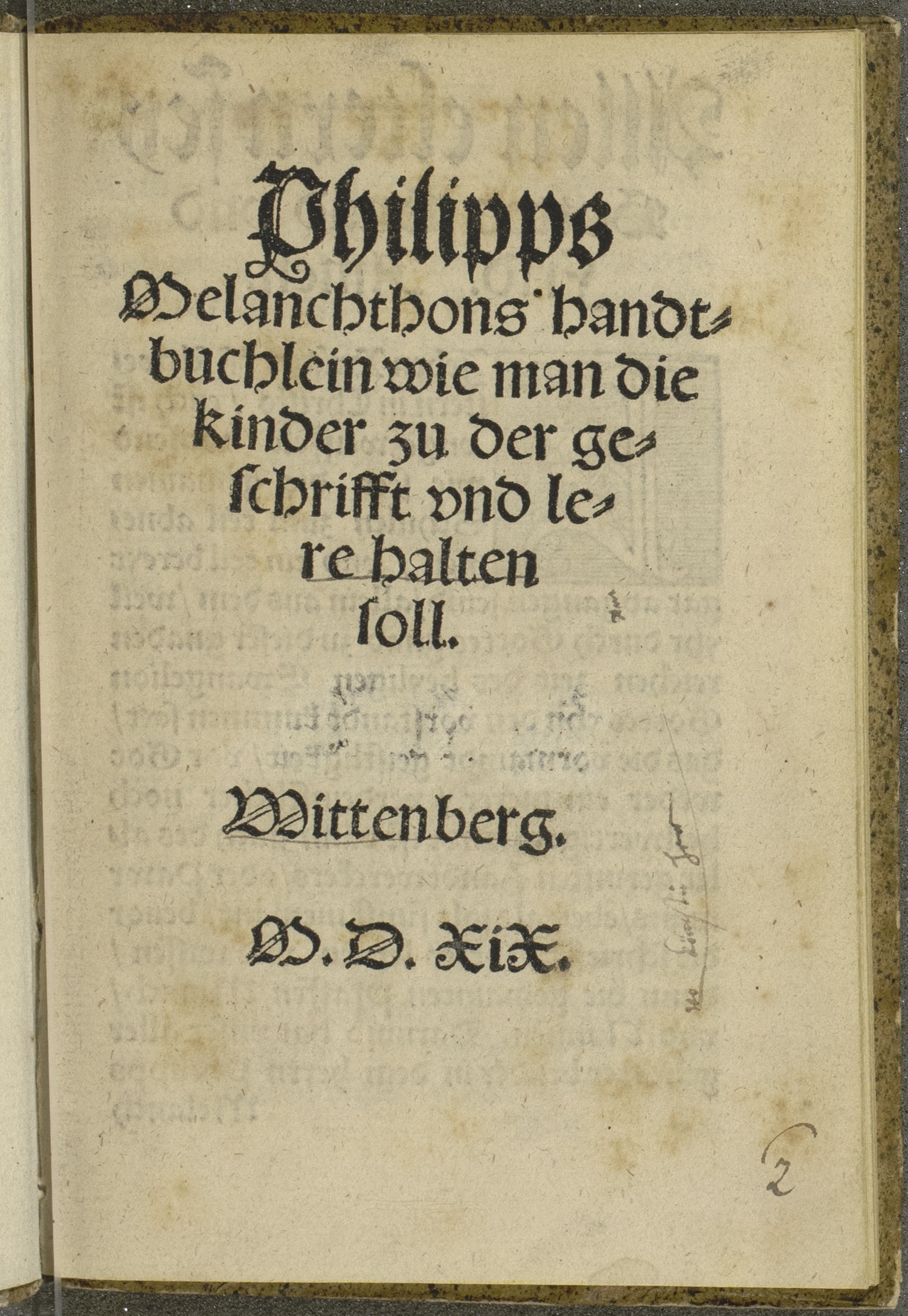
TextPhilipps Melanchthons handtbuchlein wie man die kinder zu der geschrifft vnd lere halten soll. Wittenberg. M.D.XIX
Melanchthon, Philipp, 1497-1560Summary: Melanchthon's "Handtbuchlein" is among the first attempts at a Protestant catechism. It is a collection of selections from scripture passages, prayers, and other text intended as instruction for students in German schools. Noteworthy are the "Seven Wise Saying" derived from Periander by Erasmus.Summary: Melanchthon's "Handtbuchlein" is among the first attempts at a Protestant catechism. It is a collection of selections from scripture passages, prayers, and other text intended as instruction for students in German schools. Noteworthy are the "Seven Wise Saying" derived from Periander by Erasmus.