Search
578 resources
578 items
Language
German
-
 Text
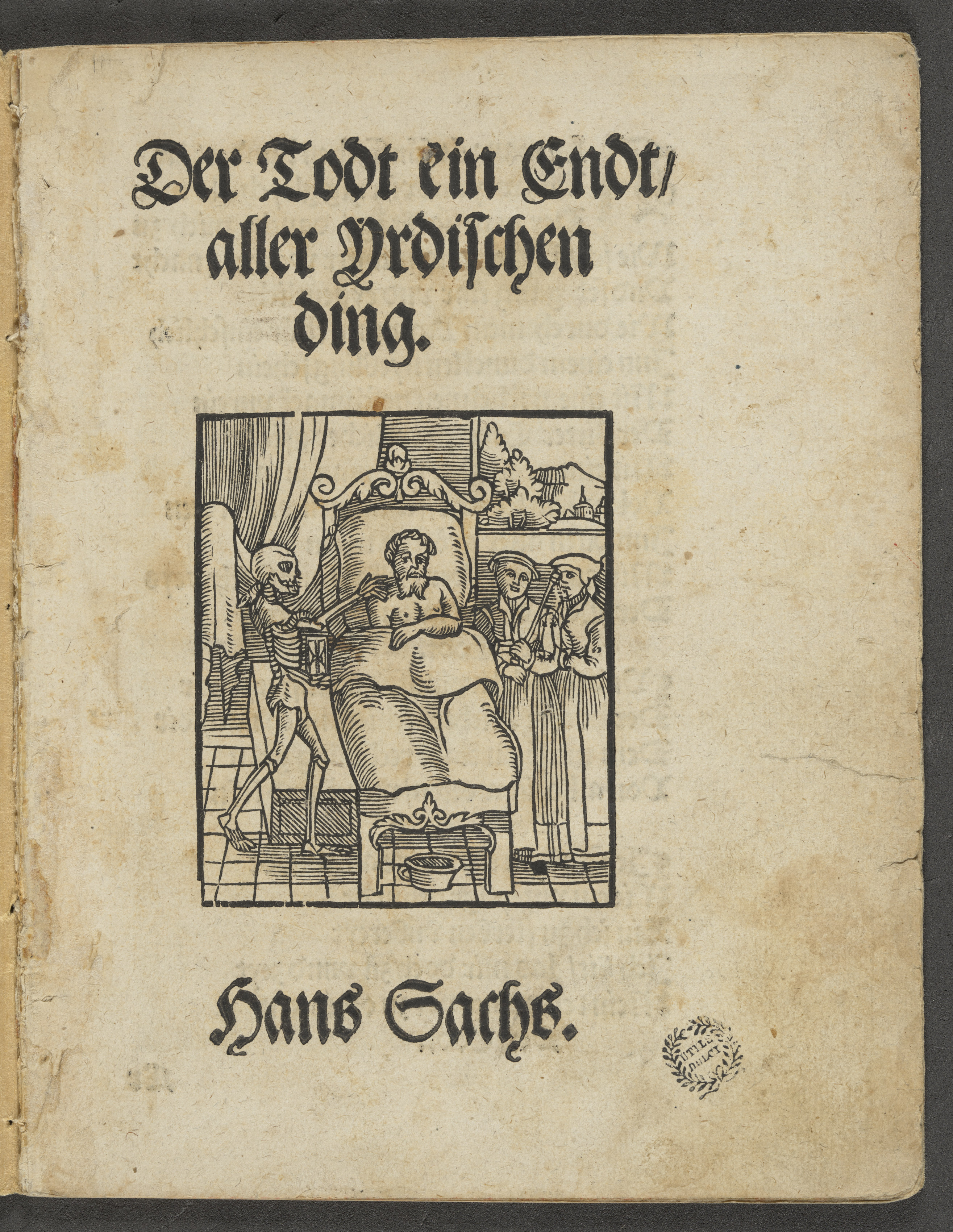
TextDer Todt ein Endt, aller Yrdischen ding
Sachs, Hans, 1494-1576Summary: In this "New Year's Wish," Hans Sachs considers the problem of a man facing death. He calls first upon his physical attributes--youth, beauty, strenght, etc,--but finds they cannot help him. It is the spiritual factors of Sorrow, Confession, Pepentance, Hope, Faith and above all Love, that give him good counsel and rouse him from the dream of Death. This is the second printing of the revised version.Summary: In this "New Year's Wish," Hans Sachs considers the problem of a man facing death. He calls first upon his physical attributes--youth, beauty, strenght, etc,--but finds they cannot help him. It is the spiritual factors of Sorrow, Confession, Pepentance, Hope, Faith and above all Love, that give him good counsel and rouse him from the dream of Death. This is the second printing of the revised version. -
 Text
TextDer Zehen Gebot ein nützliche Erklärung
Luther, Martin, 1483-1546This is a 1523 printing of Martin Luther's popular sermon on the Ten Commandments and the Seven Deadly Sins, first printed in 1520 and reprinted numerous times. The work was originally composed in Latin and was translated into German by the cartographer and Christian Hebraist Sebastian Münster.This is a 1523 printing of Martin Luther's popular sermon on the Ten Commandments and the Seven Deadly Sins, first printed in 1520 and reprinted numerous times. The work was originally composed in Latin and was translated into German by the cartographer and Christian Hebraist Sebastian Münster. -
 Text
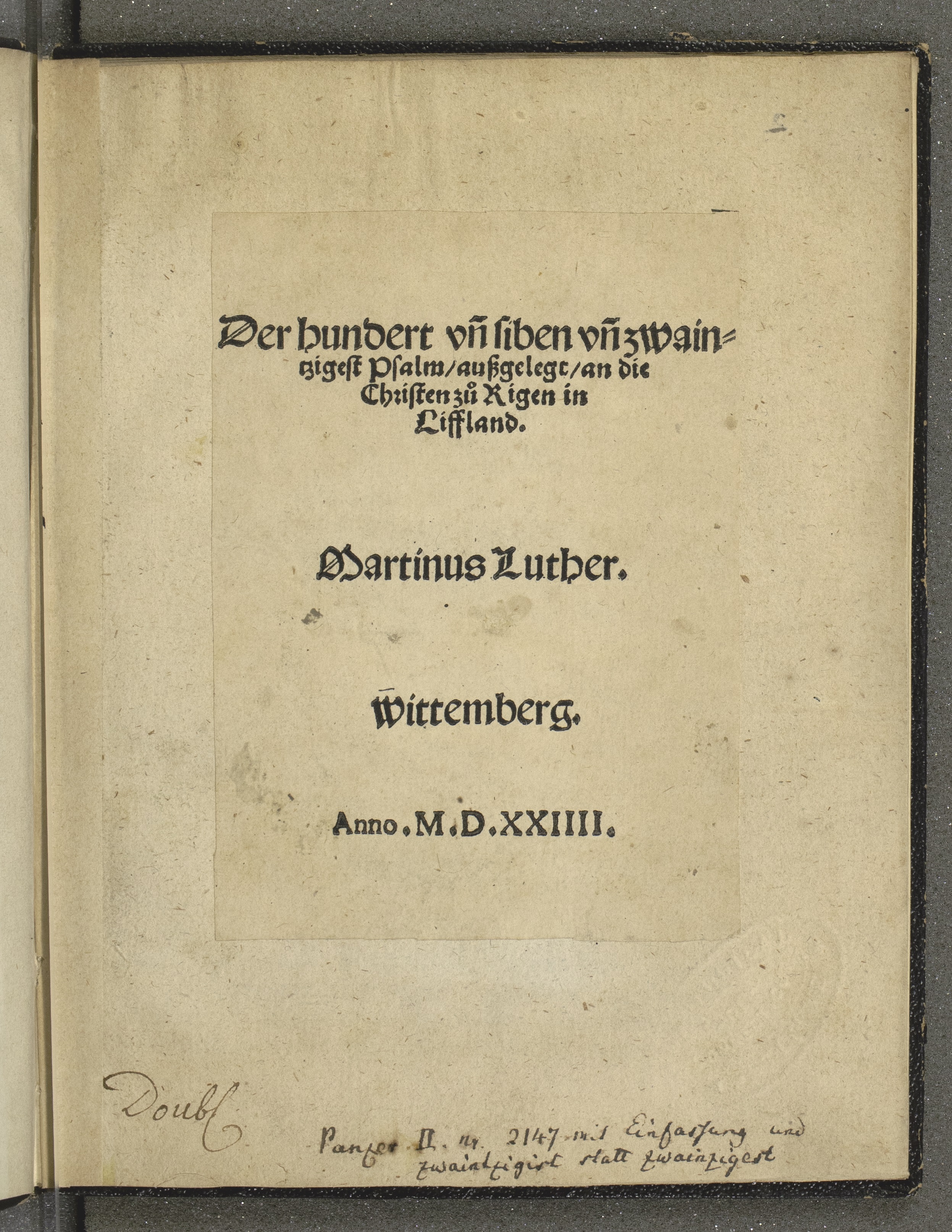
TextDer hundert vn[d] siben vn[d] zwaintzigest Psalm ausgelegt, an die Christen zu Rigen in Liffland
Luther, Martin, 1483-1546Summary: Luther's first attempts to communicate with the Protestants at Riga were unsuccessful. Later, communications were established, and this commentary on Psalm 127 was the result of their request for something edifying. This is the seventh printing of the work.Summary: Luther's first attempts to communicate with the Protestants at Riga were unsuccessful. Later, communications were established, and this commentary on Psalm 127 was the result of their request for something edifying. This is the seventh printing of the work. -
 Text
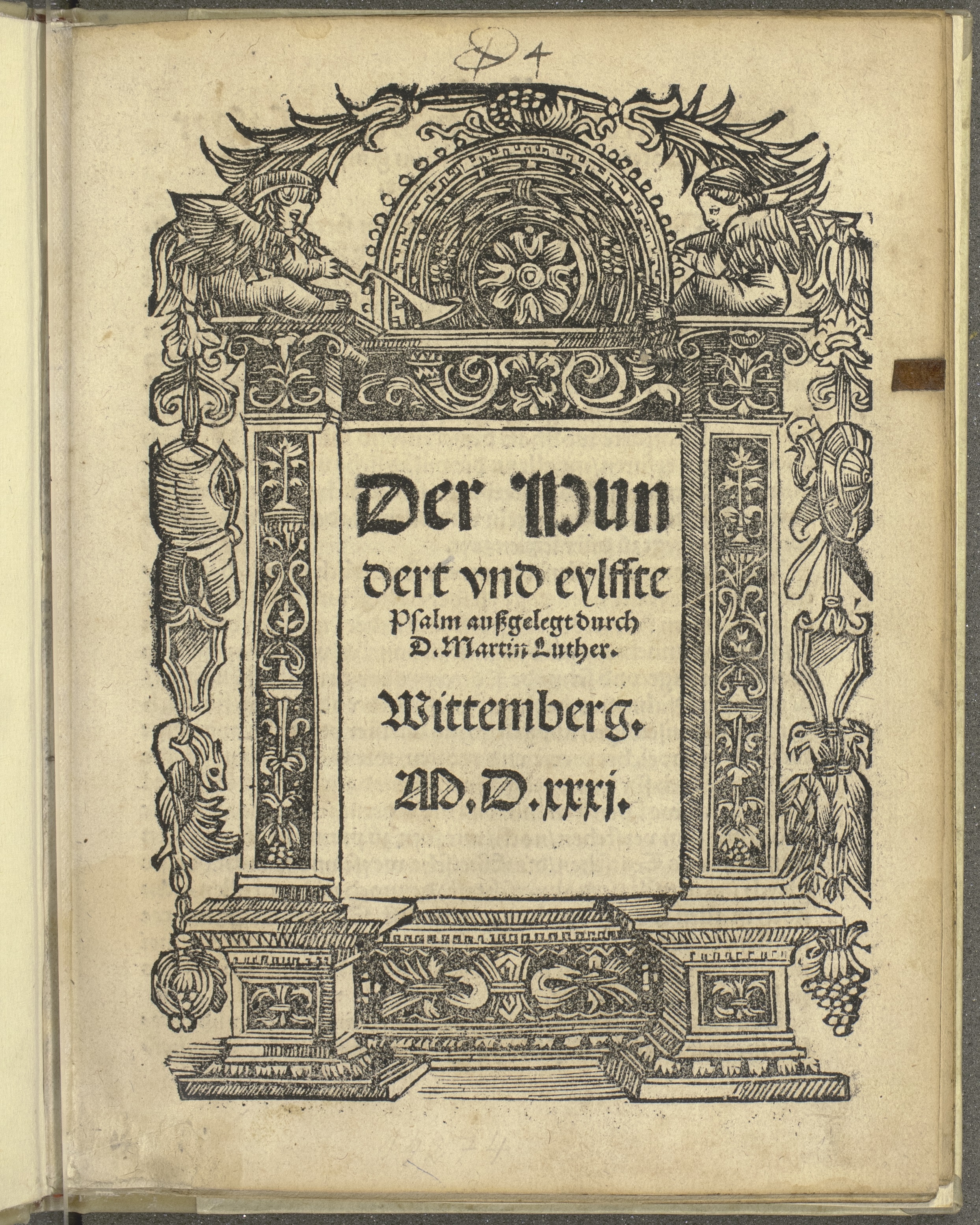
TextDer hundert vnd eylffte Psalm aussgelegt
Luther, Martin, 1483-1546Summary: 1531 printing of Luther's commentary on Psalm 111, written 1530 while he was staying at Coburg Fortress during the time of the Diet of Augsburg.Summary: 1531 printing of Luther's commentary on Psalm 111, written 1530 while he was staying at Coburg Fortress during the time of the Diet of Augsburg. -
 Text
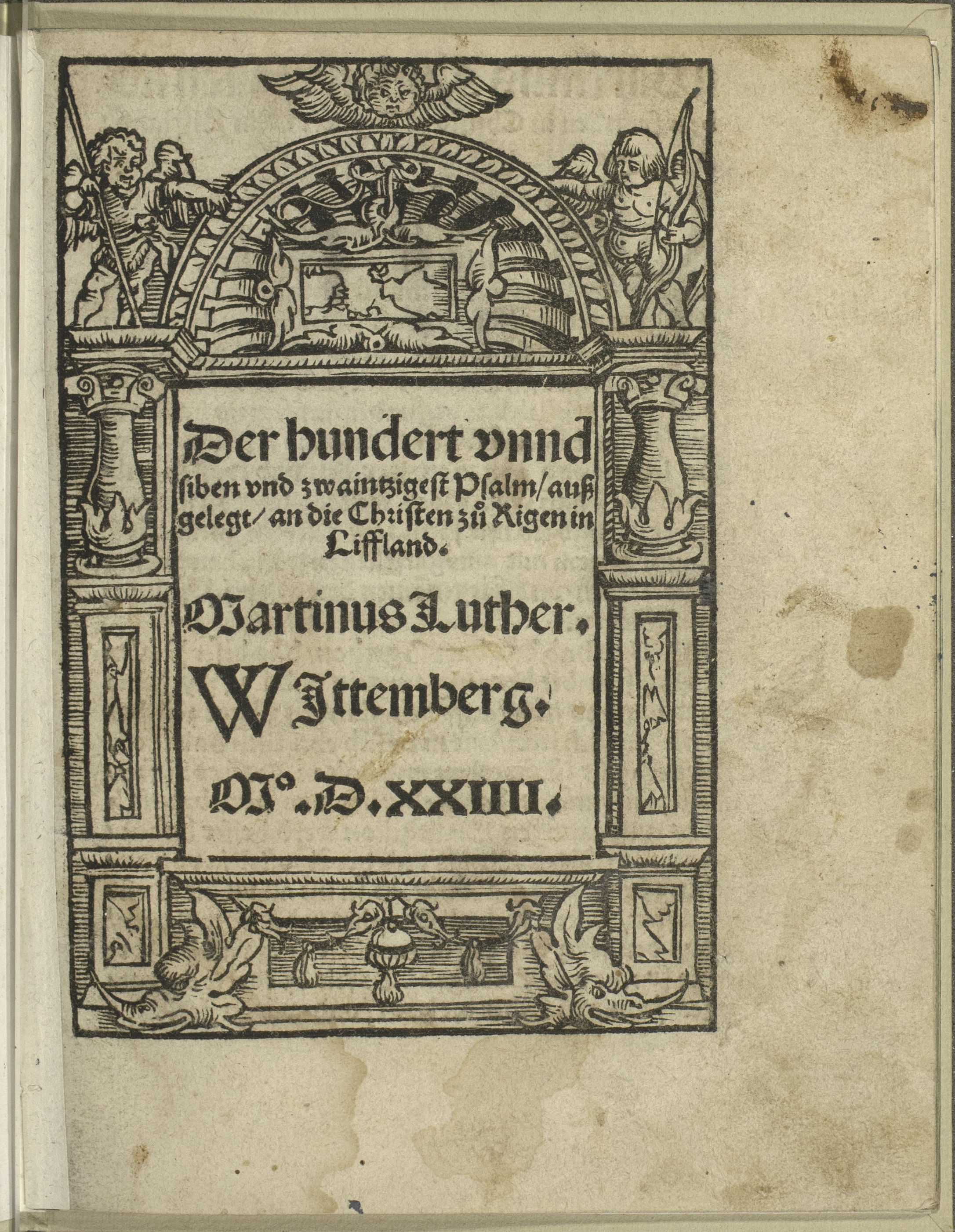
TextDer hundert vnnd siben vnd zwaintzigest Psalm, aussgelegt, an die Christen zuo Rigen in Liffland
Luther, Martin, 1483-1546Summary:Summary: -
 Still image
Des Ehrwirdigen Herrn Doctoris Martini Lutheri, gottseligen, Triumph, und Verantwortung, wider die gottlosen Schmehschrifft, der newen Münch, der Jesuiter, welche sie vnter dem Titel, Anatomia Lutheri, ausgesprenget haben
Single sheet woodcut depicting Pope Leo X on a throne that is about to topple. Behind him are priests and monks and below them a group of Jesuits, who are trying to support the toppling throne. Leo's key, the symbol of the Petrine office is crumbling in the pope's hands. Facing Leo is Martin Luther holding an open Bible. Below him is a group of reformers led by Philipp Melanchthon, each holding a book (Bible). In the center below Leo is Friedrich Staphylus depicted as Judas Iscariot. Staphylus was a student of Philipp Melanchthon's, who rejoined the Catholic Church in 1553.Single sheet woodcut depicting Pope Leo X on a throne that is about to topple. Behind him are priests and monks and below them a group of Jesuits, who are trying to support the toppling throne. Leo's key, the symbol of the Petrine office is crumbling in the pope's hands. Facing Leo is Martin Luther holding an open Bible. Below him is a group of reformers led by Philipp Melanchthon, each holding a book (Bible). In the center below Leo is Friedrich Staphylus depicted as Judas Iscariot. Staphylus was a student of Philipp Melanchthon's, who rejoined the Catholic Church in 1553. -
 Still image
Deux Jeunes Filles tuées dans l'Evêché de Bamberg environ l'An 1550
Luiken, Jan, 1649-1712An engraving depicting the execution of two young women. The image shows the young women, with crowns of straw on their heads, being led towards a stake being prepared in the background.An engraving depicting the execution of two young women. The image shows the young women, with crowns of straw on their heads, being led towards a stake being prepared in the background. -
 Text
TextDie Epistel S. Paul an die Galater
Luther, Martin, 1483-1546Summary: In August 1523, a second revision of Luther's 1519 Galatians commentary was issued by Luther himself. V. Heydnecker (who may have been V. Obsopaeus) prepared this German translation of the work. Text in German includes M. Luther's translation of St. Paul's Epistle to the Galatians from the Greek N.T. Text is translated from M. Luther's Latin work: In epistolam Sancti Pauli ad Galatas commentarius (1519) by V. Heydnecker, who some scholars believe was V. Obsopäus. Text is translation of the 2nd version of Luther's work.Summary: In August 1523, a second revision of Luther's 1519 Galatians commentary was issued by Luther himself. V. Heydnecker (who may have been V. Obsopaeus) prepared this German translation of the work. Text in German includes M. Luther's translation of St. Paul's Epistle to the Galatians from the Greek N.T. Text is translated from M. Luther's Latin work: In epistolam Sancti Pauli ad Galatas commentarius (1519) by V. Heydnecker, who some scholars believe was V. Obsopäus. Text is translation of the 2nd version of Luther's work. -
 Text
TextDie Sieben puszpsalm mit deutscher auszlegu[n]g nach dem schrifttlichen synne tzu Christi vn[d] gottis gnaden, neben seyns selben. ware erkentniss gru[n]dlich gerichtet.. 1517
Luther, Martin, 1483-1546Summary: The first edition of Martin Luther's first book, this is Luther's commentary on the seven penitential Psalms (Psalms 6, 32, 38, 51, 102, 130, and 143) based on his lectures at the University of Wittenberg and published in March1517, six months before his 95 Theses. The Reformer's understanding of repentance, penance and grace, influenced by the medieval mystic Johannes Tauler, became central to his theology and underlies his later critique of indulgences. Luther revised this commentary in 1525.Summary: The first edition of Martin Luther's first book, this is Luther's commentary on the seven penitential Psalms (Psalms 6, 32, 38, 51, 102, 130, and 143) based on his lectures at the University of Wittenberg and published in March1517, six months before his 95 Theses. The Reformer's understanding of repentance, penance and grace, influenced by the medieval mystic Johannes Tauler, became central to his theology and underlies his later critique of indulgences. Luther revised this commentary in 1525. -
 Text
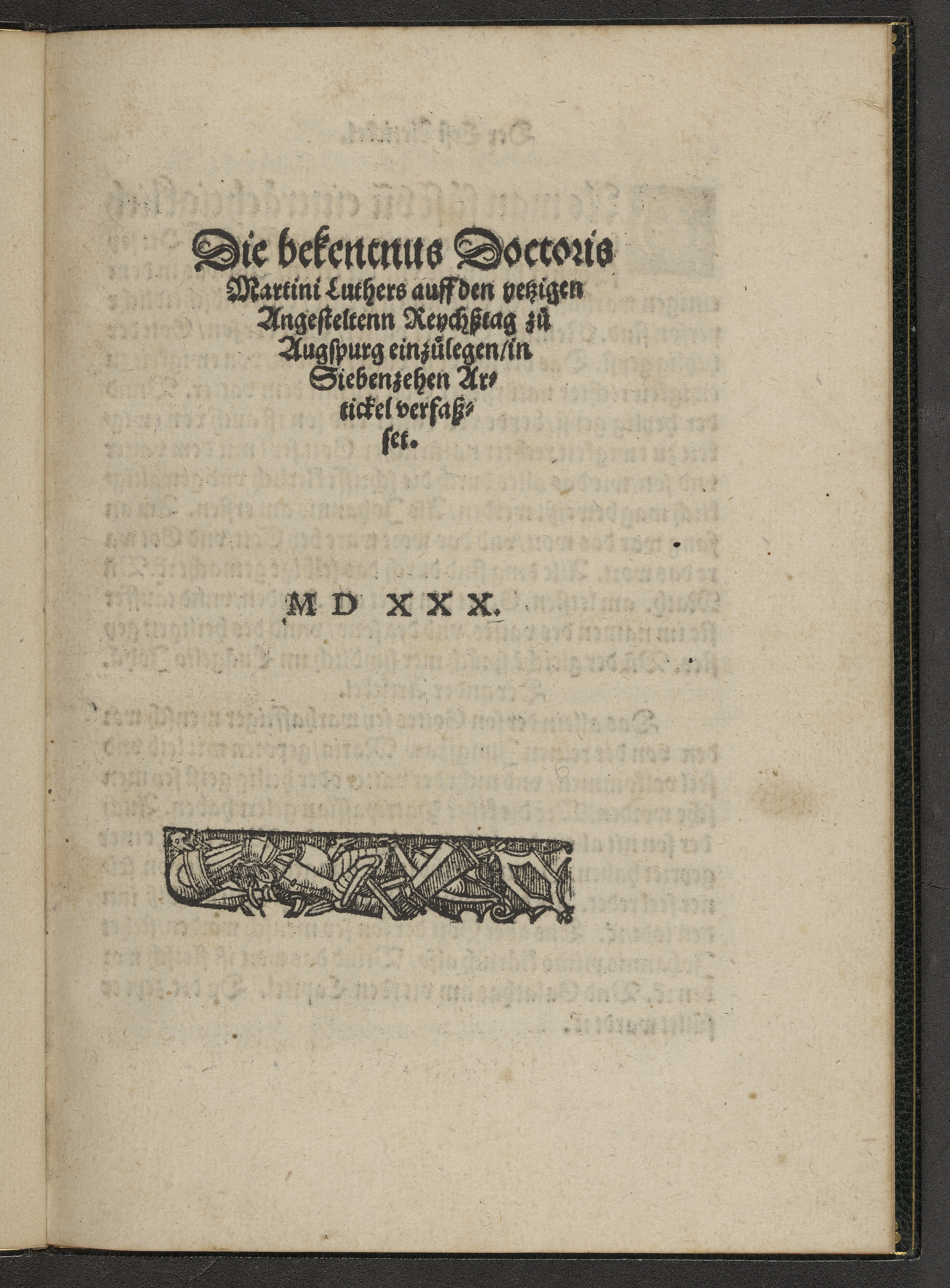
TextDie bekentnus Doctoris Martini Luthers auff den yetzigen Angesteltenn Reychstag zu Augspurg einzuolegen : in Siebenzehen Artickel verfasset
Luther, Martin, 1483-1546Summary: One of at least 11 printings produced in 1530 of the Schwabach Articles, 17 articles of faith composed by Luther 1529 in Schwabach. It became one of the foundational documents for the Augsburg Confession.Bound in modern dark green morocco, bordered, blind- and gilt-tooled, with inside dentelles, gold spine title, and gilt edges. Upper board scratched.Summary: One of at least 11 printings produced in 1530 of the Schwabach Articles, 17 articles of faith composed by Luther 1529 in Schwabach. It became one of the foundational documents for the Augsburg Confession.Bound in modern dark green morocco, bordered, blind- and gilt-tooled, with inside dentelles, gold spine title, and gilt edges. Upper board scratched. -
 Still image
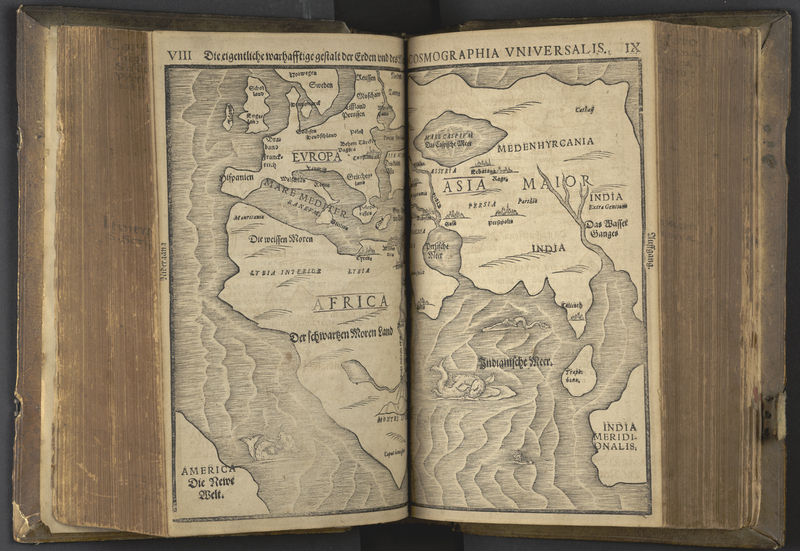
Die eigentliche warhafftige gestalt der Erden und des [...]
A map of the world including Europe, Africa ("Der schwarzen Moren Land"), Asia (Major), America ("Die Newe Welt"), and India Meridionalis (a so called "phantom" peninsula that was often depicted in Medieval and Rennaissance maps). A number of monstrous sea creatures are depicted in the various oceans and seas.A map of the world including Europe, Africa ("Der schwarzen Moren Land"), Asia (Major), America ("Die Newe Welt"), and India Meridionalis (a so called "phantom" peninsula that was often depicted in Medieval and Rennaissance maps). A number of monstrous sea creatures are depicted in the various oceans and seas. -
 Still image
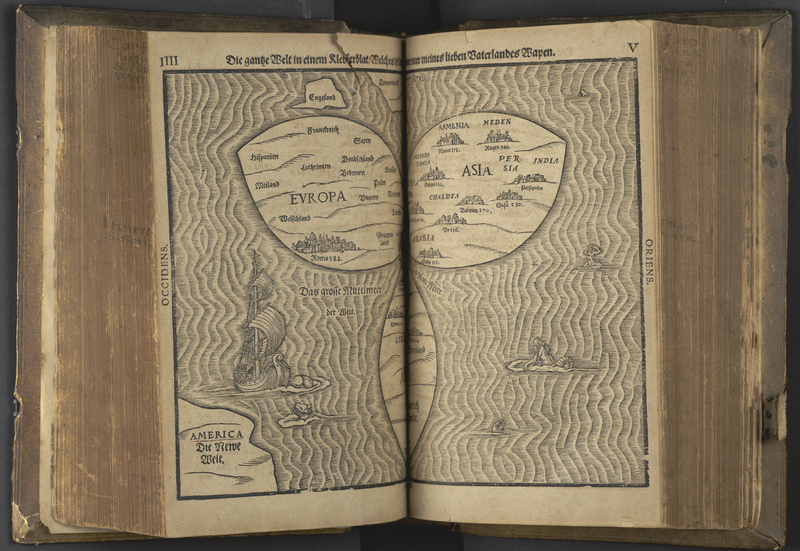
Die ganze Welt in einem [K]leberblat Welches [...] meines lieben Vaterlandes [W]apen
A map of the world including Europe, Africa, and Asia as three leaf or petal shaped continents with America ("Die Newe Welt") draw in the bottom left corner. A ship and numerous sea creatures are depicted in the oceans.A map of the world including Europe, Africa, and Asia as three leaf or petal shaped continents with America ("Die Newe Welt") draw in the bottom left corner. A ship and numerous sea creatures are depicted in the oceans. -
 Still image
Die neuwen Inseln - so hinder Hispanien gegen Orient bey dem land Indic ligen.
A map of the western hemisphere, identified as the New World, and the western coast of Asia. A spanish style galleon ship is depicted sailing in the Pacific ocean, and a rough shelter built of sticks featureing a dismembered leg is depicted in the general region of Brazil with the label, "Canibali".A map of the western hemisphere, identified as the New World, and the western coast of Asia. A spanish style galleon ship is depicted sailing in the Pacific ocean, and a rough shelter built of sticks featureing a dismembered leg is depicted in the general region of Brazil with the label, "Canibali". -
 Text
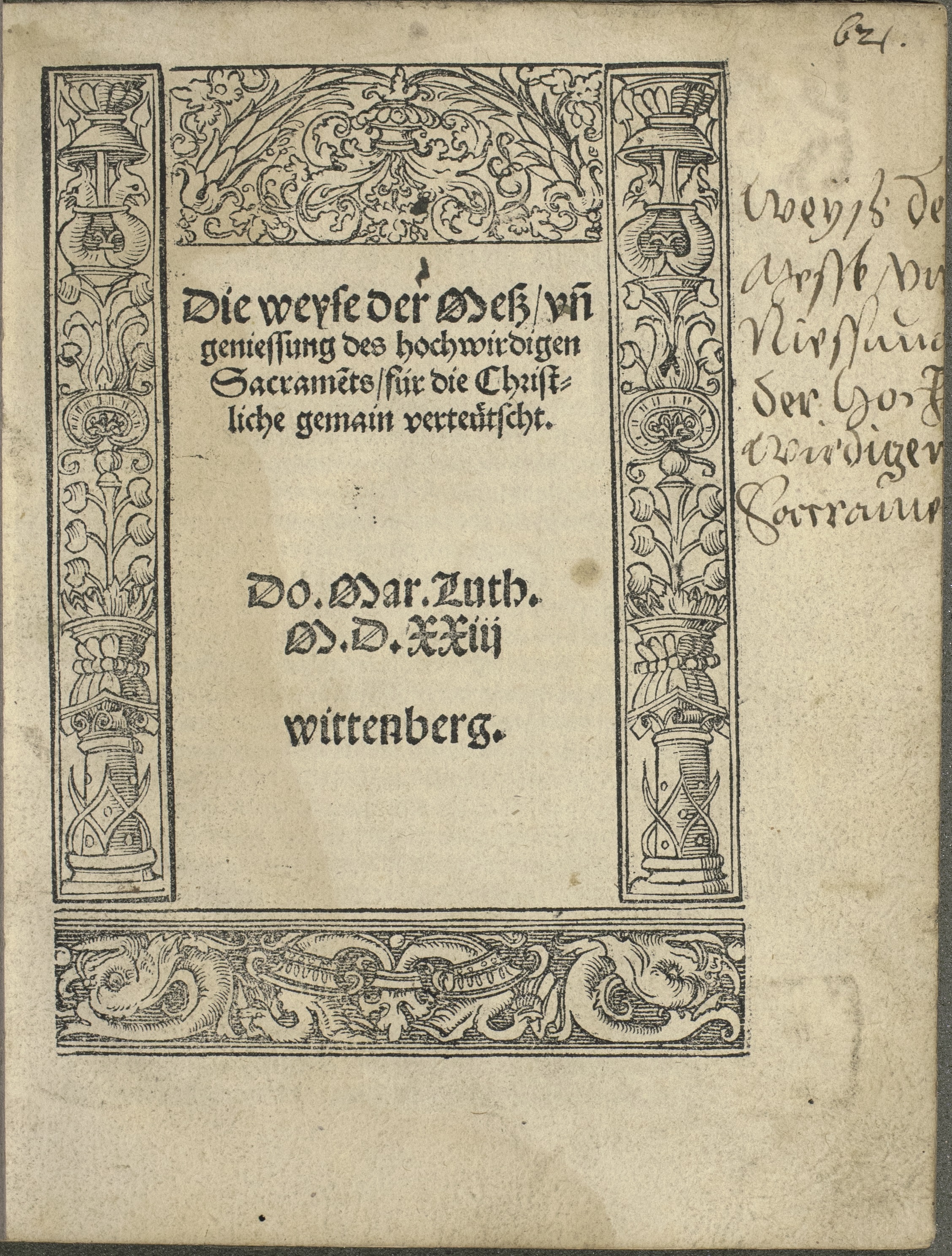
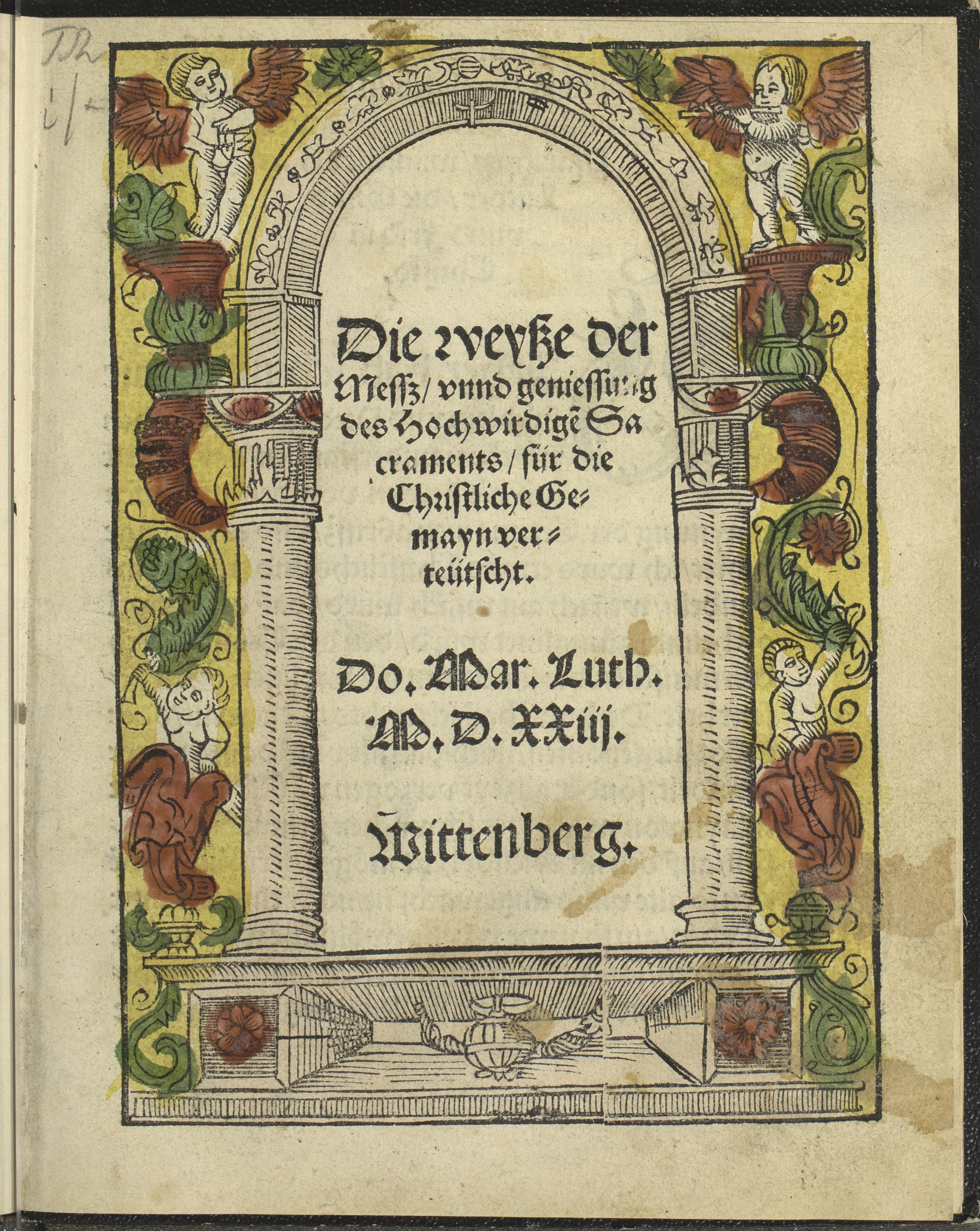
TextDie weyse der Mess, vn[d] geniessung des hochwirdigen Sacrame[n]ts, für die Christliche gemain verteütscht
Luther, Martin, 1483-1546Summary: First published in Latin in 1523, Luther defines in this tract the order of the Sunday worship service and the distribution of communion. This pamphlet is an important forerunner of Luther's "Deutsche Messe" (German Mass) published in 1526.Summary: First published in Latin in 1523, Luther defines in this tract the order of the Sunday worship service and the distribution of communion. This pamphlet is an important forerunner of Luther's "Deutsche Messe" (German Mass) published in 1526. -
 Text
TextDie weysse der Messz, : vnnd geniesung des Hochwirdigen Sacraments, für die Christliche Gemayn verteütscht
Luther, Martin, 1483-1546Summary: Luther wrote his "Formula of the Mass and Communion" in 1523 at the insistence of N. Hausmann, the preacher at the Marienkirche, in Zwickau. Hausmann then wanted a German version to be used in his church. P. Speratus supplied one, and an unnamed Nuremberg translator supplied another. This is that Nuremberg work's first printing.Summary: Luther wrote his "Formula of the Mass and Communion" in 1523 at the insistence of N. Hausmann, the preacher at the Marienkirche, in Zwickau. Hausmann then wanted a German version to be used in his church. P. Speratus supplied one, and an unnamed Nuremberg translator supplied another. This is that Nuremberg work's first printing. -
 Text
TextDis schön Buch gena[n]t der Seelen Paradiss : von waren und volkumen Tugenden sagend
Geiler von Kaysersberg, Johann, 1445-1510Summary: Collection of sermons by the Alsatian preacher Geiler von Kaysersberg, delivered between 1503 and 1505 at the convent of the sisters of the order of St. Mary Magdalene. Geiler was one of the most popular preachers of his day and was sometimes called the German Savonarola. He was a close friend of the Strasbourg humanist Jakob von Wimpheling and was greatly respected by Sebastian Brant, Johann Reuchlin and Philipp Melanchthon.Summary: Collection of sermons by the Alsatian preacher Geiler von Kaysersberg, delivered between 1503 and 1505 at the convent of the sisters of the order of St. Mary Magdalene. Geiler was one of the most popular preachers of his day and was sometimes called the German Savonarola. He was a close friend of the Strasbourg humanist Jakob von Wimpheling and was greatly respected by Sebastian Brant, Johann Reuchlin and Philipp Melanchthon. -
 Text
TextDisputatio et excusatio
Luther, Martin, 1483-1546Summary: A response by Luther to the accusations leveled at him at the Leipzig Disputation by his opponent, Johann Eck.Summary: A response by Luther to the accusations leveled at him at the Leipzig Disputation by his opponent, Johann Eck. -
 Text
TextDisputatio inter Egregios & praelatus virus ac doctores, Joannem Ecci[um] & Martinum Lutherum in p[rae]sentia notariorum habita
Luther, Martin, 1483-1546Summary: Unique printing of the original notarial protocol of the Leipzig Disputation between Andreas Karlstadt and Martin Luther on the one hand, and Johann Eck, on the other. Includes fully two thirds of the several day debate, and all of the famous "duel" between Luther and Eck on authority in the church. The debates were copied by two notaries, and, at the end of each day's sessions, were verified by two witnesses.Summary: Unique printing of the original notarial protocol of the Leipzig Disputation between Andreas Karlstadt and Martin Luther on the one hand, and Johann Eck, on the other. Includes fully two thirds of the several day debate, and all of the famous "duel" between Luther and Eck on authority in the church. The debates were copied by two notaries, and, at the end of each day's sessions, were verified by two witnesses. -
 Text
TextDiss ist ain Anzayg: ainem meinem, etwann vertrawten Gesellen, über seyne harte Widerpart, des Sacrament vnd annders betreffend
Langenmantel, Eitelhans, -1528Summary: Since the city of Augsburg was fairly evenly divided between Catholic and Protestant in the early 1520s, several Anabaptists hoped that their movement might benefit from this stalemate. Eitelhans Langenmantel attacks both Catholics and Lutherans, whom he called neo-Papists. His critique in this pamphlet focuses on the eucharist, which Langenmantel views in Zwinglian terms as a symbolic commemoration of the Last Supper. Like many other Anabaptists in Augsburg, Langenmantel was arrested and executed in 1527.Summary: Since the city of Augsburg was fairly evenly divided between Catholic and Protestant in the early 1520s, several Anabaptists hoped that their movement might benefit from this stalemate. Eitelhans Langenmantel attacks both Catholics and Lutherans, whom he called neo-Papists. His critique in this pamphlet focuses on the eucharist, which Langenmantel views in Zwinglian terms as a symbolic commemoration of the Last Supper. Like many other Anabaptists in Augsburg, Langenmantel was arrested and executed in 1527. -
 Text
TextDoctor Johan. dietenberger. [sic] Widerlegung des Lutherischen büchlins, da er schreibt von menschen leren zü meiden rc.
Dietenberger, Johann, approximately 1475-1537Summary: Johannes Dietenberger was a preaching monk who later became the grand inquisitor in the dioceses of Mainz and Cologne. He is best known for his German translation of the Bible, published in 1534. This work is an answer to Luther's writings on human doctrines and traditions in the Church.Summary: Johannes Dietenberger was a preaching monk who later became the grand inquisitor in the dioceses of Mainz and Cologne. He is best known for his German translation of the Bible, published in 1534. This work is an answer to Luther's writings on human doctrines and traditions in the Church. -
 Text
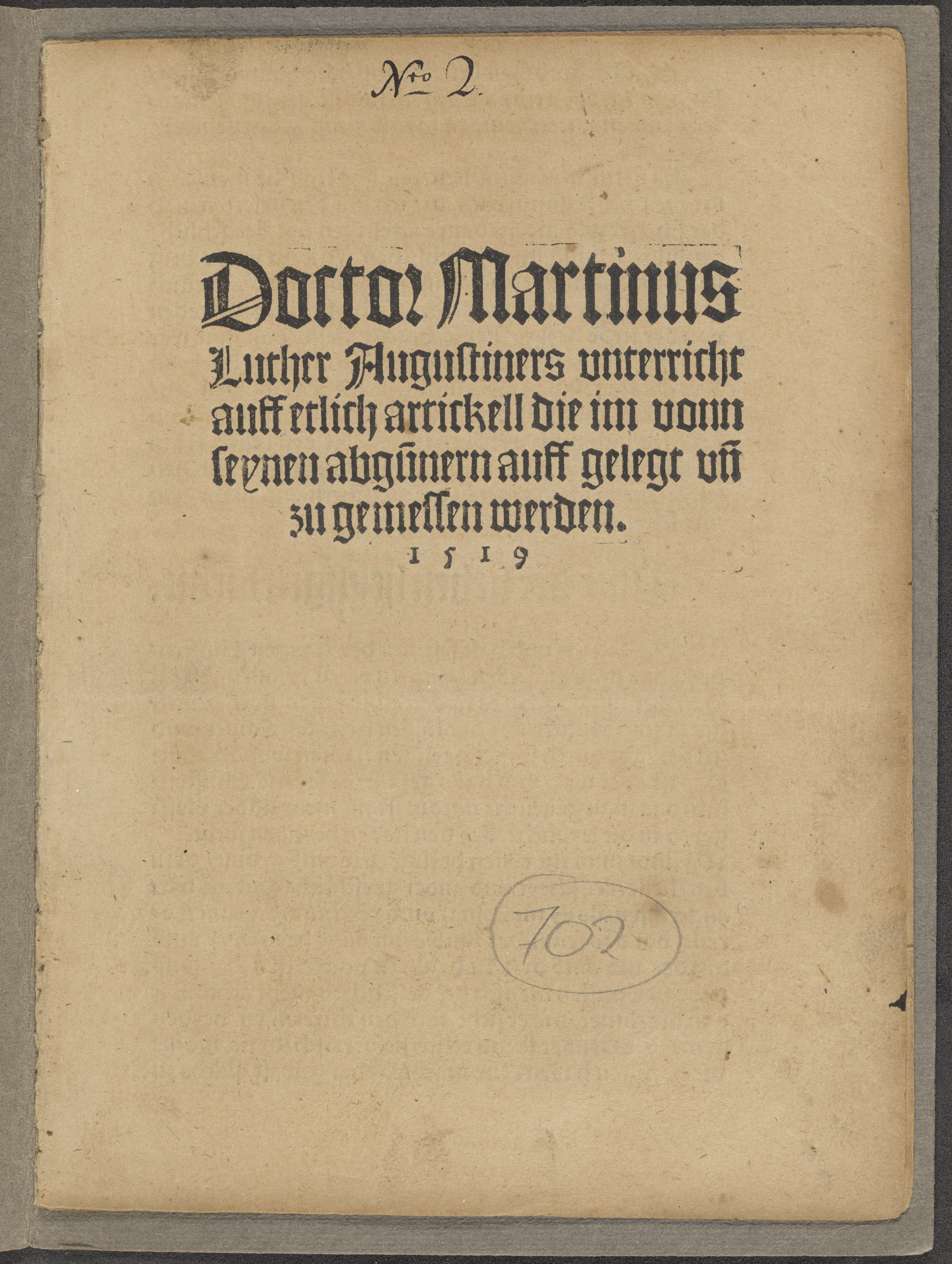
TextDoctor Martinus Luther Augustiners Vnterricht auff etlich Artickell die im vonn seynen Abgūrnern auff gelegt vn[d] zu gemessen werden
Luther, Martin, 1483-1546Summary: Luther was persuaded by Karl von Miltitz to write this public statement as a response to certain charges brought against him by his opponents, in particular Mazzolini da Prierio. In this tract, Luther still supports the invocation of the saints, an idea which he abandoned only shortly after.Summary: Luther was persuaded by Karl von Miltitz to write this public statement as a response to certain charges brought against him by his opponents, in particular Mazzolini da Prierio. In this tract, Luther still supports the invocation of the saints, an idea which he abandoned only shortly after.